Na meer dan 20 jaar ervaring met aanspuitingen heb ik vrijwel elke denkbare fout bij het verwijderen ervan gezien. Aanspuitingen voeren gesmolten kunststof naar de matrijsholte, maar na het vormen zijn het ongewenste uitsteeksels die nauwkeurig moeten worden verwijderd. Gaat dat mis, dan ontstaan spanningssporen1, maatproblemen of zwaar beschadigde onderdelen. Dit artikel behandelt alles van eenvoudig handgereedschap voor kleine series tot geavanceerde geautomatiseerde systemen voor grote productievolumes.
- Het type aanspuiting bepaalt de verwijderingsmethode — onderzeese aanspuitingen breken automatisch af, terwijl directe aanspuitingen handmatig moeten worden afgesneden
- Het productievolume bepaalt de automatiseringsbeslissing — boven 50,000 onderdelen verdient robotgestuurd verwijderen van aanspuitingen zichzelf terug
- Eisen aan aanspuitresten bepalen uw investering in gereedschap — cosmetische onderdelen vereisen een schoner aanspuitontwerp
- Materiaalkeuze beïnvloedt de verwijderingsmoeilijkheid — brosse kunststoffen zoals PC vereisen voorzichtiger verwijderen van de aanspuiting dan flexibel PP
Welke soorten aanspuitingen voor spuitgieten zijn er?
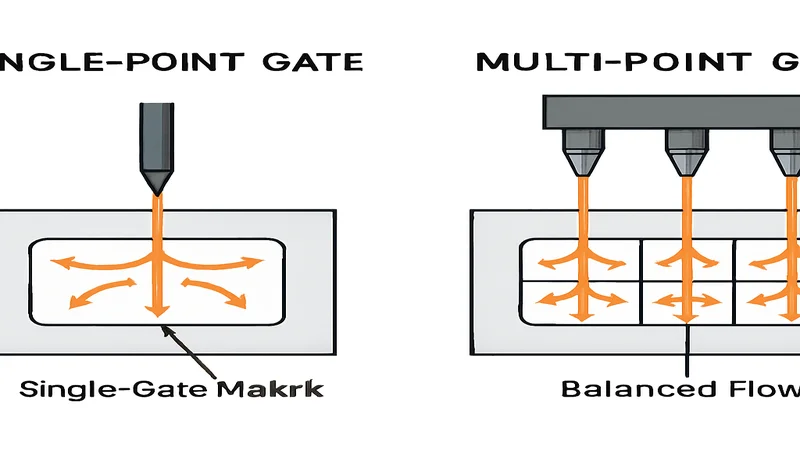
De zes belangrijkste aanspuittypen bij spuitgieten zijn directe, rand-, tunnel-, punt-, waaier- en diafragma-aanspuitingen. Elk type heeft een kenmerkend aanspuitrestprofiel en een andere verwijderingsmoeilijkheid. U kunt het verwijderen van aanspuitingen pas bespreken als u begrijpt waarmee u te maken hebt.
Als u leveranciers vergelijkt of inkoop voorbereidt, behandelt onze gids voor het selecteren van spuitgietleveranciers de RFQ-voorbereiding, kwalificatie en controle van commerciële risico’s.
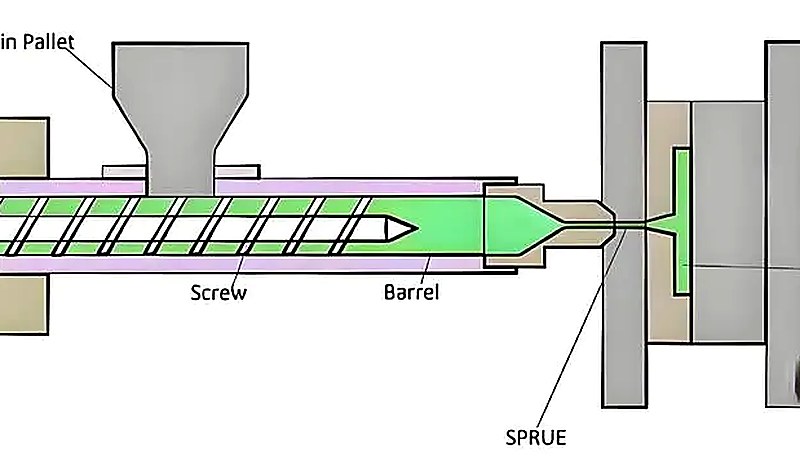
Directe-/sprue-aanspuiting
De voorhamer onder de aanspuitingen: groot, opvallend en even subtiel als een goederentrein. Directe aanspuitingen lopen rechtstreeks van de hoofdaanspuitbus naar het onderdeel en zijn doorgaans 3-8mm in diameter. Ik gebruik ze voor grote, dikke onderdelen die maximale doorstroming vereisen en waarbij het aanspuitrestant niet zichtbaar hoeft te zijn. Denk aan autobumpers of grote behuizingen waar de aanspuiting wordt verborgen of weggefreesd. Verwijderen is eenvoudig met ijzerzaag, lintzaag of CNC-bewerking. Het restant is aanzienlijk (2-6mm verhoging), dus gebruik directe aanspuitingen alleen waar ruimte en nabewerking mogelijk zijn.
Randpoort
Uw standaard aanspuiting voor de meeste toepassingen. Randaanspuitingen komen het onderdeel binnen vanaf de deellijn en zijn doorgaans 0.5-2.0mm dik en 2-6mm breed. Ze zijn het Zwitserse zakmes onder de aanspuitingen – veelzijdig, betrouwbaar en eenvoudig te verwijderen met een standaardkniptang. Ik specificeer randaanspuitingen voor waarschijnlijk 60% van de matrijzen die we ontwerpen. Het aanspuitrestant is beheersbaar (0.1-0.5mm hoog) en kan meestal met ontbraamgereedschap worden verwijderd. De plaatsing is cruciaal – positioneer de aanspuiting waar het restant de functie of het uiterlijk niet beïnvloedt.
Onderzeese/tunnelaanspuiting
Dit is de aanspuiting die vanzelf verdwijnt. Duikbootaanspuitingen lopen onder het deelvlak door en worden bij het uitwerpen automatisch afgeschoven. De gebruikelijke diameter is 0.8-1.5mm en het restant is minimaal (0.05-0.2mm). Ze zijn ideaal voor grote series waarin handmatig verwijderen te duur zou zijn. De spuitgietmatrijs vereist wel een zeer nauwkeurige geometrie: de tunnellengte moet 2-3 keer de aanspuitdiameter zijn en de breekhoek moet exact kloppen om ruwe resten te voorkomen.
Puntpoort
Het precisie-instrument onder de aanspuitingen. Puntaanspuitingen zijn zeer klein (diameter 0.3-0.8mm), komen via de holtezijde binnen en laten minimale resten achter. Ze zijn ideaal voor cosmetische onderdelen waar aanspuitmarkeringen ongewenst zijn. Verwijdering vereist finesse: een scherpe kniptang of speciale aanspuitknipper. Het restant is klein, maar moet zorgvuldig worden afgewerkt om inval of spanningsconcentraties te voorkomen. Ik gebruik puntaanspuitingen voor medische hulpmiddelen, elektronicabehuizingen en overal waar uiterlijk belangrijker is dan eenvoudige verwerking.
Waaiervormige aanspuiting
De publieksfavoriet voor brede, dunne onderdelen. Waaieraanspuitingen verdelen de stroming over een breed gebied (doorgaans 0.3-0.8mm dik en 10-50mm breed), waardoor lasnaden afnemen en de oppervlakteafwerking2 verbetert. Denk aan laptopbehuizingen of sierpanelen voor auto’s. Verwijderen kost tijd: de volledige breedte moet met scherpe messen zorgvuldig worden bijgesneden. Het dunne ribvormige restant moet voorzichtig worden geschuurd of gefreesd. Waaieraanspuitingen vragen extra werk, maar zijn dat waard wanneer een brede component gelijkmatig moet worden gevuld.
Membraan-/schijfaanspuiting
De speciale aanspuiting voor cilindrische onderdelen zoals flessen of containers. De aanspuiting omsluit de volledige omtrek van het onderdeel en zorgt voor een uitzonderlijk gelijkmatige vulling. De aanspuitdikte bedraagt doorgaans 0.2-0.6mm en voor het verwijderen moet de volledige omtrek zorgvuldig met een mes worden bewerkt. Het restant is een dunne ring die bij kritische toepassingen vaak op een draaibank moet worden nabewerkt. Membraanaanspuitingen bieden uitstekende vuleigenschappen, maar de nabewerking is arbeidsintensief tenzij CNC-nabewerking financieel haalbaar is.
Hoe verwijdert u aanspuitingen handmatig van vormdelen?
De belangrijkste handgereedschappen voor poortverwijdering zijn handtangen, zijkniptangen, ontbraamgereedschappen en poortknippers. Een goede techniek maakt het verschil tussen professioneel resultaat en uitval.
Handkniptangen en zijkniptangen
Uw belangrijkste gereedschap voor randaanspuitingen tot 2mm dik. Ik vertrouw op tangen van Xuron of Lindstrom — ze kosten 3-4 keer zoveel als bouwmarkttangen, maar leveren jarenlang zuivere sneden. Bladhoek en snijtechniek zijn bepalend. Plaats de tang loodrecht op de aanspuiting en knip in één vloeiende beweging. Gedeeltelijk knippen veroorzaakt spanningsconcentraties en lelijke restpunten. Voor ABS en PC houd ik de snijbladen vlijmscherp met diamantpasta korrel 1000. Botte bladen pletten en scheuren in plaats van te snijden, vooral bij taaie materialen zoals POM of nylon.
Universeelmessen en scheermesjes
Essentieel voor waaieraanspuitingen en dunne bramen. Gebruik consequent nieuwe mesjes – ik vervang ze afhankelijk van het materiaal na elke 50-100 sneden. Voor materialen zoals PS en ABS wordt eerst ingesneden en daarna afgebroken; bij flexibele materialen zoals TPE wordt gesneden en afgepeld. Houd de meshoek klein (15-20 graden) om insnijden in het onderdeeloppervlak te voorkomen. Voor kritische zichtdelen gebruik ik chirurgische scalpels met #11-mesjes – deze zijn scherper dan standaard afbreekmesjes en snijden dunne aanspuitingen schoner af.
Ontbraamgereedschap en schrapers
De opruimploeg voor aanspuitresten. Ontbraamgereedschap met vervangbare messen werkt uitstekend om op de meeste thermoplasten resten van 0.1-0.3mm te verwijderen. Het geheim is lichte sneden – probeer niet de hele rest in één beweging te verwijderen. Gebruik voor glasgevulde materialen hardmetalen ontbraammessen; snelstaal wordt snel bot door abrasieve vulstoffen. Gebogen schrapers werken beter op cilindrische oppervlakken, terwijl rechte messen geschikt zijn voor vlakke oppervlakken. Schraap altijd in de richting van het dikkere deel van het product om spanningsconcentraties te voorkomen.
Speciale aanspuitknippers
Voor handmatige productie in grote volumes verdienen speciale aanspuitknippers zich snel terug. Pneumatische aanspuitknippers verwerken 500-1000 onderdelen per uur met constante kwaliteit, 5-10 keer sneller dan handtangen. De initiële investering bedraagt $1500-5000, maar bij meer dan 10,000 onderdelen per jaar rechtvaardigt de arbeidsbesparing de kosten. Deze gereedschappen gebruiken nauwkeurige snijmatrijzen die op de specifieke aanspuitgeometrie zijn afgestemd en leveren een reproduceerbare kwaliteit van de aanspuitrest die handgereedschap niet kan evenaren.
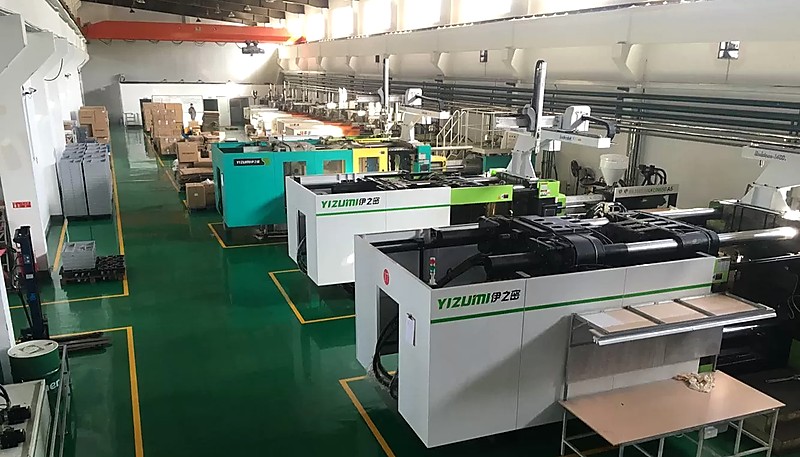
In onze fabriek in Shanghai gebruiken we 47 spuitgietmachines van 90T tot 1850T. Ik heb geleerd dat de keuze van de aanspuitverwijderingsmethode de productie-economie kan maken of breken. Met 20+ jaar ervaring in spuitgieten heb ik bedrijven verlies zien lijden doordat ze de ontbraammethode niet afstemden op hun volume- en kwaliteitseisen.
Welke geautomatiseerde methoden voor het verwijderen van aanspuitingen bestaan er?
Vijf geautomatiseerde methoden domineren: robotgestuurd3 verwijderen van aanspuitingen, CNC-bijsnijden, automatisch verwijderen met een hotrunner4, lasersnijden en ultrasoon snijden. De kern is dat het automatiseringsniveau past bij het productievolume en de complexiteit van het onderdeel.
Robotgestuurde aanspuitverwijderingssystemen
Zesassige robots met speciale snijgereedschappen verwerken complexe aanspuitgeometrieën die handmatig lastig zijn. Een gebruikelijke installatie kost $150,000-300,000 en verwerkt 1000-2000 onderdelen per uur met constante kwaliteit. Het optimum ligt bij onderdelen met 3+ aanspuitingen of complexe geometrie waarbij handmatig verwijderen meer dan 30 seconden kost. Programmering duurt bij complexe onderdelen doorgaans 2-4 weken, maar daarna is 24/7 reproduceerbare productie mogelijk. De robot wordt niet moe, meldt zich niet ziek en heeft geen secundaire arbeidsvoorwaarden nodig.
CNC-trimbewerkingen
CNC-afbramen is zinvol voor onderdelen waarbij het aanspuitrestant nauwkeurig moet worden verwijderd of waar het aanspuitgebied toch moet worden nabewerkt. Gebruikelijke cyclustijden zijn 30-180 seconden, afhankelijk van de complexiteit, met kosten van $5,000-25,000 voor opspanmiddelen en programmering. CNC is zeer geschikt voor directe aanspuitingen op auto- of luchtvaartonderdelen waarbij het aanspuitgebied toch tot de eindmaten wordt bewerkt. De beperking is de cyclustijd — onderdelen moeten een hoge waarde hebben ($5+ per stuk) om CNC-bewerking te rechtvaardigen.
Automatisch ontbramen met hotrunner
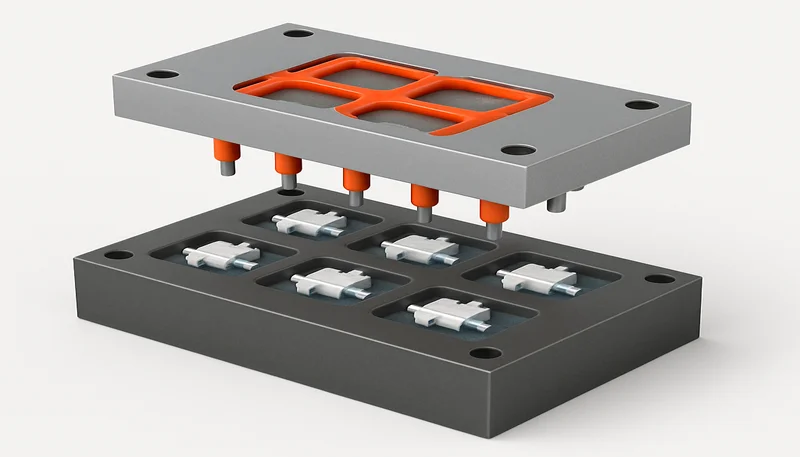
De Rolls Royce onder aanspuitsystemen. Hotrunnersystemen met naaldafsluiters elimineren handmatig ontbramen volledig door de kunststofstroom met verwarmde sondes te regelen. De initiële matrijskosten liggen 40-60% hoger dan bij koudlopers, maar alle arbeid voor ontbramen en materiaalafval van runners vervalt. Het omslagpunt ligt doorgaans bij 100,000-500,000 onderdelen, afhankelijk van grootte en complexiteit. Onderhoud is cruciaal – reken jaarlijks op $5,000-15,000 voor vervanging van verwarmingselementen en onderhoud aan regelaars.
Laser- en ultrasoon snijden
Nieuwe technologieën voor nauwkeurig verwijderen van aanspuitingen. Lasersnijden levert uitzonderlijk schone sneden met minimale warmtebeïnvloede zones en is ideaal voor medische en optische onderdelen. De apparatuur kost $200,000-500,000, waardoor toepassing beperkt blijft tot hoogwaardige onderdelen. Ultrasoon snijden werkt goed voor dunne aanspuitingen in flexibele materialen en heeft lagere apparatuurkosten ($50,000-150,000), maar ook lagere verwerkingssnelheden. Beide technieken ontwikkelen nog hun niche binnen het spuitgieten.
| Methode | Arbeidskosten | Uitrusting Kosten | Totale kosten | Break-evenvolume |
|---|---|---|---|---|
| Handmatige kniptangen | $25-45 | $0.05 | $25.05-45.05 | 0-10K onderdelen/jaar |
| Pneumatische snijgereedschappen | $15-25 | $0.50 | $15.50-25.50 | 10K-50K onderdelen/jaar |
| Robotgestuurd ontbramen | $5-10 | $2-5 | $7-15 | 50K+ onderdelen/jaar |
| Tunnel-aanspuitingen | $0 | $0.20 | $0.20 | 25K+ onderdelen/jaar |
Welke invloed heeft het aanspuitontwerp op de verwijderbaarheid?
De verwijderingsmoeilijkheid wordt bepaald door vier factoren: aanspuitoppervlak, locatie, materiaalkrimp en wanddikteovergangen rond de aanspuitzone.
Aanspuitgrootte versus kwaliteit van het aanspuitrestant
Er bestaat een omgekeerd verband tussen poortgrootte en kwaliteit van het poortrestant: grotere poorten zijn eenvoudiger zuiver af te snijden, maar laten grotere restanten achter. Voor randpoorten ligt het optimum voor de meeste toepassingen bij 0.5-1.0mm dik. Dunnere poorten (0.3mm) geven minimale restanten maar scheuren bij verwijderen, vooral bij taaie materialen. Dikkere poorten (1.5mm+) snijden zuiver maar laten duidelijke restanten achter die nabewerking vereisen. Ook het materiaal telt: zachte materialen zoals PE verdragen dunnere poorten, terwijl stijve materialen zoals PC voldoende dikte nodig hebben om spanningsscheuren bij verwijderen te voorkomen.
Strategie voor poortlocatie
Aanspuitplaatsing is schaken, geen dammen. Plaats aanspuitingen waar resten functie of uiterlijk niet beïnvloeden — in binnenhoeken, op contactloze vlakken of zones die worden gemonteerd of gelakt. Vermijd zwaar belaste gebieden waar resten spanningsconcentraties veroorzaken. Plaats ze bij cosmetische onderdelen op vlakken die na montage onzichtbaar zijn. Ik heb mooie onderdelen zien mislukken door aanspuitingen op A-oppervlakken, alleen omdat de matrijsontwerper niet aan de eindtoepassing dacht.
Effecten van materiaalkrimp
Verschillende materialen krimpen rond aanspuitpunten in verschillende mate, wat het uiterlijk van de aanspuitrest en de verwijderbaarheid beïnvloedt. Semikristallijne materialen zoals PP en POM veroorzaken door hun hoge krimp (1.5-2.5%) inval rond dikke aanspuitpunten. Amorfe materialen zoals ABS en PC hebben een lagere krimp (0.4-0.8%) en produceren gelijkmatigere aanspuitresten. Glasvezelversterkte materialen vereisen bijzondere aandacht: de vezels veroorzaken abrasieve slijtage aan snijgereedschappen en kunnen bij onjuist snijden ruwe restoppervlakken veroorzaken.
Overgangen in wanddikte
Abrupte dikteovergangen bij aanspuitingen veroorzaken problemen bij het verwijderen en leiden tot onderdeeldefecten. De overgang van de aanspuiting naar de onderdeelwand moet geleidelijk verlopen – waar mogelijk gebruik ik verjongingen van 3:1 of 4:1. Abrupte overgangen veroorzaken spanningsconcentraties waardoor onderdelen tijdens het verwijderen van de aanspuiting kunnen barsten, vooral bij brosse materialen of lage temperaturen. De aanspuiting moet uitkomen in het dikste deel van de lokale zone om drukverlies en de kans op inval te beperken.
Wanneer moet u kiezen voor zelfafbrekende aanspuitontwerpen?
Zelflossende aanspuitingen zijn ideaal bij spuitgieten: onderdelen scheiden automatisch van de runners zonder handwerk. Ze hebben echter afwegingen die u vóór toepassing moet begrijpen.
Tunnel-aanspuitpunten die automatisch scheiden
Tunnelpoorten werken door een gecontroleerd breekpunt te creëren dat afschuift wanneer het onderdeel wordt uitgeworpen. De belangrijkste parameters zijn de tunnellengte (2-3x de poortdiameter), de breekhoek (doorgaans 15-30 graden) en de materiaalkeuze. Brosse materialen zoals PS en SAN werken uitstekend, terwijl taaie materialen zoals PC en POM lastiger kunnen zijn. Ik heb zeer goede resultaten behaald met tunnelpoorten bij elektronicabehuizingen, speelgoed en consumentenproducten waarbij de cyclustijd belangrijker is dan een perfect uiterlijk van het poortrestant. Door de complexe geometrie is de tooling 15-25% duurder, maar alle arbeid voor het verwijderen van de aanspuiting vervalt.
Hotrunnerklepaanspuitingen
Klep-aanspuitpunten gebruiken verwarmde pennen om de kunststofstroom te regelen en elimineren aanspuitkanalen volledig. Elk aanspuitpunt wordt afzonderlijk geregeld, waardoor sequentieel vullen mogelijk is voor complexe onderdelen of familiematrijzen. De technologie is volwassen en betrouwbaar bij goed onderhoud, maar de initiële investering is aanzienlijk – $5,000-15,000 per aanspuitpunt, afhankelijk van grootte en complexiteit. Klep-aanspuitpunten zijn zinvol voor productie in grote volumes (jaarlijks 100,000+ onderdelen) of wanneer de materiaalkosten van aanspuitkanalen aanzienlijk zijn. De onderhoudsvereisten zijn reëel – reken op driemaandelijkse controles van verwarmingselementen en jaarlijkse kalibratie van de regelaar.
Thermische aanspuitsystemen
Thermische aanspuitingen gebruiken temperatuurverschillen om gecontroleerde scheidingspunten te creëren. Het concept is elegant: verwarm na het vullen een gedeelte van de runner, zodat thermische uitzetting de verbinding verbreekt. De praktijk is complexer en vereist nauwkeurige temperatuurregeling en timing. Ik heb succesvolle toepassingen gezien in verpakkingen en medische hulpmiddelen, maar de technologie ontwikkelt zich nog. De apparatuurkosten zijn gematigd ($25,000-75,000), maar de procesontwikkeling kan veel tijd vergen.
Investeringsonderbouwing
De berekening voor zelfontsnijdende systemen is eenvoudig maar wordt vaak genegeerd. Bereken de huidige arbeidskosten voor het verwijderen van aanspuitingen per onderdeel, vermenigvuldig die met het jaarvolume en vergelijk dit met de extra gereedschapsinvestering. Neem kwaliteitsverbetering, kortere cyclustijd en vervallen runnerkosten mee. Voor de meeste toepassingen ligt het break-evenpunt bij 25,000-100,000 onderdelen, afhankelijk van arbeidskosten en onderdeelcomplexiteit. Vergeet de onderhoudskosten niet – zelfontsnijdende systemen vereisen geavanceerder gereedschap en regelmatig onderhoud.
Welke kwaliteitscontroles zijn nodig na het verwijderen van het aanspuitrestant?
De vier essentiële controles na het verwijderen zijn visuele inspectie, maatcontrole, meting van de oppervlakteruwheid en controle op spanningsmarkeringen.
Normen voor visuele inspectie
Stel duidelijke visuele normen op voor een aanvaardbaar aanspuitrestant. Documenteer met foto’s van aanvaardbare, marginale en afkeurcondities. Train operators in het herkennen van spanningsverbleking, onvolledige sneden en oppervlakteschade. Gebruik consistente verlichting – 500-1000 lux bij een kleurtemperatuur van 6500K maakt defecten zichtbaar die bij standaard fabrieksverlichting gemist kunnen worden. Inspecteer cosmetische onderdelen onder omstandigheden die overeenkomen met het uiteindelijke gebruik – automobielonderdelen onder voertuigverlichting en consumentenelektronica onder normale woningverlichting.
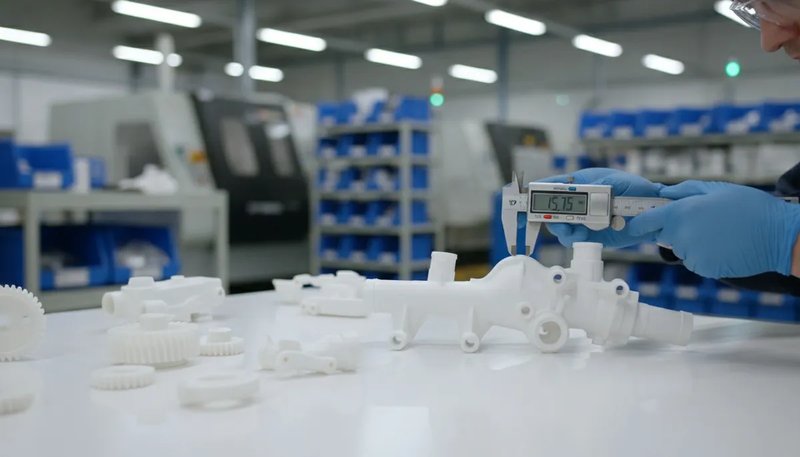
Maatverificatie
Het verwijderen van het aanspuitpunt kan door spanningsontlasting of materiaalverwijdering de afmetingen van het onderdeel beïnvloeden. Controleer kritieke afmetingen binnen 0.1mm van aanspuitpuntlocaties met gekalibreerde meetapparatuur. Bij dunwandige onderdelen kan de spanning door het afsnijden van het aanspuitpunt onmiddellijke maatveranderingen of kromtrekken op langere termijn veroorzaken. Stel de maatvastheid vast door onderdelen onmiddellijk na het verwijderen van het aanspuitpunt en vervolgens nogmaals na 24-48 uur te meten. Onderdelen die meer dan 0.05mm veranderen, wijzen op overmatige verwijderingsspanning of een slecht aanspuitpuntontwerp.
Vereisten voor oppervlaktefinish
De oppervlakteafwerking van het aanspuitrestant beïnvloedt zowel uiterlijk als functie. Ruwe restanten veroorzaken spanningsconcentraties en voortijdige breukpunten. Gebruik oppervlakteruwheidsmeters om kwantitatieve normen vast te leggen – doorgaans Ra 1.6-6.3 μm voor functionele oppervlakken en Ra 0.4-1.6 μm voor cosmetische oppervlakken. Schuur of bewerk ruwe restanten tot de specificatie in plaats van marginale kwaliteit te accepteren. De arbeidskosten voor correcte afwerking zijn meestal lager dan de kosten van storingen in het veld of klachten van klanten.
Detectie van veelvoorkomende defecten
Train inspecteurs in het herkennen van spanningsverkleuring (duidt op overbelasting tijdens het knippen), inval (materiaalkrimp rond dikke aanspuitingen), kleurvariatie (thermische schade door bot snijgereedschap) en onvolledige scheiding (gedeeltelijke sneden die spanningsconcentraties veroorzaken). Gebruik vergroting bij kleine aanspuitingen; 2-4x is doorgaans voldoende om de snijkwaliteit te beoordelen. Keur onderdelen af bij spanningsverkleuring in zichtvlakken of spanningsconcentraties in functionele zones. Deze gebreken verbeteren niet met de tijd, maar verergeren.
"Hete-kanaalsystemen maken alle bewerkingen voor het verwijderen van aanspuitingen overbodig"True
Goed functionerende hotrunner-naaldafsluitsystemen elimineren fysieke aanspuitingen volledig, waardoor geen ontbraambewerkingen nodig zijn. De kunststofstroom wordt geregeld door verwarmde pennen die bij het sluiten schoon afdichten.
"Tunnel-aanspuitingen geven altijd een betere oppervlakteafwerking dan randaanspuitingen"False
Hoewel onderzeese aanspuitingen een uitstekende restmarkering kunnen opleveren, hangt de oppervlakteafwerking af van de juiste tunnelgeometrie, materiaalkeuze en procesparameters. Slecht ontworpen onderzeese aanspuitingen kunnen onregelmatig afscheuren en ruwere restmarkeringen achterlaten dan goed afgesneden zijaanspuitingen.
Inzicht in het verband tussen het ontwerp van het aanspuitpunt en de efficiëntie van de verwijdering helpt engineers om vroeg in de productontwikkelingscyclus betere beslissingen te nemen. In de praktijk bepalen de succesvolste spuitgietprojecten de strategie voor het verwijderen van de aanspuiting tijdens de eerste DFM-beoordeling (Design for Manufacturing), ruim voordat het matrijsstaal wordt bewerkt. Deze proactieve aanpak voorkomt kostbare matrijswijzigingen en productievertragingen die vaak ontstaan wanneer het verwijderen van de aanspuiting als bijzaak wordt behandeld in plaats van als ontwerpeis.
"De methode voor het verwijderen van de aanspuiting moet tijdens de matrijsontwerpfase worden bepaald"True
Het aanspuitontwerp beïnvloedt rechtstreeks de verwijderingsmoeilijkheid, de grootte van het aanspuitrestje en de proceseconomie. Pas na voltooiing van het gereedschap over de verwijderingsmethode beslissen, leidt vaak tot suboptimale resultaten en hogere productiekosten.
"Grotere aanspuitingen zijn altijd gemakkelijker schoon te verwijderen"False
Hoewel grotere aanspuitingen meer materiaal bieden om tijdens het snijden vast te grijpen, vereisen ze ook meer snijkracht en laten ze grotere restanten achter. Zeer grote aanspuitingen kunnen tijdens het verwijderen spanningsconcentraties en scheuren veroorzaken, vooral bij brosse materialen.
Veelgestelde vragen
Veelgestelde vragen
Wat is een aanspuitrest bij spuitgieten?
Een aanspuitrestant is het kleine materiaalstompje dat op een gegoten onderdeel achterblijft nadat de aanspuiting is verwijderd. Zie het als de ‘navel’ waar het onderdeel met het aanspuitkanaalsysteem verbonden was. De grootte van het restant hangt af van het type aanspuiting en de verwijderingsmethode – tunnel-aanspuitingen laten minimale restanten achter (0.05-0.2mm), terwijl directe aanspuitingen aanzienlijke verhogingen kunnen achterlaten (2-6mm). De kwaliteit van het restant beïnvloedt zowel het uiterlijk als de structurele integriteit van het onderdeel, dus een juiste verwijderingstechniek is cruciaal om aan de onderdeelspecificaties te blijven voldoen.
Kunt u spuitgietpoorten zonder speciaal gereedschap verwijderen?
Voor kleine aanspuitingen en lage volumes kunnen eenvoudige gereedschappen zoals scherpe messen of standaardkniptangen volstaan, maar de resultaten zijn inconsistent en arbeidsintensief. Randaanspuitingen tot 1mm dik kunnen met een goede zijkniptang worden afgeknipt, hoewel speciale aanspuitknippers een schoner resultaat geven. Bij productievolumes van meer dan enkele honderden onderdelen maken de arbeidskosten en kwaliteitsproblemen goed ontbraamgereedschap echter essentieel. Geld besparen op gereedschap kost doorgaans meer aan arbeidstijd en afgekeurde onderdelen dan vanaf het begin in geschikte apparatuur investeren.
Beïnvloedt inloopverwijdering de dimensionale nauwkeurigheid van het onderdeel?
Ja, inloopverwijdering kan de dimensionale nauwkeurigheid beïnvloeden als het verkeerd wordt gedaan. Te dicht bij het onderdeeloppervlak snijden kan materiaal van de wand verwijderen, waardoor een te klein gebied ontstaat dat buiten de tolerantie valt. Omgekeerd voegt te veel inloopoverblijfsel ongewenst materiaal toe dat de montagepast interfereert. De sleutel is het beheersen van de snijdiepte — typisch binnen ±0,1 mm van het onderdeeloppervlak. Voor onderdelen met strakke toleranties zijn dimensionale controles na verwijdering op de inloopplaats essentieel om te verifiëren dat het onderdeel nog steeds voldoet aan de tekenspecificaties en functionele eisen.
Wat is het beste inlooptype voor automatische verwijdering?
Onderzeese (tunnel-)aanspuitingen zijn ideaal voor automatische verwijdering omdat ze zo zijn ontworpen dat ze tijdens het uitwerpen van het onderdeel afschuiven zonder extra bewerkingen. De aanspuiting loopt onder de scheidingslijn door en breekt bij een vooraf bepaald zwak punt, waardoor een minimale rest achterblijft (doorgaans 0.05-0.2mm). Succes hangt af van een juiste tunnelgeometrie – de lengte moet 2-3 keer de aanspuitdiameter zijn, met passende breekhoeken. Ook de materiaalkeuze is belangrijk; brosse materialen zoals PS werken beter dan taaie materialen zoals PC. Bij hotrunnersystemen maken naaldafsluiters verwijdering volledig overbodig door de stroming met verwarmde sondes te regelen.
Hoeveel kost geautomatiseerde inloopverwijderingsapparatuur?
Geautomatiseerde inloopverwijderingsapparatuur varieert sterk in kosten, afhankelijk van complexiteit en doorvoereisen. Een eenvoudig pneumatisch knipstation kost ongeveer 2.000 tot 5.000 USD voor kleinschalige operaties. Robotontgatencellen beginnen rond 50.000 USD en kunnen meer dan 200.000 USD bedragen voor meerassige systemen met geïntegreerde visuele geleiding. Lasersnijsystemen vallen in het bereik van 80.000 tot 150.000 USD. De ROI hangt af van arbeidsbesparingen, afvalreductie en doorvoerverbetering, waarbij de meeste systemen zich binnen 12 tot 24 maanden terugverdienen bij productievolumes boven de 100.000 onderdelen per jaar.
Zijn er inloopontwerpen die verwijdering overbodig maken?
Ja, verschillende inloopontwerpen maken handmatige verwijdering overbodig. Warmloper klepinlopen regelen de kunststofstroom met verwarmde probes, die schoon afsluiten zonder fysieke inloop om te verwijderen. Onderwaterinlopen (submarine gates) breken automatisch af tijdens het uitwerpen wanneer ze goed zijn ontworpen. Sommige thermische inloopsystemen gebruiken gecontroleerde verwarming om de loperverbinding te verbreken. Deze systemen vereisen echter een hogere initiële gereedschapsinvestering (15-60% meer) en kunnen voortdurend onderhoud nodig hebben. De beslissing hangt af van productievolume, arbeidskosten en kwaliteitseisen. Voor grootschalige productie rechtvaardigt het elimineren van ontgatenoperaties meestal de extra gereedschapskosten.
Wat veroorzaakt witte spanningsmarkeringen nabij inloopverwijderingsgebieden?
Witte spanningsplekken (spanningsverbleking) ontstaan wanneer snijkrachten de vloeigrens van het materiaal overschrijden, waardoor molecuulketens zich uitlijnen en de lichtverstrooiing verandert. Veelvoorkomende oorzaken zijn bot snijgereedschap dat plet in plaats van snijdt, een te grote snijkracht, onjuiste snijhoeken of het snijden van bevroren onderdelen onder hun glasovergangstemperatuur. Brossere materialen zoals PS en hard PVC zijn bijzonder gevoelig. Preventie omvat scherp gereedschap, een juiste snijtechniek, onderdelen vóór het snijden op kamertemperatuur brengen en aanspuitpunten met de juiste dikte ontwerpen voor schoon snijden. Spanningsverbleking is blijvend en vereist in zichtbare gebieden meestal afkeur van het onderdeel.
Het verwijderen van de aanspuiting lijkt misschien een eenvoudige nabewerking, maar juist daar worden goede onderdelen uitstekend – of raken uitstekende onderdelen beschadigd. Het is cruciaal om al tijdens het matrijsontwerp na te denken over het verwijderen van de aanspuiting, niet pas nadat de productie is gestart. Kies het juiste aanspuittype voor uw productievolume en kwaliteitseisen, investeer in geschikt gereedschap en opleiding en leg duidelijke kwaliteitsnormen vast. Bedenk dat de goedkoopste methode om aanspuitingen te verwijderen niet altijd de voordeligste is als u arbeidstijd, kwaliteitsproblemen en klanttevredenheid meerekent.
Klaar om uw inloopverwijderingsproces te optimaliseren? Bij ZetarMold helpen we u vanaf dag één met het ontwerpen van matrijzen met het oog op ontgaten. Ons technisch team kan uw huidige processen evalueren en verbeteringen aanbevelen die tijd besparen, kosten verlagen en de kwaliteit verbeteren. Neem contact met ons op om te bespreken hoe een goed inloopontwerp en verwijderingsstrategie uw productie-efficiëntie kunnen verbeteren.
spanning: Spanningswit worden is een zichtbare aanwijzing voor microkristallijne schade in polymeeronderdelen, gemeten in MPa aan resterende interne spanning nabij aanspuitzones. ↩
oppervlakteafwerking: Oppervlakteruwheid wordt gedefinieerd als de afwijkingen in de richting van de normaalvector van een gemeten oppervlak ten opzichte van zijn ideale vorm, gemeten in micrometers (Ra-waarden). ↩
robotgestuurd: Robotgestuurd verwijderen van aanspuitingen gebruikt programmeerbare meerassige armen om spuitgietonderdelen met herhaalbare precisie van runners en aanspuitingen te scheiden. ↩
hotrunner: Een hotrunnersysteem is een samenstel van verwarmde componenten in spuitgietmatrijzen dat gesmolten kunststof naar de matrijsholten voert en het polymeer vloeibaar houdt. ↩