U hebt zojuist een offerte ontvangen voor schoenzolen van EVA-schuim: 50.000 paar, geleverd binnen zes weken. De gereedschapskosten lijken redelijk, maar uw spuitgieterij wijst de opdracht steeds af omdat ‘EVA lastig is’. Dat klopt. EVA (ethyleenvinylacetaat1) heeft bij het spuitgieten een smaller verwerkingsvenster dan de meeste thermoplasten, en het expansiegedrag van het schuim verrast veel mensen. Dit artikel behandelt wat echt belangrijk is: temperaturen, krimp, valkuilen bij het matrijsontwerp en manieren om de drie defecten te voorkomen die EVA-onderdelen het vaakst afkeuren.
- EVA wordt verwerkt bij 160–220 °C; boven 250 °C treedt ontleding op
- De krimp bedraagt 1.0–2.0% — tweemaal zoveel als bij PP of PE
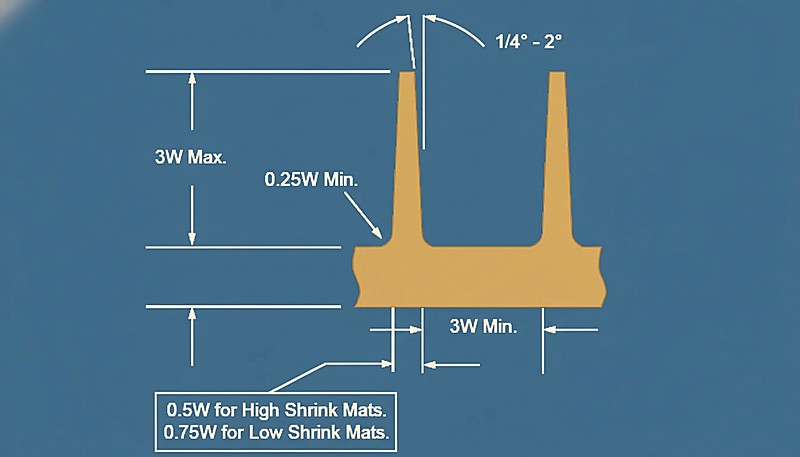
- De wanddikte moet tussen 1.5 mm en 4.0 mm blijven
- Matrijstemperatuur 20–40 °C; voorkeur voor koudkanalen
- VA-gehalte (8–28%) bepaalt flexibiliteit en schuimdichtheid
Wat is EVA-spuitgieten en wanneer moet u het gebruiken?
Wat EVA-spuitgieten is en wanneer u het moet gebruiken, wordt bepaald door de functie, beperkingen en afwegingen die in dit gedeelte worden toegelicht. EVA-spuitgieten is het vormen van ethyleenvinylacetaatcopolymeer, een opschuimbare thermoplast, met conventionele spuitgietapparatuur. Het VA-gehalte (vinylacetaat) ligt doorgaans tussen 8% en 28% en is de belangrijkste variabele: een laag VA-gehalte (8–14%) geeft een stijf, PE-achtig materiaal; een hoog VA-gehalte (18–28%) geeft een zacht, rubberachtig schuim.
In de praktijk is EVA het aangewezen materiaal als u lichte demping met een goede schokabsorptie nodig hebt. Denk aan tussenzolen, sportbescherming, helmvoeringen, yogamatten en beschermende verpakkingen. Het is niet de juiste keuze als u structurele stijfheid, chemische bestendigheid of nauwe maattoleranties nodig hebt; kijk daarvoor naar toepassingen van spuitgietmatrijzen met PC, PA of POM.
Het belangrijkste verschil tussen EVA en standaardthermoplasten: EVA zet tijdens het koelen uit. Die schuimexpansie zorgt voor de demping en lage dichtheid (0,15–0,40 g/cm³ voor schuimkwaliteiten), maar betekent ook dat de krimp minder voorspelbaar is en de onderdeelafmetingen sterker verschuiven dan bij een standaardpolymeer verwacht wordt.
"Standaardspuitgietmachines kunnen EVA zonder aanpassingen verwerken."True
Waar. Een universele schroef (20:1 L/D ratio) en standaardcilinder werken prima. De enige aanbevolen toevoeging is een gesloten-lusmondstuk om nadruppelen te voorkomen, omdat de lage smeltviscositeit van EVA ervoor zorgt dat materiaal tijdens de nadruk- en koelfasen uit open mondstukken lekt.
"EVA is slechts een soort polyethyleen en wordt precies hetzelfde verwerkt als PE."False
Onjuist. Hoewel EVA een copolymeer van ethyleen en vinylacetaat is, verandert het VA-gehalte het gedrag fundamenteel. EVA-schuim zet uit tijdens het koelen, krimpt 2–4× meer dan PE en ontleedt bij een lagere temperatuur (250 °C versus 300+ °C voor PE). EVA met PE-instellingen verwerken veroorzaakt braamvorming, brandplekken en dimensionale afkeur.
Welke verwerkingsparameters beheersen EVA tijdens de spuitgietstappen?
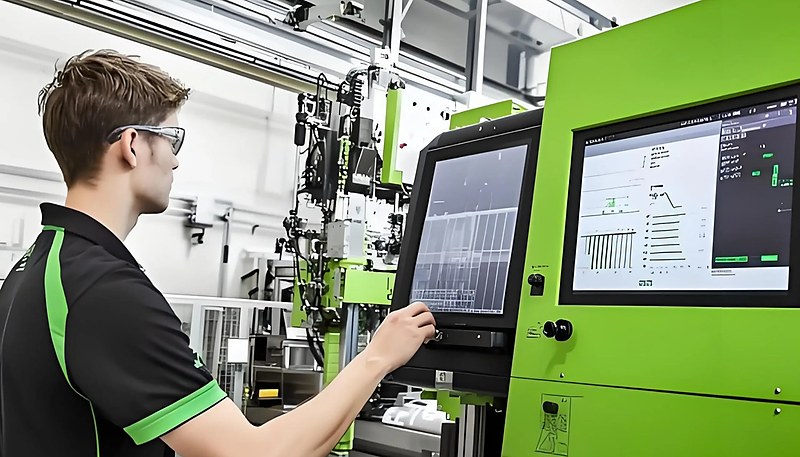
Dit gedeelte behandelt de beheersing van EVA-verwerkingsparameters tijdens de stappen van het spuitgieten en de invloed daarvan op kosten, kwaliteit, doorlooptijd en inkooprisico. EVA doorloopt dezelfde spuitgietstappen als andere thermoplasten, maar het temperatuurvenster is smaller omdat EVA kan opschuimen, nadruppelen of degraderen als warmte en verblijftijd niet worden beheerst. Begin met de cilindertemperatuur, matrijstemperatuur, injectiesnelheid, nadruk en koeltijd en pas tijdens de proef telkens één variabele aan.
| Parameterwaarde | Bereik | Opmerkingen |
|---|---|---|
| Smelttemperatuur | 160–220 °C | Boven 250 °C = ontleding (geur van azijnzuur) |
| Schimmeltemperatuur | 20–40 °C | Koel watercircuits; hogere temperaturen verergeren de krimp |
| Injectiedruk | 40–80 MPa | Lager dan bij stijve kunststoffen; te hoge druk comprimeert het schuim |
| Injectiesnelheid | Gemiddeld tot langzaam | Snelle vulling sluit lucht in en veroorzaakt brandplekken |
| Houddruk | 20–40 MPa | Korte nadruktijd (2–5 s); schuimexpansie doet de rest |
| Droogtemperatuur | 60–70 °C | 2–4 uur; EVA neemt minder vocht op dan nylon, maar moet nog steeds worden gedroogd |
| Krimp | 1.0–2.0% | Hoger VA-gehalte = hogere krimp |
De grootste fout die wij zien: EVA verwerken bij dezelfde temperaturen als PE of PP. Het thermische venster van EVA is smaller. Ruikt u tijdens het spuitgieten azijn (azijnzuur), dan is de ontleding al begonnen — verlaag de cilindertemperatuur met 15–20 °C en spoel de cilinder.
Een ander veelvoorkomend punt van verwaarlozing is de nadruk en nadruktijd. Onderdelen van EVA-schuim vereisen zeer korte nadruktijden — maximaal 2 tot 5 seconden. De uitzetting van het schuim vult de vormholte van binnenuit. Als u te lang nadruk aanhoudt, perst u de schuimstructuur samen en ontstaan dichte, zware plekken die juist zacht en licht moeten zijn.
Hoe beïnvloedt het VA-gehalte de eigenschappen van EVA-materiaal?
Het VA-percentage regelt alles — hardheid, flexibiliteit, transparantie, schuimdichtheid en chemische bestendigheid. Zo werkt dit in de praktijk:
| VA-inhoud | Shore-hardheid | Kenmerken | Typische toepassingen |
|---|---|---|---|
| 8–14% | Shore D-hardheid 40–55 | Stijf, PE-achtig, goede helderheid | Starre verpakkingen, buizen, interieurbekleding voor auto's |
| 15–18% | Shore A-hardheid 80–95 | Flexibel maar veerkrachtig | Draadmantels, knijpspeelgoed, handgrepen |
| 19–28% | Hardheid Shore A 30–70 | Zacht, rubberachtig, uitstekend schuimvormend vermogen | Schoenzolen, sportvulling, yogamatten, helmvoeringen |
Voor spuitgegoten schuimonderdelen, wat de meeste mensen met ‘EVA-vormen’ bedoelen, gebruikt u vrijwel altijd een VA-gehalte van 18–28%. Het materiaal wordt gemengd met een chemisch blaasmiddel, doorgaans azodicarbonamide2 of natriumbicarbonaat, dat bij een specifieke temperatuur wordt geactiveerd, gas vrijgeeft en het onderdeel tijdens het afkoelen laat uitzetten.
Praktische tip: bij wisselende onderdeelgewichten is de verdeling van het blaasmiddel de eerste verdachte. Vraag uw materiaalleverancier om een masterbatch met vooraf gedispergeerd blaasmiddel in plaats van het op de machine te mengen. De betere consistentie rechtvaardigt de 10–15% hogere materiaalkosten.
"Een hoger VA-gehalte in EVA resulteert in zachter, flexibeler materiaal met betere schuimeigenschappen."True
Juist. Naarmate het VA-gehalte stijgt van 8% naar 28%, verandert het materiaal van stijf en PE-achtig in zacht en rubberachtig. Een hoger VA-gehalte maakt ook meer schuimexpansie mogelijk, waardoor onderdelen met een lagere dichtheid en betere dempingseigenschappen ontstaan.
"Je kunt gewoon meer blaasmiddel aan elke EVA-kwaliteit toevoegen om beter schuim te krijgen."False
Onjuist. De dosering van het blaasmiddel moet worden afgestemd op het VA-gehalte en de gewenste schuimdichtheid. Te veel blaasmiddel veroorzaakt grote, onregelmatige cellen die de onderdeelstructuur verzwakken en blaarvorming aan het oppervlak kunnen veroorzaken. Het middel heeft bovendien een houdbaarheid van 6–12 maanden; vervallen materiaal wordt ongeacht de hoeveelheid niet correct geactiveerd.
Wat zijn de veelvoorkomende defecten bij EVA-spuitgieten?
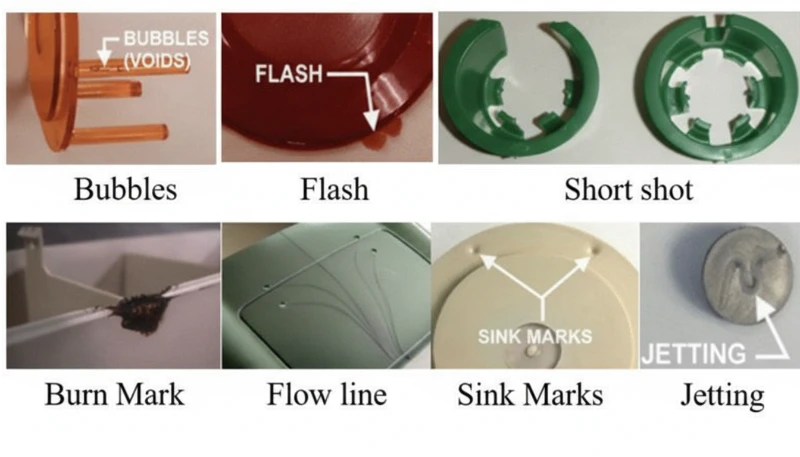
EVA kent drie terugkerende defecten die naar schatting 80% uitmaken van de kwaliteitsproblemen die we op de productievloer hebben gezien:
1. Inval en oppervlaktedeuken. Omdat EVA-schuim tijdens het koelen uitzet, blijven dikke secties materiaal naar buiten drukken terwijl aangrenzende dunnere secties al zijn gestold. Het resultaat is zichtbare deukvorming op het zichtvlak. Oplossing: houd de wanddikte zo gelijkmatig mogelijk en streef naar een verhouding van 2:1 (maximum) tussen de dikste en dunste secties.
2. Onvolledige vulling (short shots) bij schuimdelen. De schuimexpansie helpt de matrijs na te vullen, maar bij een te lage smelttemperatuur of te lage injectiesnelheid bevriest de materiaalhuid voordat de holte vol is. Oplossing: verhoog de smelttemperatuur met 5–10 °C, zet de injectiesnelheid één stand hoger en controleer of het blaasmiddel niet is verlopen (ja, blaasmiddelen hebben een houdbaarheid — doorgaans 6–12 maanden).
3. Brandplekken en verkleuring. Dit is thermische ontleding — de azijngeur verraadt het probleem. EVA begint boven 250 °C af te breken en ontleed materiaal veroorzaakt donkere strepen of bruine brandplekken. Oplossing: verlaag de cilindertemperatuur, verlaag de schroefsnelheid (minder afschuifwarmte) en controleer of de spuitmond niet warmer is dan de cilinderzones.
Nog een punt: door de lage viscositeit van EVA bij verwerkingstemperatuur vormt braamvorming een reëel risico, vooral op de deelnaad. Bij versleten inzetstukken of ontoereikende afsluitvlakken ontstaan al bramen bij drukken die voor PP of ABS geen probleem zouden zijn. Houd bij matrijzen voor EVA rekening met nauwere matrijstoleranties.
Hoe moet u matrijzen voor EVA-onderdelen ontwerpen?
Deze sectie behandelt matrijsontwerp voor EVA-onderdelen en de invloed daarvan op kosten, kwaliteit, planning en inkooprisico. Matrijsontwerp voor EVA verschilt van dat voor stijve thermoplasten. Schuimexpansie verandert de regels op drie kernpunten:
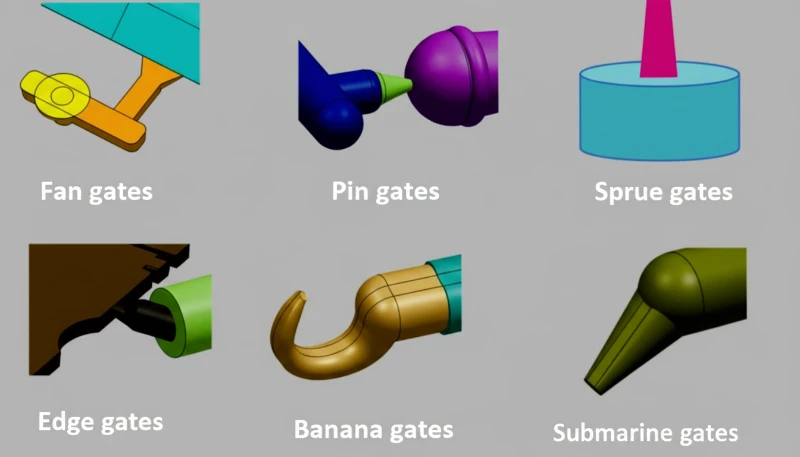
Aanspuitpuntontwerp: gebruik grotere aanspuitpunten dan voor stijve onderdelen van vergelijkbare grootte. Tabaanspuitpunten of waaiervormige aanspuitpunten met een dikte van 1.5–3.0 mm werken goed. Vermijd puntaanspuitpunten — door de lage viscositeit en schuimexpansie spuit het materiaal door een klein aanspuitpunt en ontstaan wervelsporen op het zichtoppervlak.
Wanddikte: streef naar 1.5–4.0 mm. Onder 1.5 mm kan de schuimexpansie zich niet goed ontwikkelen en ontstaan dichte, stijve zones. Boven 4.0 mm worden krimp en inval moeilijk beheersbaar. Heeft het onderdeel functionele dikke zones, zoals de hiel van een schoenzool, dan vermindert uithollen aan de achterzijde de effectieve dikte zonder het buitenprofiel te verliezen.
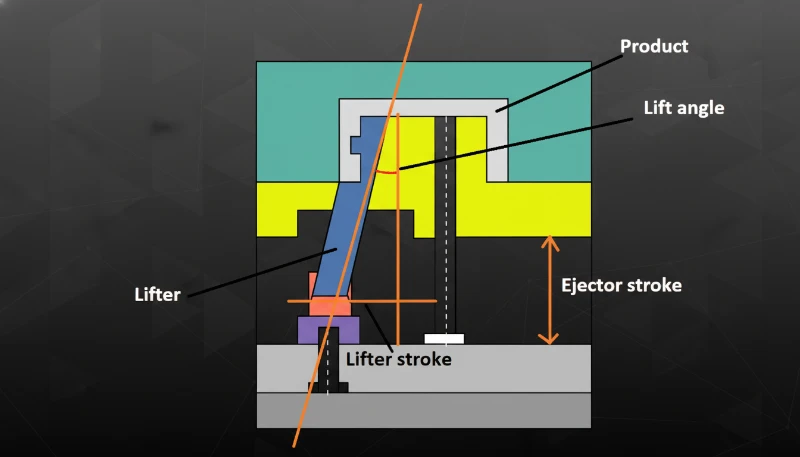
Lossingshoek en uitwerpen: de flexibiliteit van EVA helpt hierbij — het onderdeel wordt tijdens het uitwerpen samengedrukt en veert daarna terug. Schuimdelen blijven echter vaak vastzitten in diepe ribben. Hanteer per zijde een lossingshoek van minimaal 1.5° (2° is beter) en gebruik uitwerppennen met een ruime diameter. Kleine pennen drukken in een zacht schuimdeel gaten in plaats van het onderdeel uit de matrijs te duwen.
Koeling: EVA-onderdelen worden heet ontvormd — het schuim zet na openen nog enkele seconden uit. Ontwerp koelcircuits voor snelle oppervlaktekoeling en reken op cyclustijden van 30–60 seconden, afhankelijk van de wanddikte. Water van 15–25 °C werkt goed; verwarmde matrijzen bieden EVA geen voordeel.
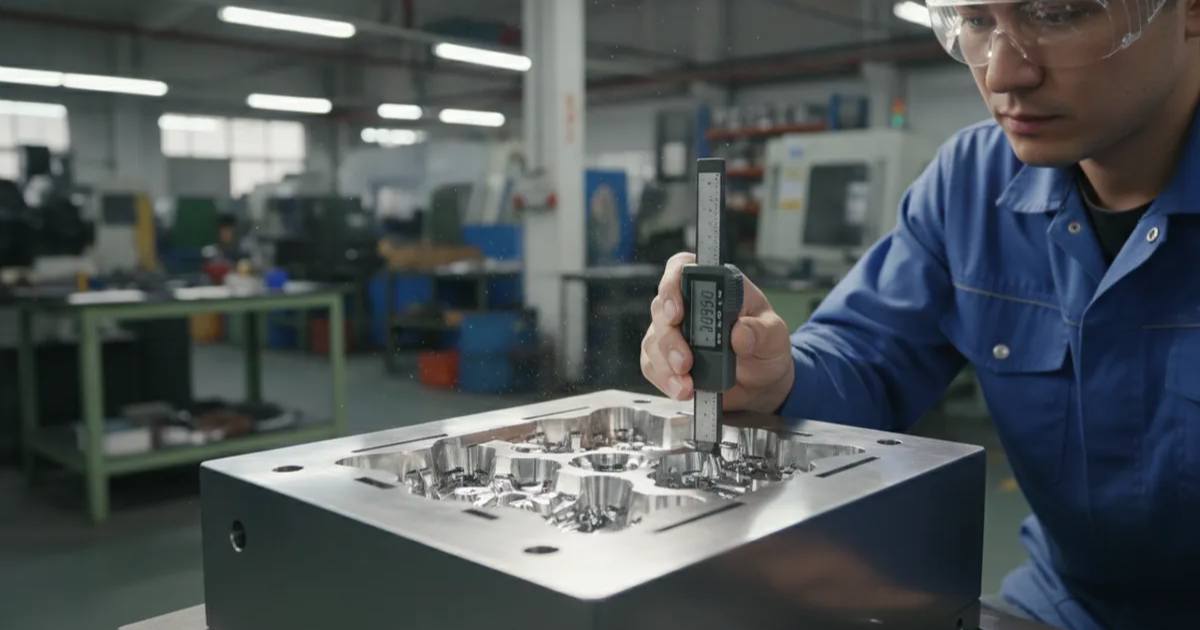
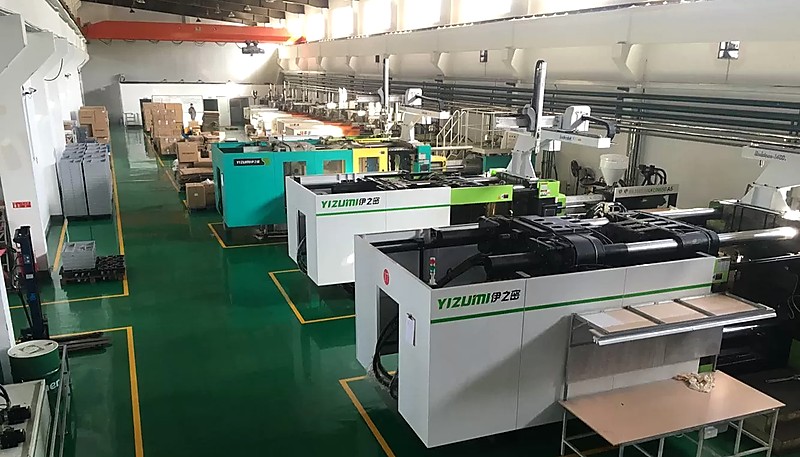
In onze fabriek in Shanghai werkt ons team met 47 spuitgietmachines van 90T tot 1850T. Voor EVA-onderdelen controleren onze engineers vóór de gereedschapsproductie het gedrag van de laagviskeuze smelt, de ontluchting, het uitwerpoppervlak en het krimprisico. Daarbij gebruiken zij ruim 20 jaar spuitgietervaring en een productieteam van meer dan 120 medewerkers om problemen bij proefproductie vóór serieproductie zichtbaar te maken.
"Onderdelen van EVA-schuim blijven enkele seconden uitzetten nadat de matrijs is geopend."True
Juist. Anders dan stijve thermoplasten die bij het ontvormen krimpen, blijven onderdelen van EVA-schuim uitzetten terwijl het resterende blaasmiddel uitreageert en ingesloten gascellen zich stabiliseren. Daarom zijn vaak koelopspanningen nodig om de maatnauwkeurigheid gedurende de eerste 2–5 minuten na uitwerpen te behouden.
"Aluminium matrijzen zijn nooit geschikt voor de productie van EVA-spuitgietonderdelen."False
Onjuist. Aluminium matrijzen zijn geschikt voor prototyping en EVA-productie in kleine tot middelgrote volumes (minder dan 100,000 shots). EVA is niet-abrasief en wordt bij relatief lage temperaturen verwerkt, waardoor aluminium matrijzen 50,000–100,000 shots kunnen meegaan. Voor productie in grote volumes is P20-staal de standaardkeuze.
Welke industrieën gebruiken EVA-spuitgieten het meest?
Dit gedeelte behandelt de sectoren die eva-spuitgieten het meest gebruiken en de gevolgen voor kosten, kwaliteit, planning of inkooprisico. Door de combinatie van laag gewicht, demping en vochtbestendigheid domineert EVA vier sectoren:
Schoeisel (grootste volume). Tussenzolen, inlegzolen en buitenzolen: EVA-schuim is wereldwijd het standaardmateriaal voor sportief en casual schoeisel. Het materiaal kan op kleur worden gebracht, van textuur worden voorzien en in één cyclus met twee dichtheden worden gevormd. Als u schoenmatrijzen inkoopt, wordt voor tussenzolen vaker EVA-compressievormen (CMEVA3) gebruikt dan spuitgieten, maar voor buitenzolen en kleinere onderdelen is spuitgieten dominant.
Sport- en beschermingsmiddelen. Helmvullingen, scheenbeschermers, kniebeschermers en gebitsbeschermers. EVA absorbeert botsingsenergie zonder volledig te worden samengedrukt en behoudt zijn eigenschappen over een breed temperatuurbereik (-40 °C tot +80 °C voor de meeste kwaliteiten).
Verpakking. Beschermende inzetstukken voor elektronica, medische hulpmiddelen en breekbare goederen. Inzetstukken van EVA-schuim kunnen exact in de productvorm worden gegoten en bieden bij vergelijkbare kosten voor middelgrote volumes (5,000–100,000 stuks) betere bescherming dan gesneden PE-schuim.
Speelgoed en consumentengoederen. Badspeelgoed, zwembandjes, knijpspeelgoed, grepen en handvatten. Door het niet-giftige karakter van EVA (kwaliteiten voor voedselcontact zijn beschikbaar) en de zachte aanraking is het geschikt voor kinderproducten, maar voor de doelmarkt moet de specifieke naleving van regelgeving (ASTM F963, EN 71) worden gecontroleerd.
Hoe verhouden de verwerkingskosten van EVA zich tot die van andere materialen?
De kosten van EVA omvatten niet alleen de harsprijs, maar ook de totale productietijd voor spuitgieten, het uitvalpercentage, de stabiliteit bij het ontvormen en de benodigde koelruimte na het vormen. Een goedkoop materiaal kan toch duur uitvallen als de schuimdichtheid varieert, onderdelen lang vlak moeten afkoelen of operators tijd kwijt zijn aan het sorteren van zachte onderdelen die na uitwerpen vervormen.
| Kostenfactor | EVA versus PP/PE | EVA versus TPU |
|---|---|---|
| Grondstof | +30–70% | -20–40% |
| Cyclustijd | 30–60s (langer door afkoeling van het schuim) | Vergelijkbaar |
| Matrijskosten | +10–20% (nauwere toleranties) | Vergelijkbaar |
| Uvalpercentage | 5–8% (hoger dan harde kunststoffen) | Vergelijkbaar |
| Nabewerking | Vaak nabewerking/ontflitsen nodig | Minder |
De conclusie: EVA is kosteneffectief wanneer je de specifieke combinatie nodig hebt van lichtgewicht demping + vormbaarheid + kleuropties. Als je je eisen met PP of PE kunt bereiken, zijn die goedkoper. Als je de flexibiliteit maar ook chemische bestendigheid nodig hebt, is TPU de upgrade-optie.
Wat zijn de beste praktijken voor EVA-spuitgietproductie?
De beste praktijken voor de productie van EVA-spuitgietdelen zijn de belangrijkste categorieën of opties die in dit gedeelte worden toegelicht. Na honderden productieorders met EVA-onderdelen te hebben uitgevoerd, zijn dit de factoren die op de werkvloer daadwerkelijk verschil maken:
Materiaalbehandeling: droog EVA vóór het vormen 2–4 uur bij 60–70 °C. Het neemt niet zoals nylon vocht op, maar oppervlaktevocht veroorzaakt zilverstrepen en inconsistente schuimexpansie. Bewaar afgesloten — blaasmiddelen degraderen bij blootstelling aan vocht.
Spoel grondig tussen materialen. EVA degradeert snel als het bij cilindertemperatuur stilstaat. Schakelt u van EVA naar een ander materiaal of omgekeerd, voer dan 3–5 shots met spoelcompound uit. Kruisbesmetting kan complete productieruns ruïneren — azijnzuur uit afgebroken EVA tast na verloop van tijd cilinder en schroef aan.
Controleer het onderdeelgewicht, niet alleen de afmetingen. Voor schuimonderdelen is gewicht je beste procesindicator. Stel een gewichtscontrolekaart (X-bar R) op en neem elke 50–100 shots een monster. Een ±3% gewichtsschommeling vertelt je dat er iets is veranderd — meestal cilindertemperatuur of blaasmiddelactiviteit — voordat je dimensionale problemen ziet.
Ontwerp voor ontvormen. Onderdelen van EVA-schuim zijn warm en zacht wanneer ze uit de matrijs komen. Ze vervormen als u ze direct stapelt. Laat ze 2–5 minuten aan de lucht afkoelen op een vlakke ondergrond of gebruik koelarmaturen voor onderdelen met kritieke afmetingen.
Ons team heeft ervaring met 400+ kunststofmaterialen, waaronder meerdere EVA-kwaliteiten gebruikt voor demping, verpakking, consumentengoederen en medisch-gerelateerde toepassingen. ZetarMold werkt onder ISO 9001, ISO 13485, ISO 14001 en ISO 45001 systemen, dus EVA-materiaalselectie, eerste-onderdeel inspectie, verpakkingscontroles en uitgaande inspectie kunnen worden gedocumenteerd voordat de massaproductie start.
Welke vragen stellen kopers over EVA-spuitgieten?
Veelgestelde vragen
Welke temperatuur wordt gebruikt voor EVA-spuitgieten?
EVA wordt meestal verwerkt bij een cilindertemperatuur van 160 tot 220 °C met een mal temperatuur rond 20 tot 40 °C. De exacte instelling hangt af van het VA-gehalte, schuimdichtheid, onderdeeldikte en of een chemisch blaasmiddel wordt gebruikt. De kritieke regel is oververhitting te vermijden. Boven ongeveer 250 °C kan EVA ontleden en zure bijproducten vrijgeven die geur, bruine vlekken en apparatuurcorrosie veroorzaken. Begin laag, bevestig de smeltstroomstabiliteit, pas dan de temperatuur in kleine stappen aan tijdens de proef en leg elke wijziging vast.
Kan EVA op standaardmachines worden gespoten?
Ja, EVA kan op standaard spuitgietmachines worden verwerkt, maar de opstelling vereist aandacht omdat de smelt zacht en laagviskeus is. Een geslotenlus mondstuk helpt druipen te voorkomen, en een universele schroef is meestal voldoende voor normale kwaliteiten. De mal moet ruime ventilatieopeningen, gladde stroombanen en voldoende uitwerpoppervlak hebben omdat EVA-schuim na uitzetting in de holte kan blijven kleven. Voor productie is de grotere uitdaging niet de machinecompatibiliteit; het is het beheersen van krimp, dichtheid en dimensionale herhaalbaarheid in elke batch.
Wat is het krimpingspercentage van EVA-spuitgietonderdelen?
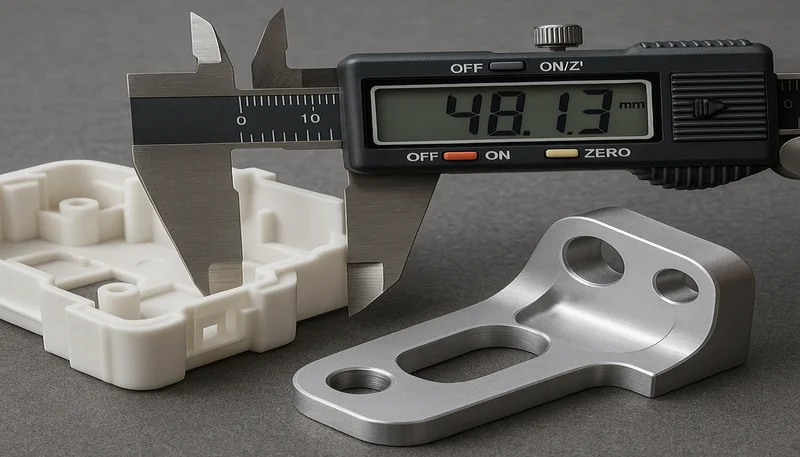
EVA-krimp ligt meestal tussen 1,0 procent en 2,0 procent, maar kan buiten dat bereik vallen wanneer schuimdichtheid, VA-gehalte, wanddikte of matrijs-temperatuur verandert. Hoger VA-gehalte en sterker schuimen vergroten over het algemeen de krimp. Daarom mag EVA-gereedschap niet alleen worden gesneden op basis van nominale CAD-afmetingen. Verwerk de verwachte krimp in het matrijsontwerp en controleer dit met eerste-artikelmonsters. Voor kritieke passingen, meet onderdelen na volledige afkoeling omdat EVA kan blijven ontspannen na uitwerping en opslag.
Is EVA-spuitgiet schuim recyclebaar?
EVA is een thermoplast, dus afval kan technisch gezien worden vermalen en opnieuw verwerkt. De beperking is dat geschuimd EVA niet terugkeert naar dezelfde structuur na de eerste vormcyclus omdat het blaasmiddel al heeft gereageerd. Vermalen materiaal leidt vaak tot dichtere, minder uniforme onderdelen, dus het is beter geschikt voor niet-cosmetische of niet-geschuimde toepassingen. Als gerecycled materiaal vereist is, test dan het exacte percentage vermalen materiaal vóór productie en let op veranderingen in dichtheid, oppervlaktekwaliteit, geur, krimp en veerkracht tijdens validatietesten.
Wat is het verschil tussen EVA-spuitgieten en persgieten?
Spuitgieten perst gesmolten EVA in een gesloten malholte, waardoor het beter is voor complexe geometrieën, meervoudige gereedschappen en hogere productievolumes. Persgieten (CMEVA) plaatst een vooraf afgewogen EVA-mengsel in een open mal en sluit deze onder hitte en druk — het is het standaardproces voor platte schoenzolen waar persen een uniformere schuimdichtheid over het hele onderdeel geeft. Spuitgieten is sneller per cyclus (30–60 seconden vs. 4–8 minuten voor persen) maar vereist complexer gereedschap. Voor de meeste schoenencomponenten bestaan beide methoden naast elkaar, afhankelijk van onderdeelgeometrie en productievolume-eisen.
Welke wanddikte wordt aanbevolen voor EVA-gevormde onderdelen?
Voor EVA-spuitgegoten schuim is een praktisch bereik voor wanddikte ongeveer 1,5 tot 4,0 mm. Dunne secties onder 1,5 mm kunnen mogelijk geen stabiele schuimexpansie toelaten, terwijl dikke secties boven 4,0 mm krimpzones, ongelijke dichtheid en lange koeltijd kunnen vertonen. Houd de wanddikte zo uniform mogelijk en vermijd abrupte overgangen. Als dikke demping vereist is, gebruik dan ribben, holle kenmerken of gecontroleerde schuimdichtheid in plaats van één massief blok te maken. Eerste-monsters moeten zowel afmetingen als veerkrachtgevoel bevestigen.
ethyleenvinylacetaat: Ethyleenvinylacetaat is een copolymeer van ethyleen en vinylacetaat, waarbij het VA-percentage de flexibiliteit, schuimdichtheid en slagvastheid bepaalt. ↩
azodicarbonamide: Azodicarbonamide is een chemisch blaasmiddel dat bij 200–220 °C ontleedt en stikstofgas afgeeft om in EVA en andere polymeren een schuimstructuur te vormen. ↩
CMEVA: Compressiegevormd EVA (CMEVA) is een productieproces waarbij een vooraf afgewogen EVA-compound in een verwarmde matrijs wordt geplaatst en samengeperst. Het wordt vaak gebruikt voor tussenzolen van schoenen. ↩