Spuitgieten is een cyclisch proces: elk onderdeel ontstaat uit een zich herhalende reeks van inspuiten, nadrukken, koelen en uitwerpen. De totale duur van één volledige cyclus is de cyclustijd1 en bepaalt rechtstreeks uw productiesnelheid en kosten per onderdeel. In onze fabriek in Shanghai hebben wij ruim 20 jaar besteed aan het optimaliseren van cyclustijden voor duizenden matrijzen. Deze gids legt de berekeningsmethode uit, zodat u de cyclustijd van uw eigen projecten kunt ramen, meten en optimaliseren.
- Cyclus tijd = injectie + pakken + koeling + ejectie + matrijs open/sluiten
- Koelen beslaat typisch 60–70% van de totale cyclusduur
- Wanddikte is de allerbelangrijkste drijver van koelduur
- Een verkorting van 1 seconde kan op een mat met meerdere holtes leiden tot meer dan 100.000 extra onderdelen per jaar
- Een goed ontwerp voor matkoeling is de meest kosteneffectieve optimalisatie
Wat is Cyclustijd bij Spuitgieten?
De cyclustijd is de totale verstreken tijd vanaf het begin van één inspuitcyclus tot het begin van de volgende. Zij geeft aan hoe snel uw machine onderdelen kan produceren en is de belangrijkste maatstaf voor de productiviteit van een spuitgietmatrijs.
Bekijk het zo: met een matrijs met 4 holten en een cyclus van 30 seconden produceert u ongeveer 480 onderdelen per uur. Verkort de cyclus tot 25 seconden en de productie stijgt naar 576 onderdelen, een toename van 20% zonder extra kapitaalinvestering. Daarom letten ervaren engineers op elke seconde.
Conceptueel is de formule eenvoudig: t_cycle = t_inject + t_pack + t_cool + t_open + t_eject + t_close. In de praktijk overlappen sommige fasen elkaar. Schroefdosering2 (het plastificeren van de volgende shot) vindt tijdens het koelen plaats. Daarom neemt u de langste van t_cool en t_screw_recovery in plaats van beide op te tellen.
Cyclustijd is niet vast — deze verandert met materiaal, onderdeelgeometrie, matrijsontwerp en machine-instellingen. Een dunwandige PP-dop kan in 5–8 seconden cycleren, terwijl een dikwandige polycarbonaatbehuizing 60 seconden of meer kan kosten. Engineers spreken vaak over de “optimale cyclustijd”: de snelste reproduceerbare cyclus die nog delen volgens alle kwaliteitsspecificaties levert. Te snel veroorzaakt onvolledige vulling, inzakkingen of maatafwijking; te langzaam verspilt machinekosten.
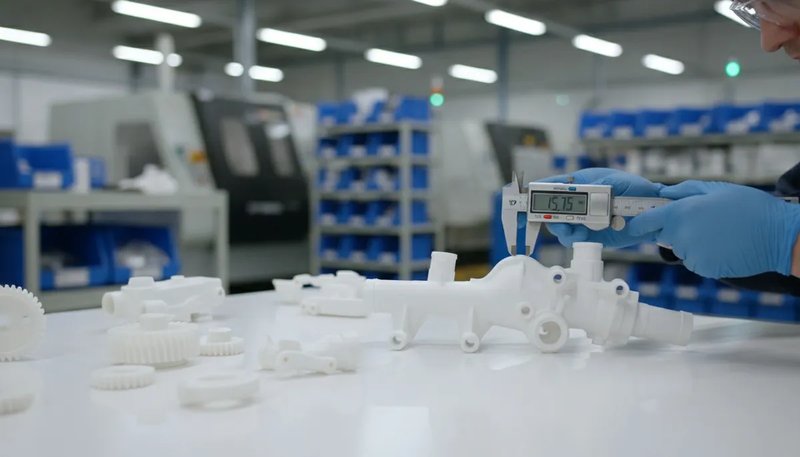
Hoe bereken je stap voor stap de cyclusduur?
De formule voor cyclusduur is de som van de injectie-, naspuit-, koel- en matbewerkingstijden. Sommige fasen overlappen – bijvoorbeeld vindt schroefterugwinning plaats tijdens het koelen – dus je neemt de langste duur in plaats van beide op te tellen.
Injectie Tijd (t_inject)
Dit is de tijd die nodig is om de holte met gesmolten kunststof te vullen. Voor de meeste onderdelen is dit 0.5–5 seconden. U kunt dit schatten als: t_inject = Part weight (g) ÷ Injection rate (g/s). Een onderdeel van 50g op een machine die 100 g/s levert, heeft bijvoorbeeld ongeveer 0.5 seconden nodig om te vullen. Werkelijke injectieprofielen gebruiken echter meertrapssnelheden (langzaam-snel-langzaam), waardoor de werkelijke tijd iets langer is dan het theoretische minimum.
Pakken/Houd Tijd (t_pack)
Nadat de holte gevuld is, houdt u druk vast om materiaalkrimp te compenseren. Dit duurt typisch 1–10 seconden, afhankelijk van wanddikte en poortbevriestijd. Dunne onderdelen bevriezen snel; dikke onderdelen hebben een langere houdtijd nodig. De persfase eindigt wanneer de poort stolt en de holte afsluit.
Koeltijd (t_koel)
Hieraan gaat het grootste deel van de cyclus op. Bij semikristallijne materialen is de koeltijd3 ongeveer evenredig met het kwadraat van de wanddikte: t_cool ≈ C × (wanddikte)², waarbij C afhangt van de thermische diffusiviteit van het materiaal en het temperatuurverschil tussen smelt en matrijs. Reken bij een ABS-wand van 3mm op 15–25 seconden. Bij een wand van 5mm loopt dit op tot 40–60 seconden.
Matrijs Openen/Sluiten en Uitwerpen
Matrijs openen en sluiten duurt typisch 2–10 seconden, afhankelijk van matrijsgrootte en pers tonnage. Kleine matrijzen op 80–200T persen doen 2–4 seconden; grote matrijzen op 500–1000T persen nemen 6–12 seconden. Uitwerptijd voegt 0.5–3 seconden toe, waarbij geautomatiseerde pickers sneller zijn dan handmatige verwijdering.
Alles Samenbrengen
Hier volgt een voorbeeldberekening voor een middelgrote ABS-behuizing (wand van 3 mm, 80 g, matrijs met 4 caviteiten op een pers van 200T): t_inject ≈ 1,5 s, t_pack ≈ 3 s, t_cool ≈ 20 s, t_open + t_eject + t_close ≈ 5 s. Totale cyclustijd: ongeveer 29,5 seconden. In productie hebben we cycli gezien van 5 seconden voor dunwandige verpakkingen tot meer dan 90 seconden voor dikke technische onderdelen.
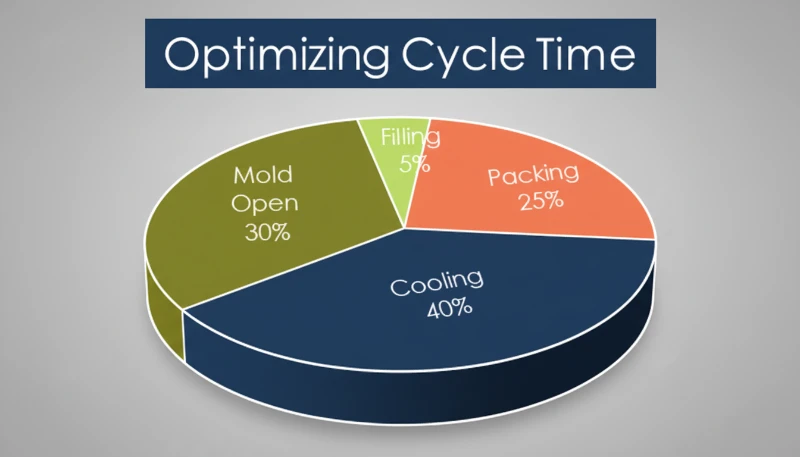
Wat zijn de vier fasen van een spuitgietcyclus?
De vier fasen zijn injectie (vullen), persen (houden), koelen en uitwerpen/herstellen. Elk heeft een duidelijke rol in onderdeelkwaliteit en cyclus efficiëntie.
Fase 1 — Injectie (Vullen)
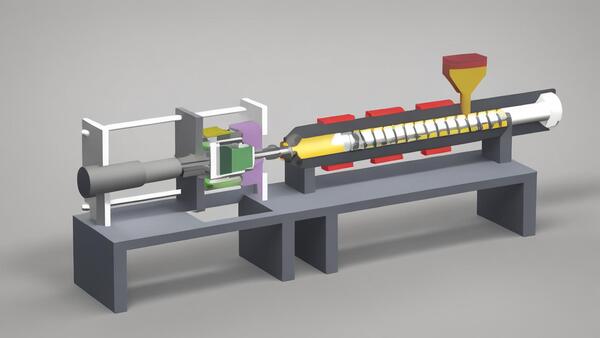
De schroef duwt naar voren en perst gesmolten plastic door de runner en de ingang in de holte. Snelheid is cruciaal – te langzaam en de smelt stolt voor het vullen; te snel en je krijgt straalvorming of uitsteeksels. Injectietijd is typisch de kortste fase, maar legt de basis voor de onderdeelkwaliteit.
Fase 2 – Naspuiten (Nadrukken)
Zodra de holte volumetrisch vol is, schakelt de machine over op houddruk. Deze extra druk perst extra materiaal in om thermische krimp te compenseren terwijl het onderdeel afkoelt. Het persen gaat door totdat de poort bevriest en de holte afsluit. Een verkeerde persduur is een veelvoorkomende oorzaak van zinkplekken en holtes.
Fase 3 — Koeling
De matrijs wordt op een gecontroleerde temperatuur gehouden (meestal 20–80°C, afhankelijk van het materiaal) en onttrekt warmte aan het onderdeel totdat dit stijf genoeg is om zonder vervorming te worden uitgeworpen. Deze fase duurt het langst — vaak 60–70% van de totale cyclustijd. Ondertussen trekt de schroef zich terug en plastificeert deze het volgende schot, zodat koeling en schroefherstel elkaar overlappen.
Fase 4 – Uitwerpen en Resetten
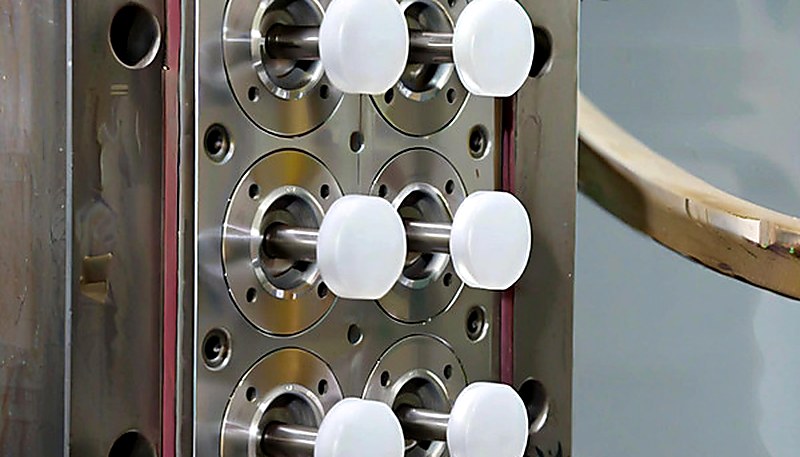
De mat opent, het onderdeel wordt uitgeworpen (mechanisch of door een robot), en de mat sluit voor het volgende schot. Uitwerpen kan een knelpunt zijn als onderdelen blijven plakken of als handmatige inspectie nodig is. Goed ontworpen uitwerpsystemen en juiste ontluikingshoeken houden deze fase voorspelbaar.
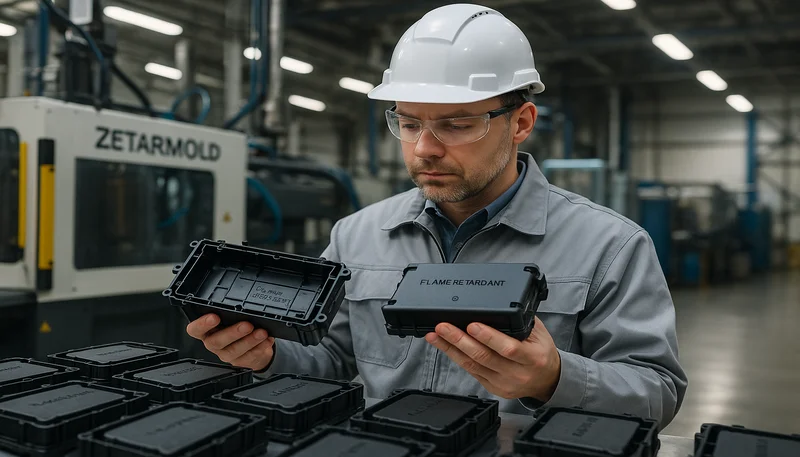
In onze fabriek in Shanghai gebruiken we 47 spuitgietmachines van 90T tot 1850T. Met meer dan 20 years productie-ervaring met meer dan 400 materials hebben we cyclustijden geoptimaliseerd van snel cyclerende PP-verpakkingsonderdelen op 8 seconds tot dikwandige PC-componenten op 60+ seconds. Elke machine registreert per schot cyclusgegevens voor continue verbetering.
Waarom domineert de koeltijd de cyclus?
Koelen is de dominante fase, die 60–70% van de totale cyclusduur in beslag neemt omdat warmteafvoer uit dikke polymeerwanden langer duurt dan elke andere stap.
De polymeersmelt komt bij 200–300°C in de caviteit en moet vóór veilig uitwerpen tot 40–80°C worden afgekoeld. De warmteoverdrachtssnelheid hangt van meerdere factoren af.
Wanddikte — De Grote Factor
De koeltijd neemt ongeveer toe met het kwadraat van de dikste sectie. Een onderdeel met een dikte van 4mm heeft ongeveer 1.8× de koeltijd nodig van een onderdeel van 3mm. Daarom wordt bij DFM-beoordelingen altijd gestreefd naar een minimale, uniforme wanddikte.
Materiaal Thermische Geleidbaarheid
Amorfe materialen zoals PC en ABS koelen anders af dan semi-kristallijne materialen zoals PA en POM. Kristallijne materialen geven tijdens het stollen latente warmte af, waardoor de koeltijd toeneemt. De materiaalkeuze bepaalt niet alleen de prestaties van het onderdeel, maar heeft ook rechtstreeks invloed op de productie-economie.
Mattemperatuur en ontwerp van koelkanalen
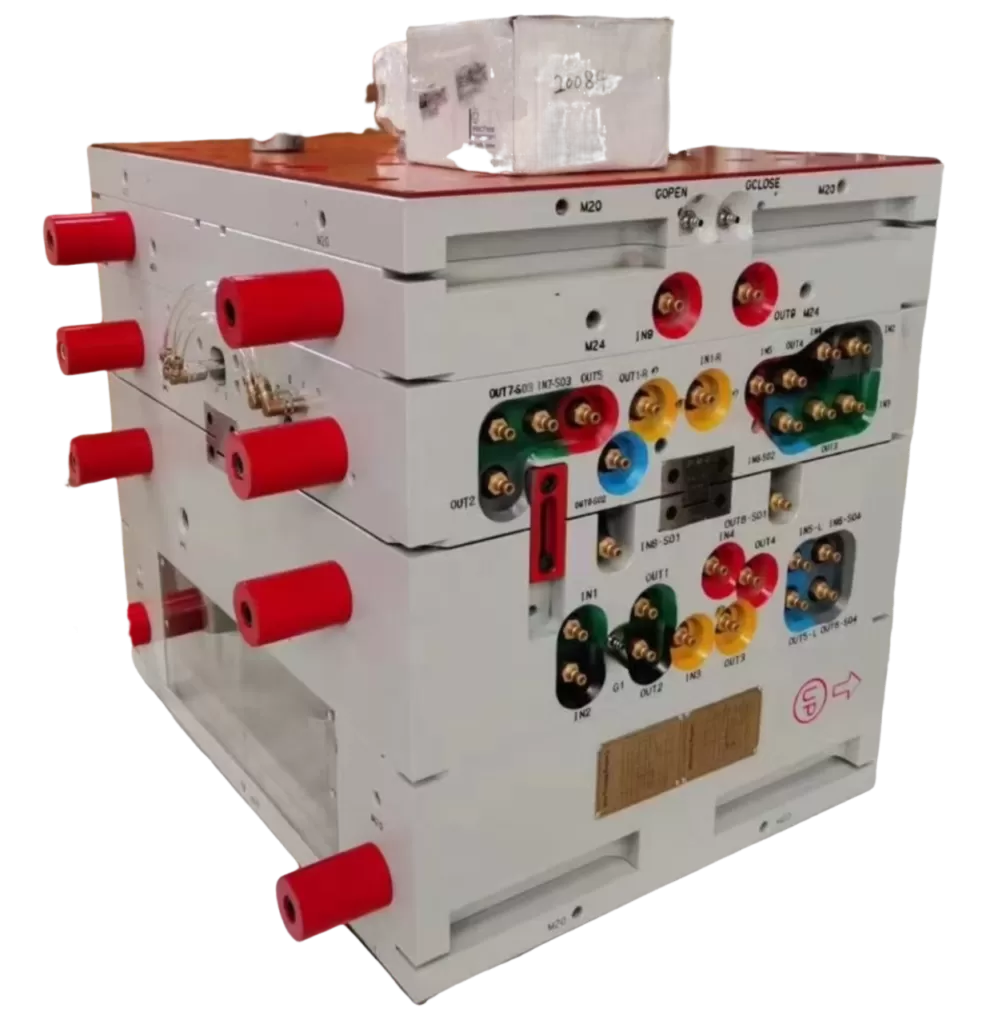
Een lagere matrijs temperatuur onttrekt sneller warmte, maar te koud veroorzaakt restspanning, vervorming of een slechte oppervlakteafwerking. Goed geplaatste bafflecircuits, warmtepijpen of conforme koelkanalen kunnen de koeltijd met 20–40% verkorten in vergelijking met eenvoudige geboorde kanalen. Dit is waar matrijsengineering zich terugverdient.
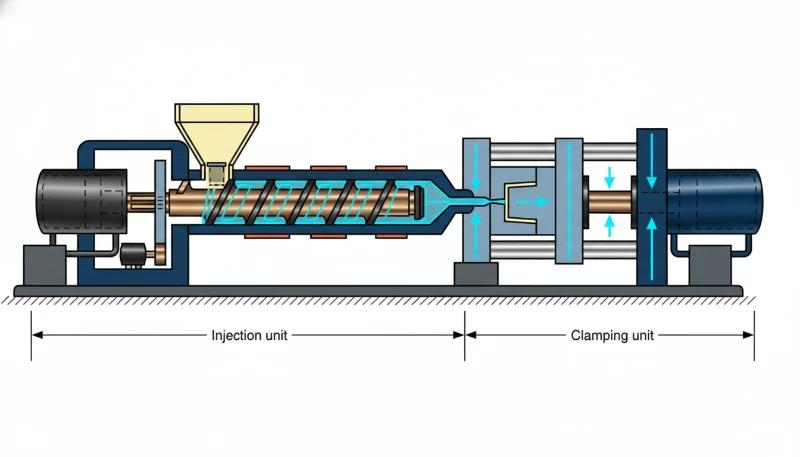
De praktische implicatie: als u de cyclustijd wilt verminderen, richt u dan eerst op de koeling. Uniforme wanddikte (houd variaties onder 25%), geoptimaliseerde koelkanaalindeling en juiste waterstroomsnelheden geven het grootste rendement.
Welke factoren hebben de grootste invloed op de cyclusduur?
De grootste factoren zijn wanddikte, thermische materiaaleigenschappen, ontwerp van matrijskoeling en machinecapaciteit – ruwweg in die volgorde.
De onderdeelgeometrie is de belangrijkste factor. Dikkere wanden betekenen exponentieel langere koeling. Complexe onderdeelgeometrieën met diepe ribben, penpunten of variërende diktesecties creëren hotspots die u dwingen de hele cyclus te verlengen voor het langzaamst koelende gebied.
Materiaalkeuze is belangrijk omdat verschillende polymeren verschillende thermische eigenschappen hebben. PP en PE koelen relatief snel. PC, PPSU en versterkte nylons hebben meer tijd nodig. Als cyclustijd kritisch is en de prestaties het toelaten, kan overschakelen van PC naar ABS de koeling met 30–40% verminderen.
Matrijzenontwerp is waar je wint of verliest. Belangrijke factoren zijn onder meer de plaatsing en stroomsnelheid van koelkanalen, het type en de locatie van de ingang, de betrouwbaarheid van het uitstootsysteem en de keuze van het matrijzenmateriaal. Berylliumkoper inzetstukken geleiden warmte 3–5× sneller dan staal en zijn uitstekend voor hotspotgebieden. Machine-instellingen geven je incrementele winst — hogere inspuitsnelheid, geoptimaliseerde houdprofielen en snellere matrijsopenings- en sluitsnelheden helpen allemaal, maar dit is fijn afstellen in vergelijking met ontwerp en matrijstechniek.
"De koeltijd vormt doorgaans 60–70% van de totale spuitgietcyclustijd."True
Correct. In duizenden productieruns in onze fabriek is koeling consequent de dominante fase in de cyclus. Zelfs bij snelcyclende verpakkingsmatrijzen blijft koeling de langste enkele fase.
"Het verhogen van de injectiesnelheid verkort altijd de totale cyclustijd."False
Onjuist. Na een optimaal punt veroorzaakt snellere inspuiting uitstulpingen, straalvorming of luchtinsluitingen die langere naspuit- en koeltijd vereisen om te verhelpen. De netto cyclusduur kan zelfs toenemen als u de inspuitsnelheid te ver doorvoert.
Hoe Kunt U de Cyclusduur Optimaliseren Zonder In Te Leveren op Kwaliteit?
Richt u eerst op koelingoptimalisatie, dan op wanddiktereductie en vervolgens op machineafstelling – in die volgorde van impact. Hier zijn de meest effectieve strategieën die wij in productie toepassen.
Koelkanalen herontwerpen
Dit is de verandering met het hoogste rendement op investering. Als uw matrijs eenvoudige recht geboorde kanalen heeft, kan overschakelen naar baffles, bubblers of spiraalkanalen de koeltijd met 15–30% verminderen. Voor hoogvolumematrijzen kan conforme koeling (mogelijk gemaakt door metaal 3D-printen) reducties van 40% of meer bereiken.
Minimaliseer en uniformeer wanddikte
Elke reductie van 0,5 mm in de maximale wanddikte kan de koeltijd met 10–20% verkorten. Houd de variatie in wanddikte onder 25% over het gehele onderdeel. Werk vroeg samen met uw ontwerpteam — DFM-aanpassingen zijn goedkoop voordat de matrijs wordt gesneden, duur daarna.
Optimaliseer locatie en type van de ingang
Betere plaatsing van de ingang zorgt voor gelijkmatige vulling en vermindert de noodzaak van verlengde naspuittijd. Heetkanaalsystemen met klepingangen zorgen voor snellere cycli omdat ze onafhankelijk van de koelfase afsluiten.
Automatiseer Uitstoting
Robotpickers of automatische dropsystemen elimineren de variabiliteit van handmatige onderdeelverwijdering. Dit is vooral impactvol voor cycli onder de 15 seconden, waar menselijke reactietijd een knelpunt wordt.
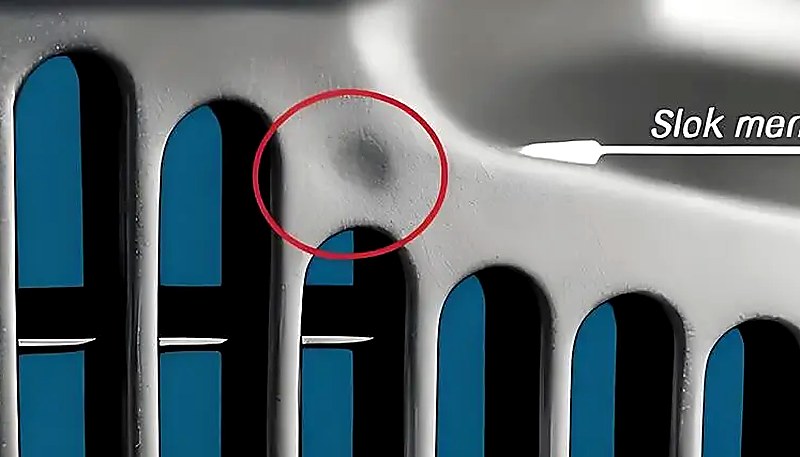
De kanttekening is dat elke optimalisatie van de cyclustijd met kwaliteitsgegevens moet worden gevalideerd. Als na het verkorten van de cyclustijd invallen, maatverloop of kromtrekken optreden, bent u te ver gegaan. Voer altijd een procescapabiliteitsonderzoek (Cpk) uit voordat u een nieuwe cyclus vastlegt. Raadpleeg onze inkoopgids voor spuitgieten voor advies over het kiezen van de juiste productiepartner voor een geoptimaliseerde productie.
"Een cyclustijdverkorting van 1 seconde op een matrijs met 4 caviteiten die 24/7 draait, kan jaarlijks ruim 100,000 extra onderdelen opleveren."True
Correct. Het terugbrengen van een cyclus van 30 seconden naar 29 seconden verhoogt de productie met ongeveer 145.000 onderdelen per jaar bij een 4-holten matrijs die continu draait. Zelfs kleine optimalisaties hebben een aanzienlijk cumulatief effect bij grootschalige productie.
"Een hogere matrijstemperatuur verbetert altijd de onderdeelkwaliteit en rechtvaardigt de langere cyclustijd."False
Onjuist. Een hogere matrijstemperatuur kan restspanning verminderen en de oppervlakteafwerking verbeteren, maar verlengt ook de koeltijd en kan overmatige krimp veroorzaken. De optimale matrijstemperatuur is een balans tussen kwaliteitseisen en cyclusefficiëntie, geen eenvoudige regel dat heter beter is.
Wat Zijn Typische Cyclusduren voor Veelgebruikte Materialen?
Cyclustijden variëren sterk, maar hier zijn typische bereiken gebaseerd op echte productiedata voor een onderdeel met gemiddelde complexiteit en wanddiktes van 2–3 mm. Deze bereiken gaan uit van een standaard matrijs met adequate koeling.
| Materiaal | Typische cyclus (seconden) | Belangrijke opmerkingen |
|---|---|---|
| PP (polypropyleen) | 8–25 | Snelle afkoeling, lage viscositeit — ideaal voor verpakking |
| PE (polyethyleen) | 8–20 | Vergelijkbaar met PP, goede vloeieigenschappen |
| ABS | 15–40 | Matige koeling, veelzijdige technische kunststof |
| PS (polystyreen) | 10–25 | Snel stollend maar bros — vereist zorgvuldige uitstoting |
| PC (polycarbonaat) | 25–60 | Hoge smelttemperatuur, trage koeling |
| PA6 (nylon 6) | 15–45 | Semi-kristallijn, vereist grondige koeling |
| PA66 (nylon 66) | 18–50 | Hogere kristalliniteit dan PA6, langere afkoeling |
| POM (acetaal) | 15–35 | Goede thermische eigenschappen, snelle kristallisatie |
| TPU | 20–45 | Flexibel materiaal, langzamere uitstoting vereist |
| PBT | 15–35 | Snelle kristallisatie, goed voor elektrische onderdelen |
Met geoptimaliseerde conforme koelkanalen kunt u vaak 20–30% sneller produceren dan binnen deze bereiken. De kern: de materiaalkeuze gaat niet alleen om de prestaties van het onderdeel — via de cyclustijd heeft deze rechtstreeks invloed op de rendabiliteit van uw productie.
Hoe Meet en Monitor Je Cycle Time in Productie?
De cyclustijd wordt gemeten met de ingebouwde timer van de machine en vervolgens gevolgd met SPC-software om procesdrift vroegtijdig te signaleren.
Machine-niveau Monitoring
Elke moderne pers geeft de cyclustijd in realtime weer. De meeste kunnen gegevens per cyclus registreren en operators waarschuwen wanneer een cyclus de ingestelde limiet overschrijdt. Dit is uw eerste verdedigingslinie — als de machine 32 seconden aangeeft en u een doel van 30 seconden hebt ingesteld, vereist iets aandacht.
SPC Trendanalyse en Drift Detectie
Volg de cyclusduur over honderden of duizenden schoten. Een geleidelijke opwaartse trend duidt vaak op een zich ontwikkelend probleem: vervuilde koelkanalen, versleten uitstoterpennen of veranderingen in materiaalviscositeit. Vroegtijdige detectie hiervan voorkomt kwaliteitsproblemen en ongeplande stilstand.
Veelvoorkomende Oorzaken van Cyclus Tijd Drift
De gebruikelijke verdachten zijn onder meer kanaalvervuiling door kalkaanslag in koelkanalen (vermindert warmteoverdracht), versleten hete runner spuitmonden (langzamere vulling, langere pakking), materiaalvariatie van lot tot lot, degradatie van het hydraulisch systeem op oudere machines en veranderingen in de omgevingstemperatuur tussen seizoenen.
Ons advies: stel een bovengrens voor cyclusduur (UCL) in op 5% boven uw geoptimaliseerde cyclus. Elke schot die de UCL overschrijdt, moet een onderzoek in gang zetten. Deze eenvoudige regel detecteert 80% van de zich ontwikkelende problemen voordat ze defecte onderdelen produceren. Voor serieuze operaties integreren MES (Manufacturing Execution Systems) cyclusduurgegevens met kwaliteitsinspectieresultaten, waardoor u cyclusvariaties in realtime kunt correleren met de kwaliteit van het onderdeel.
Veelgestelde vragen
Wat is de formule voor de spuitgietcyclusduur?
De basisformule is t_cyclus = t_injectie + t_pakking + t_koeling + t_openen + t_uitwerpen + t_sluiten. Sommige fasen overlappen echter — met name koeling en schroefterugwinning. Je neemt de langste van de twee in plaats van beide op te tellen. Voor een snelle schatting is de koeltijd doorgaans 60–70% van het totaal, dus het meten van de koelduur en vermenigvuldigen met 1,4–1,6 geeft een redelijke benadering. Valideer altijd met werkelijke machinegegevens, aangezien de werkelijke cyclustijden afhangen van de geometrie van het onderdeel, het materiaal en het matrijsontwerp.
Hoeveel seconden duurt een typische spuitgietcyclus?
De meeste spuitgietcycli vallen tussen 10 en 60 seconden. Dunwandige verpakkingsonderdelen zoals flessendoppen kunnen in 5-8 seconden cycleren op geoptimaliseerde hogesnelheidsmachines. Standaard technische onderdelen met 2-3mm wanden draaien typisch 15-30 seconden op conventionele persen. Dikwandige of hoogwaardige materialen zoals polycarbonaat kunnen oplopen tot 45-90 seconden vanwege langere koelvereisten. De specifieke cyclus hangt sterk af van wanddikte, thermische materiaaleigenschappen, matrijskoelcapaciteit en onderdeelcomplexiteit. Als u consistent boven de 60 seconden draait, onderzoek dan koeloptimalisatie.
Wat is de langste fase in spuitgieten?
Koelen is bijna altijd de langste fase en neemt 60-70% van de totale cyclusduur in beslag in de meeste productiescenario’s. Dit komt omdat u voldoende warmte uit het gesmolten polymeer moet onttrekken om het onderdeel stijf genoeg te maken voor uitstoting zonder vervorming. De thermodynamica is onvermijdelijk: de koeltijd schaalt ruwweg met het kwadraat van de wanddikte, wat betekent dat zelfs kleine toename in onderdeeldikte de totale cyclus aanzienlijk verlengt. Bij dunwandige verpakkingsonderdelen kan de inspuittijd aanzienlijk zijn, maar koelen blijft in de overgrote meerderheid van de productieruns domineren.
Hoe beïnvloedt de wanddikte de cyclusduur?
Wanddikte is de grootste bepalende factor voor de cyclusduur, omdat de koeltijd ongeveer kwadratisch schaalt met de wanddikte. Het verdubbelen van de wanddikte verviervoudigt ruwweg de benodigde koeltijd. Een onderdeel met een wanddikte van 2 mm heeft bijvoorbeeld mogelijk 8 seconden koeltijd nodig, terwijl dezelfde geometrie bij 4 mm 25-30 seconden vereist. Deze exponentiële relatie is de reden waarom ontwerp-voor-productiebeoordelingen altijd aandringen op een minimale, uniforme wanddikte. Secties die aanzienlijk dikker zijn dan de rest, worden het knelpunt voor de hele cyclus, waardoor een langere koeltijd voor alle holtes wordt afgedwongen.
Kan de cyclustijd worden verkort zonder de matrijs te wijzigen?
Ja, u kunt de cyclusduur verkorten zonder aanpassingen aan de matrijs, maar de winst is kleiner in vergelijking met aanpassingen op matrijsniveau. Optimalisaties aan de machinezijde omvatten het verhogen van de inspuitsnelheid, het aanpassen van de drukprofielen tijdens de houdfase, het garanderen van een optimale koelwaterstroomsnelheid en temperatuur, en het overschakelen naar een materiaalkwaliteit met een snellere cyclus. Deze aanpassingen leveren doorgaans een verbetering van 5-15% in cyclusduur op. Voor grotere winsten van 20-40% of meer zijn meestal matrijswijzigingen nodig, zoals verbeterde koelkanalen, berylliumkoper inzetstukken in hotspots, of een herontwerp van de poort voor efficiëntere vulling.
Wat is het verschil tussen cycletijd en levertijd in spuitgieten?
Cyclustijd meet de productiesnelheid — de tijd van shot tot shot voor één machinecyclus. Doorlooptijd is de totale tijd van bestelling tot levering, inclusief matrijsfabricage, materiaalinkoop, productieplanning, kwaliteitsinspectie en verzending. Een onderdeel met een cyclustijd van 20 seconden kan een doorlooptijd van 4–6 weken hebben voor een nieuwe matrijs, of 3–5 dagen voor een herhaalorder. Beide maatstaven zijn essentieel voor projectplanning — een snelle cyclustijd helpt niet als de matrijs niet gereed is.
Hoe berekent u de koeltijd bij spuitgieten?
Een vereenvoudigde schatting van de koeltijd gebruikt de formule t_koel = (dikte in het kwadraat maal thermische_factor) gedeeld door thermische_diffusiviteit, waarbij de thermische factor afhangt van het temperatuurverschil tussen smelttemperatuur en matrijstemperatuur. In de praktijk vertrouwen de meeste ingenieurs op empirische productiedata of matrijssimulatiesoftware zoals Moldflow omdat echte onderdeelgeometrieën te complex zijn voor nauwkeurige handberekeningen. Als praktische vuistregel, voor een 3mm wand in amorf materiaal zoals ABS, verwacht 15-25 seconden. Voor dezelfde dikte in semi-kristallijn nylon, voeg 20-30% meer koeltijd toe.
Waarom varieert mijn cyclusduur van schot tot schot?
Kleine cyclus tijd variatie van plus of min 0,5-1 seconde is volkomen normaal en is het gevolg van lichte verschillen in materiaalvoedingsconsistentie, schroefpositieherhaalbaarheid en hydraulisch systeemrespons. Grotere variaties van meer dan 2 seconden duiden meestal op een echt probleem: inconsistente materiaaldroging, verstopt of verkalkt koelkanalen, een versleten terugslagklep die schotgroottevariatie veroorzaakt, of defecte temperatuursensoren. Als u een geleidelijke opwaartse trend waarneemt over honderden schoten, controleer dan eerst de koelwaterstroomsnelheid omdat minerale kalkaanslag in kanalen de meest voorkomende oorzaak is van langzame cyclus tijd drift.
Klaar om Uw Spuitgiet Cyclus Tijd te Optimaliseren?
Het engineeringteam van ZetarMold heeft meer dan 20 jaar ervaring met het optimaliseren van productiecycli voor ruim 400 materialen. Bekijk onze complete gids voor spuitgieten voor een gedetailleerd overzicht van onze mogelijkheden. Van de beoordeling van het matrijsontwerp tot het afstellen van de productie: wij helpen u de kortst mogelijke cyclus te realiseren zonder kwaliteitsverlies. Vraag een gratis offerte aan voor uw volgende project.
Cyclustijd: De cyclustijd is de totale verstreken tijd vanaf het begin van één productiecyclus tot het begin van de volgende in een zich herhalend productieproces. ↩
Schroefdosering: Schroefdosering is de fase waarin de inspuitschroef draait om de volgende hoeveelheid materiaal te plastificeren en op te bouwen terwijl het vorige onderdeel in de matrijs afkoelt. ↩
Koeltijd: De koeltijd is de tijd die nodig is om een gevormd polymeer in de matrijsholte van de smelttemperatuur af te koelen tot een temperatuur waarbij het veilig kan worden uitgeworpen. ↩