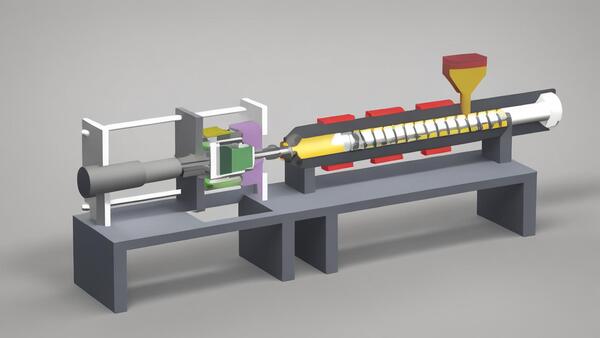
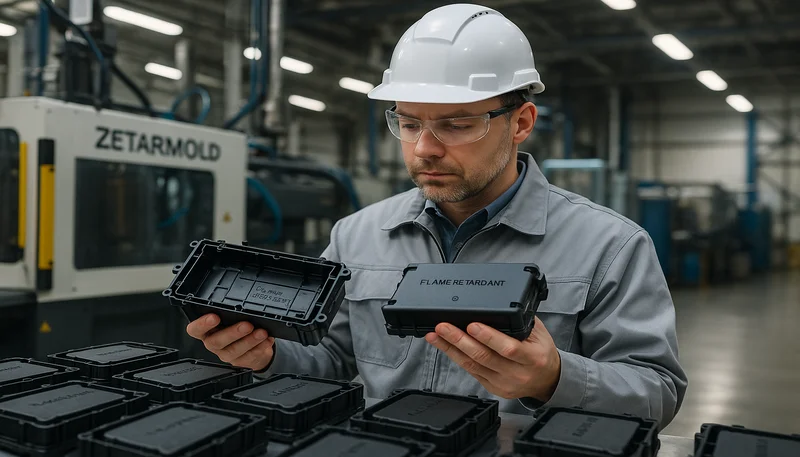
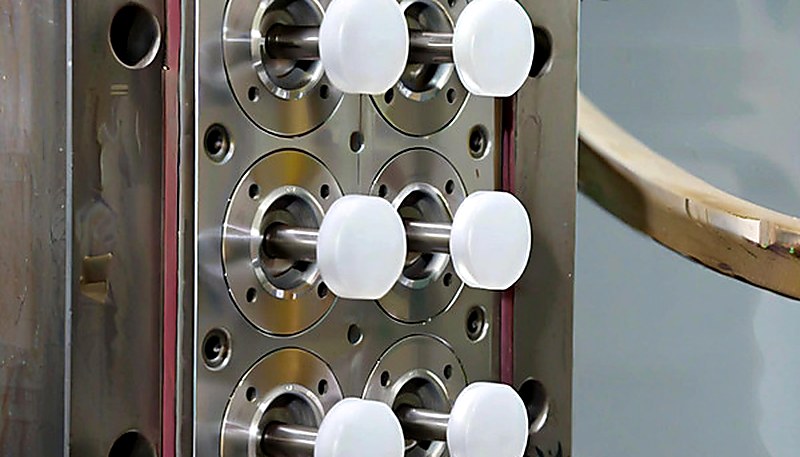
El moldeo por inyección es un proceso cíclico: cada pieza nace de una secuencia repetitiva de inyección, compactación, refrigeración y expulsión. El tiempo total de un ciclo completo es el tiempo de ciclo1, que controla directamente la tasa de producción y el coste por pieza. En nuestra fábrica de Shanghái llevamos más de 20 años perfeccionando los tiempos de ciclo en miles de moldes. Esta guía desglosa el método de cálculo para que pueda estimar, medir y optimizar el tiempo de ciclo de sus propios proyectos.
- Tiempo de ciclo = inyección + empaquetado + enfriamiento + expulsión + apertura/cierre del molde
- El enfriamiento típicamente representa el 60–70% del tiempo total del ciclo
- El grosor de la pared es el factor más importante que determina la duración del enfriamiento
- Una reducción de 1 segundo puede producir más de 100.000 piezas adicionales por año en un molde multicavidad
- Un diseño adecuado de enfriamiento del molde es la optimización más rentable
¿Qué es el tiempo de ciclo en el moldeo por inyección?
El tiempo de ciclo es el tiempo total transcurrido desde el inicio de una inyección hasta el inicio de la siguiente. Mide la rapidez con la que su máquina puede producir piezas y es el indicador más importante de la productividad del moldeo por inyección.
Piénselo así: un molde de 4 cavidades con un ciclo de 30 segundos produce unas 480 piezas por hora. Si se reduce a 25 segundos, alcanza 576: un aumento de producción del 20% sin inversión adicional. Por eso los ingenieros experimentados optimizan cada segundo.
La fórmula es conceptualmente sencilla: t_cycle = t_inject + t_pack + t_cool + t_open + t_eject + t_close. En la práctica, algunas fases se solapan. La recuperación del husillo2 (plastificación de la siguiente dosis) tiene lugar durante la refrigeración, por lo que se toma el mayor valor entre t_cool y t_screw_recovery en lugar de sumar ambos.
El tiempo de ciclo no es una propiedad fija: cambia con el material, la geometría de la pieza, el diseño del molde y los ajustes de la máquina. Un tapón de PP de pared delgada puede tener un ciclo de 5–8 segundos, mientras que una carcasa de policarbonato de pared gruesa puede requerir 60 segundos o más. Los ingenieros suelen hablar de “tiempo de ciclo óptimo”: el ciclo repetible más rápido que produce piezas conformes con todas las especificaciones de calidad. Si se acelera demasiado, aparecen llenados incompletos, rechupes o desviaciones dimensionales. Si se ralentiza demasiado, se pierde dinero en tiempo de máquina.
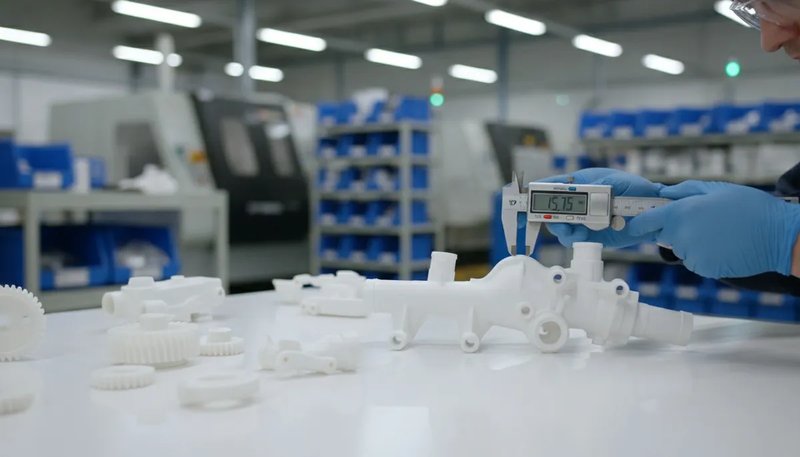
¿Cómo se calcula el tiempo de ciclo paso a paso?
La fórmula del tiempo de ciclo es la suma de los tiempos de inyección, empaquetado, enfriamiento y operación del molde. Algunas fases se superponen —por ejemplo, la recuperación del husillo ocurre durante el enfriamiento—, por lo que se toma la duración más larga en lugar de sumar ambas.
Tiempo de Inyección (t_inyección)
Este es el tiempo que se tarda en llenar la cavidad con plástico fundido. Para la mayoría de las piezas es de 0.5–5 segundos. Puede estimarse así: t_inject = Part weight (g) ÷ Injection rate (g/s). Por ejemplo, una pieza de 50g en una máquina que suministra 100 g/s tarda unos 0.5 segundos en llenarse. Sin embargo, los perfiles de inyección reales utilizan velocidades de varias etapas —lenta-rápida-lenta—, por lo que el tiempo real es ligeramente superior al mínimo teórico.
Tiempo de Empaque/Mantenimiento (t_empaque)
Después de que la cavidad se llena, mantienes presión para compensar la contracción del material. Esto típicamente dura de 1 a 10 segundos dependiendo del espesor de pared y el tiempo de solidificación de la entrada. Las piezas delgadas se solidifican rápido; las gruesas necesitan más tiempo de mantenimiento. La fase de empaque termina cuando la entrada se solidifica, sellando la cavidad.
Tiempo de Enfriamiento (t_enfriamiento)
Aquí se concentra la mayor parte del ciclo. En materiales semicristalinos, el tiempo de enfriamiento3 es aproximadamente proporcional al cuadrado del espesor de pared: t_cool ≈ C × (espesor de pared)², donde C depende de la difusividad térmica del material y de la diferencia de temperatura entre la masa fundida y el molde. Para una pared de ABS de 3 mm, calcule entre 15 y 25 segundos. Para una pared de 5 mm, el tiempo aumenta a 40–60 segundos.
Apertura/cierre del molde y expulsión
La apertura y cierre del molde suele tardar de 2 a 10 segundos, dependiendo del tamaño del molde y de la tonelaje de la prensa. Los moldes pequeños en prensas de 80–200T tardan de 2 a 4 segundos; los moldes grandes en prensas de 500–1000T tardan de 6 a 12 segundos. El tiempo de expulsión añade de 0,5 a 3 segundos, siendo los extractores automatizados más rápidos que la extracción manual.
Resumiendo todo
Este es un cálculo de ejemplo para una carcasa de ABS mediana (pared de 3mm, 80g, molde de 4 cavidades en una prensa de 200T): t_inject ≈ 1.5s, t_pack ≈ 3s, t_cool ≈ 20s, t_open + t_eject + t_close ≈ 5s. Tiempo total del ciclo: aproximadamente 29.5 segundos. En producción, hemos observado ciclos que van desde 5 segundos para envases de pared delgada hasta más de 90 segundos para piezas técnicas gruesas.
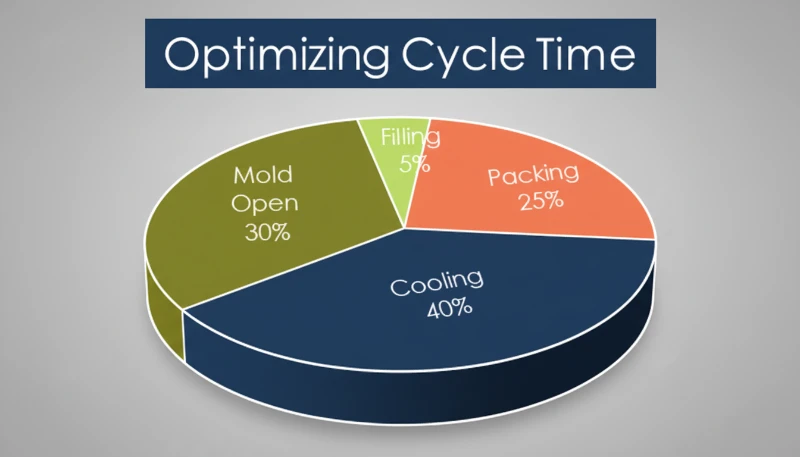
¿Cuáles son las cuatro fases de un ciclo de moldeo por inyección?
Las cuatro fases son inyección (llenado), empaque (mantenimiento), enfriamiento y eyección/reinicio. Cada una tiene un papel distinto en la calidad de la pieza y la eficiencia del ciclo.
Fase 1 — Inyección (Llenado)
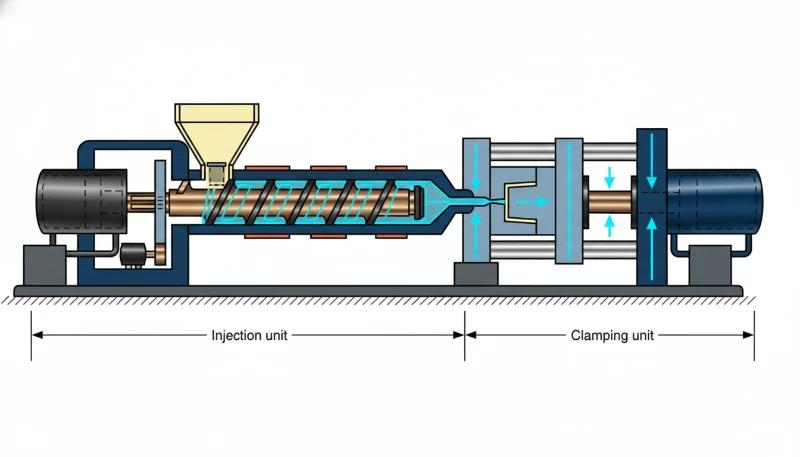
El tornillo avanza, forzando plástico fundido a través del canal y la entrada hacia la cavidad. La velocidad es crítica — demasiado lenta y el fundido se solidifica antes de llenar; demasiado rápida y se produce chorreo o rebaba. El tiempo de inyección es típicamente la fase más corta, pero establece la base para la calidad de la pieza.
Fase 2 — Empaquetado (Mantenimiento)
Una vez que la cavidad está llena volumétricamente, la máquina cambia a presión de mantenimiento. Esta presión adicional empaqueta material extra para compensar la contracción térmica a medida que la pieza se enfría. El empaquetado continúa hasta que la entrada se congela, sellando la cavidad. Calcular mal el tiempo de empaquetado es una causa común de marcas de hundimiento y huecos.
Fase 3 — Enfriamiento
El molde mantiene una temperatura controlada —normalmente 20–80°C según el material— y extrae calor de la pieza hasta que adquiere rigidez suficiente para expulsarla sin deformación. Esta fase es la más larga: a menudo representa el 60–70% del tiempo de ciclo total. Mientras tanto, el husillo retrocede y plastifica la siguiente inyección, por lo que el enfriamiento y la recuperación del husillo se solapan.
Fase 4 — Expulsión y reinicio
El molde se abre, la pieza es eyectada (mecánicamente o por robot), y el molde se cierra para el siguiente disparo. La eyección puede ser un cuello de botella si las piezas se pegan o si se requiere inspección manual. Sistemas de eyección bien diseñados y ángulos de desmoldeo adecuados mantienen esta fase predecible.
En nuestra fábrica de Shanghái operamos 47 máquinas de moldeo por inyección de 90T a 1850T. Con más de 20 años de experiencia de producción en más de 400 materiales, hemos optimizado ciclos desde 8 segundos para piezas de embalaje de PP de ciclo rápido hasta más de 60 segundos para componentes de PC de pared gruesa. Cada máquina registra los datos ciclo a ciclo para la mejora continua.
¿Por qué domina el tiempo de enfriamiento el ciclo?
El enfriamiento es la fase dominante, consumiendo 60–70% del tiempo total de ciclo porque la extracción de calor de paredes gruesas de polímero toma más tiempo que cualquier otro paso.
El polímero fundido entra en la cavidad a 200–300°C y debe enfriarse hasta 40–80°C antes de que sea seguro expulsarlo. La velocidad de transferencia térmica depende de varios factores.
Espesor de pared — El factor clave
El tiempo de refrigeración aumenta aproximadamente con el cuadrado de la sección más gruesa. Una pieza de 4mm de espesor necesita cerca de 1.8× el tiempo de refrigeración de una pieza de 3mm. Por eso las revisiones DFM siempre buscan el menor espesor de pared uniforme posible.
Conductividad térmica del material
Los materiales amorfos como PC y ABS se enfrían de forma distinta a los semicristalinos como PA y POM. Los materiales cristalinos liberan calor latente durante la solidificación, lo que prolonga el tiempo de enfriamiento. La elección del material no se limita al rendimiento de la pieza: repercute directamente en la economía de producción.
Temperatura del Molde y Diseño de Canales de Enfriamiento
Una temperatura del molde más baja extrae el calor más rápido, pero demasiado frío provoca tensiones residuales, deformaciones o un acabado superficial deficiente. Los circuitos de deflectores bien colocados, los tubos de calor o los canales de enfriamiento conformados pueden reducir el tiempo de enfriamiento entre un 20 y un 40% en comparación con los canales perforados básicos. Aquí es donde la ingeniería de moldes se amortiza.
La implicación práctica: si quieres reducir el tiempo del ciclo, ataca primero el enfriamiento. Un espesor de pared uniforme (mantén las variaciones por debajo del 25%), una disposición optimizada de los canales de enfriamiento y caudales de agua adecuados ofrecen los mayores beneficios.
¿Qué factores impactan más en el tiempo de ciclo?
Los factores más importantes son el espesor de pared, las propiedades térmicas del material, el diseño de enfriamiento del molde y la capacidad de la máquina — aproximadamente en ese orden.
La geometría de la pieza es el principal factor. Paredes más gruesas significan un enfriamiento exponencialmente más largo. Geometrías complejas con nervaduras profundas, refuerzos o secciones de espesor variable crean puntos calientes que obligan a extender todo el ciclo para el área que más tarda en enfriarse.
La selección del material importa porque diferentes polímeros tienen diferentes propiedades térmicas. El PP y el PE se enfrían relativamente rápido. El PC, el PPSU y los nailon reforzados necesitan más tiempo. Si el tiempo de ciclo es crítico y el rendimiento lo permite, cambiar de PC a ABS puede reducir el enfriamiento entre un 30 y un 40%.
El diseño del molde es donde se gana o se pierde. Los factores clave incluyen la ubicación y el caudal de los canales de enfriamiento, el tipo y ubicación de la entrada, la fiabilidad del sistema de expulsión y la selección del material del molde. Los insertos de cobre-berilio conducen el calor de 3 a 5 veces más rápido que el acero y son excelentes para áreas de puntos calientes. Los ajustes de la máquina ofrecen ganancias incrementales: una mayor velocidad de inyección, perfiles de mantenimiento optimizados y velocidades de apertura/cierre del molde más rápidas ayudan, pero son ajustes finos en comparación con el diseño y la ingeniería del molde.
"El tiempo de enfriamiento suele representar el 60–70% del ciclo total de moldeo por inyección."True
Correcto. En miles de series de producción en nuestra fábrica, el enfriamiento domina consistentemente el ciclo. Incluso en moldes de envasado de ciclo rápido, el enfriamiento sigue siendo la fase individual más larga.
"Aumentar la velocidad de inyección siempre reduce el tiempo total de ciclo."False
Falso. Más allá de un punto óptimo, una inyección más rápida provoca rebabas, chorreo o atrapamiento de aire que requieren un tiempo de empaquetado y enfriamiento prolongado para solucionarlo. El tiempo neto del ciclo puede aumentar en realidad si se lleva la velocidad de inyección demasiado lejos.
¿Cómo Puedes Optimizar el Tiempo de Ciclo Sin Sacrificar la Calidad?
Enfóquese primero en la optimización del enfriamiento, luego en la reducción del espesor de pared y luego en el ajuste de la máquina — en ese orden de impacto. Aquí están las estrategias más efectivas que usamos en producción.
Rediseñar los Canales de Enfriamiento
Este es el cambio de mayor ROI. Si tu molde tiene canales básicos rectos perforados, cambiar a deflectores, burbujeadores o canales en espiral puede reducir el tiempo de enfriamiento entre un 15 y un 30%. Para moldes de alto volumen, el enfriamiento conformado (posible gracias a la impresión 3D en metal) puede lograr reducciones del 40% o más.
Minimizar y Uniformizar el Espesor de Pared
Cada reducción de 0.5 mm en el espesor máximo de pared puede reducir el tiempo de enfriamiento entre un 10 y un 20%. Mantenga la variación del espesor de pared por debajo del 25% en toda la pieza. Trabaje con su equipo de diseño desde el principio: los cambios de DFM son económicos antes de cortar el molde, costosos después.
Optimizar la Ubicación y Tipo de Entrada
Una mejor ubicación de la compuerta asegura un llenado uniforme y reduce la necesidad de un tiempo de empaquetado prolongado. Los sistemas de canal caliente con compuertas de válvula permiten un ciclado más rápido porque sellan independientemente de la fase de enfriamiento.
Automatizar la Expulsión
Los recolectores robóticos o los sistemas de caída automática eliminan la variabilidad de la extracción manual de piezas. Esto es especialmente impactante para ciclos inferiores a 15 segundos, donde el tiempo de respuesta humano se convierte en un cuello de botella.
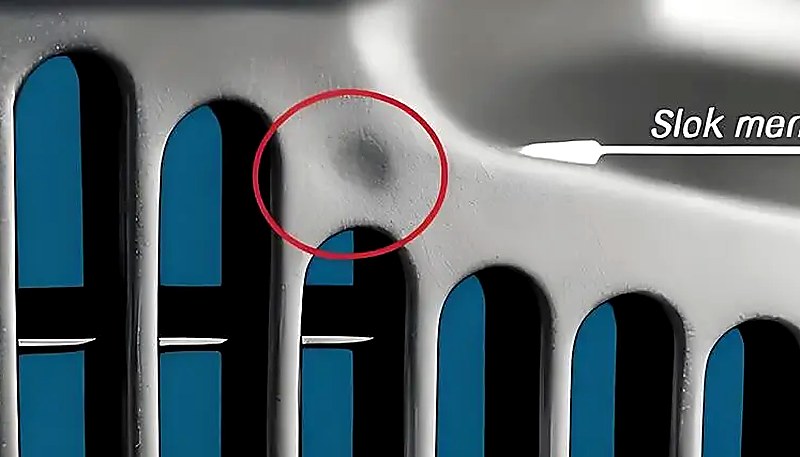
La salvedad es que cualquier optimización del tiempo de ciclo debe validarse con datos de calidad. Si aparecen marcas de hundimiento, deriva dimensional o deformación después de reducir el tiempo de ciclo, se ha ido demasiado lejos. Realice siempre un estudio de capacidad (Cpk) antes de fijar un ciclo nuevo. Para orientarse al elegir el socio de fabricación adecuado para una producción optimizada, consulte nuestra guía de aprovisionamiento de moldeo por inyección.
"Reducir 1 segundo el tiempo de ciclo en un molde de 4 cavidades que funciona 24/7 puede producir más de 100,000 piezas adicionales al año."True
Correcto. Reducir un ciclo de 30 segundos a 29 segundos aumenta la producción en aproximadamente 145.000 piezas al año en un molde de 4 cavidades funcionando continuamente. Incluso pequeñas optimizaciones se acumulan significativamente en la producción de alto volumen.
"Utilizar una temperatura de molde más alta siempre mejora la calidad de la pieza y compensa el aumento del tiempo de ciclo."False
Falso. Aunque una temperatura más alta del molde puede reducir la tensión residual y mejorar el acabado superficial, también prolonga el tiempo de enfriamiento y puede causar una contracción excesiva. La temperatura óptima del molde equilibra los requisitos de calidad y la eficiencia del ciclo; no se rige por la simple regla de que «cuanto más caliente, mejor».
¿Cuáles Son los Tiempos de Ciclo Típicos para Materiales Comunes?
Los tiempos de ciclo varían ampliamente, pero aquí hay rangos típicos basados en datos de producción real para una pieza de complejidad media con paredes de 2–3 mm. Estos rangos asumen un molde estándar con enfriamiento adecuado.
| Tipo de material | Ciclo Típico (segundos) | Notas clave |
|---|---|---|
| PP (polipropileno) | 8–25 | Enfriamiento rápido, baja viscosidad — ideal para envases |
| PE (polietileno) | 8–20 | Similar al PP, buenas características de flujo |
| ABS | 15–40 | Enfriamiento moderado, plástico de ingeniería versátil |
| PS (Poliestireno) | 10–25 | Congelación rápida pero frágil — requiere una expulsión cuidadosa |
| PC (policarbonato) | 25–60 | Alta temperatura de fusión, enfriamiento lento |
| PA6 (Nailon 6) | 15–45 | Semicristalino, necesita un enfriamiento exhaustivo |
| PA66 (nailon 66) | 18–50 | Mayor cristalinidad que el PA6, enfriamiento más largo |
| POM (acetal) | 15–35 | Buenas propiedades térmicas, cristalización rápida |
| TPU | 20–45 | Material flexible, se requiere expulsión más lenta |
| PBT | 15–35 | Cristalización rápida, buena para piezas eléctricas |
Con canales de refrigeración conformados optimizados, a menudo puede trabajar un 20–30% más rápido que estos intervalos. En resumen, la elección del material no depende solo del rendimiento de la pieza: influye directamente en la economía de producción mediante el tiempo de ciclo.
¿Cómo se mide y monitorea el tiempo de ciclo en producción?
El tiempo de ciclo se mide mediante el temporizador integrado de la máquina y después se supervisa con software SPC para detectar pronto las desviaciones del proceso.
Monitoreo a Nivel de Máquina
Toda prensa moderna muestra el tiempo de ciclo en tiempo real. La mayoría puede registrar datos ciclo a ciclo y alertar a los operadores cuando se supera el límite fijado. Esta es la primera línea de defensa: si la máquina indica 32 segundos y el objetivo es de 30 segundos, algo requiere atención.
Tendencias SPC y Detección de Deriva
Rastree el tiempo de ciclo a lo largo de cientos o miles de disparos. Una tendencia gradual al alza a menudo indica un problema en desarrollo: canales de enfriamiento sucios, pasadores eyectores desgastados o cambios en la viscosidad del material. Detectar estos problemas temprano evita problemas de calidad y tiempos de inactividad no planificados.
Causas Comunes de la Deriva del Tiempo de Ciclo
Los sospechosos habituales incluyen la acumulación de incrustaciones en los canales de enfriamiento (reduce la transferencia de calor), boquillas de canal caliente desgastadas (llenado más lento, empaquetado más largo), variación de lote a lote del material, degradación del sistema hidráulico en máquinas antiguas y cambios de temperatura ambiente entre estaciones.
Nuestra recomendación: establezca un límite de control superior (UCL) para el tiempo de ciclo en un 5% por encima de su ciclo optimizado. Cualquier disparo que exceda el UCL debe desencadenar una investigación. Esta simple regla detecta el 80% de los problemas en desarrollo antes de que produzcan piezas defectuosas. Para operaciones serias, los MES (Sistemas de Ejecución de Fabricación) integran los datos del tiempo de ciclo con los resultados de inspección de calidad, permitiéndole correlacionar las variaciones del ciclo con la calidad de la pieza en tiempo real.
Preguntas frecuentes
¿Cuál es la fórmula para el tiempo de ciclo del moldeo por inyección?
La fórmula básica es t_cycle = t_inject + t_pack + t_cool + t_open + t_eject + t_close. Sin embargo, algunas fases se solapan, especialmente el enfriamiento y la recuperación del husillo. Se toma la más larga de las dos en lugar de sumarlas. Para una estimación rápida, el tiempo de enfriamiento suele representar el 60–70% del total, por lo que medir su duración y multiplicarla por 1.4–1.6 ofrece una aproximación razonable. Valídela siempre con datos reales de la máquina, ya que los tiempos de ciclo efectivos dependen de la geometría de la pieza, el material y el diseño del molde.
¿Cuántos segundos dura un ciclo típico de moldeo por inyección?
La mayoría de los ciclos de moldeo por inyección oscilan entre 10 y 60 segundos. Las piezas de empaque de pared delgada como tapas de botellas pueden ciclar en 5-8 segundos en máquinas de alta velocidad optimizadas. Las piezas técnicas estándar con paredes de 2-3 mm suelen funcionar entre 15-30 segundos en prensas convencionales. Las piezas de pared gruesa o materiales de alto rendimiento como el policarbonato pueden llegar a 45-90 segundos debido a los requisitos de enfriamiento prolongado. El ciclo específico depende en gran medida del espesor de la pared, las propiedades térmicas del material, la capacidad de enfriamiento del molde y la complejidad de la pieza. Si está funcionando consistentemente por encima de 60 segundos, investigue la optimización del enfriamiento.
¿Cuál es la fase más larga en el moldeo por inyección?
El enfriamiento es casi siempre la fase más larga, consumiendo del 60-70% del tiempo total del ciclo en la mayoría de los escenarios de producción. Esto se debe a que debes extraer suficiente calor del polímero fundido para que la pieza sea lo suficientemente rígida para la expulsión sin deformación. La termodinámica es inevitable: el tiempo de enfriamiento escala aproximadamente con el cuadrado del espesor de la pared, lo que significa que incluso pequeños aumentos en el grosor de la pieza extienden dramáticamente el ciclo total. En piezas de empaque de pared delgada, el tiempo de inyección puede ser significativo, pero el enfriamiento aún domina la gran mayoría de las corridas de producción.
¿Cómo afecta el espesor de pared al tiempo de ciclo?
El espesor de pared es el factor más importante que determina el tiempo de ciclo porque el tiempo de enfriamiento escala aproximadamente con el cuadrado del espesor de pared. Duplicar el espesor de la pared cuadruplica aproximadamente el tiempo de enfriamiento requerido. Por ejemplo, una pieza con una pared de 2 mm podría necesitar 8 segundos de enfriamiento, mientras que la misma geometría a 4 mm requiere 25-30 segundos. Esta relación exponencial es la razón por la cual las revisiones de diseño para fabricación siempre impulsan un espesor de pared mínimo uniforme. Cualquier sección significativamente más gruesa que el resto se convierte en el cuello de botella para todo el ciclo, forzando un enfriamiento prolongado para todas las cavidades.
¿Se puede reducir el tiempo de ciclo sin cambiar el molde?
Sí, puedes reducir el tiempo de ciclo sin cambios en el molde, pero las mejoras son menores en comparación con las modificaciones a nivel de molde. Las optimizaciones del lado de la máquina incluyen aumentar la velocidad de inyección, ajustar los perfiles de presión de mantenimiento, garantizar un caudal y temperatura óptimos del agua de refrigeración, y cambiar a un grado de material de ciclo más rápido. Estos ajustes suelen producir mejoras del 5-15% en el tiempo de ciclo. Para mejoras mayores del 20-40% o más, generalmente necesitas modificaciones en el molde, como canales de refrigeración mejorados, inserciones de cobre berilio en áreas de puntos calientes o rediseño de la compuerta para un llenado más eficiente.
¿Cuál es la diferencia entre el tiempo de ciclo y el tiempo de entrega en la inyección de plásticos?
El tiempo de ciclo mide la velocidad de producción: el tiempo de un ciclo de máquina entre una inyección y la siguiente. El plazo de entrega es el tiempo total desde que se realiza el pedido hasta la entrega, incluida la fabricación del utillaje, la adquisición de materiales, la programación de la producción, la inspección de calidad y el envío. Una pieza con un tiempo de ciclo de 20-second puede tener un plazo de entrega de 4–6 week para un molde nuevo o de 3–5 días para una serie de producción repetida. Comprender ambas métricas es esencial para planificar el proyecto: un ciclo rápido no ayuda si el molde no está listo.
¿Cómo se calcula el tiempo de enfriamiento en el moldeo por inyección?
Una estimación simplificada del tiempo de enfriamiento utiliza la fórmula t_enfriamiento = (espesor al cuadrado multiplicado por factor_térmico) dividido por difusividad_térmica, donde el factor térmico depende de la diferencia de temperatura entre la temperatura de fusión y la temperatura del molde. En la práctica, la mayoría de los ingenieros confían en datos empíricos de producción o software de simulación de moldes como Moldflow porque las geometrías reales de las piezas son demasiado complejas para cálculos manuales precisos. Como regla práctica, para una pared de 3 mm en material amorfo como ABS, espere 15-25 segundos. Para el mismo espesor en nailon semicristalino, agregue un 20-30% más de tiempo de enfriamiento.
¿Por qué varía mi tiempo de ciclo de disparo a disparo?
Una variación menor del tiempo de ciclo de más o menos 0.5-1 segundo es completamente normal y resulta de ligeras diferencias en la consistencia de alimentación del material, la repetibilidad de la posición del husillo y la respuesta del sistema hidráulico. Variaciones mayores que exceden los 2 segundos generalmente indican un problema real: secado inconsistente del material, canales de enfriamiento obstruidos o con incrustaciones, un anillo de retención desgastado que causa variación en el tamaño del disparo o sensores de temperatura defectuosos. Si observa una tendencia gradual al alza a lo largo de cientos de disparos, verifique primero el caudal de agua de enfriamiento porque la acumulación de incrustaciones minerales dentro de los canales es la causa más común de la deriva lenta del tiempo de ciclo.
¿Listo para Optimizar tu Tiempo de Ciclo de Moldeo por Inyección?
El equipo de ingeniería de ZetarMold cuenta con más de 20 años de experiencia en la optimización de ciclos de producción con más de 400 materiales. Para conocer en detalle nuestras capacidades, consulte nuestra guía completa de moldeo por inyección. Desde la revisión del diseño del molde hasta el ajuste de la producción, le ayudamos a conseguir el ciclo más rápido sin comprometer la calidad. Solicite un presupuesto gratuito para su próximo proyecto.
Tiempo de ciclo: El tiempo de ciclo es el tiempo total transcurrido desde el inicio de un ciclo de producción hasta el inicio del siguiente en un proceso de fabricación repetitivo. ↩
Recuperación del husillo: La recuperación del husillo es la fase en la que el husillo de inyección gira para plastificar y acumular la siguiente dosis de material mientras la pieza anterior se enfría en el molde. ↩
Tiempo de enfriamiento: El tiempo de enfriamiento es el periodo necesario para reducir la temperatura de un polímero moldeado desde su temperatura de fusión hasta una temperatura de expulsión segura dentro de la cavidad del molde. ↩