콘텐츠로 건너뛰기
You just got a quote for EVA foam shoe soles — 50,000 pairs, delivered in six weeks. The tooling looks reasonable, but your injection shop keeps rejecting the job because “EVA is tricky.” They’re not wrong. EVA (ethylene-vinyl acetate1) injection molding has a narrower processing window than most thermoplastics, and the foam expansion behavior catches a lot of people off guard. This article walks you through what actually matters: temperatures, shrinkage, mold design gotchas, and how to avoid the three defects that kill EVA parts most often.
- EVA processes at 160–220 °C; exceeding 250 °C causes decomposition
- Shrinkage runs 1.0–2.0% — double that of PP or PE
- Wall thickness should stay between 1.5 mm and 4.0 mm
- Mold temperature 20–40 °C; cold runners preferred
- VA content (8–28%) determines flexibility and foam density
What Is EVA Injection Molding and When Should You Use It?
Eva injection molding and when should you use it is defined by the function, constraints, and tradeoffs explained in this section. EVA injection molding is the process of shaping ethylene-vinyl acetate copolymer — a foamable thermoplastic — using conventional 사출 성형 equipment. The VA (vinyl acetate) content typically ranges from 8% to 28%, and that percentage is the single most important variable: low VA (8–14%) gives you a stiff, PE-like material; high VA (18–28%) gives you a soft, rubbery foam.
In practice, EVA is the go-to material when you need lightweight cushioning with good impact absorption. Think shoe midsoles, sports padding, helmet liners, yoga mats, and protective packaging. It’s not the right choice if you need structural rigidity, chemical resistance, or tight dimensional tolerances — for those, look at 사출 금형 applications using PC, PA, or POM.
The key difference between EVA and standard thermoplastics: EVA expands during cooling. That foam expansion is what gives you the cushioning and low density (0.15–0.40 g/cm³ for foam grades), but it also means shrinkage is less predictable and part dimensions shift more than you’d expect from a standard polymer.
“Standard injection molding machines can process EVA without modification.”True
True. A general-purpose screw (20:1 L/D ratio) and standard barrel work fine. The only recommended addition is a closed-loop nozzle to prevent drool, since EVA’s low melt viscosity causes material to leak from open nozzles during hold and cooling phases.
“EVA is just a type of polyethylene and processes exactly like PE.”False
False. While EVA is a copolymer of ethylene and vinyl acetate, the VA content fundamentally changes its behavior. EVA foam expands during cooling, has 2–4× higher shrinkage than PE, and decomposes at a lower temperature (250 °C vs. 300+ °C for PE). Running EVA on PE settings will give you flash, burn marks, and dimensional rejects.
사출 성형 단계에서 EVA를 제어하는 가공 매개변수는 무엇인가요?
이 섹션은 사출 성형 단계에서 EVA의 가공 매개변수 제어와 이로 인한 비용, 품질, 시기 또는 조달 위험에 대한 영향을 다룹니다. EVA 가공은 동일한 사출 성형 단계 다른 열가소성 수지와 마찬가지지만, 열과 체류 시간이 제어되지 않으면 EVA가 발포, 드리블 또는 열분해될 수 있어 온도 창이 더 좁습니다. 배럴 온도, 금형 온도, 사출 속도, 보압, 냉각 시간부터 시작한 후 시험 중 한 번에 하나의 변수를 조정하세요.
| 매개변수 | Range | 참고 |
|---|---|---|
| 용융 온도 | 160–220 °C | Above 250 °C = decomposition (acetic acid odor) |
| 금형 온도 | 20–40 °C | Cool water circuits; higher temps worsen shrinkage |
| 사출 압력 | 40–80 MPa | Lower than rigid plastics; too much pressure compresses foam |
| 사출 속도 | Medium to slow | Fast fills trap air and cause burn marks |
| 유지 압력 | 20–40 MPa | Short hold time (2–5 s); foam expansion does the rest |
| Drying temperature | 60–70 °C | 2–4 hours; EVA absorbs less moisture than nylon but still needs drying |
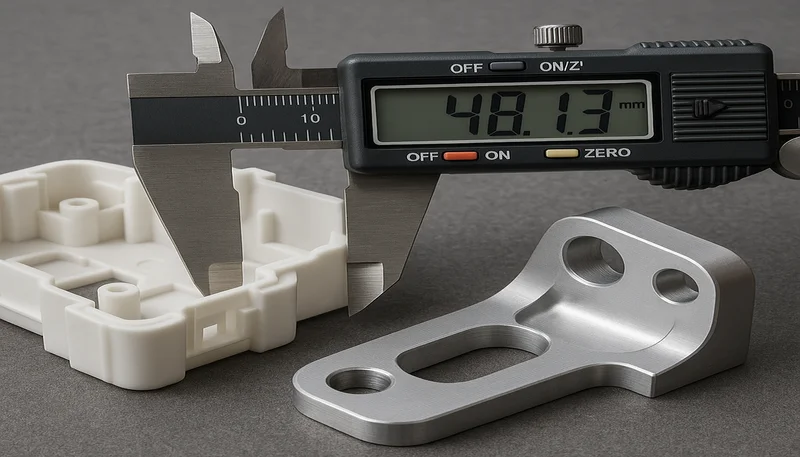
| 수축 | 1.0–2.0% | Higher VA content = higher shrinkage |
The biggest mistake we see: running EVA at the same temperatures you’d use for PE or PP. EVA’s thermal window is tighter. If you smell vinegar (acetic acid) during molding, you’ve already crossed into decomposition territory — drop the barrel temperature 15–20 °C and purge the barrel.
Another common oversight is holding pressure and time. EVA foam parts need very short hold times — 2 to 5 seconds at most. The foam expansion packs the cavity from the inside. If you hold pressure too long, you compress the foam structure and end up with dense, heavy spots that should be soft and lightweight.
How Does VA Content Affect EVA Material Properties?
The VA percentage is the dial that controls everything — hardness, flexibility, transparency, foam density, and chemical resistance. Here’s how it breaks down in real applications:
| VA Content | Shore Hardness | 특성 | 일반적인 애플리케이션 |
|---|---|---|---|
| 8–14% | Shore D 40–55 | Stiff, PE-like, good clarity | Rigid packaging, tubing, automotive interior trim |
| 15–18% | Shore A 80–95 | Flexible but resilient | Wire jacketing, squeeze toys, grips |
| 5–8% (강성 플라스틱보다 높음) | Shore A 30–70 | Soft, rubbery, excellent foamability | Shoe midsoles, sports padding, yoga mats, helmet liners |
For injection-molded foam parts (which is what most people mean by “EVA molding”), you’re almost always in the 18–28% VA range. The material is compounded with a chemical blowing agent (typically azodicarbonamide2 or sodium bicarbonate) that activates at a specific temperature, releasing gas and expanding the part as it cools.
Practical tip: if you’re getting inconsistent part weights, the blowing agent distribution is your first suspect. Ask your material supplier for a masterbatch with pre-dispersed blowing agent rather than trying to mix it on the machine. The consistency improvement is worth the 10–15% material cost premium.
“Higher VA content in EVA results in softer, more flexible material with better foamability.”True
True. As VA content increases from 8% to 28%, the material transitions from stiff and PE-like to soft and rubbery. The higher VA content also means more foam expansion is possible, producing lower-density parts with better cushioning properties.
“You can simply add more blowing agent to any EVA grade to get better foam.”False
False. Blowing agent dosage must be matched to the VA content and the target foam density. Too much blowing agent causes large, irregular cells that weaken the part structure and can cause surface blistering. The agent also has a shelf life (6–12 months) — expired material won’t activate properly regardless of quantity.
What Are the Common Defects in EVA Injection Molding?
EVA has three recurring defects that account for probably 80% of quality issues we’ve seen on the shop floor:
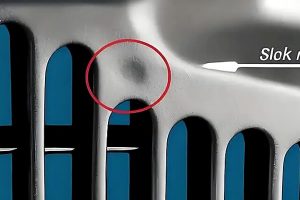
1. Sink marks and surface depressions. Because EVA foam expands during cooling, thick sections continue pushing material outward while thinner adjacent sections have already solidified. The result is visible depressions on the show surface. Fix: keep wall thickness as uniform as possible, aim for a 2:1 ratio (maximum) between thickest and thinnest sections.
2. Incomplete fills (short shots) with foam parts. The foam expansion helps pack the mold, but if melt temperature is too low or injection speed too slow, the material skin-freezes before the cavity fills. Fix: increase melt temp by 5–10 °C, increase injection speed one notch, and verify your blowing agent hasn’t expired (yes, blowing agents have shelf lives — typically 6–12 months).
3. Burn marks and discoloration. This is thermal decomposition — the vinegar smell is the giveaway. EVA starts breaking down above 250 °C, and decomposed material produces dark streaks or brown burn marks. Fix: lower barrel temperature, slow down screw speed (reduces shear heating), and check that your nozzle isn’t running hotter than the barrel zones.
One more thing: EVA’s low viscosity at processing temperature means flash is a real risk, especially on parting lines. If your mold has worn inserts or marginal shut-off surfaces, you’ll see flash at pressures that would be fine for PP or ABS. Budget for tighter mold tolerances if you’re tooling up for EVA.
How Should You Design Molds for EVA Parts?
This section is about design molds for eva parts and its impact on cost, quality, timing, or sourcing risk. Mold design for EVA isn’t the same as for rigid thermoplastics. The foam expansion changes the rules in three key areas:
Gate design: Use larger gates than you would for equivalent-sized rigid parts. Tab gates or fan gates with 1.5–3.0 mm thickness work well. Avoid pinpoint gates — the material’s low viscosity and foam expansion will jet through a small gate and create swirl marks on the visible surface.
Wall thickness: Target 1.5–4.0 mm. Below 1.5 mm, foam expansion can’t develop properly and you get dense, stiff sections. Above 4.0 mm, shrinkage and sink marks become difficult to control. If your part has functional thick sections (like a shoe sole heel area), coring out the back reduces the effective thickness without losing the external profile.
Draft and ejection: EVA’s flexibility actually helps here — the part compresses during ejection and rebounds. But foam parts tend to stick in deep ribs. Minimum 1.5° draft per side (2° is better), and use generous ejector pin diameters. Small pins on a soft foam part just punch holes instead of pushing the part out.
Cooling: EVA parts demold hot — the foam continues expanding for several seconds after the mold opens. Design cooling circuits for rapid surface chill, and expect cycle times of 30–60 seconds depending on wall thickness. Water at 15–25 °C works well; heated molds offer no benefit for EVA.
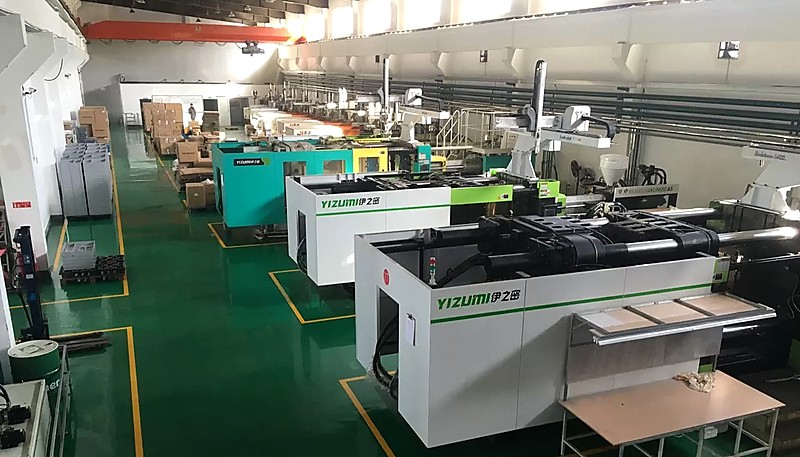
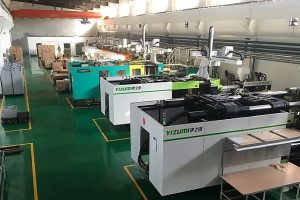
상하이 공장에서는 90톤에서 1850톤까지 47대의 사출 성형기를 운영합니다. EVA 부품의 경우, 20년 이상의 성형 경험과 120명 이상의 생산 팀을 보유한 엔지니어들이 금형 제작 전 저점도 용융물 거동, 배기, 탈형 영역, 수축 위험을 점검하여 양산 전 시험 문제를 가시화합니다.
“EVA foam parts continue to expand for several seconds after the mold opens.”True
True. Unlike rigid thermoplastics that shrink on demolding, EVA foam parts continue expanding as residual blowing agent completes its reaction and trapped gas cells equilibrate. This means cooling fixtures are often needed to maintain dimensional accuracy during the first 2–5 minutes after ejection.
“Aluminum molds are never suitable for EVA injection molding production.”False
False. Aluminum molds work for prototyping and low-to-medium volume EVA production (under 100,000 shots). EVA is non-abrasive and processes at relatively low temperatures, so aluminum tool life can reach 50,000–100,000 shots. For high-volume production, P20 steel is the standard choice.
What Industries Use EVA Injection Molding the Most?
This section is about industries use eva injection molding the most and its impact on cost, quality, timing, or sourcing risk. EVA’s combination of light weight, cushioning, and moisture resistance makes it dominant in four sectors:
Footwear (largest volume). Shoe midsoles, insoles, outsoles — EVA foam is the default material for athletic and casual footwear worldwide. The material can be color-matched, textured, and dual-density molded in a single shot. If you’re sourcing 신발 금형, EVA 압축 성형 (CMEVA3) is actually more common than injection for midsoles — but injection dominates for outsoles and smaller components.
Sports and protective equipment. Helmet liners, shin guards, knee pads, mouth guards. EVA absorbs impact energy without bottoming out, and it retains its properties across a wide temperature range (-40 °C to +80 °C for most grades).
Packaging. Protective inserts for electronics, medical devices, and fragile goods. EVA foam inserts can be molded to exact product shapes, providing better protection than cut PE foam at comparable cost for medium volumes (5,000–100,000 units).
Toys and consumer goods. Bath toys, pool floats, squeeze toys, grips, and handles. EVA’s non-toxic nature (food-contact grades are available) and soft feel make it suitable for children’s products, though you need to verify specific regulatory compliance (ASTM F963, EN 71) for your target market.
How Do EVA Processing Costs Compare to Other Materials?
EVA 비용은 수지 가격뿐만 아니라 총 사출 성형 생산 시간, 스크랩률, 탈형 안정성, 성형 후 냉각 공간. 폼 밀도가 변동하거나, 부품이 긴 평평한 냉각이 필요하거나, 작업자가 탈형 후 변형되는 부드러운 부품을 분류하는 데 시간을 소비한다면 저렴한 재료도 여전히 비쌀 수 있습니다.
| Cost Factor | EVA vs PP/PE | EVA vs TPU |
|---|---|---|
| 원재료 | +30–70% | -20–40% |
| 주기 시간 | 30–60s (longer, foam cooling) | Similar |
| Mold cost | +10–20% (tighter tolerances) | Similar |
| Scrap rate | 5–8% (higher than rigid plastics) | Similar |
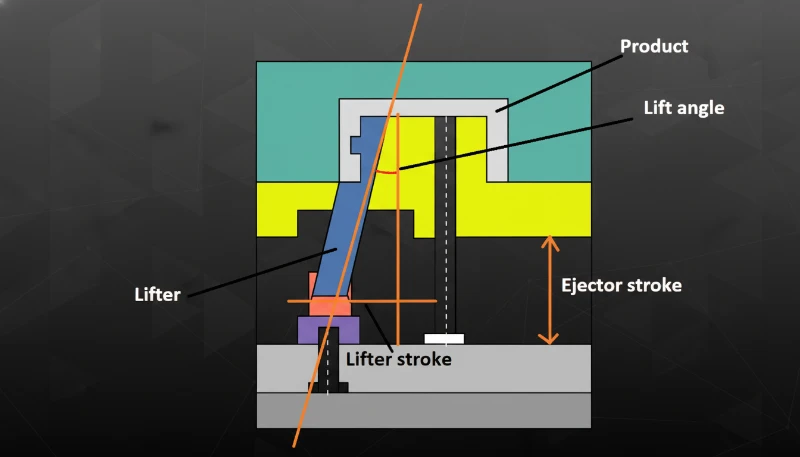
| 사출 금형 리프터 및 이젝터 스트로크 다이어그램 | Often needs trimming/deflashing | Less |
The bottom line: EVA is cost-effective when you need the specific combination of lightweight cushioning + moldability + color options. If you could achieve your requirements with PP or PE, those are cheaper. If you need the flexibility but also chemical resistance, TPU is the upgrade path.
What Are the Best Practices for EVA Injection Molding Production?
The best practices for eva injection molding production are the main categories or options explained in this section. After running EVA parts across hundreds of production orders, here’s what actually makes a difference on the shop floor:
Material handling: Dry EVA at 60–70 °C for 2–4 hours before molding. It doesn’t absorb moisture like nylon, but surface moisture causes splay marks and inconsistent foam expansion. Store sealed — blowing agents degrade when exposed to humidity.
Purge thoroughly between materials. EVA degrades quickly if it sits at barrel temperature without movement. If you’re switching from EVA to another material (or vice versa), run 3–5 shots of purging compound. We’ve seen cross-contamination ruin entire production runs — the acetic acid from decomposed EVA will corrode your barrel and screw over time.
Monitor part weight, not just dimensions. For foam parts, weight is your best process indicator. Set up a weight control chart (X-bar R) and sample every 50–100 shots. A ±3% weight drift tells you something has changed — usually barrel temperature or blowing agent activity — before you see dimensional issues.
Design for demolding. EVA foam parts are warm and soft when they come out of the mold. They’ll deform if you stack them immediately. Plan for 2–5 minutes of air cooling on a flat surface, or use cooling fixtures for parts with critical dimensions.
저희 팀은 쿠션, 포장, 소비재 및 의료 관련 응용 분야에 사용되는 여러 EVA 등급을 포함하여 400종 이상의 플라스틱 소재 경험을 보유하고 있습니다. ZetarMold는 ISO 9001, ISO 13485, ISO 14001 및 ISO 45001 시스템 하에 운영되므로, EVA 소재 선정, 초도품 검사, 포장 검사 및 출하 검사가 양산 시작 전에 문서화될 수 있습니다.
구매자들이 EVA 사출 성형에 대해 어떤 질문을 하나요?
자주 묻는 질문
What temperature is used for EVA injection molding?
EVA는 일반적으로 배럴 온도 160~220°C, 금형 온도 약 20~40°C에서 가공됩니다. 정확한 설정은 VA 함량, 폼 밀도, 부품 두께 및 화학 발포제 사용 여부에 따라 달라집니다. 중요한 규칙은 과열을 피하는 것입니다. 약 250°C 이상에서 EVA는 분해되어 냄새, 갈색 자국 및 장비 부식을 유발하는 산성 부산물을 방출할 수 있습니다. 낮은 온도에서 시작하여 용융물 흐름 안정성을 확인한 후, 시험 중 작은 단계로 온도를 조정하고 모든 변경 사항을 기록하세요.
Can EVA be injection molded on standard machines?
예, EVA는 표준 사출 성형기에서 운전 가능하지만, 용융물이 부드럽고 점도가 낮기 때문에 설정에 주의가 필요합니다. 폐쇄형 노즐은 드리블 방지에 도움이 되며, 일반 목적 스크류는 일반 등급에는 보통 충분합니다. 금형은 넉넉한 배기구, 매끄러운 유로 및 충분한 탈형 영역을 가져야 합니다. EVA 폼은 팽창 후 캐비티를 잡을 수 있기 때문입니다. 생산의 경우, 더 큰 도전은 기계 호환성이 아닙니다. 모든 배치에 걸쳐 수축률, 밀도 및 치수 반복성을 제어하는 것입니다.
What is the shrinkage rate of EVA injection molded parts?
EVA 수축률은 일반적으로 1.0%에서 2.0% 범위이지만, 폼 밀도, VA 함량, 벽 두께 또는 금형 온도가 변할 때 이 범위를 벗어날 수 있습니다. 높은 VA 함량과 강한 발포는 일반적으로 수축률을 증가시킵니다. 이것이 EVA 금형이 명목상 CAD 치수만으로 절단되어서는 안 되는 이유입니다. 예상 수축률을 금형 설계에 반영한 후, 초도품 샘플로 검증하세요. 중요한 핏의 경우, 완전 냉각 후 부품을 측정하십시오. EVA는 탈형 및 저장 후에도 계속 이완될 수 있기 때문입니다.
Is EVA injection molded foam recyclable?
EVA는 열가소성 수지이므로, 스크랩은 기술적으로 재분쇄 및 재처리가 가능합니다. 제한 사항은 발포된 EVA는 발포제가 이미 반응했기 때문에 첫 번째 성형 주기 후 동일한 구조로 돌아가지 않는다는 점입니다. 재생 분쇄물은 종종 더 밀도가 높고 덜 균일한 부품을 생산하므로, 비외관용 또는 비발포 응용 분야에 더 적합합니다. 재활용 함량이 요구되는 경우, 생산 전 정확한 재생 분쇄물 비율을 테스트하고 검증 시험 중 밀도, 표면 품질, 냄새, 수축률 및 반발력 변화를 주시하세요.
What is the difference between EVA injection molding and compression molding?
사출 성형은 용융된 EVA를 폐쇄된 금형 캐비티에 강제로 주입하여 복잡한 형상, 다중 캐비티 금형, 그리고 대량 생산 런에 더 적합합니다. 압축 성형(CMEVA)은 미리 계량된 EVA 컴파운드를 열린 금형에 넣고 열과 압력 하에서 폐쇄하는 방식으로, 압축이 부품 전체에 걸쳐 더 균일한 폼 밀도를 제공하는 평평한 신발 미드솔의 표준 공정입니다. 사출은 사이클당 더 빠르지만(압축 성형의 4~8분 대비 30~60초) 더 복잡한 금형이 필요합니다. 대부분의 신발 구성 요소의 경우 부품 형상과 생산량 요구 사항에 따라 두 방법이 공존합니다.
What wall thickness is recommended for EVA molded parts?
EVA 사출 성형 폼의 경우, 실용적인 벽 두께 범위는 약 1.5~4.0mm입니다. 1.5mm 미만의 얇은 부분은 안정적인 폼 팽창을 허용하지 않을 수 있으며, 4.0mm 이상의 두꺼운 부분은 싱크 마크, 불균일한 밀도 및 긴 냉각 시간을 보일 수 있습니다. 벽 두께를 가능한 한 균일하게 유지하고 급격한 변화를 피하세요. 두꺼운 쿠션이 필요한 경우, 하나의 단단한 블록을 만드는 대신 리브, 중공 구조 또는 제어된 폼 밀도를 사용하세요. 초도품 샘플은 치수와 반발감 모두를 확인해야 합니다.
-
ethylene-vinyl acetate: Ethylene-vinyl acetate is a copolymer of ethylene and vinyl acetate, where the VA percentage determines flexibility, foam density, and impact resistance. ↩
-
azodicarbonamide: Azodicarbonamide is a chemical blowing agent that decomposes at 200–220 °C, releasing nitrogen gas to create foam structure in EVA and other polymers. ↩
-
CMEVA: Compression molded EVA (CMEVA) is a manufacturing process where pre-weighed EVA compound is placed in a heated mold and compressed, commonly used for shoe midsoles. ↩




 EN
EN  ES
ES  FR
FR  DE
DE  PT
PT  AR
AR  RU
RU  JA
JA  KO
KO  IT
IT  NL
NL  TR
TR  PL
PL