 コンテンツへスキップ

TPU材料の射出成形プロセスは、柔軟で耐久性があり耐摩耗性のある部品を大量生産する最も価値のある製造技術の一つです。熱可塑性ポリウレタン(TPU)は硬質プラスチックと軟質ゴムの中間に位置し、エンジニアが弾性と構造強度を兼ね備えた部品を作成できるようにします——これは他の材料ではほとんど実現できません。スマートフォンケースや時計バンドから自動車ブッシュ、医療用チューブ、産業用コンベヤベルトまで、TPU射出成形は事実上すべての主要製造分野の製品を支えています。
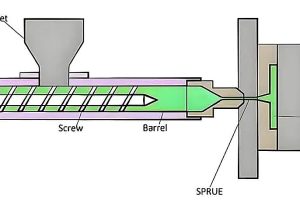
TPU射出成形は、TPUペレットを加熱して金型に注入し、柔軟で弾力性のある部品を作ります。
「TPUは射出成形においてTPEと同じです。」 Injection Molding Complete Guide.
“TPU offers excellent abrasion resistance and flexibility.”真
TPU is widely recognized for its superior abrasion resistance and flexibility, making it ideal for demanding applications like footwear soles and cable jackets.
“TPU injection molding is less efficient than other methods.”偽
TPU射出成形は非常に効率的で、詳細で耐久性のある部品を製造できることから、しばしば選択されます。
TPU素材とは?
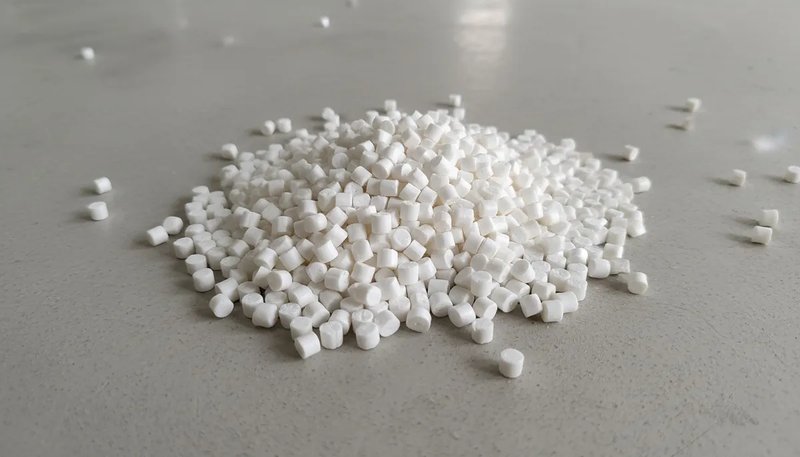
TPU stands for thermoplastic polyurethane elastomer rubber. It’s not a textile in the traditional sense, let alone leather. TPU overcomes many of the shortcomings of PVC, PU leather, and PU coating, and has made major breakthroughs in the application of waterproof and breathable fabrics.
TPU not only has most of the characteristics of rubber and ordinary plastics, but also has excellent comprehensive physical and chemical properties. It is a new type of polymer environmentally friendly material between rubber and plastic. It has both the softness of rubber and the hardness of hard plastic.
“TPU is both flexible and durable.”真
TPU’s unique composition allows it to maintain flexibility while providing strength and resistance to wear and tear, making it ideal for diverse applications.
“TPU is only used in clothing and footwear.”偽
TPUは衣料品や履物で人気があるが、その適応性の高い特性から、自動車、医療、エレクトロニクス産業にも応用されている。
TPU素材の基本特性とは?
TPU材料の基本特性は、このセクションで説明する主なカテゴリーまたは選択肢です。TPU材料は高い弾性、優れた耐摩耗性、温度範囲を超えた柔軟性を提供し、履物、医療機器(チューブやハウジングの基準を満たす)、過酷な環境下での自動車部品などに最適です。 ISO 10993 biocompatibility1 チューブやハウジングの基準)、および過酷な環境下での自動車部品に適しています。
広い硬度範囲
By changing the ratio of each reaction component of TPU, you can get products of different Shore hardness2 硬度が増加しても製品は良好な弾性と耐摩耗性を維持します。TPUの剛性は弾性率で測定できます。
The elastic modulus of rubber is usually 1~10Mpa, TPU is 10~1000Mpa, and plastics such as nylon, ABS, PC, POM, etc. are 1000~10000Mpa.
卓越した耐寒性
TPU has a low TPU glass transition temperature3 and remains elastic and flexible even at minus 35 degrees. It is flexible over a wide temperature range of -40 to 120 degrees Celsius without the need for plasticizers.
耐油性、耐水性、耐薬品性、防カビ性
TPU is good at resisting oils (mineral oils, animal and vegetable oils and lubricants) and many solvents. TPU\’s oil resistance is better than nitrile rubber, and it has an excellent oil resistance life.
テーバー摩耗値は0.5~0.35mgで、プラスチックの中では最も小さい。MoS2、シリコーンオイルグラファイトなどを添加すれば、摩擦係数を下げ、耐摩耗性を向上させることができる。
Tensile strength and elongation: TPU has a tensile strength that is 2-3 times that of natural rubber and synthetic rubber. The tensile strength of polyester TPU is almost 60MPa, and the elongation is almost 410%. The tensile strength of polyether TPU is 50MPa, and the elongation is >30%.
“TPU materials enhance product durability in harsh environments.”真
TPU’s resistance to abrasion and chemicals makes it suitable for use in challenging conditions.
“TPU materials are only suitable for footwear applications.”偽
TPU素材はフットウェアに広く使用されていますが、その汎用性と弾力性から、自動車、医療、工業用途にも最適です。
Tpu射出成形のプロセス条件は?
温度
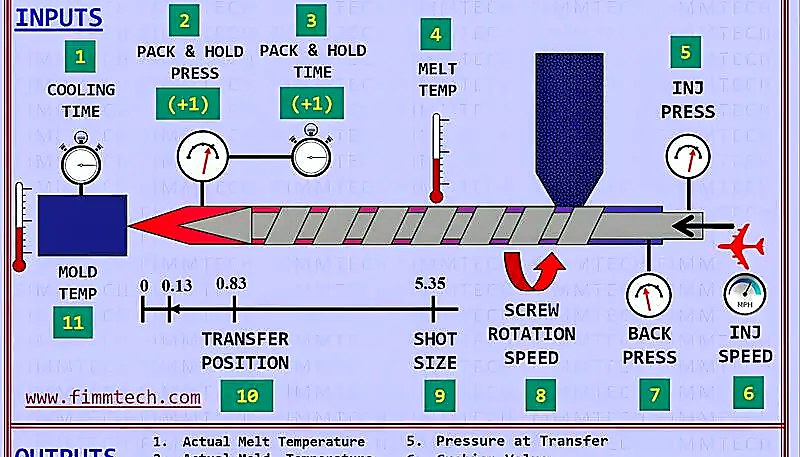
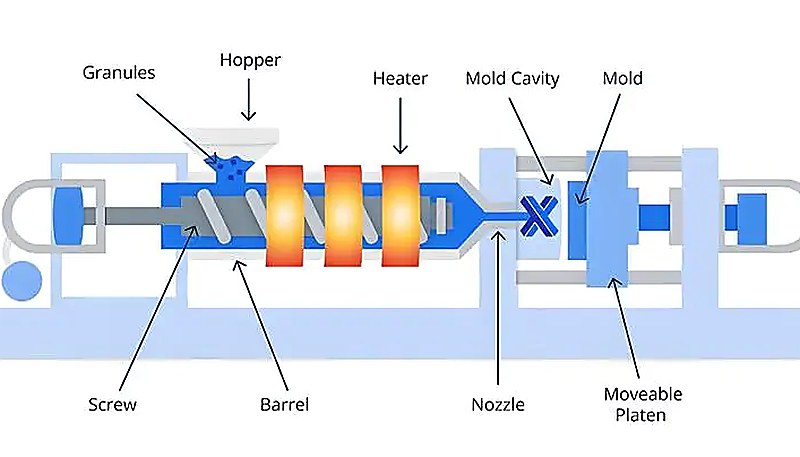
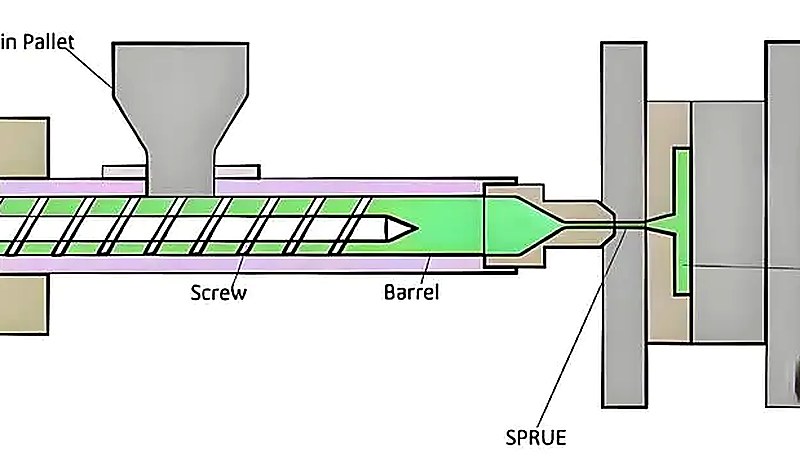
The temperatures you need to control in the TPU molding process are the barrel temperature, nozzle temperature, and mold temperature. The first two temperatures mainly affect the plasticization and flow of TPU, and the last temperature affects the flow and cooling of TPU. Learn more in our 射出成形金型設計ガイド.
樽の温度: バレル温度の選択はTPUの硬度に関連しています。硬度の高いTPUは融解温度が高く、バレル末端の最高温度も高くなります。TPU加工に使用されるバレル温度範囲は177~232℃です。バレル温度の分布は一般にホッパー側(後端)からノズル(前端)にかけて段階的に上昇し、TPUの温度を安定して上昇させて均一な可塑化を実現します。
ノズル温度: The nozzle temperature is usually slightly lower than the maximum temperature of the barrel to prevent the molten material from drooling out of the straight-through nozzle.
金型温度:The mold temperature is very important for the intrinsic performance and appearance quality of TPU products. It is determined by many factors such as the crystallinity of TPU and the size of the product. The mold temperature is usually controlled by a constant temperature cooling medium such as water.
The mold temperature of TPU products is generally 10~60℃.When the mold temperature is low, the melt freezes prematurely and produces streamlines, which is not conducive to the growth of spherulites, resulting in low crystallinity of the product and a late crystallization process, which causes post-shrinkage and performance changes of the product.
圧力
The pressure in the injection molding process includes plasticizing pressure (back pressure) and injection pressure. When the screw retreats, the pressure on the top melt is the back pressure, which is adjusted by the overflow valve.
背圧を高めると、溶融温度が上昇し、可塑化速度が低下し、溶融温度が均一になり、着色剤が均一に混合され、溶融ガスが排出されるが、成形サイクルが長くなる。TPUの背圧は通常0.3~4MPaである。
Injection pressure is the pressure applied by the top of the screw to TPU. It’s used to overcome the flow resistance of TPU from the barrel to the cavity, increase the rate of melt filling, and compact the melt.
In other words, melt viscosity is determined by temperature and pressure, as well as TPU hardness and deformation rate. The higher the shear rate, the lower the viscosity. When the shear rate remains unchanged, the higher the hardness of TPU, the greater the viscosity.
When the shear rate is constant, the viscosity decreases as the temperature increases, but at high shear rates, the viscosity is not as affected by temperature as it is at low shear rates. The injection pressure of TPU is generally 20~110MPa.
時間
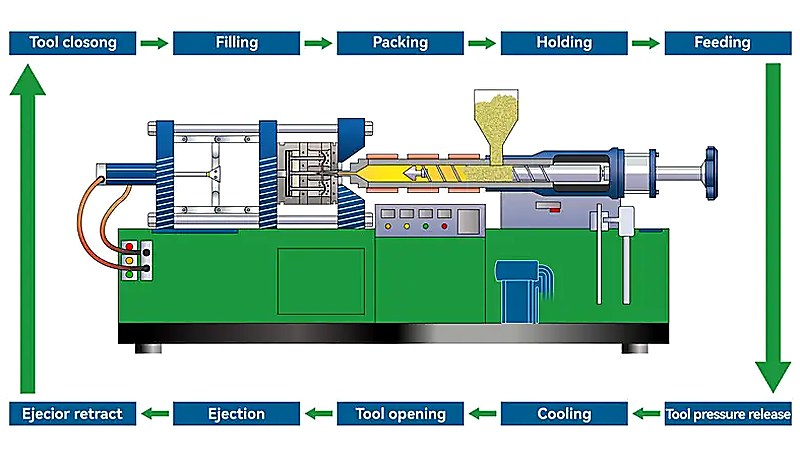
射出成形にかかる時間は成形サイクルと呼ばれる。成形サイクルには、金型に注入する時間、金型を保持する時間、金型を冷却する時間、その他の時間(金型を開く時間、金型から部品を取り出す時間、金型を閉じる時間など)が含まれます。
The molding cycle for TPU is usually determined by how hard the TPU is, how thick the part is, and what shape the part is. The cycle is short for hard TPU, long for thick parts, and long for parts that have a lot of shapes.
射出速度
射出速度は主にTPU製品の構成によって決まる。端面が厚い製品は射出速度が低く、端面が薄い製品は射出速度が速くなります。
スクリュースピード
TPU製品を加工する場合、せん断速度を低くする必要があるので、スクリュー速度を低くする必要がある。TPUのスクリュー速度は一般的に20~80r/minで、20~40r/minが良い。
シャットダウン処理
TPUは高温に長時間さらされると劣化する可能性があるため、シャットダウン後はPS、PE、アクリル樹脂、ABSなどで洗浄する必要がある。シャットダウンが1時間を超える場合は、加熱をオフにする必要がある。
製品の後処理
TPUは、バレル内での可塑化ムラや金型キャビティ内での冷却速度の違いにより、結晶化、配向、収縮にムラが生じることが多い。その結果、製品に内部応力が発生し、これは肉厚の製品や金属インサートがある製品で顕著になります。
Products with internal stress often experience a decrease in mechanical properties during storage and use, silver streaks on the surface, and even deformation and cracking. The way to solve these problems in production is to anneal the product. The annealing temperature depends on the hardness of the TPU product.
硬度の高い製品のアニール温度も高く、硬度の低い製品のアニール温度も低い。温度が高すぎると製品の反りや変形の原因となり、低すぎると内部応力を除去する目的を達成できない。
再生材料のリサイクル
TPUの加工工程では、ランナー、スプルー、規格外部品などの廃材をリサイクルして再利用することができる。試験結果から、100%のリサイクル材料は、新しい材料と混合することなく、機械的特性を著しく低下させることなく、十分に利用することができます。
“Correct TPU injection molding conditions prevent defects in final products.”真
理想的な温度と圧力の設定を守ることで、材料の特性を維持し、反りや気泡などの欠陥を減らすことができる。
“You can use any mold temperature for TPU without affecting the outcome.”偽
不適切な金型温度は、表面仕上げの不良や構造上の問題を引き起こす可能性があり、特定の温度範囲の重要性が強調されている。
TPU素材の射出成形工程における注意点とは?
材料乾燥
Because TPU is easy to absorb moisture and easy to hydrolyze, if the TPU raw materials are not dried thoroughly, it will easily cause processing difficulties.
If carbon powder or masterbatch is used for dyeing, it must be fully mixed with TPU natural colorant and dried together. Generally, a circulating air dryer or a dehumidifying dryer is used to dry TPU.
リサイクル材料加工
ノズル材料、洗濯機材料、または不良な最終製品は、粉砕して新しい材料と混合することができるが、使用する前に再度乾燥させなければならない。機械的な物理的要件によっては、リサイクル材料を射出成形工程で使用することはできません。
全原材料の30%以上。押し出されたリサイクル材料は、別々に処理されるか、新しい射出成形材料に加えられるべきである。また、リサイクル材はあまり長期間保管しないこと。ドライトップを使用する。リサイクルできない廃材は、焼却して熱を得ることができる。
射出速度と射出圧力の制御
The speed and pressure of the injection are important for how well the TPU material flows and fills the mold. If the speed and pressure are too high, the material can break or make bubbles.
金型温度のコントロール
But if the mold temperature is too high, it can cause the material to overheat and decompose or bubble. If the mold temperature is too low, it can cause cold flow marks or shrinkage marks on the surface of the product.
過度の加熱と剪断を避ける
過度の加熱と高いせん断速度は加工中のTPUを劣化させ、変色、ガス発生、機械的特性の永久的な損失を引き起こす可能性があります。特定のTPUグレードに推奨されるバレル温度範囲内に保ち、バレル内の滞留時間を長くしすぎないようにしてください。機械が数分以上アイドル状態になる場合は、温度設定を下げるか、ポリエチレンなどの適合材料でバレルをパージして熱劣化を防止します。
クリーンな射出成形環境の維持
射出成形環境の清浄度は、TPU材料の射出成形品質にとって非常に重要である。不純物や油汚れがあると、金型表面に付着したり、材料に混入したりして、製品表面の欠陥や性能劣化の原因となります。
“Injection molding of TPU requires precise temperature management.”真
TPU’s thermoplastic nature demands consistent temperature regulation to maintain material integrity and prevent defects.
“All TPU materials can be molded under the same conditions.”偽
TPUの配合が異なれば、望ましい結果を得るために、温度、速度、圧力にさまざまな設定が必要になる可能性があり、加工条件を調整する必要性が浮き彫りになる。
TPU射出成形のプロセスフローは?
材料の準備
Before you start injection molding tpu pellets, you need to get them ready. This means drying them, preheating them, and mixing them. Drying gets rid of any moisture in the material so you don’t get bubbles or cracks when you’re injection molding.
金型設計
TPU材料の射出成形金型を設計する際、材料の流動性、収縮性、製品の脱型性などの要素を考慮する必要がある。合理的な金型設計は、製品の不良率を効果的に低減し、生産効率を向上させることができます。
射出成形機の選択
Choosing the right injection molding machine is key to ensuring the stability of the TPU material injection molding process and the quality of the product.
射出成形プロセスパラメータ設定
射出成形プロセスのパラメーターを設定することは、TPU材料の射出成形の品質を確保するために非常に重要である。これらのパラメータには、射出圧力、射出速度、保持時間、金型温度などが含まれます。
By setting the process parameters properly, you can make sure that the TPU material flows and fills the mold completely during the injection molding process, while avoiding defects like bubbles and shrinkage holes.
製品の後処理
射出成形後、TPU製品は内部応力を除去し、寸法安定性を向上させ、表面品質を改善するために後加工が必要である。一般的な後加工方法には、熱処理、冷却、表面処理などがある。
熱処理は、射出成形時に製品に発生する内部応力を除去し、寸法安定性を向上させます。冷却は、製品を素早く成形し、変形を抑えるのに役立ちます。表面処理は、製品の外観と性能を向上させます。
“TPU injection molding results in durable and flexible products.”真
TPU’s unique properties make it ideal for producing parts that require elasticity and resilience.
“TPU is the same as TPE in injection molding.”偽
TPUとTPEは柔軟性という点では共通していますが、組成や性能特性が異なる別個の素材です。
TPU素材の射出成形プロセスにおける欠陥とは?
製品にひび割れがある
TPU処理
脱型不良によるクラックを避けるためには、金型キャビティに十分な脱型勾配を持たせ、エジェクターピンの大きさ、位置、形状を適切にする必要があります。エジェクションの際、製品の各部分の脱型抵抗が均一であること。
Overfilling happens when you shoot too much plastic into the mold. This can be caused by too much injection pressure or too much material being metered.
金型に過剰に充填すると、金型部品へのストレスも大きくなり、金型から部品を取り出すのが難しくなり、部品にひびが入る(あるいは割れる)。このようなことが起こったら、射出圧力を下げて過充填を止める必要があります。
過充填による内部応力は通常、ゲート部分に留まる。ゲート付近は脆く、特に直接ゲート付近は内部応力のために破断する。
製品の表面光沢が悪い
Poor surface gloss is usually caused by inadequate polishing of the mold surface. When the surface condition of the mold cavity is good, increasing the material and mold temperature can improve the surface gloss of the product.
さらに、素材が吸湿したり、揮発性物質や異物が混入したりすると、表面の光沢が悪くなる。そのため、金型や素材に関する要素には注意が必要である。
製品にバリがある
TPU製品にはよくバリが発生する。金型キャビティ内の原料の圧力が大きすぎると、発生するパーティング力がクランプ力より大きくなり、金型が開かざるを得なくなり、原料がオーバーフローしてバリが発生する。
バリが発生する原因は、原料の問題、射出成形機の問題、調整不良、金型自体の問題など様々です。したがって、バリの原因を特定する際には、簡単なものから難しいものへと進めていく。
原料が十分に乾燥されているか、異物が混入していないか、異なる種類の原料が混ざっていないか、原料の粘度の影響をチェックする。
射出成形機の圧力制御システムを正しく調整し、射出速度の調整は、使用されるクランプ力と調整する必要があり、金型の特定の部品が摩耗しているかどうか、排気孔がふさがれているかどうか、流路の設計が合理的であるかどうか。
射出成形機のテンプレート間の平行度にずれがないか、テンプレートのタイロッド力の分布が均一か、スクリューチェックリングとメルトバレルが摩耗していないか。
製品の充填不足
溶けた材料が金型の隅々まで流れないことを充填不足という。成形条件が合わない、金型の設計や作りが悪い、製品に厚い部分と薄い部分があるなど、原因はさまざま。
To fix this, you can raise the temperature of the material and mold, increase the injection pressure and speed, and make the material flow better. You can also make the runner or flow channel bigger, or change the gate\’s position, size, or number to make the material flow better.
製品のゆがみと変形
TPU射出成形品の反りや変形の原因は、冷却・成形時間が短すぎること、金型温度が高すぎて不均一であること、流路システムが非対称であることにある。
そのため、金型を設計する際には、同じプラスチック部品の厚みの差が大きくなりすぎないようにし、過度な鋭角を避け、バッファゾーンが短すぎて厚みの変化が大きくならないようにし、さらに、適切なエジェクターの数を設定し、合理的なキャビティ冷却流路を設計することに注意してください。
“Warping is a common defect in TPU injection molding.”真
反りは、冷却速度が不均一であるために内部応力が発生し、成形品に歪みが生じる。
“Sink marks are only a cosmetic issue in TPU molding.”偽
シンクマークは構造的な弱点の可能性を示し、最終製品の外観と完全性の両方に影響を与える。
If you are evaluating TPU injection molding suppliers for your next project, our Injection Molding Supplier Sourcing Guide provides a practical framework for comparing capabilities, lead times, and pricing across manufacturers.
- TPU injection molding requires precise temperature control: barrel 190–230°C, mold 10–60°C, adjusted to Shore hardness grade.
- Proper drying (80–110°C for 2–3 hours) is essential — residual moisture causes silver streaks and degraded mechanical properties.
- Injection pressure and speed must match TPU hardness: harder grades need higher pressure, softer grades need faster filling.
- Common defects like warping, short shots, and sink marks are preventable by optimizing cooling time, mold temperature, and holding pressure.
- TPU’s unique combination of flexibility, abrasion resistance, and temperature range (−40 to 120°C) makes it indispensable for footwear, automotive, and medical applications.
TPU射出成形に関するよくある質問は何ですか?
What temperature should TPU be injection molded at?
TPU is typically injection molded at barrel temperatures of 190–230°C with mold temperatures maintained between 10–60°C, though the exact settings depend heavily on the Shore hardness grade of the specific TPU material being processed. Harder TPU grades require higher barrel temperatures to achieve proper melt flow, while softer grades process effectively at lower temperatures. The nozzle temperature should generally be set slightly below the maximum barrel temperature to prevent premature drooling. Always consult the manufacturer’s technical data sheet for grade-specific processing windows.
Does TPU need to be dried before injection molding?
Yes, TPU must be thoroughly dried before injection molding to prevent surface defects and ensure consistent mechanical performance in finished parts. The recommended drying conditions are 80–110°C for 2–3 hours using a dehumidifying hopper dryer, bringing moisture content below 0.1% by weight. Residual moisture above this threshold causes silver streaks, surface bubbles, and significantly degraded mechanical properties including reduced tensile strength and elongation at break. Ester-based TPUs tend to absorb more moisture than ether-based grades and may require extended drying cycles. Always verify dryness with a moisture analyzer before loading material into the hopper.
What is the difference between ester-based and ether-based TPU for injection molding?
Ester-based TPU delivers superior mechanical strength, abrasion resistance, and oil resistance, making it the preferred choice for heavy-duty applications such as industrial conveyor belts, hydraulic seals, and sport shoe soles. However, ester-based grades are more susceptible to hydrolysis in humid or wet environments over time. Ether-based TPU offers excellent hydrolysis resistance, better low-temperature flexibility down to −40°C, and inherent microbial resistance, which makes it the standard choice for medical tubing, outdoor cable jackets, and aquatic sports equipment. Both types process similarly on standard injection molding machines, but drying requirements and optimal melt temperature profiles may differ between grades.
What causes warping in TPU injection molded parts?
Warping in TPU injection molded parts is primarily caused by uneven cooling across the part, insufficient cooling time before ejection, or inconsistent mold surface temperatures between the core and cavity halves. Additional contributing factors include excessive injection pressure combined with low mold temperature, and part geometries with significant wall thickness variations. The most effective countermeasures are extending the cooling cycle, ensuring uniform mold temperature through balanced cooling channel design, and reducing the temperature differential between the core and cavity to within 5°C.
Can TPU be overmolded onto other materials?
Yes, TPU is one of the most commonly overmolded materials and bonds well to substrates including ABS, PC, PA, and metal inserts when proper processing conditions are met. Successful overmolding requires adequate melt temperature for chemical bonding, clean substrate surfaces, and compatible material chemistry between the TPU and the substrate. Two-shot (two-component) molding is the most efficient production method, widely used for consumer electronics grips, power tool handles, and automotive interior components where a soft-touch surface is needed over a rigid structure.
当社の経験では、乾燥、バレル温度、またはせん断速度が安定したプロセスウィンドウから外れると、TPUの欠陥が急速に増加することが確認されています。当社工場では、90トンから1850トンまでの47台の射出成形機で400種類以上の材料を加工しています。TPUの試作では、通常0.3MPaから4.0MPaの背圧、20.0MPaから110.0MPaの射出圧力、20.0r/minから80.0r/minのスクリュー速度から開始し、硬度と肉厚に応じて調整します。
より優れた製品のためにTPU射出成形を習得するには?
The injection molding process of TPU materials is a complex and delicate technology that requires comprehensive consideration of multiple factors such as material properties, mold design, injection molding machine selection, and process parameter setting.
射出成形工程における重要なリンクと技術ポイントを正確にコントロールすることで、高品質・高精度のTPU製品を生産することができる。今後、TPU材料の性能の継続的な向上と射出成形技術の継続的な革新により、TPU材料の射出成形技術はより多くの分野で広く使用され、関連産業の持続可能な発展を促進すると確信しています。
-
ISO 10993 biocompatibility: ISO 10993 biocompatibility refers to a series of standards for evaluating the biocompatibility of medical devices, relevant for medical-grade TPU grades used in tubing and device housings. ↩
-
Shore hardness: Shore hardness refers to a standardized measure of material hardness, where Shore A (0–100) is used for softer elastomers like TPU and Shore D for harder plastics. ↩
-
TPU glass transition temperature: TPU glass transition temperature refers to the temperature at which TPU transitions from a rigid to a rubbery state, typically between −40 °C and −20 °C for ether-based grades. ↩


 EN
EN  ES
ES  FR
FR  DE
DE  PT
PT  AR
AR  RU
RU  JA
JA  KO
KO  IT
IT  NL
NL  TR
TR  PL
PL 