 Skip to content
- TPU is a flexible, abrasion-resistant thermoplastic elastomer processed at 180–230°C on standard injection molding machines.
- Shore A hardness spans 60A–98A, covering everything from soft grips to semi-rigid structural parts.
- Pre-drying at 80–100°C for 2–4 hours is mandatory — moisture above 0.02% causes splay and chain scission.
- TPU outperforms TPE in tensile strength (25–55 MPa) and abrasion resistance, making it ideal for demanding applications.
- Design for TPU requires generous draft angles (2–3° for soft grades) and gate diameters ≥1.5 mm.
What Is TPU Injection Molding?
TPU moulage par injection1 est le processus d'injection de polyuréthane thermoplastique fondu dans un moule en acier pour produire des pièces flexibles et résistantes à l'abrasion. Le matériau combine une élasticité semblable au caoutchouc avec une aptitude au traitement thermoplastique, ce qui le rend idéal pour le surmoulage, les joints et les composants d'usure. Pour une vue plus large, voir notre moulage par injection guide et le moule d'injection2 aperçu.
Pour une vue plus large, notre injection molding complete guide couvre les fondamentaux du procédé, le comportement des matériaux et les décisions de production.
For broader context, compare this topic with supplier sourcing guide.
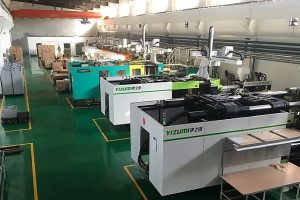
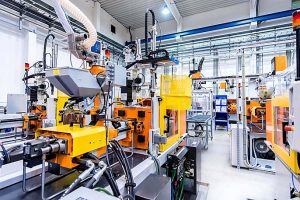
Dans notre usine de Shanghai, nous exploitons 47 machines de moulage par injection de 90T à 1850T, donc nous considérons chaque décision de fabrication d'outillage comme une question de fenêtre de processus, pas seulement un prix.
Le moulage par injection TPU consiste à fondre des granulés de polyuréthane thermoplastique et à les injecter dans un moule pour fabriquer des pièces flexibles, semblables au caoutchouc. Il fonctionne sur les mêmes machines utilisées pour l'ABS, le PP ou le nylon.
In our factory, TPU has become one of the most requested elastomeric materials over the past five years. Customers come to us when they need parts that combine rubber-like flexibility with thermoplastic recyclability — think cable overmolds, wearable device skins, and industrial seals. The chemistry behind TPU consists of alternating hard segments (from diisocyanate and chain extender) and soft segments (from polyol), which create its signature combination of strength and elasticity at the molecular level.
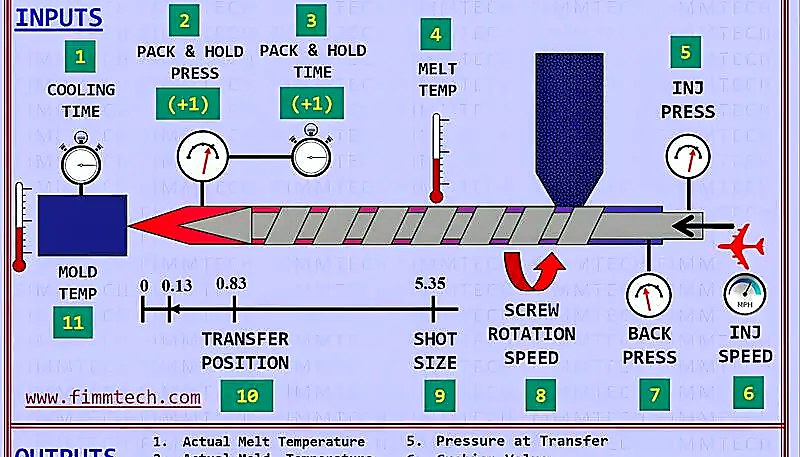
TPU injection molding follows the same fundamental cycle as any thermoplastic: plasticizing, injection, packing, cooling, and ejection. However, TPU’s sensitivity to moisture and its unique flow behavior demand tighter process control than commodity plastics. The reward is a part with outstanding mechanical performance that no other thermoplastic fully replicates.
““Le TPU peut être injecté sur les mêmes machines utilisées pour l'ABS, le PP et le nylon.””Vrai
Standard reciprocating-screw injection molding machines process TPU effectively. The key differences are parameter settings (lower barrel temperatures of 180–230°C, slower injection speeds) and the mandatory pre-drying step — not the equipment itself.
« Vous avez besoin d'équipements spécialisés de traitement du caoutchouc pour mouler des pièces TPU. »Faux
TPU is a thermoplastic elastomer, not a thermoset rubber. It melts and flows like a thermoplastic, so it can be processed on any standard injection molding machine without special rubber-processing attachments or vulcanization ovens.
What Are the Key Material Properties of TPU?
Les propriétés clés du TPU sont la dureté Shore A de 60A à 98A, la résistance à la traction de 25 à 55 MPa et la perte par abrasion de 20 à 80 mm³. Elles sont déterminées lors de la synthèse par le rapport entre segments rigides et flexibles.
| Propriété | Typical Value | Significance |
|---|---|---|
| Shore Hardness | 60A–98A / 40D–80D | Soft grips to semi-rigid housings |
| Résistance à la traction | 25–55 MPa | Higher than most TPEs |
| Allongement à la rupture | 300–700% | Excellent flexibility |
| Operating Temp. | –40°C to +100°C | Outdoor and refrigerated use |
| Résistance à l'abrasion | Perte DIN de 20 à 80 mm³ | Superior to rubbers and TPEs |
| Absorption de l'eau | 0.5–2.0% (24 hr) | Mandatory pre-drying |
Polyester-based TPU grades offer superior oil resistance and abrasion performance, while polyether-based grades excel in hydrolysis resistance and low-temperature flexibility. For marine or humid-environment parts, we always specify polyether TPU. For automotive underhood components exposed to hydraulic fluid, polyester grades perform better.
TPU process parameters are barrel temp 180–230°C, mold temp 20–50°C, slow injection speed, and 2–4 hour pre-drying at 80–100°C. Moisture below 0.02% is mandatory.
| Paramètres | Range | Notes |
|---|---|---|
| Pre-drying Temp. | 80–100°C | 2–4 hours; dehumidifying dryer |
| Barrel Temp. (Rear) | 170–190°C | Prevents premature melting |
| Barrel Temp. (Front) | 190–230°C | 10–30 MPa |
| Température du moule | 20–50°C | Higher = better surface |
| Pression d'injection | 50–120 MPa | Softer grades need less |
| Pression de maintien | 60–80% of peak | Prevents sink marks |
| Temps de refroidissement | 15–60 seconds | Flexible parts need longer |
| Vitesse de la vis | 30–80 RPM | Slow prevents shear damage |
In our experience, TPU’s sensitivity to residence time is one of the trickiest parameters to manage. If TPU sits in the barrel at processing temperature for more than 5–10 minutes, it begins to degrade — you’ll see yellowing and a sharp drop in tensile properties. We always purge the machine between runs and minimize shot-to-cycle intervals during production startup.
What Are Common Defects in TPU Injection Molding and How Can You Prevent Them?
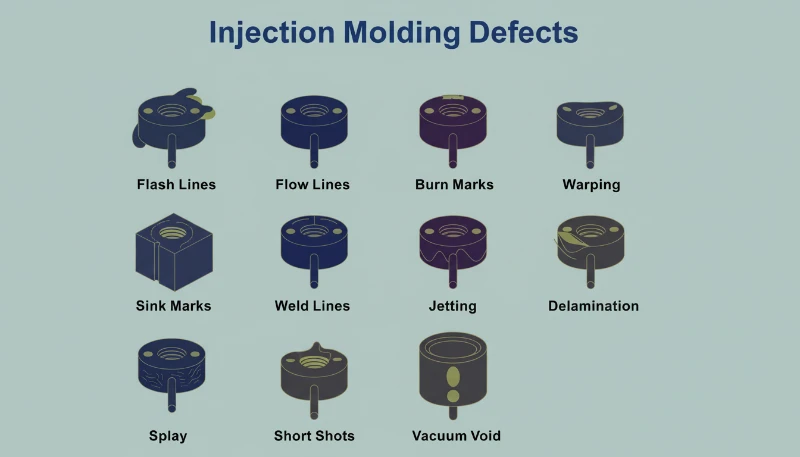
The most common TPU defects are splay marks (moisture), mold sticking (high tack), short shots (low pressure), and yellowing (thermal degradation). Each has a specific root cause and a practical fix.
| Défaut | Empêche les marques d'affaissement sur la surface opposée | Prevention |
|---|---|---|
| Splay / Silver Streaks | Moisture in material | Dry at 90°C for 3–4 hours |
| Part Sticking | High elasticity, low draft | Increase draft to 2–3° |
| Bubbles / Voids | Thermal degradation | Reduce barrel temp; improve venting |
| Coup court | Insufficient fill pressure | Raise injection pressure 10–20% |
| Flash | Overpacking; worn parting line | Reduce holding pressure |
| Yellowing | Excessive temp or residence | Keep barrel below 240°C; purge |
We’ve found that part sticking is the single biggest production bottleneck for soft TPU grades. In one project for a wearable fitness device, we were running Shore 75A TPU with a complex undercut geometry. The fix wasn’t more release agent — it was increasing the draft angle from 1° to 2.5° on the sidewalls and redesigning the ejector pin locations. Cycle time dropped from 45 seconds to 28 seconds after the mold modification.
« Le TPU doit être séché à 80–100°C pendant 2–4 heures avant chaque cycle de production. »Vrai
Pre-drying is non-negotiable. Moisture content above 0.02% causes hydrolytic chain scission during the melt phase, producing splay marks, surface bubbles, and significant reduction in tensile strength.
« Si les granulés TPU sont stockés dans un sac scellé, ils ne nécessitent pas de séchage. »Faux
TPU is highly hygroscopic — it can absorb enough moisture in 30–60 minutes of open-air exposure to cause splay marks and chain scission. Pre-drying is mandatory regardless of storage conditions.
What Industries Rely on TPU Injection Molded Parts?
TPU is widely used across automotive, footwear, medical, consumer electronics, and industrial applications. Its combination of flexibility, abrasion resistance, and chemical tolerance makes it the go-to elastomer for demanding environments.
Automobile : Door seals, gearshift boots, cable grommets, and vibration-damping mounts. Polyester-based TPU grades offer the fuel and oil resistance required for underhood applications. We’ve produced TPU cable harness guides for EV battery packs where dimensional stability at –30°C was a hard requirement.
Footwear: Les semelles intermédiaires, les semelles externes et les embouts utilisent le TPU pour une résistance exceptionnelle à l'abrasion (perte DIN de 20 à 40 mm³) et une endurance à la fatigue en flexion. Les semelles externes TPU moulées par injection résistent à des millions de cycles de flexion sans fissuration.
Dispositifs médicaux : Medical-grade TPU formulations are used for surgical tubing, catheter components, and wearable sensor housings. Polyether TPU’s hydrolysis resistance and biocompatibility (ISO 10993) make it suitable for body-contact applications. We produce flexible TPU housings for continuous glucose monitoring devices.
““Le TPU peut tolérer des contre-dépouilles mineures en se flexant lors du démoulage.””Vrai
TPU’s elasticity allows it to stretch over minor undercuts without damage, reducing tooling complexity by eliminating sliders or lifters.
““Les pièces TPU sont trop coûteuses pour les produits de consommation à grand volume.””Faux
TPU costs more per kilogram than commodity TPE, but its longer mold life (300K+ shots), lower scrap rate, and runner recyclability often make it cheaper per-part in volumes above 10,000 units.
Électronique grand public : Phone cases, cable overmolds, earphone tips, and smartwatch bands. TPU’s chemical resistance to sweat, cleaning solvents, and UV light makes it durable in daily consumer environments.
Industrial: Hydraulic hose couplings, conveyor components, roll covers, and protective boots from harder TPU grades (Shore 90A–60D). Abrasion and tear resistance exceeds natural rubber by 3–5× in high-speed conveyor applications.
How Does TPU Compare to TPE, Silicone, and Rubber?
Le TPU est plus résistant et plus résistant à l'abrasion que les élastomères thermoplastiques standard (TPE), avec une résistance à la traction de 25 à 55 MPa contre 8 à 20 MPa pour le TPE. Il offre également une recyclabilité que le caoutchouc vulcanisé et le LSR ne peuvent égaler.
| Propriété | TPU | TPE | Silicone | Rubber |
|---|---|---|---|---|
| Résistance à la traction | 25–55 MPa | 8–20 MPa | 6–12 MPa | 10–30 MPa |
| Moulage par injection TPU : Guide complet pour les ingénieurs | Excellent | Bon | Pauvre | Very Good |
| Temp. Range | –40 to +100°C | –50 to +80°C | –60 to +200°C | –40 to +100°C |
| Recyclable | Yes | Yes | Non | Non |
| Pre-drying | Mandatory | Sometimes | Non | N/A |
We’ve run direct comparison projects for clients choosing between TPU and TPE for phone case applications. TPE (SEBS-based) costs 20–30% less per kilogram and processes more easily, but drop test results were consistently 15–25% worse with TPE versus a comparable Shore 85A TPU grade. When mechanical performance under repeated impact is critical, TPU wins.
What Design Guidelines Should You Follow for TPU Parts?
TPU parts are best designed with 1.5–4.0 mm walls, 2–3° draft for soft grades, gate diameter ≥1.5 mm, and gradual transitions. TPU flexes enough to demold 3–5% undercuts without sliders.
Épaisseur de la paroi : Very thin walls (6 mm) produce long cooling times and potential voids. Uniform wall thickness is especially important with TPU — sudden changes cause differential shrinkage that creates warpage.
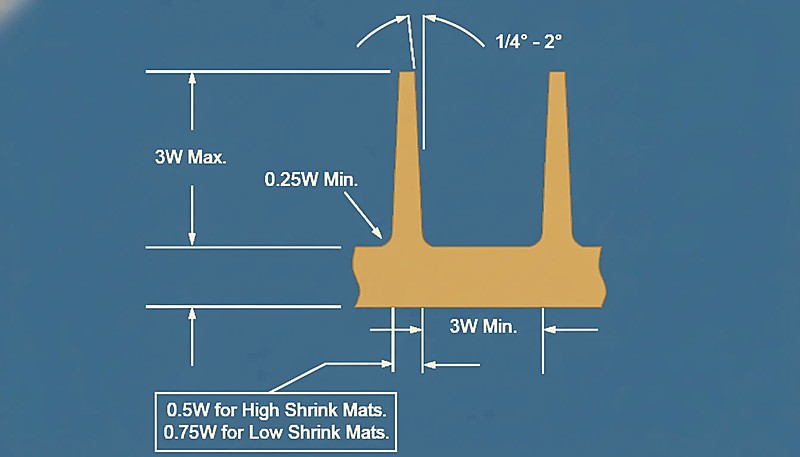
Angles d'ébauche : This is where we see the most design revisions. Shore 60A–75A grades need 2–3° minimum, and 3–5° for textured surfaces. TPU grips the mold core during cooling, so generous draft is essential for reliable ejection.
Sous-coupes : Unlike rigid plastics, TPU can accommodate minor undercuts (3–5% of part diameter) by flexing during demolding. This reduces tooling complexity — many features that would require sliders in ABS can be directly demolded with TPU.
Conception de la porte : Submarine gates are popular for TPU because they self-degate. Gate diameter must be 1.5–2.5 mm minimum — undersized gates cause excessive shear. Avoid pin gates smaller than 1.0 mm with soft grades.
| Zone du point de contrôle 1 | Vérification du point de contrôle 1 |
|---|---|
| Tooling | Confirmer comment la conception du moule affecte le moulage par injection TPU : Guide complet de traitement pour les ingénieurs. |
| Matériau | Check resin behavior, shrinkage, heat, and cosmetic risks. |
| Qualité | Ask for inspection evidence before production approval. |
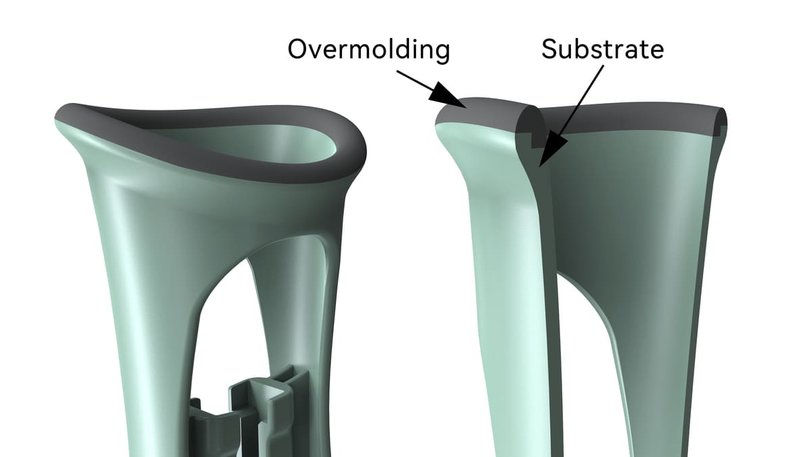
Surmoulage : Le TPU est un des matériaux les plus polyvalents pour le surmoulage sur substrats rigides (ABS, PC, PC/ABS, nylon). Nous avons surmoulé avec succès du TPU Shore 85A sur des boîtiers PC/ABS, obtenant une force d'adhérence supérieure à 5 MPa dans les tests de pelage. Pour plus d'informations sur conception de moules d'injection design principles, see our complete guide.
Les vérifications clés avant une demande de prix sont la confirmation du grade de résine, des tolérances, des zones cosmétiques et du volume annuel. La durée de vie de l'outil, le nombre de cavités et le niveau d'automatisation influent également sur le prix unitaire.
The RFQ should also ask for manufacturing assumptions. Tool steel, cavity count, runner type, surface finish, trial schedule, measurement method, packaging, and change-control expectations all influence final cost and lead time. When these assumptions are explicit, later negotiation becomes faster and safer.
Une réponse technique solide et détaillée identifiera toujours les informations manquantes plutôt que de dissimuler l'incertitude. Si le fournisseur demande des informations sur la tolérance cumulée, les limites des vestiges de la porte, la certification de la résine, l'accord des couleurs ou la variation de la demande annuelle, cela signifie généralement que l'équipe d'ingénierie évalue le projet à la profondeur de la production plutôt que de faire une estimation à l'aveugle.
Pour les projets de type ZetarMold, le meilleur résultat est un chemin de fabrication clair : revue DFM, confirmation de conception du moule, construction de l'outillage, échantillonnage, inspection, action corrective et lancement de production. Cette séquence offre une autorité pratique et donne aux acheteurs une liste de contrôle utile pour leur prochaine conversation avec un fournisseur.
Quelles preuves de production examiner avant d'approvisionner un fournisseur TPU ?
Les principales preuves de production sont les essais de moulage, les rapports dimensionnels et les certificats de résine. Avant d'approbation d'un fournisseur TPU pour la production, les données du premier article doivent indiquer les valeurs mesurées pour chaque dimension critique, pas seulement des tampons de réussite/échec.
Lorsqu'un projet implique des aspects cosmétiques ou des tolérances strictes plastique3 pièces, les preuves doivent également inclure les règles d'approbation des échantillons convenues avant le début de la production en série. Les échantillons limites, les gabarits de mesure, les standards de couleur et les tableaux de classification des défauts doivent être établis et clairement documentés avant la mise en production pour éviter des litiges subjectifs ultérieurs.
Questions fréquemment posées sur l'injection TPU
Quelle est la quantité minimale de commande pour les pièces moulées par injection en TPU ?
Il n'y a pas de minimum universel — cela dépend de l'amortissement des outils. Pour un moule simple coûtant $3 000–5 000, des quantités de 500–2 000 pièces peuvent être économiques. Pour les pièces TPU à grand volume (100 000+ unités/an), les moules multi-empreintes avec 4–8 cavités sont la norme.
Puis-je utiliser du TPU recyclé (rTPU) pour le moulage par injection ?
Oui, mais avec des limites. Le TPU recyclé a généralement une résistance à la traction inférieure de 10–20% et une élasticité réduite. Pour les applications non structurelles, le rTPU fonctionne bien. Pour les pièces porteuses, mélanger 10–20% de rTPU avec de la résine vierge est un compromis courant.
Combien de temps un moule d'injection TPU dure-t-il généralement ?
Un moule en acier P20 de qualité production pour le TPU dure généralement 300 000 à 500 000 cycles. Le TPU est moins agressif pour l'acier du moule que les matériaux chargés d'abrasifs, donc la durée de vie du moule est principalement déterminée par le nombre de cycles.
Pourquoi ma pièce en TPU jaunit-elle après le moulage ?
Le jaunissement est presque toujours causé par une dégradation thermique — température du cylindre trop élevée (au-dessus de 240°C), temps de séjour excessif, ou hydrolyse induite par l'humidité. Vérifiez d'abord votre profil de température du cylindre et purgez la machine avant la production.
Quel est le taux de retrait typique pour le TPU ?
Le retrait du TPU varie de 0,8 à 2,0% selon la dureté. Les grades plus souples (Shore 60A–75A) rétrécissent de 1,5 à 2,0%, tandis que les grades plus durs (Shore 90A–60D) rétrécissent de 0,8 à 1,2%. Consultez toujours la fiche technique du matériau et effectuez des tirs d'essai avant de finaliser les dimensions du moule.
Le TPU est-il sûr pour les applications en contact alimentaire ?
Certaines qualités de TPU sont conformes à la FDA pour le contact alimentaire selon les règlements 21 CFR, mais la qualité spécifique doit être vérifiée. Toutes les formulations ne sont pas sûres pour les aliments — les colorants et additifs peuvent disqualifier une qualité.
Quelle est la différence entre le TPU polyester et polyether ?
Polyester TPU offers better oil resistance and abrasion performance; polyether TPU provides superior hydrolysis resistance and low-temperature flexibility. For marine or humid environments, specify polyether. For automotive underhood applications, choose polyester.
Get Expert TPU Injection Molding Support
Le principal facteur de coût dans le moulage TPU n'est pas le prix du matériau — c'est de réussir le séchage, les angles de dépouille et la conception de la porte dès la première fois. En 20 ans d'utilisation des outils TPU à ZetarMold, nos 8 ingénieurs seniors utilisent la simulation de flux de moule sur chaque projet TPU avant la coupe de l'acier, captant les déséquilibres de remplissage et les risques de lignes de joint dès le début.
Avec 47 machines de moulage par injection (90T à 1850T), plus de 400 options de matériaux et des systèmes qualité certifiés ISO 9001/13485, nous disposons des équipements et de l'expérience pour traiter les projets TPU du prototype à la production en série. Contactez-nous pour discuter de votre projet TPU — notre équipe technique anglophone répond dans les 24 heures.
-
moulage par injection: le moulage par injection désigne le processus de production qui fait fondre le plastique, l'injecte dans une cavité de moule, refroidit la pièce et répète le cycle pour une fabrication en volume stable. ↩
-
moule d'injection: moule d'injection désigne un moule d'injection est l'outil de précision qui définit la géométrie de la pièce, le comportement de refroidissement, l'éjection, l'entrée, la finition de surface et la répétabilité. ↩
-
plastique: Le plastique est une famille de matériaux dont l'écoulement, le retrait, la résistance, la résistance thermique, la qualité esthétique, le temps de cycle et la performance à long terme influencent les décisions de moulage. ↩



 EN
EN  ES
ES  FR
FR  DE
DE  PT
PT  AR
AR  RU
RU  JA
JA  KO
KO  IT
IT  NL
NL  TR
TR  PL
PL 