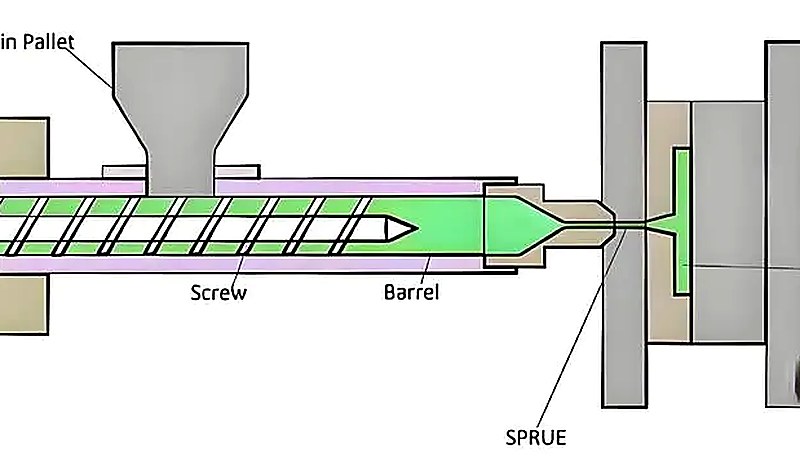
Acabas de recibir un pedido urgente de cinco cubiertas de plástico diferentes, cada una necesita su propio molde. Tu planta de producción está completamente reservada, y la idea de cambiar cinco moldes de tamaño completo —cada cambio consumiendo de dos a cuatro horas— hace que tu calendario sea imposible. Un sistema de molde de inyección MUD está construido exactamente para esta situación: un marco universal permanece en la prensa, y tú intercambias moldes de inserción ligeros en minutos en lugar de horas.
Este artículo desglosa qué es realmente un sistema MUD, cuándo tiene sentido (y cuándo no), cómo diseñar para él y cuánto cuesta en comparación con las herramientas convencionales. He visto talleres malgastar dinero en bases MUD para aplicaciones incorrectas y otros ahorrar miles al mes en las correctas; la diferencia radica en comprender las compensaciones.
- Un sistema MUD utiliza un marco universal con moldes de inserción intercambiables para cambios rápidos.
- Los cambios de herramienta toman minutos en lugar de horas con una base de cambio rápido MUD.
- Los moldes MUD funcionan mejor para series de producción de bajo volumen, múltiples piezas o prototipos.
- Las limitaciones de tamaño de inserción y volumen de inyección hacen que MUD no sea adecuado para piezas grandes o de alta cavitación.
- Una inserción MUD cuesta un 40–60% menos que una base de molde convencional completa.
¿Qué es un molde de inyección MUD?
Un molde de inyección MUD es un sistema de utillaje de cambio rápido en el que un componente estandarizado base del molde1 permanece montado en el moldeo por inyección máquina. En lugar de retirar un molde completo cada vez que cambia el producto, el operario sustituye un inserto más pequeño que contiene la cavidad y el núcleo. Esto reduce el tiempo de preparación cuando varias piezas relacionadas comparten la misma prensa, familia de materiales y ventana de producción.
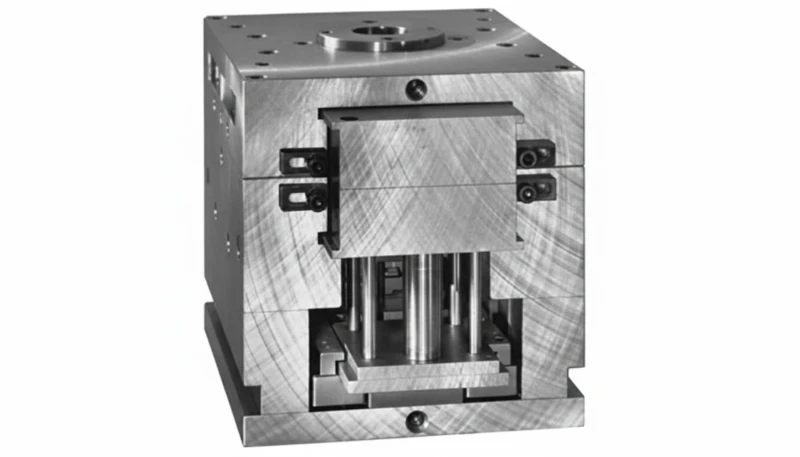
Piense en un taladro eléctrico: el taladro permanece en la mano y solo se cambia la broca. El bastidor MUD es el taladro; el molde de inserción2 es el componente. Los tamaños estándar de bastidor van aproximadamente de 6 inches a 18 inches y admiten moldes de inserto de distintas dimensiones. Cada bastidor incluye pasadores guía, casquillos y mecanismos de cierre que alinean y fijan el inserto en su posición.
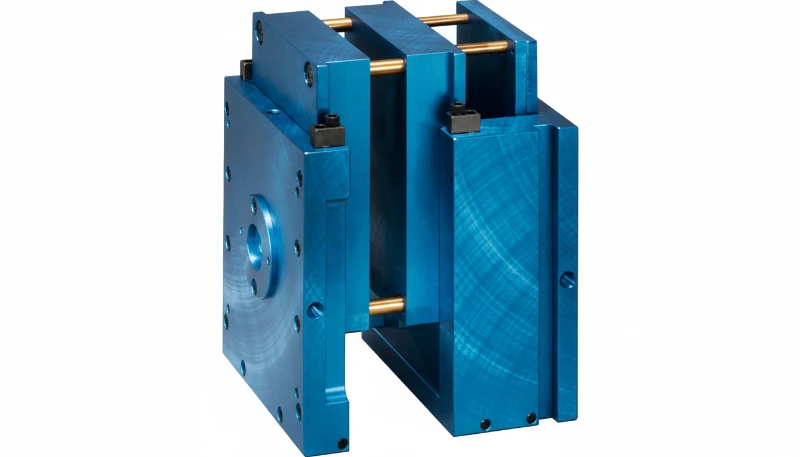
En nuestro taller, hemos utilizado marcos estilo MUD para trabajos que requieren múltiples piezas pequeñas de la misma familia de material, como carcasas de conectores, cubiertas pequeñas y envolventes de sensores. La capacidad de intercambiar inserciones sin sacar todo el molde de la prensa es un verdadero ahorro de tiempo cuando varios SKU se ejecutan uno tras otro. Con 47 máquinas de moldeo por inyección que van de 90T a 1850T, tenemos la flexibilidad de dedicar ciertas prensas para configuraciones de herramientas de cambio rápido como estas. Nuestro equipo de producción tiene la experiencia para manejar intercambios rápidos de inserciones sin sacrificar la calidad de la pieza o el tiempo de actividad de la prensa.
La distinción clave de un molde estándar es que el marco MUD maneja toda la infraestructura: alineación, carrera de eyección y montaje en prensa. La inserción se centra en la geometría de la pieza. Esta separación es lo que impulsa tanto el ahorro de costos como los cambios de herramienta más rápidos. No estás reconstruyendo la rueda cada vez que necesitas una nueva pieza; solo estás cambiando el neumático. Ese margen de planificación adicional también protege el tiempo de muestreo.
¿Cómo funciona un sistema de cambio rápido MUD?
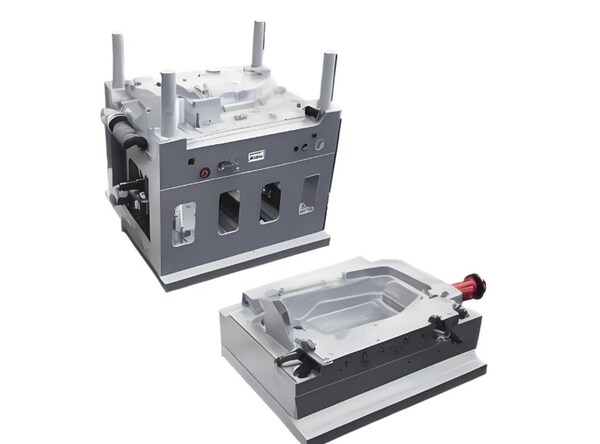
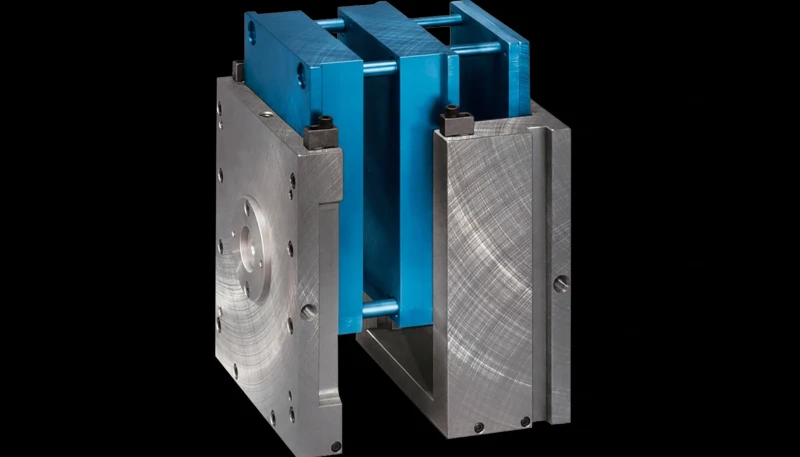
Un sistema de cambio rápido de lodo es una secuencia de proceso controlada que funciona a través de las etapas y configuraciones explicadas en esta sección. El sistema MUD tiene tres componentes principales: el marco maestro, el molde de inserción y el mecanismo de bloqueo. El marco maestro se atornilla a las placas de la prensa al igual que un molde convencional. Contiene el conjunto de la placa eyectora, juegos de pasadores guía, pilares de soporte y un bolsillo mecanizado dimensionado para aceptar una clase específica de inserción.
El molde de inserción es una unidad autónoma que contiene el núcleo, la cavidad, el sistema de canalización y sus propios circuitos de enfriamiento. Cuando necesitas cambiar la producción de la Pieza A a la Pieza B, el operador abre la prensa, desbloquea la inserción actual, la desliza hacia afuera, coloca la nueva inserción, la bloquea y cierra el molde. Todo el proceso suele tomar de 10 a 30 minutos, dependiendo del tamaño del marco y la complejidad de la conexión de enfriamiento y eyección.
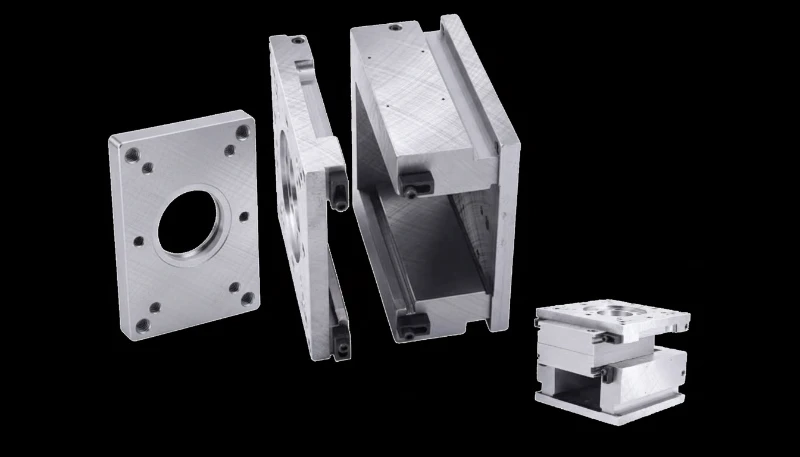
Algunas configuraciones MUD avanzadas integran accesorios de desconexión rápida para líneas de agua y conexiones eléctricas, reduciendo aún más el tiempo de cambio. En lugar de apretar y aflojar manualmente mangueras de refrigerante individuales, el operador conecta un único bloque de múltiple que dirige el agua de enfriamiento a los canales correctos dentro del inserto. Estos accesorios de desconexión rápida agregan costo inicial al marco, pero se pagan rápidamente en un entorno de producción de alta mezcla donde podría cambiar insertos tres o cuatro veces por turno.
Compara eso con un cambio de molde convencional: necesitas bajar el molde de la prensa usando una grúa o montacargas, desconectar todas las líneas de agua y conexiones eléctricas, mover físicamente un molde que puede pesar cientos de kilogramos, y luego revertir todo el proceso para el nuevo molde. Eso son de dos a cuatro horas de tiempo de inactividad en un buen día.
Los mecanismos de bloqueo varían según el fabricante. El sistema MUD original de DME utiliza una abrazadera de cuña que se aprieta lateralmente. Otros sistemas emplean abrazaderas hidráulicas, cierres de palanca o acoplamientos de liberación rápida tipo bayoneta. Como ingeniero, lo importante es comprender cómo afecta el método de bloqueo a la alineación del inserto: una desalineación de apenas unas milésimas de pulgada producirá rebaba o piezas fuera de tolerancia.
En nuestra planificación de producción, las herramientas estilo MUD son más útiles cuando los cambios de inserción pueden ejecutarse en prensas compatibles sin largas ventanas de configuración. ZetarMold tiene más de 20 años de experiencia en herramientas y 47 máquinas de moldeo por inyección de 90T a 1850T, por lo que nuestros ingenieros pueden hacer coincidir el tamaño de la inserción, la tonelaje, el material y la frecuencia de cambio esperada antes de recomendar una base MUD.
¿Cuándo debe usar un sistema MUD?
Esta sección trata sobre el uso de un sistema de lodo y su impacto en el costo, la calidad, el tiempo o el riesgo de abastecimiento. Los sistemas MUD brillan en escenarios específicos. Aquí es donde realmente agregan valor, basado en lo que hemos visto ejecutando moldes de producción durante los últimos 20+ años. El hilo común en todos estos casos de uso es que necesita ejecutar múltiples piezas diferentes en la misma prensa en ventanas de producción relativamente cortas, y el costo de construir moldes de tamaño completo dedicados para cada pieza no puede justificarse por el volumen.
Familias de múltiples piezas en el mismo material
Si está moldeando una familia de cinco carcasas pequeñas en ABS — mismo espesor de pared, mismo estilo de compuerta, misma contracción — un marco MUD le permite ejecutarlas todas en una prensa con un cambio mínimo. Este es el caso de uso típico. Moldea SKU-1 durante cuatro horas, cambia los insertos, moldea SKU-2 durante tres horas, y así sucesivamente. Una prensa, un marco, cinco insertos. La economía mejora aún más cuando se tiene en cuenta que cada inserto solo necesita mantenimiento en su propio horario — no se lleva todo el marco fuera de línea para dar servicio a una cavidad.
Producción de bajo volumen y prototipos
Cuando los volúmenes anuales son inferiores a 10,000 piezas por SKU, construir cinco moldes completos dedicados es difícil de justificar financieramente. ¿Cinco insertos MUD al 40–60% del costo de cinco moldes completos? Esa cuenta funciona. Regularmente recomendamos este enfoque a clientes que necesitan puentes de prototipo o corridas de prueba de mercado antes de comprometerse con herramientas de producción. El perfil de riesgo también es más bajo: si el producto no gana tracción en el mercado, pierdes unos pocos miles de dólares por inserto en lugar de decenas de miles por molde completo.
Cambios de diseño frecuentes
Durante el desarrollo del producto, cuando el diseño cambia cada pocas semanas, modificar un pequeño inserto es más rápido y económico que rehacer una base de molde completa. El inserto contiene solo los elementos específicos de la geometría, por lo que su costo de modificación se limita al acero de la cavidad y del núcleo, no a todo el conjunto del marco. Nuestros 8 ingenieros senior trabajan regularmente con clientes en diseños de insertos iterativos durante la fase de validación.
También hay una ventaja de programación que la gente a menudo pasa por alto. Si su planificador de producción necesita colocar un trabajo pequeño y urgente entre dos corridas más grandes, un inserto MUD le permite hacerlo sin interrumpir el horario principal. Ejecuta el trabajo grande, pausa durante 20 minutos para cambiar el inserto urgente, ejecuta el trabajo corto, vuelve a cambiar y reanuda. Sin grúa, sin recalibración de la prensa, sin reequilibrar el piso de producción.
¿Cuáles son las limitaciones de los moldes MUD?
Las limitaciones de los moldes de lodo son las principales categorías u opciones explicadas en esta sección. No sería honesto si solo hablara de los beneficios. Los sistemas MUD tienen limitaciones reales que los convierten en la elección incorrecta para muchas aplicaciones.
En primer lugar, límites de tamaño. Los insertos MUD son pequeños por diseño. Incluso los marcos estándar más grandes (serie de 15 a 18 pulgadas) limitan su envolvente máxima de pieza. Si su pieza es más grande que aproximadamente 300 mm en cualquier dimensión, o requiere múltiples cavidades para producción de alto volumen, un sistema MUD no funcionará. Necesita un molde convencional de tamaño completo.
En segundo lugar, rigidez estructural. Un inserto MUD se asienta en un alojamiento dentro del bastidor, y esa interfaz no es tan rígida como un molde sólido de una sola pieza. Con presiones de inyección elevadas —especialmente con materiales reforzados con vidrio— puede observarse línea de partición3 separación o rebaba en la unión entre el inserto y el bastidor. Para piezas de tolerancia estrecha con requisitos de ±0.05mm o más estrictos, esta flexión puede ser decisiva para descartar la solución.
En tercer lugar, limitaciones de enfriamiento. El molde de insertos dispone de menos espacio para canales de enfriamiento que un molde completo. Unos tiempos más largos de duración del ciclo4 por inyección es habitual, a veces un 15–25% más que en un molde convencional equivalente. Si produce millones de piezas y cada segundo del tiempo de ciclo importa, la penalización de refrigeración se acumula rápidamente.
En cuarto lugar, límites de cavitación. La mayoría de los insertos MUD admiten de 1 a 4 cavidades. Si tu plan de producción requiere un molde de 8 o 16 cavidades para alcanzar los objetivos de volumen, un sistema MUD no puede cumplirlo. La huella del inserto simplemente no tiene espacio.
"Un molde de inserto MUD cuesta un 40–60% menos que un molde convencional completo para la misma pieza."True
El inserto contiene solo el núcleo, la cavidad y el enfriamiento básico — sin marco, sin placa eyectora grande, sin estructuras de soporte pesadas. El marco maestro compartido se amortiza entre todos los insertos, por lo que ahorra en acero, tiempo de mecanizado y esfuerzo de ingeniería para cada diseño de pieza adicional.
"Los sistemas MUD son ideales para la producción de gran volumen de piezas grandes."False
Los insertos MUD tienen límites estrictos de tamaño y cavidades. Las piezas grandes exceden el volumen del inserto, y los trabajos de alto volumen requieren diseños multicavidad que no caben. Para producción grande o de alto volumen, los moldes convencionales de tamaño completo siguen siendo la elección correcta.
¿Cómo se Compara MUD con las Bases de Molde Convencionales?
Aquí hay una comparación lado a lado que refleja lo que realmente vemos en cotizaciones y producción, no números teóricos de libros de texto.
| Factor | Cambio Rápido MUD | Molde Convencional |
|---|---|---|
| Costo inicial del molde (por diseño de pieza) | 40–60% más bajo | Precio completo |
| Tiempo de cambio | 10–30 minutos | 2–4 horas |
| Tamaño máximo de pieza | ~300mm (marco más grande) | Limitado solo por el tamaño de la prensa |
| Máxima cavitación | 1–4 cavidades típicas | 16+ cavidades posibles |
| Rigidez estructural | Buena (inserto en marco) | Excelente (bloque sólido) |
| Impacto en el tiempo de ciclo | +15–25% vs convencional | Línea base |
| Más adecuado para | Bajo volumen, múltiples SKU, prototipo | Alto volumen, piezas grandes |
| Costo de cambio de ingeniería | Bajo (modificar solo el inserto) | Alto (modificar el molde completo) |
La decisión no siempre es binaria. Algunos talleres utilizan ambos: moldes convencionales para sus SKU de mayor volumen y un marco MUD en una prensa dedicada para la larga cola de piezas de bajo volumen. Con nuestra capacidad mensual de más de 100 juegos de moldes de inyección, construimos ambos estilos regularmente y podemos ayudarte a determinar qué enfoque se adapta a tu mezcla específica de productos.
"Cambiar de moldes convencionales a un sistema MUD puede reducir el tiempo de inactividad por cambio en más del 90%."True
Un cambio de molde convencional toma de 2 a 4 horas (grúa, desconectar agua/electricidad, intercambiar, reconectar, verificar). Un intercambio de inserto MUD toma de 10 a 30 minutos (abrir prensa, desbloquear, deslizar hacia afuera, deslizar hacia adentro, bloquear, cerrar). La diferencia es de un 90% a un 95% menos de tiempo de inactividad por cambio.
"Cualquier diseño de molde de inyección puede convertirse en un inserto MUD sin concesiones."False
El tamaño del inserto, el diseño de los canales de enfriamiento, la complejidad del sistema de eyección y los requisitos de volumen de inyección imponen límites. Los moldes con acciones laterales complejas, elevadores o grandes socavados pueden no caber dentro del espacio del inserto o mantener la rigidez requerida.
¿Qué reglas de diseño se aplican a los moldes de inserto MUD?
Diseñar para un sistema MUD no es lo mismo que diseñar un molde independiente molde de inyección. El inserto debe funcionar dentro de las restricciones del bastidor. Estas son las reglas que más importan en la práctica.
1. Respeta el espacio del inserto. Cada tamaño de bastidor tiene una dimensión máxima de alojamiento. El macho y la cavidad deben caber dentro de ese límite con un espesor de pared adecuado para proporcionar soporte estructural. Diseñe primero la pieza y después compárela con las especificaciones del bastidor antes de comprometerse con el utillaje. Parece obvio, pero he visto a ingenieros diseñar una pieza, obtener la aprobación y descubrir después que no cabe en ningún inserto MUD estándar.
2. Planifique la ubicación de la compuerta para el sistema de canales del bastidor. La mayoría de los bastidores MUD tienen el bebedero en el centro como ubicación estándar del diseño del molde de inyección. Si la pieza requiere un punto de inyección lateral o submarino, asegúrese de que la disposición de canales del inserto pueda conducir la masa fundida desde esa posición fija del bebedero hasta la ubicación óptima del punto de inyección en la pieza.
3. Minimiza las acciones laterales. Los mecanismos de corredera, los elevadores y los núcleos colapsables ocupan el espacio limitado del interior de un inserto. Cada acción lateral añade complejidad y reduce el espacio disponible para los canales de refrigeración. Si la pieza tiene más de dos socavados externos, un inserto MUD queda muy ajustado y la ventaja de coste del utillaje empieza a desaparecer.
4. Optimice la refrigeración dentro de los límites del inserto. No se pueden disponer circuitos de refrigeración de gran diámetro en un inserto compacto. Siempre que sea posible, utilice deflectores, burbujeadores o disposiciones de canales optimizadas para maximizar la extracción de calor en el espacio limitado. La penalización en refrigeración es real, pero un buen diseño puede reducir la diferencia.
5. Verifique la carrera de expulsión respecto a la placa expulsora del bastidor. El bastidor maestro proporciona la placa expulsora y el sistema de retorno. El inserto debe conectarse correctamente con él: las posiciones de los pasadores, la longitud de carrera y la fuerza del muelle de retorno deben coincidir. La mayoría de los bastidores utilizan una retícula estándar de pasadores expulsores; diseñe la expulsión del inserto para alinearla con esa retícula.
¿Cuánto Cuesta un Molde MUD en Comparación con la Herramiental Estándar?
El costo es la razón principal por la que la mayoría de las personas considera MUD, así que permítame darle cifras reales de nuestra experiencia en cotizaciones. Estos son rangos típicos para un molde de una sola cavidad para una carcasa electrónica pequeña (aproximadamente 80 mm × 50 mm × 25 mm) en acero P20.
| Componente del coste | Inserción MUD Únicamente | Molde Convencional Completo |
|---|---|---|
| Marco maestro (única vez) | $3,000–$6,000 | N/A (integrado en el molde) |
| Insertar molde (por pieza) | $2,500–$5,000 | $6,000–$12,000 |
| Insertos adicionales (cada uno) | $2,500–$5,000 | $6,000–$12,000 |
| Total de familia de 5 piezas | $15,500–$31,000 | $30,000–$60,000 |
| Mano de obra de cambio por intercambio | 15 min × 1 operador | 3 hrs × 2 operadores + grúa |
| Tiempo de inactividad por cambio de producción | 10–30 min | 2–4 horas |
La clave: el marco maestro es una inversión única. Una vez que lo posee, cada inserto adicional es solo el costo del inserto. Para una familia de cinco piezas, el enfoque MUD generalmente ahorra 40–50% en la inversión total de herramientas. Para una familia de diez piezas, el ahorro se aproxima a 55–60%.
Pero aquí está la trampa que la gente olvida: si está produciendo un diseño de pieza en volumen muy alto — digamos 500,000+ piezas por año — la penalización en tiempo de ciclo por la refrigeración limitada y los límites de cavidad de un inserto MUD significa que su costo por pieza es realmente mayor. El ahorro en herramientas se consume por la ineficiencia de producción. Para ese escenario, un molde convencional dedicado de 8 cavidades gana en costo total de propiedad.
Con nuestro acero para moldes interno abastecimiento y unas instalaciones completas de fabricación de moldes (máquinas CNC, cortadoras de hilo, EDMs, rectificadoras — 23 máquinas dedicadas), podemos entregar insertos MUD y moldes convencionales con plazos competitivos. La clave es elegir el sistema adecuado para su realidad productiva, no solo la opción más barata.
base del molde: Un portamoldes es el bastidor o alojamiento normalizado que sostiene los insertos del núcleo y la cavidad y proporciona soporte estructural, elementos de alineación e interfaces de montaje para las platinas de la máquina de moldeo por inyección. ↩
molde de inserto: Un molde de inserto es una unidad de moldeo compacta y autónoma que encaja en un bastidor de base de molde normalizado y contiene únicamente el núcleo y la cavidad, junto con los componentes de refrigeración y expulsión específicos para el diseño de una pieza. ↩
línea de partición: La línea de partición es la unión visible en una pieza moldeada donde se encuentran las dos mitades del molde y suele aparecer como un ligero reborde o línea en la superficie del producto acabado. ↩
tiempo de ciclo: El tiempo de ciclo se define como la duración total de un ciclo completo de moldeo por inyección, medida desde el cierre del molde hasta el siguiente cierre, incluidas las fases de inyección, compactación, enfriamiento y expulsión, y normalmente se expresa en segundos. ↩
Preguntas Frecuentes Sobre Moldes de Inyección MUD
¿Qué significa MUD en el moldeo por inyección?
MUD significa Master Unit Die. Es un sistema de base de molde de cambio rápido originalmente desarrollado por DME (ahora parte de Barnes Group) donde un marco universal permanece montado permanentemente en la máquina de moldeo por inyección y pequeños moldes insertos intercambiables se introducen y extraen para cambios rápidos de herramientas. El marco maestro contiene el sistema de expulsión, guías y mecanismo de sujeción, mientras que cada inserto solo contiene el núcleo, la cavidad y sus circuitos de refrigeración específicos. Aunque MUD es una marca registrada, el término se ha usado ampliamente en la industria del moldeo por inyección para describir cualquier sistema similar de molde inserto de cambio rápido, independientemente del fabricante.
¿Cuánto tiempo toma un cambio de inserto MUD?
Un cambio de inserto MUD típico toma de 10 a 30 minutos dependiendo del tamaño del marco y la complejidad de las conexiones de refrigeración y expulsión. El operador abre la prensa, desbloquea el inserto actual, lo extrae, instala el nuevo inserto, lo bloquea y cierra el molde. Esto se compara con 2–4 horas para un cambio de molde completo convencional que requiere una grúa o carretilla elevadora, desconectar líneas de agua y conexiones eléctricas, mover físicamente un molde que pesa cientos de kilogramos y luego revertir todo el proceso. Para una instalación de producción que ejecuta múltiples trabajos de serie corta por día, este ahorro de tiempo es significativo y se traduce directamente en una mayor utilización de la prensa y menores costos indirectos por pieza.
¿Cuál es el tamaño máximo de pieza para un molde MUD?
El tamaño máximo de la pieza depende de la serie específica de marco MUD que seleccione. Los marcos MUD estándar más grandes disponibles (generalmente la serie de 15–18 pulgadas) pueden acomodar piezas de hasta aproximadamente 300mm en su dimensión más grande. Sin embargo, debe considerar el grosor de la pared del inserto y el soporte estructural alrededor de la cavidad, por lo que el volumen útil de la pieza es algo menor que la dimensión del receptáculo del marco. Las piezas que exceden este tamaño, o las piezas que requieren diseños multicavidad para cumplir objetivos de producción de alto volumen, son más adecuadas para moldes completos convencionales donde el único límite práctico de tamaño es la tonelada y las dimensiones de las placas de su prensa de moldeo por inyección.
¿Puede un sistema MUD manejar materiales con carga de vidrio o de alta presión?
Los insertos MUD pueden moldear materiales con carga de vidrio y de alta presión, pero debe considerar las limitaciones estructurales de la interfaz inserto-marco. Debido que el inserto se sitúa en un receptáculo dentro del marco maestro y no es un bloque sólido de una pieza, es inherentemente menos rígido bajo altas presiones de inyección. Con nylon con carga de vidrio, PBT u otras resinas de ingeniería de alta viscosidad que requieren presiones de inyección superiores a 150 MPa, puede aparecer rebaba en el límite del inserto o una leve separación en la línea de separación. Para piezas de tolerancia estrecha (±0.05mm o más estrictas) moldeadas con estos materiales agresivos, un molde convencional sólido generalmente ofrece una estabilidad dimensional más consistente durante las series de producción.
¿Cuántas cavidades caben en un inserto MUD?
La mayoría de los insertos MUD admiten de 1 a 4 cavidades, dependiendo del tamaño individual de la pieza y de la serie específica de marco que se utilice. La huella compacta del inserto limita inherentemente el número total de cavidades en comparación con los moldes convencionales, que pueden diseñarse con 8, 16 o incluso 32 o más cavidades para piezas de alto volumen. Si sus requisitos de volumen de producción demandan una alta cavitación para alcanzar el ciclo objetivo de producción y el costo por pieza, un molde convencional de tamaño completo casi siempre será la opción más rentable durante la vida del proyecto, aunque la inversión inicial en herramienta sea mayor.
¿Es adecuado un molde MUD para piezas médicas o de grado alimentario?
Los insertos MUD pueden producir piezas médicas y de grado alimentario siempre que el inserto esté diseñado con acabados superficiales apropiados, enfriamiento adecuado para un comportamiento consistente del material y una eyección que no contamine la superficie de la pieza. Sin embargo, debe considerar cuidadosamente los requisitos de validación. En industrias reguladas por la FDA, ISO 13485 o marcos similares, cada inserto puede requerir su propio protocolo de calificación, incluyendo validación del proceso, estudios de capacidad y documentación. Si está utilizando múltiples insertos para una familia de piezas, la sobrecarga de validación para cada inserto individual puede compensar los ahorros en costos de herramienta que hacen atractivo el MUD en primer lugar. Para piezas reguladas de alto volumen, un molde convencional dedicado con una única validación integral suele ser más sencillo.
¿De qué materiales se fabrican típicamente los insertos MUD?
Los insertos MUD se mecanizan más comúnmente de acero preendurecido P20 (aproximadamente 28–32 HRC) para series de producción estándar, ofreciendo un buen equilibrio de mecanizabilidad, pulibilidad y vida útil de la herramienta a un costo moderado. Para aplicaciones de alto desgaste que involucren materiales con carga de vidrio, resinas de ingeniería abrasivas o series de producción que superen los 500.000 ciclos, el acero de herramienta endurecido H13 (48–52 HRC) proporciona una resistencia al desgaste y una vida a fatiga térmica significativamente mejores. Los insertos de aluminio (típicamente 7075-T6) también se utilizan para prototipos y series puente de muy bajo volumen donde el menor costo del material y el tiempo de mecanizado CNC más rápido superan la vida útil más corta de la herramienta. El acero inoxidable S136 es una opción cuando se requiere resistencia a la corrosión para PVC u otros materiales de moldeo corrosivos.