 Ir al contenido

What Exactly Is a Multiple Cavity Injection Mold?
- Un molde de inyección multicavidad produce varias piezas idénticas en un solo disparo, reduciendo drásticamente el costo por unidad y el tiempo de ciclo.
- El número de cavidades varía de 2 a 128+, elegido según el volumen anual, el tamaño de la pieza y la tonelada de la prensa.
- El diseño equilibrado del canal de alimentación y el enfriamiento uniforme son los dos factores más importantes para una calidad de pieza consistente en todas las cavidades.
- El costo inicial de la herramienta es mayor que el de un molde de una sola cavidad, pero el ROI a menudo se recupera durante la primera corrida de producción.
- ZetarMold construye herramientas multicavidad de hasta 128 cavidades con una variación de peso entre cavidades inferior al 1%.
Para lectores comparando moldeo por inyección2 opciones, este artículo conecta los molde de inyección, plástico3 comportamiento del material, evaluación de proveedores y decisiones de control de calidad que determinan si un proyecto puede pasar del diseño a una producción repetible.
For broader context, compare this topic with diseño de moldes de inyección, y guía de búsqueda de proveedores.
A multiple cavity injection mold is a tool that contains two or more identical cavities machined into the same mold base, allowing the press to produce multiple parts with every cycle. Instead of one shot yielding one part, a 16-cavity mold delivers 16 parts per shot—same resin, same cycle time, fraction of the cost per piece.
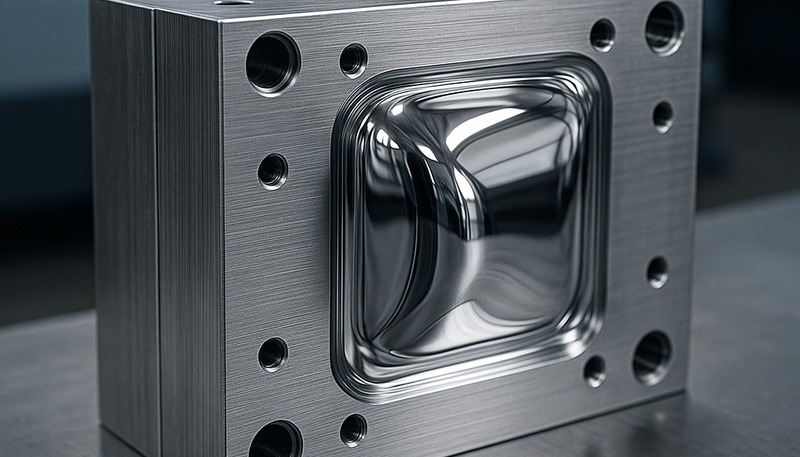
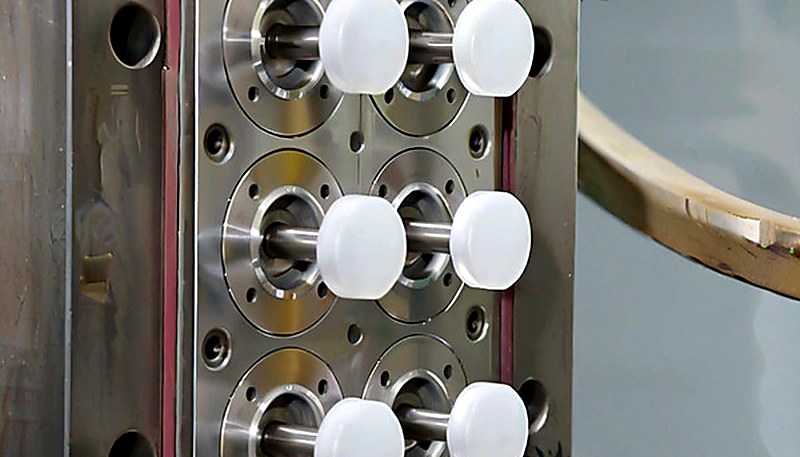
En nuestra fábrica en ZetarMold, clasificamos los moldes por número de cavidades: una sola cavidad (1), multicavidad baja (2–8), multicavidad media (16–32) y multicavidad alta (64–128+). La categoría correcta depende de su objetivo de volumen anual, el diseño del molde de inyección de plástico de precisión y el tamaño de prensa disponible.
The concept is straightforward, but the engineering behind it is anything but simple. Every cavity must fill at the same time, cool at the same rate, and eject without interference. When done right, a multi-cavity mold is the single most effective way to scale injection molding output without buying more machines.
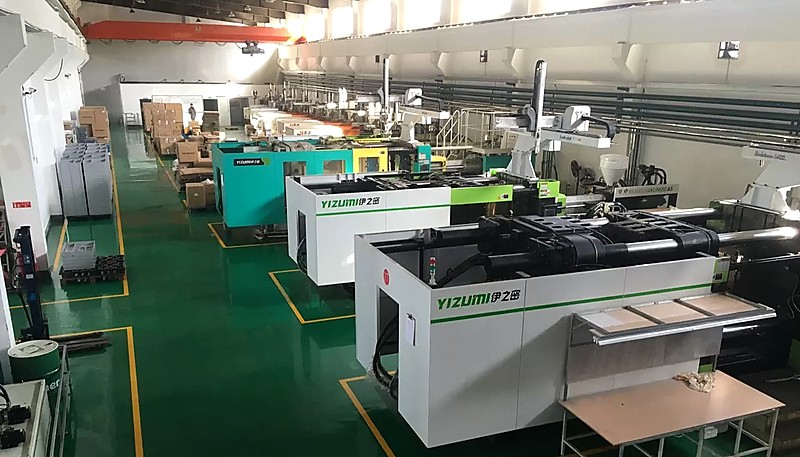
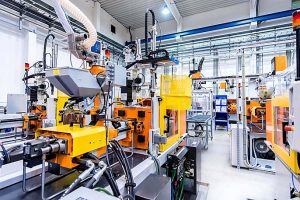
En nuestra fábrica de Shanghái, operamos 47 máquinas de moldeo por inyección desde 90T hasta 1850T. Con más de 20 años de experiencia y una instalación interna de fabricación de moldes, construimos herramientas de múltiples cavidades que ofrecen una calidad de pieza consistente en cada cavidad.
What Are the Key Design Parameters of a Multi-Cavity Mold?
Los parámetros de diseño clave de un molde multicavidad son las categorías principales u opciones explicadas en esta sección. Los parámetros de diseño críticos incluyen el diseño de la cavidad, el equilibrio del canal de alimentación, la ubicación de los canales de enfriamiento, la ventilación y la estrategia de expulsión. Equivocarse en cualquiera de estos conduce a llenados incompletos, rebabas o variación dimensional entre cavidades.
We’ve found that runner balance is the single most debated topic in multi-cavity mold design. There are two main approaches:
Naturally balanced (geometrically symmetric) runners – every cavity sits the same flow distance from the sprue. This is the gold standard for consistency but requires more mold real estate.
Artificially balanced runners – cavity positions are asymmetric, and balance is achieved by varying runner diameters or gate sizes. This saves mold space but is harder to fine-tune.
| Design Parameter | Typical Range / Value | Why It Matters |
|---|---|---|
| Cavity count | 2, 4, 8, 16, 32, 64, 128 | Directly sets output per cycle |
| Runner type | Cold runner / Hot runner | Hot runners reduce waste and improve balance |
| Cavity spacing | Minimum 2× wall thickness between cavities | Prevents thermal crosstalk and structural weakness |
| Cooling channel diameter | 6–12 mm | Controls cycle time and warpage |
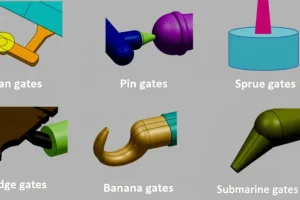
| Gate type | Sub-gate, pin gate, valve gate | Affects vestige, balance, and automation |
| Cavity-to-cavity weight variation | < 1–2% | Key quality metric for multi-cavity tools |
| Mold steel | El proceso sigue una secuencia estructurada: revisión de DFM, optimización del número de cavidades, simulación de flujo de molde, diseño detallado del molde, corte de acero, ensamblaje, prueba y calificación. En ZetarMold, todo el ciclo desde el inicio del diseño hasta las muestras T1 suele tomar de 4 a 8 semanas dependiendo de la complejidad. | Determines mold life and polish capability |
En ZetarMold, utilizamos análisis de flujo de molde en cada proyecto multicavidad antes de cortar el acero. La simulación nos muestra el desequilibrio de llenado, las ubicaciones de las líneas de soldadura y los puntos calientes de enfriamiento, problemas que son mucho más baratos de corregir en pantalla que en metal.
"La simulación de flujo de molde es esencial para el diseño de moldes multicavidad para garantizar un llenado equilibrado en todas las cavidades."Verdadero
Simulation reveals fill-time differences, pressure drops, and thermal imbalances between cavities before any steel is cut, allowing engineers to optimize runner sizes and gate locations for uniform filling.
"Puedes simplemente copiar el diseño de un molde de una sola cavidad y duplicarlo para crear una herramienta multicavidad."Falso
A multi-cavity mold requires a completely re-engineered runner system, cooling layout, and ejection scheme. Simply duplicating cavities without rebalancing the feed system leads to fill imbalance, dimensional variation, and quality defects.
Why Does a Multi-Cavity Mold Matter for Production Efficiency?
A multi-cavity mold matters because it multiplies output without multiplying machine time, labor, or floor space. If your single-cavity mold runs a 20-second cycle, switching to an 8-cavity tool gives you 8× the parts in the same 20 seconds (cycle time may increase slightly—typically 5–15%—due to larger shot size and cooling demands, but the net throughput gain is enormous).
In our experience at ZetarMold, the advantages break down like this:
Lower per-part cost – Machine hourly rate is divided across more parts. A 16-cavity mold can cut piece price by 60–80% versus a single-cavity tool.
Reduced labor per part – One operator runs one press regardless of cavity count.
Faster time to volume – High-volume launches meet demand sooner without needing multiple molds or presses.
Consistent quality – All parts come from the same process conditions in the same shot, reducing lot-to-lot variation.
We’ve seen customers cut their total program cost by 40% simply by moving from a 4-cavity to a 16-cavity mold on a bottle cap project producing 50 million units per year.
What Are the Common Challenges and How Do You Solve Them?
The most common challenges are fill imbalance, uneven cooling, higher upfront tooling cost, and more complex maintenance. Each has proven solutions that experienced mold makers apply routinely.
Fill imbalance es el problema número uno. Incluso en canales de alimentación geométricamente equilibrados, un fenómeno llamado desequilibrio inducido por cizalladura puede hacer que las cavidades internas y externas se llenen de manera diferente. Resolvemos esto con la tecnología MeltFlipper® o con diámetros de canal de alimentación ajustados artificialmente, validados mediante simulación y estudios de llenado incompleto.
Uneven cooling happens when cavities in the center of the mold run hotter than those on the edges. We address this with conformal cooling channels in critical zones and independent cooling circuits per cavity row, monitored by thermocouples during trial runs.
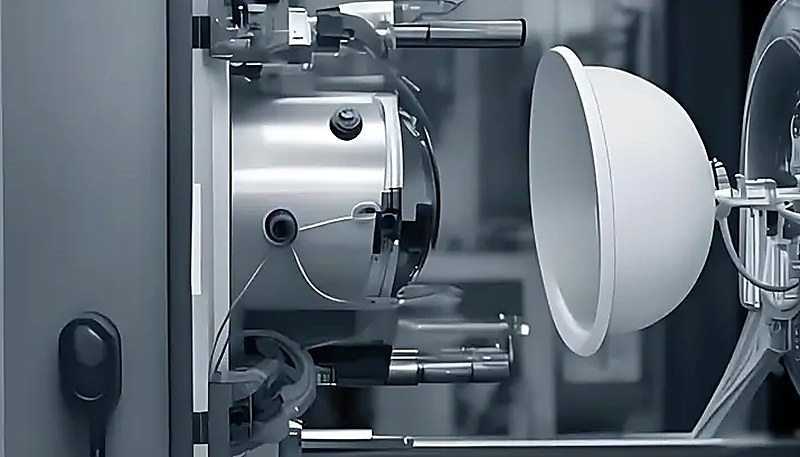
Higher tooling cost is real—a 16-cavity mold might cost 3–5× more than a single-cavity version. But when amortized over hundreds of thousands or millions of parts, the per-piece tooling amortization drops well below the single-cavity alternative. We help customers run ROI calculations before committing to a cavity count.
Maintenance complexity increases with cavity count. More cavities mean more core pins, more ejector pins, more cooling lines to inspect. At ZetarMold, we design modular cavity inserts so individual cavities can be pulled for repair without disassembling the entire mold.
Which Industries and Applications Use Multi-Cavity Molds?
Multi-cavity molds are used wherever high volumes of identical small-to-medium parts are needed—packaging, medical devices, consumer electronics, automotive, and household goods are the top five sectors.
Here’s what we build most often at ZetarMold:
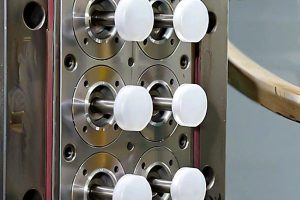
Embalaje – Bottle caps (32–128 cavities), thin-wall containers, closures
Médico – Syringe barrels, pipette tips, diagnostic cartridge housings (16–64 cavities, often in cleanroom-grade steel)
"El factor principal que determina el número óptimo de cavidades es el volumen de producción anual equilibrado con la inversión en herramienta."Verdadero
Cavity count is an economic optimization: more cavities lower per-part cost but raise upfront tooling expense. The breakeven point depends on annual volume, part price target, and available press capacity.
“Los moldes de múltiples cavidades solo son adecuados para piezas simples y planas.”Falso
Modern multi-cavity molds handle complex geometries including undercuts (via lifters and slides), textured surfaces, and tight tolerances. The key constraint is part size relative to available press platen area, not geometric complexity.
Electrónica – Connector housings, LED lens arrays, switch covers (8–32 cavities)
Automoción – Small clips, fasteners, sensor housings (4–16 cavities)
Consumer goods – Toothbrush heads, razor cartridge components, toy parts
The common thread is annual volume. As a rule of thumb, if you’re producing fewer than 50,000 parts per year, a single or 2-cavity mold is usually sufficient. Above 500,000 parts per year, multi-cavity tooling almost always makes economic sense.
What Does the Design and Manufacturing Process Look Like?
The process follows a structured sequence: DFM review, cavity count optimization, mold flow simulation, detailed mold design, steel cutting, assembly, trial, and qualification. At ZetarMold, the entire cycle from design kick-off to T1 samples typically takes 4–8 weeks depending on complexity.
Here’s how we approach it:
DFM review – We analyze the part design for moldability, draft angles, wall thickness uniformity, and gate location options.
Cavity count study – Based on annual volume, target piece price, and available press sizes, we recommend an optimal cavity count with ROI projections.
Simulación del flujo del molde – Los análisis de llenado, empaque, enfriamiento y deformación confirman el equilibrio del canal de alimentación, el rendimiento del enfriamiento y el comportamiento de contracción esperado.
Detailed design – Full 3D mold design in NX/UG or SOLIDWORKS, including runner system, cooling circuits, ejection layout, and mold base selection.
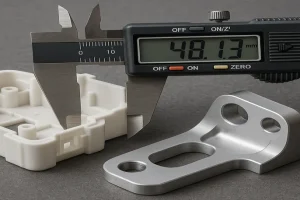
Steel machining – CNC milling, EDM, wire EDM, and grinding to tolerances of ±0.005 mm on critical cavity dimensions.
Assembly and spotting – All components are assembled, parting line fit is verified by blue-spotting, and cooling circuits are pressure-tested.
Mold trial (T1) – First shots are run, parts are measured against drawings, and process parameters are documented.
Optimization (T2/T3 if needed) – Fine-tuning runner sizes, cooling times, or gate dimensions until all cavities meet spec.
How Does Cavity Count Affect Part Quality and Total Cost?
Cavity count affects quality through its influence on fill balance and cooling uniformity, and it affects total cost through the trade-off between higher tooling investment and lower per-part production cost. The sweet spot is the cavity count where total program cost (tooling + production) is minimized while maintaining required quality standards.
We’ve compiled data from recent ZetarMold projects to illustrate the economics:
| Cavity Count | Relative Mold Cost | Cycle Time (sec) | Parts/Hour | Per-Part Cost Index |
|---|---|---|---|---|
| 1 | 1.0× | 18 | 200 | 1.00 |
| 4 | 2.2× | 20 | 720 | 0.38 |
| 8 | 3.0× | 22 | 1,309 | 0.22 |
| 16 | 4.5× | 24 | 2,400 | 0.15 |
| 32 | 7.0× | 26 | 4,431 | 0.11 |
Como muestra la tabla, duplicar las cavidades no duplica el costo del molde; hay economías de escala en la base del molde, el sistema de canal caliente y el trabajo de diseño. Mientras tanto, el costo por pieza cae drásticamente. Para un programa que produce más de 500,000 piezas al año, la inversión adicional en herramienta normalmente se recupera en 3 a 6 meses gracias al ahorro en tiempo de ciclo y un menor precio por pieza. Dicho esto, el punto de equilibrio depende en gran medida de la geometría de la pieza, la selección del material y de si se necesitan acciones laterales o expulsores elevadores en el molde.
En cuanto a la calidad, los recuentos de cavidades más altos exigen un control de proceso más estricto. Monitoreamos la variación de peso entre cavidades en cada corrida de producción: si cualquier cavidad se desvía más del 2% de la media, paramos e investigamos. Los culpables comunes incluyen insertos de compuerta desgastados, circuitos de enfriamiento bloqueados o temperatura de fusión inconsistente en un distribuidor amplio. Los principios de moldeo científico, como el moldeo desacoplado y los sensores de presión en el molde, ayudan a mantener la consistencia de ciclo a ciclo en todas las cavidades. Para piezas médicas o automotrices críticas, agregamos trazabilidad específica por cavidad para que cada pieza pueda rastrearse hasta su posición exacta en el molde.
Preguntas frecuentes
What is the difference between a multi-cavity mold and a family mold?
Un molde de múltiples cavidades produce múltiples copias de la misma pieza en cada ciclo, lo que significa que cada cavidad es idéntica. Un molde familiar, por otro lado, produce diferentes piezas en el mismo molde, por ejemplo, una carcasa izquierda y derecha, o una tapa y su base correspondiente. Los moldes familiares son más difíciles de equilibrar porque las diferentes geometrías de las piezas tienen diferente resistencia al flujo, tiempos de enfriamiento y tasas de contracción. En la práctica, los moldes de múltiples cavidades son preferidos para la producción de alto volumen de una sola pieza, mientras que los moldes familiares se usan cuando se necesitan varias piezas relacionadas que deben coincidir entre sí con precisión.
How do I decide the right cavity count for my project?
Sí. Más cavidades significan un volumen total de disparo mayor y un área proyectada más grande en la línea de partición, ambos requieren más tonelaje de cierre y capacidad de disparo. Un molde de 16 cavidades típicamente necesita una prensa de 3 a 4 veces más grande que una versión de una sola cavidad de la misma pieza. La fuerza de cierre requerida es aproximadamente proporcional al área total proyectada de la cavidad, por lo que duplicar el número de cavidades aproximadamente duplica el tonelaje requerido. Antes de decidir un número de cavidades, confirme que su moldeador tiene una prensa lo suficientemente grande para el volumen de disparo proyectado y el tamaño de la placa.
Do multi-cavity molds require larger injection molding machines?
Sí. Más cavidades significan un volumen total de disparo mayor y un área proyectada más grande en la línea de partición, ambos requieren más tonelaje de cierre y capacidad de disparo. Un molde de 16 cavidades típicamente necesita una prensa de 3 a 4 veces más grande que una versión de una sola cavidad de la misma pieza. La fuerza de cierre requerida es aproximadamente proporcional al área total proyectada de la cavidad, por lo que duplicar el número de cavidades aproximadamente duplica el tonelaje requerido. Antes de decidir un número de cavidades, confirme que su moldeador tiene una prensa lo suficientemente grande para el volumen de disparo proyectado y el tamaño de la placa.
Can I start with fewer cavities and add more later?
Es posible si la base del molde está diseñada para expansión desde el principio, a menudo llamada base de molde escalable o expandible. El diseñador del molde deja posiciones de cavidad en blanco con canales de enfriamiento pre-perforados y agujeros para pasadores eyectores para que se puedan agregar insertos adicionales más tarde. Sin embargo, adaptar cavidades a un molde que no fue diseñado originalmente para ello suele ser poco práctico y costoso. Recomendamos planificar el número final de cavidades desde el principio, incluso si se implementan los insertos de cavidad por fases con el tiempo para gestionar la inversión inicial en herramienta.
How long does a multi-cavity mold last?
La vida útil del molde depende del grado de acero, el material de la pieza y la calidad del mantenimiento. Un molde de múltiples cavidades bien construido en acero endurecido H13 o S136 típicamente dura de 500,000 a 2,000,000 o más ciclos. Aceros más blandos como el P20 pueden alcanzar de 300,000 a 500,000 ciclos antes de requerir una renovación significativa. El mantenimiento regular, que incluye limpiar los canales de enfriamiento, reemplazar pasadores eyectores desgastados y pulir las superficies de las cavidades, extiende considerablemente la vida útil de la herramienta. En ZetarMold, garantizamos la vida útil del molde según la clase de molde SPI especificada en el alcance del proyecto y proporcionamos programas de mantenimiento preventivo para todas las herramientas de producción.
¿Qué hace que los moldes multicavidad sean la clave para una producción escalable?
A multiple cavity injection mold is the workhorse behind high-volume plastic part production. By producing multiple identical parts per cycle, it slashes per-unit cost, maximizes press utilization, and delivers consistent quality across every cavity. The trade-off is higher upfront tooling investment and greater engineering complexity—but for programs above 100,000 parts per year, the economics almost always favor multi-cavity tooling.
En ZetarMold, hemos construido cientos de moldes de múltiples cavidades, que van desde 2 hasta 128 cavidades, en aplicaciones de envasado, médicas, automotrices y de electrónica de consumo. Nuestro enfoque combina simulación de flujo de molde, mecanizado CNC de precisión hasta ±0.005 mm y protocolos de prueba rigurosos para garantizar que cada cavidad funcione de manera idéntica. Si está planeando un programa de alto volumen y desea explorar herramientas de múltiples cavidades, comuníquese con nuestro equipo de ingeniería para una revisión DFM gratuita y una recomendación del número de cavidades.
Need a Quote for Your Injection Molding Project?
Get competitive pricing, DFM feedback, and production timeline from ZetarMold’s engineering team.
Request a Free Quote →
-
injection mold: injection mold refers to an injection mold is the precision tool that defines part geometry, cooling behavior, ejection, gating, surface finish, and repeatability. ↩
-
injection molding: injection molding refers to is the production process that melts plastic, injects it into a mold cavity, cools the part, and repeats the cycle for stable volume manufacturing. ↩
-
plastic: Plastic is a material family whose flow, shrinkage, strength, heat resistance, cosmetic quality, cycle time, and long-term performance shape molding decisions. ↩




 EN
EN  ES
ES  FR
FR  DE
DE  PT
PT  AR
AR  RU
RU  JA
JA  KO
KO  IT
IT  NL
NL  TR
TR  PL
PL 