 Перейти к содержанию

You designed a part for eight months. You found a factory in China that quotes 40% less than your local tooling shop. But before you hit “send” on that CAD file, your legal team asks one question that stops everything: “What happens if they copy it?”
That question is the right one. China’s IP landscape has improved significantly since the early 2000s, but the gap between “what the law says” and “what actually happens when your mold design shows up on Alibaba” is still wide enough to lose sleep over. This article walks through the NDA and IP protection framework that actually works — not the theoretical version, but the one we have seen hold up (and fail) in practice over 20+ years of running injection molds in Shanghai.
- A bilateral NNN agreement in Chinese and English is the minimum — but not sufficient on its own.
- Register your design patents in China before sharing files with any supplier.
- Mold ownership clauses prevent the most common IP dispute: “who owns the tool.”
- Choose factories with export-facing compliance (ISO certifications, Western clients).
- Contract terms matter, but supplier vetting matters more.
Why Does IP Protection Matter When Outsourcing Injection Molding to China?
IP protection is essential when outsourcing injection molding to China because low cost and high capability increase design exposure risk. China accounts for roughly 35% of global plastic production, and filing an infringement lawsuit in China costs $15,000–$50,000 and takes 12–18 months, during which a rogue factory can produce tens of thousands of counterfeit parts.
““China’s first-to-file whoever files a design patent first owns the rights, even if they did not create the design.””Правда
China operates a strict first-to-file system. If a supplier files a design patent on your part before you do, they legally own it. Always file before sharing files with any supplier.
““A standard US-style NDA is sufficient to protect your injection mold designs in China.””Ложь
US NDAs are governed by US law and are not directly enforceable in Chinese courts. You need a bilingual NNN agreement (Chinese and English) governed by Chinese law, with CIETAC1 1 arbitration or local court jurisdiction.
Here is the uncomfortable math. If a factory produces 50,000 counterfeit parts during that window at $2 each, you are already out $100,000 in lost revenue before the court rules. Prevention is not just cheaper — it is the only rational strategy.
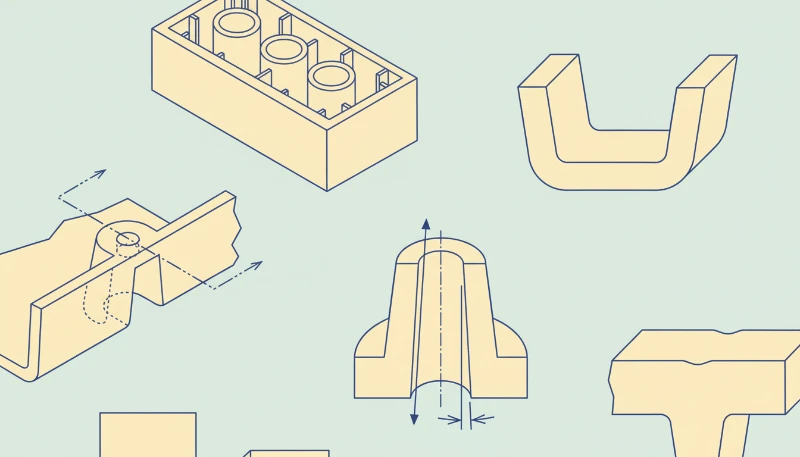
The three most common IP risks in литьё под давлением outsourcing are:
Design leakage: Your CAD files get shared with a competitor or used to produce unlicensed copies.
Mold duplication: The factory makes a second, identical mold and runs unauthorized production on night shifts.
Tooling hostage situations: You paid for the mold, but the factory claims ownership and refuses to ship it or release the design.
Each of these has a different legal remedy, but they all share one root cause: inadequate upfront protection. The rest of this article covers exactly what to put in place before you send your first file.
What Should an Injection Molding NDA Actually Cover?
An injection molding NDA is a manufacturing-specific contract that controls CAD files, mold ownership, permitted use, and governing law. Generic software or consulting NDAs fail in manufacturing because physical assets like molds and tooling are involved.
““China’s specialized IP courts have become more reliable for foreign plaintiffs in recent years.””Правда
Since 2014, specialized IP courts in Beijing, Shanghai, Guangzhou, and Shenzhen have developed a track record of competent, technically informed rulings. Statutory damages increased in 2021, and punitive damages are now available for willful infringement.
““If I paid for the mold, I automatically own it under Chinese law.””Ложь
Under Chinese law, mold ownership defaults to the entity that designed the mold — not necessarily who paid for it. Without a written mold ownership agreement, the factory may retain legal title even though you funded the tooling.
The five critical clauses:
| Clause | What It Covers | Common Mistake |
|---|---|---|
| Definition of Confidential Information | CAD files, mold designs, material specs, process parameters, BOM | Too vague — “all technical information” is unenforceable in Chinese courts |
| Purpose Limitation | Supplier can only use files for producing your parts | Omitting this lets the factory claim “independent development” |
| Mold Ownership | You own all molds, inserts, and tooling paid by you | Not specifying this is the #1 cause of tooling disputes |
| Return/Destruction | Supplier must delete digital files and return physical molds on termination | Forgetting to include digital file deletion |
| Governing Law & Jurisdiction | Chinese law, local court (or CIETAC arbitration) | Choosing US/EU law — unenforceable without reciprocal treaty |
Two details that trip up most companies: First, the NDA must be bilingual (Chinese and English), and in case of conflict, the Chinese version governs. Second, the agreement must name specific individuals at the factory who are authorized to access your files — a blanket “our team” clause will not hold up.
How Do Chinese IP Laws Protect Your Mold Designs?
Chinese IP law is a three-layer system: CNIPA2 design patents, trade secret protection, and contract enforcement through IP courts. You need all three layers because each one protects a different part of the mold design, file-sharing, and supplier-control process.
““Factories with ISO 13485 certification have already been audited for document control and traceability.””Правда
ISO 13485 (medical devices) requires documented procedures for design control, file access management, and full traceability. While not specifically an IP certification, these controls directly support confidential information protection.
““Sending STEP files for quotation is safe as long as you have an NDA.””Ложь
A STEP file contains everything needed to replicate your part. Even with an NDA, the risk is highest before the relationship is established. Share PDF drawings for initial quotes and reserve 3D files for after the NDA is countersigned.
Design Patents
China operates a “first-to-file” system, meaning the first entity to file a design patent application owns the right — regardless of who created the design. If your factory files a design patent on your part before you do, they legally own it. Filing a design patent in China through CNIPA costs approximately $500–$1,500 and takes 3–6 months to grant. You should file before sharing any files with suppliers.
Trade Secret Protection
China’s Anti-Unfair Competition Law3 protects trade secrets, including manufacturing processes and technical data. However, the burden of proof is on you to demonstrate: (1) the information was secret, (2) it had commercial value, and (3) you took reasonable steps to protect it. That third element is where most companies fail — without an NDA, access logs, and file encryption, courts will rule that you did not take “reasonable steps.”
Contract Enforcement
Chinese courts enforce well-drafted contracts, including NDAs and mold ownership agreements. The key is specificity. A clause that says “supplier shall not disclose confidential information” is weaker than one that says “supplier shall not reproduce, share, or use CAD files numbered [X] for any purpose other than producing [Part Name] under Purchase Order [Y].”
One practical note: foreign companies often assume Chinese courts are biased. In IP cases, this is increasingly inaccurate. China’s specialized IP courts (established in Beijing, Shanghai, Guangzhou, and Shenzhen since 2014) have a reputation for competent, technically informed rulings. The real challenge is not bias — it is speed and evidence.
When Should You Sign an NDA in the Mold Tooling Process?
The right time to sign an NDA is before you share any technical files. Do not wait until after the first quote, during DFM review, or “when things get serious,” because by then the factory already has enough detail to reproduce your part.
Here is the realistic timeline for when IP protection steps should happen:
| Stage | What to Share | IP Protection Required |
|---|---|---|
| Initial inquiry | Part material, general dimensions, estimated volume | Basic NDA signed |
| Quotation | 2D drawings, critical dimensions, tolerances | NDA + file watermarking |
| DFM review | Full 3D CAD, mold flow analysis requests | NDA + design patent filed |
| Tooling kickoff | Complete CAD, mold design approval | NDA + mold ownership agreement + patent |
| Производство | Process parameters, inspection criteria | All above + access logs |
The biggest mistake we see: companies send complete STEP files for quotation before any legal protection is in place. A STEP file contains everything a competent литьевая форма designer needs to replicate your part. Share PDF drawings for initial quotes — save the 3D files for after the NDA is countersigned.
What Are the Most Common IP Risks in China Injection Molding?
The most common ip risks in china injection molding are the main categories or options explained in this section. The three most common IP risks are unauthorized mold duplication (night-shift copies), “improvement” patent claims (factory files patents on minor modifications), and unapproved subcontracting (your files end up at a factory you never vetted) — all of which are preventable with the right contract clauses.
Risk 1: The Unauthorized Second Mold. A factory produces your parts during the day on Mold A (the one you paid for). At night, they run an identical Mold B on a different machine, selling parts through a trading company on Alibaba. You discover it when a competitor starts selling your part at 60% of your price. Prevention: include a clause that grants you the right to inspect the factory’s production records and mold inventory at any time.
Risk 2: The “Improvement” Claim. The factory makes a small modification to your mold design — a different gate location, adjusted cooling — and then claims the improved version is their own intellectual property. Under Chinese patent law, an “improvement” patent can be filed by anyone who makes a non-obvious technical contribution. Prevention: your NDA should explicitly state that all derivatives, modifications, and improvements of your design remain your property.
Risk 3: Subcontracting Without Consent. Your contract is with Factory A, but they subcontract the actual injection molding process to Factory B — without telling you. Factory B now has your design files and no contractual relationship with you. Prevention: prohibit subcontracting in your agreement, or require written consent and extend NDA coverage to subcontractors.
How Can You Verify a Factory’s IP Protection Track Record?
A factory’s IP track record is verified through audits, customer references, security checks, NDA process evidence, and court records. Asking “do you protect IP?” will always yield a “yes,” so buyers need concrete proof before sharing sensitive files.
1. Export Certifications. Factories that hold ISO 13485 or IATF 16949 (automotive) certifications have already passed third-party audits for document control and traceability. These audits are not about IP specifically, but a factory that cannot control its documents cannot protect your IP.
2. Customer References from IP-Sensitive Industries. If a factory supplies medical device companies or automotive OEMs, it has already been vetted by compliance teams who take IP protection seriously. Ask for references from customers in these sectors — not just consumer goods companies.
3. Physical Security. Visit the factory (or request a video tour). Check whether the mold storage area is accessible to all employees or restricted. Ask how digital files are stored — shared network drives accessible to everyone is a red flag; a PLM or PDM system with role-based access is a green flag.
4. Existing NDAs with Other Customers. A factory that routinely signs NDAs with Western customers will have a standard process, a legal contact, and actual experience with the mechanics of confidentiality. A factory that has never signed one is a higher risk.
5. Court Record Check. Search China Judgements Online (wenshu.court.gov.cn) for the factory’s company name. Any prior IP disputes are public record. This takes 15 minutes and can save you months of headaches.
For a structured approach to supplier evaluation, our injection molding supplier sourcing guide covers 12 verification points including IP protection, financial stability, and production capabilities.
What Should a Mold Ownership Agreement Include?
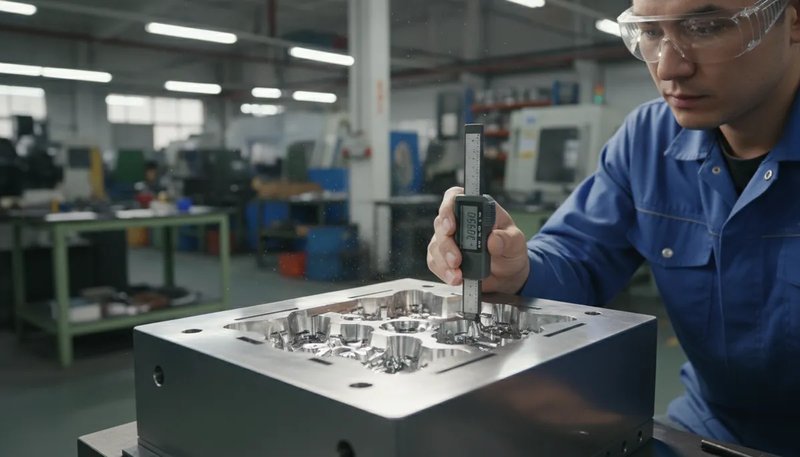
A mold ownership agreement is the document that proves who owns the пресс-форма для литья под давлением, inserts, spare parts, and design files. Without it, ownership can default to the entity that designed the mold, even if you paid for the steel and machining.
A mold ownership agreement must cover:
Clear title: “All molds, inserts, cores, cavities, and associated tooling produced for [Customer] under Purchase Order [X] are the sole property of [Customer].”
Transfer of possession: When and how the mold will be returned to you (or transferred to another supplier).
Maintenance responsibility: Who pays for mold maintenance, and what standard applies.
Storage terms: How the mold is stored when not in production, and insurance requirements.
Right to audit: Your right to inspect the mold’s physical condition and production logs at any time.
One clause that many companies miss: what happens to the mold if the factory goes bankrupt? Under Chinese bankruptcy law, molds owned by a customer (not the factory) are not considered factory assets and should be returned. But proving ownership without a written agreement is extremely difficult after the factory’s doors are locked.
Practical Checklist: 8 Steps to Protect Your IP Before Sending CAD Files
Here is the sequence we recommend to every new customer, distilled from 20+ years of experience and the mistakes we have watched others make:
File a Chinese design patent before sharing files with anyone. Cost: $500–$1,500. Timeline: file today, protection starts from filing date.
Sign a bilingual NNN agreement (Chinese governing) that covers CAD files, mold designs, process parameters, and BOM. Name specific authorized personnel.
Sign a mold ownership agreement that explicitly states you own all tooling paid by you, including molds, inserts, and spare parts.
Watermark all technical documents with your company name, date, and “Confidential — for quotation only.”
Share PDF drawings first, not native 3D files. Save STEP/IGES files for after the NDA is countersigned.
Verify the factory’s credentials: ISO certifications, customer references, court record check.
Include an audit clause giving you the right to inspect production records and mold inventory.
Use encrypted file transfer (not email attachments) for sensitive CAD data.
None of these steps is optional. Skipping any one of them creates a gap that a bad actor can exploit — and has.
ЧАСТО ЗАДАВАЕМЫЕ ВОПРОСЫ
Is a Chinese NDA enforceable in Chinese courts?
Yes. Chinese courts enforce properly drafted NDAs, especially when the agreement is in Chinese, specifies damages, and includes clear definitions of confidential information. Bilateral NDAs are more enforceable than unilateral ones because both parties have obligations.
Should I use an NNN agreement instead of a standard NDA?
NNN (Non-Disclosure, Non-Use, Non-Circumvention) agreements are stronger for manufacturing in China because they explicitly prohibit the supplier from using your information to compete with you or to circumvent your business relationships. For injection molding projects, an NNN agreement is preferred over a basic NDA.
Can I register a design patent in China as a foreign company?
Yes. Foreign entities can file design patent applications through CNIPA, typically via a local patent attorney. First-to-file means you should register before any disclosure, including to potential suppliers.
Что произойдет, если китайский завод скопирует конструкцию моей пресс-формы?
Вы можете подать иск о нарушении патента на промышленный образец в специализированный суд по интеллектуальной собственности. Размер компенсации в Китае значительно увеличился после поправок 2021 года — теперь законные компенсации составляют от 10 000 до 5 000 000 юаней (1 400–700 000 долларов США), с штрафными компенсациями до 5 раз за умышленное нарушение.
Нужны ли отдельные NDA для каждого проекта литья под давлением?
Одно основное NDA покрывает несколько проектов с одним и тем же поставщиком, но каждый проект должен иметь свой собственный заказ на покупку или техническое задание, ссылающееся на основное NDA. Это упрощает правовую структуру, сохраняя при этом проектную документацию.
Как предотвратить несанкционированное копирование пресс-форм?
Включите пункт, предоставляющий право на внезапные проверки, требуйте от завода вести журнал учета пресс-форм и маркируйте формы уникальными серийными номерами, зафиксированными в вашем соглашении о собственности. Физическая проверка во время визитов на завод является наиболее эффективным сдерживающим фактором.
Какое применимое право должно быть указано в моем NDA для китайского поставщика?
Китайское право, споры разрешаются в китайских судах или через арбитраж CIETAC. Выбор права США или ЕС звучит защитно, но на практике неисполнимо — китайские суды не будут применять иностранное право к внутреннему производственному спору.
Как долго действует защита интеллектуальной собственности на конструкции пресс-форм для литья под давлением в Китае?
Патент на промышленный образец в Китае действует 15 лет с даты подачи заявки (обновлено с 10 лет в 2021 году). Защита коммерческой тайны в соответствии с Законом о борьбе с недобросовестной конкуренцией не имеет срока действия при условии сохранения мер секретности. Договорная защита действует в течение срока, указанного в соглашении.
В чем разница между NDA и NNN-соглашением для производства?
Соглашение о неразглашении (NDA) охватывает только неразглашение (сохранение информации в тайне), в то время как соглашение NNN добавляет запрет на использование (поставщик не может использовать вашу информацию в своих интересах) и запрет на обход (поставщик не может обходить вас для прямых сделок с вашими клиентами). Для производства в Китае соглашения NNN обеспечивают значительно более сильную защиту.
-
CIETAC: относится к Китайской международной экономической и торговой арбитражной комиссии, форуму по разрешению споров, часто упоминаемому в трансграничных производственных контрактах с участием китайских поставщиков. ↩
-
CNIPA: CNIPA — это Государственное управление интеллектуальной собственности Китая, орган, который рассматривает и выдает китайские патенты на промышленные образцы. ↩
-
Закон о борьбе с недобросовестной конкуренцией: — это китайский закон, который определяет незаконное присвоение коммерческой тайны и предусматривает средства правовой защиты, когда конфиденциальная техническая информация используется без разрешения. ↩



 EN
EN  ES
ES  FR
FR  DE
DE  PT
PT  AR
AR  RU
RU  JA
JA  KO
KO  IT
IT  NL
NL  TR
TR  PL
PL 