Перейти к содержанию
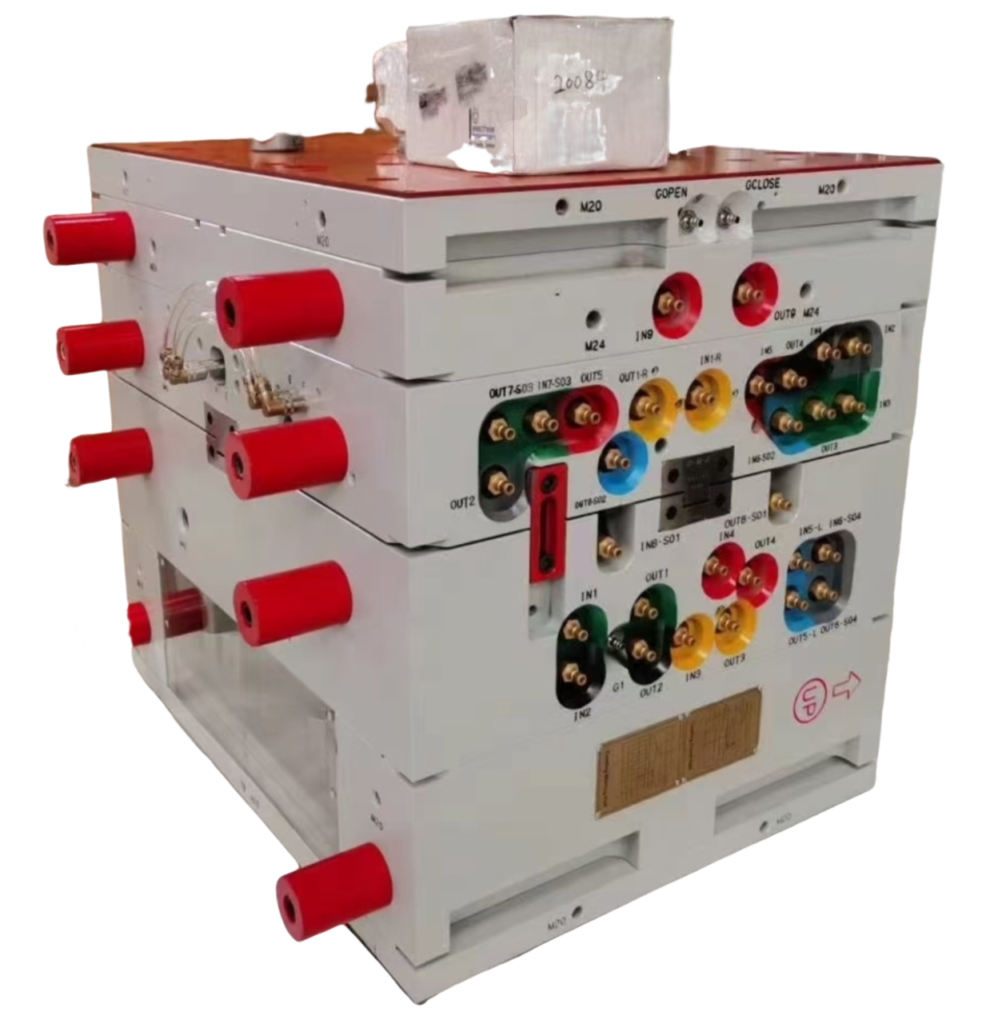
- Uniform wall thickness is the single most impactful DFM parameter — it controls fill, cooling, cycle time, and part strength simultaneously.
- Material-specific minimums: ABS 1.0–3.5mm, PC 1.0–4.0mm, PA6 0.8–3.0mm, PP 0.8–3.8mm, PEEK 0.4–6.5mm.
- Ribs must be 50–60% of nominal wall thickness and no taller than 3× wall to prevent sink marks and warpage.
- Every wall thickness transition requires a taper of at least 3:1 (length:thickness change) to avoid stress concentrations and knit lines.
- ZetarMold’s DFM audit shows wall thickness violations account for 40%+ of first-article failures — catching them before steel cuts saves $5,000–$25,000 per mold.
Why Does Wall Thickness Control Everything in Injection Molding?
A design engineer once brought us a PC housing with walls ranging from 0.8mm to 6.2mm in the same part. The tool ran for three weeks before we could hold a consistent cycle time. Wall thickness variation was the entire problem. When walls are uneven, thinner sections freeze first and restrict flow to thicker areas — causing short shots, sink marks, and unpredictable warpage. For the full injection molding process context, see our Injection Molding Complete Guide.
Uniform wall thickness is not a cosmetic preference. It governs fill pressure, cooling uniformity, cycle time, and structural performance. термопласты1 shrink as they cool, and non-uniform cooling creates differential усадка2 — the root cause of warpage. Parts that look good in CAD can be structurally unsound and dimensionally unstable if wall thickness is not controlled from the design stage. For mold design specifications and tooling decisions, see our Injection Mold Complete Guide.
At ZetarMold, wall thickness violations account for 40%+ of first-article DFM failures in our review queue. The most common error: ribs designed at 100% of nominal wall — not the recommended 50–60% — causing sink marks on Class-A surfaces within the first 500 shots. Catching this in DFM review costs 4 hours; fixing it after T1 costs 2–4 weeks and $3,000–$8,000 in steel rework.
What Are the Wall Thickness Ranges for Common Injection Molding Materials?
Every thermoplastic has a processable wall thickness range determined by its melt viscosity, thermal conductivity, and shrinkage rate. Outside this range, you get either short shots (too thin) or excessive sink marks and cycle time (too thick). These ranges assume standard processing conditions; thin-wall applications with high injection speed and optimized tooling can push below the minimums.
| Материал | Min (mm) | Typical (mm) | Max (mm) | Примечания |
|---|---|---|---|---|
| ABS | 1.0 | 1.5–3.0 | 3.5 | Good flow; cosmetic grades need uniform wall for sink control |
| ПК | 1.0 | 2.0–3.5 | 4.0 | High viscosity; avoid sharp corners, requires generous draft |
| PA6 (Nylon) | 0.8 | 1.5–3.0 | 3.0 | Hygroscopic; dry before processing; low warpage at uniform thickness |
| PP | 0.8 | 1.5–3.5 | 3.8 | High shrinkage (1.5–2.0%); warpage-prone with non-uniform walls |
| PEEK | 0.4 | 1.0–4.5 | 6.5 | High processing temp (380°C+); excellent dimensional stability |
| PC/ABS | 1.0 | 1.5–3.0 | 3.5 | Balanced flow/strength; preferred for enclosures |
| PA66-GF30 | 1.0 | 1.5–3.5 | 4.0 | Reduced shrinkage vs unfilled; anisotropic warpage risk |
How Do You Design Ribs and Bosses Without Causing Sink Marks?
Ribs are the leading cause of sink marks on Class-A surfaces. The rule is simple but frequently violated: rib thickness must be 50–60% of nominal wall thickness. At 100% wall thickness, the rib base creates a localized thick section that takes longer to cool — pulling material from the outer surface and creating a visible depression. At 40% or less, the rib fills poorly and has insufficient structural strength.
Rib height adds a second constraint: no taller than 3× the nominal wall thickness. Taller ribs cause jetting, poor fill, and high ejection stress. For cosmetic surfaces, limit rib height to 2× wall and ensure the draft angle is at minimum 0.5° per side — 1° preferred — to prevent scoring during ejection.
Bosses follow the same 50–60% rule for outer wall thickness relative to the nominal part wall. The boss core diameter determines the screw thread size; the outer wall is what creates sink risk. Add a rib from the boss to a nearby structural wall if the boss height exceeds 2× its outer diameter — unsupported bosses crack under torque loading in assembly.
What Happens When Wall Thickness Transitions Are Too Abrupt?
Abrupt wall transitions create two problems simultaneously: flow hesitation and stress concentration. When melt hits a sudden thick section after a thin one, it can hesitate and create a weld line or cold slug. When a thin section follows a thick one, the thin section freezes first and constrains the still-cooling thick section — generating residual stress that warps the part after ejection.
The design rule is a taper of at least 3:1 — for every 1mm of thickness change, allow 3mm of taper length. For critical structural parts or optical components, use 5:1 or greater. анализ течения в пресс-форме3 reliably identifies abrupt transitions before steel is cut; any thickness ratio above 2:1 between adjacent wall sections should trigger a flow simulation review.
How Does Wall Thickness Affect Cycle Time and Cost?
Cycle time is dominated by cooling time, and cooling time scales with the square of wall thickness. A part with 3mm walls takes approximately 4× longer to cool than a 1.5mm wall part — not 2×. This is the most important formula in injection molding economics: doubling wall thickness quadruples cooling time, which directly multiplies unit cost at high volume.
For structural enclosures where thick walls seem necessary, evaluate rib-reinforced thin walls instead. A 1.5mm wall with properly designed ribs can match the structural performance of a 3.0mm solid wall at half the cycle time. The tooling cost increase for ribbed design is typically $2,000–$5,000; the savings at 500,000 parts/year often exceeds $80,000 annually in cycle time reduction alone.
How to Calculate Optimal Wall Thickness for Your Part
At our factory, switching from 3.0mm to 1.8mm wall thickness on a PC/ABS enclosure program reduced cycle time from 48 seconds to 31 seconds — a 35% reduction. At 400,000 parts/year on a 4-cavity tool, this saved the customer $62,000 annually in machine time, while the rib-reinforced 1.8mm wall met the same structural drop-test requirements as the original 3.0mm design.
The cost penalty of over-thick walls compounds at production volume. A 0.5mm reduction in wall thickness — from 2.5mm to 2.0mm — reduces cooling time by 36%. On a 16-cavity tool running 2 million parts per year, that 36% cycle time reduction can save $40,000–$80,000 annually in machine time. The tooling modification cost for a wall thickness adjustment is typically $500–$2,000 — one of the highest ROI changes available before T1.
Gate location relative to thick sections is the second critical parameter after wall thickness uniformity. Placing the gate at the thickest section ensures fill pressure reaches thin areas before the thick section freezes. Gating into a thin section causes hesitation marks and incomplete fill in thick zones. Mold flow analysis verifies gate position for any design where wall ratio exceeds 1.5:1 between gate-proximal and gate-distal sections.
“Uniform wall thickness is the highest-ROI DFM change available before tooling authorization.”Правда
Wall thickness uniformity affects fill, cooling, shrinkage, cycle time, and structural performance simultaneously. A DFM audit that enforces uniform wall — typically a 4-hour engineering review — prevents the most common causes of first-article failure. At our factory, wall thickness corrections caught in DFM review save an average of 2.3 revision rounds per mold, worth $6,000–$20,000 in steel rework avoidance.
“Thicker walls always produce stronger injection molded parts.”Ложь
Beyond material-specific optimal thickness ranges, additional wall thickness adds weight and cycle time without proportional strength gain. Structural efficiency peaks at 1.5–3.0mm for most engineering thermoplastics. Above this range, the dominant failure modes shift from material strength to residual stress, warpage, and sink marks — all of which reduce effective load-bearing performance. Ribbed thin-wall designs consistently outperform solid thick-wall equivalents in both strength-to-weight ratio and dimensional stability.
Wall thickness decisions cascade through the entire manufacturing process. A part designed with 3.0mm walls where 1.5mm would suffice carries 4× the cooling time penalty — and that penalty compounds across every production run. Mold flow analysis quantifies these tradeoffs before tooling authorization, giving engineering teams the data to make informed thickness decisions rather than conservative overestimates. Accounting for these dynamics early — in the concept design phase, not after T0 — is the difference between a program that runs on schedule and one that spends months in revision cycles chasing dimensional stability.
“Mold flow analysis can predict wall thickness-related defects before T1 samples are cut.”Правда
Modern mold flow simulation accurately predicts fill pressure, weld line location, sink mark depth, and warpage magnitude caused by wall thickness variation. Mold flow analysis catches 80%+ of thickness-related defects before steel is cut, at a cost of $500–$2,000 per simulation run. For production programs above 100,000 parts/year, mold flow analysis delivers positive ROI on every program by eliminating at least one T1 revision cycle.
«Толщина ребра, равная номинальной толщине стенки, допустима для не косметических поверхностей.»Ложь
Утяжины от слишком толстых ребер не ограничиваются внешним видом поверхности — они указывают на локальные различия в усадке, которые создают внутренние напряжения и снижают усталостную долговечность. Даже на невидимых поверхностях ребра толщиной 100% вызывают изменение размеров, влияющее на посадку при сборке. Правило толщины ребра 50–60% применяется независимо от косметического класса; единственное исключение — структурные ребра в несущих конструкциях, подтвержденные анализом методом конечных элементов.
Frequently Asked Questions About Injection Mold Wall Thickness

Какая минимальная толщина стенки для литья под давлением?
Минимальная толщина стенки зависит от материала и геометрии детали. Для стандартных ABS и PC практический минимум составляет 1,0 мм при использовании обычной оснастки. Для нейлона (PA6/PA66) и PP достижима толщина 0,8 мм при оптимизированном дизайне литника и высокой скорости впрыска. PEEK и LCP могут достигать 0,4 мм в специализированных инструментах для тонких стенок. При толщине ниже минимальной расплав застывает до полного заполнения полости, что приводит к недоливам. На нашей фабрике мы проверяем каждую толщину стенки ниже 1,2 мм с помощью анализа потока расплава перед утверждением оснастки, чтобы подтвердить уверенность в заполнении выше 95%.
Как толщина стенки влияет на усадку и коробление?
Неравномерная толщина стенки вызывает дифференциальную усадку — более толстые участки охлаждаются медленнее и усаживаются больше, чем тонкие. Эта дифференциальная усадка создает внутренние напряжения, которые деформируют деталь после извлечения из формы. Для полукристаллических материалов, таких как PP и PA6, усадка может достигать 1,5–2,5% в толстых участках против 0,5–1,0% в тонких — разница в 3×, которая создает значительную деформацию в деталях с разной толщиной стенок. Решение — равномерная толщина стенки с отклонением в пределах 10–15%, дополненная анализом потока расплава для подтверждения равномерного охлаждения. Симуляция деформации точно предсказывает величину отклонения до изготовления формы.
Можно ли формовать детали с разной толщиной стенок методом литья под давлением?
Да, но изменение должно контролироваться через постепенные переходы. Правило дизайна — соотношение уклона 3:1 — 3 мм длины уклона на каждое изменение толщины на 1 мм. Резкие переходы создают задержку потока, линии спая и остаточные напряжения. Для критических оптических или структурных деталей используйте соотношение 5:1 или больше. Анализ потока расплава необходим, когда толщина стенки меняется более чем на 50% в одной детали. На нашей фабрике мы отмечаем любой дизайн с соотношением толщин стенок выше 2:1 для обязательной симуляции потока перед утверждением DFM.
Какое идеальное соотношение толщины ребра к толщине стенки для литьевых деталей?
Стандартное соотношение составляет 50–60% от номинальной толщины стенки. Для номинальной стенки 2,0 мм ребра должны быть толщиной 1,0–1,2 мм у основания. При 70% или выше следы усадки становятся видимыми на противоположной поверхности в первых 100–500 производственных циклах. При 40% или ниже ребра плохо заполняются и несут недостаточную структурную нагрузку. Высота ребра не должна превышать 3× номинальной толщины стенки; угол уклона должен быть минимум 0,5° на сторону. Эти правила применяются независимо от материала — физика образования следов усадки из-за усадки одинакова для ABS, PC, нейлона и PP.
Насколько толщина стенки влияет на стоимость литья под давлением?
Толщина стенки напрямую и значительно влияет на стоимость через время цикла. Время охлаждения — основная составляющая времени цикла литья под давлением — пропорционально квадрату толщины стенки. Деталь со стенками 3,0 мм охлаждается примерно в 4 раза дольше, чем такая же деталь со стенками 1,5 мм, что напрямую увеличивает стоимость единицы при производственном объеме. При 500 000 деталей/год эта разница может составлять $60,000–$120,000 в годовых производственных затратах. Кроме того, стенки ниже 1,0 мм или выше 4,0 мм требуют специализированной оснастки и обработки, добавляя $5,000–$20,000 к первоначальной стоимости оснастки.
Как толщина стенки влияет на время охлаждения и стоимость цикла?
Время охлаждения примерно пропорционально квадрату толщины стенки — удвоение толщины стенки примерно увеличивает время охлаждения в четыре раза, что напрямую увеличивает цикл и стоимость детали. Поэтому сохранение равномерной толщины стенки является требованием как для структуры, так и для производственной эффективности. Толстые участки не только рискуют образовать следы усадки и деформацию, но значительно удлиняют цикл литья, снижая производительность пресса за смену.
- Rosato, D.V. & Rosato, M.G. Injection Molding Handbook, 3-е изд. Springer, 2000 — принципы проектирования толщины стенок для термопластов.
- Harper, C.A. (ed.) Справочник по технологиям пластиков. McGraw-Hill, 2006 — диапазоны обработки и данные усадки для конкретных материалов.
- Bryce, D.M. Литье пластмасс под давлением: основы проектирования и изготовления форм. SME, 1998 — правила проектирования ребер и бобышек, коэффициенты конусности.
-
thermoplastics: Термопласты — это полимеры, которые плавятся при нагревании и затвердевают при охлаждении, что позволяет многократно их обрабатывать. Они являются основной группой материалов для литья под давлением, включая ABS, PC, PA6, PP и сотни инженерных марок. ↩
-
shrinkage: Усадка — это уменьшение объема, которое претерпевает формованная деталь при охлаждении от температуры расплава до комнатной температуры. Неравномерная усадка, вызванная неоднородной толщиной стенки, является основной причиной коробления и утяжин. ↩
-
mold flow analysis: Анализ потока расплава — это компьютерная симуляция, моделирующая поток расплава пластика, охлаждение и усадку внутри полости формы до изготовления металлической оснастки. Он выявляет дисбалансы заполнения, линии спая и тепловые горячие точки, вызванные изменением толщины стенки. ↩





 EN
EN  ES
ES  FR
FR  DE
DE  PT
PT  AR
AR  RU
RU  JA
JA  KO
KO  IT
IT  NL
NL  TR
TR  PL
PL