 Перейти к содержанию

Для расчета времени заполнения вы вычисляете перепад давления в системе литника и впуска, используя степенное уравнение, затем находите Q из доступного давления машины и, наконец, применяете формулу tf равно V деленное на Q. Это требует итерационного численного решения, для чего компьютеры становятся незаменимыми. литьё под давлениемСделайте всё правильно — и вы получите детали с точными размерами и гладкими поверхностями; допустите ошибку — и столкнётесь с недоливами, усадками, облоем или пригаром материала. На производственной площадке с 47 машинами мощностью от 90 до 1850 тонн даже превышение времени заполнения на 0,3 секунды приводит к тысячам бракованных деталей за смену.
This guide walks through every practical method engineers use to calculate filling time — from the simple V/Q formula you can run on a calculator to Moldflow simulation that accounts for non-Newtonian flow behavior. Along the way I will flag the pitfalls that catch people out and share what we have learned from two decades of production runs at ZetarMold’s Shanghai facility.
- Filling time = cavity volume divided by volumetric flow rate (tf = V/Q).
- Material viscosity, mold geometry, and machine settings all influence fill time.
- Simulation tools (Moldflow, Moldex3D) give plus or minus 5% accuracy for complex molds.
- Optimizing fill time reduces cycle time, cuts scrap, and improves part quality.
- Real-world validation is always the final step — no formula replaces a trial shot.
What Is Injection Molding Machine Filling Time?
Время заполнения машины для литья под давлением — это продолжительность фазы заполнения от движения шнека до полного заполнения полости. Оно не включает время дожатия и выдержки, поэтому инженеры используют его для установки первого профиля скорости, оценки тепла сдвига и сравнения возможностей машины с объемом формы.
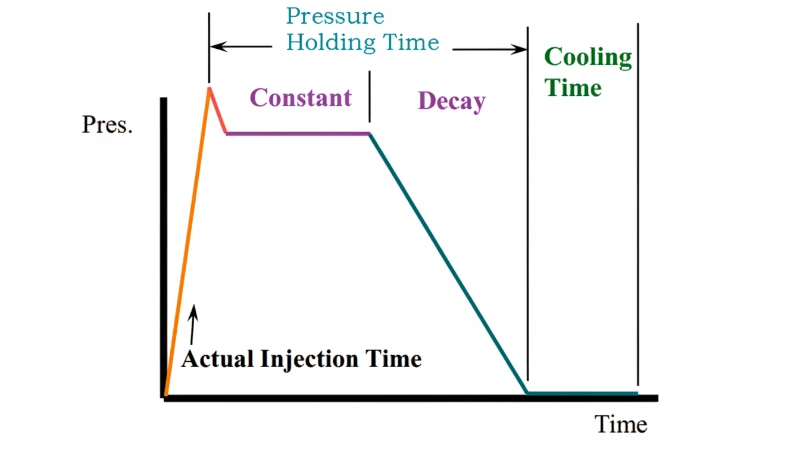
In a production environment the term “filling time” is sometimes confused with total injection time. They are not the same. Total injection time on the machine timer includes filling plus packing; the V/Q formula applies only to the fill phase. Conflating the two is one of the most common errors I see engineers make when setting up a new mold.
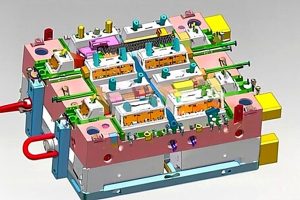
Сайт литьевая форма geometry — runner layout, gate type, wall thickness distribution — dictates how the melt front advances. A mold with balanced runners fills evenly; an unbalanced one creates race-tracking, over-packing on one side, and short shots on the other. That is why mold design and fill-time calculation are inseparable.
Why Does Filling Time Matter for Product Quality?
Время заполнения важно, потому что оно контролирует температуру расплава, передачу давления, линии сварки, недоливы, облой и время цикла. Слишком медленное заполнение приводит к застыванию фронта потока до полного заполнения полости, а слишком быстрое — может вызвать перегрев материала из-за сдвига или выдавливание облоя по линии разъёма формы.
Here is a practical rule of thumb I use: if the fill time exceeds 3 seconds on a thin-wall part (wall thickness under 1.5 mm), the probability of a short shot rises above 15 percent. If the fill time is under 0.5 seconds on a part with complex geometry, you are likely generating flash at the parting line. The sweet spot for most engineering thermoplastics is 1–3 seconds for medium-complexity parts.
Помимо качества детали, время заполнения напрямую влияет на время цикла и производительность. Сокращение на 0,5 секунды 12-секундного цикла в 16-гнёздной форме, работающей круглосуточно, даёт примерно 250 000 дополнительных деталей в год на одну машину. На производственной площадке с 47 прессами это более 11 миллионов дополнительных деталей ежегодно — значительное преимущество в доходах и затратах.
“Filling time and packing time are separate phases in the injection cycle.”Правда
Correct. Filling time covers only the phase when the cavity goes from empty to volumetrically full. Packing time is the subsequent phase where additional material is pushed in to compensate for shrinkage. Most machine timers show injection time as the sum of both.
“A longer filling time always produces better surface finish.”Ложь
Excessively long fill time allows the melt to cool and increase in viscosity, which can cause flow marks, weld lines, and short shots. Optimal surface finish comes from the right fill speed — not the slowest one.
What Factors Affect Filling Time?
Основные факторы, влияющие на время заполнения: вязкость материала, геометрия формы, скорость впрыска, предел давления, а также температуры расплава и формы. Поведение течения материала задаёт базовый уровень, в то время как длина литника, размер литника, толщина стенки и пропускная способность машины определяют, сможет ли полость заполниться до того, как фронт потока застынет.
Material Viscosity
Viscosity is the single biggest material factor. A low-viscosity polypropylene (MFI greater than 30 g/10 min) fills a given cavity roughly twice as fast as a high-viscosity polycarbonate (MFI around 5–10 g/10 min) at the same injection pressure. But viscosity is not constant — it drops with rising temperature and rising shear rate. This shear-thinning1 Такое поведение делает моделирование неньютоновских жидкостей необходимым для точных прогнозов.
Геометрия пресс-формы
Runner length and diameter, gate size, number of cavities, and wall-thickness distribution all create flow resistance. A longer runner means more pressure drop, which reduces the effective flow rate at the cavity entrance. Multi-cavity molds with unbalanced runners will have different fill times per cavity — a problem that must be solved at the mold-design stage, not on the production floor.
Machine Parameters
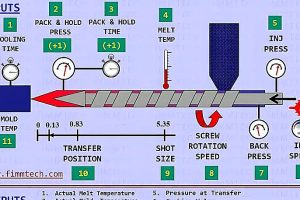
Скорость впрыска, предел давления впрыска, диаметр винта и геометрия наконечника сопла определяют максимальный объёмный расход Q, который может обеспечить машина. На прессе 200 тонн с винтом 40 мм, работающим на скорости 150 мм/с, Q составляет примерно π, умноженное на 20 в квадрате, умноженное на 150, что равно примерно 188,5 см³/с. Замените этот винт на версию 30 мм, и Q упадёт примерно до 106 см³/с — мгновенно увеличивая время заполнения примерно на 78% для той же полости.
Melt and Mold Temperature
Higher melt temperature reduces viscosity, speeding up the fill. Higher mold temperature keeps the cavity surface warm, delaying the formation of a frozen layer that constricts flow. Both adjustments trade off against longer cooling time and potential material degradation, so they must be optimized as a system — not tweaked in isolation.
How Do You Calculate Filling Time?
There are four main methods, each trading simplicity for accuracy. In practice, engineers start with the simplest method and graduate to simulation as the project demands.
Method 1 — Empirical Formula (tf = V / Q)
Наиболее широко используемая быстрая оценка — это объёмное соотношение. Объём полости V (в см³), делённый на объёмный расход машины Q (в см³/с), даёт время заполнения в секундах. Расход рассчитывается из площади поперечного сечения винта A и скорости впрыска винта v. В виде формулы: Q равно A, умноженному на v, что равно π, умноженному на (D/2) в квадрате, умноженному на v. Тогда t_f равно V, делённому на Q.
Рабочий пример — корпус из ПП с винтом 30 мм при скорости 100 мм/с, объём полости 200 см³. Площадь винта A равна π, умноженному на 15 в квадрате, что даёт 706,86 мм². Расход Q равен 706,86 мм², умноженным на 100 мм/с, что равно 70 686 мм³/с или примерно 70,69 см³/с. Разделив объём полости 200 см³ на 70,69 см³/с, получаем время заполнения примерно 2,83 секунды.
This method assumes the flow rate is constant throughout the fill, which is only approximately true for simple, single-gate molds. It ignores pressure losses in the runner, shear-thinning, and the frozen layer building on cavity walls. Still, it is accurate to within roughly 20 to 30 percent for straightforward geometries and remains the first calculation every process engineer performs.
Method 2 — Newtonian Fluid Model
For Newtonian fluids, viscosity is constant regardless of shear rate. Under this assumption, you can use the Hagen-Poiseuille equation2 для потока через каналы известных размеров и расчета перепада давления в каждом сегменте литника, затем определения Q из доступного давления впрыска. На практике очень немногие термопласты ведут себя как истинные ньютоновские жидкости при заполнении формы — большинство являются псевдопластичными материалами с разжижением при сдвиге. Ньютоновская модель в основном полезна как учебный инструмент и для проверки корректности результатов моделирования.
Method 3 — Non-Newtonian (Power-Law) Model
Сайт power-law model3 описывает взаимосвязь между напряжением сдвига и скоростью сдвига с двумя параметрами — индексом консистенции k и индексом поведения потока n. Для большинства термопластов n меньше 1, что означает поведение с разжижением при сдвиге. Типичный ПП может иметь n приблизительно от 0,3 до 0,4 при температурах переработки. Степенная модель дает лучшую оценку Q в реальных условиях литья, поскольку учитывает снижение вязкости при высоких скоростях сдвига вблизи литника.
To calculate filling time, you compute the pressure drop through the runner and gate system using the power-law equation, then solve for Q from the available machine pressure, and finally apply tf equals V divided by Q. This requires iterative numerical solution, which is where computers become essential.
Большинство деталей средней сложности из термопластов заполняются за 1–3 секунды при стандартных условиях обработки на типовом производственном оборудовании. Пресс-формы для тонкостенной упаковки могут заполняться менее чем за 0,5 секунды, а крупные структурные детали с толстыми стенками могут полностью заполняться за 5–10 секунд. Конкретный диапазон зависит от объёма полости, вязкости материала, толщины стенок и максимальной пропускной способности машины для литья под давлением. Всегда сравнивайте с аналогичными пресс-формами в вашей собственной производственной истории, чтобы установить реалистичную базовую линию перед тонкой настройкой параметров процесса для нового проекта пресс-формы.Правда
Correct. Under the power-law model, most thermoplastics have a flow behavior index n less than 1, so effective viscosity drops at higher shear rates. This is why injection speed has a non-linear effect on fill time and why faster injection can fill cavities more efficiently than a simple linear model would predict.
“The empirical V/Q formula accounts for pressure loss in the runner system.”Ложь
The simple tf equals V divided by Q formula assumes constant flow rate and ignores runner pressure drop, shear-thinning, and frozen layer build-up. It is a first approximation only.
Method 4 — Numerical Simulation (Moldflow or Moldex3D)
Modern CAE tools solve the full momentum, energy, and continuity equations on a 3D mesh of the mold geometry, using the material’s actual rheological data (often supplied by the resin manufacturer). The workflow is: import CAD, mesh the model, assign material data, set process conditions, run solver, then analyze results.
Simulation accuracy for filling time is typically within 3 to 8 percent compared to measured values — a dramatic improvement over the 20 to 30 percent margin of the empirical formula. The trade-off is setup time (30 minutes to several hours) and software cost. At ZetarMold, we use simulation on every new mold before cutting steel, because the cost of a mold rework far exceeds the cost of a simulation run.
For the PP housing example above, Moldflow predicted a fill time of 2.85 seconds — within 0.7 percent of the measured 2.83 seconds. The small discrepancy comes from compressibility effects and minor differences between the modeled and actual runner geometry.
“Profiled injection speed can reduce fill time while also lowering defect rates.”Правда
By starting slow through the gate (preventing jetting), speeding up in the cavity, and decelerating near end-of-fill (allowing air evacuation), profiled injection achieves the best of both worlds — shorter fill and fewer defects. Most modern machines support 5 to 10 velocity stages.
“Adding a second gate always improves part quality.”Ложь
A second gate reduces fill time but introduces a weld line where the two melt fronts meet. If the weld line falls on a structural or cosmetic surface, the part may be weaker or visually defective. Gate placement must be optimized holistically using simulation to predict weld-line location.
How Do All Calculation Methods Compare?
Методы расчета включают эмпирический V/Q, ньютоновский поток, степенной поток и численное моделирование. Простой метод V/Q достаточно быстр для ранних оценок, в то время как Moldflow или Moldex3D дают наилучший прогноз для тонкостенных, многолитниковых или высокорисковых производственных форм.
| Method | Calculated Fill Time | Accuracy vs. Measured | Setup Effort |
|---|---|---|---|
| Empirical (V/Q) | 2.83 s | baseline | 1 minute |
| Newtonian model | 2.83 s | same assumptions | 10 minutes |
| Power-law model | 2.78 s | approximately minus 1.8% | 30 minutes |
| Moldflow simulation | 2.85 s | plus 0.7% | 1 to 2 hours |
| Measured (trial shot) | 2.80 s | actual | 2 to 4 hours |
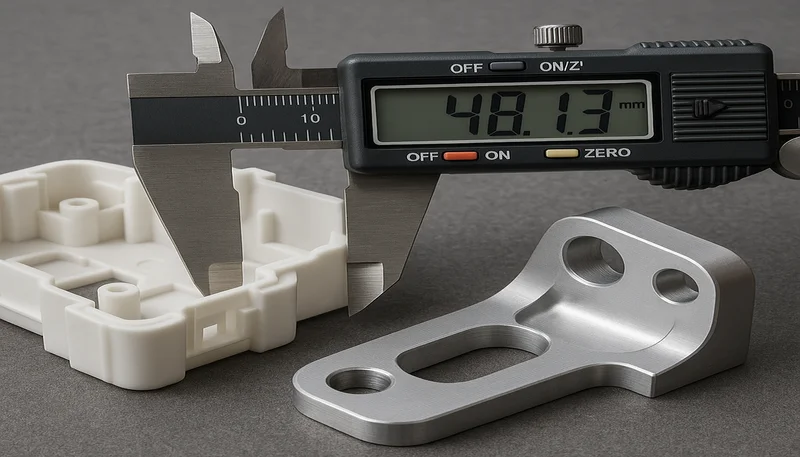
Для этой относительно простой детали с одним литником все методы дают результаты в пределах 2%. Различия становятся намного больше для деталей с несколькими литниками, тонкостенных или с запрессованными элементами — именно в таких ситуациях моделирование окупается. Для деталей с жёсткими допусками (формы для ЧПУ с точностью ±0,05 мм) даже ошибка во времени заполнения в 0,2 секунды может вывести размеры за пределы допуска, поэтому большинство производителей высокоточного литья проверяют расчёты с помощью исследования недолива перед запуском полного производства.
How Can You Optimize Filling Time?
Calculating fill time is only the beginning. Optimizing it — reducing cycle time while maintaining or improving part quality — is where the real engineering value lies. Here are the levers we pull most often on the production floor.
Increase Injection Speed
Raising the screw velocity from 100 mm/s to 150 mm/s in our example drops fill time from 2.83 s to about 1.89 s. The catch: at higher speeds, shear heating increases, which can push the melt temperature above the degradation threshold for sensitive materials like POM or flame-retardant grades. Always monitor melt temperature with a pyrometer after speed changes.
Optimize Runner and Gate Design
Adding a second gate to our example mold reduced simulated fill time from 2.85 s to 1.75 s — a 39 percent improvement. Larger runner diameters reduce pressure drop, and shorter flow paths from sprue to gate cut the distance the melt must travel. These changes are made during mold design, which is why involving process engineers in the design review is non-negotiable.
Raise Melt Temperature Within Limits
Increasing melt temperature from 220 degrees C to 240 degrees C for PP can reduce viscosity by 20 to 30 percent, shortening fill time proportionally. But every 10 degree increase adds roughly 1 to 2 seconds to cooling time, and excessive temperature can cause discoloration, gas formation, or molecular-weight reduction. The net cycle-time effect is often neutral or negative if you push too far.
Use Profiled Injection Speed
Rather than running at a single speed, modern machines allow multi-stage velocity profiles — slow through the gate to prevent jetting, then fast through the cavity, then slow again near the end of fill to prevent flash and allow air to escape. Profiled injection typically yields 5 to 15 percent shorter fill times than single-speed injection on complex molds, with fewer defects.
What Does Real-World Production Teach Us About Filling Time?
Реальное производство показывает, что время заполнения — это оценка, которую необходимо проверять с помощью исследований недолива, проверок баланса полостей и контроля деталей. На нашем предприятии в Шанхае мы начинаем с оценки V/Q, подтверждаем картину заполнения, а затем корректируем профили скорости, учитывая дефекты, время цикла и размерную стабильность.
Реальное производство учит, что время заполнения — это оценка, подтверждаемая исследованиями недолива, проверками баланса полостей и контролем деталей. На нашем предприятии в Шанхае мы начинаем с оценки V/Q для установки начальной скорости впрыска, затем проводим исследования недолива перед настройкой профилей скорости с учетом дефектов, времени цикла и размерной стабильности.
One lesson that took years to internalize: the fastest fill time is rarely the best fill time. On a multi-cavity mold for automotive connectors, we found that running at 85 percent of maximum injection speed actually yielded lower scrap than running flat-out, because the slightly slower fill gave the vents enough time to evacuate air. The 0.3 seconds we added to fill time saved 12 percent in scrap — a far larger cost saving than the tiny throughput reduction.
Если вы закупаете литьевые детали и хотите поставщика, который оптимизирует время заполнения научно, а не просто увеличивает скорость машины, ознакомьтесь с нашим руководством по поиску поставщиков для литья под давлением, чтобы получить схему оценки производственных партнёров.

Frequently Asked Questions About Filling Time
What is a normal filling time for injection molding?
Most medium-complexity thermoplastic parts fill in 1 to 3 seconds under standard processing conditions on typical production equipment. Thin-wall packaging molds may fill in under 0.5 seconds, while large structural parts with thick walls can take 5 to 10 seconds to fill completely. The exact range depends on cavity volume, material viscosity, wall thickness, and the injection molding machine maximum flow rate capability. Always benchmark against similar molds in your own production history to establish a realistic baseline before fine-tuning process parameters for a new mold project.
Время заполнения литьевой машины: Экспертное руководство
Most modern injection molding machines display fill time directly on the controller screen, making it easy to read during initial setup and subsequent process optimization runs. You can also observe the transition from injection pressure to holding pressure on the pressure-versus-time graph, where the inflection point clearly marks the end of the fill phase. For older machines without digital readouts, a stopwatch from screw start to the pressure switchover click gives a reasonable approximation of the actual fill duration in seconds.
Does filling time change with different plastics?
Yes, filling time changes significantly with different plastics due to their varying melt viscosities and thermal properties during the molding process. Low-viscosity materials like polypropylene with an MFI above 20 fill faster than high-viscosity materials like polycarbonate or PEEK, even at the same injection pressure setting on the machine. The material shear-thinning behavior also plays an important role in practice — some polymers thin dramatically under high shear rates, which effectively speeds up cavity filling compared to what a constant-viscosity calculation would predict.
Can filling time be too short?
Absolutely, filling time can definitely be too short for the specific part and mold design at hand. Extremely fast fills cause excessive shear heating, air traps, jetting through the gate, and flash at the parting line of the mold. On transparent parts, jetting creates visible worm-like cosmetic defects on the surface; on structural parts, trapped air causes internal burns and mechanically weak spots. The optimal fill time balances speed with part quality and dimensional consistency — it is not always the minimum possible time your machine can achieve.
What happens if filling time is too long?
When filling time is too long, the melt cools progressively and thickens as it flows through the cavity, increasing the risk of short shots, surface flow marks, and high residual stress in the finished part. Thin-wall parts are especially sensitive to this particular problem — if the frozen layer closes off the flow channel before the cavity is completely full, you get an incomplete part. Long fill times also reduce overall production throughput by extending the injection phase of the molding cycle unnecessarily.
Is Moldflow simulation worth the cost for small molds?
For simple single-cavity molds with straightforward geometry, the basic V/Q formula is usually sufficient for initial setup and saves the simulation fee entirely. For multi-cavity, thin-wall, or high-precision molds, simulation pays for itself by preventing even a single mold revision, which typically costs 10 to 50 times the combined simulation software and engineering time fee. As a practical guideline, any mold with more than two cavities or a flow-length-to-thickness ratio above 100 should definitely be simulated before the mold tool is cut.
How does wall thickness affect filling time?
Thinner walls restrict polymer flow and increase viscous resistance in the mold cavity, requiring higher injection pressure and often resulting in longer overall fill times for the part. The flow length-to-thickness ratio is a key metric for judging fillability of a design — ratios above 150 typically require very high injection speeds to fill completely without short shots. Product designers should aim for uniform wall thickness throughout the part geometry to avoid flow hesitations that cause air traps, weld-line visibility issues, and uneven fill patterns.
What is the difference between fill time and cycle time?
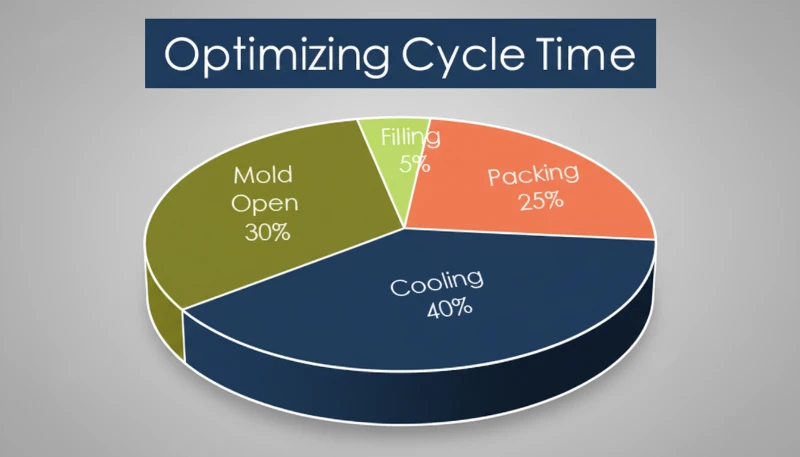
Fill time is just the cavity-filling phase, typically lasting 1 to 3 seconds depending on part size, material choice, and mold complexity. Cycle time includes the complete sequence of filling, packing, cooling, mold opening, ejection, and mold closing — usually 10 to 60 seconds total for a complete production molding cycle. Fill time is typically only 5 to 15 percent of the total cycle. Reducing fill time alone may not significantly reduce overall cycle time if cooling is the dominant bottleneck in the process.
Заключение
Filling time sits at the intersection of material science, mold engineering, and machine capability. The simplest calculation — tf equals V divided by Q — gives you a useful starting point. Adding rheological modeling or full simulation progressively improves accuracy. And real-world trial shots remain the ultimate validation.
Optimizing fill time is not about chasing the fastest possible number. It is about finding the speed that delivers dimensionally stable, cosmetically clean parts at the lowest total cost — accounting for cycle time, scrap rate, and tooling longevity. That balance is exactly what our engineering team at ZetarMold works toward on every project.
Need help optimizing your injection molding process? Инженерная команда ZetarMold предоставляет обратную связь по технологичности конструкции (DFM), моделирование течения расплава и оптимизацию производственного процесса. Имея более 20 лет опыта работы с 400+ материалами и 47 машинами (от 90 до 1850 тонн), мы можем помочь вам точно настроить время заполнения и все остальные параметры. Запросите бесплатное предложение сегодня.
-
shear-thinning: Shear-thinning refers to the phenomenon where a fluid’s viscosity decreases as the applied shear rate increases. Most thermoplastic melts exhibit this behavior during injection molding. ↩
-
Hagen-Poiseuille equation: The Hagen-Poiseuille equation describes laminar flow of a Newtonian fluid through a long cylindrical pipe, relating flow rate to pressure drop, pipe radius, and fluid viscosity. ↩
-
power-law model: power-law fluid model refers to the power-law or Ostwald-de Waele model relates shear stress to shear rate with the equation τ = k × γ̇ⁿ, where k is the consistency index and n is the flow behavior index. ↩




 EN
EN  ES
ES  FR
FR  DE
DE  PT
PT  AR
AR  RU
RU  JA
JA  KO
KO  IT
IT  NL
NL  TR
TR  PL
PL 