Die Füllzeit – also die Sekunden, in denen die Kunststoffschmelze eine Formkavität vollständig füllt – gehört zu den entscheidenden Variablen beim Spritzgießen. Ist sie richtig eingestellt, entstehen maßhaltige Teile mit glatten Oberflächen; ist sie falsch, drohen unvollständige Füllung, Einfallstellen, Grat oder verbranntes Material. In einer Fertigung mit 47 Maschinen und Pressen von 90T bis 1850T führt schon eine Überschreitung um 0,3 Sekunden zu Tausenden fehlerhafter Teile pro Schicht.
Dieser Leitfaden erläutert alle praktischen Verfahren, mit denen Ingenieure die Füllzeit berechnen – von der einfachen V/Q-Formel für den Taschenrechner bis zur Moldflow-Simulation, die nicht-newtonsches Fließverhalten berücksichtigt. Dabei weise ich auf typische Fallstricke hin und teile die Erkenntnisse aus zwei Jahrzehnten Serienfertigung im Werk von ZetarMold in Shanghai.
- Füllzeit = Kavitätsvolumen geteilt durch Volumenstrom (tf = V/Q).
- Materialviskosität, Werkzeuggeometrie und Maschineneinstellungen beeinflussen sämtlich die Füllzeit.
- Simulationswerkzeuge (Moldflow, Moldex3D) erreichen bei komplexen Formen eine Genauigkeit von plus/minus 5 %.
- Die Optimierung der Füllzeit verkürzt die Zykluszeit, reduziert Ausschuss und verbessert die Teilequalität.
- Die Validierung unter realen Bedingungen ist stets der letzte Schritt — keine Formel ersetzt einen Probeschuss.
Was ist die Füllzeit einer Spritzgießmaschine?
Die Füllzeit einer Spritzgießmaschine ist die Dauer der Füllphase von der Schneckenbewegung bis zur vollständigen Kavitätenfüllung. Sie schließt Nachdruck- und Haltezeit aus, daher nutzen Ingenieure sie, um das erste Geschwindigkeitsprofil festzulegen, die Scherwärme abzuschätzen und die Maschinenkapazität mit dem Werkzeugvolumen zu vergleichen.
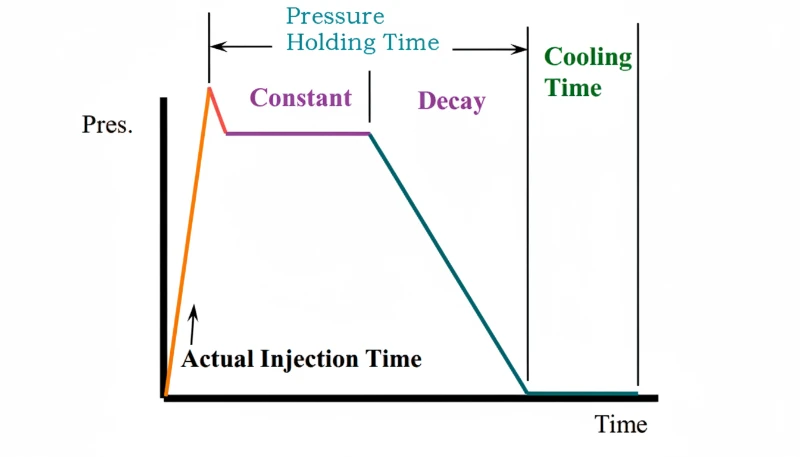
In einer Produktionsumgebung wird der Begriff „Füllzeit“ bisweilen mit der gesamten Einspritzzeit verwechselt. Beide sind nicht identisch. Die gesamte Einspritzzeit in der Maschinensteuerung umfasst Füllen und Nachdrücken; die V/Q-Formel gilt ausschließlich für die Füllphase. Die Verwechslung dieser beiden Größen ist einer der häufigsten Fehler, die ich bei Ingenieuren beim Einrichten eines neuen Werkzeugs beobachte.
Die Geometrie der Spritzgussform – Verteileranordnung, Angussart und Wandstärkenverteilung – bestimmt den Vorschub der Fließfront. Eine Form mit ausgeglichenen Verteilern füllt gleichmäßig; eine unausgeglichene verursacht Vorlaufströmungen, Überverdichtung auf einer Seite und unvollständige Füllung auf der anderen. Deshalb sind Formkonstruktion und Füllzeitberechnung untrennbar verbunden.
Warum ist die Füllzeit für die Produktqualität wichtig?
Die Füllzeit ist wichtig, weil sie die Schmelztemperatur, den Druckübertrag, Schweißlinien, Kurzläufer, Grat und die Zykluszeit steuert. Eine zu langsame Füllung friert die Fließfront ein, bevor der Hohlraum voll ist, während eine zu schnelle Füllung das Material überscherren oder Grat an der Trennlinie erzwingen kann.
Hier ist eine praktische Faustregel, die ich verwende: Wenn die Füllzeit bei einem Dünnwandteil (Wanddicke unter 1.5 mm) 3 Sekunden überschreitet, steigt die Wahrscheinlichkeit eines Kurzspritzers auf über 15 Prozent. Liegt die Füllzeit bei einem Teil mit komplexer Geometrie unter 0.5 Sekunden, entsteht wahrscheinlich Grat an der Trennlinie. Der optimale Bereich für die meisten technischen Thermoplaste liegt bei Teilen mittlerer Komplexität bei 1–3 Sekunden.
Neben der Teilequalität beeinflusst die Füllzeit direkt die Zykluszeit und den Durchsatz. Eine Reduzierung um 0,5 Sekunden bei einem 12-Sekunden-Zyklus in einem 16-fach-Werkzeug im Dauerbetrieb bedeutet etwa 250.000 zusätzliche Teile pro Jahr und Maschine. Bei 47 Pressen in einer Fabrik sind das über 11 Millionen zusätzliche Teile jährlich – ein erheblicher Umsatz- und Kostenbonus.
"Füllzeit und Nachdruckzeit sind getrennte Phasen des Spritzgießzyklus."True
Richtig. Die Füllzeit umfasst nur die Phase, in der die Kavität von leer zu volumetrisch gefüllt übergeht. Die Nachdruckzeit ist die anschließende Phase, in der zusätzliches Material eingebracht wird, um die Schwindung auszugleichen. Die meisten Maschinenzeitgeber zeigen die Einspritzzeit als Summe aus beiden an.
„Eine längere Füllzeit erzeugt immer eine bessere Oberflächengüte.“False
Eine übermäßig lange Füllzeit lässt die Schmelze abkühlen und ihre Viskosität steigen, was Fließmarken, Bindenähte und unvollständige Formfüllung verursachen kann. Die optimale Oberflächengüte entsteht durch die richtige Füllgeschwindigkeit – nicht durch die langsamste.
Welche Faktoren beeinflussen die Füllzeit?
Die Hauptfaktoren, die die Füllzeit beeinflussen, sind Materialviskosität, Werkzeuggeometrie, Einspritzgeschwindigkeit, Druckgrenze sowie Schmelz- und Werkzeugtemperatur. Das Fließverhalten des Materials setzt die Basis, während Angusslänge, Gate-Größe, Wandstärke und die Durchflusskapazität der Maschine bestimmen, ob der Hohlraum gefüllt wird, bevor die Fließfront erstarrt.
Materialviskosität
Die Viskosität ist der wichtigste Werkstofffaktor. Niedrigviskoses Polypropylen mit einem MFI über 30 g/10 min füllt dieselbe Kavität bei gleichem Einspritzdruck etwa doppelt so schnell wie hochviskoses Polycarbonat mit einem MFI von rund 5–10 g/10 min. Viskosität ist jedoch nicht konstant: Sie sinkt mit steigender Temperatur und Scherrate. Dieses strukturviskose1 Verhalten macht nichtnewtonsche Modelle für genaue Vorhersagen unverzichtbar.
Geometrie der Form
Länge und Durchmesser des Verteilers, Anschnittgröße, Anzahl der Kavitäten und Wandstärkenverteilung erzeugen sämtlich Fließwiderstand. Ein längerer Verteiler bedeutet einen größeren Druckabfall, wodurch sich die effektive Fließgeschwindigkeit am Kavitätseingang verringert. Mehrkavitätenwerkzeuge mit nicht ausbalancierten Verteilern weisen je Kavität unterschiedliche Füllzeiten auf – ein Problem, das in der Werkzeugkonstruktionsphase und nicht in der Produktion gelöst werden muss.
Maschinenparameter
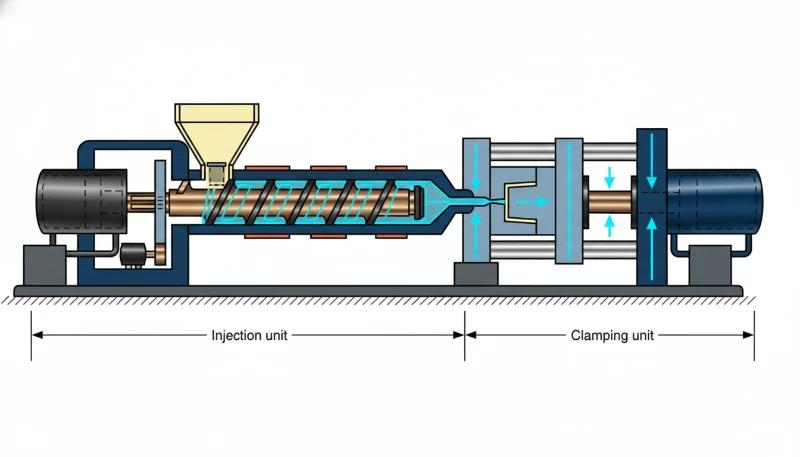
Einspritzgeschwindigkeit, Einspritzdruckgrenze, Schneckendurchmesser und Düsenspitzengeometrie bestimmen die maximale volumetrische Durchflussrate Q, die die Maschine liefern kann. Bei einer 200-Tonnen-Presse mit 40-mm-Schnecke bei 150 mm/s beträgt Q etwa Pi mal 20² mal 150, also rund 188,5 cm/s. Tauscht man diese Schnecke gegen eine 30-mm-Version, sinkt Q auf etwa 106 cm/s – die Füllzeit steigt für denselben Hohlraum sofort um rund 78 Prozent.
Schmelze- und Werkzeugtemperatur
Eine höhere Schmelzetemperatur senkt die Viskosität und beschleunigt die Füllung. Eine höhere Werkzeugtemperatur hält die Kavitätsoberfläche warm und verzögert die Bildung einer erstarrten Schicht, die den Fluss einschränkt. Beide Anpassungen gehen zulasten einer längeren Kühlzeit und bergen das Risiko einer Materialzersetzung. Sie müssen daher als System optimiert werden — nicht isoliert voneinander.
Wie berechnet man die Füllzeit?
Es gibt vier Hauptmethoden, die jeweils Einfachheit gegen Genauigkeit abwägen. In der Praxis beginnen Ingenieure mit der einfachsten Methode und gehen bei steigenden Projektanforderungen zur Simulation über.
Methode 1 — Empirische Formel (tf = V / Q)
Die am häufigsten verwendete Schnellschätzung basiert auf dem Volumenverhältnis. Das Kavitätsvolumen V (in cm) geteilt durch den Volumenstrom Q der Maschine (in cm/s) ergibt die Füllzeit in Sekunden. Der Volumenstrom wird aus der Schneckenquerschnittsfläche A und der Einspritzgeschwindigkeit v berechnet. Als Formel: Q ist A mal v, also Pi mal (D geteilt durch 2) zum Quadrat mal v. Dann ist tf gleich V geteilt durch Q.
Praktisches Beispiel – PP-Gehäuse mit einer 30-mm-Schnecke bei 100 mm/s, Kavitätenvolumen 200 cm³. Die Schneckenfläche A ist gleich pi mal 15², was 706,86 mm² ergibt. Der Durchfluss Q ist gleich 706,86 mm² mal 100 mm/s, was 70.686 mm³/s oder etwa 70,69 cm³/s entspricht. Teilen des Kavitätenvolumens 200 cm³ durch 70,69 cm³/s ergibt eine Füllzeit von etwa 2,83 Sekunden.
Diese Methode setzt voraus, dass der Volumenstrom während des gesamten Füllvorgangs konstant bleibt, was nur bei einfachen Werkzeugen mit einem einzigen Anschnitt näherungsweise zutrifft. Sie ignoriert Druckverluste im Angusskanal, Scherverdünnung und den Aufbau der erstarrten Schicht an den Kavitätswänden. Bei einfachen Geometrien ist sie dennoch auf etwa 20 bis 30 Prozent genau und bleibt die erste Berechnung, die jeder Verfahrensingenieur durchführt.
Methode 2 — Newtonsches Fluidmodell
Bei newtonschen Fluiden bleibt die Viskosität unabhängig von der Scherrate konstant. Unter dieser Annahme lässt sich mit der Hagen-Poiseuille-Gleichung2 die Strömung durch Kanäle bekannter Abmessungen berechnen. Man bestimmt den Druckabfall in jedem Verteilerabschnitt und leitet daraus Q anhand des verfügbaren Einspritzdrucks ab. In der Praxis verhalten sich beim Formfüllen nur sehr wenige Thermoplaste wirklich newtonsch; die meisten sind strukturviskose, pseudoplastische Werkstoffe. Das newtonsche Modell dient vor allem als Lehrmittel und zur Plausibilitätsprüfung von Simulationsergebnissen.
Methode 3 — Nichtnewtonsches Potenzgesetzmodell
Das Potenzgesetzmodell3 beschreibt den Zusammenhang zwischen Schubspannung und Scherrate mit dem Konsistenzindex k und dem Fließverhaltensindex n. Bei den meisten Thermoplasten ist n kleiner als 1, was strukturviskoses Verhalten bedeutet. Typisches PP kann bei Verarbeitungstemperatur einen n-Wert von etwa 0,3 bis 0,4 aufweisen. Das Potenzgesetzmodell schätzt Q unter realen Formbedingungen besser, da es die Viskositätsabnahme bei hohen Scherraten in Angussnähe berücksichtigt.
Zur Berechnung der Füllzeit wird der Druckabfall durch das Angusskanal- und Anschnittsystem mithilfe des Potenzgesetzes ermittelt, anschließend Q aus dem verfügbaren Maschinendruck berechnet und schließlich tf gleich V geteilt durch Q angesetzt. Dies erfordert eine iterative numerische Lösung, weshalb Computer unverzichtbar sind.
"Die meisten Thermoplaste sind strukturviskos, das heißt, ihre Viskosität nimmt mit steigender Schergeschwindigkeit ab."True
Richtig. Im Potenzgesetzmodell haben die meisten Thermoplaste einen Fließindex n kleiner als 1, sodass die effektive Viskosität bei höheren Scherraten sinkt. Deshalb wirkt sich die Einspritzgeschwindigkeit nichtlinear auf die Füllzeit aus und eine schnellere Einspritzung kann Kavitäten effizienter füllen, als es ein einfaches lineares Modell vorhersagen würde.
„Die empirische V/Q-Formel berücksichtigt den Druckverlust im Angusssystem.“False
Die einfache Formel tf gleich V geteilt durch Q setzt einen konstanten Volumenstrom voraus und lässt Druckverluste im Verteilerkanal, Strukturviskosität und den Aufbau der erstarrten Randschicht unberücksichtigt. Sie dient nur als erste Näherung.
Methode 4 – Numerische Simulation (Moldflow oder Moldex3D)
Moderne CAE-Werkzeuge lösen die vollständigen Impuls-, Energie- und Kontinuitätsgleichungen auf einem 3D-Netz der Werkzeuggeometrie und verwenden dabei die tatsächlichen rheologischen Daten des Materials, die häufig vom Kunststoffhersteller bereitgestellt werden. Der Ablauf lautet: CAD importieren, Modell vernetzen, Materialdaten zuweisen, Prozessbedingungen festlegen, Berechnung ausführen und anschließend die Ergebnisse analysieren.
Die Simulationsgenauigkeit der Füllzeit liegt gegenüber Messwerten typischerweise innerhalb von 3 bis 8 % – eine deutliche Verbesserung gegenüber der Abweichung von 20 bis 30 % bei der empirischen Formel. Dem stehen eine Einrichtungszeit von 30 Minuten bis mehreren Stunden und die Softwarekosten gegenüber. Bei ZetarMold simulieren wir jedes neue Werkzeug vor der Stahlbearbeitung, weil die Kosten einer Werkzeugnacharbeit die Kosten eines Simulationslaufs bei Weitem übersteigen.
Für das obige PP-Gehäuse prognostizierte Moldflow eine Füllzeit von 2.85 Sekunden – innerhalb von 0.7 Prozent des gemessenen Werts von 2.83 Sekunden. Die geringe Abweichung ist auf Kompressibilitätseffekte und kleine Unterschiede zwischen der modellierten und der tatsächlichen Verteilergeometrie zurückzuführen.
"Ein profiliertes Einspritzgeschwindigkeitsprofil kann die Füllzeit verkürzen und zugleich die Fehlerquote senken."True
Durch einen langsamen Beginn am Anschnitt zur Vermeidung von Freistrahlbildung, eine Beschleunigung in der Kavität und ein Abbremsen gegen Ende der Füllung zur Entlüftung erzielt ein profiliertes Einspritzen die Vorteile beider Ansätze: kürzere Füllzeiten und weniger Fehler. Die meisten modernen Maschinen unterstützen 5 bis 10 Geschwindigkeitsstufen.
"Ein zweiter Anschnitt verbessert immer die Bauteilqualität."False
Ein zweiter Anschnitt verkürzt die Füllzeit, erzeugt jedoch dort eine Bindenaht, wo die beiden Schmelzefronten zusammentreffen. Liegt die Bindenaht auf einer strukturellen oder optischen Oberfläche, kann das Teil schwächer oder optisch fehlerhaft sein. Die Anschnittposition muss ganzheitlich mithilfe einer Simulation optimiert werden, um die Lage der Bindenaht vorherzusagen.
Wie schneiden alle Berechnungsmethoden im Vergleich ab?
Die Berechnungsmethoden sind empirisch V/Q, Newtonsches Fließen, Potenzgesetz-Fließen und numerische Simulation. Die einfache V/Q-Methode ist schnell genug für erste Schätzungen, während Moldflow oder Moldex3D die beste Vorhersage für dünnwandige, mehrfach beaufschlagte oder Hochrisiko-Produktionswerkzeuge liefert.
| Methode | Berechnete Füllzeit | Genauigkeit vs. Messwert | Rüstaufwand |
|---|---|---|---|
| Empirisch (V/Q) | 2.83 s | Ausgangsbasis | 1 Minute |
| Newtonsches Modell | 2.83 s | dieselben Annahmen | 10 Minuten |
| Potenzgesetzmodell | 2.78 s | etwa minus 1.8% | 30 Minuten |
| Moldflow-Simulation | 2.85 s | zuzüglich 0.7% | 1 bis 2 Stunden |
| Gemessen (Versuchsschuss) | 2.80 s | tatsächlich | 2 bis 4 Stunden |
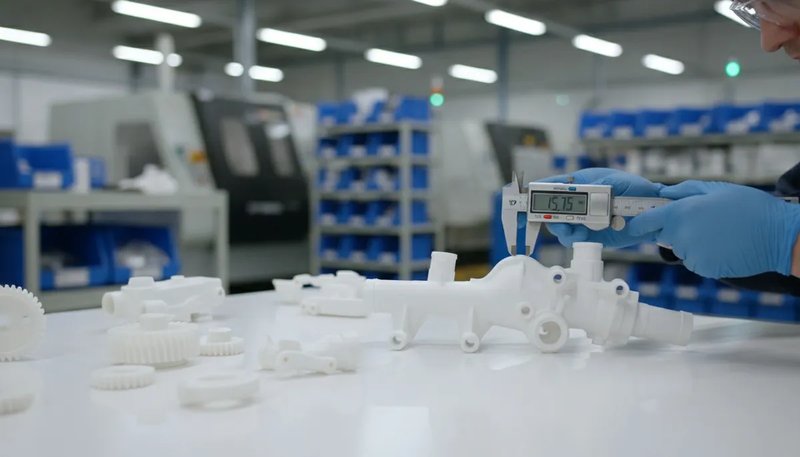
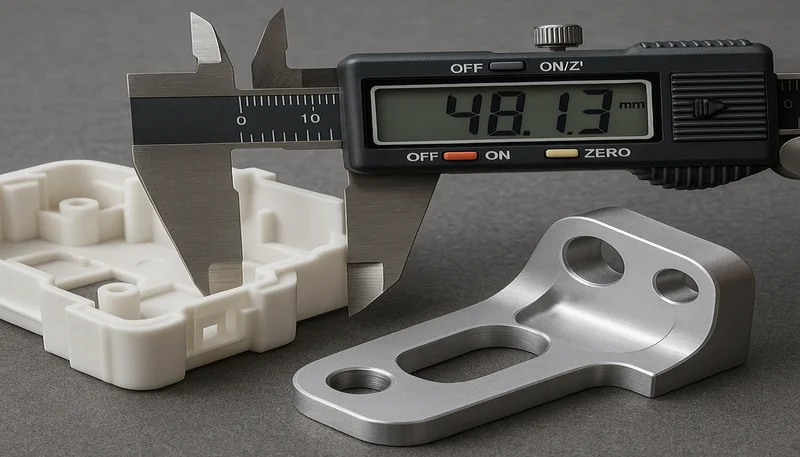
Für dieses relativ einfache, einstufig beaufschlagte Bauteil stimmen alle Methoden innerhalb von 2 Prozent überein. Die Unterschiede werden bei mehrfach beaufschlagten, dünnwandigen oder umspritzten Bauteilen viel größer – genau die Situationen, in denen sich Simulation auszahlt. Bei Bauteilen mit engen Toleranzen (CNC-gefertigte Werkzeuge mit ±0,05 mm) kann selbst ein Füllzeitfehler von 0,2 Sekunden die Maße außerhalb der Spezifikation bringen, weshalb die meisten Hochpräzisions-Spritzgießer die Berechnung vor der Serienproduktion anhand einer Kurzschussstudie validieren.
Wie können Sie die Füllzeit optimieren?
Die Berechnung der Füllzeit ist nur der Anfang. Ihre Optimierung — die Zykluszeit zu verkürzen und dabei die Teilequalität zu erhalten oder zu verbessern — schafft den eigentlichen technischen Mehrwert. Dies sind die Stellhebel, die wir in der Produktion am häufigsten nutzen.
Einspritzgeschwindigkeit erhöhen
Wird die Schneckengeschwindigkeit in unserem Beispiel von 100 mm/s auf 150 mm/s erhöht, sinkt die Füllzeit von 2,83 s auf etwa 1,89 s. Der Haken: Bei höheren Geschwindigkeiten steigt die Schererwärmung und kann die Schmelzetemperatur über die Abbaugrenze empfindlicher Materialien wie POM oder flammhemmender Typen treiben. Überwachen Sie die Schmelzetemperatur nach Geschwindigkeitsänderungen stets mit einem Pyrometer.
Anguss- und Verteilerdesign optimieren
Durch einen zweiten Anschnitt in unserem Beispielwerkzeug sank die simulierte Füllzeit von 2.85 s auf 1.75 s – eine Verbesserung um 39 Prozent. Größere Verteilerdurchmesser reduzieren den Druckverlust, und kürzere Fließwege vom Anguss zum Anschnitt verringern die Strecke, die die Schmelze zurücklegen muss. Diese Änderungen erfolgen während der Werkzeugkonstruktion. Deshalb ist die Einbeziehung von Prozessingenieuren in die Konstruktionsprüfung unverzichtbar.
Schmelzetemperatur innerhalb der Grenzwerte erhöhen
Eine Erhöhung der Schmelzetemperatur von 220°C auf 240°C kann bei PP die Viskosität um 20–30% senken und die Füllzeit entsprechend verkürzen. Jede Erhöhung um 10° verlängert jedoch die Kühlzeit um etwa 1–2 Sekunden; eine zu hohe Temperatur kann Verfärbung, Gasbildung oder eine Verringerung des Molekulargewichts verursachen. Wird zu weit gegangen, ist der Nettoeffekt auf die Zykluszeit oft neutral oder negativ.
Profiliertes Einspritzgeschwindigkeitsprofil verwenden
Anstatt mit nur einer Geschwindigkeit zu arbeiten, ermöglichen moderne Maschinen mehrstufige Geschwindigkeitsprofile: langsam durch den Anschnitt, um Freistrahlbildung zu verhindern, anschließend schnell durch die Kavität und gegen Ende der Füllung wieder langsam, um Gratbildung zu vermeiden und Luft entweichen zu lassen. Eine profilierte Einspritzung erzielt bei komplexen Werkzeugen typischerweise 5 bis 15 Prozent kürzere Füllzeiten als eine Einspritzung mit konstanter Geschwindigkeit und verursacht weniger Fehler.
Was lehrt uns die reale Produktion über die Füllzeit?
Die Praxis zeigt, dass die Füllzeit eine Schätzung ist, die mit Kurzläuferstudien, Kavitätenbalanceprüfungen und Teileinspektion validiert werden muss. In unserer Shanghai-Einrichtung beginnen wir mit der V/Q-Schätzung, bestätigen das Füllmuster und optimieren dann die Geschwindigkeitsprofile anhand von Fehlern, Zykluszeit und Maßhaltigkeit.
Die reale Produktion lehrt, dass die Füllzeit eine Schätzung ist, die durch Kurzschussstudien, Kavitätenausgleichsprüfungen und Bauteilinspektionen validiert wird. In unserer Einrichtung in Shanghai beginnen wir mit der V/Q-Schätzung, um die anfängliche Einspritzgeschwindigkeit festzulegen, führen dann Kurzschussstudien durch, bevor wir die Geschwindigkeitsprofile anhand von Fehlern, Zykluszeit und Maßhaltigkeit optimieren.
Eine Erkenntnis, die sich erst nach Jahren verinnerlichen ließ: Die kürzeste Füllzeit ist selten die beste Füllzeit. Bei einem Mehrkavitätenwerkzeug für Fahrzeugsteckverbinder stellten wir fest, dass der Betrieb mit 85 Prozent der maximalen Einspritzgeschwindigkeit tatsächlich weniger Ausschuss erzeugte als der Betrieb mit voller Leistung, weil die etwas langsamere Füllung den Entlüftungen genügend Zeit zum Ableiten der Luft gab. Die zusätzlich aufgewendeten 0,3 Sekunden Füllzeit verringerten den Ausschuss um 12 Prozent — eine weitaus größere Kosteneinsparung als der geringfügige Durchsatzverlust.
Wenn Sie spritzgegossene Teile beschaffen und einen Lieferanten suchen, der die Füllzeit wissenschaftlich optimiert, anstatt nur die Maschinengeschwindigkeit hochzudrehen, werfen Sie einen Blick in unseren Leitfaden zur Beschaffung von Spritzgießlieferanten, um einen Rahmen für die Bewertung von Fertigungspartnern zu erhalten.
Häufig gestellte Fragen zur Füllzeit
Das Potenzgesetz-Fluidmodell, auch als Potenzgesetz- oder Ostwald-de-Waele-Modell bekannt, setzt die Scherspannung mit der Scherrate über die Gleichung τ = k × γ̇ⁿ in Beziehung, wobei k der Konsistenzindex und n der Fließverhaltensindex ist.
Die meisten thermoplastischen Teile mittlerer Komplexität werden unter Standardprozessbedingungen auf typischen Produktionsanlagen in 1 bis 3 Sekunden gefüllt. Dünnwandige Verpackungsformen können in weniger als 0.5 Sekunden gefüllt werden, während große Strukturteile mit dicken Wänden 5 bis 10 Sekunden bis zur vollständigen Füllung benötigen können. Der genaue Bereich hängt vom Kavitätsvolumen, der Materialviskosität, der Wanddicke und der maximalen Förderleistung der Spritzgießmaschine ab. Vergleichen Sie stets mit ähnlichen Werkzeugen aus Ihrer eigenen Produktionshistorie, um eine realistische Ausgangsbasis festzulegen, bevor Sie die Prozessparameter für ein neues Werkzeugprojekt feinabstimmen.
Wie misst man die tatsächliche Füllzeit an einer Maschine?
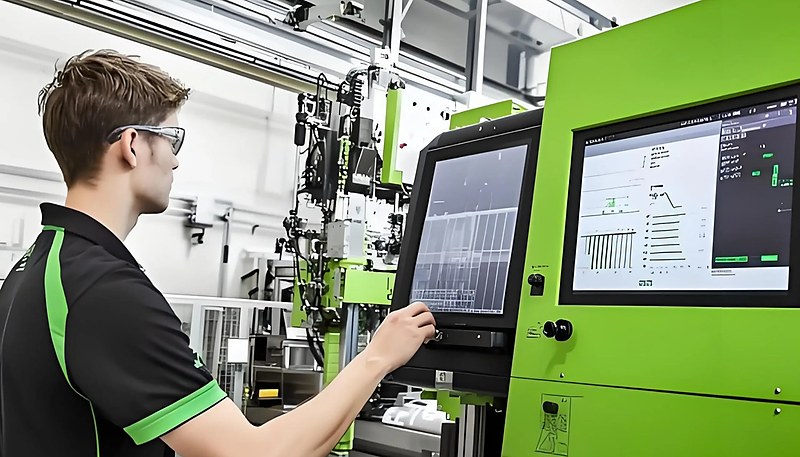
Die meisten modernen Spritzgießmaschinen zeigen die Füllzeit direkt auf dem Bildschirm der Steuerung an, sodass sie bei der Ersteinrichtung und späteren Prozessoptimierungsläufen leicht abgelesen werden kann. Im Druck-Zeit-Diagramm lässt sich außerdem der Übergang vom Einspritzdruck zum Nachdruck beobachten; der Wendepunkt kennzeichnet klar das Ende der Füllphase. Bei älteren Maschinen ohne digitale Anzeige liefert eine Stoppuhrmessung vom Schneckenstart bis zum hörbaren Druckumschaltpunkt eine brauchbare Näherung der tatsächlichen Fülldauer in Sekunden.
Ändert sich die Füllzeit bei unterschiedlichen Kunststoffen?
Ja, die Füllzeit ändert sich bei verschiedenen Kunststoffen aufgrund ihrer unterschiedlichen Schmelzeviskositäten und thermischen Eigenschaften während des Formprozesses erheblich. Niedrigviskose Werkstoffe wie Polypropylen mit einem MFI über 20 füllen bei derselben Einstellung des Einspritzdrucks an der Maschine schneller als hochviskose Werkstoffe wie Polycarbonat oder PEEK. Auch das Scherverdünnungsverhalten des Werkstoffs spielt in der Praxis eine wichtige Rolle — einige Polymere werden bei hohen Scherraten deutlich dünnflüssiger, wodurch sich die Kavitätenfüllung gegenüber der Vorhersage einer Berechnung mit konstanter Viskosität effektiv beschleunigt.
Kann die Füllzeit zu kurz sein?
Ja, die Füllzeit kann für die jeweilige Teile- und Formkonstruktion durchaus zu kurz sein. Extrem schnelles Füllen verursacht übermäßige Schererwärmung, Lufteinschlüsse, Freistrahlbildung durch den Anschnitt und Grat an der Formtrennebene. Bei transparenten Teilen erzeugt die Freistrahlbildung sichtbare wurmartige Oberflächenfehler; bei Strukturteilen verursacht eingeschlossene Luft innere Brandstellen und mechanisch geschwächte Bereiche. Die optimale Füllzeit bringt Geschwindigkeit, Teilequalität und Maßkonstanz ins Gleichgewicht — sie ist nicht immer die kürzestmögliche Zeit, die Ihre Maschine erreichen kann.
Was geschieht, wenn die Füllzeit zu lang ist?
Bei einer zu langen Füllzeit kühlt die Schmelze beim Fließen durch die Kavität zunehmend ab und wird zähflüssiger. Dadurch steigt das Risiko unvollständiger Füllungen, sichtbarer Fließlinien an der Oberfläche und hoher Eigenspannungen im fertigen Teil. Dünnwandige Teile reagieren besonders empfindlich auf dieses Problem — verschließt die erstarrte Randschicht den Fließkanal, bevor die Kavität vollständig gefüllt ist, entsteht ein unvollständiges Teil. Lange Füllzeiten verringern außerdem den gesamten Produktionsdurchsatz, weil sie die Einspritzphase des Formzyklus unnötig verlängern.
Lohnt sich eine Moldflow-Simulation bei kleinen Werkzeugen?
Bei einfachen Einkavitätenwerkzeugen mit unkomplizierter Geometrie reicht die grundlegende V/Q-Formel für die Ersteinrichtung in der Regel aus und spart die Simulationskosten vollständig. Bei Mehrkavitäten-, Dünnwand- oder Hochpräzisionswerkzeugen amortisiert sich die Simulation, indem sie bereits eine einzige Werkzeugänderung verhindert, die üblicherweise das 10- bis 50-Fache der kombinierten Kosten für Simulationssoftware und Engineeringzeit kostet. Als praktische Richtlinie sollte jedes Werkzeug mit mehr als zwei Kavitäten oder einem Verhältnis von Fließweglänge zu Wanddicke über 100 unbedingt simuliert werden, bevor das Werkzeug gefertigt wird.
Wie beeinflusst die Wanddicke die Füllzeit?
Dünnere Wände behindern den Polymerfluss und erhöhen den viskosen Widerstand in der Formkavität. Dadurch ist ein höherer Einspritzdruck erforderlich und die Gesamtfüllzeit des Bauteils verlängert sich häufig. Das Verhältnis von Fließlänge zu Wandstärke ist eine wichtige Kennzahl zur Beurteilung der Füllbarkeit einer Konstruktion – bei Verhältnissen über 150 sind typischerweise sehr hohe Einspritzgeschwindigkeiten erforderlich, um ohne unvollständige Füllungen vollständig zu füllen. Produktentwickler sollten über die gesamte Bauteilgeometrie hinweg eine gleichmäßige Wandstärke anstreben, um Fließstockungen zu vermeiden, die Lufteinschlüsse, sichtbare Bindenähte und ungleichmäßige Füllmuster verursachen.
Was ist der Unterschied zwischen Füllzeit und Zykluszeit?
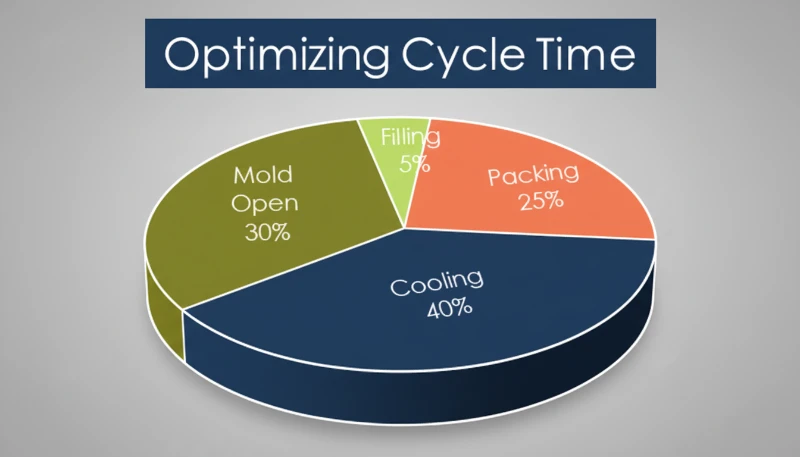
Die Füllzeit bezeichnet nur die Phase, in der die Kavität gefüllt wird, und beträgt je nach Teilegröße, Materialwahl und Formkomplexität üblicherweise 1 bis 3 Sekunden. Die Zykluszeit umfasst den vollständigen Ablauf aus Füllen, Nachdruck, Kühlen, Öffnen der Form, Auswerfen und Schließen der Form — bei einem vollständigen Produktionszyklus normalerweise insgesamt 10 bis 60 Sekunden. Die Füllzeit macht üblicherweise nur 5 bis 15 Prozent des Gesamtzyklus aus. Eine Verkürzung allein der Füllzeit reduziert die gesamte Zykluszeit möglicherweise nicht wesentlich, wenn die Kühlung den maßgeblichen Engpass des Prozesses bildet.
Schlussfolgerung
Die Füllzeit liegt an der Schnittstelle von Materialwissenschaft, Werkzeugtechnik und Maschinenleistung. Die einfachste Berechnung — tf gleich V geteilt durch Q — liefert einen nützlichen Ausgangspunkt. Rheologische Modellierung oder eine vollständige Simulation steigern die Genauigkeit schrittweise. Bemusterungen unter realen Bedingungen bleiben jedoch die endgültige Validierung.
Bei der Optimierung der Füllzeit geht es nicht darum, den schnellstmöglichen Wert zu erzielen. Entscheidend ist die Geschwindigkeit, die maßstabile und optisch einwandfreie Teile zu den niedrigsten Gesamtkosten liefert – unter Berücksichtigung von Zykluszeit, Ausschussrate und Werkzeugstandzeit. Genau auf dieses Gleichgewicht arbeitet unser Entwicklungsteam bei ZetarMold in jedem Projekt hin.
Benötigen Sie Hilfe bei der Optimierung Ihres Spritzgießprozesses? Das Engineering-Team von ZetarMold bietet DFM-Feedback, Moldflow-Simulationen und Optimierung der Produktionsprozesse. Mit über 20 Jahren Erfahrung, mehr als 400 Werkstoffen und 47 Maschinen (90T–1850T) helfen wir Ihnen, Füllzeit und alle weiteren Parameter optimal einzustellen. Fordern Sie noch heute ein kostenloses Angebot an.
Strukturviskosität: Sie bezeichnet das Phänomen, dass die Viskosität eines Fluids mit steigender Scherrate abnimmt. Die meisten thermoplastischen Schmelzen zeigen dieses Verhalten beim Spritzgießen. ↩
Hagen-Poiseuille-Gleichung: Sie beschreibt die laminare Strömung eines newtonschen Fluids durch ein langes zylindrisches Rohr und setzt den Volumenstrom mit Druckabfall, Rohrradius und Fluidviskosität in Beziehung. ↩
Potenzgesetzmodell: Das Potenzgesetz- oder Ostwald-de-Waele-Modell für Fluide setzt die Schubspannung über die Gleichung τ = k × γ̇ⁿ mit der Scherrate in Beziehung, wobei k der Konsistenzindex und n der Fließverhaltensindex ist. ↩