- Pode ser suficiente para ativar o ESC sem
- A ESC é a principal causa de falhas em campo em produtos de polietileno, policarbonato, ABS e poliestireno—responsável por cerca de 15–25% de todas as falhas em serviço de peças plásticas.
- A tensão residual da moldagem é frequentemente o componente "mecânico" oculto da ESC: peças que parecem livres de tensão após a moldagem podem falhar rapidamente quando expostas a agentes químicos mesmo diluídos.
- O valor de ESCR (resistência à fissuração por tensão ambiental) de um polímero deve ser compatível com o agente químico específico no ambiente da aplicação—as classificações genéricas de ESCR não são transferíveis entre diferentes produtos químicos.
- Eliminar a fissuração por tensão ambiental exige três frentes: seleção de material com ESCR adequado, redução de tensões residuais pela otimização da moldagem e modificações de projeto que minimizem concentrações de tensões mecânicas.
O que é a fissuração por tensão ambiental e porque causa falhas em peças de plástico?
A fissuração por tensão ambiental (ESC) é falha frágil causada pela ação conjunta de tensão mecânica e agente químico que o plástico normalmente resistiria sem tensão. Não é simples ataque químico, mas sinergia em que ambos produzem falha que isoladamente não causariam.
O mecanismo de ESC ocorre em três etapas:
- Início do microfissuramento: O agente químico reduz a energia superficial do polímero e permite que microfissuras se formem abaixo do escoamento em concentrações de tensão — entalhes, linhas de fluxo, linhas de solda, transições de insertos ou tensões residuais — muito abaixo do limite de escoamento.
- Nucleação da trinca: As microfissuras crescem até que o limite entre elas e o polímero maciço se torne um núcleo de trinca. O fator de intensidade de tensão na ponta começa a superar o valor crítico do polímero.
- Fratura frágil: A trinca se propaga catastroficamente e produz uma superfície de fratura frágil característica. Ao contrário da falha dúctil, praticamente não há deformação plástica: a peça quebra subitamente, sem deformação visível de alerta, distinção essencial frente a outros defeitos de moldagem por injeção1
| Polímero | Suscetibilidade à ESC | Agentes químicos desencadeadores comuns | Modo de falha típico |
|---|---|---|---|
| HDPE / LDPE | Alta (parede fina) | Surfactantes, sabões, óleos | Crescimento lento de fissuras, fratura frágil |
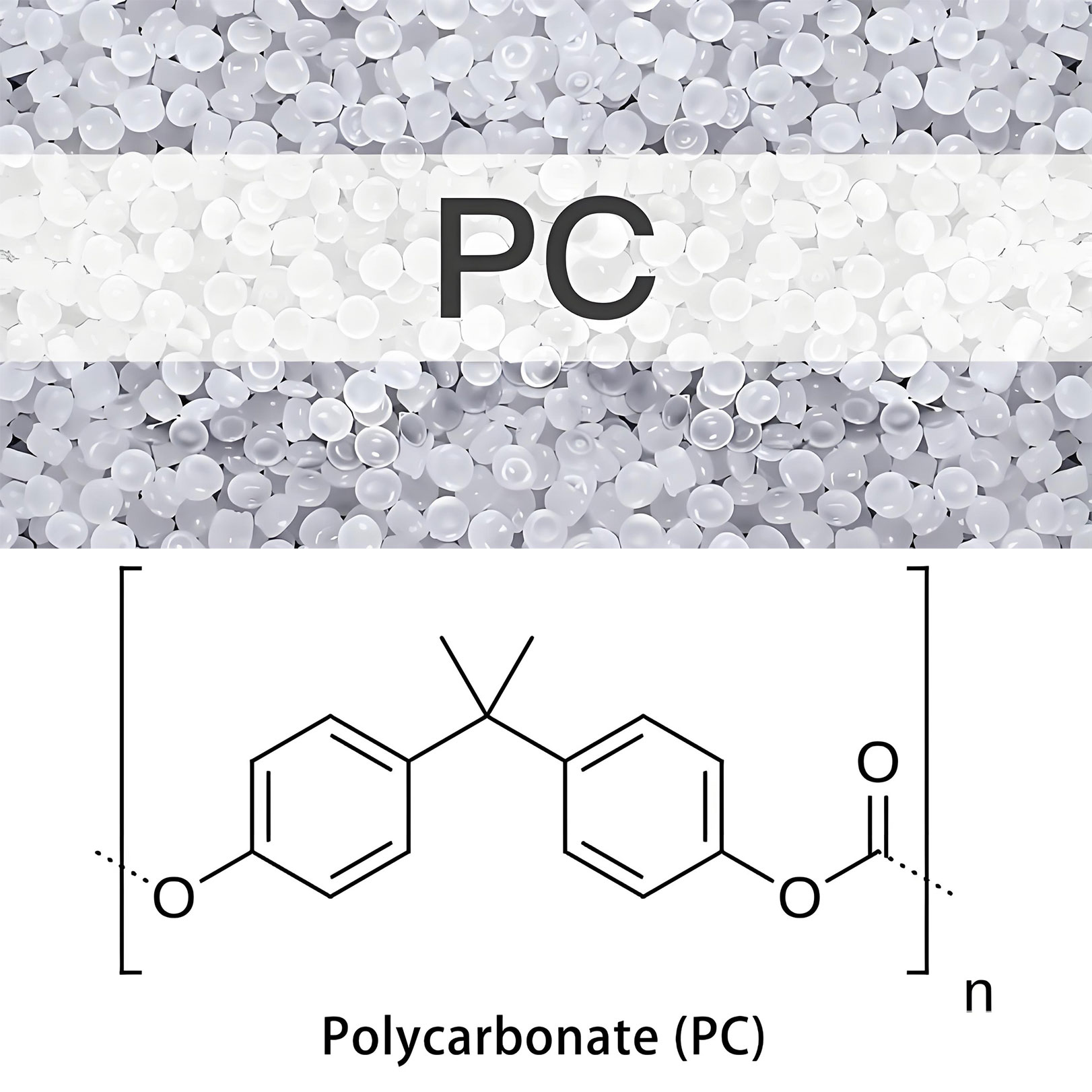
| PC (Policarbonato) | Elevado | Cetonas, ésteres e álcoois | Fissuração superficial rápida até à fratura |
| ABS | Médio-Alto | Ésteres, cetonas, solventes aromáticos | Fissuração em zonas de tensão residual |
| PS (Poliestireno) | Elevado | Álcoois, ésteres, hidrocarbonetos | Fissuração, esbranquiçamento da superfície |
| PP (Polipropileno) | Baixo–Médio | Tensoativos, óleos minerais | Crescimento lento de fissuras junto aos insertos |
| Náilon (PA66) | Baixo quando seco; mais alto quando úmido | Cloreto de zinco, cloreto de cálcio | Fissuração acelerada por hidrólise |
A ESC só ocorre quando as peças de plástico são imersas em agentes químicos.False
A fissuração sob tensão ambiental (ESC) pode ser desencadeada pela exposição a vestígios de produtos químicos, incluindo contato breve, exposição a vapores ou uma película residual de um agente de limpeza que evaporou horas antes. O agente químico não precisa continuar presente; basta reduzir a energia superficial em uma concentração crítica de tensão para iniciar microfissuras. Peças limpas com um solvente incompatível e depois secas e montadas podem falhar por ESC dias ou semanas mais tarde, sem qualquer produto químico visível no local da fratura.
Que Fatores Determinam a Resistência à Fissuração por Tensão Ambiental (ESCR) de um Plástico?
A ESCR não é uma única propriedade do material — é uma característica multifatorial que depende da arquitetura molecular do polímero, do agente químico específico, do nível de tensão aplicada e da temperatura. Compreender estes fatores permite aos engenheiros selecionar materiais e condições de processamento que minimizam o risco de ESC.
Peso molecular (MW) e distribuição de peso molecular (MWD): Polímeros de maior peso têm redes de emaranhamento de cadeias mais longas que resistem ao início das microfissuras. HDPE com MW > 200.000 g/mol apresenta ESCR muito melhor que classes com MW < 100.000 g/mol em surfactantes. O UHMWPE foi desenvolvido para aplicações resistentes a ESC, como implantes e revestimentos industriais; seu MW extraordinário, geralmente 3–6 milhões g/mol, faz dele um dos polímeros mais resistentes, conforme detalhado no guia de moldagem por injeção de UHMWPE2
Cristalinidade: Polímeros semicristalinos com maior cristalinidade geralmente resistem melhor à ESC, pois os domínios cristalinos dificultam a penetração química e a formação de microfissuras. Porém, o resfriamento rápido na moldagem por injeção pode suprimir a cristalinidade e reduzir a ESCR abaixo do previsto pelo MW.
Morfologia e orientação do polímero: A orientação molecular criada pela moldagem por injeção gera resistência anisotrópica à ESC. As peças costumam ser mais suscetíveis na direção perpendicular ao fluxo do que na direção do fluxo. Isso explica por que as trincas frequentemente se alinham ao fluxo em componentes injetados.
Propriedades do agente químico: Os agentes ESC mais eficazes têm parâmetros de solubilidade próximos aos do polímero e tensão superficial inferior à energia superficial crítica do material. Isso promove o molhamento rápido das microfissuras sem dissolver o polímero maciço, exatamente as condições da ESC. Surfactantes são especialmente potentes em poliolefinas por reduzirem a tensão superficial em concentrações de partes por milhão.
Temperatura: A taxa de ESC aumenta com a temperatura porque a maior mobilidade molecular acelera o crescimento das microfissuras e a difusão química no polímero. Componentes que operam acima de 60°C devem ter sua ESCR reavaliada na temperatura real de serviço, não com dados à temperatura ambiente.
Como a tensão residual de moldagem contribui para a fissuração por tensão ambiental?
A tensão residual é a tensão que permanece numa peça após a moldagem sem qualquer carga externa aplicada. Resulta do arrefecimento diferencial entre o interior de fundido quente e as camadas superficiais rapidamente temperadas, da contração diferencial entre secções espessas e finas e da orientação molecular congelada durante o enchimento rápido. Para ESC, a tensão residual é extremamente importante porque:
- Ela se soma a qualquer tensão mecânica aplicada; portanto, a tensão total em um ponto crítico = (tensão aplicada) + (tensão residual)
- Isso pode bastar para provocar ESC sem qualquer carga externa aplicada, apenas pela tensão de moldagem + exposição química
- É mais elevada na superfície da peça, que é também onde os agentes químicos entram primeiro em contacto com o polímero
Quantificação da tensão residual: O ensaio padrão para tensão residual relevante à ESC é o ensaio de tira dobrada (ISO 22088), no qual uma peça é curvada até uma deformação controlada e exposta ao agente químico. A deformação que provoca microfissura ou trinca é comparada à deformação residual esperada. Peças com alta tensão residual por condições agressivas — alta velocidade de injeção, alta pressão de recalque e baixa temperatura do molde — falham em concentrações químicas menores, aspecto crítico ao otimizar parâmetros de moldagem por injeção3
Otimização do processo para reduzir a tensão residual:- Aumentar a temperatura do molde para permitir maior relaxamento molecular antes da solidificação
- Reduza a velocidade de injeção, especialmente na fase inicial de preenchimento
- Reduzir a pressão de compactação; prolongar o tempo de compactação a uma pressão inferior para compensar a contração
- Garanta espessura uniforme da parede para minimizar os gradientes de tensão induzidos pelo resfriamento diferencial
- Recoza as peças após a moldagem a 60–80% da Tg por 30–120 minutos para aliviar tensões residuais
O recozimento de peças moldadas por injeção pode reduzir significativamente sua suscetibilidade à fissuração por tensão ambiental.True
O recozimento pós-moldagem a temperaturas abaixo da temperatura de deformação térmica (HDT) do polímero permite que os segmentos da cadeia polimérica relaxem e reduzam a tensão residual em 30–60%. Para aplicações sensíveis à ESC — particularmente PC em contacto com agentes de limpeza ou HDPE em contacto com surfactantes — o recozimento é uma prática padrão. A redução da tensão residual reduz diretamente a tensão total nas concentrações superficiais, elevando o limiar para a iniciação da ESC.
Quais produtos químicos desencadeiam ESC com mais frequência em peças plásticas?
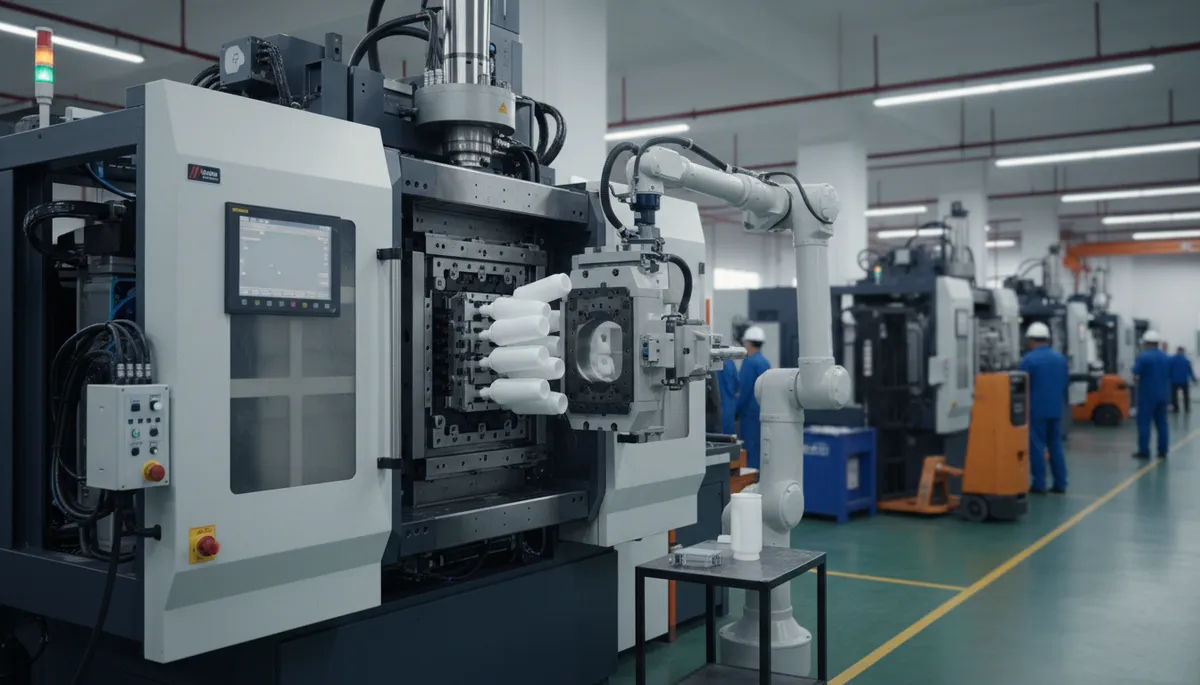
Os agentes químicos de ESC abrangem uma ampla variedade de classes de substâncias. A tabela a seguir identifica os fatores de ESC mais comuns por tipo de polímero e ambiente de aplicação:
| Categoria de agente químico | Exemplos | Polímeros mais suscetíveis | Contexto da aplicação |
|---|---|---|---|
| Surfactantes | Detergente para louça, detergentes, agentes umectantes | HDPE, LDPE, PP | Embalagens, recipientes, tubulações |
| Álcoois | Isopropanol, etanol, metanol | PC, PS, PMMA | Limpeza de dispositivos médicos, eletrônicos |
| Cetonas | Acetona, MEK, ciclo-hexanona | PC, ABS, PS | Limpeza industrial, suportes para adesivos |
| Ésteres | Acetato de etila, propilenoglicol | ABS, PS, PC | Revestimentos, impressão e adesivos |
| Hidrocarbonetos aromáticos | Tolueno, xileno, benzeno | PS, ABS, PC | Combustíveis, solventes, industrial |
| Óleos minerais / lubrificantes | Óleo de máquina e graxa | PP, PE, PS | Equipamento automóvel e industrial |
| Soluções de sais inorgânicos | Cloreto de zinco, cloreto de cálcio | Náilon e POM | Sal rodoviário, fluidos de usinagem |
Protetores solares e produtos para a pele merecem destaque como gatilhos de ESC frequentemente ignorados. Invólucros de PC, como armações, óculos de segurança e caixas eletrônicas, são suscetíveis à ESCR pelo contato com filtros UV (benzofenonas, octocrileno). É um modo de falha bem documentado em óculos de PC e levou a mudanças nas formulações de protetores e nas classes de PC, conforme documentado no processo de moldagem por injeção de PC4
Como devem os engenheiros projetar peças para minimizar o risco de ESC?
A fissuração por tensão ambiental ocorre apenas com exposição química agressiva em ambientes industriais.False
A ESC pode ocorrer com produtos domésticos, desmoldantes, solventes e óleos da pele. A tensão residual torna a peça vulnerável mesmo a contacto químico suave sob carga.
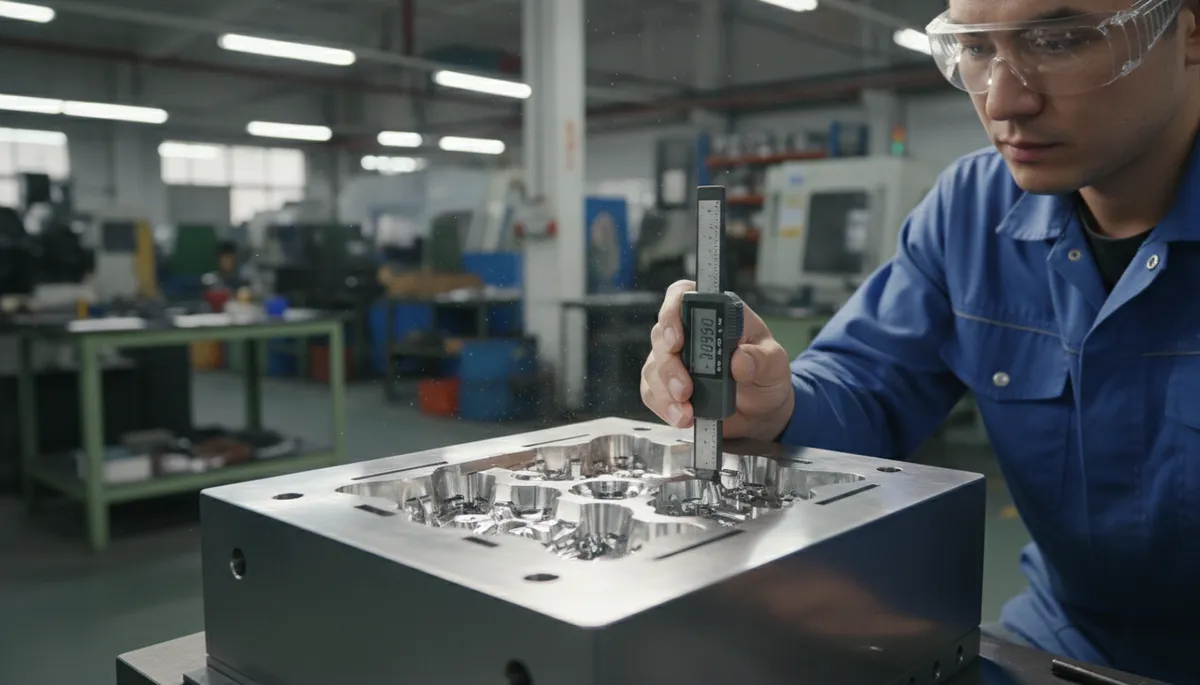
As diretrizes de design de componentes para prevenção de ESC—incluindo raios de curvatura, espessura das paredes e posição das entradas—são fundamentais para os princípios de design de moldes de plástico por injecção fiáveis para aplicações críticas de fiabilidade.True
Paredes mais espessas reduzem a concentração de tensão, enquanto raios generosos — mínimo de R = 0,5 × a espessura da parede — distribuem a carga por uma área maior. Ambas as medidas diminuem diretamente a intensidade da tensão que inicia a propagação de trincas por ESC.
O projeto da peça é a estratégia mais duradoura de prevenção da ESC, pois aborda o componente de tensão mecânica do mecanismo sinérgico. As seguintes práticas de projeto reduzem o risco de ESC:
Raios de canto generosos: Cantos internos vivos (r ≤ 0,5 mm) geram fatores de concentração de tensão (Kt) de 3–5×. Aumentar o raio para 1,5–3 mm reduz Kt para 1,2–1,5× e diminui muito a tensão local que impulsiona a ESC. Em componentes de PC, onde ESC por álcoois ou cetonas é comum, o raio interno mínimo de 1,5× a espessura da parede é a regra padrão.
Espessura uniforme da parede: Mudanças abruptas de seção criam tensões de resfriamento diferencial e concentradores em serviço. Projetar peças com variações de espessura ≤ 25% do valor nominal elimina a maior fonte de tensão residual induzida pela moldagem.
Posição do ponto de injeção em relação à tensão: Linhas de solda formadas pela união das frentes de fluxo perto do ponto têm menor resistência e são locais prioritários para início de ESC. Os pontos devem ser posicionados para que essas linhas surjam em regiões de baixa tensão, longe da exposição química.
Minimize a tensão de montagem: Encaixes por interferência, encaixes de pressão e fixadores roscados aplicam tensão mecânica ao plástico. Em projetos sensíveis à ESC, calcule a tensão combinada — montagem + serviço + moldagem residual — em cada ponto crítico e confirme que está abaixo da tensão admissível nas condições químicas previstas.
Textura superficial: Superfícies ásperas com saliências agudas oferecem mais locais de nucleação de microfissuras que superfícies lisas e polidas. Em componentes críticos para ESC, acabamentos finos (Ra ≤ 0,8 µm) reduzem a densidade desses locais conforme o projeto de molde de injeção de plástico5
Perguntas frequentes sobre fissuração por tensão ambiental de peças plásticas
P: Como distinguir ESC de fratura puramente mecânica ou ataque puramente químico? R: As superfícies de fratura por ESC são tipicamente frágeis, com marcas de microfissuras irradiando da origem e sem deformação dúctil. A fratura mecânica em polímeros dúcteis mostra deformação significativa. O ataque químico puro geralmente produz dissolução, descoloração ou inchaço sem a morfologia de trinca aguda. A análise da superfície combinada ao histórico de exposição costuma bastar para o diagnóstico.
P: Qual é o método de ensaio padrão para medir ESCR? R: O principal é ASTM D1693, ensaio de tira dobrada para polietileno em soluções surfactantes. ISO 22088 abrange vários polímeros e condições de carga. O ensaio de esfera e soquete (ASTM D5419) e o de carga de tração constante (ISO 22088 Parte 3) são usados para resinas de engenharia. Os resultados são expressos como tempo até a falha (F50, F100) sob tensão e exposição especificadas.
P: Revestimentos superficiais podem proteger contra ESC? R: Revestimentos de barreira podem retardar o início da ESC ao reduzir o contato químico com o polímero. Revestimentos duros à base de silicone ou cerâmica isolam eficazmente a superfície. Porém, devem ser compatíveis, sem poros e permanecer íntegros em serviço. A delaminação expõe o polímero a tensão química concentrada nesses locais e pode acelerar, em vez de impedir, a ESC.
P: A estabilização UV afeta a resistência ao ESC? R: Indiretamente. A degradação UV reduz o peso molecular e introduz produtos de oxidação superficial que criam locais adicionais para o início de fissuras por ESC. Polímeros estabilizados contra UV mantêm o peso molecular e a qualidade superficial ao longo do tempo, preservando a ESCR original por mais tempo. Em aplicações externas, a estabilização UV é, portanto, uma medida indireta de prevenção do ESC.
P: Se uma peça resiste a um teste inicial de ESC, ela é segura para uso prolongado? R: Não necessariamente. O ESC depende do tempo, com períodos de incubação de horas a anos conforme a tensão e a concentração química. Testes curtos padrão podem não revelar o crescimento lento de fissuras no longo prazo. Para aplicações críticas à segurança (vasos de pressão, dispositivos médicos e componentes estruturais), são necessários testes acelerados com temperatura ou concentração química elevadas para prever o desempenho de longo prazo com confiança suficiente.
P: O ESC é mais comum em peças moldadas por injeção do que em peças extrudadas ou moldadas por sopro? R: Em geral, sim. A moldagem por injeção normalmente gera maior tensão residual devido às altas pressões, ao enchimento rápido e ao resfriamento abrupto. Essa tensão, combinada às geometrias complexas típicas, cria mais locais potenciais de início de ESC. Contudo, qualquer peça plástica pode sofrer ESC quando há a combinação adequada de tensão e agente químico.
Resumo: como evitar a fissuração por tensão ambiental em peças de plástico
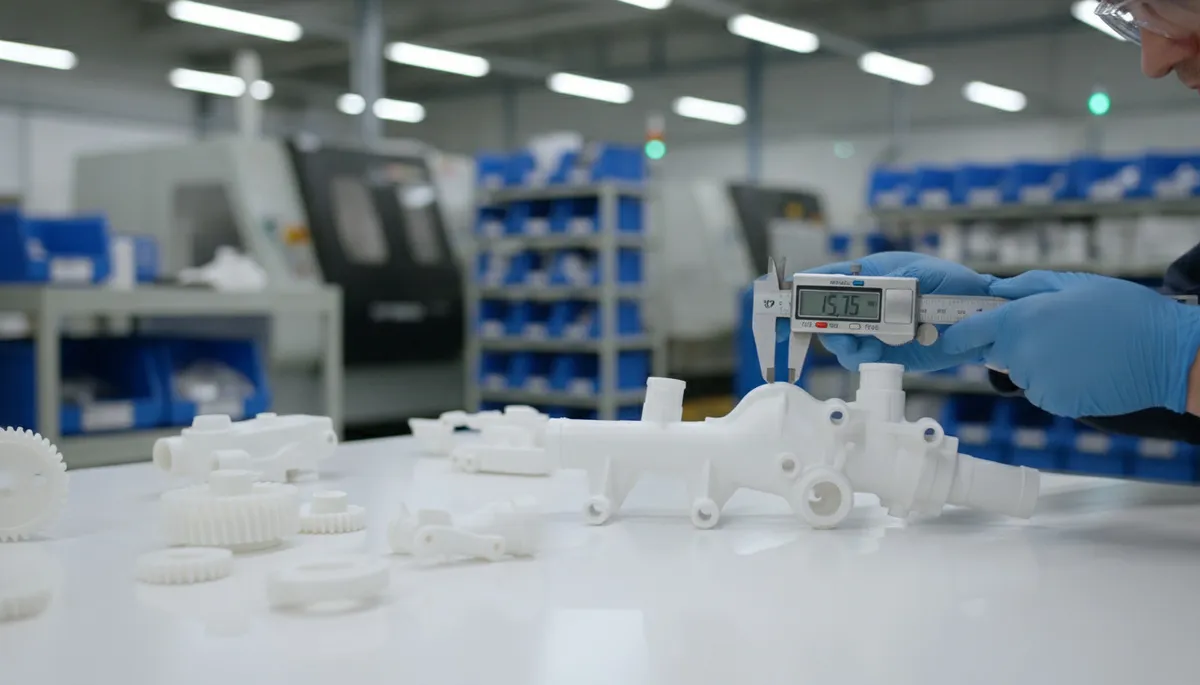
A fissuração por tensão ambiental é um mecanismo de falha sinérgico que continua sendo uma das causas mais comuns e evitáveis de falhas em campo de peças plásticas. Sua natureza insidiosa — fratura frágil sob cargas e concentrações químicas que, isoladamente, seriam inofensivas — faz com que seja frequentemente diagnosticada de forma incorreta e subestimada durante o desenvolvimento do produto.
A estrutura tridimensional de prevenção:
1. Seleção do material: Compatibilize a ESCR do polímero com o agente químico e a concentração previstos no ambiente de uso. Não confie em classificações genéricas: teste com os produtos químicos reais. Considere graus de maior peso molecular, copolímeros resistentes ao ESC ou polímeros alternativos quando o grau padrão for insuficiente. Para exigências extremas, UHMWPE, PEEK e fluoropolímeros oferecem a maior resistência inerente ao ESC.
2. Otimização do projeto: Elimine cantos internos vivos (r mínimo = 1,5× a espessura da parede), projete paredes uniformes, posicione pontos de injeção e linhas de solda longe de zonas de alta tensão expostas a produtos químicos e minimize tensões de montagem nas transições de insertos e torres de fixação.
3. Otimização do processo: Reduza a tensão residual com temperaturas de molde mais altas, velocidades de injeção menores, pressão de recalque otimizada e recozimento após a moldagem. Verifique a consistência do processo por meio de testes periódicos de ESCR em amostras do início, meio e fim de cada lote de produção.
Quando as três dimensões são abordadas sistematicamente, as taxas de falha ESC podem ser reduzidas a quase zero, substituindo uma causa importante de falhas em campo por um mecanismo bem gerido e fiavelmente evitável.
A fissuração por tensão ambiental é documentada como um dos principais mecanismos de falha na literatura sobre defeitos de moldagem por injeção, sobretudo em componentes de poliolefina e policarbonato expostos a ambientes químicos. ↩
A extraordinária resistência do UHMWPE ao ESC está ligada ao seu peso molecular ultra-alto; parâmetros detalhados de processamento do UHMWPE estão disponíveis em guias especializados. ↩
A quantificação da tensão residual e sua relação com o risco de ESC são temas centrais na otimização dos parâmetros de moldagem por injeção, especialmente em aplicações com resinas de engenharia de alto desempenho. ↩
A vulnerabilidade do policarbonato ao ESC diante de agentes químicos específicos exige avaliar cuidadosamente o grau do material e as condições de processamento em aplicações resistentes a produtos químicos. ↩
Diretrizes de projeto para prevenir ESC — incluindo raios de canto, espessura de parede e posição do ponto de injeção — integram os princípios de um projeto confiável de moldes de injeção para aplicações críticas. ↩
Obtenha preços competitivos, feedback de DFM e o cronograma de produção da equipe de engenharia da ZetarMold.
Solicite um orçamento gratuito → Consulte nosso Guia completo de moldes de injeção para uma visão abrangente. Consulte nosso Guia completo de moldagem por injeção para uma visão abrangente.