- charge externe appliquée—uniquement due à la contrainte de moulage + exposition chimique
- L'ESC est la principale cause de défaillance en service des produits en polyéthylène, polycarbonate, ABS et polystyrène — elle serait responsable de 15–25% de toutes les défaillances en service des pièces plastiques.
- Les contraintes résiduelles de moulage sont souvent la composante « mécanique » cachée de l'ESC : des pièces qui semblent exemptes de contraintes après moulage peuvent tomber en panne rapidement lorsqu'elles sont exposées à des agents chimiques même dilués.
- La valeur ESCR (résistance à la fissuration sous contrainte environnementale) d’un polymère doit correspondre à l’agent chimique précis de l’environnement d’application : les valeurs ESCR génériques ne sont pas transférables entre différents produits chimiques.
- L’élimination de la fissuration sous contrainte environnementale exige une approche à trois volets : sélection d’un matériau à ESCR appropriée, réduction des contraintes résiduelles par optimisation du moulage et modifications de conception minimisant les concentrations de contraintes mécaniques.
Qu’est-ce que la fissuration sous contrainte environnementale et pourquoi provoque-t-elle la défaillance des pièces plastiques ?
La fissuration sous contrainte environnementale est la rupture fragile d’un composant en plastique causée par l’action combinée d’une contrainte mécanique, de traction ou résiduelle, et d’un agent chimique, tel qu’un tensioactif, un solvant, un lubrifiant ou un produit de nettoyage, auquel le plastique résisterait normalement en l’absence de contrainte. Il ne s’agit pas d’une simple attaque chimique, mais d’un phénomène synergique dans lequel la contrainte et la chimie provoquent ensemble une défaillance que ni l’une ni l’autre ne causerait seule avec la même intensité.
Le mécanisme de fissuration sous contrainte environnementale se déroule en trois étapes :
- Amorçage des craquelures : l’agent chimique réduit l’énergie de surface du polymère et permet à des microfissures sous la limite d’élasticité de se former aux concentrations de contraintes — entailles, lignes d’écoulement, lignes de soudure, transitions d’inserts ou zones de contraintes résiduelles — à des niveaux bien inférieurs à la résistance à la limite d’élasticité.
- Nucléation de la fissure : les craquelures croissent jusqu’à ce que leur frontière avec le polymère massif devienne un véritable noyau de fissure. Le facteur d’intensité des contraintes en pointe commence alors à dépasser la valeur critique du polymère.
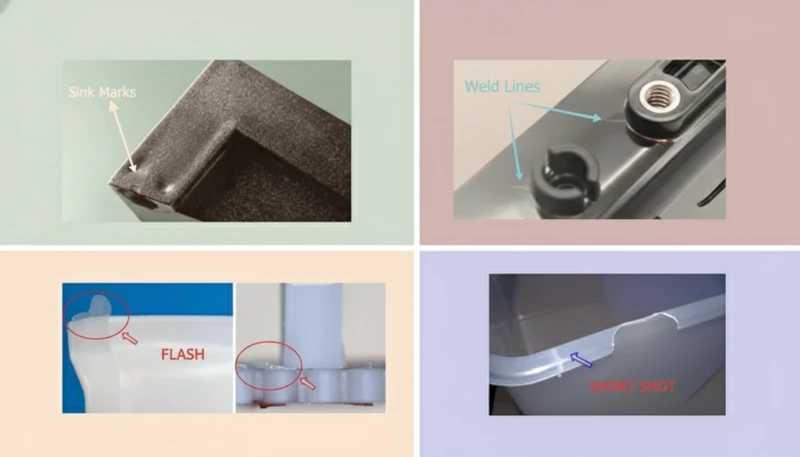
- Rupture fragile : la fissure se propage de façon catastrophique et produit une surface de rupture fragile caractéristique. Contrairement à une rupture ductile, il n’y a pratiquement aucune déformation plastique : la pièce casse brutalement sans signe visible préalable, ce qui la distingue nettement des autres défauts de moulage par injection1.
| Polymère | Sensibilité à la fissuration sous contrainte environnementale | Déclencheurs chimiques courants | Mode de défaillance typique |
|---|---|---|---|
| HDPE / LDPE | Élevé (paroi mince) | Tensioactifs, savons, huiles | Propagation lente des fissures, rupture fragile |
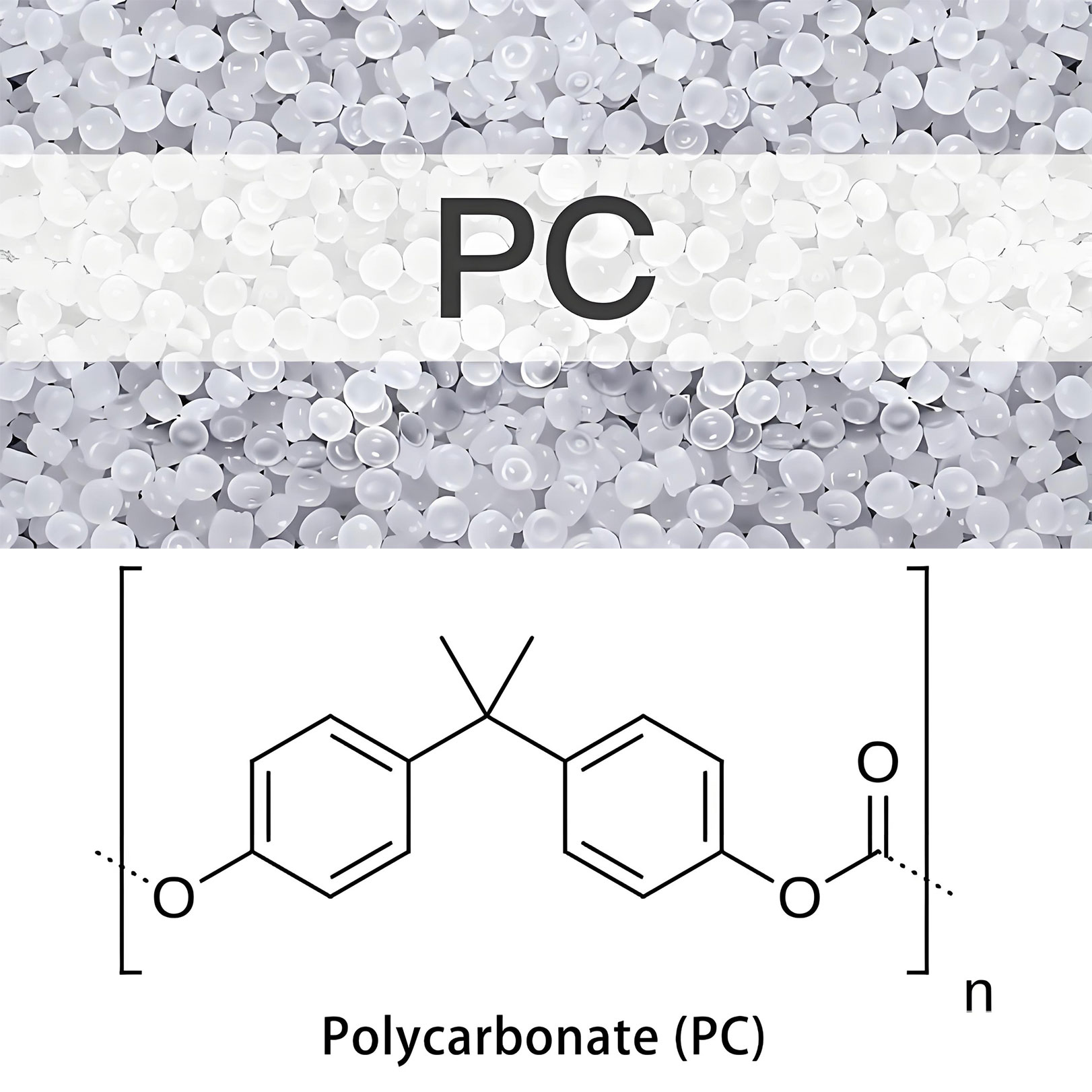
| PC (polycarbonate) | Haut | Cétones, esters, alcools | Craquelure rapide jusqu’à la rupture |
| ABS | Moyenne-élevée | Esters, cétones, solvants aromatiques | Microfissuration dans les zones de contraintes résiduelles |
| PS (Polystyrène) | Haut | Alcools, esters, hydrocarbures | Craquelures, blanchiment de surface |
| PP (Polypropylène) | Faible à moyen | Tensioactifs, huiles minérales | Propagation lente de fissures près des inserts |
| Polyamide (PA66) | Faible à sec ; plus élevé à l’état humide | Chlorure de zinc, chlorure de calcium | Fissuration accélérée par hydrolyse |
La fissuration sous contrainte environnementale ne se produit que lorsque les pièces plastiques sont immergées dans des agents chimiques.False
L’ESC peut être déclenchée par une exposition chimique infime, y compris un bref contact, des vapeurs ou le film résiduel d’un nettoyant évaporé plusieurs heures auparavant. L’agent n’a pas besoin de rester présent : il lui suffit de réduire l’énergie de surface au niveau d’une concentration critique de contraintes pour amorcer la fissuration. Des pièces nettoyées avec un solvant incompatible, puis séchées et assemblées, peuvent subir une ESC plusieurs jours ou semaines plus tard sans trace chimique visible à la rupture.
Quels facteurs déterminent la résistance à la fissuration sous contrainte environnementale (ESCR) d’un plastique ?
L’ESCR n’est pas une propriété matérielle unique — c’est une caractéristique multifactorielle qui dépend de l’architecture moléculaire du polymère, de l’agent chimique spécifique, du niveau de contrainte appliqué et de la température. Comprendre ces facteurs permet aux ingénieurs de sélectionner les matériaux et les conditions de transformation qui minimisent le risque d’ESC.
Masse moléculaire (MW) et distribution des masses moléculaires (MWD) : les polymères de masse moléculaire élevée possèdent des réseaux de chaînes plus enchevêtrés qui résistent à l’amorçage des craquelures. Dans les milieux tensioactifs, le HDPE de MW > 200 000 g/mol présente une ESCR nettement meilleure que les grades de MW < 100 000 g/mol. L’UHMWPE, ou polyéthylène à très haute masse moléculaire, a été spécialement développé pour les applications résistantes à l’ESC, notamment les implants médicaux et revêtements industriels. Sa MW exceptionnelle, généralement de 3 à 6 millions g/mol, en fait l’un des polymères les plus résistants, comme l’explique le guide du moulage par injection de l’UHMWPE2.
Cristallinité : les polymères semi-cristallins présentant une cristallinité plus élevée résistent généralement mieux à l’ESC, car les domaines cristallins sont moins sensibles à la pénétration chimique et à la formation de craquelures. Toutefois, un refroidissement rapide pendant l’injection peut limiter la cristallinité et réduire l’ESCR en dessous de la valeur prévisible d’après la MW.
Morphologie et orientation du polymère : l’orientation moléculaire issue du moulage par injection crée une résistance anisotrope à l’ESC. Les pièces sont généralement plus sensibles perpendiculairement à l’écoulement, dans le sens transversal, que dans son sens. Cela explique pourquoi les fissures ESC sont souvent alignées avec l’écoulement dans les composants injectés.
Propriétés de l’agent chimique : les agents ESC les plus efficaces ont des paramètres de solubilité proches de celui du polymère et une tension superficielle inférieure à son énergie de surface critique. Cette combinaison mouille rapidement les surfaces des craquelures sans dissoudre le polymère massif, soit exactement les conditions nécessaires à l’ESC. Les tensioactifs sont particulièrement puissants sur les polyoléfines, car ils réduisent efficacement la tension superficielle à de très faibles concentrations, de l’ordre de quelques parties par million.
Température : la vitesse de l’ESC augmente avec la température pour deux raisons : une mobilité moléculaire accrue accélère la croissance des craquelures, et la diffusion chimique dans le polymère s’intensifie. Pour les composants utilisés au-dessus de 60°C, l’ESCR doit être réévaluée à la température réelle de service plutôt qu’à partir d’essais à température ambiante.
Comment les contraintes résiduelles de moulage contribuent-elles à la fissuration sous contrainte environnementale ?
La contrainte résiduelle est une contrainte qui demeure dans une pièce après le moulage sans qu’aucune charge extérieure soit appliquée. Elle résulte du refroidissement différentiel entre l’intérieur chaud de la matière fondue et les couches superficielles rapidement trempées, du retrait différentiel entre les sections épaisses et minces, ainsi que de l’orientation moléculaire figée pendant le remplissage rapide. Pour l’ESC, la contrainte résiduelle est d’une importance critique parce que :
- Elle s’ajoute à toute contrainte mécanique appliquée ; la contrainte totale à un emplacement critique = (contrainte appliquée) + (contrainte résiduelle)
- Cela peut suffire à déclencher l’ESC sans aucune charge externe appliquée, uniquement sous l’effet des contraintes de moulage et de l’exposition chimique.
- L’augmentation de l’épaisseur des parois et l’élimination des angles internes aigus réduisent considérablement la sensibilité à la fissuration sous contrainte.
Quantification des contraintes résiduelles : l’essai standard applicable aux contraintes résiduelles liées à l’ESC est l’essai de la bande courbée (ISO 22088), où une pièce est soumise à une déformation contrôlée puis exposée à l’agent chimique. La déformation à laquelle apparaissent craquelures ou fissures est comparée à la déformation résiduelle prévue après moulage. Les pièces fortement contraintes par des conditions agressives — vitesse d’injection et pression de maintien élevées, basse température du moule — échouent systématiquement à des concentrations chimiques plus faibles, point crucial lors de l’optimisation des paramètres de moulage par injection3.
Optimisation du procédé pour réduire les contraintes résiduelles :- Augmenter la température du moule pour permettre une relaxation moléculaire plus importante avant la solidification
- Réduire la vitesse d’injection, en particulier au début de la phase de remplissage
- Réduire la pression de maintien ; prolonger le maintien à une pression plus faible pour compenser le retrait
- Garantir une épaisseur de paroi uniforme afin de réduire les gradients de contrainte dus au refroidissement différentiel
- Recuire les pièces après moulage à 60–80 % de la Tg pendant 30–120 minutes afin de libérer les contraintes résiduelles
Le recuit des pièces moulées par injection peut réduire considérablement leur sensibilité à la fissuration sous contrainte environnementale.True
Le recuit après moulage à des températures inférieures à la température de déformation sous charge (HDT) du polymère permet aux segments de chaîne polymère de se relaxer et de réduire la contrainte résiduelle de 30 à 60 %. Pour les applications sensibles à l'ESC — notamment le PC en contact avec des agents nettoyants ou le HDPE en contact avec des surfactants — le recuit est une pratique standard. La réduction de la contrainte résiduelle diminue directement la contrainte totale aux concentrations de surface, augmentant le seuil d'initiation de l'ESC.
Quels produits chimiques déclenchent le plus souvent la fissuration sous contrainte environnementale dans les pièces plastiques ?
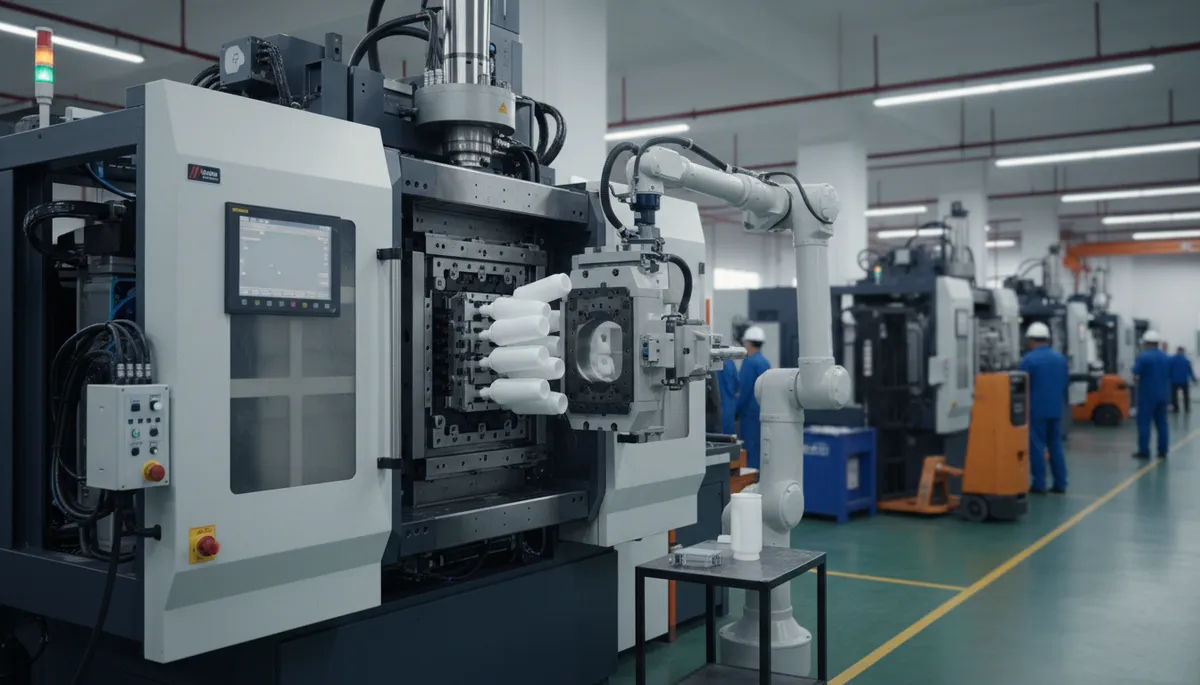
Les agents chimiques responsables de la fissuration sous contrainte environnementale (ESC) couvrent un large éventail de classes de substances. Le tableau suivant présente les déclencheurs ESC les plus courants par type de polymère et environnement d’utilisation :
| Catégorie d’agent chimique | Exemples | Polymères les plus sensibles | Contexte d’application |
|---|---|---|---|
| Tensioactifs | Liquide vaisselle, détergents, agents mouillants | HDPE, LDPE, PP | Emballages, contenants, plomberie |
| Alcools | Isopropanol, éthanol, méthanol | PC, PS, PMMA | Nettoyage de dispositifs médicaux, électronique |
| Cétones | Acétone, MEK, cyclohexanone | PC, ABS, PS | Nettoyage industriel, supports d’adhésifs |
| Esters | Acétate d’éthyle, propylène glycol | ABS, PS, PC | Revêtements, impression, adhésifs |
| Hydrocarbures aromatiques | Toluène, xylène, benzène | PS, ABS, PC | Carburants, solvants, industrie |
| Huiles minérales / lubrifiants | Huile machine, graisse | PP, PE, PS | Automobile, équipements industriels |
| Solutions de sels inorganiques | Chlorure de zinc, chlorure de calcium | Polyamide (nylon), POM | Sel de voirie, fluides d’usinage des métaux |
Les produits solaires et soins cutanés méritent une attention particulière, car ils déclenchent souvent une ESC négligée dans les biens de consommation. Les boîtiers en PC — montures de lunettes, lunettes de protection et boîtiers électroniques — sont très sensibles à l’ESCR au contact des filtres UV tels que benzophénones et octocrylène. Ce mode de défaillance bien documenté dans les lunettes en PC a entraîné des changements de formulation des écrans solaires et des grades de PC, comme l’indique le procédé de moulage par injection du PC4.
Comment les ingénieurs doivent-ils concevoir les pièces pour réduire au minimum le risque de fissuration sous contrainte environnementale ?
La fissuration sous contrainte environnementale ne se produit qu’en cas d’exposition à des produits chimiques agressifs en milieu industriel.False
La fissuration sous contrainte environnementale peut être provoquée par des produits chimiques ménagers courants, des agents de démoulage, des solvants de nettoyage et même les huiles présentes sur la peau. Les contraintes résiduelles du moulage rendent les pièces vulnérables même à un contact chimique modéré sous charge prolongée.
L’augmentation de l’épaisseur de paroi et l’élimination des angles intérieurs vifs réduisent sensiblement la sensibilité à l’ESC.True
Les directives de conception des pièces pour la prévention des ESC—incluant les rayons de coin, l'épaisseur des parois et le placement des portes—sont intégrales aux principes de conception fiable de moules d'injection plastique pour les applications critiques en matière de fiabilité.
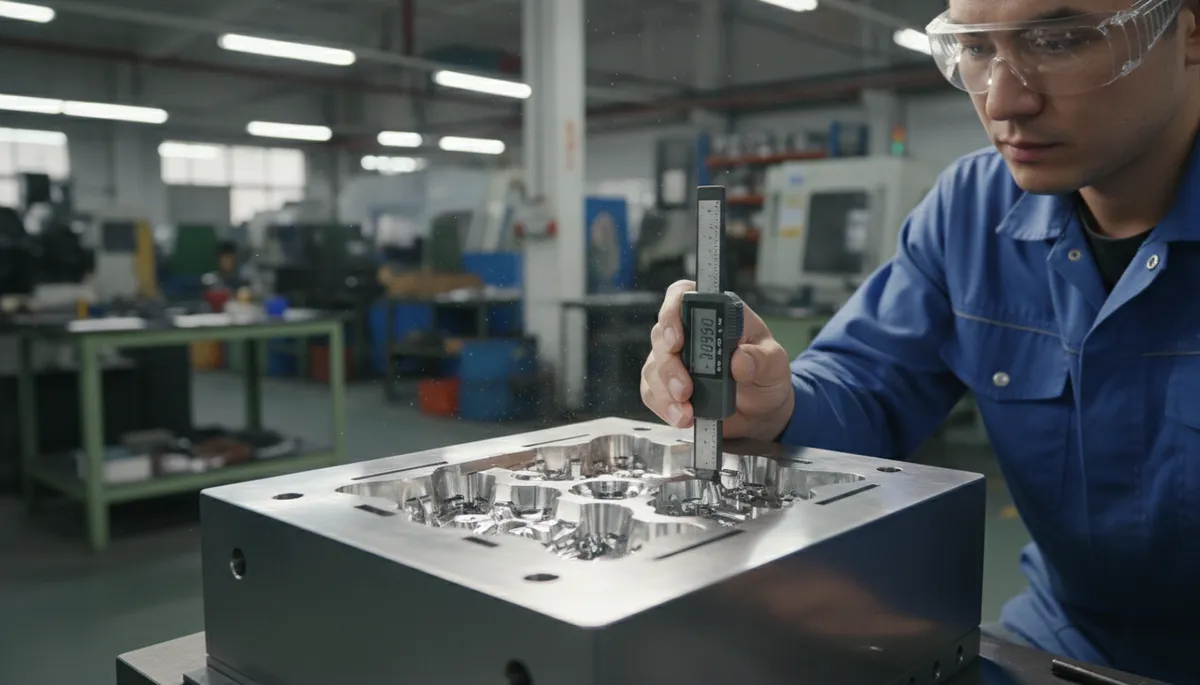
La conception de la pièce constitue la stratégie de prévention de l’ESC la plus durable, car elle traite la composante de contrainte mécanique du mécanisme synergique. Les pratiques de conception suivantes réduisent le risque d’ESC :
Rayons d’angle généreux : les angles intérieurs vifs (r ≤ 0,5 mm) génèrent des facteurs de concentration des contraintes (Kt) de 3–5×. Porter le rayon à 1,5–3 mm réduit Kt à 1,2–1,5× et diminue fortement la contrainte locale susceptible d’entraîner l’ESC. Pour les composants en PC, souvent sujets à l’ESC causée par les alcools ou cétones, la règle de conception impose un rayon intérieur minimal égal à 1,5× l’épaisseur de paroi.
Épaisseur de paroi uniforme : les changements brusques de section créent des contraintes différentielles de refroidissement, donc des contraintes résiduelles, ainsi que des concentrations de contraintes en service. Limiter les variations d’épaisseur à ≤ 25 % de l’épaisseur nominale élimine la principale source de contraintes résiduelles dues au moulage.
Position du seuil par rapport aux contraintes : les lignes de soudure formées par la rencontre des fronts d’écoulement dans la zone du seuil ou à proximité sont moins résistantes et constituent des sites privilégiés d’amorçage de l’ESC. Les seuils doivent être placés de façon à former ces lignes dans des zones peu contraintes et éloignées de l’exposition chimique.
Réduction des contraintes d’assemblage : emmanchements serrés, clips et fixations filetées imposent tous des contraintes mécaniques au composant plastique. Pour une conception sensible à l’ESC, calculez à chaque emplacement critique la contrainte combinée — assemblage, service et résidu de moulage — puis vérifiez qu’elle reste inférieure à la contrainte admissible du matériau dans les conditions d’exposition chimique prévues.
Texture de surface : les surfaces rugueuses aux aspérités vives offrent davantage de sites potentiels de nucléation des craquelures que les surfaces lisses et polies. Pour les composants critiques vis-à-vis de l’ESC, imposer une finition fine (Ra ≤ 0,8 µm) réduit la densité de ces sites conformément à la conception des moules d’injection plastique5.
Questions fréquentes sur la fissuration sous contrainte environnementale des pièces en plastique
Q : Comment distinguer l’ESC d’une rupture purement mécanique ou d’une attaque purement chimique ? R : Les surfaces de rupture ESC sont typiquement fragiles, avec des marques de craquelure rayonnant depuis l’origine de la fissure et sans signe de déformation ductile — striction, blanchiment ou lignes d’étirement. Une rupture mécanique pure d’un polymère ductile présente une forte déformation avant la rupture. Une attaque chimique pure provoque généralement dissolution superficielle, décoloration ou gonflement sans morphologie de fissure nette. L’analyse de la surface de rupture associée à l’historique d’exposition chimique suffit généralement au diagnostic.
Q : Quelle est la méthode d’essai standard pour mesurer l’ESCR ? R : La principale norme est ASTM D1693, essai de la bande courbée, pour le polyéthylène dans des solutions tensioactives. ISO 22088 fournit un cadre plus large couvrant plusieurs polymères et conditions de charge. L’essai à rotule (ASTM D5419) et l’essai sous charge de traction constante (ISO 22088 partie 3) sont employés pour les résines techniques. Les résultats indiquent le délai avant rupture (F50, F100) sous une contrainte et une exposition chimique données.
Q : Les revêtements de surface peuvent-ils protéger contre l’ESC ? R : Les revêtements barrières peuvent retarder son amorçage en ralentissant le contact chimique avec la surface du polymère. Les revêtements durs à base de silicone ou de céramique isolent efficacement la surface. Ils doivent toutefois être compatibles avec le substrat, exempts de piqûres et rester intacts en service. Leur délamination expose le polymère à une contrainte chimique concentrée aux zones décollées, ce qui peut accélérer l’ESC au lieu de la prévenir.
Q: La stabilisation UV affecte-t-elle la résistance à l’ESC ? R : Effet indirect. La dégradation UV réduit la masse moléculaire et introduit des produits d’oxydation de surface qui créent des sites supplémentaires d’amorçage des craquelures ESC. Les polymères stabilisés aux UV conservent leur MW et leur qualité de surface dans le temps, préservant plus longtemps leur ESCR initiale. Pour les applications extérieures, la stabilisation UV constitue donc une mesure indirecte de prévention de l’ESC.
Q: Si une pièce réussit un essai ESC initial, est-elle sûre à long terme ? R : Pas nécessairement. L’ESC dépend du temps et comporte des périodes d’incubation allant de quelques heures à plusieurs années selon le niveau de contrainte et la concentration chimique. Les essais standard de courte durée peuvent ne pas révéler la propagation lente des fissures à long terme. Pour les applications critiques pour la sécurité (récipients sous pression, dispositifs médicaux, composants structurels), des essais accélérés à température ou concentration chimique élevée sont nécessaires pour prévoir les performances à long terme avec une confiance suffisante.
Q: L’ESC est-elle plus fréquente sur les pièces injectées que sur les pièces extrudées ou soufflées ? R : Oui, généralement. L’injection génère davantage de contraintes résiduelles que l’extrusion ou le soufflage en raison des pressions élevées, du remplissage rapide et du refroidissement brutal. Associées aux géométries complexes typiques, ces contraintes créent plus de sites d’amorçage de l’ESC. Toute pièce plastique peut néanmoins subir une ESC si la contrainte et l’agent chimique appropriés sont réunis.
Résumé : comment prévenir la fissuration sous contrainte environnementale des pièces en plastique
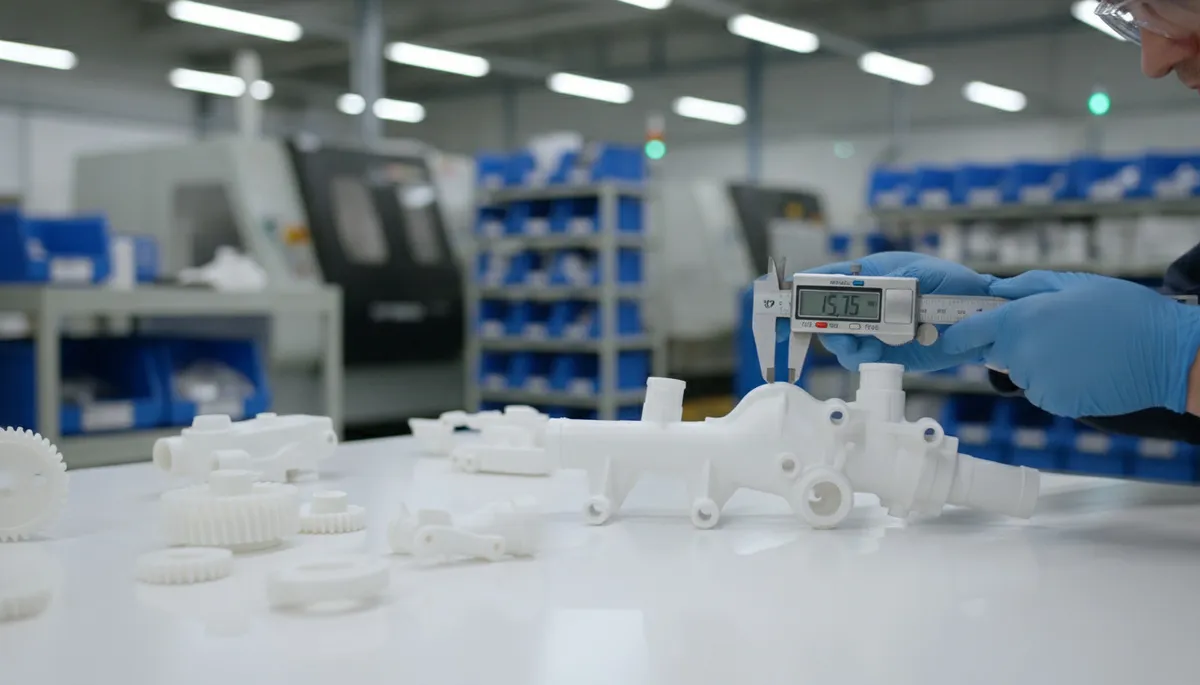
La fissuration sous contrainte environnementale est un mécanisme de défaillance synergique qui reste l’une des causes les plus courantes et évitables de défaillance en service des pièces plastiques. Sa nature insidieuse — une rupture fragile sous des charges et des concentrations chimiques qui seraient individuellement inoffensives — conduit fréquemment à un diagnostic erroné et à une sous-estimation lors du développement du produit.
Le cadre de prévention tridimensionnel :
1. Choix du matériau : Adaptez l’ESCR du polymère à l’agent chimique et à la concentration prévus dans l’environnement d’utilisation. Ne vous fiez pas à des valeurs ESCR génériques : testez avec les produits chimiques réels. Envisagez des grades de masse moléculaire supérieure, des copolymères résistants à l’ESC ou d’autres polymères si le grade standard présente une ESCR insuffisante. Pour les exigences extrêmes, l’UHMWPE, le PEEK et les fluoropolymères offrent la meilleure résistance intrinsèque à l’ESC.
2. Optimisation de la conception : Éliminez les angles intérieurs vifs (r minimal = 1.5× l’épaisseur de paroi), concevez des sections de paroi uniformes, éloignez les seuils et les lignes de soudure des zones à forte exposition chimique sous contrainte, et réduisez les contraintes induites par l’assemblage aux transitions d’inserts et aux bossages de fixation.
3. Optimisation du procédé : Réduisez les contraintes résiduelles en augmentant la température du moule, en diminuant la vitesse d’injection, en optimisant la pression de maintien et en appliquant un recuit après moulage. Vérifiez la constance du procédé par des essais ESCR périodiques sur des échantillons de production prélevés au début, au milieu et à la fin de chaque série.
Lorsque ces trois dimensions sont traitées de manière systématique, les taux de défaillance par fissuration sous contrainte environnementale dans les pièces de production peuvent être ramenés à un niveau proche de zéro, remplaçant ainsi l’une des principales causes de défaillance sur le terrain par un mécanisme bien maîtrisé et évitable de façon fiable.
La fissuration sous contrainte environnementale est reconnue comme un mécanisme de défaillance majeur dans la documentation sur les défauts de moulage par injection, notamment pour les composants en polyoléfine et polycarbonate exposés à des environnements chimiques. ↩
L’extraordinaire résistance de l’UHMWPE à la fissuration sous contrainte environnementale (ESC) est liée à sa masse moléculaire ultra-élevée ; des paramètres de transformation détaillés sont disponibles dans des guides spécialisés. ↩
La quantification des contraintes résiduelles et leur relation avec le risque d’ESC sont des sujets centraux de l’optimisation des paramètres du moulage par injection, notamment pour les applications utilisant des résines techniques haute performance. ↩
La vulnérabilité du polycarbonate à l’ESC face à certains agents chimiques exige un choix soigneux de la nuance et des conditions de transformation pour les applications résistantes aux produits chimiques. ↩
Les règles de conception des pièces visant à prévenir l’ESC — notamment les rayons d’angle, l’épaisseur de paroi et le placement des points d’injection — font partie intégrante des principes de conception fiable des moules d’injection plastique pour les applications critiques en matière de fiabilité. ↩
Obtenez des prix compétitifs, un retour DFM et un calendrier de production auprès de l’équipe d’ingénierie de ZetarMold.
Demandez un devis gratuit → Consultez notre Guide complet du moulage par injection pour une vue d’ensemble complète. Consultez notre Guide complet du moule d’injection pour une vue d’ensemble complète. Consultez notre Guide complet du moulage par injection pour une vue d’ensemble complète.