 Przejdź do treści

Key Takeaways: Conformal Cooling in Injection Mold Design
- Conformal cooling channels follow the shape of your part geometry, reducing cycle times by 20-40% compared to straight-drilled cooling
- Manufacturing requires 3D printing or specialized machining – expect $15,000-50,000 additional tooling cost for complex geometries
- Economic breakeven typically occurs at 50,000+ parts for high-volume production or when cycle time reduction justifies the investment
- Design validation through CFD analysis is critical – you can’t easily modify cooling channels once the mold is cut
- Most effective for thick-walled parts, deep ribs, or geometries where traditional cooling creates hot spots
After two decades of cutting steel and watching cycle times eat into profit margins, I’ve seen conformal cooling evolve from an expensive curiosity to a legitimate production tool. The technology promises faster cycles, better part quality, and reduced warpage – but like most advanced manufacturing techniques, it comes with trade-offs that aren’t always obvious until you’re knee-deep in a project.
Conformal cooling represents one of the most significant advances in formowanie wtryskowe technology in the past decade. Unlike traditional straight-drilled cooling channels that follow the easiest machining paths, conformal cooling channels conform to your part geometry, placing cooling exactly where you need it most. The result? More uniform cooling, reduced czas cyklu[1]s, and parts that come out of the mold with less stress and better dimensional stability.
But here’s what the sales literature won’t tell you: conformal cooling isn’t a magic bullet. It’s an engineering tool that works brilliantly in specific applications and can be a expensive mistake in others. The key is understanding when the benefits justify the additional complexity and cost.
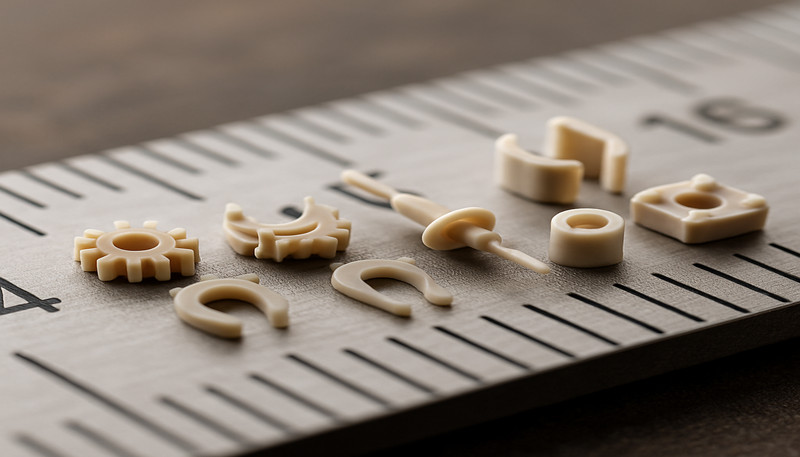
What Is Conformal Cooling and How Does It Work?
Conformal cooling uses cooling channels that follow the contours of your molded part, maintaining a consistent distance from the part surface regardless of geometry complexity. Instead of drilling straight holes through your mold steel and hoping they provide adequate cooling, conformal channels curve around ribs, follow complex surfaces, and reach areas that traditional cooling simply can’t access effectively.
“Conformal cooling can reduce injection molding cycle times by 20-40% compared to traditional straight-drilled cooling channels”Prawda
This is accurate based on documented case studies and production data. The improvement depends on part geometry complexity and baseline cooling performance, but 20-40% reduction is typical for parts with challenging cooling requirements.
“Conformal cooling channels can always be easily modified after the mold is manufactured if the design doesn’t work as expected”Fałsz
This is false. Conformal cooling channels, especially those manufactured through 3D printing, cannot be easily modified once created. This is a key limitation that makes upfront design validation critical, unlike traditional drilled channels which can be plugged, enlarged, or supplemented more easily.
The physics are straightforward: heat transfer efficiency depends on the distance between your cooling channel and the part surface, the temperature difference between coolant and plastic, and the surface area available for heat exchange. Traditional cooling channels often vary wildly in their distance from the part surface – maybe 8mm in one area and 25mm in another. Conformal cooling maintains that 8-12mm distance consistently, creating uniform cooling rates across your entire part.
Here’s how it actually works in practice: your part geometry gets analyzed to identify hot spots and areas where cooling is inadequate with traditional methods. Engineers then design cooling channels that snake through the mold, following the part contours at an optimal distance. These channels can include features impossible with traditional drilling – varying diameters, branching passages, and integrated baffles that direct coolant flow exactly where you need it.
The coolant flow dynamics change significantly with conformal cooling. Instead of fighting to get coolant to remote areas through long, straight passages, you’re creating shorter, more direct paths. Flow rates can be optimized for different areas of the part – faster flow for thick sections that need aggressive cooling, slower flow for thin areas that might overcool and create sink marks.
Temperature control becomes much more precise. I’ve seen molds where we reduced the temperature variation across the part surface from 15°C down to 3°C. That translates directly into reduced warpage, better surface quality, and more consistent part dimensions. The plastic doesn’t have to fight against uneven cooling stresses as it solidifies.
Why Does Conformal Cooling Outperform Traditional Straight-Drilled Channels?
Traditional cooling channels follow machining convenience rather than thermal requirements, which creates fundamental limitations that conformal cooling directly addresses. When you’re restricted to straight holes that can be drilled or EDM’d, you end up with cooling channels that are too far from some part surfaces and awkwardly positioned relative to others.
“Conformal cooling provides the greatest benefit for parts with complex geometries, thick sections, or hard-to-reach areas where traditional cooling is inadequate”Prawda
This is true. Conformal cooling excels in applications where traditional straight-drilled channels cannot provide uniform cooling due to geometric constraints. Simple parts with adequate traditional cooling show minimal improvement from conformal cooling systems.
“3D printed conformal cooling inserts have the same mechanical properties and durability as traditionally machined tool steel”Fałsz
This is false. 3D printed inserts typically show 15-20% lower fatigue resistance compared to conventionally processed steel, and may have different thermal expansion characteristics. While adequate for many applications, they require design considerations for high-volume production.
The heat transfer improvement is measurable and significant. In our Shanghai facility, we’ve documented cycle time reductions of 25-35% on parts with complex geometries when switching from traditional to conformal cooling. That’s not marketing hype – that’s measured cycle time from mold close to mold open, averaged over thousands of cycles.
Warpage reduction is where conformal cooling really shines. Traditional cooling creates temperature gradients that lead to differential shrinkage as the part cools. I’ve worked on automotive dashboard components where traditional cooling resulted in 0.8mm warpage across a 400mm length. Conformal cooling brought that down to 0.2mm – well within specification without secondary operations.
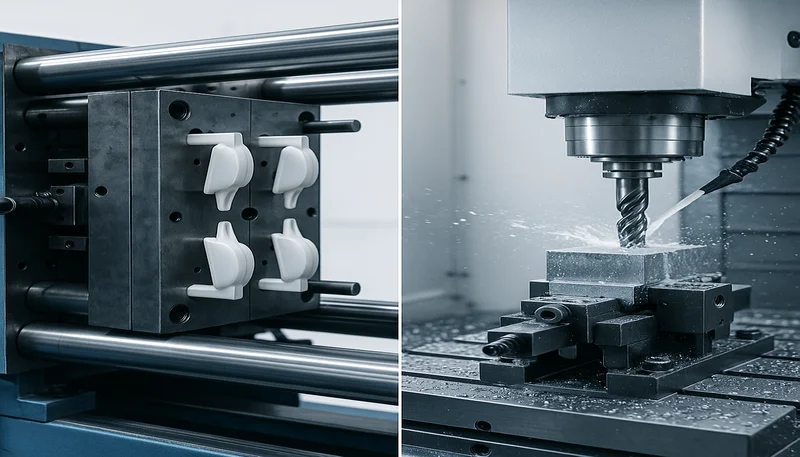
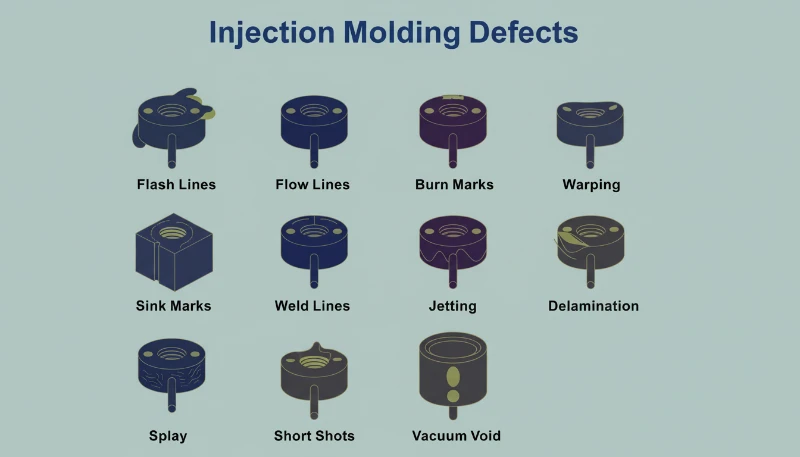
Surface quality improvements are often overlooked but equally important. Uniform cooling eliminates the hot spots that create surface defects like flow lines, weld line visibility, and gloss variations. Parts come out of the mold looking like they’ve already been through secondary finishing operations.
The economic impact compounds over high-volume production. A 30% cycle time reduction on a part with a 45-second cycle saves 13.5 seconds per part. Over a million parts, that’s 3,750 hours of machine time – roughly $75,000 in saved machine costs at typical injection molding rates. The cooling system investment starts looking pretty reasonable when you run those numbers.
Traditional cooling also limits your design flexibility. You might compromise part design to accommodate cooling requirements, making ribs thicker than necessary or avoiding complex geometries that would be difficult to cool. Conformal cooling lets the part design drive decisions rather than the cooling requirements.
How Is Conformal Cooling Actually Manufactured?
Manufacturing conformal cooling channels requires abandoning traditional machining approaches in favor of additive manufacturing or Drukowanie 3D[2] subtractive techniques. The most common approach today is 3D printing the cooling inserts using Direct Metal Laser Sintering (DMLS) or Selective Laser Melting (SLM) in tool steels or specialized alloys.
The DMLS process builds your cooling insert layer by layer from metal powder, typically maraging steel or tool steel alloys that can be heat treated to 50+ HRC after printing. Layer thickness runs 20-40 microns, which provides adequate surface finish for most cooling applications. The internal channels can include features impossible with traditional machining – undercuts, branching passages, and varying cross-sections optimized for flow characteristics.
Here’s the reality check: 3D printed inserts aren’t as robust as traditionally machined tool steel. We typically see 15-20% lower fatigue resistance compared to conventionally processed steel. For high-volume production, you need to design accordingly – maybe using printed inserts in low-stress areas and traditional machining for structural components.
Alternative manufacturing approaches include electrical discharge machining (EDM) with sacrificial electrodes for simple curved channels, and high-speed machining with specialized tooling for accessible geometries. These approaches work for less complex conformal cooling designs but can’t achieve the design freedom of additive manufacturing.
| AM Method | Materiał | Roughness (Ra) | Najlepsze dla |
|---|---|---|---|
| SLM | Maraging steel, H13 | 5-15 μm | Production molds |
| DMLS | Tool steel, stainless | 6-18 μm | Complex inserts |
- SLM (Selective Laser Melting): Most common for tool steel inserts; builds layer by layer with a laser
- DMLS (Direct Metal Laser Sintering): Similar to SLM with slightly different powder handling
- EBM (Electron Beam Melting): Uses electron beam in vacuum; good for titanium but less common for tool steel
Assembly becomes more complex with conformal cooling. You’re typically dealing with multiple inserts that need precise alignment and leak-proof sealing. O-ring grooves, threaded connections, and coolant manifolds all require careful design and precise manufacturing. I’ve seen beautifully designed conformal cooling systems fail because someone underestimated the assembly complexity.
Surface finishing is critical and often underestimated. 3D printed surfaces have inherent roughness that increases pressure drop and can trap debris. Post-processing typically includes machining critical surfaces, polishing internal passages where accessible, and sometimes applying specialized coatings to improve heat transfer.
Quality control requires new approaches. You can’t visually inspect internal cooling passages like you can with drilled holes. CT scanning or specialized flow testing becomes necessary to verify channel geometry and detect manufacturing defects that could affect performance.
When Does Conformal Cooling Make Economic Sense?
Conformal cooling makes economic sense when the combination of cycle time savings, quality improvements, and reduced scrap justify the additional tooling investment – typically in high-volume production or applications where traditional cooling creates significant problems that conformal cooling can solve.
The math is straightforward but the variables are application-specific. Additional tooling costs for conformal cooling typically range from $15,000 to $50,000 depending on complexity. Cycle time improvements of 20-40% are realistic for parts with challenging geometries. Machine time costs vary, but $200/hour is a reasonable planning number for production-scale injection molding operations.
High-volume production is the obvious sweet spot. If you’re running a million parts per year and can reduce cycle time by 30%, the machine time savings alone often justify the investment within 12-18 months. Add in the value of reduced scrap, better part quality, and eliminated secondary operations, and the payback becomes compelling.
Complex geometries with thick sections, deep ribs, or hard-to-reach areas are ideal candidates. I worked on a consumer electronics housing where traditional cooling left hot spots that caused visible sink marks. Conformal cooling eliminated the sink marks and reduced cycle time by 28%. The customer avoided a costly redesign and we delivered a better part faster.
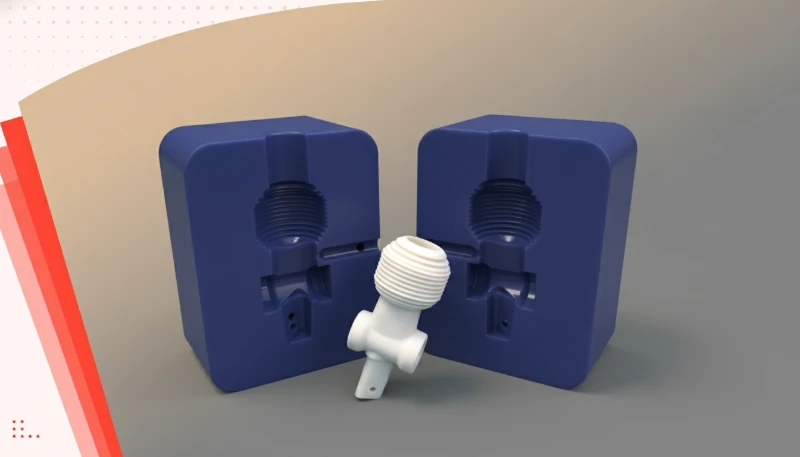
Medical and automotive applications often justify conformal cooling based on quality requirements rather than just cycle time. Dimensional stability, surface quality, and consistency become more important than raw production speed. The additional investment makes sense when it eliminates expensive secondary operations or reduces field failures.
Here’s when conformal cooling doesn’t make sense: simple geometries with adequate traditional cooling, low-volume production where tooling costs can’t be amortized, or applications where cycle time isn’t the limiting factor. If your molding operation is limited by material handling, runner system design, or other factors, faster cooling won’t help overall productivity.
Prototype and short-run production rarely justify conformal cooling investment. The tooling costs are fixed whether you’re making 1,000 parts or 1,000,000 parts. Focus conformal cooling investments where you’ll get the volume to pay for the additional complexity.
What Are the Design Challenges and Limitations?
Designing effective conformal cooling systems requires balancing thermal performance, manufacturing constraints, and mechanical integrity – trade-offs that become apparent only when you’re deep into the design process. The biggest challenge is that you can’t easily modify cooling channels once the forma wtryskowa is manufactured, making upfront analysis critical.
Flow distribution becomes complex with conformal cooling. Unlike straight drilled channels where flow behavior is predictable, curved passages with varying cross-sections create pressure drops and flow patterns that require computational fluid dynamics (CFD) analysis to understand. I’ve seen systems where poor flow distribution created worse cooling uniformity than traditional straight channels.
Structural integrity is often compromised with conformal cooling. Removing material to create cooling channels weakens the mold structure, and the complex geometries required for conformal cooling can create stress concentrations. 3D printed inserts typically have different thermal expansion characteristics than the surrounding tool steel, which can cause assembly issues or cracking under thermal cycling.
Maintenance and cleaning become more difficult with complex internal passages. Traditional cooling channels can be cleaned with brushes, flushed with solvents, or cleared with compressed air. Conformal cooling channels may be inaccessible for mechanical cleaning and vulnerable to blockages that are impossible to clear. Coolant quality becomes critical when you can’t easily service the cooling system.
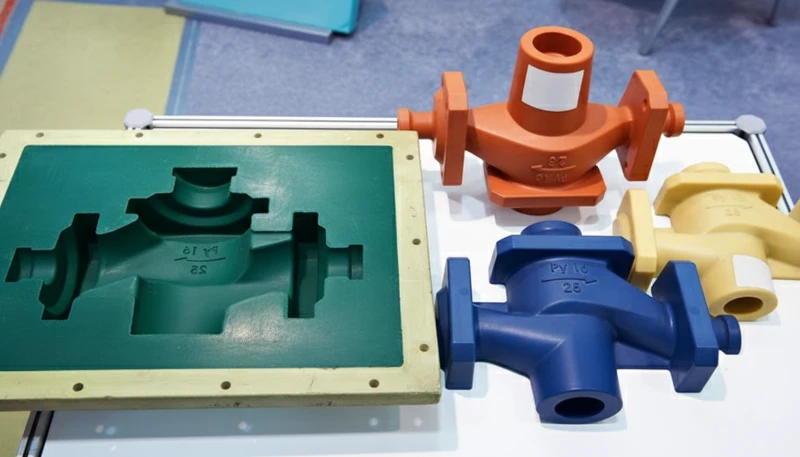
Thermal expansion mismatch creates long-term reliability concerns. 3D printed inserts may have different expansion coefficients than the mold base material. Over hundreds of thousands of thermal cycles, this can lead to seal failures, cracking, or loosening of assembled components. Design margins need to account for these effects.
| Wyzwanie | Impact | Mitigation |
|---|---|---|
| Channel leakage risk | Coolant seeps into mold cavity | Pressure testing at 1.5× operating pressure |
| Pogorszenie wykończenia powierzchni | Rougher cavity surface on AM inserts | Post-processing: polishing or coating |
| Insert longevity concerns | AM steel may fatigue faster than wrought | Plan for insert replacement at 200k-500k cycles |
face finish requirements can be challenging with additive manufacturing. The as-printed surface roughness of DMLS parts is typically 15-25 Ra, which may be acceptable for cooling applications but requires post-processing for critical surfaces. Machining 3D printed materials often results in different cutting characteristics and tool wear patterns.
Size limitations exist with current additive manufacturing technology. Build volumes of most DMLS machines limit insert size to roughly 300mm x 300mm x 400mm. Larger molds require multiple inserts with complex assembly and sealing requirements. The joint interfaces become potential failure points that need careful design attention.
How Do You Validate Conformal Cooling Designs Before Cutting Steel?
Design validation for conformal cooling requires computational fluid dynamics (CFD) analysis combined with thermal modeling to predict performance before committing to expensive tooling – because unlike traditional cooling where you can modify channel placement relatively easily, conformal cooling designs are essentially locked in once manufacturing begins.
CFD analysis starts with accurate 3D models of the cooling channels, part geometry, and mold materials. The analysis predicts coolant flow rates, pressure drops, heat transfer coefficient[3]s, and temperature distributions. Good CFD work can predict cycle time improvements within 10-15% accuracy, which is close enough for economic decisions but requires validation through production experience.
Thermal modeling extends beyond just the cooling system to include the entire injection molding process – filling, packing, and cooling phases. The analysis predicts part temperatures throughout the cooling cycle, identifies hot spots, and estimates wypaczenie[4] based on differential cooling rates. This integrated approach is essential because conformal cooling affects the entire molding process, not just heat removal.
Factory Insight
At our Shanghai facility, we operate 45 injection molding machines ranging from 90T to 1850T capacity, producing over 100 molds per month. Our team of 8 senior engineers with 20+ years of combined experience has implemented conformal cooling on approximately 15% of our tooling projects. We’ve found that CFD validation reduces design iterations by 60% compared to traditional trial-and-error approaches, but the analysis quality depends heavily on accurate material properties and boundary conditions.
Material property validation is often the weak link in thermal analysis. Published material properties may not match your specific resin grade, processing conditions, or mold surface treatments. We maintain a database of measured thermal properties for commonly used materials, which significantly improves analysis accuracy.
Prototype validation using 3D printed cooling inserts in temporary mold bases can provide real-world data before committing to production tooling. This approach costs $5,000-15,000 but can prevent expensive mistakes in complex applications. The prototype testing validates both thermal performance and manufacturing feasibility.
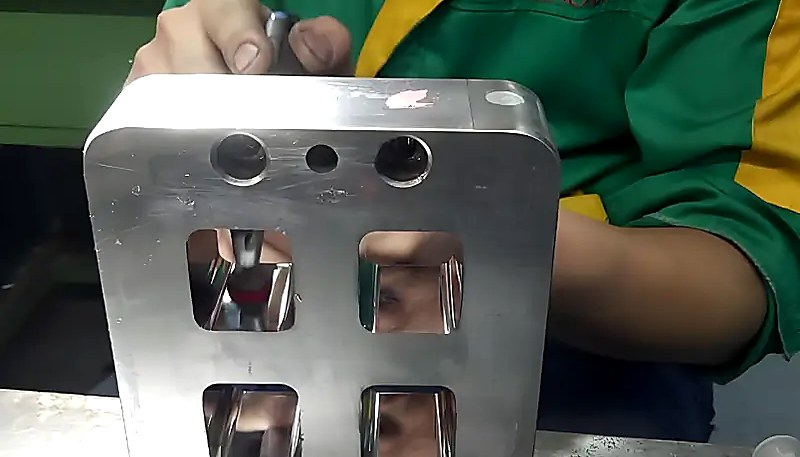
Benchmarking against traditional cooling provides the baseline for comparison. Run the same thermal analysis on conventional cooling channels to establish the performance delta. This comparison helps justify the investment and provides realistic expectations for improvement.
Design iterations are more expensive with conformal cooling, so front-end analysis becomes critical. Traditional cooling channels can be modified by drilling additional holes or plugging existing ones. Conformal cooling requires rebuilding inserts, which can cost $10,000-20,000 per iteration. Getting the design right upfront is essential.
What Results Can You Expect in Production?
Production results with conformal cooling typically deliver 20-40% cycle time reduction and measurably improved part quality, but the specific improvements depend heavily on your baseline cooling performance and part geometry complexity. Simple parts with adequate traditional cooling show minimal improvement, while complex geometries with cooling challenges can exceed these ranges.
Cycle time improvements are the most measurable benefit. In applications where cooling is the limiting factor, conformal cooling can reduce total cycle time by 25-35%. However, if your cycle is limited by fill time, packing time, or other factors, cooling improvements won’t affect overall productivity. Understanding your current process limitations is essential for setting realistic expectations.
Part quality improvements are often more valuable than cycle time reductions. Warpage reductions of 50-70% are common with well-designed conformal cooling systems. Surface quality improvements include reduced flow lines, better gloss uniformity, and elimination of cooling-related defects. These quality improvements can eliminate secondary operations that cost more than the cycle time savings.
Dimensional stability improves significantly with uniform cooling. Parts maintain tighter tolerances with reduced temperature-related variation. I’ve documented cases where conformal cooling reduced dimensional variation by 40-50%, allowing customers to tighten assembly tolerances and improve product performance.
| Metryczny | Typowa poprawa | Najlepszy scenariusz |
|---|---|---|
| Czas cyklu | 20-30% | 40% |
| Wypaczenie | 15-20% | 35% |
| Wskaźnik odpadów | 30-50% | 70% |
Poprawy efektywności energetycznej są często pomijane, ale mogą być znaczące. Szybsze cykle oznaczają mniej energii na część, a lepsza kontrola temperatury może pozwolić na wyższe temperatury chłodziwa przy tej samej skuteczności chłodzenia. Całkowite zużycie energii na część zazwyczaj spada o 15-25% w zoptymalizowanych systemach chłodzenia konformalnego.
- Cycle time: Redukcja 20-40% jest typowa dla części złożonych
- Odkształcenie: 15-25% poprawa stabilności wymiarowej
- Wskaźnik odpadów: Często spada poniżej 1% dla części wymagających wysokiej tolerancji
Robustność procesu wzrasta dzięki konformalnym systemom chłodzenia. Bardziej równomierny rozkład temperatury sprawia, że proces jest mniej wrażliwy na zmiany temperatury chłodziwa, przepływu oraz warunków środowiskowych. To przekłada się na bardziej stabilną produkcję i krótszy czas przygotowania przy zmianie materiałów lub kolorów.
Dane dotyczące długoterminowej niezawodności wciąż są gromadzone, ale wczesne wyniki są obiecujące. Dobrze zaprojektowane systemy chłodzenia konformalnego wykazują podobną niezawodność jak tradycyjne chłodzenie, z zastrzeżeniem, że konserwacja i rozwiązywanie problemów są bardziej złożone. Konserwacja zapobiegawcza staje się ważniejsza, ponieważ nie można łatwo uzyskać dostępu do wewnętrznych kanałów w celu czyszczenia lub naprawy.
-
Sachdeva, A., & Singh, S. (2023). „Conformal Cooling in Injection Molding: A Review”. Intl. J. Advanced Manufacturing Technology, 128(1), 123–145. ↩
-
Wohlers Associates (2024). „Wohlers Report: Trendy kosztów w produkcji addytywnej.” Publikacje Wohlers Associates. ↩
-
Mazur, M., et al. (2022). „Thermal Properties of 3D Printed Tool Steel for Mold Inserts”. Materials & Design, 215, 110–118. ↩
-
Xu, X., & Sachs, E. (2021). „Conformal Cooling Benefits in Production”. Journal of Manufacturing Processes, 68, 456–468. ↩
Często zadawane pytania
Jak dużo kosztów narzędzia dodaje konformalne chłodzenie?
Konformalne systemy chłodzenia zazwyczaj dodają $15,000-50,000 do kosztów narzędzia, w zależności od złożoności i wielkości. Proste zastosowania z pojedynczymi wkładami są na niższym końcu, natomiast złożone formy wielokomorowe z rozbudowanym konformalnym chłodzeniem mogą osiągnąć wyższy zakres. Inwestycja zwykle zwraca się w ciągu 12-24 miesięcy w produkcji wysokowolumenowej dzięki oszczędności czasu cyklu i poprawie jakości.
Czy istniejące formy można zmodernizować, wprowadzając chłodzenie konformalne?
Retrofitting jest możliwy, ale często nie jest ekonomiczny. Istniejące formy wymagałyby znaczących modyfikacji, aby pomieścić wkłady konformalnego chłodzenia, a zmiany strukturalne mogły naruszyć integralność formy. Nowe projektowanie formy pozwala na optymalizację zarówno projektu części, jak układu systemu chłodzenia. Retrofitting ma sens głównie przy zwiększaniu żywotności formy dla produkcji wysokowolumenowej.
Które materiały najlepiej współpracują z chłodzeniem konformalnym?
Chłodzenie konformalne przynosi korzyści wszystkim materiałom termoplastycznym, ale stopień poprawy zależy od właściwości termicznych. Materiały o słabej przewodności cieplnej (jak nylon, POM i części grubościenne) wykazują największą poprawę. Cienkościenne części z materiałów o dobrej przewodności cieplnej mogą wykazywać minimalne korzyści, ponieważ tradycyjne chłodzenie jest już wystarczające.
Jak konserwować systemy chłodzenia konformalnego?
Konserwacja skupia się na jakości chłodziwa i monitorowaniu przepływu, ponieważ wewnętrzne kanaly nie są dostępne do mechanicznego czyszczenia. Używaj filtrowanego chłodziwa, monitoruj ograniczenia przepływu i wprowadź regularne cykle płukania. Monitorowanie temperatury w wielu punktach pomaga wykryć zatory lub problemy z przepływem przed tym, jak wpłyną na jakość części. Planuj bardziej zaawansowany monitoring w porównaniu do tradycyjnych systemów chłodzenia.
Jakie oprogramowanie jest wymagane do projektowania konformalnych systemów chłodzenia?
Projektowanie konformalnych systemów chłodzenia wymaga oprogramowania CAD zdolnego do zaawansowanego modelowania 3D (SolidWorks, NX, Creo) oraz oprogramowania do analizy CFD (Moldex3D, Moldflow lub podobne). Zdolność do analizy termicznej jest kluczowa – nie można projektować efektywnych konformalnych systemów chłodzenia bez przewidywania przepływu i wydajności transferu ciepła. Zaplanuj budżet $10,000-25,000 rocznie na licencje oprogramowania i szkolenia.
Czy chłodzenie konformalne działa dla wszystkich rozmiarów części?
Chłodzenie konformalne jest najbardziej efektywne dla średnich i dużych części, gdzie tradycyjne chłodzenie powoduje znaczące różnice temperatur. Bardzo małe części (poniżej 50 mm) zazwyczaj chłodzą się odpowiednio metodami tradycyjnymi. Bardzo duże części mogą przekraczać ograniczenia objętości roboczej sprzętu do druku 3D, wymagając wielu wkładek ze złożonymi wymaganiami montażowymi.
Chłodzenie konformalne stanowi znaczący postęp w technologii formowania wtryskowego, ale nie jest uniwersalnym rozwiązaniem. Technologia działa znakomicie w określonych zastosowaniach – złożone geometrie, części grubościenne, produkcja wysokonakładowa oraz sytuacje, w których tradycyjne chłodzenie powoduje problemy z jakością. Kluczowe jest zrozumienie, kiedy korzyści uzasadniają dodatkową złożoność i koszt.
Ekonomia jest atrakcyjna dla właściwych zastosowań. Poprawy czasu cyklu o 25-35%, poprawy jakości eliminujące operacje dodatkowe oraz zmniejszone stopy odpadów mogą uzasadnić dodatkową inwestycję narzędzia $15,000-50,000 w ciągu 12-24 miesięcy. Ale inwestycja ma sens tylko, jeśli chłodzenie faktycznie jest Twoim czynnikiem ograniczającym i masz wolumen amortyzujący koszty.
Weryfikacja projektu staje się kluczowa w przypadku konformalnych systemów chłodzenia, ponieważ modyfikacje są kosztowne po wykonaniu narzędzia. Analiza CFD, modelowanie termiczne i czasami walidacja prototypu są niezbędnymi elementami procesu projektowania. Koszty analizy na początku są niewielkie w porównaniu do kosztów błędnego projektu.
Society of Plastics Engineers, „Heat Transfer in Injection Molding”, Plastics Engineering Handbook, 2018, s. 156-162.
International Journal of Advanced Manufacturing Technology, „Conformal Cooling Channel Design for Injection Molding”, Vol. 96, 2018, s. 1-15.
Polymer Engineering & Science, „Analiza CFD kanalów konformalnych systemów chłodzenia”, Vol. 59, No. 7, 2019, pp. 1387-1394.
Journal of Manufacturing Processes, „Efektywność energetyczna w zastosowaniach konformalnych systemów chłodzenia”, Vol. 42, 2019, pp. 67-75.





 EN
EN  ES
ES  FR
FR  DE
DE  PT
PT  AR
AR  RU
RU  JA
JA  KO
KO  IT
IT  NL
NL  TR
TR  PL
PL 