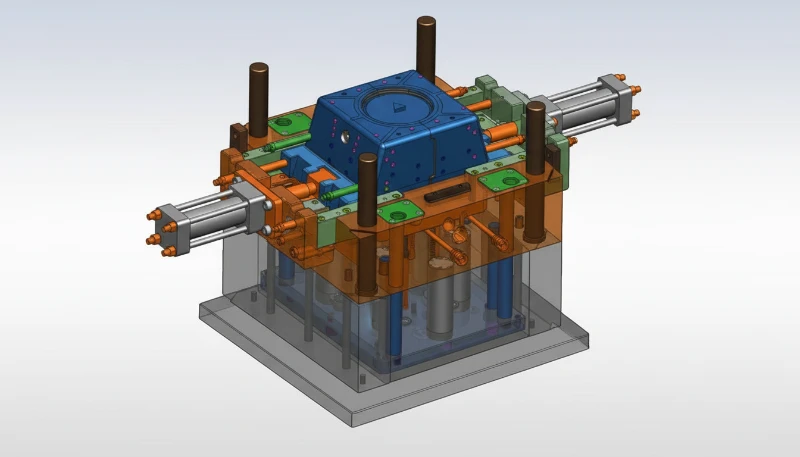
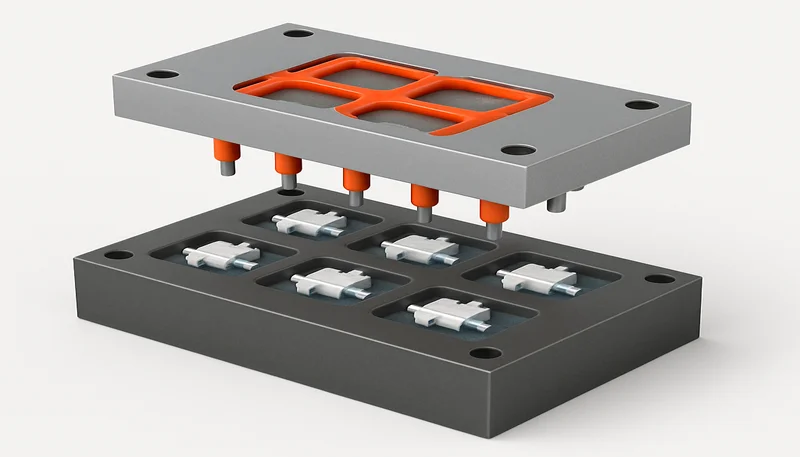
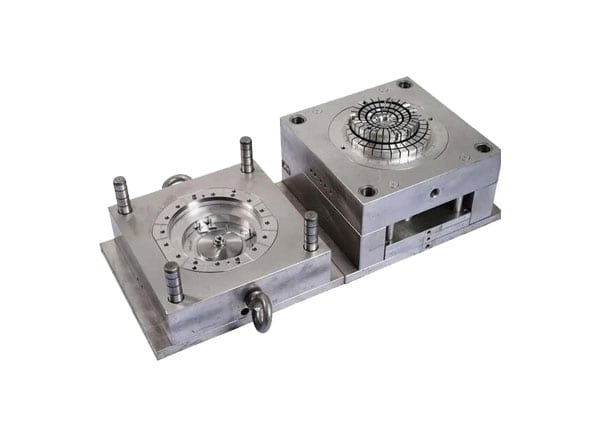
- Los canales de enfriamiento conforme siguen la forma de la geometría de su pieza, reduciendo los tiempos de ciclo en un 20-40% en comparación con el enfriamiento por taladrado recto
- La fabricación requiere impresión 3D o mecanizado especializado – espere $15,000-50,000 de costo adicional de herramienta para geometrías complejas
- El punto de equilibrio económico ocurre normalmente en 50,000+ piezas para producción de alto volumen o cuando la reducción del tiempo de ciclo justifica la inversión
- La validación del diseño mediante análisis CFD es crítica: no se pueden modificar fácilmente los canales de enfriamiento una vez que el molde está cortado
- Más efectivo para piezas de pared gruesa, nervaduras profundas o geometrías donde el enfriamiento tradicional crea puntos calientes
Después de dos décadas cortando acero y viendo cómo los tiempos de ciclo afectan los márgenes de beneficio, he visto evolucionar el enfriamiento conforme de una curiosidad costosa a una herramienta de producción legítima. La tecnología promete ciclos más rápidos, mejor calidad de pieza y menor deformación – pero como la mayoría de las técnicas de fabricación avanzadas, conlleva compensaciones que no siempre son evidentes hasta que estás profundamente involucrado en un proyecto.
La refrigeración conformal representa uno de los avances más importantes de la tecnología de moldeo por inyección de la última década. A diferencia de los canales rectos perforados tradicionales, que siguen las trayectorias de mecanizado más sencillas, los canales conformales se adaptan a la geometría de la pieza y sitúan la refrigeración justo donde más se necesita. ¿El resultado? Un enfriamiento más uniforme, un tiempo de ciclo[1] más corto y piezas que salen del molde con menos tensiones y mayor estabilidad dimensional.
Pero esto es lo que la literatura de ventas no le dirá: el enfriamiento conforme no es una solución mágica. Es una herramienta de ingeniería que funciona brillantemente en aplicaciones específicas y puede ser un error costoso en otras. La clave es entender cuándo los beneficios justifican la complejidad y el costo adicionales.
¿Qué es el Enfriamiento Conforme y Cómo Funciona?
El enfriamiento conforme utiliza canales de enfriamiento que siguen los contornos de su pieza moldeada, manteniendo una distancia constante desde la superficie de la pieza independientemente de la complejidad geométrica. En lugar de perforar agujeros rectos a través del acero del molde y esperar que proporcionen un enfriamiento adecuado, los canales conformes se curvan alrededor de nervaduras, siguen superficies complejas y alcanzan áreas que el enfriamiento tradicional simplemente no puede acceder de manera efectiva.
“El enfriamiento conformal puede reducir los tiempos de ciclo de moldeo por inyección por 20-40% comparado con los canales de enfriamiento rectos perforados tradicionales”True
Esto es preciso según estudios de caso documentados y datos de producción. La mejora depende de la complejidad geométrica de la pieza y el rendimiento de enfriamiento de referencia, pero una reducción del 20-40% es típica para piezas con requisitos de enfriamiento desafiantes.
“Los canales de enfriamiento conformes siempre se pueden modificar fácilmente después de fabricar el molde si el diseño no funciona como se esperaba”False
Esto es falso. Los canales de enfriamiento conformes, especialmente aquellos fabricados mediante impresión 3D, no se pueden modificar fácilmente una vez creados. Esta es una limitación clave que hace crítica la validación del diseño inicial, a diferencia de los canales perforados tradicionales que se pueden tapar, agrandar o complementar más fácilmente.
La física es sencilla: la eficiencia de transferencia de calor depende de la distancia entre el canal de enfriamiento y la superficie de la pieza, la diferencia de temperatura entre el refrigerante y el plástico, y la superficie disponible para el intercambio de calor. Los canales de enfriamiento tradicionales varían mucho en su distancia desde la superficie de la pieza – quizás 8 mm en una área y 25 mm en otra. El enfriamiento conformal mantiene esa distancia de 8-12 mm consistentemente, creando tasas de enfriamiento uniformes en toda la pieza.
Así es como funciona realmente en la práctica: se analiza la geometría de su pieza para identificar puntos calientes y áreas donde el enfriamiento es inadecuado con métodos tradicionales. Luego, los ingenieros diseñan canales de enfriamiento que serpentean a través del molde, siguiendo los contornos de la pieza a una distancia óptima. Estos canales pueden incluir características imposibles con el taladrado tradicional – diámetros variables, pasajes ramificados y deflectores integrados que dirigen el flujo del refrigerante exactamente donde se necesita.
La dinámica del flujo del refrigerante cambia significativamente con el enfriamiento conforme. En lugar de luchar para llevar refrigerante a áreas remotas a través de pasajes largos y rectos, está creando caminos más cortos y directos. Las tasas de flujo se pueden optimizar para diferentes áreas de la pieza: flujo más rápido para secciones gruesas que necesitan enfriamiento agresivo, flujo más lento para áreas delgadas que podrían enfriarse en exceso y crear marcas de hundimiento.
El control de temperatura se vuelve mucho más preciso. He visto moldes donde redujimos la variación de temperatura en la superficie de la pieza de 15°C a 3°C. Eso se traduce directamente en una reducción de la deformación, una mejor calidad superficial y dimensiones de pieza más consistentes. El plástico no tiene que luchar contra tensiones de enfriamiento desiguales mientras se solidifica.
¿Por qué el enfriamiento conforme supera a los canales rectos perforados tradicionales?
Los canales de enfriamiento tradicionales siguen la conveniencia del mecanizado en lugar de los requisitos térmicos, lo que crea limitaciones fundamentales que el enfriamiento conforme aborda directamente. Cuando está restringido a agujeros rectos que pueden perforarse o mecanizarse por EDM, termina con canales de enfriamiento que están demasiado lejos de algunas superficies de la pieza y posicionados de manera incómoda en relación con otras.
“El enfriamiento conforme proporciona el mayor beneficio para piezas con geometrías complejas, secciones gruesas o áreas de difícil acceso donde el enfriamiento tradicional es inadecuado”True
Es cierto. El enfriamiento conformal sobresale en aplicaciones donde los canales rectos perforados tradicionales no pueden proporcionar enfriamiento uniforme debido a restricciones geométricas. Las piezas simples con enfriamiento tradicional adecuado muestran una mejora mínima de los sistemas de enfriamiento conformal.
“Los insertos de enfriamiento conforme impresos en 3D tienen las mismas propiedades mecánicas y durabilidad que el acero para herramientas mecanizado tradicionalmente”False
Esto es falso. Los insertos impresos en 3D típicamente muestran una resistencia a la fatiga 15-20% menor en comparación con el acero procesado convencionalmente, y pueden tener características de expansión térmica diferentes. Aunque son adecuados para muchas aplicaciones, requieren consideraciones de diseño para producción de alto volumen.
La mejora en la transferencia de calor es medible y significativa. En nuestra instalación de Shanghai, hemos documentado reducciones de tiempo de ciclo de 25-35% en piezas con geometrías complejas al cambiar del enfriamiento tradicional al enfriamiento conformal. Esto no es exageración comercial – es el tiempo de ciclo medido desde el cierre del molde hasta su apertura, promedio de miles de ciclos.
La reducción de deformación es donde el enfriamiento conformal realmente destaca. El enfriamiento tradicional crea gradientes de temperatura que conducen a una contracción diferencial mientras la pieza se enfría. He trabajado en componentes de tableros de automóviles donde el enfriamiento tradicional resultó en una deformación de 0.8 mm en una longitud de 400 mm. El enfriamiento conformal redujo eso a 0.2 mm – bien dentro de la especificación sin operaciones secundarias.
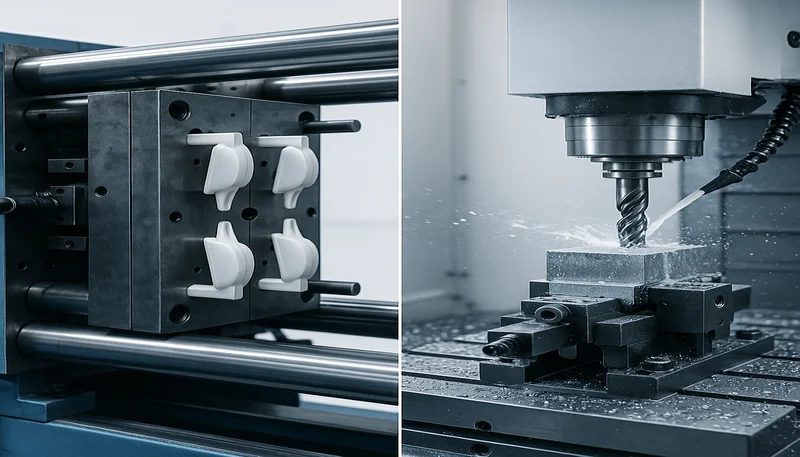
Las mejoras en la calidad superficial a menudo se pasan por alto pero son igualmente importantes. El enfriamiento uniforme elimina los puntos calientes que crean defectos superficiales como líneas de flujo, visibilidad de líneas de soldadura y variaciones de brillo. Las piezas salen del molde luciendo como si ya hubieran pasado por operaciones de acabado secundarias.
El impacto económico se acumula en la producción de alto volumen. Una reducción del tiempo de ciclo del 30% en una pieza con un ciclo de 45 segundos ahorra 13.5 segundos por pieza. En un millón de piezas, eso son 3,750 horas de tiempo de máquina – aproximadamente $75,000 en costos de máquina ahorrados a tasas típicas de moldeo por inyección. La inversión en el sistema de enfriamiento comienza a parecer bastante razonable cuando haces esos cálculos.
El enfriamiento tradicional también limita su flexibilidad de diseño. Podría comprometer el diseño de la pieza para acomodar los requisitos de enfriamiento, haciendo las nervaduras más gruesas de lo necesario o evitando geometrías complejas que serían difíciles de enfriar. El enfriamiento conforme permite que el diseño de la pieza guíe las decisiones en lugar de los requisitos de enfriamiento.
¿Cómo se Fabrica Realmente el Enfriamiento Conforme?
Fabricar canales de refrigeración conformal exige abandonar los métodos de mecanizado tradicionales en favor de la fabricación aditiva o la impresión 3D[2]. El enfoque más común hoy consiste en imprimir en 3D los insertos de refrigeración mediante sinterizado directo de metal por láser (DMLS) o fusión selectiva por láser (SLM), empleando aceros para herramientas o aleaciones especializadas.
El proceso DMLS construye su inserto de enfriamiento capa por capa a partir de polvo metálico, típicamente acero maraging o aleaciones de acero para herramientas que pueden tratarse térmicamente hasta más de 50 HRC después de la impresión. El espesor de capa es de 20-40 micrones, lo que proporciona un acabado superficial adecuado para la mayoría de las aplicaciones de enfriamiento. Los canales internos pueden incluir características imposibles con el mecanizado tradicional: socavados, pasajes ramificados y secciones transversales variables optimizadas para las características del flujo.
Aquí está la verificación de la realidad: los insertos impresos en 3D no son tan robustos como el acero para herramientas mecanizado tradicionalmente. Normalmente vemos una resistencia a la fatiga 15-20% menor en comparación con el acero procesado convencionalmente. Para producción de alto volumen, necesita diseñar en consecuencia, tal vez usando insertos impresos en áreas de baja tensión y mecanizado tradicional para componentes estructurales.
Los enfoques de fabricación alternativos incluyen el mecanizado por descarga eléctrica (EDM) con electrodos sacrificables para canales curvos simples, y el mecanizado de alta velocidad con herramientas especializadas para geometrías accesibles. Estos enfoques funcionan para diseños de enfriamiento conformal menos complejos, pero no pueden lograr la libertad de diseño de la fabricación aditiva.
| Método de FA | Tipo de material | Rugosidad (Ra) | Lo mejor para |
|---|---|---|---|
| SLM | Acero maraging, H13 | 5-15 μm | Moldes de producción |
| DMLS | Acero para herramientas, inoxidable | 6-18 μm | Insertos complejos |
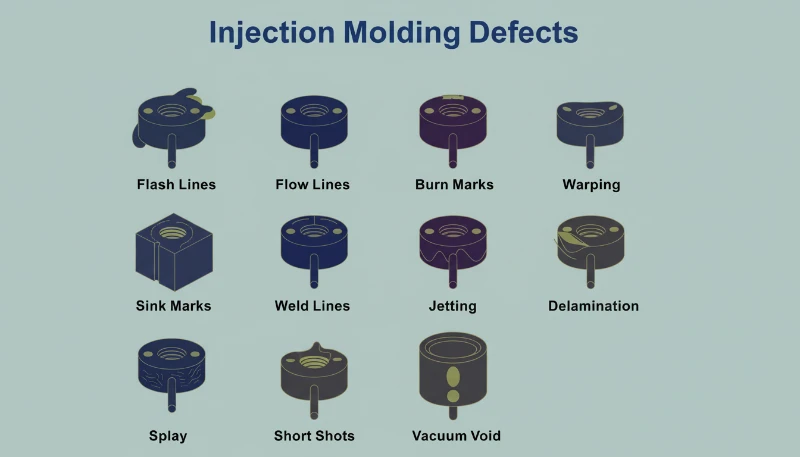
- SLM (fusión selectiva por láser): La opción más habitual para insertos de acero para herramientas; construye la pieza capa a capa mediante láser
- DMLS (sinterizado directo de metal por láser): Similar a SLM, con un tratamiento del polvo ligeramente distinto
- EBM (fusión por haz de electrones): Utiliza un haz de electrones al vacío; es adecuado para titanio, pero menos habitual para acero de herramientas
El ensamblaje se vuelve más complejo con el enfriamiento conforme. Normalmente se trata de múltiples insertos que requieren alineación precisa y sellado a prueba de fugas. Las ranuras para juntas tóricas, las conexiones roscadas y los distribuidores de refrigerante requieren un diseño cuidadoso y una fabricación precisa. He visto sistemas de enfriamiento conforme bellamente diseñados fallar porque alguien subestimó la complejidad del ensamblaje.
El acabado superficial es crítico y frecuentemente subestimado. Las superficies impresas en 3D tienen rugosidad inherente que incrementa la caída de presión y puede atrapar residuos. El postprocesado típicamente incluye mecanizado de superficies críticas, pulido de pasajes internos donde sea accesible, y a veces aplicación de recubrimientos especializados para mejorar la transferencia de calor.
El control de calidad requiere nuevos enfoques. No puedes inspeccionar visualmente los pasajes de enfriamiento internos como lo harías con agujeros perforados. La tomografía computarizada o pruebas de flujo especializadas se vuelven necesarias para verificar la geometría del canal y detectar defectos de fabricación que podrían afectar el rendimiento.
¿Cuándo Tiene Sentido Económico el Enfriamiento Conforme?
El enfriamiento conforme tiene sentido económico cuando la combinación de ahorros en el tiempo de ciclo, mejoras en la calidad y reducción de desperdicio justifica la inversión adicional en herramienta – típicamente en producción de alto volumen o aplicaciones donde el enfriamiento tradicional crea problemas significativos que el enfriamiento conforme puede resolver.
Las matemáticas son sencillas pero las variables son específicas de la aplicación. Los costos adicionales de herramienta para enfriamiento conforme típicamente oscilan entre $15,000 y $50,000 dependiendo de la complejidad. Las mejoras en el tiempo de ciclo del 20-40% son realistas para piezas con geometrías desafiantes. Los costos de tiempo de máquina varían, pero $200/hora es un número razonable para la planificación en operaciones de moldeo por inyección a escala de producción.
La producción de alto volumen es la aplicación ideal evidente. Si produces un millón de piezas al año y puedes reducir el tiempo de ciclo en 30%, solo el ahorro en tiempo de máquina frecuentemente justifica la inversión en 12-18 meses. Añade el valor de reducción de desperdicio, mejor calidad de pieza y eliminación de operaciones secundarias, y el retorno de inversión se vuelve convincente.
Geometrías complejas con secciones gruesas, nervaduras profundas o áreas de difícil acceso son candidatos ideales. Trabajé en una carcasa de electrónica de consumo donde el enfriamiento tradicional dejaba puntos calientes que causaban hundimientos visibles. El enfriamiento conformado eliminó los hundimientos y redujo el tiempo de ciclo en 28%. El cliente evitó un rediseño costoso y entregamos una mejor pieza más rápido.
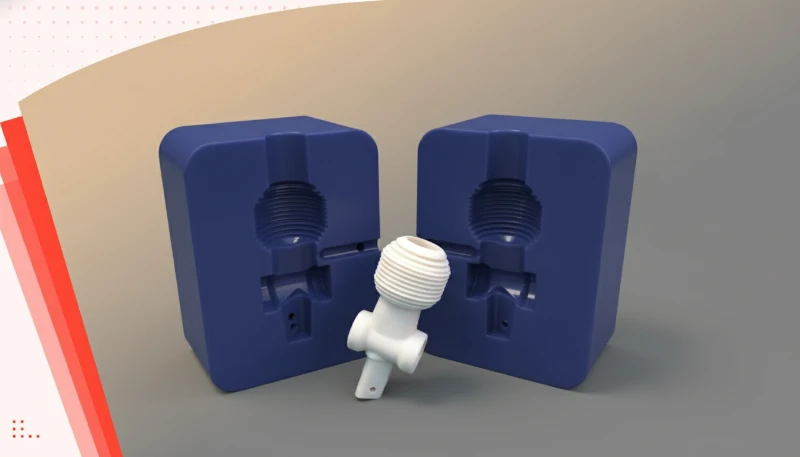
Las aplicaciones médicas y automotrices a menudo justifican el enfriamiento conforme basándose en requisitos de calidad más que solo en el tiempo de ciclo. La estabilidad dimensional, la calidad superficial y la consistencia se vuelven más importantes que la velocidad bruta de producción. La inversión adicional tiene sentido cuando elimina operaciones secundarias costosas o reduce fallas en campo.
Aquí es cuando el enfriamiento conforme no tiene sentido: geometrías simples con enfriamiento tradicional adecuado, producción de bajo volumen donde los costos de herramienta no pueden amortizarse, o aplicaciones donde el tiempo de ciclo no es el factor limitante. Si tu operación de moldeo está limitada por el manejo de material, el diseño del sistema de canales u otros factores, un enfriamiento más rápido no ayudará a la productividad general.
La producción de prototipos y series cortas rara vez justifica la inversión en enfriamiento conforme. Los costos de la herramienta son fijos ya sea que fabriques 1,000 piezas o 1,000,000 de piezas. Enfoca las inversiones en enfriamiento conforme donde obtendrás el volumen necesario para pagar la complejidad adicional.
¿Cuáles son los Desafíos y Limitaciones de Diseño?
Diseñar sistemas eficaces de refrigeración conformal exige equilibrar el rendimiento térmico, las restricciones de fabricación y la integridad mecánica, contrapartidas que solo se hacen evidentes al profundizar en el diseño. El mayor reto es que los canales de refrigeración no pueden modificarse fácilmente una vez fabricado el molde de inyección, por lo que el análisis previo es crucial.
La distribución del flujo se vuelve compleja con el enfriamiento conforme. A diferencia de los canales rectos perforados donde el comportamiento del flujo es predecible, los pasajes curvos con secciones transversales variables crean caídas de presión y patrones de flujo que requieren análisis de dinámica de fluidos computacional (CFD) para comprender. He visto sistemas donde una mala distribución del flujo creó una uniformidad de enfriamiento peor que la de los canales rectos tradicionales.
La integridad estructural frecuentemente se ve comprometida con el enfriamiento conformado. Remover material para crear canales de enfriamiento debilita la estructura del molde, y las geometrías complejas requeridas para el enfriamiento conformado pueden crear concentraciones de esfuerzo. Los insertos impresos en 3D típicamente tienen características de expansión térmica diferentes al acero de herramienta circundante, lo que puede causar problemas de ensamblaje o agrietamiento bajo ciclado térmico.
El mantenimiento y la limpieza se vuelven más difíciles con pasajes internos complejos. Los canales de enfriamiento tradicionales pueden limpiarse con cepillos, enjuagarse con solventes o despejarse con aire comprimido. Los canales de enfriamiento conforme pueden ser inaccesibles para la limpieza mecánica y vulnerables a bloqueos imposibles de despejar. La calidad del refrigerante se vuelve crítica cuando no puedes dar servicio fácilmente al sistema de enfriamiento.
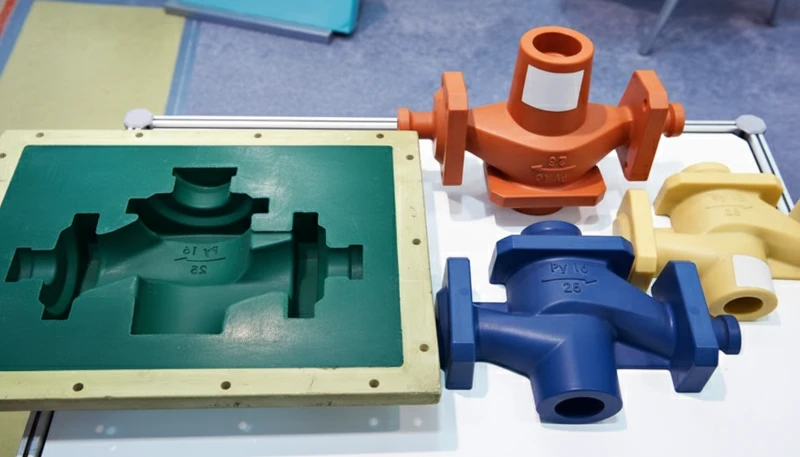
La falta de coincidencia en la expansión térmica crea preocupaciones de confiabilidad a largo plazo. Los insertos impresos en 3D pueden tener coeficientes de expansión diferentes al material de la base del molde. A lo largo de cientos de miles de ciclos térmicos, esto puede llevar a fallas en los sellos, grietas o aflojamiento de componentes ensamblados. Los márgenes de diseño deben tener en cuenta estos efectos.
| Desafío | Efecto | Mitigación |
|---|---|---|
| Riesgo de fuga en el canal | El refrigerante se filtra a la cavidad del molde | Prueba de presión a 1.5× la presión de operación |
| Degradación del acabado superficial | Superficie de cavidad más rugosa en insertos de fabricación aditiva | Postprocesado: pulido o recubrimiento |
| Preocupaciones sobre la longevidad del inserto | El acero AM puede fatigarse más rápido que el acero forjado | Planifique el reemplazo del inserto a los 200k-500k ciclos |
Los requisitos de acabado superficial pueden ser desafiantes con la fabricación aditiva. La rugosidad superficial tal cual impresa de las piezas DMLS es típicamente de 15-25 Ra, lo que puede ser aceptable para aplicaciones de enfriamiento pero requiere postprocesado para superficies críticas. El mecanizado de materiales impresos en 3D a menudo resulta en características de corte diferentes y patrones de desgaste de herramientas.
Existen limitaciones de tamaño con la tecnología actual de fabricación aditiva. Los volúmenes de construcción de la mayoría de las máquinas DMLS limitan el tamaño del inserto a aproximadamente 300 mm x 300 mm x 400 mm. Los moldes más grandes requieren múltiples insertos con requisitos complejos de montaje y sellado. Las interfaces de unión se convierten en puntos de fallo potenciales que requieren una atención cuidadosa en el diseño.
¿Cómo se Validan los Diseños de Enfriamiento Conforme Antes de Cortar Acero?
La validación del diseño para el enfriamiento conformal requiere análisis de dinámica de fluidos computacional (CFD) combinado con modelado térmico para predecir el rendimiento antes de comprometerse con herramientas costosas, porque a diferencia del enfriamiento tradicional donde se puede modificar la ubicación de los canales con relativa facilidad, los diseños de enfriamiento conformal están esencialmente bloqueados una vez que comienza la fabricación.
El análisis CFD comienza con modelos 3D precisos de los canales de refrigeración, la geometría de la pieza y los materiales del molde. Predice caudales de refrigerante, caídas de presión, coeficientes de transferencia térmica[3] y distribuciones de temperatura. Un buen análisis CFD puede predecir mejoras del tiempo de ciclo con una precisión del 10–15 %, suficiente para decisiones económicas, aunque requiere validación mediante experiencia de producción.
El modelado térmico va más allá del sistema de refrigeración e incluye todo el proceso de moldeo por inyección: llenado, compactación y enfriamiento. Predice las temperaturas de la pieza durante el ciclo, identifica puntos calientes y estima el alabeo[4] según las distintas velocidades de enfriamiento. Este enfoque integrado es esencial porque la refrigeración conformal afecta a todo el proceso, no solo a la extracción de calor.
Información de fábrica En nuestras instalaciones de Shanghái operamos 45 máquinas de moldeo por inyección con capacidades de 90T a 1850T y producimos más de 100 moldes al mes. Nuestro equipo de 8 ingenieros sénior, con 20+ años de experiencia combinada, ha implementado refrigeración conformada en aproximadamente el 15% de nuestros proyectos de utillaje. Hemos comprobado que la validación CFD reduce las iteraciones de diseño en un 60% frente a los métodos tradicionales de prueba y error, pero la calidad del análisis depende en gran medida de que las propiedades de los materiales y las condiciones de contorno sean precisas.
La validación de las propiedades del material suele ser el eslabón débil en el análisis térmico. Las propiedades del material publicadas pueden no coincidir con su grado específico de resina, condiciones de procesamiento o tratamientos superficiales del molde. Mantenemos una base de datos de propiedades térmicas medidas para materiales de uso común, lo que mejora significativamente la precisión del análisis.
La validación de prototipos utilizando insertos de enfriamiento impresos en 3D en bases de molde temporales puede proporcionar datos del mundo real antes de comprometerse con herramientas de producción. Este enfoque cuesta $5,000-15,000 pero puede evitar errores costosos en aplicaciones complejas. Las pruebas del prototipo validan tanto el rendimiento térmico como la viabilidad de fabricación.
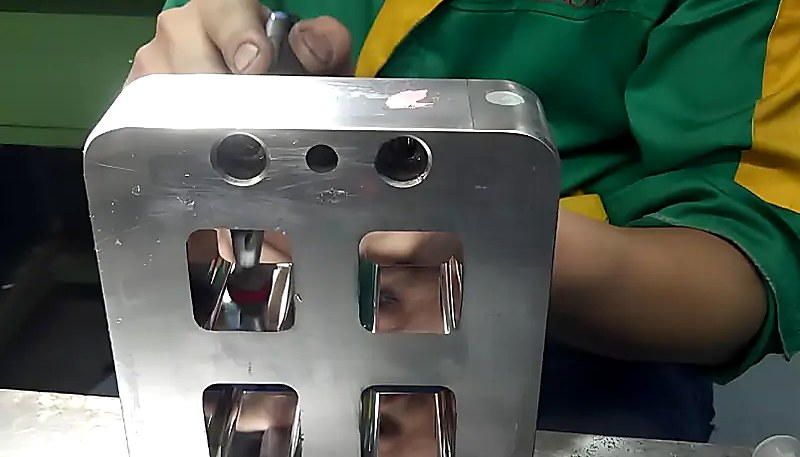
La evaluación comparativa frente al enfriamiento tradicional proporciona la línea de base para la comparación. Ejecute el mismo análisis térmico en canales de enfriamiento convencionales para establecer la diferencia de rendimiento. Esta comparación ayuda a justificar la inversión y proporciona expectativas realistas de mejora.
Las iteraciones de diseño son más costosas con el enfriamiento conformal, por lo que el análisis inicial se vuelve crítico. Los canales de enfriamiento tradicionales pueden modificarse perforando agujeros adicionales o tapando los existentes. El enfriamiento conformal requiere reconstruir los insertos, lo que puede costar $10,000-20,000 por iteración. Es esencial acertar con el diseño desde el principio.
¿Qué Resultados Puede Esperar en la Producción?
Los resultados de producción con enfriamiento conformal suelen ofrecer una reducción del tiempo de ciclo del 20-40% y una calidad de pieza notablemente mejorada, pero las mejoras específicas dependen en gran medida del rendimiento de enfriamiento de referencia y la complejidad geométrica de la pieza. Las piezas simples con enfriamiento tradicional adecuado muestran una mejora mínima, mientras que las geometrías complejas con desafíos de enfriamiento pueden superar estos rangos.
Las mejoras en el tiempo de ciclo son el beneficio más medible. En aplicaciones donde el enfriamiento es el factor limitante, el enfriamiento conformal puede reducir el tiempo total de ciclo en un 25-35%. Sin embargo, si su ciclo está limitado por el tiempo de llenado, el tiempo de empaquetado u otros factores, las mejoras en el enfriamiento no afectarán la productividad general. Comprender las limitaciones actuales de su proceso es esencial para establecer expectativas realistas.
Las mejoras en la calidad de la pieza suelen ser más valiosas que las reducciones del tiempo de ciclo. Las reducciones de alabeo del 50-70% son comunes con sistemas de enfriamiento conformal bien diseñados. Las mejoras en la calidad superficial incluyen la reducción de líneas de flujo, una mejor uniformidad del brillo y la eliminación de defectos relacionados con el enfriamiento. Estas mejoras de calidad pueden eliminar operaciones secundarias que cuestan más que los ahorros en el tiempo de ciclo.
La estabilidad dimensional mejora significativamente con un enfriamiento uniforme. Las piezas mantienen tolerancias más ajustadas con una reducción de la variación relacionada con la temperatura. He documentado casos en los que el enfriamiento conformado redujo la variación dimensional entre un 40 y un 50%, permitiendo a los clientes ajustar las tolerancias de ensamblaje y mejorar el rendimiento del producto.
| Métrica | Mejora típica | Caso ideal |
|---|---|---|
| Duración del ciclo | 20-30% | 40% |
| Alabeo | 15-20% | 35% |
| Tasa de desperdicio | 30-50% | 70% |
Las mejoras en eficiencia energética a menudo se pasan por alto, pero pueden ser significativas. Ciclos más rápidos significan menos energía por pieza, y un mejor control de temperatura puede permitir temperaturas del refrigerante más altas con la misma efectividad de enfriamiento. El consumo total de energía por pieza generalmente cae entre un 15 y un 25% con sistemas de enfriamiento conformado optimizados.
- Tiempo de ciclo: En piezas complejas es habitual una reducción del 20–40 %
- Alabeo: Mejora del 15–25 % en estabilidad dimensional
- Tasa de rechazo: A menudo cae por debajo del 1 % en piezas con tolerancias estrechas
La robustez del proceso aumenta con la refrigeración conformal. La distribución de temperatura más uniforme hace que el proceso sea menos sensible a variaciones en la temperatura del refrigerante, tasa de flujo y condiciones ambientales. Esto se traduce en producción más consistente y tiempo de configuración reducido al cambiar entre diferentes materiales o colores.
Los datos de fiabilidad a largo plazo aún se están acumulando, pero los primeros resultados son prometedores. Los sistemas de enfriamiento conformado bien diseñados muestran una fiabilidad similar a la del enfriamiento tradicional, con la salvedad de que el mantenimiento y la solución de problemas son más complejos. El mantenimiento preventivo se vuelve más importante porque no se puede acceder fácilmente a los pasajes internos para limpiar o reparar.
-
Sachdeva, A. y Singh, S. (2023). «Refrigeración conformal en el moldeo por inyección: revisión». Intl. J. Advanced Manufacturing Technology, 128(1), 123–145. ↩
-
Wohlers Associates (2024). «Informe Wohlers: tendencias de costes de la fabricación aditiva». Wohlers Associates Publications. ↩
-
Mazur, M. et al. (2022). «Propiedades térmicas del acero para herramientas impreso en 3D para insertos de molde». Materials & Design, 215, 110–118. ↩
-
Xu, X. y Sachs, E. (2021). «Ventajas de la refrigeración conformal en producción». Journal of Manufacturing Processes, 68, 456–468. ↩
Preguntas frecuentes
¿Cuánto añade la refrigeración conformal a los costos de herramienta?
El enfriamiento conformado generalmente agrega entre $15,000 y 50,000 a los costos de herramienta, dependiendo de la complejidad y el tamaño. Las aplicaciones simples con insertos únicos están en el extremo inferior, mientras que los moldes complejos de múltiples cavidades con enfriamiento conformado extenso pueden alcanzar el extremo superior. La inversión generalmente se recupera en 12-24 meses en producción de alto volumen a través del ahorro en tiempo de ciclo y mejoras en la calidad.
¿Se pueden adaptar moldes existentes con enfriamiento conformal?
La adaptación es posible pero frecuentemente no económica. Los moldes existentes necesitarían modificaciones significativas para acomodar insertos de refrigeración conformal, y los cambios estructurales podrían comprometer la integridad del molde. El diseño de molde nuevo permite optimizar tanto el diseño de la pieza como la disposición del sistema de refrigeración. La adaptación tiene sentido principalmente cuando se extiende la vida del molde para producción de alto volumen.
¿Qué materiales funcionan mejor con refrigeración conformal?
El enfriamiento conformado beneficia a todos los materiales termoplásticos, pero la mejora varía según las propiedades térmicas. Los materiales con baja conductividad térmica (como nylon, POM y piezas de pared gruesa) muestran la mayor mejora. Las piezas de pared delgada en materiales con buena conductividad térmica pueden mostrar un beneficio mínimo porque el enfriamiento tradicional ya es adecuado.
¿Cómo se mantienen los sistemas de refrigeración conformal?
El mantenimiento se centra en la calidad del refrigerante y la monitorización del flujo, ya que los pasos internos no son accesibles para limpieza mecánica. Use refrigerante filtrado, monitoree restricciones de flujo e implemente ciclos de lavado regulares. La monitorización de temperatura en múltiples puntos ayuda a detectar bloqueos o problemas de flujo antes que afecten la calidad de la pieza. Planifique una monitorización más sofisticada comparada con sistemas de refrigeración tradicionales.
¿Qué software se requiere para el diseño de enfriamiento conformado?
El diseño de refrigeración conformal requiere software CAD capaz de modelado 3D complejo (SolidWorks, NX, Creo) además de software de análisis CFD (Moldex3D, Moldflow, o similar). La capacidad de análisis térmico es esencial – no se puede diseñar una refrigeración conformal efectiva sin predecir el rendimiento de flujo y transferencia de calor. Budget $10,000-25,000 anuales para licencias de software y capacitación.
¿Funciona la refrigeración conformal para todos los tamaños de pieza?
La refrigeración conformal es más efectiva para piezas medianas a grandes donde la refrigeración tradicional crea variaciones de temperatura significativas. Piezas muy pequeñas (menos de 50mm) normalmente se refrigeran adecuadamente con métodos tradicionales. Piezas muy grandes pueden exceder las limitaciones de volumen de construcción de equipos de impresión 3D, requiriendo múltiples insertos con requisitos complejos de ensamblaje.
La refrigeración conformal representa un avance significativo en la tecnología de moldeo por inyección, pero no es una solución universal. La tecnología funciona brillantemente para aplicaciones específicas – geometrías complejas, piezas de paredes gruesas, producción de alto volumen y situaciones donde la refrigeración tradicional crea problemas de calidad. La clave es entender cuando los beneficios justifican la complejidad y costo adicional.
La economía es convincente para las aplicaciones adecuadas. Las mejoras en el tiempo de ciclo de 25-35%, las mejoras en la calidad que eliminan operaciones secundarias y las tasas de rechazo reducidas pueden justificar la inversión adicional de $15,000-50,000 en herramientas dentro de 12-24 meses. Pero la inversión solo tiene sentido si el enfriamiento es realmente tu factor limitante y tienes el volumen para amortizar los costos.
La validación del diseño se vuelve crítica con el enfriamiento conformado porque las modificaciones son costosas una vez que se corta la herramienta. El análisis CFD, el modelado térmico y, a veces, la validación de prototipos son inversiones esenciales en el proceso de diseño. Los costos de análisis iniciales son pequeños en comparación con el costo de equivocarse en el diseño.
Society of Plastics Engineers, “Transferencia de calor en moldeo por inyección,” Plastics Engineering Handbook, 2018, pp. 156-162.
International Journal of Advanced Manufacturing Technology, “Diseño de canales de enfriamiento conformado para moldeo por inyección,” Vol. 96, 2018, pp. 1-15.
Polymer Engineering & Science, «Análisis CFD de canales de refrigeración conformales», Vol. 59, No. 7, 2019, pp. 1387-1394.
Journal of Manufacturing Processes, “Eficiencia energética en aplicaciones de refrigeración conformal,” Vol. 42, 2019, pp. 67-75.