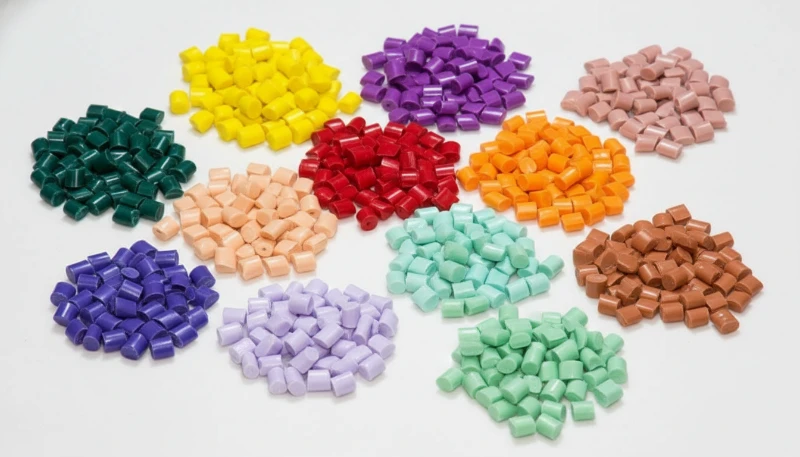
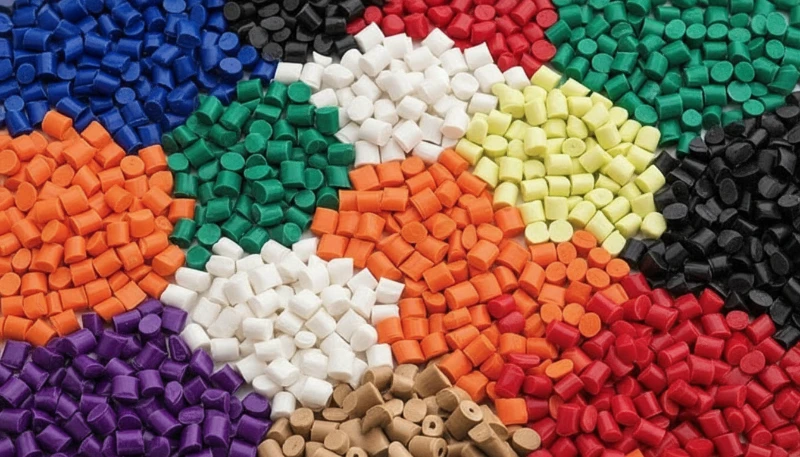
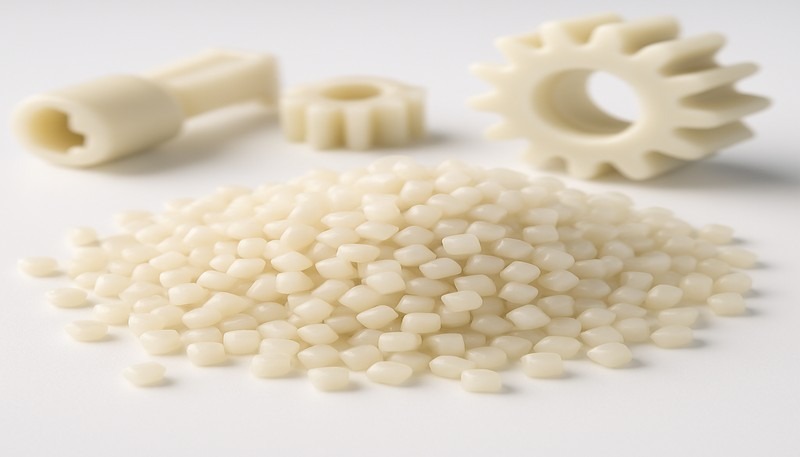
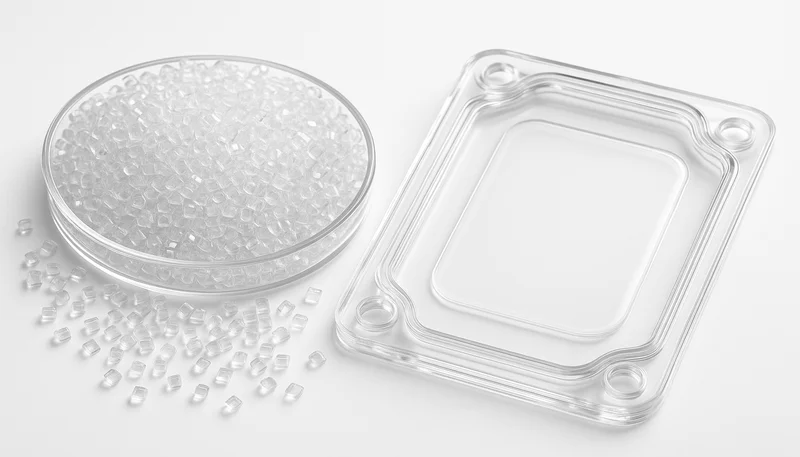
U hebt net een nieuw spuitgietproject gekregen en de eerste vraag in de offerteaanvraag luidt: “Welk materiaal raadt u aan?” Zoals de meeste ingenieurs die wij spreken, hebt u waarschijnlijk een shortlist — misschien PP, misschien ABS1 — maar weet u niet helemaal zeker of de goedkopere optie de valtest doorstaat. Deze gids bespreekt de meest gebruikte kunststoffen voor spuitgieten, met echte cijfers uit onze productie, zodat u zonder twijfel een keuze kunt maken.
- Polypropyleen (PP) is het meest gebruikte spuitgietplastic wereldwijd — goedkoop, chemisch bestendig en gemakkelijk te verwerken.
- ABS en PC/ABS domineren behuizingen voor consumentenelektronica vanwege hun balans tussen slagvastheid en oppervlakteafwerking.
- Nylon (PA6/PA66) en POM zijn de standaard technische kunststoffen voor mechanische, belastingdragende componenten.
- Polycarbonaat (PC) is uw beste keuze wanneer optische helderheid of extreme slagvastheid vereist is.
- Materiaalkosten vormen slechts ~30–50% van de onderdeelprijs — kies niet de goedkoopste hars als die tijdens gebruik faalt.
Wat Zijn de Meest Gebruikte Kunststofmaterialen bij Spuitgieten?
De meest gebruikte kunststoffen bij spuitgieten zijn de hoofdcategorieën of opties die in dit gedeelte worden uitgelegd. Vergelijkt u leveranciers of plant u de inkoop, dan behandelt onze gids voor het selecteren van een spuitgietleverancier de voorbereiding van de offerteaanvraag, kwalificatie en controle van commerciële risico’s.
De meest gebruikte kunststof bij spuitgieten is polypropyleen (PP)2, gevolgd door ABS, polyethyleen (PE), polycarbonaat (PC) en nylon (PA). Samen vertegenwoordigen deze vijf harsen ongeveer 75% van het wereldwijde spuitgietvolume. De reden is eenvoudig: ze dekken 90% van de gangbare prestatie-eisen tegen concurrerende prijzen.
Dit is de korte rangschikking naar wereldwijd productieaandeel in spuitgieten:
| Materiaal | Dichtheid (g/cm³) | Treksterkte (MPa) | Kosten ($/kg) | Typische toepassing |
|---|---|---|---|---|
| PP | 0.90 | 31–41 | 1.0–1.5 | Verpakkingen, automotive, consumentenproducten |
| PE (HDPE/LDPE) | 0.92–0.96 | 20–37 | 1.0–1.4 | Flessen, containers, doppen |
| ABS | 1.04–1.06 | 29–48 | 1.8–2.5 | Elektronica behuizingen, interieur afwerking |
| PC | 1.20 | 55–75 | 3.0–5.0 | Lenzen, medisch, veiligheidsuitrusting |
| Nylon (PA6) | 1.13–1.15 | 50–80 | 2.5–4.0 | Tandwielen, bussen, onder de motorkap |
| POM | 1.41–1.42 | 60–70 | 2.5–3.5 | Precisie mechanische onderdelen |
| PMMA (acryl) | 1.18–1.19 | 48–76 | 2.0–3.5 | Lichtkappen, displays |
| PBT | 1.30–1.35 | 40–55 | 2.5–4.0 | Elektrische connectoren, automotive |
| TPU | 1.10–1.25 | 25–50 | 4.0–8.0 | Flexibele handvatten, draagbare apparaten, afdichtingen |
| PEEK | 1.30 | 90–100 | 60–100+ | Lucht- en ruimtevaart, olie en gas, medisch |
Waarom is Polypropyleen het Meest Gebruikte Spuitgietplastic?
Polypropyleen is de meest gespuitgiete kunststof omdat de afweging tussen kosten, kwaliteit, volume en toepassing gunstig is. Polypropyleen (PP) domineert het spuitgieten om drie redenen: het is goedkoop (~$1.0–1.5/kg), is met korte cyclustijden gemakkelijk te verwerken bij 200–260 °C en is bestand tegen de meeste chemicaliën, vocht en vermoeiing. In onze fabriek vertegenwoordigt PP ongeveer 30–35% van alle opdrachten, van sluitingen met filmscharnier tot accubakken voor auto’s.
De dichtheid van PP is slechts 0.90 g/cm³ — de laagste van gangbare constructiekunststoffen. Dat betekent meer onderdelen per kilogram hars en dus een direct lagere stukprijs. PP-onderdelen drijven bovendien, wat relevant is bij het ontwerpen van maritieme of buitenapparatuur.
Het nadeel: PP heeft een relatief lage stijfheid (buigmodulus ~1.3–1.7 GPa) en is in ongewijzigde vorm slecht UV-bestendig. Als uw onderdeel stijfheid vereist, hebt u glasgevuld PP nodig (dit stijgt naar ~5 GPa, maar veroorzaakt extra slijtage aan de matrijs). Voor buitengebruik zijn UV-gestabiliseerde kwaliteiten nodig.
In de praktijk zien we dat PP het vaakst wordt gekozen voor doppen en sluitingen (het filmscharnier is een specialiteit van PP), voedselverpakkingen (veel kwaliteiten voldoen aan de FDA-eisen), luchtkanalen en reservoirs onder de motorkap en behuizingen van consumentenproducten waarbij de kosten doorslaggevend zijn.
Eén punt dat de meeste gegevensbladen niet vermelden: bij dunwandvormen heeft PP een smal procesvenster. Bij een wand dunner dan 0.8 mm stolt de smelt voordat de holte gevuld is, waardoor onvolledige vulling ontstaat. We hebben geleerd dunwandwerk met PP aan de bovengrens van het temperatuurbereik (250–260 °C) en met hoge injectiesnelheid uit te voeren — kennis die alleen ontstaat door in 20 jaar duizenden PP-matrijzen te draaien.
ZetarMold Fabrieksgegevens: Onze 47 spuitgietmachines (90T–1850T) verwerken 400+ materialen inclusief alle belangrijke PP-graden — homopolymeer, copolymeer, willekeurig copolymeer en glasgevulde varianten. Met 120+ productiemedewerkers die 24/7 ploegendiensten draaien, leveren we typisch PP-gietmonsters af in 15 dagen.
Wanneer Kiest U ABS Boven Andere Kunststoffen?
Kies ABS wanneer u een combinatie nodig heeft van slagvastheid, oppervlakteafwerkingkwaliteit en matige kosten. ABS is de standaard voor behuizingen van consumentenelektronica, apparaatschermen en interieurafwerking in auto’s — kortom, alles wat mensen zullen zien en aanraken.
ABS biedt een slagvastheid van 200–400 J/m (Izod gekerfd) bij kamertemperatuur, wat aanzienlijk beter is dan PP (~30–100 J/m) en vergelijkbaar met veel kwaliteiten nylon. Het neemt ook verf, plating en textuur uitstekend aan — het oppervlak komt met een hoogglans- of matte afwerking uit de matrijs, afhankelijk van de matrijsafwerking, zonder secundaire bewerkingen nodig.
Waar ABS tekortschiet: de continue gebruikstemperatuur is slechts ~85 °C (sommige hittebestendige kwaliteiten bereiken 100 °C) en het is van nature niet UV-stabiel. Voor buitentoepassingen kiest u beter ASA (acrylonitril-styreen-acrylaat), in wezen UV-bestendig ABS.
Een veelvoorkomend upgradepad: PC/ABS-mengsel. Dit geeft u de slagvastheid van polycarbonaat met de verwerkbaarheid en kosten van ABS. Treksterkte stijgt naar ~55 MPa, warmtevervormingstemperatuur klimt naar ~110 °C, en het materiaal behoudt een mooie afwerking. Als uw projectbudget de extra €0,50–1,00/kg toelaat, is PC/ABS bijna altijd de moeite waard ten opzichte van puur ABS.
Hoe Verhouden Technische Kunststoffen zoals Nylon en POM Zich?
Dit gedeelte vergelijkt technische kunststoffen zoals nylon en POM en bespreekt de gevolgen voor kosten, kwaliteit, planning en inkooprisico. Zodra u van standaardkunststoffen (PP, PE, ABS) overstapt op technische kunststoffen, betaalt u meer per kilogram maar krijgt u mechanische eigenschappen die standaardharsen eenvoudig niet kunnen bieden. Nylon (PA6/PA66)3 en POM (acetaal) zijn de twee meest gebruikte technische kunststoffen bij spuitgieten.
De opvallendste eigenschap van nylon is taaiheid in combinatie met slijtvastheid. Droog PA66 heeft een treksterkte tot 80 MPa en kan continu werken bij 120–150 °C (glasgevulde kwaliteiten nog hoger). Het is de standaard voor tandwielen, lagerkooien, kabelbinders en onderdelen onder de motorkap. Nylon neemt echter vocht op, tot 2.5% bij 50% RH, en elke 1% vochttoename verlaagt de treksterkte met ongeveer 10% en vergroot de afmetingen met ~0.3%. Ontwerp toleranties daarom voor de geconditioneerde toestand, niet voor de droge toestand direct na het spuitgieten.
POM (ook bekend als acetaal of Delrin) is de koning van dimensionale stabiliteit en lage wrijving. De wrijvingscoëfficiënt tegen staal is ~0,1–0,3, waardoor het ideaal is voor precisietandwielen, vergrendelingen en schuifmechanismen. POM bewerkt goed, heeft uitstekende vermoeiingsweerstand en behoudt eigenschappen tussen -40 °C en +100 °C. De afweging: POM is moeilijk te verlijmen (oppervlakte-energie is laag) en geeft formaldehyde af als het tijdens de verwerking oververhit raakt.
Wat Maakt Polycarbonaat Anders dan Andere Heldere Kunststoffen?
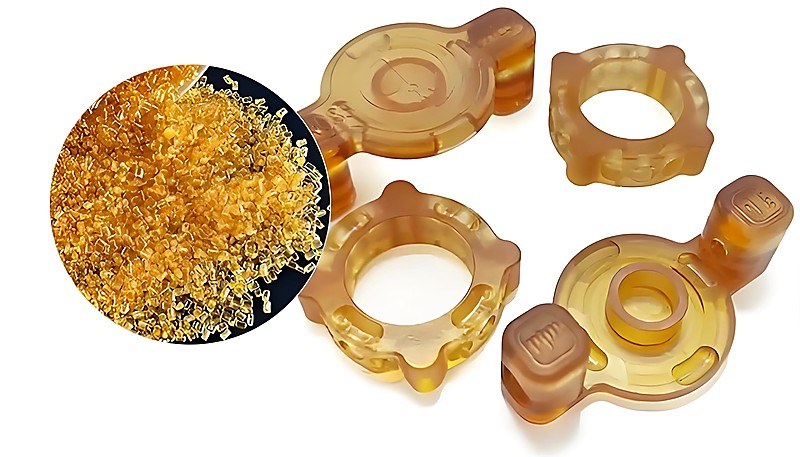
Polycarbonaat (PC) staat in een klasse apart als het gaat om slagvastheid onder transparante kunststoffen. De gekerfde Izod slagvastheid bereikt 600–850 J/m — ongeveer 20x die van acryl (PMMA) en 10x die van helder ABS. Als uw onderdeel doorzichtig MOET zijn EN een valtest moet doorstaan, is PC meestal het antwoord.
De treksterkte van PC van 55–75 MPa en warmtevervormingstemperatuur van ~130–140 °C liggen voor structurele en thermische prestaties ruim boven PMMA (48–76 MPa, ~90–100 °C HDT). PC wordt gebruikt in veiligheidsbrillen, medische behuizingen, autokoplampen en kogelwerende beglazing.
Het grootste nadeel: PC is gevoelig voor inkepingen. Een scherpe interne hoek zal barsten onder impact, ook al is het materiaal zelf ongelooflijk taai. Ontwerpregel: alle interne stralen moeten minimaal 0,5 mm zijn, en 1,0 mm heeft de voorkeur. PC is ook gevoelig voor veel gangbare chemicaliën — oplosmiddelen, oliën en zelfs sommige schoonmaakmiddelen kunnen omgevingsspanningsscheuren veroorzaken.
Verwerkingstip: PC vereist grondig drogen (4+ uur bij 120 °C) voor het vormen. Als u nat PC vormt, krijgt u sproeivlekken en een verlaagd molecuulgewicht — en uw dure lenskwaliteit PC is verpest. Wij controleren altijd dat het vochtgehalte onder 0,02% ligt voordat we PC-opdrachten uitvoeren.
Hoe Verandert Materiaalkeuze Uw Matrijsontwerp?
Dit gedeelte gaat over hoe materiaalkeuze het matrijsontwerp verandert en welke gevolgen dat heeft voor kosten, kwaliteit, planning en inkooprisico. Het gekozen materiaal beïnvloedt niet alleen de prestaties van het onderdeel, maar verandert ook de spuitgietmatrijs zelf. Verschillende harsen vereisen verschillende krimpcompensaties, aanspuittypen, koelstrategieën en zelfs staalsoorten voor de matrijs.
Krimp varieert sterk: PP krimpt 1,5–2,5%, ABS krimpt 0,4–0,7% en POM krimpt 1,8–2,3%. Uw matrijs holte moet overmaat worden gesneden om dit te compenseren. Als de krimp verkeerd is, zal elk onderdeel buiten tolerantie zijn.
Glasgevuld nylon en glasgevuld PP zijn extreem abrasief. Standaard P20 matrijzenstaal zal slijtage vertonen na 50.000–100.000 schoten. Voor productieseries van 500K+ cycli heeft u H13 of S136 gehard staal nodig — wat 30–50% toevoegt aan uw gereedschapskosten maar voorkomt dat uw matrijs voortijdig faalt.
Het ontwerp van de aanspuiting is bij kristallijne materialen (PP, POM, nylon) belangrijker dan bij amorfe materialen (ABS, PC). Een verkeerd geplaatst aanspuitpunt op een kristallijn onderdeel veroorzaakt laslijnen, jetting of kromtrekken die niet uitsluitend met procesparameters kunnen worden gecorrigeerd.
Droogvereisten beperken uw materiaalkeuze ook op basis van de apparatuur van uw spuitgieter. PC, nylon, PBT en PET moeten allemaal worden voorgedroogd. Als uw fabriek geen drogers heeft, bent u beperkt tot PP, PE en PS. PEEK wordt verwerkt bij 370–400 °C — de meeste standaardmachines kunnen dit niet aan, waardoor gespecialiseerde apparatuur nodig is.
Daarom raden wij altijd aan om de materiaalkeuze definitief te maken voordat het matrijsontwerp begint. Materiaal veranderen nadat de matrijs is gesneden is duur — u moet mogelijk holtes opnieuw snijden om krimp aan te passen, poortafmetingen wijzigen of het hele koellay-out veranderen.
ZetarMold Fabrieksgegevens: Onze interne matrijsproductiefaciliteit met 23 toegewijde machines — inclusief Makino CNC, Sodick langdraad EDM en precisiegraveermachines — stelt ons in staat om matrijzen snel te bouwen en aan te passen wanneer materiaalwijzigingen nodig zijn. 8 senior engineers (elk met 10+ jaar ervaring) behandelen DFM-beoordeling om materiaal-matrijs compatibiliteitsproblemen op te vangen voordat staal wordt gesneden.
Wat Is het Kostverschil tussen Veelgebruikte Spuitgietkunststoffen?
Materiaalkosten variëren met een factor 50x of meer tussen bulk- en hoogwaardige kunststoffen. PP en PE zitten onderaan (~€1,0–1,5/kg), terwijl PEEK bovenaan staat (€60–100+/kg). Maar de grondstofkosten zijn slechts een deel van de vergelijking — cyclus tijd, afvalpercentage en gereedschapskosten spelen allemaal een rol in uw stukprijs.
| Kostenklasse | Materialen | $/kg (ongeveer) | Cyclustijd | Gereedschap |
|---|---|---|---|---|
| Standaardmateriaal | PP, HDPE, LDPE, PS | 1.0–2.0 | Snel (10–25s) | Standaard P20 OK |
| Middenklasse | ABS, PMMA, TPU | 1.8–5.0 | Matig (15–40s) | P20 of 718H |
| Engineering | PA6, PA66, POM, PBT, PC | 2.5–8.0 | Matig–langzaam | P20 voor korte series, H13 voor volumeproductie |
| Hoge prestaties | PEEK, PEI, PPS, LCP | 15–100+ | Langzaam (30–60s+) | Gehard staal vereist |
Een veelgemaakte fout die we zien: de goedkoopste hars kiezen zonder rekening te houden met het onderdeelgewicht, de cyclustijd en het rendement. PP kost misschien $1.20/kg tegenover $2.20/kg voor ABS — maar als het PP-onderdeel 20% dikker moet zijn om dezelfde stijfheid te bereiken, wordt het verschil in materiaalkosten kleiner of verdwijnt het. En als het dikkere PP-onderdeel inval veroorzaakt waardoor het uitvalpercentage stijgt, kost het goedkopere materiaal per goedgekeurd onderdeel juist meer.
Hoe Kiest u het Juiste Kunststofmateriaal voor Uw Project?
De juiste kunststofkeuze draait om matrijscapaciteit, kwaliteitssystemen, communicatie en commerciële geschiktheid. Stem de onderdeeleisen af op vijf criteria: mechanische prestaties, thermische bestendigheid, chemische blootstelling, naleving van regelgeving en kosten. Dit is het praktische besliskader dat we met klanten gebruiken.
Bepaal eerst de doorslaggevende eigenschap: het ene criterium dat absoluut niet mag falen. Is dat slagvastheid? Temperatuurbestendigheid? Chemische bestendigheid? FDA-conformiteit? Deze ene eis elimineert direct 70% van uw materiaalopties en focust de selectie.
Controleer ten tweede de verwerkingscompatibiliteit. Beschikt uw spuitgieter over droogapparatuur voor hygroscopische materialen zoals PC, nylon en PBT? Kunnen de machines de vereiste smelttemperatuur en injectiedruk bereiken? Hebben ze ervaring met dit specifieke materiaal op productieschaal?
Voer ten derde een kostenanalyse per goed onderdeel uit. Vergelijk niet alleen de prijs per kilogram. Neem onderdeelgewicht, cyclustijd, verwachte uitval en nabewerkingen zoals lakken of gloeien mee. Materiaal van $2/kg met cycli van 15 seconden en 2% uitval is voordeliger dan $1.50/kg met cycli van 25 seconden en 8% uitval.
Ten vierde: valideer met een proefrun. Vorm en test altijd monsters voordat u tot productie overgaat. Materiaalgegevensbladen omvatten geen praktijkfactoren zoals aanspuitwaas, de sterkte van lasnaden of het krimpgedrag na het vormen.
Volgens onze ervaring komen de meeste projecten uit bij vier materiaalfamilies: PP voor kostengedreven consumentenonderdelen, ABS of PC/ABS voor zichtbehuizingen, nylon (vaak glasgevuld) voor mechanische en auto-onderdelen, en PC voor transparante of slagvaste toepassingen.
Wat Zijn de Voor- en Nadelen van Gerecycled vs. Maagdelijk Kunststofhars?
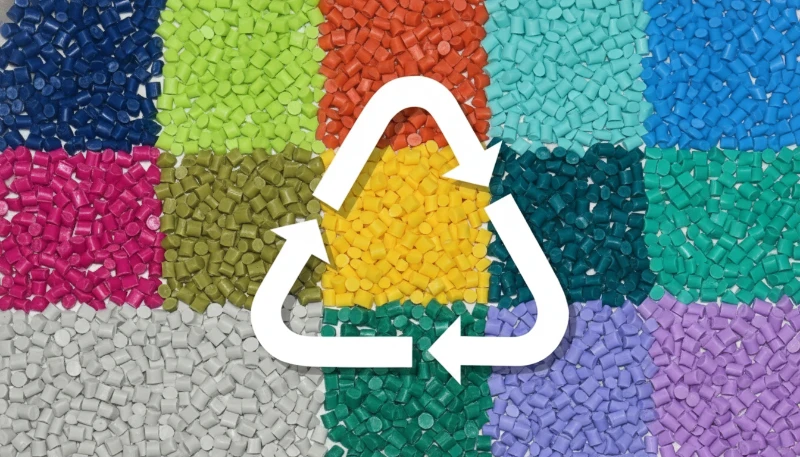
In dit onderdeel worden de voor- en nadelen van gerecyclede tegenover nieuwe kunststofhars toegelicht. Gerecyclede hars (regranulaat of rPCR — post-consumer recycled) kost 15–30% minder dan nieuw materiaal en wordt steeds vaker gevraagd door merken die op duurzaamheid sturen. U moet de afwegingen echter begrijpen voordat u dit materiaal specificeert.
Nieuwe kunststofhars heeft van batch tot batch een consistente smeltvloei-index (MFI), kleur en mechanische eigenschappen. Gerecyclede kunststofhars — vooral post-consumer materiaal — vertoont grotere variaties in eigenschappen. De MFI kan met plus of min 20% fluctueren en verontreinigingen (andere kunststoffen, additieven, vocht) kunnen verwerkingsproblemen veroorzaken, zoals zilverstrepen, zwarte vlekken of inconsistente krimp.
Praktisch advies uit onze productie: voor niet-kritieke, niet-zichtbare onderdelen (interne beugels, niet-constructieve componenten) is 20–30% maalgoed gemengd met nieuw materiaal doorgaans veilig; dit passen wij routinematig toe. Voor zichtbare, constructieve of gereguleerde onderdelen adviseren wij nieuw materiaal, tenzij u de gerecyclede kwaliteit volledig kunt kwalificeren.
Fabrieksgegevens van ZetarMold: wij beschikken over ISO 9001-, ISO 13485-, ISO 14001- en ISO 45001-certificeringen. Ons kwaliteitsproces in 6 stappen (IQC → In-Process → FQC → OQC) omvat een ingangscontrole van materiaal die kwaliteitsproblemen met maalgoed detecteert voordat het de pers bereikt.
"Polycarbonaat is de sterkste transparante thermoplast voor spuitgieten."True
De slagvastheid van PC (600–850 J/m gekerfde Izod) is veel groter dan die van PMMA (~20 J/m) en wordt door geen enkele andere transparante thermoplast geëvenaard. Het wordt gebruikt voor kogelwerende beglazing en veiligheidsuitrusting.
"Alle kunststoffen krimpen bij spuitgieten evenveel."False
De krimp varieert sterk — PP krimpt tot 2.5%, terwijl ABS slechts 0.4–0.7% krimpt. Kristallijne materialen (PP, POM, nylon) krimpen ongeveer 2–4x meer dan amorfe materialen (ABS, PC, PMMA).
Inzicht in deze veelvoorkomende misvattingen over spuitgietmaterialen helpt u betere beslissingen te nemen voor uw volgende project. De kern is dat materiaalkeuze altijd moet voortkomen uit de specifieke toepassingsvereisten en gebruiksomgeving, niet uit de aanname dat prijs gelijkstaat aan prestaties of dat alle kunststoffen uitwisselbaar zijn. Elk materiaal heeft een optimaal toepassingsgebied waarin de eigenschappen aansluiten op de eisen. De beste spuitgietpartners helpen dit snel te vinden in plaats van standaard de duurste optie te kiezen.
"Nylon onderdelen presteren in sommige opzichten juist beter nadat ze vocht hebben opgenomen."True
Droog nylon is bros; geconditioneerd nylon heeft een veel hogere slagvastheid. De sleutel is toleranties ontwerpen voor de geconditioneerde toestand in plaats van vochtopname te bestrijden.
"Duurdere kunststof betekent altijd betere onderdeelprestaties."False
PEEK kost 50x meer dan PP, maar voor een eenvoudige voedselverpakking die chemisch bestendig en goedkoop moet zijn, is PP de betere keuze. Materiaalkeuze draait om het afstemmen van eigenschappen op eisen.
Wat Zijn de Meest Gestelde Vragen over Spuitgietmaterialen?
Wat is de meest gebruikte kunststof bij spuitgieten?
Polypropyleen (PP) is de meest gebruikte kunststof bij spuitgieten en vertegenwoordigt ongeveer 35% van het wereldwijde spuitgietvolume. De lage prijs van circa $1.0 tot $1.5 per kilogram, gecombineerd met uitstekende chemische bestendigheid, een lage dichtheid van 0.90 g/cm³ en eenvoudige verwerking bij 200 tot 260 °C, maakt het de standaardkeuze voor verpakkingen, consumptiegoederen en toepassingen in de auto-industrie. PP heeft ook een goede vermoeiingsweerstand; daarom zijn filmscharnieren op flessendoppen vrijwel altijd van PP.
Wat is de sterkste kunststof voor spuitgieten?
PEEK biedt met circa 90 tot 100 MPa de hoogste treksterkte onder verwerkbare thermoplasten, maar kost $60 tot meer dan $100 per kilogram en vereist gespecialiseerde apparatuur die smelttemperaturen van 370 tot 400 °C aankan. Voor de meeste industriële toepassingen levert glasgevuld nylon PA66 in kwaliteit GF30 een treksterkte tot 180 MPa bij circa $4 tot $6 per kilogram. Daarmee is het de praktische keuze met hoge sterkte voor tandwielen, beugels en structurele auto-onderdelen waarvoor het budget PEEK niet rechtvaardigt.
Welk temperatuurbereik kan POM bij spuitgieten aan?
POM, ook bekend als polyoxymethyleen, acetaal of Delrin, wordt verwerkt bij smelttemperaturen van 185 tot 225 °C en behoudt betrouwbare mechanische eigenschappen binnen een continu gebruikstemperatuurbereik van min 40 °C tot plus 100 °C. De lage wrijvingscoëfficiënt van 0.1 tot 0.3 tegen staal en uitstekende maatvastheid over dit volledige bereik maken het geschikt voor precisietandwielen, vergrendelingen en schuifmechanismen in auto- en consumentenproducten waarbij constante prestaties bij temperatuurschommelingen cruciaal zijn. In onze productie-ervaring is POM een van de betrouwbaarste materialen voor constante maatvoering onder wisselende omgevingsomstandigheden.
Is ABS of polypropyleen beter voor buitengebruik?
Noch standaard-ABS, noch ongemodificeerd PP presteert buitenshuis goed zonder additieven. PP degradeert bij blootstelling aan UV-straling en wordt na verloop van tijd bros, terwijl ABS vergeelt en slagvastheid verliest bij blootstelling aan zonlicht. Voor buitentoepassingen wordt ASA (acrylonitril-styreen-acrylaat) aanbevolen, omdat het in wezen een UV-stabiele variant van ABS is die in direct zonlicht zowel zijn kleur als slagvastheid behoudt. Er zijn ook UV-gestabiliseerde PP-kwaliteiten verkrijgbaar die geschikt zijn voor tuinmeubilair, tuingereedschap en exterieuronderdelen voor auto’s.
Hoeveel krimpt nylon bij spuitgieten?
Ongevuld nylon PA6 krimpt 0.5 tot 1.5 procent en PA66 0.8 tot 1.8 procent tijdens spuitgieten en koelen. Glasgevulde kwaliteiten krimpen aanzienlijk minder, 0.2 tot 0.8 procent, maar de krimp wordt anisotroop: verschillend in stromings- en dwarsrichting. Hiermee moet in het matrijsontwerp zorgvuldig rekening worden gehouden, vooral bij onderdelen met nauwe toleranties zoals tandwielen of lagerhuizen. Nylon absorbeert bovendien tot 2.5 procent vocht bij 50 procent relatieve luchtvochtigheid, wat per procent vochtopname circa 0.3 procent maatverandering toevoegt.
Welke kunststof is het meest geschikt voor transparante spuitgietonderdelen?
Polycarbonaat (PC) is het best voor transparante onderdelen met hoge slagvastheid: gekerfde Izod 600–850 J/m en lichttransmissie boven 87 procent. PMMA biedt 92 procent transmissie, maar slechts circa 20 J/m slagvastheid. PC wordt verwerkt bij 280–320 °C en vereist minstens 4 uur drogen bij 120 °C; PMMA bij 220–260 °C stelt lagere droogvereisten.
Moeten alle spuitgietmaterialen vóór verwerking worden gedroogd?
Nee, niet alle spuitgietmaterialen moeten vóór verwerking worden voorgedroogd. Polypropyleen (PP) en polyethyleen (PE) worden geclassificeerd als niet-hygroscopische materialen. Ze nemen geen noemenswaardig vocht uit de lucht op en kunnen zonder droogstap rechtstreeks uit de zak worden verwerkt. Polycarbonaat (PC), nylon (PA6 en PA66), PBT, PET en TPU zijn daarentegen allemaal hygroscopisch en moeten, afhankelijk van het specifieke materiaal, 3 tot 4 uur bij 80 tot 120 °C worden gedroogd. Het spuitgieten van vochtig hygroscopisch materiaal veroorzaakt zichtbare zilverstrepen, een lager molecuulgewicht, slechtere mechanische eigenschappen en maatinstabiliteit van de afgewerkte onderdelen.
Wat is het goedkoopste kunststofmateriaal voor spuitgieten?
Polypropyleen (PP) en polyethyleen (PE) zijn de goedkoopste spuitgietmaterialen, beide geprijsd op ongeveer $1,0 tot $1,5 per kilogram voor standaardkwaliteiten. Polystyreen (PS) is vergelijkbaar geprijsd en ook ruim beschikbaar bij meerdere wereldwijde leveranciers. Deze bulkharsen zijn geschikt voor niet-kritieke, kostenbewuste toepassingen zoals voedselverpakkingen, wegwerpbakken en eenvoudige consumentenbehuizingen. De uiteindelijke onderdeelprijs hangt echter sterk af van de onderdeelgeometrie, de cyclustijd, de productiehoeveelheid en het afvalpercentage. Een duurder materiaal dat sneller verwerkt wordt en minder afval produceert, kan uiteindelijk leiden tot een lagere kostprijs per afgewerkt onderdeel dan de goedkoopste beschikbare hars.
De juiste kunststof kiezen begint met begrijpen wat uw onderdeel werkelijk moet doorstaan en eerlijk bepalen waar concessies mogelijk zijn. Twijfelt u tussen twee materialen, stuur ons dan het ontwerp; wij zeggen rechtstreeks welk materiaal we zouden verwerken en waarom. Geen upselling, alleen 20 jaar praktijkervaring toegepast op uw project.
Klaar om uw materiaalkeuze te bespreken? Neem contact op met ons engineeringteam — we beoordelen uw ontwerp, adviseren het meest kosteneffectieve materiaal en verstrekken binnen 24 uur een gedetailleerde offerte.
ABS: ABS staat voor acrylonitril-butadieen-styreen — een amorfe thermoplast met een slagvastheid van circa 200–400 J/m, treksterkte van 29–48 MPa en warmtevervormingstemperatuur van circa 90–105 °C. ↩
polypropyleen (PP): polypropyleen (PP) is een semikristallijne thermoplast met een dichtheid van circa 0.90 g/cm³, een smeltpunt van circa 160–168 °C en een treksterkte van 31–41 MPa. Het wordt veel gebruikt in verpakkingen, auto's en consumentenproducten. ↩
nylon (PA6/PA66): nylon (PA6/PA66) omvat technische polyamidethermoplasten met een treksterkte tot 80 MPa (droog), smeltpunten van 220–265 °C en uitstekende slijtvastheid. ↩