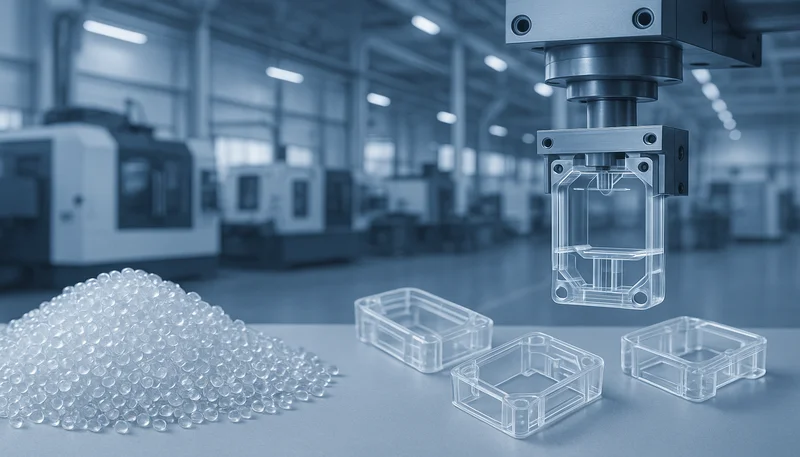
PETG1 (polyethyleentereftalaatglycol) biedt een combinatie die weinig andere thermoplasten evenaren: optische helderheid die polycarbonaat benadert, slagvastheid vergelijkbaar met ABS en een chemische bestendigheid die beide overtreft — bij een lagere verwerkingstemperatuur en lagere kosten. Hebt u ooit een transparante behuizing voor een medisch hulpmiddel, een displayvenster voor consumentenelektronica of een voedselcontainer vastgehouden, dan was die waarschijnlijk van PETG gemaakt. In deze gids bespreken we alles wat nodig is om PETG met succes op uw spuitgietafdeling te verwerken, van droging en smelttemperaturen tot aanspuitontwerp en het oplossen van defecten.
- PETG is een amorfe copolymer met een glasovergang van ~88 °C — gemakkelijk te vormen, taai en kristalhelder.
- Droog PETG bij 65–75 °C gedurende 4–6 uur; vocht boven 0,02 % veroorzaakt spuitstrepen en broosheid.
- Smelttemperatuurbereik: 220–260 °C. Matrijstemperatuur: 15–40 °C voor helderheid, tot 65 °C voor spanningsverlichting.
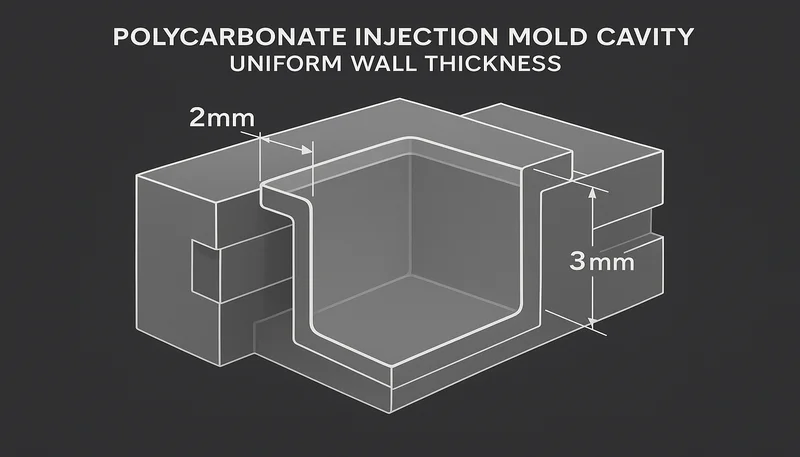
- Wanddikte moet tussen 1,0–3,0 mm blijven; uniforme dikte voorkomt zinkmarkeringen en interne spanning.
- PETG is FDA-conform voor voedselcontact, chemisch bestendig en volledig recyclebaar — ideaal voor medische en consumententoepassingen.
Wat Is PETG en Waarom Is Het Belangrijk bij Spuitgieten?
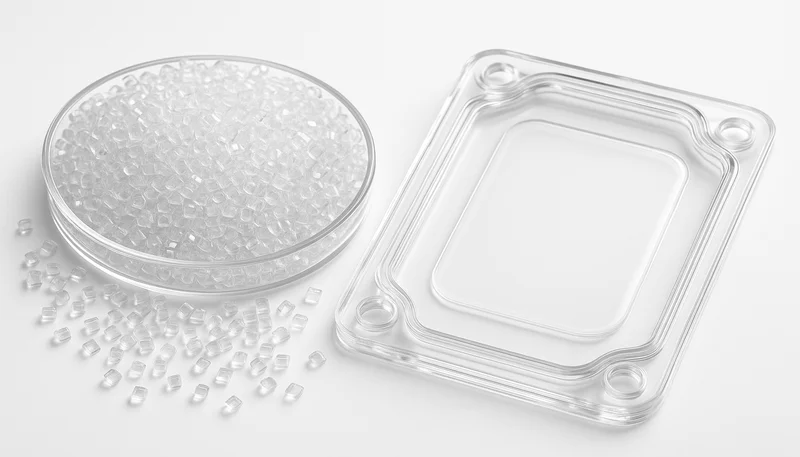
PETG is een glycol-gemodificeerde versie van polyethyleentereftalaat (PET). De glycolcomonomeer verstoort de kristallisatie, wat de sleutel is om bijna alles te begrijpen over hoe dit materiaal zich gedraagt in een matrijs. In tegenstelling tot PET, dat wil kristalliseren en ondoorzichtig wordt, blijft PETG amorfe — transparant, dimensioneel stabiel en vergevingsgezind tijdens de verwerking. De glasovergangstemperatuur ligt op ongeveer 88 °C (190 °F). Dat plaatst het ruim onder polycarbonaat (ongeveer 147 °C) maar boven standaard heldere kunststoffen zoals polystyreen.
In de praktijk biedt PETG dus bijna dezelfde optische helderheid als PC, zonder de grote drooggevoeligheid of neiging tot kromtrekken. Het verkort ook de spuitgietcyclustijd, omdat u vanaf een lagere smelttemperatuur koelt in een matrijs die minder heet hoeft te zijn. Voor fabrikanten die een transparant, taai en chemisch bestendig onderdeel nodig hebben en een ruim procesvenster willen behouden, is PETG vaak de eerste keuze.
Het materiaal is ook aantrekkelijk vanuit een duurzaamheidsperspectief. PETG is recyclebaar (SPI-hars code 1 in de meeste PET-stromen), en veel kwaliteiten zijn FDA-conform voor direct voedselcontact. Naarmate de regelgevingsdruk op wegwerpverpakkingen en medische verpakkingen toeneemt, is het een echt voordeel om een heldere thermoplast te hebben die voldoet aan voedselcontact- en medische normen zonder de kosten van PC.
Wat Zijn de Belangrijkste Materiaaleigenschappen van PETG?
De belangrijkste materiaaleigenschappen van PETG zijn een glasovergang van ~88 °C, treksterkte van 50–55 MPa en lichttransmissie van 85–92 %. Voordat u één temperatuur op de cilinderregelaars instelt, moet u de waarden begrijpen die het gedrag van PETG bepalen. Hieronder staan de eigenschappen die op de productievloer het belangrijkst zijn.
| Eigendom | Waarde | Opmerkingen |
|---|---|---|
| Dichtheid | 1.27 g/cm3 | Matig; lichter dan veel technische kunststoffen |
| Glasovergang (Tg) | Ongeveer 88 °C (190 °F) | Amorf; geen scherp smeltpunt |
| Smelttemperatuurbereik | 220–260 °C | Vermijd temperaturen boven 280 °C om degradatie te voorkomen |
| Matrijs Temperatuurbereik | 15–65 °C | Lager = helderder; hoger = minder spanning |
| Treksterkte | 50–55 MPa | Vergelijkbaar met ABS, lager dan PC |
| Rek bij breuk | 100–150 % | Hoge vervormbaarheid — bestand tegen bros falen |
| Buigmodulus | ~2,100 MPa | Stijf genoeg voor structurele onderdelen |
| Izod Kerfslagvastheid | ~800 J/m | Veel beter dan acryl; dichtbij PC |
| Lichttransmissie | 85–92 % | Bijna optische helderheid |
| Vochtopname | 0.2–0.3 % | Laag, maar nog steeds drogen vereist |
De combinatie van hoge rek en een goede treksterkte van PETG2 (50–55 MPa) onderscheidt PETG van andere transparante kunststoffen. Acryl (PMMA) laat mogelijk meer licht door, maar barst bij impact. Polycarbonaat is taaier, maar aanzienlijk duurder en veel gevoeliger voor vocht en chemische aantasting. PETG zit daartussenin en onze ervaring leert dat juist dit middengebied het grootste deel van de praktijksituaties beslaat.
Hoe bereid je PETG voor op spuitgieten?
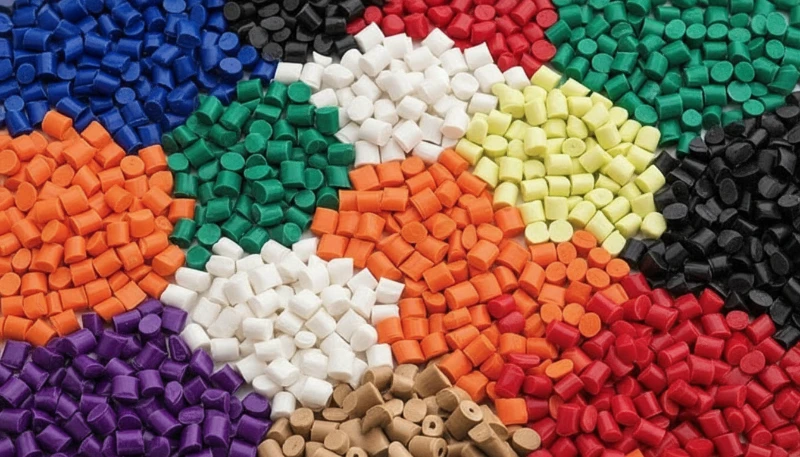
PETG is hygroscopisch — minder sterk dan nylon of polycarbonaat, maar genoeg om het overslaan van de droger duur te maken. Het doelvochtgehalte is lager dan 0.02 gewichtsprocent. In onze fabriek drogen we PETG 4–6 uur bij 65–75 °C in een ontvochtigende hopperdroger en houden we de hopper tijdens de hele productierun op temperatuur. Deze droogtemperatuur voor PETG3 is cruciaal: te heet en de korrels kleven aan elkaar; te koud en het doelvochtgehalte wordt nooit bereikt.
"Ongedroogde PETG-hars veroorzaakt zilverstrepen en een lagere slagvastheid door hydrolyse van de polymeerketen."True
Juist. Vocht in de smelt veroorzaakt stoombellen die zilverstrepen op het oppervlak vormen. Hydrolyse breekt bovendien esterbindingen in de polymeerketen af, waardoor taaiheid en rek blijvend afnemen.
"PETG hoeft vóór het spuitgieten niet te worden gedroogd, omdat het zeer weinig vocht opneemt."False
Onjuist. Hoewel PETG minder vocht opneemt dan nylon, veroorzaakt elk vochtgehalte boven 0.02 % zilverstrepen, bellen en een lagere slagvastheid. Droog PETG vóór het vormen altijd 4–6 uur bij 65–75 °C.
Dit gebeurt er wanneer u het droogproces overslaat of verkort: zilverstrepen op het onderdeeloppervlak door stoom die in de smelt uitzet; een lagere slagvastheid doordat hydrolyse esterbindingen in de polymeerhoofdketen verbreekt; bellen en holtes in dikke secties; brosse laslijnen op samenvloeipunten; en een inconsistent gewicht van shot tot shot met maatafwijkingen.
Een snelle praktijktest: als u tijdens het spoelen ploppende geluiden hoort of schuim bij de spuitmond ziet, is uw PETG vochtig. Stop, vul bij met gedroogd materiaal en spoel de cilinder grondig. Drogen is altijd goedkoper dan uitval. Kleur- en additiefconcentraten (masterbatches) moeten eveneens droog zijn — PETG wordt verwerkt bij een temperatuur waarbij restvocht in een kleurkorrel dezelfde defecten veroorzaakt.
Wat Zijn de Optimale PETG Spuitgietparameters?
PETG is een van de vergevingsgezindere materialen om te vormen, wat mede verklaart waarom het zo populair is. Maar “vergevingsgezind” betekent niet dat u de basisbeginselen kunt negeren. Dit zijn de parameters die we bij elke PETG-opdracht afstellen, samen met de bereiken die bij uiteenlopende onderdeelgeometrieën betrouwbaar werken.
| Parameterwaarde | Aanbevolen bereik | Tips |
|---|---|---|
| Vat Achterzone | 210–230 °C | Houd lager om voortijdig smelten te voorkomen |
| Cilinder Middenzone | 230–250 °C | Primaire smeltzone |
| Voorste cilinderzone / spuitmond | 240–260 °C | Overschrijd 280 °C niet |
| Schimmel Temperatuur | 15–40 °C (helderheid) / 40–65 °C (spanningsvermindering) | Koeler = helderder oppervlak |
| Injectiesnelheid | Gemiddeld tot snel | Voorkom aarzellijnen in dunne wanden |
| Houddruk | 40–70 % van de injectiedruk | Nadruk aanhouden tot de poort bevriest |
| Wachttijd | 3–8 seconden (afhankelijk van de wanddikte) | Aanspuitpuntafdichting is cruciaal |
| Koeltijd | 15–40 seconden (afhankelijk van de wanddikte) | Uniforme wand = kortere cyclus |
| Tegendruk | 5–10 bar | Laag tot matig; overmatige afschuiving degradeert PETG |
| Schroefsnelheid | 40–80 RPM | Lagere snelheden verminderen afschuifverwarming |
Een praktische tip: PETG heeft een relatief breed verwerkingsvenster, maar de randen daarvan geven verschillende resultaten. Aan de lage kant (220–230 °C) krijgt u betere transparantie en minder kans op vergeling, maar kan het vullen van dunwandige delen lastig zijn. Aan de hoge kant (250–260 °C) verbetert de vloei sterk, maar veroorzaakt een lange verblijftijd thermische degradatie — het materiaal vergeelt en verliest slagvastheid. Voor de meeste onderdelen is 240–250 °C optimaal.
De inspuitsnelheid is bij PETG belangrijker dan veel spuitgieters beseffen. Omdat PETG amorf is, heeft het geen scherp smeltpunt maar wordt het geleidelijk zacht binnen een bereik. Snel inspuiten helpt het materiaal gelijkmatig door de caviteit te stromen voordat de voorrand begint te bevriezen. Bij dunwandige onderdelen (minder dan 1.5 mm) draaien we doorgaans op 70–90 % van de maximale inspuitsnelheid. Bij dikkere onderdelen vertragen we tot 40–60 % om straalvorming en luchtinsluitingen te voorkomen.
De meeste problemen bij het vormen van PETG ontstaan door nadruk en nadruktijd. PETG is bij de ontvormtemperatuur een “zacht” materiaal — het trekt krom, vertoont inzakkingen of verandert van maat als u de nadruk loslaat voordat de aanspuiting is bevroren. Een onderzoek naar het bevriezen van de aanspuiting (onderdelen wegen bij steeds langere nadruktijden totdat het gewicht stabiliseert) is eenmaal per matrijs de moeite waard. In onze fabriek volstaat een nadruktijd van 4–6 seconds voor de meeste PETG-onderdelen met een wanddikte onder 3 mm.
"Voor elke nieuwe PETG-matrijs wordt een onderzoek naar de stolling van de aanspuiting aanbevolen om de optimale nadruktijd te bepalen."True
Juist. De bevriezingstijd van de poort varieert met wanddikte, poortgrootte en matrijstemperatuur. Door onderdelen bij stapsgewijs langere nadruktijden te wegen totdat het gewicht stabiliseert, bepaalt u de minimale nadruktijd voor constante onderdeelkwaliteit.
"PETG moet altijd bij de hoogst mogelijke smelttemperatuur worden gevormd om volledige caviteitsvulling te waarborgen."False
Onjuist. Hogere smelttemperaturen verbeteren de vloei, maar boven 280 °C ontstaan thermische degradatie, vergeling en verlies van slagvastheid. Het aanbevolen bereik is 220–260 °C; voor de meeste toepassingen is 240–250 °C optimaal.
Hoe Moet U Matrijzen Ontwerpen voor PETG Onderdelen?
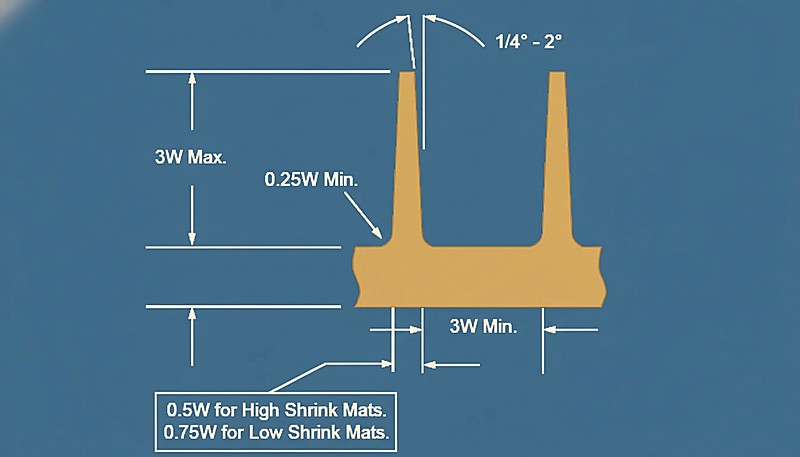
Het PETG-matrijsontwerp wordt bepaald door een uniforme wanddikte van 1-3 mm, lossingshoeken van 2-3 graden en poorttypen met lage afschuiving voor probleemloos lossen en optische helderheid.
Wanddikte en krimp
Streef naar een wanddikte van 1.0–3.0 mm en houd deze zo uniform mogelijk. PETG kristalliseert niet en krimpt daarom minder dan semikristallijne materialen zoals nylon — maar het krimpt nog steeds (0.3–0.7 %). Ongelijke diktes veroorzaken differentieële krimp, zichtbaar als inval en kromtrekken. Als om constructieve redenen een dikker gedeelte nodig is, verdient uithollen met ribben altijd de voorkeur boven een massief blok.
Ontwerp en plaatsing van de aanspuiting
Bij transparante PETG-onderdelen hebben de positie en het type aanspuiting direct invloed op de optische kwaliteit. Rand- en waaiervormige aanspuitingen worden het meest gebruikt, omdat hun brede ingang met lage afschuiving straalvorming en vloeisporen beperkt. Ondergrondse (tunnel)aanspuitingen zijn geschikt voor kleine onderdelen, maar kunnen een zichtbaar aanspuitrestje achterlaten. Vermijd puntaanspuitingen voor onderdelen zwaarder dan enkele grammen: de hoge afschuiving door een kleine opening degradeert PETG en veroorzaakt waas rond de aanspuiting.
Plaats aanspuitpunten zo dat het stromingsfront zich gelijkmatig door de caviteit beweegt. Bij een ongelijkmatig stroompad ontstaan lasnaden en vloeimarkeringen in het transparante materiaal. Een Moldflow-simulatie vóór het bewerken van staal is een zinvolle investering voor elk PETG-product waarbij optische kwaliteit belangrijk is.
Lossingshoeken en oppervlakteafwerking
De standaard lossingshoek bedraagt 1–2° per zijde, maar bij diepe vormen profiteert PETG van een iets grotere lossingshoek (2–3°), omdat het materiaal bij de uitwerptemperatuur relatief zacht is. Een onvoldoende lossingshoek veroorzaakt sleepsporen die op een transparant onderdeel direct zichtbaar zijn. Polijst de oppervlakken van kern en matrijsholte tot spiegelglans (SPI A-2 of beter) voor optimale optische helderheid — PETG neemt de oppervlaktetextuur van de matrijs nauwkeurig over.
Ventilatie
PETG geeft geen agressieve gassen af tijdens het vormen (in tegenstelling tot PVC of acetaal), maar adequate ontluchting blijft essentieel. Opgesloten lucht veroorzaakt brandplekken en onvolledige injecties. Standaard ontluchtingsdieptes van 0,01–0,02 mm zijn voldoende. Voor onderdelen met complexe geometrie, voeg ontluchting toe aan het einde van de stroompaden en bij blinde zakken.
Wat Zijn de Veelvoorkomende PETG Spuitgietdefecten en Oplossingen?
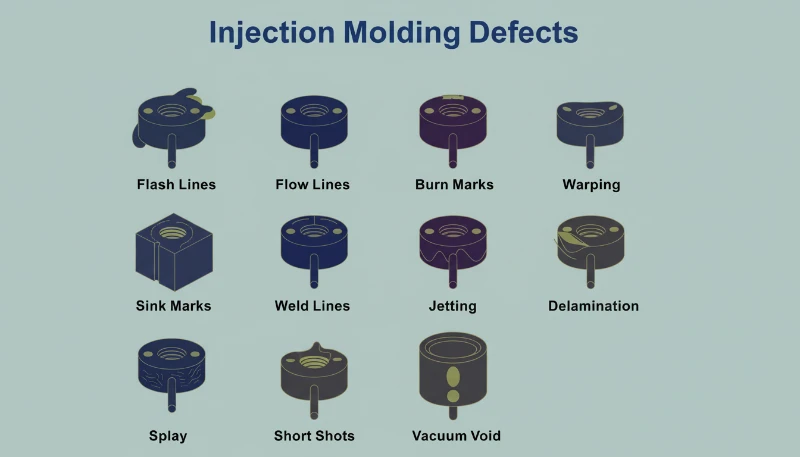
Veelvoorkomende PETG-defecten zijn splay marks, waas, krimpkraters en vervorming — de meeste zijn te voorkomen met goed drogen, goede poortontwerpen en voldoende naspanning. Zelfs met goede parameters heeft PETG zijn eigenaardigheden. Hier zijn de defecten die we het vaakst op de productievloer zien, samen met de oplossingen die echt werken.
Splay Marks (Zilveren Strepen)
Oorzaak: Vocht in het materiaal. Dit is het grootste probleem bij PETG. Zelfs een kleine hoeveelheid vocht creëert stoombellen die aan het stroomfront barsten, waardoor zilverachtige strepen op het oppervlak van het onderdeel achterblijven. De oplossing is eenvoudig: controleer de temperatuur en tijd van de droger. Zorg ervoor dat het dauwpunt van de drooglucht onder -20 °C ligt. Als u geregenereerd materiaal gebruikt, droog dit dan apart voor – geregenereerd materiaal heeft een groter oppervlak en neemt vocht sneller op dan nieuwe korrels.
Waas of Troebelheid
Oorzaak: Overmatige afschuiving door te snelle injectie door een kleine poort, vervuiling of een smelttemperatuur die te laag is voor volledige homogenisatie. Oplossing: maak de poort iets groter, verlaag de injectiesnelheid en zorg voor een goed temperatuurprofiel in de cilinder. Controleer ook op vervuiling in de trechter — zelfs sporen van een andere kunststof (vooral kristallijne materialen) veroorzaken troebelheid in PETG.
Gootsteentekens
Oorzaak: onvoldoende nadruk of nadruktijd, of te grote verschillen in wanddikte. PETG is amorf en krimpt relatief weinig, maar dikke zones krijgen nog steeds inval als ze niet goed worden nagevuld. Oplossing: verhoog de nadruk en verleng de nadruktijd totdat het aanspuitpunt bevriest. Ontwerp dikke zones opnieuw met uitgeholde ribben. Een goed nagevulde caviteit van een spuitgietmatrijs hoort onderdelen met minimale inval te produceren.
"De amorfe structuur van PETG betekent dat het materiaal minder en gelijkmatiger krimpt dan semikristallijne kunststoffen zoals nylon of POM."True
Waar. Amorfe materialen zoals PETG krimpen isotroop (0,3–0,7 %), terwijl semi-kristallijne materialen 1–2,5 % kunnen krimpen met aanzienlijke richtingsafhankelijke variatie. Dit maakt PETG gemakkelijker te spuiten met nauwe toleranties.
"Inval in PETG-onderdelen kan eenvoudig worden verholpen door de matrijstemperatuur te verlagen."False
Onwaar. Hoewel de matrijstemperatuur het oppervlakteaspect beïnvloedt, worden indeukingen voornamelijk veroorzaakt door onvoldoende naspuitdruk of dikke wanddelen die ongelijkmatig krimpen tijdens het koelen. De oplossing omvat het verhogen van de naspuitdruk, het verlengen van de naspuittijd en het herontwerpen van dikke secties met uitsparingen.
Kromtrekken en Jetting
Vervorming ontstaat door ongelijkmatige koeling of verschilkrimp tussen dikke en dunne zones. De lage krimp van PETG helpt, maar asymmetrische wanddikte of ongelijkmatige matrijskoeling veroorzaakt nog steeds vervorming. Zorg voor een uniforme koelkanalenindeling, gebruik matrijstemperatuurregelaars op beide helften en overweeg voor onderdelen met onvermijdelijke diktevariatie een iets hogere matrijstemperatuur (50–65 °C).
Jetting treedt op wanneer de smeltstroom te snel de holte binnenkomt door een beperkende poort zonder contact met de wand te maken — hij kronkelt door de holte en veroorzaakt wormachtige oppervlaktemarkeringen. Oplossing: verlaag de injectiesnelheid in de eerste vulstap, schakel over op een waaierpoort of lip-poort om de instroom te spreiden, en plaats de poort zo dat de smelt direct bij binnenkomst een wand of kernpin raakt.
Welke industrieën en toepassingen gebruiken PETG-spuitgieten?
PETG wordt voornamelijk gebruikt in medische apparaten, voedselverpakkingen, consumentenelektronica en industriële beschermkappen waar helderheid en taaiheid belangrijk zijn. De combinatie van helderheid, taaiheid, chemische bestendigheid en regelgevingsconformiteit maakt het een veelgebruikt materiaal in verschillende veeleisende industrieën.
Medisch en Gezondheidszorg
PETG wordt veel gebruikt voor medische apparaatbehuizingen, componenten voor vloeistofbehandeling, diagnostische apparatuurhoezen en blisterverpakkingen. De helderheid maakt visuele inspectie van vloeistofniveaus en apparaatstatus mogelijk, terwijl de taaiheid vallen en stoten overleeft die acryl zouden doen breken. Veel PETG-kwaliteiten voldoen aan de biocompatibiliteitsvereisten van USP Klasse VI en ISO 10993 voor medische toepassingen. In onze ervaring met het verwerken van PETG voor medische klanten maakt de combinatie van optische helderheid en sterilisatiecompatibiliteit (compatibel met ethyleenoxide- en gammasterilisatie) het de standaardkeuze voor heldere medische behuizingen.
Voedsel- en drankverpakkingen
FDA-conforme PETG-kwaliteiten worden gebruikt voor transparante voedselverpakkingen, drankflessen, delicatessentrays en cosmeticaverpakkingen. Dankzij de chemische bestendigheid verdraagt het materiaal oliën en zuren zonder spanningsscheuren, terwijl de helderheid de aantrekkelijkheid in het schap vergroot. Anders dan PET kan PETG zonder kristallisatie worden gethermoformeerd en gespuitgiet, wat de verwerking voor verpakkingsproducenten vereenvoudigt.
Consumentenelektronica en Industrieel
Displayvensters, LED-lichtdiffusoren, beschermhoezen en transparante behuizingen voor wearables en gadgets gebruiken allemaal PETG. Het biedt de optische helderheid van PC tegen lagere kosten, en het vergeelt niet zo snel onder UV-blootstelling wanneer het goed gestabiliseerd is. Industriële toepassingen zijn onder meer winkelpresentatiemateriaal, bewegwijzering, beschermkappen en machinevisieramen waar slagvastheid PETG de voorkeur geeft boven acryl in drukke omgevingen.
PETG vs. Andere Transparante Kunststoffen — Hoe Verhoudt Het Zich?
De keuze tussen PETG, polycarbonaat, acryl (PMMA) en helder ABS komt neer op het afwegen van helderheid, taaiheid, kosten en verwerkingseisen. Hier is hoe ze zich onderling verhouden.
| Eigendom | PETG | Polycarbonaat (PC) | Acryl (PMMA) | Helder ABS |
|---|---|---|---|---|
| Lichttransmissie | 85–92 % | 88–91 % | 92 % | 75–85 % |
| Slagvastheid (Izod) | ~800 J/m | ca. 850 J/m | ~20 J/m | ongeveer 300 J/m |
| Tg-waarde | ~88 °C | Circa 147 °C | ~105 °C | ~105 °C |
| Verwerkingstemp. | 220–260 °C | 280–320 °C | 200–250 °C | 220–260 °C |
| Vochtgevoeligheid | Matig | Hoog | Laag | Matig |
| Chemische weerstand | Goed | Slecht (scheurt) | Slecht | Matig |
| Kosten (relatief) | $$ | $$$ | $ | $$ |
| FDA-conformiteit | Ja (veel kwaliteiten) | Sommige kwaliteiten | Sommige kwaliteiten | Geen |
Conclusie: als uw onderdeel helder, taai en chemisch bestendig moet zijn, en u heeft niet de extreme hittebestendigheid van polycarbonaat nodig, dan is PETG meestal de beste keuze. Het verwerkt gemakkelijk, kost minder dan PC en biedt een betere chemische bestendigheid. Het nadeel is een lagere hittebestendigheid — als uw onderdeel langdurig aan temperaturen boven 70 °C wordt blootgesteld, kunt u beter naar PC kijken.
Hoe verwerkt ZetarMold PETG in productie?
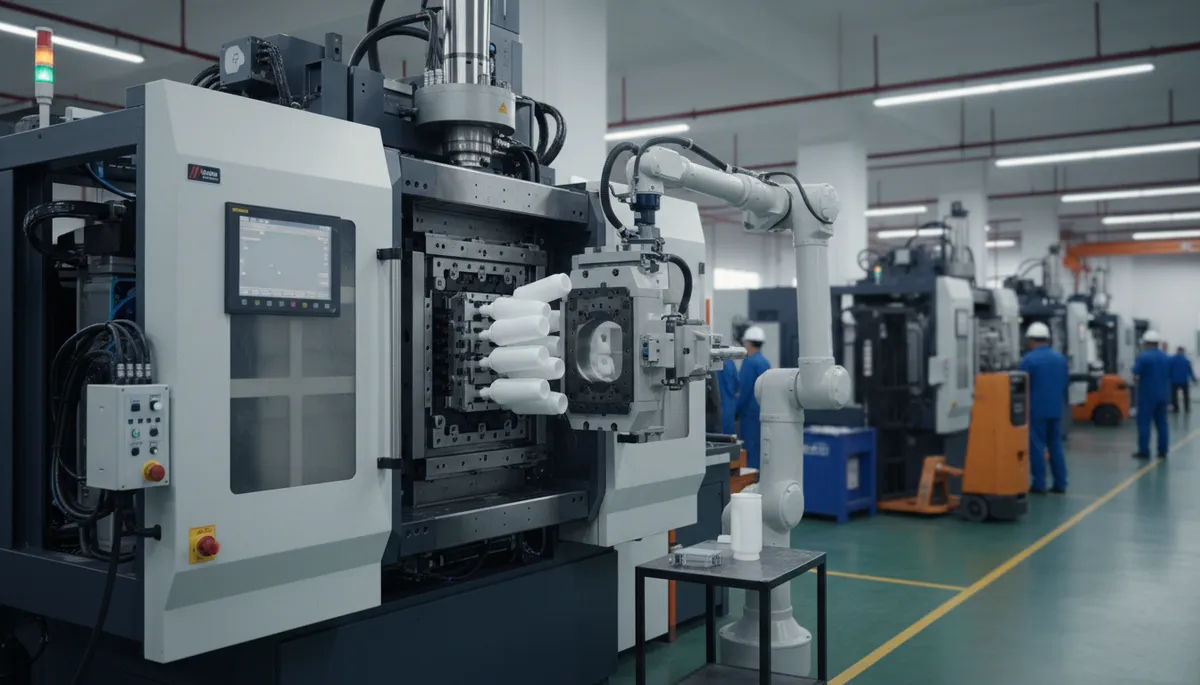
In onze fabriek in Shanghai is PETG een van de top vijf materialen die we verwerken qua volume. Met 47 spuitgietmachines van 90T tot 1850T verwerken we PETG-onderdelen, van kleine behuizingen voor medische apparaten tot grote industriële displayafdekkingen. Dit is wat we hebben geleerd na duizenden PETG-cycli in de afgelopen 20+ jaar.
| Capaciteit | Specificatie |
|---|---|
| Spuitgietmachines | 45 machines, van 90T–1850T |
| Materiaalbereik | 400+ verwerkte materialen, inclusief alle belangrijke PETG-kwaliteiten |
| Engineeringteam | 8 senior engineers met elk 10+ jaar ervaring |
| Productiepersoneel | Meer dan 120 productiemedewerkers |
| Maandelijkse Matrijsproductie | 100+ sets spuitgietmatrijzen per maand |
| Kwaliteitssysteem | ISO 9001 / 13485 / 14001 / 45001 gecertificeerd |
| Internationaal Team | 30+ vloeiende Engelssprekenden voor wereldwijde communicatie |
Droogdiscipline is niet onderhandelbaar. We gebruiken ontvochtigende trechterdrogers op 70 °C gedurende minimaal 4 uur voor elke PETG-opdracht. Onze materiaalhandlers weten dat overslaan van drogen bij PETG betekent dat de eerste 20 shots minimaal worden afgekeurd. Ingangsontwerp is belangrijker dan men denkt — voor transparante PETG-onderdelen specificeren we bijna altijd waaier- of randingangen met een breedte van 60–80% van de wanddikte om schuifspanning te minimaliseren en een schone stromingsfront te produceren.
Matrijstemperatuurregeling bepaalt de kwaliteit. Wij gebruiken watercirculerende matrijstemperatuurregelaars ingesteld op 25–30 °C voor de meeste PETG-onderdelen. Dit geeft de beste combinatie van oppervlaktehelderheid en cyclustijd. Voor onderdelen met grote wanddiktevariatie gaan we naar 50 °C. Voor medische en optische toepassingen gloeien we PETG-onderdelen soms uit bij 65–70 °C gedurende 30–60 minuten om interne spanningen te verminderen, wat de dimensionale stabiliteit verbetert en het risico op spanningsscheuren in chemische omgevingen verkleint.
Ontwikkelt u een nieuwe PETG-toepassing en hebt u hulp nodig met materiaalkeuze, matrijsontwerp of procesoptimalisatie, neem dan contact op — wij delen onze ervaring graag. Ons team antwoordt binnen 24 uur en kan volledige inkoopondersteuning bieden, van de eerste DFM-beoordeling tot de productiestart.
Veelgestelde vragen over PETG-spuitgieten
Veelgestelde vragen
Op welke temperatuur spuitgiet u PETG?
PETG wordt typisch gespoten bij een smelttemperatuur van 220–260 °C en een matrijstemperatuur van 15–40 °C voor helderheidskritische onderdelen, of tot 65 °C voor onderdelen die extra spanningsverlichting tijdens het koelen vereisen. De cilinder moet worden geprofileerd van 210 °C aan de achterkant tot 250 °C bij de spuitmond voor optimale materiaalhomogenisatie en consistente smeltkwaliteit. Het overschrijden van 280 °C brengt het risico op thermische degradatie, vergeling en verlies van slagvastheid met zich mee, dus blijf binnen het aanbevolen bereik en controleer de smeltkleur nauwlettend gedurende uw productieruns.
Moet PETG worden gedroogd voor spuitgieten?
Ja, absoluut. PETG moet worden gedroogd bij 65–75 °C gedurende 4–6 uur om het vochtgehalte te verlagen tot onder 0,02 % op gewichtsbasis voordat met spuitgieten wordt begonnen. Hoewel PETG minder hygroscopisch is dan nylon of polycarbonaat, veroorzaakt restvocht sproeimarkeringen op het onderdeeloppervlak, aanzienlijk verminderde slagvastheid, ingesloten luchtbellen in dikke secties en dimensionale inconsistentie tussen spuitbeurten. Gebruik een ontvochtigende trechterdroger met een dauwpunt onder -20 °C en houd de trechter op temperatuur gedurende de hele productierun om her-opname van omgevingsvocht te voorkomen.
Kan PETG worden gebruikt voor voedselcontacttoepassingen?
Veel PETG-kwaliteiten voldoen aan FDA 21 CFR §177.1630 voor direct voedselcontact en zijn daardoor geschikt voor voedselverpakkingen, drankflessen, delicatesseschalen en keukengerei. Controleer altijd het conformiteitscertificaat van de specifieke kwaliteit bij uw materiaalleverancier voordat u deze voor voedselcontact toepast, omdat niet alle PETG-formuleringen volgens voedselveiligheidsnormen worden geproduceerd. Sommige PETG-kwaliteiten voldoen bovendien aan de Europese voorschriften voor voedselcontact volgens EU Regulation 10/2011, wat bredere internationale markttoegang en naleving in meerdere regio’s mogelijk maakt.
Wat veroorzaakt waas in gegoten PETG-onderdelen?
Waas in PETG-gegoten onderdelen wordt meestal veroorzaakt door overmatige schuifspanning door te snelle injectie via een kleine ingang, onvoldoende smelttemperatuur voor volledige materiaalhomogenisatie, of contaminatie door een andere kunststof die via de trechter of cilinder wordt ingebracht. Om waasproblemen op te lossen: vergroot de ingang om schuifspanning te verminderen, controleer of cilindertemperaturen correct zijn geprofileerd op 240–250 °C bij de spuitmond, verlaag de injectiesnelheid tijdens de initiële vul-fase en reinig de trechter en het voersysteem grondig om kruisbesmetting van eerdere productieruns te elimineren.
Hoe verhoudt PETG zich tot polycarbonaat voor transparante onderdelen?
PETG biedt een vergelijkbare optische helderheid als polycarbonaat, tegen aanzienlijk lagere materiaalkosten en met veel eenvoudigere verwerking. PETG smelt bij 220–260 °C tegenover 280–320 °C voor PC, vereist minder intensieve droging en is bestand tegen veel chemicaliën die spanningsscheuren in polycarbonaat veroorzaken. Polycarbonaat presteert echter beter qua hittebestendigheid, met een Tg van 147 °C tegenover 88 °C voor PETG, en PC heeft een iets hogere absolute slagvastheid. Voor de meeste toepassingen met een bedrijfstemperatuur onder 70 °C biedt PETG de beste totale waarde voor transparante spuitgietonderdelen.
Wat is het typische krimppercentage voor PETG-spuitgieten?
PETG vertoont een krimp van 0,3–0,7%, wat typisch is voor amorfe thermoplasten en aanzienlijk lager dan semi-kristallijne materialen zoals nylon met 1,0–2,0% of acetaal met 1,8–2,5%. Deze lage, isotrope krimpsnelheid maakt PETG relatief eenvoudig te gieten met nauwe dimensionale toleranties zonder complexe krimpcompensatie in het gereedschapsontwerp. Het handhaven van een uniforme wanddikte in de gehele geometrie en het toepassen van de juiste houddruk totdat de ingang bevriest, helpen beide om differentiële krimp te minimaliseren en vervorming in de gegoten onderdelen te voorkomen.
Kan PETG worden overgoten met TPE- of TPU-materialen?
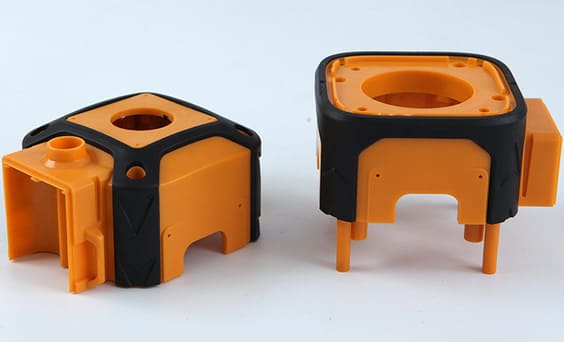
Ja, PETG wordt vaak gebruikt als een rigide substraat voor TPE- of TPU-overmolding in consumentenelektronica, elektrisch gereedschap en medische toepassingen waar een zacht aanvoelend oppervlak nodig is op een helder of rigide basisonderdeel. De chemische compatibiliteit tussen PETG en veel TPE- of TPU-kwaliteiten is goed, wat voldoende hechtsterkte oplevert op het materiaalinterface. Voor de beste resultaten: ontwerp mechanische vergrendelingen in de matrijsgeometrie, zorg voor een goede oppervlaktevoorbereiding van het PETG-substraat en optimaliseer de overmoldingtemperatuur om chemische hechting te bereiken zonder het rigide basisonderdeel te vervormen tijdens het tweede spuitgietproces.
Welke poorttypen werken het beste voor PETG-spuitgieten?
Rand- en waaieringangen zijn de beste keuzes voor PETG, vooral voor transparante onderdelen waar optische kwaliteit belangrijk is. Deze ingangstypen zorgen voor een brede, lage-schuifinvoer die stromingssporen, straalvorming en ingangsverkleuring minimaliseert. Ondergedoken ingangen werken voor kleine onderdelen maar kunnen zichtbaar spoor achterlaten op heldere oppervlakken. Vermijd puntvormige ingangen voor grotere onderdelen omdat de hoge schuifspanning door een kleine opening PETG aantast en waas nabij de ingang veroorzaakt. De ingangsbreedte moet 60–80% van de nominale wanddikte zijn voor optimale vulling.
Hoe begin je met PETG-spuitgieten?
PETG-spuitgieten combineert optische helderheid, slagvastheid en verwerkingsgemak in één veelzijdige heldere thermoplast. Of u nu behuizingen voor medische apparaten, voedselcontactcontainers, displays voor consumentenelektronica of beschermende verpakkingen maakt, PETG biedt een balans die weinig andere transparante kunststoffen evenaren.
De sleutel tot succes is eenvoudig: droog het materiaal goed bij 65–75 °C gedurende 4–6 uur, ontwerp uw matrijs met voldoende ingangen en een uniforme wanddikte, werk binnen het 220–260 °C smeltvenster en houd vast totdat de ingang bevriest. Doe deze vier dingen consequent, en PETG zal u belonen met heldere, taaie, dimensionaal stabiele onderdelen cyclus na cyclus.
Bij ZetarMold verwerken we al meer dan 20 jaar PETG en meer dan 400 andere materialen in onze fabriek in Shanghai. Met 45 machines van 90T tot 1850T en een team van 8 senior engineers kunnen we uw PETG-project van concept tot productie begeleiden. Vraag vandaag een gratis offerte aan en laat ons engineeringteam uw onderdeelontwerp en spuitgietproces optimaliseren.
PETG: PETG staat voor polyethyleentereftalaatglycol — een thermoplastisch polyester-copolymeer dat bekendstaat om zijn helderheid, taaiheid en chemische bestendigheid. De glasovergangstemperatuur bedraagt circa 88 °C (190 °F). ↩
treksterkte van PETG: de treksterkte van PETG is het nominale bereik van 50–55 MPa voor standaard-PETG-kwaliteiten, met een rek bij breuk van 100–150% volgens gegevensbladen van Eastman Chemical. ↩
droogtemperatuur voor PETG: De droogtemperatuur voor PETG verwijst naar de aanbevolen 65–75 °C gedurende 4–6 uur om de vochtigheid onder de 0,04% te brengen volgens de materiaalrichtlijnen van Autodesk Moldflow. ↩