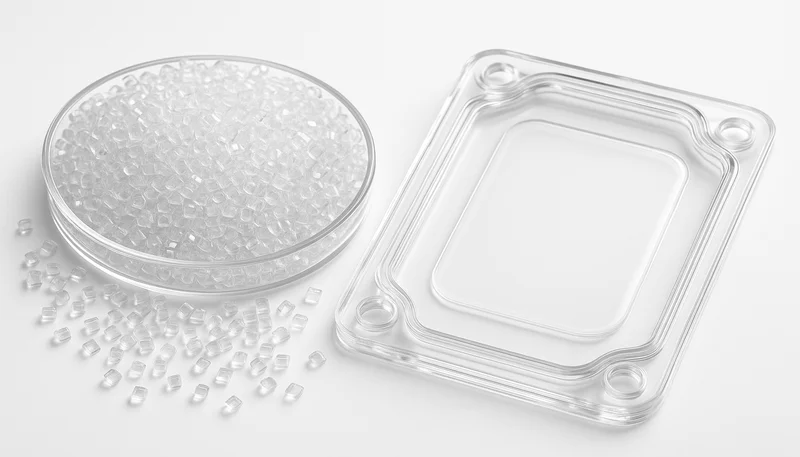
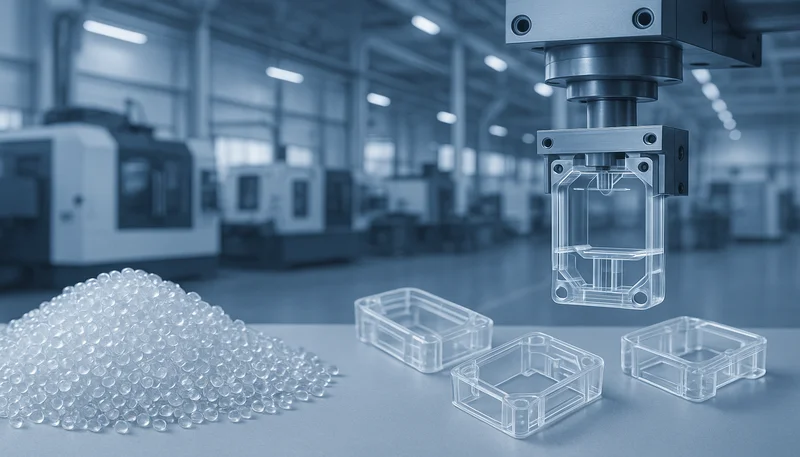
PETGXXQLINK1QXZ (ポリエチレン テレフタレート グリコール) は、ポリカーボネートに匹敵する光学的透明性、ABS に匹敵する耐衝撃性、両方を上回る耐薬品性を備え、他の熱可塑性プラスチックが匹敵するものはほとんどありませんが、そのすべてがより低い加工温度とコストで実現されます。透明な医療機器の筐体、家庭用電化製品のショーウィンドウ、または食品と接触する容器を手にしたことがあれば、それは PETG で成形されている可能性があります。このガイドでは、乾燥や溶融温度からゲート設計や欠陥のトラブルシューティングまで、射出成形フロアで PETG を正常に実行するために知っておくべきことをすべて説明します。
- PETGはガラス転移温度が約88°Cの非晶性共重合体で、成形が容易、強靭、かつ完全透明です。
- PETGは65–75°Cで4–6時間乾燥;水分が0.02%を超えるとスプレー(銀条)や脆化の原因となります。
- 溶融温度ウィンドウ: 220–260 °C。金型温度: 透明性確保の場合は15–40 °C、応力緩和の場合は最大65 °C。
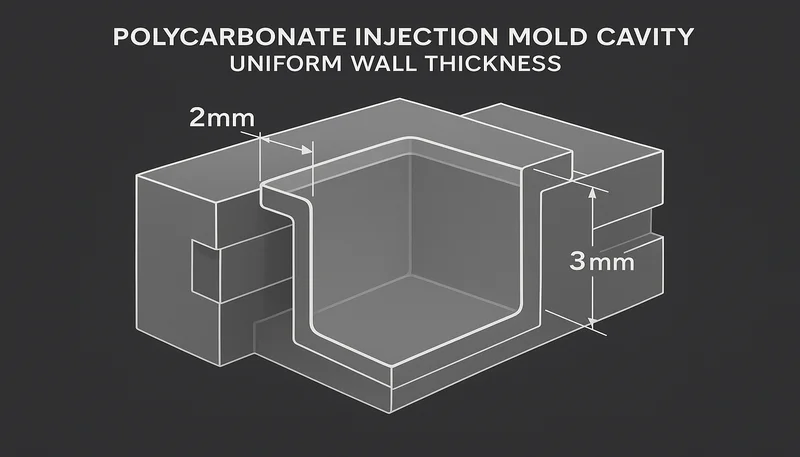
- 肉厚は1.0~3.0mmの範囲に保つべきです;均一な肉厚はシンクマークと内部応力を防止します。
- PETGは食品接触に関するFDA基準を満たし、耐薬品性があり、完全にリサイクル可能です — 医療および消費者向けアプリケーションに理想的です。
PETGとは何か、なぜ射出成形において重要なのか?
PETGは、ポリエチレンテレフタレート(PET)のグリコール変性バージョンです。グリコール共重合体が結晶化を妨げるため、この材料が金型内でどのように挙動するかを理解するためのほぼすべての鍵となります。結晶化して不透明になる傾向のあるPETとは異なり、PETGは非晶質のままです — 透明で、寸法安定性が高く、加工中も扱いやすい特性を持ちます。そのガラス転移温度は約88 °C (190 °F)です。これはポリカーボネート(約147 °C)よりはるかに低いですが、ポリスチレンなどの汎用透明プラスチックよりは高くなっています。
実際、これは、PETG が高い乾燥感度や反りを起こしやすい性質を持たずに、PC に近い光学的透明性を提供することを意味します。また、より低い樹脂温度からそれほど熱くする必要のない金型に冷却するため、射出成形 サイクル タイムも短縮されます。透明で丈夫な耐薬品性の部品を必要とし、成形ウィンドウを広く保ちたいメーカーにとって、多くの場合、PETG が最初の相談となります。
この材料は持続可能性の観点からも魅力的です。PETGはリサイクル可能(ほとんどのPETストリームではSPI樹脂識別コード1)であり、多くのグレードは直接食品接触についてFDA準拠です。使い捨て製品や医療用包装に対する規制圧力が強まる中、PCのコストをかけずに食品接触および医療グレード基準を満たす透明熱可塑性プラスチックを有することは、真の利点となります。
PETGの主要な材料特性は何か?
PETGの主な材料特性には、ガラス転移温度約88 °C、引張強度50–55 MPa、光線透過率85–92 %があります。バレル温度調節器に温度を設定する前に、PETGの挙動を左右する数値を理解する必要があります。以下に、生産現場で特に重要な特性をまとめます。
| プロパティ | 値 | 備考 |
|---|---|---|
| 密度 | 1.27 g/cm3 | 中程度; 多くのエンジニアリングプラスチックより軽量 |
| ガラス転移温度 (Tg) | 約88 °C(190 °F) | 非晶性;明確な融点なし |
| 溶融温度範囲 | 220–260 °C | 280°Cを超えないように注意(分解防止のため) |
| 金型温度範囲 | 15–65 °C | 低い=透明度が高い;高い=応力が少ない |
| 引張強度 | 50–55 MPa | ABSに匹敵、PCより低い |
| 破断伸度 | 100–150 % | 高延性 — 脆性破壊に耐性 |
| 曲げ弾性率 | ~2,100 MPa | 構造部品に十分な剛性 |
| アイゾットノッチ衝撃強度 | 約800 J/m | アクリルをはるかに上回る;PCに近い |
| 光伝送 | 85–92 % | 光学透明度に近い |
| 吸湿性 | 0.2–0.3 % | 低いが、乾燥は依然必要 |
高い伸びと優れた PETG引張強さXXQLINK1QXZ (50 ~ 55 MPa) の組み合わせが、PETG を他の透明プラスチックと区別するものです。アクリル (PMMA) はより多くの光を透過しますが、衝撃を受けると割れます。ポリカーボネートはより丈夫ですが、コストが大幅に高く、湿気や化学的攻撃に対してはるかに敏感です。 PETG はその中間に位置しており、私たちの経験から言えば、現実世界のほとんどのアプリケーションが実際に存在するのはその中間です。2
PETGを射出成形用にどのように準備しますか?
PETG は吸湿性があり、ナイロンやポリカーボネートほどではありませんが、乾燥機を使用しないとコストがかかるほどです。目標含水率は 0.02 重量%未満です。当店では、PETG を除湿ホッパードライヤーで 65 ~ 75 °C で 4 ~ 6 時間乾燥させ、運転中はホッパーの温度を一定に保ちます。この PETGの乾燥温度XXQLINK1QXZ は重要です。熱すぎるとペレットがくっつきます。寒すぎると目標の湿度レベルに達しません。3
"乾燥が不十分なPETG樹脂は、ポリマー主鎖の加水分解により、シルバーストリークが発生し、衝撃強度が低下します。"True
その通りです。溶融体に含まれる水分が蒸気気泡を発生させ、表面に銀色の筋を作ります。加水分解によりポリマー鎖のエステル結合も切断され、靭性と伸びが永久的に低下します。
「PETGは吸湿性が非常に低いため、射出成形前に乾燥する必要がない。」False
誤り。PETGはナイロンより吸湿量は少ないものの、0.02%を超える水分はスプレーマーク・気泡・衝撃強度低下を引き起こします。成形前には必ず65〜75°Cで4〜6時間乾燥してください。
乾燥工程を省略または短縮すると以下の問題が発生します:溶融樹脂内の水蒸気膨張によるスプレーマーク(銀色の筋)、エステル結合の加水分解による衝撃強度低下、肉厚部の気泡・空洞、溶着部の脆化、ショット間の重量バラつきと寸法変動。
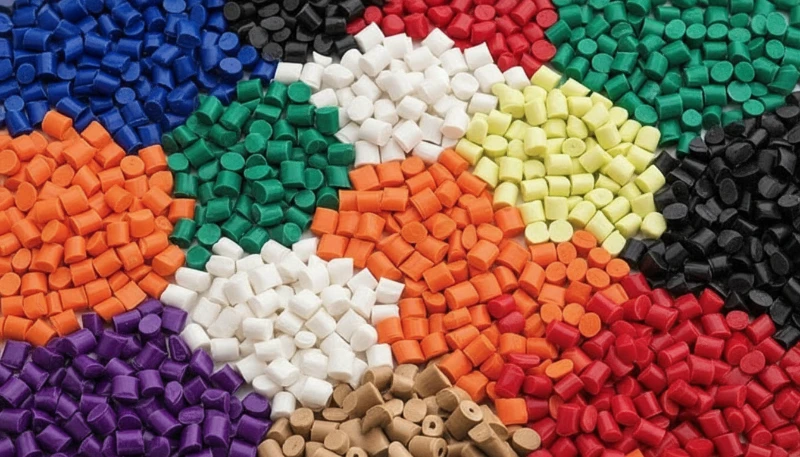
簡易な現場テスト:パージ時にノズルからポップ音や発泡が見られる場合、PETGは湿っています。停止し、乾燥済み材料を再投入し、バレルを徹底的にパージしてください。乾燥にかかるコストは、廃棄コストよりも常に安価です。着色剤や添加剤の濃縮物(マスターバッチ)も乾燥している必要があります。PETGの加工温度では、カラーペレット内の残留水分も同様の欠陥を引き起こします。
PETG射出成形の最適なパラメータは何ですか?
PETGは比較的成形しやすい材料であり、それが広く使用されている理由の一つです。ただし、「成形しやすい」からといって、基本条件を無視できるわけではありません。以下に、当社がPETGの各案件で調整する条件と、さまざまな製品形状で安定した結果が得られる範囲を示します。
| パラメータ | 推奨範囲 | ヒント |
|---|---|---|
| バレル後部ゾーン | 210–230 °C | 早期溶融を避けるため低めに設定 |
| バレル中部ゾーン | 230–250 °C | 一次溶融ゾーン |
| シリンダー前部ゾーン/ノズル | 240–260 °C | 280 °Cを超えないでください |
| 金型温度 | 15–40 °C(透明性確保)/40–65 °C(応力緩和) | 冷却温度が低いほど表面は透明になる |
| 射出速度 | 中程度〜高速 | 薄肉部でのためらい跡を避ける |
| 保持圧力 | 射出圧力 40~70 % | ゲートが凍結するまで保圧 |
| 保持時間 | 3~8秒(肉厚による) | ゲートシールは重要です |
| 冷却時間 | 15〜40秒(肉厚に依存) | 均一な肉厚 = 短いサイクル |
| 背圧 | 5–10 bar | 低〜中程度。過剰なせん断はPETGを劣化させます |
| スクリュースピード | 40–80 RPM | 低速設定でせん断発熱を低減 |
実用的なヒント:PETGは比較的広い加工ウィンドウを持ちますが、そのウィンドウの端では異なる結果が得られます。低温側(220〜230 °C)では、透明性が向上し、黄変リスクが低減しますが、薄肉部分の充填が困難になる場合があります。高温側(250〜260 °C)では、流動性が劇的に向上しますが、滞留時間が長くなると熱劣化が起こり、材料は黄変し、衝撃強度が低下し始めます。ほとんどの部品では、240〜250 °Cが最適な領域です。
PETGでは、多くの成形業者が認識している以上に射出速度が重要です。PETGは非晶質であるため、明確な融点がなく、ある範囲で徐々に軟化します。高速射出により、材料の先端部が凍結し始める前に、キャビティ内を均一に流動させることができます。薄肉部品(1.5 mm未満)では、通常、最大射出速度の70〜90%で運転します。厚肉部品では、ジェッティングやエアトラップを避けるため、40〜60%に速度を落とします。
PETG成形の問題の多くは、保圧と保圧時間に起因します。PETGは離型温度では「軟らかい」材料であり、ゲートが固化する前に保圧を解除すると、反り、ヒケ、寸法変化が生じます。ゲートシール試験(保圧時間を段階的に延ばし、重量が安定するまで成形品を計量する試験)は、金型ごとに一度実施する価値があります。当社工場では、肉厚3 mm未満のPETG成形品の大半は、4–6秒の保圧時間で対応できることを確認しています。
"最適な保圧時間を決定するため、新規のPETG金型ごとにゲートシール試験を実施することを推奨します。"True
その通りです。ゲート凍結時間は、肉厚、ゲートサイズ、金型温度によって変化します。保圧時間を段階的に延長し、重量が安定するまで部品を計量することで、一貫した部品品質に必要な最小保圧時間がわかります。
"PETGは、キャビティを完全に充填するため、常に可能な限り高い溶融温度で成形すべきです。"False
誤りです。より高い溶融温度は流動性を向上させますが、280 °Cを超えると熱劣化、黄変、衝撃強度の低下を引き起こします。推奨範囲は220〜260 °Cであり、ほとんどの用途では240〜250 °Cが最適です。
PETG部品の金型はどのように設計すべきですか?
PETGの金型設計は、均一な1〜3 mmの肉厚、2〜3度の抜き勾配、およびクリーンな離型と光学的透明性のための低せん断ゲートタイプによって決定されます。
肉厚と収縮
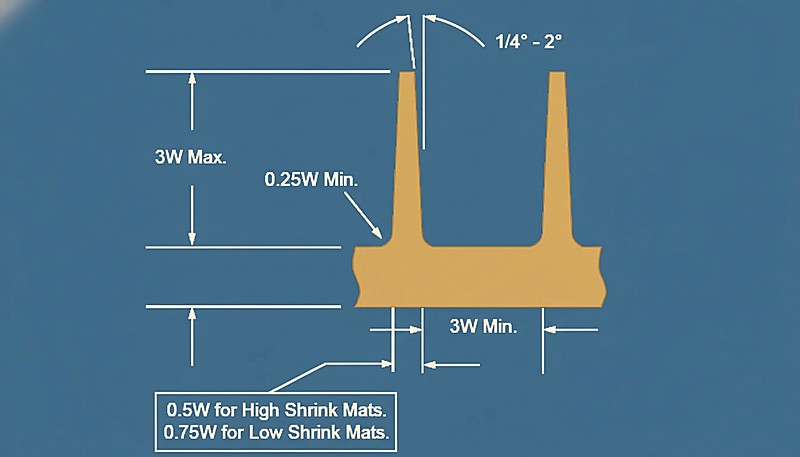
肉厚は1.0〜3.0 mmを目標とし、可能な限り均一に保ってください。PETGは結晶化しないため、ナイロンなどの半結晶性材料よりも収縮は少ないですが、それでも収縮します(0.3〜0.7%)。不均一な肉厚は収縮の差を生み、ヒケや反りとして現れます。構造上の理由で肉厚が必要な場合は、肉盛りではなく、リブで中抜きすることが常に望ましいです。
ゲート設計と配置
透明PETG部品において、ゲートの配置と種類は光学品質に直接影響する。エッジゲートやファンゲートは、ジェッティングや流動跡を最小限に抑える広く低せん断の流入点を提供するため、最も一般的な選択肢である。サブマリン(トンネル)ゲートは小部品に有効だが、透明部品で目立つバスティジを残す可能性がある。数グラムを超える部品にはピンポイントゲートは避けること ― 小オリフィスを通る高せん断はPETGを劣化させ、ゲート付近にヘイズを生じさせる。
ゲートは流動フロントがキャビティ内を均一に移動するように配置すること。流動経路が不均一な場合、透明材料内に溶接ラインや流動跡が生じる。光学品質が重要なPETG部品では、鋼材加工前にMoldflowシミュレーションを行うことが有益な投資となる。
抜き勾配と表面仕上げ
標準的な抜き勾配は片側1~2°だが、PETGは深絞り部では材料が取り出し温度で比較的柔らかいため、やや大きめの勾配(2~3°)が有効である。抜き勾配不足は透明部品に直ちに目立つ引きずり跡を生む。最高の光学透明度を得るためには、コア及びキャビティ表面を鏡面仕上げ(SPI A-2以上)に研磨すること ― PETGは金型表面性状を忠実に複写する。
ベンチレーション
PETGはPVCやアセタルのような有害ガスを発生しませんが、適切なベンティングは必須です。残留空気は焼けやショートショットの原因となります。0.01〜0.02 mmの標準ベント深さで十分です。形状が複雑な部品では、流動末端部やデッドポケットにベントを追加してください。
PETG射出成形における一般的な欠陥と解決策は何ですか?
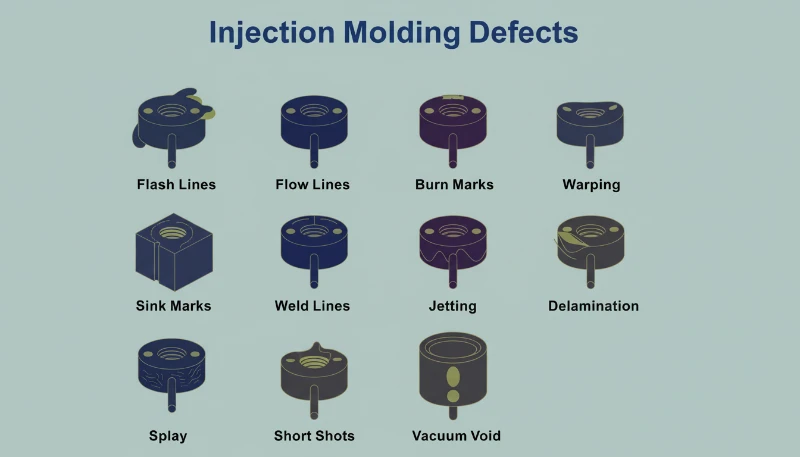
一般的なPETGの欠陥には、スプレーマーク、ヘイズ、シンクマーク、反りなどがあり、適切な乾燥、ゲート設計、保圧によりほとんどが防止可能です。良好なパラメータであっても、PETGには特有の癖があります。生産現場で最も頻繁に目にする欠陥と、実際に効果のある対策を以下に示します。
スプレーマーク(銀条痕)
原因:樹脂中の水分。これはPETGにおける最大の問題です。わずかな水分でも蒸気気泡を発生させ、それが流動先端で破裂し、部品表面に銀色の筋を残します。修正は簡単です:乾燥機の温度と時間を確認してください。乾燥空気の露点が-20°C以下であることを確認します。再生材を使用する場合は、別途予備乾燥を行ってください。再生材は表面積が大きく、バージンペレットよりも速く水分を吸収します。
ヘイズまたは曇り
原因:小さなゲートを通じた高速射出による過剰せん断、汚染、または完全な均質化には低すぎる溶融温度。修正:ゲートをわずかに広げ、射出速度を下げ、バレル温度プロファイルが適切であることを確認します。また、ホッパー内の汚染(特に結晶性材料などの異種樹脂の微量でもPETGに曇りを引き起こします)をチェックしてください。
シンクマーク
原因: 保持圧力または保持時間が不十分であるか、肉厚のばらつきが大きすぎます。 PETG は非晶質で比較的低収縮ですが、厚い切片が適切に梱包されていない場合は依然として沈みます。修正方法: 保持圧力を上げ、ゲートが固化するまで保持時間を延長します。コアリングリブを備えた厚いセクションを再設計します。適切に梱包された 射出成形金型 キャビティでは、ひけが最小限の部品が生成されます。
「PETGは非晶質構造であるため、ナイロンやPOMのような半結晶性プラスチックと比べて収縮率が低く、収縮も均一です。」True
正解です。PETGのような非晶質材料は等方収縮(0.3–0.7 %)しますが、半結晶性材料は1–2.5 %収縮し、方向による大きなばらつきがあります。このため、PETGは厳しい公差で成形しやすくなります。
「PETG部品のヒケは、金型温度を下げるだけで解消できます。」False
誤りです。金型温度は表面仕上げに影響しますが、シンクマークは主に保持圧力不足や冷却中に不均一に収縮する厚肉部によって引き起こされます。修正には保持圧力の増加、保持時間の延長、および厚肉部のコアリングによる再設計が含まれます。
反りとジェッティング
反りは、冷却の不均一、または厚肉部と薄肉部の収縮差によって発生します。PETGは収縮率が低いため有利ですが、肉厚が非対称であったり、金型冷却が不均一であったりすれば、反りは依然として発生します。冷却水路を均等に配置し、固定側と可動側の両方に金型温度調節機を使用してください。肉厚差を避けられない部品では、金型温度をやや高めの50–65 °Cに設定することも検討します。
ジェッティングは、溶融流が制限ゲートを通じてキャビティに速すぎる速度で流入し、壁面接触せずに蛇行してワーム状の表面痕を生じる現象です。対策:初期充填段階での射出速度を低減し、ファンゲートやタブゲートに変更して流入を分散させ、ゲート位置を溶融樹脂が流入直後に壁やコアピンに衝突するように配置します。
どの産業・用途でPETG射出成形が使用されるか?
PETGは、透明性と強靭性が重要視される医療機器、食品包装、民生用電子機器、産業用ガードなどを主に使用されています。その透明性、強靭性、耐薬品性、規制適合性の組み合わせにより、いくつかの厳しい要件を求める産業分野で主要な材料となっています。
医療・ヘルスケア
PETGは、医療機器ハウジング、流体ハンドリング部品、診断機器カバー、ブリスター包装などに広く使用されています。その透明性により、流体レベルや機器状態の視認検査が可能であり、その靭性はアクリルが割れてしまうような落下や衝撃に耐えます。多くのPETGグレードは、医療機器用途におけるUSPクラスVIおよびISO 10993生体適合性要件を満たしています。医療顧客向けにPETGを加工する当社の経験では、光学透明度と滅菌適合性(エチレンオキサイドおよびガンマ滅菌と適合)の組み合わせにより、透明な医療機器筐体のデフォルト選択肢となっています。
食品・飲料包装
FDA準拠のPETGグレードは、透明食品容器、飲料ボトル、デリ用トレー、化粧品包装に使用されます。この材料は耐薬品性に優れ、油や酸に触れても応力亀裂を生じにくく、透明性が店頭での訴求力を高めます。PETとは異なり、PETGは結晶化させずに熱成形と射出成形ができるため、包装メーカーの加工工程を簡素化できます。
民生電子機器および産業用
ディスプレイウィンドウ、LED光拡散板、保護カバー、ウェアラブル機器やガジェットの透明ハウジングなどはすべてPETGを使用しています。PETGはPCと同等の光学透明性を低コストで提供し、適切に安定化されていれば紫外線暴露による黄変も遅くなります。産業用途には、耐衝撃性により高トラフィック環境でアクリルよりもPETGが好まれる、小売ディスプレイ器具、看板、ガード、マシンビジョンウィンドウなどが含まれます。
PETG vs. その他の透明プラスチック — 比較するとどうか?
PETG、ポリカーボネート、アクリル(PMMA)、クリアABSの選択は、透明性、耐衝撃性、コスト、加工要件のバランスによって決まります。以下に各材料の直接比較を示します。
| プロパティ | PETG | ポリカーボネート(PC) | アクリル(PMMA) | クリアABS |
|---|---|---|---|---|
| 光伝送 | 85–92 % | 88–91 % | 92 % | 75–85 % |
| 衝撃強度(アイゾット) | 約800 J/m | 約850 J/m | ~20 J/m | 約300 J/m |
| ガラス転移温度 | 約 88 °C | 約147°C | 約105 °C | 約105 °C |
| 加工温度 | 220–260 °C | 280–320 °C | 200–250 °C | 220–260 °C |
| 湿気感受性 | 中程度 | 高い | 低い | 中程度 |
| 耐薬品性 | グッド | 不良(クラック発生) | 貧しい | 中程度 |
| コスト(相対値) | $$ | $$$ | $ | $$ |
| FDA適合性 | はい(多数グレードあり) | 一部のグレード | 一部のグレード | いいえ |
結論:部品が透明で耐衝撃性・耐薬品性を必要とし、ポリカーボネートほどの極端な耐熱性が不要な場合、PETGが通常最適な選択です。加工性が良く、PCよりコストが低く、優れた耐薬品性を提供します。トレードオフは耐熱性の低さです。70°Cを超える持続温度にさらされる場合は、PCを検討すべきです。
ZetarMoldは生産でPETGをどのように処理しますか?
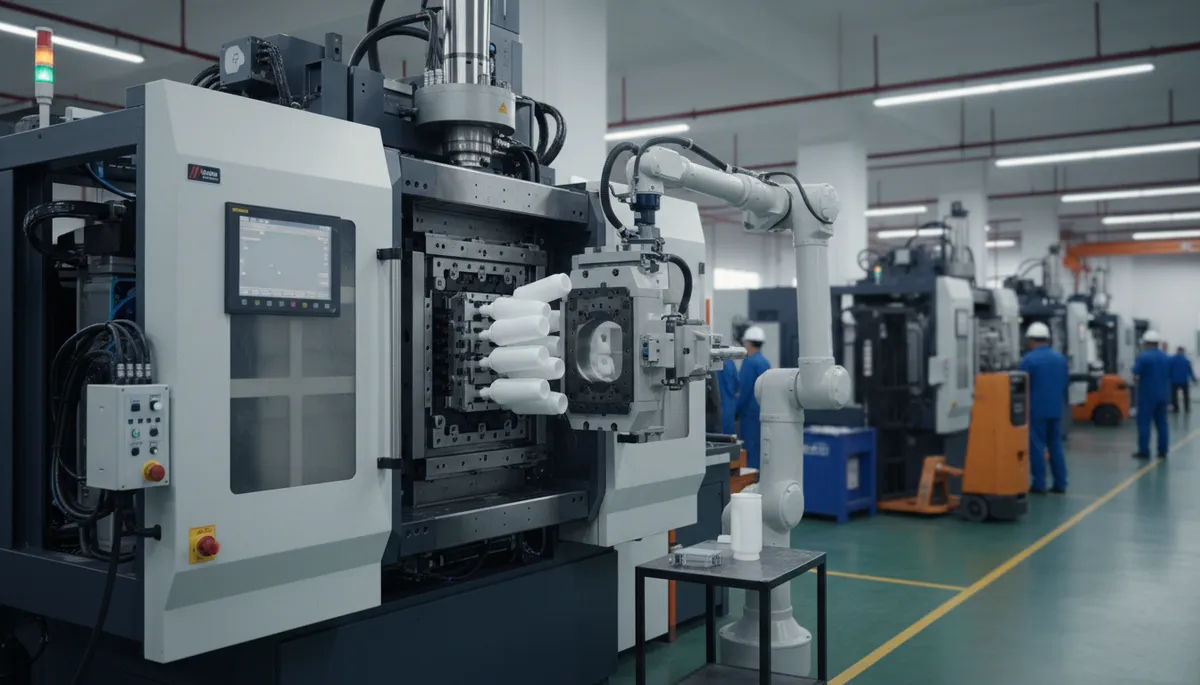
当社の上海施設では、PETGは加工量トップ5の材料の一つです。90トンから1850トンまでの47台の射出成形機を備え、小型医療機器ハウジングから大型産業用ディスプレイカバーまで、PETG部品を扱っています。以下は、過去20年以上にわたり数千サイクルのPETG加工から得た知見です。
| 対応能力 | 仕様 |
|---|---|
| 射出成形機 | 45機種、90T~1850T |
| 材料範囲 | 全主要PETGグレードを含む400以上の材料を加工実績あり |
| エンジニアリングチーム | 10年以上の経験を持つシニアエンジニア8名 |
| 生産スタッフ | 生産作業員120人以上 |
| 月間金型生産数 | 月間100セット以上の射出成形金型 |
| 品質システム | ISO 9001 / 13485 / 14001 / 45001認証取得 |
| 国際チーム | グローバルなコミュニケーションに対応できる英語堪能者30名以上 |
乾燥管理は必須です。当社ではPETGの成形前に必ず、除湿ホッパードライヤーを70 °Cで最低4時間運転します。材料担当者は、PETGの乾燥を省けば最低でも最初の20ショットが廃棄になることを理解しています。ゲート設計は一般に考えられている以上に重要です。透明PETG部品では、せん断を最小限に抑えて均一なフローフロントを形成するため、ほぼ必ず肉厚の60–80 %の幅を持つファンゲートまたはエッジゲートを指定します。
金型温度管理が品質を左右します。当社では、ほとんどのPETG部品に対して水循環式金型温度調節機を25–30 °Cに設定しています。これにより、表面の透明性とサイクルタイムを最適に両立できます。肉厚差が大きい部品では、50 °Cまで上げます。医療および光学用途では、残留内部応力を緩和するため、PETG部品を65–70 °Cで30–60分間アニールする場合があります。これにより寸法安定性が向上し、化学環境での応力亀裂リスクが低減します。
新しい PETG アプリケーションを開発していて、材料の選択、金型設計、プロセスの最適化についてサポートが必要な場合は、お問い合わせください。私たちが学んだことを喜んで共有します。当社のチームは 24 時間以内に応答し、最初の DFM レビューから運用開始までの包括的な 調達 サポートを提供できます。
PETG射出成形に関するよくある質問
よくある質問
PETGの射出成形温度は何度ですか?
PETGの射出成形では通常、溶融温度を220–260 °C、透明性が重視される部品の金型温度を15–40 °Cに設定します。冷却中に追加の応力緩和が必要な部品では、金型温度を最大65 °Cに設定します。材料を最適に均質化し、溶融品質を安定させるには、バレル温度を後部の210 °Cからノズルの250 °Cまで段階的に設定します。280 °Cを超えると熱劣化、黄変、耐衝撃性低下の恐れがあるため、推奨範囲を守り、量産中は溶融樹脂の色を継続的に注意深く監視してください。
PETGは射出成形前に乾燥が必要ですか?
はい、必須です。成形を開始する前に、PETGを65–75 °Cで4–6時間乾燥し、含水率を重量比0.02 %未満に下げる必要があります。PETGはナイロンやポリカーボネートほど吸湿性が高くありませんが、残留水分は部品表面のシルバーストリーク、衝撃強度の大幅な低下、厚肉部に閉じ込められた気泡、ショット間の寸法ばらつきを引き起こします。露点-20 °C未満の除湿式ホッパードライヤーを使用し、周囲の水分の再吸収を防ぐため、生産運転中はホッパーの温度を維持してください。
PETGは食品接触用途に使用できますか?
多くのPETGグレードは、食品への直接接触用途に関するFDA 21 CFR §177.1630に適合しており、食品容器、飲料ボトル、デリ用トレー、台所用品に使用できます。ただし、すべてのPETG配合が食品グレード基準で製造されているわけではないため、食品接触用途への採用を決定する前に、必ず材料サプライヤーに該当グレードの適合証明書を確認してください。さらに、一部のPETGグレードはEU Regulation 10/2011に基づく欧州連合の食品接触規則にも適合しており、より広い国際市場への展開と複数地域での規制適合に対応できます。
成形PETG部品に曇りが生じる原因は?
PETG成形品の曇りは通常、小さなゲート開口部から高速で射出することによる過度のせん断、材料を完全に均質化するには不十分な溶融温度、またはホッパーやバレルから混入した異種樹脂による汚染が原因です。曇りを解消するには、ゲートを拡大して溶融樹脂のせん断応力を低減し、ノズル部が240–250 °Cになるようバレル温度プロファイルが適切に設定されていることを確認し、初期充填段階の射出速度を下げ、ホッパーと供給系を徹底的に清掃して前回の生産ロットによる交差汚染を除去します。
透明部品では、PETGとポリカーボネートにどのような違いがありますか?
PETGはポリカーボネートと同等の光学的透明性を、はるかに低い材料コストと大幅に優れた加工性で実現します。PETGの溶融温度は220–260 °Cで、PCの280–320 °Cより低く、乾燥条件もそれほど厳しくありません。また、ポリカーボネートに応力亀裂を生じさせる多くの薬品にも耐性があります。一方、耐熱性ではポリカーボネートが優れており、TgはPETGの88 °Cに対して147 °Cで、PCの絶対衝撃強度もわずかに高くなります。使用温度70 °C未満のほとんどの用途では、透明射出成形品の総合的な価値はPETGの方が高くなります。
PETG射出成形の一般的な収縮率は?
PETGの成形収縮率は0.3–0.7 %で、これは非晶性熱可塑性樹脂として一般的な値であり、ナイロンの1.0–2.0 %やアセタールの1.8–2.5 %といった半結晶性材料より大幅に低くなります。この低く等方的な収縮率により、金型設計で複雑な収縮補正を行わなくても、PETGは厳しい寸法公差で比較的容易に成形できます。部品形状全体で均一な肉厚を維持し、ゲートシールまで適切な保圧をかけることで、収縮差を最小限に抑え、成形品の反りを防止できます。
PETGにTPEまたはTPU材料をオーバーモールドできますか?
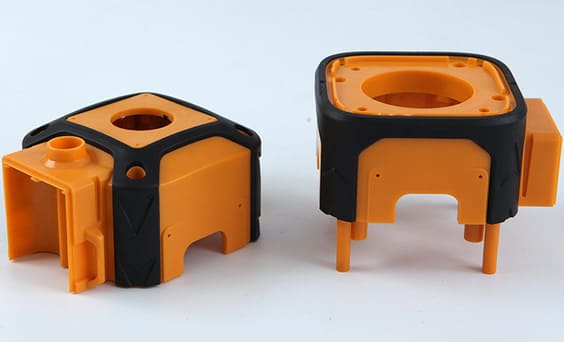
はい。PETGは、透明または硬質のベース部品にソフトタッチ表面が必要な家電、電動工具、医療機器用途において、TPEまたはTPUのオーバーモールディング用硬質基材として一般的に使用されます。PETGと多くのTPEまたはTPUグレードは化学的適合性が良好で、材料界面に十分な接着強度が得られます。最良の結果を得るには、金型形状に機械的インターロックを設け、PETG基材の表面を適切に前処理し、第2ショット時に硬質ベース部品を変形させることなく化学結合が得られるよう、オーバーモールド温度を最適化してください。
PETG射出成形に最適なゲート形式は何ですか?
PETGにはエッジゲートとファンゲートが最適であり、特に光学品質が重視される透明部品に適しています。これらのゲートは幅広く低せん断の流入口を形成し、フローマーク、ジェッティング、ゲートブラッシュを最小限に抑えます。サブマリンゲートは小型部品に使用できますが、透明面に目立つゲート跡が残る場合があります。大型部品では、小さな開口部を通過する際の高せん断によってPETGが劣化し、ゲート付近に白濁が生じるため、ピンポイントゲートは避けてください。最適な充填を得るには、ゲート幅を公称肉厚の60–80 %とします。
PETG射出成形を始めるには?
PETG射出成形は、光学的透明性、耐衝撃性、加工のしやすさを、汎用性の高い透明熱可塑性樹脂で実現します。医療機器ハウジング、食品接触容器、家電ディスプレイ、保護包装のいずれを成形する場合でも、PETGは他の透明樹脂では得にくい特性バランスを備えています。
成功の要点は明確です。材料を65–75 °Cで4–6時間適切に乾燥し、十分なゲートと均一な肉厚を備えた金型を設計し、220–260 °Cの溶融温度範囲で成形し、ゲートが固化するまで保圧します。この4点を一貫して実行すれば、PETGにより、成形サイクルを重ねても透明で強靭かつ寸法安定性に優れた部品を得られます。
ZetarMold では、上海の施設で 20 年以上にわたって PETG および 400 以上のその他の材料を稼働させてきました。 90T から 1850T までの 45 台のマシンと 8 人の上級エンジニアのチームを擁し、お客様の PETG プロジェクトをコンセプトから生産に移行するお手伝いをいたします。今すぐ無料見積もりを入手し、当社のエンジニアリング チームが部品の設計と成形プロセスを最適化しましょう。