- Maak spuitgietmallen elke 50.000–100.000 schoten schoon, of wanneer defecten zoals flits, brandvlekken of oppervlaktewaas verschijnen.
- Volg een vijf-staps sequentie: droog reinigen, solvent wipe, diepe reiniging, roestbehandeling, dan lubricatie.
- Gebruik altijd messing borstels op gepolijste holte-oppervlakken — nooit staaldraad of schuurpads.
- Dry-ice stralen verwijdert zware koolstofafzettingen zonder demontage of chemisch afval in 30–60 minuten.
- Registreer elke schoonmaakactie met datum, methode en technicusnaam om een voorspellend onderhoudsschema op te bouwen.
U bent drie uur bezig met een productierun wanneer de kwaliteitsmedewerker naar u toe loopt en een onderdeel op tafel legt. Daar is hij — een vage bruine streep over het oppervlak, op het eerste gezicht nauwelijks zichtbaar. Twee ploegen geleden maakte de matrijs nog perfecte onderdelen. Nu heeft elk vijfde shot een brandvlek. U legt de lijn stil, verwijdert de matrijs en ontdekt wat u al vermoedde: de ontluchtingen zitten volledig verstopt met verkoolde hars. Een schoonmaakklus van 30 minuten die twee dagen geleden had moeten worden uitgevoerd, heeft u zojuist vier uur stilstand en een volle bak uitval gekost.
Voor lezers die opties voor spuitgieten1 vergelijken, legt dit artikel het verband tussen de spuitgietmatrijs2, het gedrag van kunststofmaterialen, leveranciersbeoordeling en beslissingen over kwaliteitscontrole die bepalen of een project van ontwerp naar reproduceerbare productie kan gaan.
Onze 8 senior engineers — elk met 10+ jaar ervaring in matrijsonderhoud — volgen een kwaliteitsworkflow in 6 stappen die begint met de ingangsinspectie van de matrijs en eindigt met de uitgaande kwaliteitscontrole. We hebben gezien hoe het overslaan van de oppervlakte-inspectie na reiniging leidt tot gemiste micropitting, die later braamdefecten op productieonderdelen veroorzaakt.
In onze fabriek draaien 47 machines voor spuitgieten in drie ploegendiensten. We hebben door schade en schande geleerd dat matrijsreiniging niet iets is wat je pas doet wanneer er problemen ontstaan, maar een discipline die in elk productieschema thuishoort. Deze gids behandelt het exacte vijfstappenproces van onze technici, de keuze van de juiste reinigingsmethode en de fouten die matrijzen beschadigen, zelfs wanneer operators denken dat ze het goed doen.
Waarom het reinigen van spuitgietmatrijzen belangrijk is voor de kwaliteit van onderdelen
Schimmelverontreiniging is de belangrijkste oorzaak van onderdeeldefecten bij spuitgieten. Residuen hopen zich op uit vier bronnen: afgebroken polymeerafzettingen (koolstof en was), ophoping van vormlosmiddel, migratie van smeermiddel uit uitstootpennen en oxidatie op onbeschermde stalen oppervlakken.
| Defect | Hoofdoorzaak | Impact op productie |
|---|---|---|
| Ontwerpen voor spuitgieten draait fundamenteel om het begrijpen van hoe gesmolten plastic zich gedraagt in een stalen holte. Elke ontwerpbeslissing — wanddikte, ontlophoeken, ribben, plaatsing van de ingang, materiaalkeuze — heeft een direct, meetbaar effect op de onderdeelkwaliteit, de cyclustijd en de gereedschapskosten. | Gecarboniseerde kunststof in ventilatiekanalen (dieseleffect) | Cosmetische afkeuring, carbonpitting op cavity |
| Braamvorming | Frettingafzettingen op scheidingsvlakken | Secundaire trimming, dimensionaal afval |
| Onvolledige vulling | Blokkeerde ventilatiekanalen of gates | 100% afval, lijnstop |
| Oppervlaktewaas | Losmiddel of koolstoflaag op de holte | Glansverlies, klachten van klanten |
| Moeilijke uitwerping | Residu op uitwerppennen of holtewanden | Pinbreuk, onderdeelschade |
Onderhoudsgegevens uit de industrie tonen aan dat matrijzen met een gedocumenteerd preventief onderhoudsschema 2–3× langer meegaan dan matrijzen die pas worden gereinigd wanneer defecten ontstaan. Voor een matrijs ter waarde van $20,000–$80,000 vertaalt die factor zich direct in lagere kosten per onderdeel en een snellere afschrijving van de matrijs. Matrijsreiniging is geen kostenpost, maar een strategie om kapitaal te beschermen.
"Geplande matrijsreiniging na 50,000–100,000 shots voorkomt het merendeel van de oppervlaktegerelateerde onderdeeldefecten voordat ze de kwaliteitscontrole bereiken."True
Na de eerste 50,000 shots bouwt residu zich sneller op doordat afbraakproducten van polymeren en uitgassende additieven zich op de ontluchtingsoppervlakken ophopen. Reiniging met dit interval verwijdert verontreiniging voordat deze zich chemisch aan het matrijsstaal3 bindt, houdt caviteitsoppervlakken binnen de specificatie voor oppervlakteafwerking en handhaaft de ontluchtingsgeometrie op de ontworpen diepte van 0.01–0.03 mm.
"Een spuitgietmatrijs hoeft pas te worden gereinigd wanneer zichtbare gebreken op onderdelen verschijnen."False
Tegen de tijd dat defecten zichtbaar zijn, is de vorm al voldoende verontreinigd om afval te produceren — en de verontreiniging kan chemisch aan de holtestaal zijn gaan hechten. Onzichtbare residulagen verslechteren nog steeds de oppervlakteafwerking Ra-waarden en beperken de ventilatiestroom, wat stille non-conformiteiten veroorzaakt die aan visuele inspectie ontsnappen. Proactieve geplande reiniging kost een fractie van de stilstandtijd en afvalverlies van reactieve noodrevisie.
Wanneer schoonmaken: Triggers en frequentierichtlijnen
Reinig een spuitgietmatrijs bij 50.000–100.000 cycli voor standaard technische thermoplasten, of onmiddellijk wanneer onderdeeldefecten optreden. Het juiste interval hangt af van het harstype, de complexiteit van het onderdeel en waargenomen kwaliteitsgegevens, niet van één universeel getal. Sterk gevulde harsen en corrosieve materialen vereisen kortere intervallen. Alleen met een goed bijgehouden reinigingslogboek kunnen nauwkeurige, matrijsspecifieke PM-schema’s worden opgesteld. Inzicht in hoe parameters van het spuitgietproces — harstemperatuur, vulsnelheid en nadruk — de vorming van afzettingen beïnvloeden, helpt het juiste reinigingsinterval voor elk gereedschap vast te stellen.
| Activeringspunt | Vereiste actie | Geschatte stilstand |
|---|---|---|
| Elke 50.000–100.000 shots (standaard kunststoffen) | Volledige 5-staps preventieve reiniging | 4–8 uur |
| Elke 25.000–50.000 schoten (GF/CF-gevuld of FR-harsen) | Volledige 5-staps reiniging + ventilatiecontrole | 4–8 uur |
| Brandsporen op onderdelen | Ventilatie reiniging + holte oplosmiddel afvegen | 1–2 uur |
| Flash bij de splitsingslijn | Scheidingsvlak inspectie en opnieuw stenen | 1–3 uur |
| Oppervlak haze of glansverlies | Oplosmiddel reiniging + holtepolijstbeoordeling | 2–4 uur |
| Na stilstand >2 weken | Anti-corrosie behandeling + controle van de smering | 1–2 uur |
| Na PVC of brandvertragende run | Direct solvent reinigen + ventilatie spoelen | 2–3 uur |
Met glasvezel (GF) en koolstofvezel (CF) gevulde harsen laten slijtende deeltjes achter in ontluchtingskanalen en op holte-oppervlakken, waardoor elke 25.000–50.000 schoten reiniging vereist is. PVC geeft zoutzuurgas af dat onbeschermd matrijsstaal binnen enkele uren bij bedrijfstemperatuur aantast. Vlamvertragende harsen geven corrosieve gassen af (fosfor- en broomverbindingen) die gepolijste oppervlakken etsen. Voor deze materialen behandelen we het einde van elke productierun als een reinigingstrigger — volledige reiniging met oplosmiddel voordat de matrijs wordt opgeslagen.
5-staps reinigingsproces voor spuitgietmatrijzen
De vijfstaps malreinigingsprocedure is: droog reinigen bij 40–60°C, solvent afvegen, diep reinigen, corrosiebehandeling en smering. Elke stap is vereist — het overslaan van de corrosiebehandeling of de laatste smering na reiniging maakt de mal kwetsbaar voor corrosie en versnelde slijtage tijdens de volgende productierun.
Stap 1: Droogreiniging
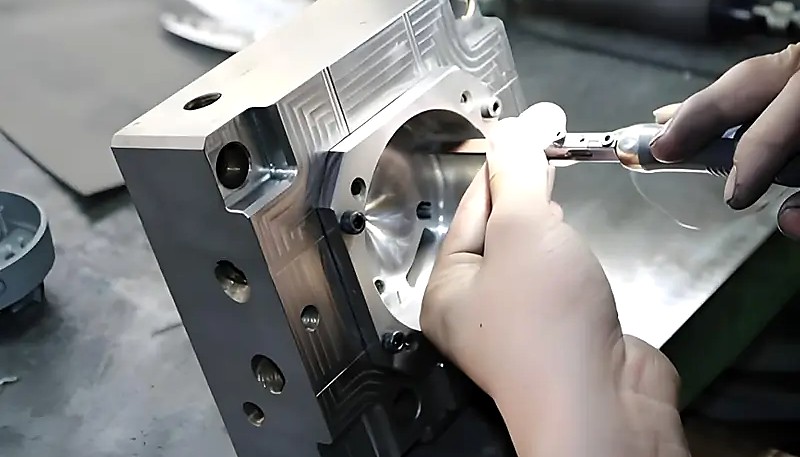
Terwijl de mal nog warm is bij 40–60°C na de laatste injectie, gebruik een zachte koperen borstel of houten prikker om losse polymerflash, gate-resten en oppervlakteafzettingen van niet-gepolijste zones te verwijderen. Gebruik nooit staalborstels op gepolijste holtevlakken — koper is zacht genoeg om te reinigen zonder krassen te veroorzaken op gehard gereedschapstaal. Gebruik gefilterde, olievrije perslucht met maximaal 0,3 MPa om residu uit ventilatiekanalen, ejectorpinholen en splitsingslijnrecessen te blazen. Een vacuüm is beter dan perslucht voor afgesloten zones om te voorkomen dat deeltjes naar al gereinigde oppervlakken worden verdeeld.
| Gereedschap / Materiaal | Toepassing | Belangrijke beperking |
|---|---|---|
| Messenborstel (zachte haren) | Niet gepolijste holtegebieden, runner-systeem | Nooit gebruiken op gepolijste of spiegelgladde oppervlakken |
| Houten prikker / bamboespies | Diepe hoeken, ribbasis, fijne holtedetails | Geen risico voor krassen — veilig op elk oppervlak |
| Stofvrije stofzuiger | Ontluchtingskanalen, uitstootpen gaten, scheidingslijn spleten | Voorkeur boven perslucht in afgesloten ruimtes |
| Gefilterde perslucht (≤0,3 MPa) | Opwaaiend vuil uit ventilatiekanalen en openingen | Moet olievrij en vochtvrij zijn |
| Wattenstaafjes | Precisiezones, tekstgravures, O-ringgroeven | Eenmalig gebruik — niet dubbeldippen |
Stap 2: Oplosmiddel Reiniging
Breng een matrijsveilig oplosmiddel aan op een stofvrije doek of schuimapplicator. Isopropylalcohol (IPA) met 99% zuiverheid is de veiligste algemene keuze voor gepolijste en gecoate oppervlakken. Aceton is effectief op niet-gepolijst staal maar tast bepaalde chroom- en PVD-coatings aan. Speciaal geformuleerde matrijsreinigers zijn de gouden standaard voor productieomgevingen — ze zijn pH-gebalanceerd voor specifieke staalsoorten en verontreinigingschemie. Veeg holte-oppervlakken in één richting — nooit in cirkels schrobben, wat slijtende deeltjes van de doek in het gepolijste staal drukt in een karakteristiek zwermpatroon zichtbaar bij 10× vergroting.
Vermijd gechloreerde oplosmiddelen zoals trichloorethyleen of methylenchloride op chroom-, nickel- of PVD-gecoat oppervlakken — ze tasten de coating aan en versnellen delaminatie. Controleer altijd de compatibiliteit van het oplosmiddel met uw matrijsstaaltype en oppervlaktebehandeling voordat u het voor de eerste keer op productiegereedschap gebruikt. Laat het oplosmiddel volledig verdampen voordat u naar stap 3 gaat.
Stap 3: Diep reinigen (droogijs of ultrasoon)
Voor zware koolstofafzettingen, verbrande hars of ontoegankelijke gebieden voor handmatige reiniging zijn twee geavanceerde methoden beschikbaar. Droogijsstralen gebruikt vaste CO₂-pellets die met hoge snelheid worden versneld — ze sublimeren bij contact en tillen verontreinigingen op zonder secundair afval of vocht achter te laten. Het kan worden uitgevoerd met de matrijs in de pers, vereist geen demontage en produceert geen chemisch afval. Het reinigen van een eenholte matrijs duurt 30–60 minuten. Dit is de voorkeursmethode voor diepe reiniging bij grootschalige productie omdat het stilstandtijd minimaliseert.
Ultrasone reiniging dompelt gedemonteerde matrijsscomponenten onder in een verwarmde reinigingsoplossing van 60–80°C, geagiteerd door 20–40 kHz ultrasone golven. Cavitatiebellen dringen door in fijne ontluchtingsgleuven van 0,01–0,03 mm diepte, uitstootpen spelinggaten en koelkanalen inlaten — oppervlakken waar geen handgereedschap bij kan. Plan ultrasone reiniging in bij grote revisies, meestal elke 500.000 schoten of jaarlijks. Demontage voegt 2–4 uur toe aan de totale reinigingstijd, dus deze methode is voorbehouden aan gepland onderhoud in plaats van routine-PM.
Stap 4: Roestbehandeling en oppervlakte-inspectie
Na reiniging inspecteer alle holteoppervlakken, scheidingslijnvlakken en ejector-pin openingen onder fel strijklicht of met een 10× loupe. Voor licht oppervlakroest (witachtige oxidatiefilm, geen putjes), gebruik een fosforzuur-gebaseerd roestverwijderingsmiddel, laat 5–15 minuten inwerken volgens fabrikantinstructies, neutraliseer met schoon water, droog direct met gefilterde perslucht en breng roestpreventieve olie binnen 15 minuten aan. Voor matige putjes is mechanische polijsting met 400 tot 2000 korrelpapier, vervolgens 6 µm en 1 µm diamantpaste nodig om het originele oppervlakafwerking Ra te herstellen.
| Ernst | Beschrijving | Behandelingsmethode |
|---|---|---|
| Licht (oppervlakfilm) | Wittige oxidatie, geen zichtbare putjes | Corrosieverwijderaar + corrosiepreventieve olie — geen polijsten nodig |
| Matig (oppervlakkige putjes) | Roodachtige vlekken, Ra-waarde verslechterd | Roestverwijderaar + 1200–2000 korrelpapier + 1 µm diamantpasta |
| Ernstig (putvorming >0.1 mm) | Zichtbaar staalverlies, dimensionale impact | Matrijswerkplaats: TIG-lasreparatie of EDM-hervonken |
| Fretting (scheidingslijn) | Microbraamsels, afdichtingsfalen onder klemkracht | Opnieuw stenen met fijn wetsteen, opnieuw lappen tot vlakheid |
Stap 5: Smering en Corrosiebescherming
Breng een dunne, gelijkmatige laag matrijsgraadsmeermiddel aan op alle bewegende componenten: uitstoterpennen en -bussen, geleidingspennen en geleidingsbussen, schuifrails en hefstangen. Gebruik het type smeermiddel dat voor uw matrijs is gespecificeerd — PTFE-gebaseerd droog smeermiddel voor medische of voedselcontactmatrijzen, siliconengebaseerde vet voor matrijstemperaturen boven 100°C en lithiumvet voor standaardproductie onder zware mechanische belasting. Breng spaarzaam aan en veeg alle overtollige onmiddellijk weg — overtollig smeermiddel migreert binnen de eerste paar shots naar het holteoppervlak en veroorzaakt defecten door onderdeelverontreiniging.
Als de mal langer dan 48 uur stil staat, breng roestwerende olie of was aan op alle holte- en kernvlakken. Voor langdurige opslag van meer dan een maand, wikkel componenten in VCI (vluchtige corrosieremmer) folie na het aanbrengen van roestwerende olie. Bewaar horizontaal in een temperatuur- en vochtigheidsgecontroleerde omgeving: idealiter 20–25°C, RV onder 60%. Controleer elke 90 dagen opnieuw tijdens opslag.
De juiste reinigingsmethode kiezen voor uw matrijs
Handmatige reiniging met oplosmiddel is het beste voor routinematig onderhoud (1–2 uur), droogijsstralen voor diepe reiniging in de pers (0,5–1 uur) en ultrasoon reinigen voor grote revisies met intervallen van 500.000 shots (4–8 uur). Stem de methode af op uw verontreinigingsniveau en beschikbare stilstandtijd.
| Methode | Beste voor | Oppervlak Veilig? | Stilstand | Chemisch Afval |
|---|---|---|---|---|
| Handmatig (messingborstel + oplosmiddel) | Lichte oppervlakteafzettingen, routinematig PM-reinigen | Ja — alleen messingborstel op gepolijste oppervlakken | 1–2 uur | Minimaal |
| Droogijsstralen | Zware koolstofafzettingen, reiniging in pers | Ja — veilig voor spiegelglanzende oppervlakken | 0,5–1 uur | Geen |
| Ultrasone reiniging | Complexe geometrie, diepe ontluchtingen, volledige revisie | Ja — controleer de compatibiliteit van de reinigingsoplossing | 4–8 uur (demontage vereist) | Afvoer van reinigingsoplossing |
| Laserreiniging | Precisie medische/optische mallen, non-contact | Ja — geen schurend contact | 1–3 uur | Geen |
| Chemisch ontlakken | Ernstige polymerenhechting, coatingverwijdering | Afhankelijk van coatingtype | 2–6 uur | Aanzienlijk — correcte afvoer vereist |
Een goed ontwerp van de spuitgietmatrijs speelt een cruciale rol in de reinigbaarheid. Diepe, smalle ribben met lossingshoeken kleiner dan 0,5° zijn met handgereedschap vrijwel onbereikbaar. Ontluchtingssleuven op de deelnaad die minder dan 0,01 mm diep zijn, raken sneller verstopt en vragen vaker aandacht. Wanneer wij nieuw gereedschap beoordelen, is reinigbaarheid een van onze DFM-criteria (Design for Manufacturability): een matrijs die gemakkelijker te reinigen is, kost gedurende zijn volledige levensduur minder onderhoud.
"Droogijsstralen bij 0.3–0.6 MPa is veilig voor caviteitsoppervlakken van spuitgietmatrijzen met SPI A1- en A2-spiegelafwerking."True
CO₂-pellets sublimeren bij contact en genereren geen secundair schurend residu. Het -78°C temperatuurverschil tussen de pellet en het warme matrijzenstaal zorgt ervoor dat verontreinigingslagen bros worden en schoon van het oppervlak afschilferen zonder mechanische abrasie. Correcte procesparameters — nozzleafstand 150–300 mm en gecontroleerde bewegingssnelheid — zijn essentieel. Voer altijd een testpassage uit op een niet-kritiek gebied met een nieuwe straaleenheid of operator voordat precisieoppervlakken worden gereinigd.
"Ultrasoon reinigen is de snelste optie voor routinematig matrijsonderhoud tussen productieruns."False
Ultrasoon reinigen vereist volledige demontage van de matrijs, onderdompeling van componenten, een reinigingscyclus van 20–40 minuten en hermontage — wat 2–4 uur toevoegt aan het basisproces. Het is de meest grondige methode voor interne oppervlakken, maar is veel te tijdrovend voor routinematige onderhoudsintervallen. Handmatige reiniging met oplosmiddel en droogijsstralen zijn de juiste gereedschappen voor onderhoud tussen productieruns; ultrasoon reinigen hoort thuis bij geplande grote revisies.
Veelvoorkomende schoonmaakfouten die spuitgietmallen beschadigen
Een stalen draadborstel is het meest schadelijke gereedschap bij matrijsreiniging — het verhoogt permanent de oppervlakteruwheid Ra op gepolijste holtes. Eenmaal aangebracht vereist slijpschade volledig mechanisch herpolijsten van 400 tot 2000 korrel plus diamantpasta om te herstellen. Verkeerde timing en ontbrekende onderhoudslogboeken zijn de volgende meest kostbare fouten.
Drie categorieën omvatten de meeste reinigingsschade: verkeerde gereedschapskeuze (schurende materialen op gepolijste oppervlakken), verkeerd tijdstip (een koude matrijs reinigen of wachten tot defecten optreden) en verkeerde techniek (overmatig smeren, cirkelvormig afnemen of de ontluchting helemaal niet reinigen). De vierde categorie — geen documentatie — beschadigt de matrijs niet onmiddellijk, maar maakt elke toekomstige beslissing over reinigingsintervallen tot giswerk.
Verkeerd Gereedschap, Verkeerde Timing: De Twee Oorzakelijke Factoren
"Los vuil met perslucht wegblazen voordat oplosmiddel wordt aangebracht, voorkomt door reiniging veroorzaakte microkrassen op gepolijste holteoppervlakken."True
Losse schuurdeeltjes — polymeerflitsfragmenten, koolstofschilfers en metaalslijtpuin — werken als een slijppasta wanneer ze onder een doek over gepolijst staal worden gesleept. Ze eerst wegblazen met gefilterde perslucht (0,3 MPa, olievrij) vóór elk contact met oplosmiddel of doek elimineert dit slijpmechanisme. Deze ene stap behoudt de Ra-oppervlakteafwerking tussen geplande polijstcycli en is de meest kosteneffectieve gewoonte voor schadepreventie in elk matrijsonderhoudsprogramma.
"Staalwol of fijn schuurpapier kan worden gebruikt om hardnekkige afzettingen snel van oppervlakken van spuitgietholten te verwijderen."False
Zelfs 400-korrel schuurpapier laat krassen achter die bij 10× vergroting zichtbaar zijn op gehard gereedschapsstaal. Deze krassen verhogen permanent de oppervlakteruwheid Ra, veroorzaken uitstootweerstand, creëren spanningsconcentratiepunten in dunne wanden en brengen textuur over op gespoten onderdelen. Eenmaal aangebracht vereist slijpschade gecontroleerd mechanisch polijsten via een volledige 400–600–800–1200–2000 korrelreeks plus diamantpasta om de specificatie te herstellen. Gebruik altijd eerst messing gereedschappen, houten prikkers of goedgekeurde chemische methoden.
Andere veelvoorkomende fouten: een volledig afgekoelde matrijs reinigen (onder 40°C is residu harder en hechtender; reinigen bij 40–60°C is aantoonbaar effectiever), uitwerppennen te veel smeren (overtollig vet migreert naar het holteoppervlak en vervuilt de eerste cycli), ventilatiekanalen niet reinigen omdat het onderdeel “er goed uitziet” (verstopping veroorzaakt brandplekken die vaak ten onrechte aan injectiesnelheid of nadruk worden toegeschreven) en reiniging niet registreren (zonder logboek bestaat geen voorspellend schema, alleen reactief ingrijpen).
Schoonmaken integreren in een totaal mallenonderhoudsprogramma
Reiniging is één pijler van een volledig matrijsonderhoudsprogramma. Een totaal PM-schema integreert reinigingsmomenten met maatcontrole, vervanging van slijtdelen, debiettests van koelkanalen en beoordeling van het einde van de levensduur. Het doel is het totale aantal shots gedurende de ontworpen levensduur te maximaliseren: doorgaans 500.000–1.000.000 shots voor voorgehard P20-matrijsstaal en 1.000.000–2.000.000 shots voor gehard H13- of S136-roestvast staal. In onze fabriek heeft elke matrijs een fysiek of digitaal onderhoudslogboek waarin elke reiniging, elk gevonden defect en elke reparatie wordt vastgelegd.
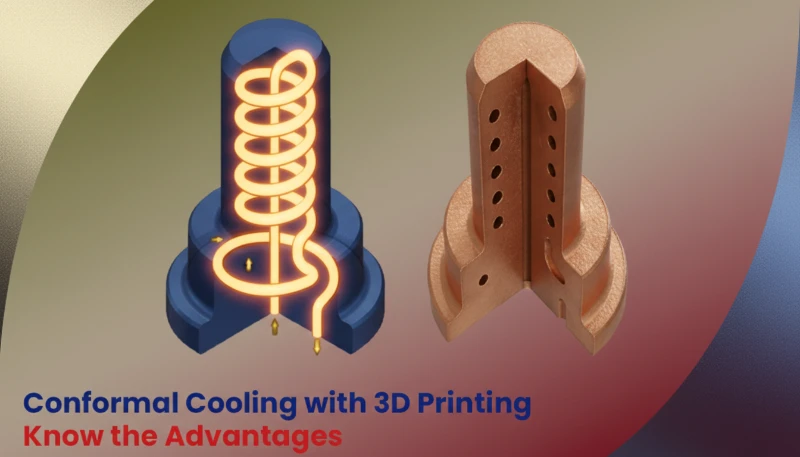
Onderhoud van koelkanalen wordt vaak over het hoofd gezien in routinematige PM-programma’s. Kalkaanslag, biologische groei en roestafzettingen in koelkanalen isoleren de kanaalwanden en verminderen de koelvloeistofsnelheid, waardoor de warmteoverdrachtsefficiëntie in ernstige gevallen met 20–40% daalt. Wij voeren tijdens elke grote revisie een ontkalkingsspoeling en debietmeting uit bij elk inlaat-uitlaat paar. Het herstellen van de koel efficiëntie naar specificatie vermindert direct de cyclustijd en verbetert de consistentie van onderdeel tot onderdeel — twee verbeteringen die niets kosten buiten de geplande stilstand.
Koelkanaalonderhoud: De over het hoofd geziene prioriteit
We integreren ook een formele matrijsconditiebeoordeling bij elke 250.000-schot interval — halverwege tussen volledige revisies. Tijdens deze beoordeling inspecteert een gereedschapsmaker het holte-oppervlak Ra op drie referentiepunten met een oppervlakteprofilometer, meet de uitstoterpen-speling tegen de originele specificatie en controleert de scheidingslijnvlakheid met een precisie-rechtkant. Elke afwijking buiten 50% van de tolerantieband leidt tot onmiddellijke corrigerende actie in plaats van te wachten op de volgende geplande revisie. Deze mid-cycle beoordeling voorkomt dat kleine problemen uitgroeien tot dure reparaties.
Documentatie is het meest onderschatte element van elk matrijsonderhoudsprogramma. Zonder een volledig onderhoudslogboek kun je geen voorspellend schema opbouwen — je reageert altijd op defecten in plaats van ze te voorkomen. Ons logboekformaat registreert: matrijs-ID, datum, schotaantal bij reiniging, gebruikte reinigingsmethode, gevonden defecten, uitgevoerde reparaties en technicus-handtekening. Na zes maanden data ontstaan patronen die ons in staat stellen PM-intervallen te verkorten of verlengen op basis van daadwerkelijk matrijsgedrag in plaats van algemene industrierichtlijnen. Een $15 notitieboekje of een eenvoudige spreadsheet verandert reactief onderhoud in preventief onderhoud.
| Mijlpaal | Actie | Belangrijkste controle |
|---|---|---|
| Elke PM-reiniging (50K–100K schoten) | 5-staps reinigingssequentie | Ventdiepte, holte Ra, scheidingslijn vlakheid |
| 250.000 shots (midden cyclus) | Conditiebeoordeling + dimensionale controle | Pen-speling, oppervlakte Ra op 3 referentiepunten |
| 500.000 shots (revisie) | Volledige demontage, ultrasoon reinigen, koelspoeling | Doorstroomsnelheid per kanaal, vervanging van slijtonderdelen |
| Jaarlijks (of 1 miljoen shots) | Volledige inspectie + gereedschapslevensduurbeoordeling | Staalhardheid steekproef, holte-inzetpassing |
"Het spoelen van koelkanalen van spuitgietmatrijzen met een ontkalkingsoplossing bij elke revisie na 500,000 shots voorkomt 20–40% verlies aan warmteoverdrachtsefficiëntie door kalkaanslag."True
Mineraalaanslag van hard water zet lagen af op de binnenste kanaalwanden, wat werkt als thermische isolatie. Een commerciaal ontkalkingsmiddel (meestal op basis van citroenzuur of fosforzuur, gecirculeerd op 40–60°C gedurende 30–60 minuten) lost calciumcarbonaat en ijzeroxide-afzettingen op zonder de kanaalwanden te beschadigen. Spoel na met schoon water en meet de doorstroomsnelheid bij elk kanaalpaar om volledige verwijdering van verstopping te bevestigen voor remontage.
"Voor de prestaties van een spuitgietmatrijs telt alleen een schoon holteoppervlak — de toestand van de koelkanalen is secundair."False
Holte-oppervlakreinheid beïnvloedt oppervlakteafwerking en onderdeeluitstoting, maar een vervuild koelsysteem beïnvloedt tegelijkertijd cyclustijd, dimensionale stabiliteit en kromtrekken. In onze productie-ervaring veroorzaakt verslechterde koeling onderdeel-tot-onderdeel variatie die moeilijk te diagnosticeren is zonder thermische beeldvorming, omdat het zich manifesteert als inconsistente krimp in plaats van zichtbare oppervlaktedefecten. Koelkanaalconditie is even belangrijk als holte-oppervlakconditie — beide vereisen gepland onderhoud.
Veelgestelde vragen over spuitgietvormreiniging?
Veelgestelde vragen
Hoe vaak moet u een spuitgietmatrijs schoonmaken?
Reinig elke 50.000–100.000 schoten als basis-PM-interval voor standaard technische thermoplasten zoals ABS, PP en nylon. Hoogvulharsen (GF30, CF15), vlamvertragende kwaliteiten en PVC-gebaseerde materialen vereisen reiniging elke 25.000–50.000 schoten omdat ze agressiever residu afzetten of corrosieve gassen vrijgeven. Reinig altijd onmiddellijk na elke run waarbij brandvlekken, uitstulpingen of oppervlakteverkleuring op onderdelen verschenen, ongeacht het aantal schoten. Houd reinigingsdata en schotaantallen bij in een onderhoudslogboek om trends te identificeren en uw interval te verfijnen op basis van daadwerkelijk matrijs- en materiaalgedrag.
Wat is het veiligste oplosmiddel voor het reinigen van gepolijste spuitgietmatrijsholtes?
Isopropylalcohol (IPA) met een zuiverheid van 99% is het veiligste universele oplosmiddel voor gepolijste holteoppervlakken. Het lost de meeste thermoplastresten op, waaronder polyolefinewas, styreenpolymeerafzettingen en lossingsmiddelfilms, zonder chroomlagen, PVD-coatings of gepolijst gereedschapsstaal aan te tasten. Gebruik voor zwaardere koolafzettingen die IPA niet oplost een speciale matrijsreiniger zoals Moldklenz of Slide Mold Cleaner. Aceton werkt op ongepolijst staal, maar kan bepaalde coatings aantasten. Controleer vóór het eerste gebruik op productiegereedschap altijd de compatibiliteit met de staalsoort en oppervlaktebehandeling.
Kun je een spuitgietmatrijs reinigen terwijl deze nog in de pers staat?
Ja — zowel droogijsstralen als handmatige oplosmiddelreiniging kunnen in-pers worden uitgevoerd zonder de matrijs uit de machine te verwijderen. Houd de matrijs op 40–60°C (warm van de laatste productierun) voor maximale reinigingseffectiviteit en zorg ervoor dat de pers zich in volledige lockout/tagout (LOTO)-toestand bevindt om onbedoelde matrijs-sluiting tijdens het reinigen te voorkomen. In-pers reinigen elimineert arbeid voor matrijs-omwisseling, vermijdt het risico van montagefouten en is de standaardaanpak in hoogvolume faciliteiten waar het maximaliseren van pers-uptime een primair operationeel doel is. Alleen ultrasoon reinigen vereist volledige matrijsverwijdering en demontage.
Hoe verwijder je roest uit holtes van spuitgietmatrijzen?
Breng een roestverwijderaar op fosforzuurbasis aan die speciaal voor matrijsstaal is samengesteld en volg de inwerktijd van de fabrikant — doorgaans 5–15 minuten, afhankelijk van de roesternst. Neutraliseer met schoon water of een verdunde zuiveringszoutoplossing (10 g/L) en droog direct met gefilterde perslucht om vliegroest te voorkomen. Breng binnen 15 minuten na het drogen roestwerende olie aan. Bij matige putcorrosie is mechanisch polijsten met papier van korrel 600 tot 2000 en vervolgens diamantpasta van 6 µm en 1 µm vereist om de oorspronkelijke oppervlakteafwerking Ra te herstellen. Is de putvorming dieper dan 0,1 mm, raadpleeg dan een matrijzenmakerij — dit vereist doorgaans TIG-lasreparatie of opnieuw vonkeroderen.
Welk smeermiddel moet u gebruiken op ejectorpennen van spuitgietmatrijzen?
Gebruik PTFE-gebaseerde droge smeermiddelen voor cleanroom-, medische hulpmiddelen- of voedselcontactmatrijzen waar migratie van siliconen of vet op onderdeeloppervlakken onaanvaardbaar is. Voor standaard productiematrijzen is matrijsklasse lithiumvet, spaarzaam aangebracht, effectief voor ejectorpennen, geleidingspennen en lagers onder normale belasting. Siliconengebaseerd vet heeft de voorkeur voor hoge-temperatuur matrijstoepassingen (matrijstemperatuur boven 100°C) waar lithiumvet kan degraderen of overmatig kan vloeien. Veeg altijd direct na aanbrengen overtollig smeermiddel weg — overtollig smeermiddel migreert binnen de eerste paar shots naar het holteoppervlak en veroorzaakt vervuilingsdefecten op het onderdeeloppervlak.
spuitgieten: het productieproces waarbij kunststof wordt gesmolten, in een vormholte wordt geïnjecteerd, het onderdeel wordt gekoeld en de cyclus wordt herhaald voor stabiele serieproductie. ↩
spuitgietmatrijs: het precisiegereedschap dat de geometrie van het onderdeel, de koeling, uitwerping, aanspuiting, oppervlakteafwerking en reproduceerbaarheid bepaalt. ↩
matrijsstaal: een categorie gereedschapsstaal die op basis van hardheid, corrosiebestendigheid en polijstbaarheid wordt geselecteerd voor de bouw van spuitgietmatrijzen, waaronder kwaliteiten als P20, H13 en S136. ↩