 Overslaan naar inhoud

ASA (acrylonitril-styreen-acrylaat) spuitgieten geeft je iets wat ABS niet kan: echte langdurige UV- en weersbestendigheid zonder schilderen of coating. Als je een materiaal specificeert voor buitenbehuizingen, automotive exterieurtrim of tuingereedschap dat jaren in de zon staat, is ASA meestal de juiste keuze. Deze gids behandelt de verwerkingsparameters, veelvoorkomende valkuilen en ontwerpoverwegingen die je nodig hebt om ASA-onderdelen in één keer goed te krijgen.
- ASA vervangt het butadieen in ABS door acrylaatrubber voor inherente UV-stabiliteit
- Smelttemperatuurbereik: 240–260°C; matrijstemperatuur: 40–80°C
- Krimp is 0,4–0,7% — vergelijkbaar met ABS, maar controleer met uw specifieke kwaliteit
- Vooraf drogen op 80–85°C gedurende 2–4 uur om oppervlaktedefecten te voorkomen
- Het beste voor buitentoepassingen, auto-exterieur en tuingereedschaponderdelen
Wat is ASA en waarom kiezen voor ASA in plaats van ABS voor spuitgieten?
ASA is een terpolymeer — acrylonitril, styreen en acrylaatrubber — ontwikkeld als een directe UV-bestendige vervanging voor ABS. Het belangrijkste structurele verschil: ABS gebruikt polybutadieen als rubberfase, dat dubbele bindingen bevat die afbreken onder UV-straling. ASA vervangt dit door acrylaatrubber (een verzadigd polymeer), dat niet degradeert door zonlicht. Volgens de ISO 4892-2 weertestnormen behoudt ASA meer dan 90% van zijn treksterkte na 1000 uur UV-blootstelling, terwijl degradatie van ABS al begint na slechts 200–400 uur. Het resultaat is een materiaal dat zijn kleur, oppervlakteglans en mechanische eigenschappen behoudt na jarenlange continue buitenblootstelling.
Het nadeel? ASA kost doorgaans 15–30% meer per kilogram dan ABS. Het heeft ook een iets lagere slagvastheid bij kamertemperatuur in vergelijking met hoogimpact ABS-graden. Maar als uw onderdeel buiten staat, is de kostprijs van ASA bijna altijd goedkoper dan het schilderen, coaten of vervangen van defecte ABS-onderdelen. Wanneer we spuitgieten proeven voor buitentoepassingen in onze faciliteit, raden we ASA standaard aan, tenzij de klant een specifiek kostenplafond heeft dat ABS plus verf noodzakelijk maakt.
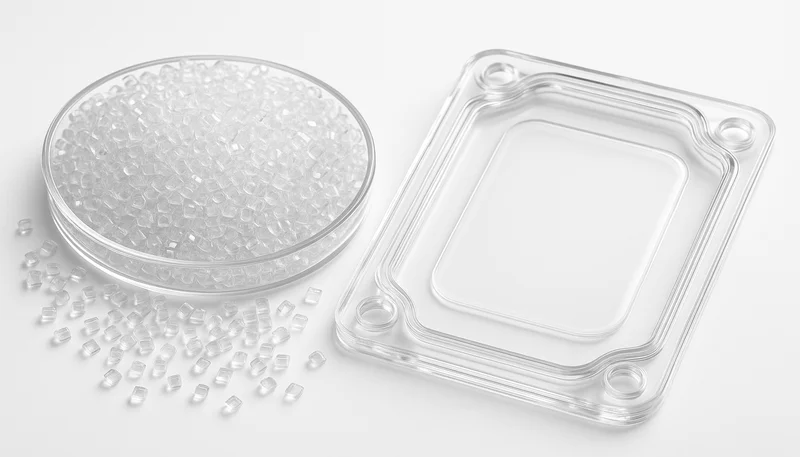
“ASA behoudt jarenlang zijn kleur en mechanische eigenschappen buitenshuis zonder enige coating of verf.”Echt
De acrylaatrubberfase in ASA is een verzadigd polymeer dat bestand is tegen UV-afbraak, in tegenstelling tot het polybutadieen in ABS dat UV-gevoelige dubbele bindingen bevat.
“UV-gestabiliseerd ABS presteert net zo goed als ASA voor langdurige buitentoepassingen.”Vals
UV-gestabiliseerd ABS gebruikt additieven die in 1–2 jaar migreren, waarna de afbraak versnelt. De UV-bestendigheid van ASA is structureel — ingebouwd in de polymeerketen — en neemt niet af in de loop der tijd.
Wat zijn de belangrijkste ASA-spuitgietparameters?
De belangrijkste ASA-spuitgietparameters zijn de hoofdcategorieën of opties die in deze sectie worden uitgelegd. ASA verwerkt vergelijkbaar met ABS, maar de temperatuurvensters en droogvereisten verdienen uw aandacht. Op basis van de ASA-verwerkingsgids en onze eigen productiegegevens, zijn hier de kritieke parameters die u moet vaststellen voordat u ASA gaat verwerken.
| Parameter | Aanbevolen bereik | Opmerkingen |
|---|---|---|
| Smelttemperatuur | 240–260°C | Niet meer dan 270°C — risico op thermische degradatie |
| Vat Achterzone | 215–225°C | Geleidelijke verwarming voorkomt voortijdig smelten |
| Cilinder Middenzone | 230–240°C | Overgangszone voor consistente smelt |
| Vat Voorzone | 240–250°C | Smelttemperatuur dicht bij het doel |
| Temperatuur sproeier | 240–245°C | Pas de voorste zone aan om druipen of bevriezing te voorkomen |
| Schimmel Temperatuur | 40–80°C | Hogere matrijstemperaturen verbeteren de oppervlakteafwerking en verminderen laslijnen |
| Injectiedruk | 800–1400 bar | Aanpassen op basis van onderdeelgeometrie en stroomlengte |
| Houd-/Nadrukdruk | 30–60% van de injectiedruk | Compenseer voor volumetrische krimp |
| Tegendruk | 3–15 bar | Hogere tegendruk verbetert de smelthomogeniteit |
| Schroefsnelheid | 40–80 rpm | Matige snelheid om afschuifdegradatie te voorkomen |
| Droogtemperatuur | 80–85°C | 2–4 uur; vochtgehalte onder 0,1% |
| Krimp | 0.4–0.7% | Verify with specific grade data sheet 4 |
The most common mistake I see engineers make with ASA is skipping or under-drying the material. ASA is hygroscopic — it absorbs moisture from the air, and if you inject it wet, you get silver streaks, splay marks, and reduced mechanical properties. At our spuitgietvorm shop, we always run a moisture check with a halogen analyzer before starting a production run. Target is below 0.1% moisture. If the material has been sitting in open bags for more than a few hours, re-dry it.
“Pre-drying ASA pellets to below 0.1% moisture is essential to prevent silver streaks and splay marks.”Echt
ASA is hygroscopic and absorbs moisture from humid air. When injected wet, the water turns to steam in the barrel, creating visible surface defects and reducing part strength.
“ASA does not require pre-drying because it is less hygroscopic than ABS.”Vals
ASA is actually more hygroscopic than standard ABS grades and requires strict drying at 80–85°C for 2–4 hours. Skipping this step is the most common cause of surface defects in ASA molding.
Hoe beïnvloedt matrixtemperatuur de kwaliteit van ASA-onderdelen?
Mold temperature is the single most impactful parameter for ASA surface quality. At 40–50°C, you get fast cycle times but the surface finish is matte and weld lines are more visible. Push the mold temperature up to 60–80°C, and the surface becomes glossy, weld lines fade, and the part’s impact resistance improves because internal stresses are lower.
The trade-off is cycle time. Going from 40°C to 70°C mold temperature typically adds 5–15 seconds to your cycle, depending on wall thickness. For thin-wall parts (under 2mm), you might barely notice the difference. For thick-wall structural parts (4mm+), the cooling time penalty is real.
In our experience running ASA for automotive exterior trim at the ZetarMold facility, we target 60–70°C mold temperature as the sweet spot. This gives a Class A surface finish that eliminates the need for post-molding painting on many projects. The gloss level is consistent across the part, and color matching to a specific Pantone or RAL reference is reliable batch-to-batch.
Wat zijn veelvoorkomende ASA-spuitgietdefecten en hoe los je ze op?
ASA shares most of the same defect modes as ABS, but a few are more frequent or present differently because of the acrylate rubber phase.
Silver Streaks and Splay Marks
This is the #1 defect with ASA, and it’s almost always a moisture problem. ASA absorbs moisture faster than ABS. If your pellets aren’t dried to below 0.1% moisture, the water turns to steam in the barrel and creates silver streaks on the part surface. Fix: dry at 80–85°C for 2–4 hours minimum. Use a desiccant dryer, not a hot-air oven.
Weld Lines and Flow Marks
ASA’s melt viscosity is slightly higher than ABS, so weld lines can be more prominent, especially around inserts or multiple-gate designs. Fix: raise mold temperature to 60–80°C, increase injection speed, and consider moving the weld line to a non-cosmetic area during mold design.
Discoloration and Yellowing
If your ASA parts are coming out yellowed or brown-tinted, you’re running too hot or leaving material sitting in the barrel too long. ASA starts to degrade above 270°C. Fix: reduce melt temperature, purge the barrel if the machine has been idle, and keep residence time under 5 minutes.
Warpage and Shrinkage Variation
ASA shrinks in the same practical range reported on the ASA Resin1 reference page, and differential shrinkage between thick and thin sections causes warpage. Fix: maintain uniform wall thickness (target 2–3mm nominal), use adequate hold pressure and time, and ensure even cooling channel layout in the mold.
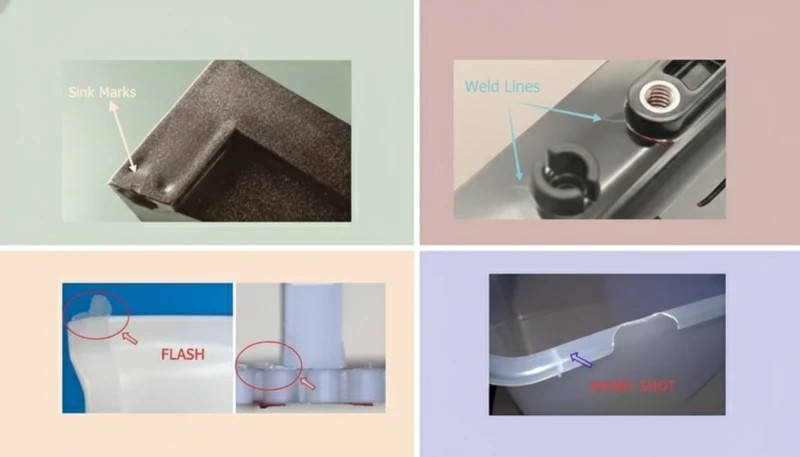
| Defect | Most Likely Cause | First Fix | Second Fix |
|---|---|---|---|
| Silver streaks / splay | Moisture in pellets | Re-dry material (80–85°C, 3–4h) | Check hopper dryer functionality |
| Short shots | Insufficient injection pressure | Increase injection speed | Raise melt temperature by 5–10°C |
| Flash | Excessive pressure or worn tool | Reduce injection pressure | Inspect mold parting line |
| Weld lines (visible) | Low mold temperature | Raise mold temp to 65–80°C | Increase injection speed |
| Als het materiaal bevriest voordat het vult, verhoog dan de injectiesnelheid (vulsnelheid). | Insufficient hold pressure/time | Increase hold time by 1–2s | Reduce wall thickness variation |
| Discoloration | Melt temperature too high | Lower barrel temps by 5–10°C | Purge barrel, reduce residence time |
| Part sticking | Insufficient draft angle | Increase draft to 1.5°+ | Apply mold release (temporary) |
| Brittle parts | Material degraded or over-dried | Check melt temp below 270°C | Reduce drying time (max 6h at 85°C) |
One thing that catches people off guard with ASA: over-drying can be as bad as under-drying. If you dry ASA pellets at 85°C for more than 6–8 hours, the acrylate rubber phase starts to oxidize, and impact strength drops. Set a timer and don’t forget the material in the dryer overnight.
Hoe verhoudt ASA zich tot andere weersbestendige materialen?
Asa is more competitive than other weatherable materials when the cost, lead time, and quality tradeoffs below match your program needs. ASA isn’t the only option for outdoor parts. According to SABIC Luran S2 and our own comparative testing, here’s how ASA stacks up against the main alternatives engineers consider for weatherable applications.
| Eigendom | ASA | ABS (UV-stabilized) | PC/ABS Blend | PP (UV-stabilized) |
|---|---|---|---|---|
| UV Resistance | Excellent (inherent) | Moderate (additives degrade) | Goed | Moderate (additives needed) |
| Impact Strength (notched Izod) | 10–35 kJ/m² 2 | 15–40 kJ/m² | 50–60 kJ/m² | 3–10 kJ/m² |
| Heat Deflection Temp | 85–100°C | 85–100°C | 95–115°C | 55–65°C |
| Cost (relative to ABS) | 1.2–1.3x | 1,0x (basislijn) | 1.4–1.6x | 0.5–0.7x |
| Color Retention (outdoor) | Excellent (5+ years) | Poor to fair | Goed | Eerlijk |
| Surface Finish (as-molded) | Glossy, paint-free | Paint required | Goed | Waxy, matte |
| Chemische weerstand | Good (oils, dilute acids) | Goed | Very good | Uitstekend |
The bottom line: if you need UV resistance and a good-looking surface without painting, ASA is often the most cost-effective sourcing choice for exterior molded parts. UV-stabilized ABS is cheaper but the UV additives migrate out over time and long-term degradation accelerates. PC/ABS blends have better impact and heat resistance but at a higher price point, and they still need UV stabilizer additives. PP is the cheapest option but its surface quality is inferior and it does not hold pigments as well as ASA.
“ASA can eliminate the need for post-molding painting on outdoor parts, saving 20–30% on per-part cost.”Echt
Because ASA’s UV resistance is built into the polymer structure, the as-molded glossy surface maintains color and gloss for years. This removes paint material, equipment, labor, and rework costs.
“ASA has higher impact resistance than all ABS grades at room temperature.”Vals
Standard ASA grades typically have 10–35 kJ/m² notched Izod, while high-impact ABS grades can reach 35–40 kJ/m². ASA’s advantage is maintaining properties outdoors, not peak impact strength.
Welke ontwerprichtlijnen moet u volgen voor ASA-onderdelen?
This section is about design guidelines should you follow for asa parts and its impact on cost, quality, timing, or sourcing risk. Designing for ASA follows standard thermoplastic injection molding guidelines with a few material-specific considerations.
Wall thickness: 1.5–4mm nominal. Stay under 5mm to avoid sink marks. Maintain ±10% thickness uniformity across the part.
Draft angle: 1–2° minimum per side. ASA has a slightly higher coefficient of friction against polished steel than ABS, so don’t skimp on draft.
Radii: 0.5mm minimum inside corners. Sharp internal corners create stress concentrators that reduce impact resistance — this matters more for ASA because the acrylate rubber phase is less forgiving than butadiene at notches.
Ribs: max 50–60% of nominal wall thickness. Over-sized ribs cause sink marks on the opposite (cosmetic) surface.
Gate placement: ASA’s flow characteristics work well with edge gates, submarine gates, or valve gates. Avoid pinpoint gates for parts over 200g — the shear rate is too high and causes jetting.
Wat zijn de belangrijkste toepassingen van ASA-spuitgietonderdelen?
The main applications of asa injection molded parts are the main categories or options explained in this section. ASA shows up wherever a part needs to look good and survive outdoors. The major application categories:
Automotive exterior trim: grille surrounds, mirror housings, door handles, cowl vents. ASA holds up to road salt, UV, and temperature cycling without fading. This is the single largest application segment for ASA globally.
Outdoor equipment housings: lawnmower covers, chainsaw housings, garden tool handles. The combination of impact resistance and color stability is hard to beat for consumer-visible surfaces.
Electrical enclosures (outdoor): junction boxes, meter covers, antenna housings. ASA’s electrical insulation properties are comparable to ABS, and the ZetarMold Injection Molding Guide3 notes that the UL 746C thermal index rates ASA for continuous use up to 85°C.
Marine accessories: boat fittings, dock equipment, buoy housings. ASA resists salt spray and humidity better than UV-stabilized ABS, making it reliable for coastal and marine environments.
Recreational vehicles: RV trim, caravan panels, ATV body panels. Long-term color matching across multiple production batches is one of ASA’s strengths — important when you need replacement parts to match the original years later.
At our Shanghai facility, we’ve run ASA production for automotive exterior components and outdoor equipment housings across our 47 injection molding machines (90T–1850T clamping force range). The material processes consistently once your drying and temperature profiles are locked in, and our 8 senior engineers have accumulated significant experience optimizing ASA parameters for different part geometries and surface-finish requirements.
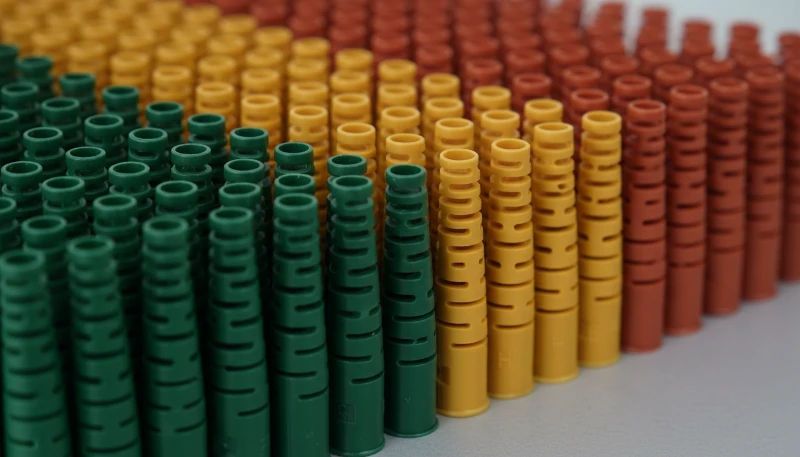
At ZetarMold’s Shanghai facility, we process ASA across our 47 injection molding machines with tonnage from 90T to 1850T. Our 8 senior engineers (each with 10+ years of experience) have optimized ASA parameters for automotive exterior trim, outdoor housings, and electrical enclosures. We maintain strict drying protocols — every ASA production run starts with a moisture content verification below 0.1%. With 400+ materials in our processing database and 30+ English-speaking project managers, we can recommend the right ASA grade and deliver consistent surface quality from first article through volume production.
Veelgestelde vragen over ASA-spuitgieten
What Is the Recommended Drying Temperature for ASA Before Molding?
Dry ASA at 80 to 85C for 2 to 4 hours in a desiccant dryer and aim for moisture below 0.1 percent before molding. In production, the safer rule is to treat open-bag material as wet unless you can verify hopper dew point and moisture level. If the resin sat in humid air overnight, use the longer end of the window and keep the feed system closed after drying. The goal is not just to prevent splay. Proper drying also stabilizes gloss, reduces gas marks, and makes your process window much wider during startup and color change.
Can ASA Be Overmolded with TPE or Other Materials?
Yes, ASA can be overmolded, but the real answer depends on the second material and the bond mechanism you need. TPE, TPU, and some TPV grades are workable candidates, yet you should confirm adhesion with actual peel or pull tests rather than relying on a catalog claim. Surface temperature of the ASA substrate, gate position, mold texture, and the dwell time before the second shot all affect bond strength. If the part will live outdoors, also validate UV aging and thermal cycling because a bond that looks acceptable on day one may fail after weather exposure.
What Shrinkage Rate Should You Use for ASA Mold Design?
For mold design, start with a linear shrinkage assumption of 0.4 to 0.7 percent and then tighten the number with trial data from your exact grade. ASA behavior changes with wall thickness, gloss package, pigment loading, and flow direction, so one generic number is only a starting point. For cosmetic exterior parts, it is safer to build steel safe and measure first-shot dimensions before final polishing or texture approval. If the geometry is long and asymmetric, also watch directional shrink because that is where warpage surprises usually show up in pilot runs.
Is ASA Recyclable After Injection Molding?
ASA is recyclable because it is a thermoplastic, but reuse strategy matters if you still need weatherability and surface quality. Regrind is usually acceptable in controlled percentages, yet every extra heat history slightly reduces toughness and can shift color. For structural or customer-facing parts, many teams cap regrind at about 10 to 25 percent depending on grade and appearance requirements. Keep sprues and runners clean, separate dark and light colors, and do not mix unknown regrind lots. If the part is an exterior trim piece, validate impact and gloss again before approving a recycled blend for production.
What Is the Maximum Wall Thickness for ASA Injection Molding?
You can technically mold ASA at wall sections above 5 mm, but that is usually a bad production decision unless the geometry is very simple and cosmetics do not matter. Thick walls increase sink risk, trap heat, extend cycle time, and make internal voids more likely, especially in glossy exterior parts. A better engineering approach is to keep nominal walls around 2 to 4 mm and add ribs, gussets, or local bosses where you need stiffness. When a heavy section cannot be avoided, plan extra cooling capacity, verify pack pressure response, and check cross-sections from first articles rather than trusting simulation alone.
How Does ASA Perform in Cold Weather Environments?
ASA performs well outdoors and handles normal winter exposure better than standard ABS, but it is not the best choice for severe low-temperature impact service. Below roughly minus 10 to minus 20C, toughness drops enough that thin clips, snap fits, and highly notched details need special attention. If the product will be used in northern climates, validate the exact grade with cold-drop or impact testing instead of assuming room-temperature data still applies. In many projects the right answer is a tougher ASA grade or a PC/ASA blend, especially when you need both weatherability and better cold-hit resistance.
Do ASA Parts Need Painting for Outdoor Use?
Most ASA parts do not need painting for outdoor use because inherent UV stability is the main reason to choose ASA in the first place. If color, gloss, and texture are designed correctly, the as-molded part can usually go straight into service and avoid the cost and variation of a paint line. That said, painting still makes sense when you need a very specific brand color, metallic effect, extra chemical resistance, or visual matching with already-painted adjacent parts. The engineering question is not whether ASA can survive unpainted. It is whether the product specification requires a finish that molding alone cannot deliver consistently.
What Injection Speed Works Best for ASA Molding?
ASA generally runs best with a moderate-to-high injection speed because you want the cavity filled before the melt front cools and weld lines become obvious. A common starting profile is fast filling through most of the cavity, then a controlled switchover to packing so you do not create flash or overpack sharp features. If you go too slow, surface quality drops and knit lines become easier to see. If you go too fast, you may create jetting, burn marks, or unstable cushion behavior. The right setting is the highest stable speed that still gives consistent weight, appearance, and venting performance.
Wanneer moet u samenwerken met een ervaren ASA-spuitgietleverancier?
This section is about partner with an experienced asa molding supplier and its impact on cost, quality, timing, or sourcing risk. ASA isn’t a difficult material to mold, but getting it right consistently — especially for Class A surfaces on automotive or consumer products — requires experience with the material’s specific behaviors. The drying discipline, temperature control, and mold design considerations are learnable, but they do require attention.
At ZetarMold, we’ve been running ASA production for outdoor and automotive applications at our Shanghai facility for years. With 47 injection molding machines (90T–1850T), 8 senior engineers averaging 10+ years of experience, and 400+ materials in our processing database, we can dial in ASA parameters quickly and deliver consistent quality. Our 30+ English-speaking project managers ensure smooth communication from DFM review through production delivery.
If you’re planning an ASA molding project — whether it’s a new part or migrating from ABS — reach out for a technical discussion. We’ll review your part design, recommend the right ASA grade, and provide a processing plan before you invest in tooling. Get a free project assessment →
-
ASA Resin: ASA Resin refers to the Plastic Molded Concepts material reference for acrylonitrile styrene acrylate, which summarizes typical outdoor-use properties and shrinkage guidance in the 0.2–0.7% range used for mold compensation decisions. ↩
-
SABIC Luran S: SABIC Luran S refers to SABIC’s ASA resin family data, including notched Izod impact values of 10–35 kJ/m² depending on grade and heat deflection temperature values around 85–100°C at 0.45 MPa. ↩
-
ZetarMold Injection Molding Guide: ZetarMold Injection Molding Guide refers to zetarMold processes over 400 thermoplastic materials across 45 injection molding machines (90T–1850T) at their Shanghai facility, including ASA grades for automotive and outdoor applications. ↩





 EN
EN  ES
ES  FR
FR  DE
DE  PT
PT  AR
AR  RU
RU  JA
JA  KO
KO  IT
IT  NL
NL  TR
TR  PL
PL 