 Vai al contenuto

Lo stampaggio a iniezione in ASA (acrilonitrile stirene acrilato) offre qualcosa che l'ABS non può: una genuina resistenza a lungo termine ai raggi UV e alle intemperie senza necessità di verniciatura o rivestimento. Se si sta specificando un materiale per custodie esterne, guarnizioni automobilistiche esterne o attrezzature da giardino esposte al sole per anni, l'ASA è generalmente la scelta corretta. Questa guida copre i parametri di lavorazione, le insidie comuni e le considerazioni progettuali necessarie per realizzare correttamente i componenti in ASA al primo tentativo.
- L'ASA sostituisce il butadiene presente nell'ABS con gomma acrilica per una stabilità intrinseca ai raggi UV
- Intervallo di temperatura di fusione: 240–260°C; temperatura dello stampo: 40–80°C
- Il ritiro è dello 0,4–0,7% — simile all'ABS ma verifica con il tuo grado specifico
- Pre-essiccare a 80–85°C per 2–4 ore per evitare difetti superficiali
- Ideale per componenti esterni, per esterni automobilistici e per attrezzature da giardino
Cos'è l'ASA e perché sceglierlo al posto dell'ABS per lo stampaggio ad iniezione?
L'ASA è un terpolimero — acrilonitrile, stirene e gomma acrilica — progettato come sostituto diretto resistente ai raggi UV dell'ABS. La differenza strutturale chiave: l'ABS utilizza il polibutadiene come fase gommosa, che contiene doppi legami che si degradano sotto radiazione UV. L'ASA sostituisce la gomma acrilica (un polimero saturo), che non si degrada alla luce solare. Secondo gli standard di prova di invecchiamento ISO 4892-2, l'ASA mantiene oltre il 90% della resistenza alla trazione dopo 1000 ore di esposizione ai raggi UV, mentre la degradazione dell'ABS inizia già dopo 200–400 ore. Il risultato è un materiale che mantiene il suo colore, lucentezza superficiale e proprietà meccaniche dopo anni di esposizione continua all'aperto.
Il compromesso? L'ASA costa tipicamente il 15–30% in più dell'ABS per chilogrammo. Ha anche una resistenza all'impatto leggermente inferiore a temperatura ambiente rispetto ai gradi ad alto impatto dell'ABS. Ma se il tuo componente è destinato all'esterno, il costo dell'ASA è quasi sempre più economico della verniciatura, del rivestimento o della sostituzione dei componenti in ABS danneggiati. Quando eseguiamo stampaggio a iniezione test per applicazioni esterne nella nostra struttura, raccomandiamo l'ASA come scelta predefinita a meno che il cliente non abbia un tetto di costo specifico che imponga l'ABS più vernice.
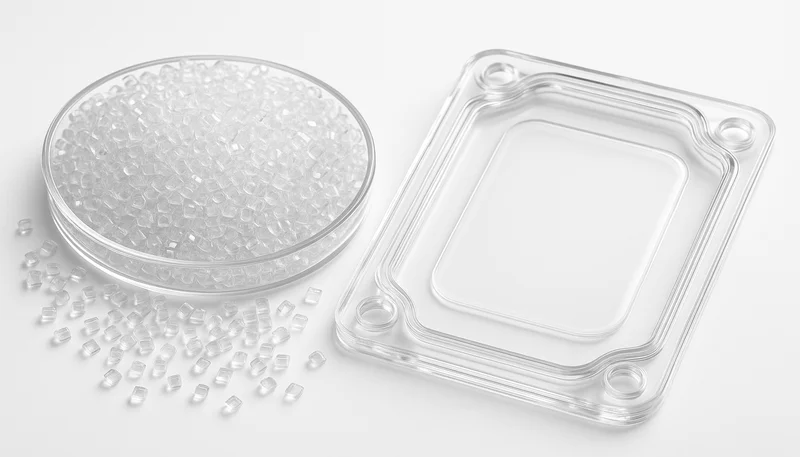
“L'ASA mantiene il suo colore e le proprietà meccaniche per anni all'aperto senza alcun rivestimento o vernice.”Vero
La fase di gomma acrilica nell'ASA è un polimero saturo che resiste alla degradazione indotta dai raggi UV, a differenza del polibutadiene nell'ABS che contiene doppi legami sensibili agli UV.
“L'ABS stabilizzato ai raggi UV performa altrettanto bene dell'ASA per l'esposizione esterna a lungo termine.”Falso
L'ABS stabilizzato ai raggi UV utilizza additivi che migrano fuori in 1–2 anni, dopodiché la degradazione accelera. La resistenza ai raggi UV dell'ASA è strutturale — integrata nella catena polimerica — e non diminuisce nel tempo.
Quali Sono i Parametri Chiave dello Stampaggio a Iniezione dell'ASA?
I parametri chiave dello stampaggio a iniezione dell'ASA sono le principali categorie o opzioni spiegate in questa sezione. L'ASA viene processato in modo simile all'ABS, ma le finestre di temperatura e i requisiti di essiccazione meritano la vostra attenzione. Sulla base della Guida alla Lavorazione dell'ASA e dei nostri dati di produzione, ecco i parametri critici che dovete fissare prima di lavorare l'ASA.
| Parametro | Intervallo consigliato | Note |
|---|---|---|
| Temperatura di fusione | 240–260°C | Non superare i 270°C — rischio di degradazione termica |
| Zona posteriore della canna | 215–225°C | Il riscaldamento graduale previene la fusione prematura |
| Zona Centrale della Cilindrata | 230–240°C | Zona di transizione per fusione uniforme |
| Zona Anteriore della Cilindrata | 240–250°C | Temperatura di fusione vicina al bersaglio |
| Temperatura dell'ugello | 240–245°C | Adatta la zona anteriore per prevenire sgocciolamenti o congelamenti |
| Temperatura dello stampo | 40–80°C | Temperature dello stampo più elevate migliorano la finitura superficiale e riducono le linee di saldatura |
| Pressione di iniezione | 800–1400 bar | Regola in base alla geometria del componente e alla lunghezza del flusso |
| Pressione di mantenimento/imballaggio | 30–60% della pressione di iniezione | Compensare il ritiro volumetrico |
| Contropressione | 3–15 bar | Una maggiore pressione di ritorno migliora l'omogeneità del fuso |
| Velocità della vite | 40–80 giri/min | Velocità moderata per evitare degradazione da taglio |
| Temperatura di asciugatura | 80–85°C | 2–4 ore; contenuto di umidità inferiore allo 0,1% |
| Restringimento | 0.4–0.7% | Verificare con la scheda tecnica del grado specifico 4 |
L'errore più comune che vedo fare agli ingegneri con l'ASA è saltare o sotto-essiccare il materiale. L'ASA è igroscopico — assorbe umidità dall'aria e, se lo si inietta umido, si ottengono striature argentee, segni di splay e proprietà meccaniche ridotte. Nel nostro stampo a iniezione stabilimento, eseguiamo sempre un controllo dell'umidità con un analizzatore alogeno prima di iniziare una produzione. L'obiettivo è un'umidità inferiore a 0,1%. Se il materiale è rimasto in sacchi aperti per più di poche ore, ri-essiccatelo.
“Il pre-essiccamento dei pellet di ASA al di sotto dello 0,1% di umidità è essenziale per prevenire striature argentee e segni di splay.”Vero
L'ASA è igroscopico e assorbe umidità dall'aria umida. Quando viene iniettato umido, l'acqua si trasforma in vapore nella canna, creando difetti superficiali visibili e riducendo la resistenza del componente.
"L'ASA non richiede pre-essiccazione perché è meno igroscopico dell'ABS."Falso
L'ASA è effettivamente più igroscopico delle qualità standard di ABS e richiede un'asciugatura rigorosa a 80–85°C per 2–4 ore. Saltare questo passaggio è la causa più comune di difetti superficiali nella stampaggio dell'ASA.
Come Influenza la Temperatura dello Stampo la Qualità del Pezzo in ASA?
La temperatura dello stampo è il parametro più influente per la qualità superficiale dell'ASA. A 40–50°C, si ottengono cicli rapidi ma la finitura superficiale è opaca e le linee di saldatura sono più visibili. Portando la temperatura dello stampo a 60–80°C, la superficie diventa lucida, le linee di saldatura si attenuano e la resistenza all'impatto del pezzo migliora perché le tensioni interne sono inferiori.
Il compromesso è il tempo di ciclo. Passare da 40°C a 70°C di temperatura dello stampo tipicamente aggiunge 5–15 secondi al ciclo, a seconda dello spessore della parete. Per parti a parete sottile (sotto i 2mm), la differenza potrebbe essere appena percettibile. Per parti strutturali a parete spessa (4mm+), la penalità nel tempo di raffreddamento è reale.
Nella nostra esperienza con l'ASA per guarnizioni esterne automotive presso lo stabilimento ZetarMold, puntiamo a una temperatura dello stampo di 60–70°C come punto ottimale. Questo garantisce una finitura superficiale di Classe A che elimina la necessità di verniciatura post-stampaggio in molti progetti. Il livello di lucentezza è uniforme su tutto il componente e la corrispondenza del colore rispetto a un riferimento Pantone o RAL specifico è affidabile da lotto a lotto.
Quali sono i difetti comuni dello stampaggio ad iniezione in ASA e come si correggono?
L'ASA condivide la maggior parte delle stesse modalità di difetto dell'ABS, ma alcune sono più frequenti o si presentano diversamente a causa della fase di gomma acrilica.
Strie argentee e segni di spruzzo
Questo è il difetto #1 con l'ASA, ed è quasi sempre un problema di umidità. L'ASA assorbe umidità più velocemente dell'ABS. Se i pellet non sono essiccati al di sotto dello 0,1% di umidità, l'acqua si trasforma in vapore nella canna e crea striature argentee sulla superficie del pezzo. Soluzione: essiccare a 80–85°C per almeno 2–4 ore. Utilizzare un essiccatore a desicante, non un forno ad aria calda.
Linee di saldatura e segni di flusso
La viscosità del fuso dell'ASA è leggermente superiore a quella dell'ABS, quindi le linee di saldatura possono essere più evidenti, specialmente attorno agli inserti o nei progetti con più punti di iniezione. Soluzione: aumentare la temperatura dello stampo a 60–80°C, aumentare la velocità di iniezione e considerare di spostare la linea di saldatura in un'area non estetica durante la progettazione dello stampo.
Scolorimento e ingiallimento
Se i tuoi componenti in ASA risultano ingialliti o con una tonalità marrone, la temperatura è troppo alta o il materiale rimane nella canna troppo a lungo. L'ASA inizia a degradarsi sopra i 270°C. Soluzione: ridurre la temperatura di fusione, spurgo della canna se la macchina è stata inattiva e mantenere il tempo di permanenza sotto i 5 minuti.
Deformazione e variazione del ritiro
L'ASA si ritira nello stesso intervallo pratico riportato sul Resina ASA1 pagina di riferimento, e il ritiro differenziale tra sezioni spesse e sottili causa deformazione. Soluzione: mantenere uno spessore uniforme della parete (obiettivo nominale 2–3mm), utilizzare pressione e tempo di mantenimento adeguati e garantire una disposizione uniforme dei canali di raffreddamento nello stampo.
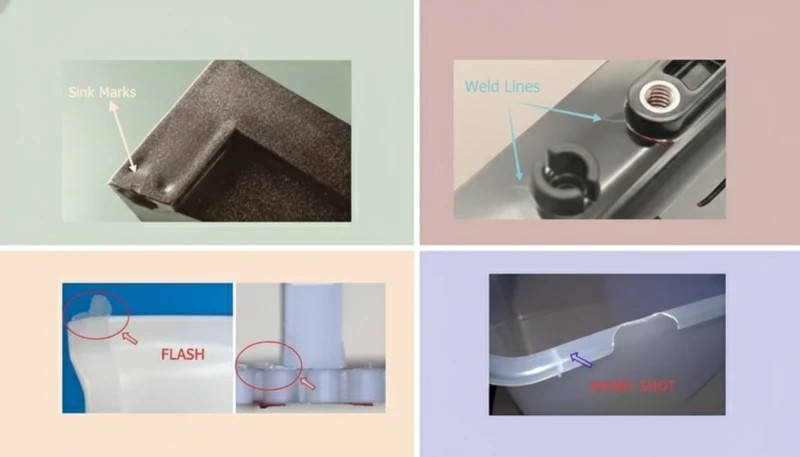
| Difetto | Most Likely Cause | First Fix | Seconda Soluzione |
|---|---|---|---|
| Silver streaks / splay | Umidità nei pellet | Ri-essiccare il materiale (80–85°C, 3–4h) | Verificare il funzionamento dell'essiccatore a tramoggia |
| Short shots | Pressione di iniezione insufficiente | Increase injection speed | Aumentare la temperatura di fusione di 5–10°C |
| Flash | Pressione eccessiva o utensile usurato | Ridurre la pressione di iniezione | Ispezionare la linea di apertura dello stampo |
| Linee di saldatura (visibili) | Low mold temperature | Aumentare la temperatura dello stampo a 65–80°C | Increase injection speed |
| Il gas intrappolato crea una contropressione che impedisce il riempimento. Controllare le prese d'aria (tipicamente profondità 0,0005" – 0,0015"). | Pressione/tempo di mantenimento insufficiente | Aumentare il tempo di mantenimento di 1–2s | Ridurre la variazione dello spessore della parete |
| Discoloration | Melt temperature too high | Abbassare le temperature della canna di 5–10°C | Spurgare la canna, ridurre il tempo di residenza |
| Parte che si incolla | Angolo di spoglia insufficiente | Aumentare il ritiro a 1,5°+ | Applicare agente distaccante (temporaneo) |
| Parti fragili | Materiale degradato o sovra-essiccato | Verificare che la temperatura di fusione sia inferiore a 270°C | Ridurre il tempo di essiccazione (massimo 6h a 85°C) |
Un aspetto che coglie di sorpresa con l'ASA: l'essiccazione eccessiva può essere dannosa quanto quella insufficiente. Se si essiccano i pellet di ASA a 85°C per più di 6–8 ore, la fase di gomma acrilica inizia a ossidarsi e la resistenza all'urto diminuisce. Impostare un timer e non lasciare il materiale nell'essiccatore durante la notte.
Come si confronta l'ASA con altri materiali resistenti alle intemperie?
L'ASA è più competitivo rispetto ad altri materiali resistenti agli agenti atmosferici quando i compromessi su costo, tempi di consegna e qualità di seguito corrispondono alle esigenze del tuo programma. L'ASA non è l'unica opzione per componenti da esterno. Secondo SABIC Luran S2 and our own comparative testing, here’s how ASA stacks up against the main alternatives engineers consider for weatherable applications.
| Proprietà | ASA | ABS (UV-stabilized) | PC/ABS Blend | PP (UV-stabilized) |
|---|---|---|---|---|
| UV Resistance | Excellent (inherent) | Moderate (additives degrade) | Buono | Moderate (additives needed) |
| Impact Strength (notched Izod) | 10–35 kJ/m² 2 | 15–40 kJ/m² | 50–60 kJ/m² | 3–10 kJ/m² |
| Heat Deflection Temp | 85–100°C | 85–100°C | 95–115°C | 55–65°C |
| Cost (relative to ABS) | 1.2–1.3x | 1.0x (linea base) | 1.4–1.6x | 0.5–0.7x |
| Color Retention (outdoor) | Excellent (5+ years) | Poor to fair | Buono | Fiera |
| Finitura Superficiale (così come stampata) | Glossy, paint-free | Paint required | Buono | Waxy, matte |
| Resistenza chimica | Good (oils, dilute acids) | Buono | Very good | Eccellente |
The bottom line: if you need UV resistance and a good-looking surface without painting, ASA is often the most cost-effective sourcing choice for exterior molded parts. UV-stabilized ABS is cheaper but the UV additives migrate out over time and long-term degradation accelerates. PC/ABS blends have better impact and heat resistance but at a higher price point, and they still need UV stabilizer additives. PP is the cheapest option but its surface quality is inferior and it does not hold pigments as well as ASA.
“ASA can eliminate the need for post-molding painting on outdoor parts, saving 20–30% on per-part cost.”Vero
Because ASA’s UV resistance is built into the polymer structure, the as-molded glossy surface maintains color and gloss for years. This removes paint material, equipment, labor, and rework costs.
“ASA has higher impact resistance than all ABS grades at room temperature.”Falso
Standard ASA grades typically have 10–35 kJ/m² notched Izod, while high-impact ABS grades can reach 35–40 kJ/m². ASA’s advantage is maintaining properties outdoors, not peak impact strength.
Quali Linee Guida di Progettazione Dovresti Seguire per i Componenti in ASA?
This section is about design guidelines should you follow for asa parts and its impact on cost, quality, timing, or sourcing risk. Designing for ASA follows standard thermoplastic injection molding guidelines with a few material-specific considerations.
Wall thickness: 1.5–4mm nominal. Stay under 5mm to avoid sink marks. Maintain ±10% thickness uniformity across the part.
Draft angle: 1–2° minimum per side. ASA has a slightly higher coefficient of friction against polished steel than ABS, so don’t skimp on draft.
Radii: 0.5mm minimum inside corners. Sharp internal corners create stress concentrators that reduce impact resistance — this matters more for ASA because the acrylate rubber phase is less forgiving than butadiene at notches.
Ribs: max 50–60% of nominal wall thickness. Over-sized ribs cause sink marks on the opposite (cosmetic) surface.
Gate placement: ASA’s flow characteristics work well with edge gates, submarine gates, or valve gates. Avoid pinpoint gates for parts over 200g — the shear rate is too high and causes jetting.
Quali sono le principali applicazioni dei componenti stampati ad iniezione in ASA?
The main applications of asa injection molded parts are the main categories or options explained in this section. ASA shows up wherever a part needs to look good and survive outdoors. The major application categories:
Automotive exterior trim: grille surrounds, mirror housings, door handles, cowl vents. ASA holds up to road salt, UV, and temperature cycling without fading. This is the single largest application segment for ASA globally.
Outdoor equipment housings: lawnmower covers, chainsaw housings, garden tool handles. The combination of impact resistance and color stability is hard to beat for consumer-visible surfaces.
Electrical enclosures (outdoor): junction boxes, meter covers, antenna housings. ASA’s electrical insulation properties are comparable to ABS, and the ZetarMold Injection Molding Guide3 notes that the UL 746C thermal index rates ASA for continuous use up to 85°C.
Marine accessories: boat fittings, dock equipment, buoy housings. ASA resists salt spray and humidity better than UV-stabilized ABS, making it reliable for coastal and marine environments.
Recreational vehicles: RV trim, caravan panels, ATV body panels. Long-term color matching across multiple production batches is one of ASA’s strengths — important when you need replacement parts to match the original years later.
At our Shanghai facility, we’ve run ASA production for automotive exterior components and outdoor equipment housings across our 47 injection molding machines (90T–1850T clamping force range). The material processes consistently once your drying and temperature profiles are locked in, and our 8 senior engineers have accumulated significant experience optimizing ASA parameters for different part geometries and surface-finish requirements.
At ZetarMold’s Shanghai facility, we process ASA across our 47 injection molding machines with tonnage from 90T to 1850T. Our 8 senior engineers (each with 10+ years of experience) have optimized ASA parameters for automotive exterior trim, outdoor housings, and electrical enclosures. We maintain strict drying protocols — every ASA production run starts with a moisture content verification below 0.1%. With 400+ materials in our processing database and 30+ English-speaking project managers, we can recommend the right ASA grade and deliver consistent surface quality from first article through volume production.
Domande frequenti sullo stampaggio ad iniezione in ASA
What Is the Recommended Drying Temperature for ASA Before Molding?
Dry ASA at 80 to 85C for 2 to 4 hours in a desiccant dryer and aim for moisture below 0.1 percent before molding. In production, the safer rule is to treat open-bag material as wet unless you can verify hopper dew point and moisture level. If the resin sat in humid air overnight, use the longer end of the window and keep the feed system closed after drying. The goal is not just to prevent splay. Proper drying also stabilizes gloss, reduces gas marks, and makes your process window much wider during startup and color change.
Can ASA Be Overmolded with TPE or Other Materials?
Yes, ASA can be overmolded, but the real answer depends on the second material and the bond mechanism you need. TPE, TPU, and some TPV grades are workable candidates, yet you should confirm adhesion with actual peel or pull tests rather than relying on a catalog claim. Surface temperature of the ASA substrate, gate position, mold texture, and the dwell time before the second shot all affect bond strength. If the part will live outdoors, also validate UV aging and thermal cycling because a bond that looks acceptable on day one may fail after weather exposure.
What Shrinkage Rate Should You Use for ASA Mold Design?
For mold design, start with a linear shrinkage assumption of 0.4 to 0.7 percent and then tighten the number with trial data from your exact grade. ASA behavior changes with wall thickness, gloss package, pigment loading, and flow direction, so one generic number is only a starting point. For cosmetic exterior parts, it is safer to build steel safe and measure first-shot dimensions before final polishing or texture approval. If the geometry is long and asymmetric, also watch directional shrink because that is where warpage surprises usually show up in pilot runs.
Is ASA Recyclable After Injection Molding?
ASA is recyclable because it is a thermoplastic, but reuse strategy matters if you still need weatherability and surface quality. Regrind is usually acceptable in controlled percentages, yet every extra heat history slightly reduces toughness and can shift color. For structural or customer-facing parts, many teams cap regrind at about 10 to 25 percent depending on grade and appearance requirements. Keep sprues and runners clean, separate dark and light colors, and do not mix unknown regrind lots. If the part is an exterior trim piece, validate impact and gloss again before approving a recycled blend for production.
What Is the Maximum Wall Thickness for ASA Injection Molding?
You can technically mold ASA at wall sections above 5 mm, but that is usually a bad production decision unless the geometry is very simple and cosmetics do not matter. Thick walls increase sink risk, trap heat, extend cycle time, and make internal voids more likely, especially in glossy exterior parts. A better engineering approach is to keep nominal walls around 2 to 4 mm and add ribs, gussets, or local bosses where you need stiffness. When a heavy section cannot be avoided, plan extra cooling capacity, verify pack pressure response, and check cross-sections from first articles rather than trusting simulation alone.
How Does ASA Perform in Cold Weather Environments?
ASA performs well outdoors and handles normal winter exposure better than standard ABS, but it is not the best choice for severe low-temperature impact service. Below roughly minus 10 to minus 20C, toughness drops enough that thin clips, snap fits, and highly notched details need special attention. If the product will be used in northern climates, validate the exact grade with cold-drop or impact testing instead of assuming room-temperature data still applies. In many projects the right answer is a tougher ASA grade or a PC/ASA blend, especially when you need both weatherability and better cold-hit resistance.
Do ASA Parts Need Painting for Outdoor Use?
Most ASA parts do not need painting for outdoor use because inherent UV stability is the main reason to choose ASA in the first place. If color, gloss, and texture are designed correctly, the as-molded part can usually go straight into service and avoid the cost and variation of a paint line. That said, painting still makes sense when you need a very specific brand color, metallic effect, extra chemical resistance, or visual matching with already-painted adjacent parts. The engineering question is not whether ASA can survive unpainted. It is whether the product specification requires a finish that molding alone cannot deliver consistently.
What Injection Speed Works Best for ASA Molding?
ASA generally runs best with a moderate-to-high injection speed because you want the cavity filled before the melt front cools and weld lines become obvious. A common starting profile is fast filling through most of the cavity, then a controlled switchover to packing so you do not create flash or overpack sharp features. If you go too slow, surface quality drops and knit lines become easier to see. If you go too fast, you may create jetting, burn marks, or unstable cushion behavior. The right setting is the highest stable speed that still gives consistent weight, appearance, and venting performance.
Quando Dovresti Collaborare con un Fornitore Esperto di Stampaggio ASA?
This section is about partner with an experienced asa molding supplier and its impact on cost, quality, timing, or sourcing risk. ASA isn’t a difficult material to mold, but getting it right consistently — especially for Class A surfaces on automotive or consumer products — requires experience with the material’s specific behaviors. The drying discipline, temperature control, and mold design considerations are learnable, but they do require attention.
At ZetarMold, we’ve been running ASA production for outdoor and automotive applications at our Shanghai facility for years. With 47 injection molding machines (90T–1850T), 8 senior engineers averaging 10+ years of experience, and 400+ materials in our processing database, we can dial in ASA parameters quickly and deliver consistent quality. Our 30+ English-speaking project managers ensure smooth communication from DFM review through production delivery.
If you’re planning an ASA molding project — whether it’s a new part or migrating from ABS — reach out for a technical discussion. We’ll review your part design, recommend the right ASA grade, and provide a processing plan before you invest in tooling. Get a free project assessment →
-
ASA Resin: ASA Resin refers to the Plastic Molded Concepts material reference for acrylonitrile styrene acrylate, which summarizes typical outdoor-use properties and shrinkage guidance in the 0.2–0.7% range used for mold compensation decisions. ↩
-
SABIC Luran S: SABIC Luran S refers to SABIC’s ASA resin family data, including notched Izod impact values of 10–35 kJ/m² depending on grade and heat deflection temperature values around 85–100°C at 0.45 MPa. ↩
-
ZetarMold Injection Molding Guide: ZetarMold Injection Molding Guide refers to zetarMold processes over 400 thermoplastic materials across 45 injection molding machines (90T–1850T) at their Shanghai facility, including ASA grades for automotive and outdoor applications. ↩





 EN
EN  ES
ES  FR
FR  DE
DE  PT
PT  AR
AR  RU
RU  JA
JA  KO
KO  IT
IT  NL
NL  TR
TR  PL
PL 