 Overslaan naar inhoud

What Defines P20 and H13 in the Context of MUD Inserts?
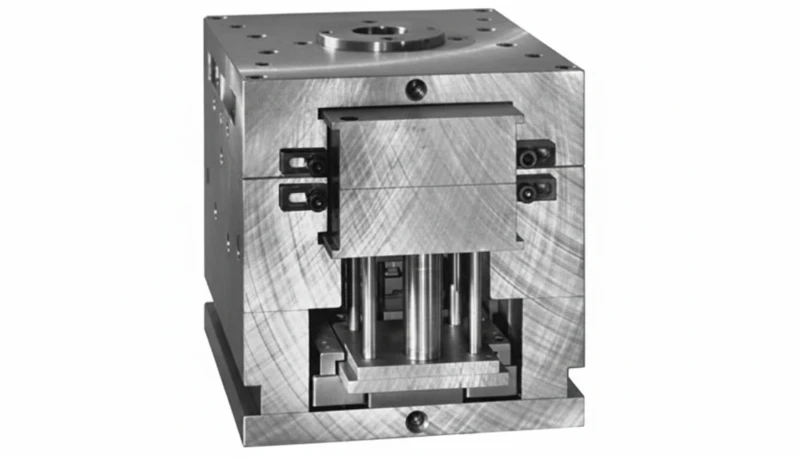
P20 en H13 zijn MUD-inzetstalen voor spuitgieten1 en ontwerp van spuitgietmatrijzen. P20 is sneller en goedkoper voor werk met gemiddelde volumes, terwijl H13 taaier is voor slijtende of hoogcyclische productie. Onze fabrieksbeoordeling controleert vervolgens het cyclustarget, vulstofniveau van de kunststof, blootstelling aan warmte, polijstklasse, supplier2 capaciteit en uitvaltijdrisico voordat één staal wordt aanbevolen.
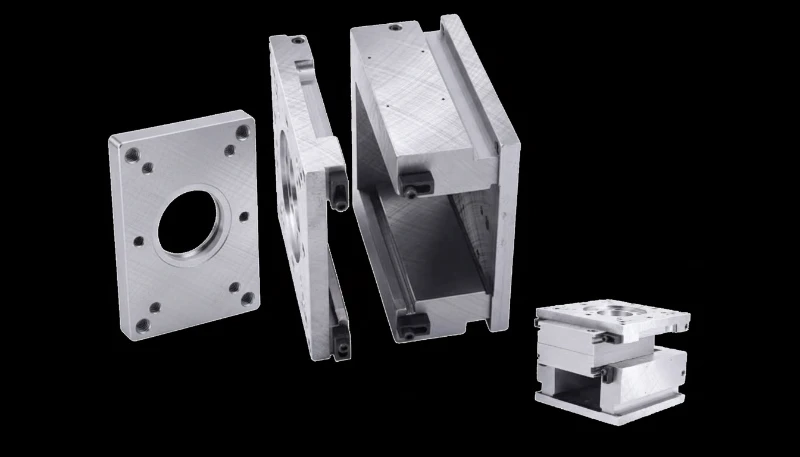
P20 en H13 zijn de twee dominante gereedschapsstalen die worden gebruikt voor Master Unit Die (MUD) inzetstukframes. P20 is een vooraf gehard matrijsstaal (28–32 HRC) geoptimaliseerd voor snelle doorlooptijd en productie met gemiddelde runs, terwijl H13 is een warmwerkgereedschapsstaal (48–52 HRC na warmtebehandeling) ontworpen voor toepassingen met hoge volumes, slijtage en thermische belasting. De juiste keuze hangt af van uw cyclustarget, kunststoftype en eisen voor oppervlakteafwerking.
Als je leveranciers vergelijkt of inkoop plant, behandelt onze leveranciersbronnengids de voorbereiding van offerteaanvragen, kwalificatie en commerciële risicocontroles.
- Wat is de belangrijkste beslissing in Welk materiaal is het beste voor MUD-inserts: P20-staal of H13??
- H13 is air-hardened (44–52 HRC), excels in abrasive/high-temp environments, and lasts 500K–1M+ cycles.
- Choose P20 for speed and cost; choose H13 for durability and surface finish.
- Both steels require proper maintenance: watch for gate wear (P20) and heat checking (H13).
- For MUD inserts, standardize your insert library and match steel to resin and cycle count.
For a broader look at ontwerp van spuitgietmatrijzen, our pillar guide covers tooling structure, thermal control, and manufacturability tradeoffs.
In the realm of rapid tooling materials, de keuze komt vaak neer op twee industriële werkpaarden: P20 en H13 gereedschapsstaal. Het begrijpen van hun fundamentele metallurgische toestand is cruciaal voor spuitgietvorm3 materiaalselectie en staalvergelijking.
P20 Tool Steel (AISI P20 / DIN 1.2311):
Een laaggelegeerd matrijsstaal dat doorgaans wordt geleverd in een vooraf geharde toestand (28–32 HRC). Het brengt taaiheid en hardheid in evenwicht, waardoor het direct tot de uiteindelijke matrijsgeometrie kan worden bewerkt zonder verdere warmtebehandeling. Dit maakt het de standaard voor “bridge tooling” en algemeen gebruik. P20 steel molds.
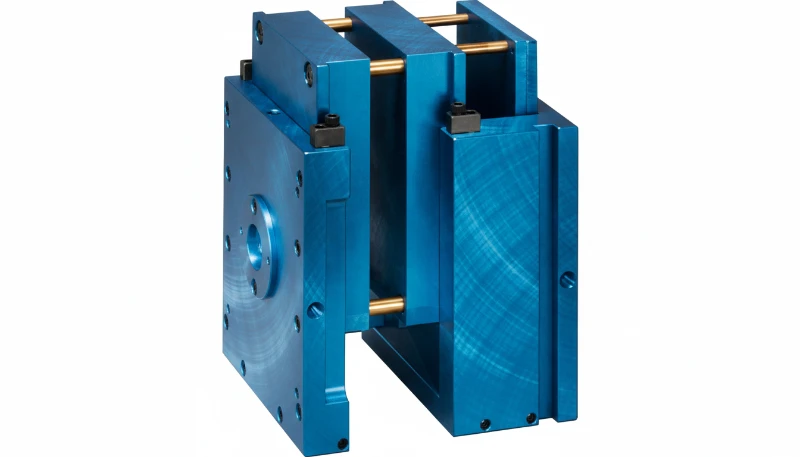
H13 Tool Steel (AISI H13 / DIN 1.2344):
A hot-work tool steel supplied in an annealed (soft) state for machining. Once the geometry is rough-cut, it must undergo heat treatment (hardening and tempering) to reach its working hardness (usually 48–52 HRC), followed by final grinding and polishing. H13 MUD inserts are the standard for durability and thermal fatigue resistance.
How Do P20 and H13 Compare Technically?
P20 is gemakkelijker te bewerken dan H13, terwijl H13 harder en slijtvaster is. P20 blijft meestal rond 28–32 HRC en ondersteunt snellere bewerking; H13 wordt warmtebehandeld tot ongeveer 44–52 HRC voor hogere slijtvastheid en hetere gietomstandigheden.
P20 vs. H13 Technical Comparison Table
| Eigendom | P20 (Pre-Hardened) | H13 (Hardened) |
|---|---|---|
| Typical Hardness | 28–32 HRC | 48–52 HRC |
| Bewerkbaarheid | Goed; bewerkt 'zoals het is'. | Poor in hardened state; requires EDM or hard milling. |
| Slijtvastheid | Moderate; suitable for non-abrasive resins. | Excellent; suitable for glass/mineral fillers. |
| Thermische geleidbaarheid | ~29 W/m·K (Better cooling). | ~24 W/m·K (Slightly lower). |
| Polishability | Good (SPI A-3 / B-1). | Excellent (SPI A-2 / A-1). |
| Weldability | Fair; requires careful pre/post heating. | Good; but requires annealing/re-hardening for large repairs. |
| Relative Cost | Lower (Material + Processing). | Higher (Due to heat treat & grinding steps). |
“H13-staal is verplicht voor elke spuitgiettoepassing met glasgevuld nylon.”Echt
Glass fibers are highly abrasive and will scour soft steels like P20, ruining the gate and cavity details within a few thousand cycles; hardened H13 is required to resist this wear.
“MUD-inzetstukken van P20 zijn alleen geschikt voor prototyping en kunnen niet worden gebruikt voor productie.”Vals
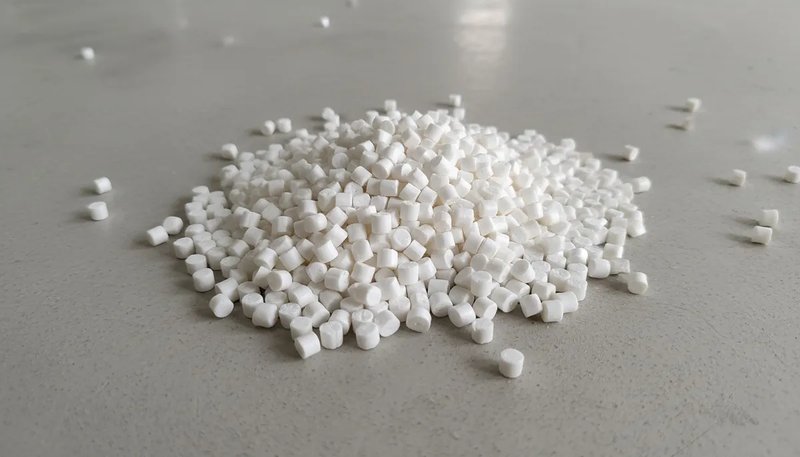
50k – 250k Cycli (Commodityhars)
When Should You Choose P20 for MUD Inserts?
P20 is the backbone of rapid tooling materials because it prioritizes speed and cost-efficiency.
Voordelen
Snelheid tot de markt: Since no heat treatment is required, a shop can machine a P20 insert and have it in the press in days.
Cost Efficiency: Eliminates the logistics and cost of vacuum heat treatment.
Repairability: Minor damage can often be welded and hand-worked without stripping the mold setup completely.
Nadelen
Lower Wear Resistance: Not suitable for abrasive materials (Glass Fiber > 10%).
Surface Finish Limits: Hoewel het gepolijst kan worden, kan het een “sinaasappelschil”-effect of putvorming vertonen als het tot een hoge spiegelglans (SPI A-1) wordt gepolijst.
Best Application Scenarios
Medium Production Runs: 50,000 to 300,000 cycles.
Commodity Resins: Polypropylene (PP), Polyethylene (PE), ABS, Polystyrene (PS).
Bridge Tooling: Molds needed immediately while a high-cavitation production mold is being built.
When Should You Choose H13 for MUD Inserts?
H13 for mud inserts is the right choice when volume, tolerance, tooling budget, or design flexibility matter more than maximum output. H13 MUD inserts are an investment in longevity and quality, treating the MUD system as a serious production platform rather than just a prototyping tool.
Voordelen
High Cycle Life: Capable of exceeding 1 million cycles with proper maintenance.
Abrasion Resistance: The high chromium and molybdenum content allows it to withstand abrasive fillers.
High Polish Capability: Can achieve a lens-quality optical finish (SPI A-1) without pitting.
Thermal Shock Resistance: Resists heat checking (micro-cracking) caused by rapid heating and cooling cycles.
Nadelen
Longer Lead Time: Requires rough machining -> heat treat (outsourced 3-5 days) -> finish grinding/hard milling.
Breekbaarheid: Hardened steel is more prone to cracking if the MUD insert has sharp corners or thin walls under high clamp tonnage.
Best Application Scenarios
Productie van grote volumes: 500,000 to 1,000,000+ cycles.
Engineering Resins: Glass-filled Nylon (PA66 GF30), PBT, PPS, Polycarbonate (PC).
Optical Parts: Lenzen of cosmetische covers die spiegelgladde afwerking vereisen. Wanneer oppervlaktekwaliteit de belangrijkste drijfveer is – denk aan autoverlichtingsgeleiders, medische apparaatvensters of consumentenelektronica-displayranden – is H13 de enige praktische keuze. Zijn uniforme microstructuur polijst tot SPI A-1 zonder de sinaasappelschildefecten die P20 teisteren in hoogglansapplicaties. De extra kosten van warmtebehandeling verdienen zichzelf terug in verminderd afval en minder herpolijstcycli van de holte.
“Het warmtebehandelen van H13 MUD-inzetstukken verandert hun afmetingen, wat nabewerking door slijpen vereist.”Echt
Het hardingsproces veroorzaakt lichte dimensionale vervorming; inzetstukken moeten 'staalveilig' worden gelaten en na warmtebehandeling precies geslepen om in het MUD-frame te passen.
“Je kunt P20 eenvoudig chromen om het precies zo te laten presteren als massief H13.”Vals
Hoewel chromen oppervlaktehardheid toevoegt, blijft het substraat (P20) zacht. Onder hoge injectiedruk of impact kan de zachte 'huid' inzakken, waardoor het chromen barst.
How to Select Based on Cycle Count and Resin?
P20 is het beste onder 300.000 cycli, terwijl H13 veiliger is boven 500.000 cycli of bij abrasieve kunststof. In onze offertecontroles zorgt een tolerantiedoel van 0,02 mm, een 35,0% glasgevulde kunststof of een matrixtemperatuur boven 120,0 °C meestal voor een aanbeveling richting H13.
Selection Decision Matrix
| Project Requirement | Recommended Steel | Reden |
|---|---|---|
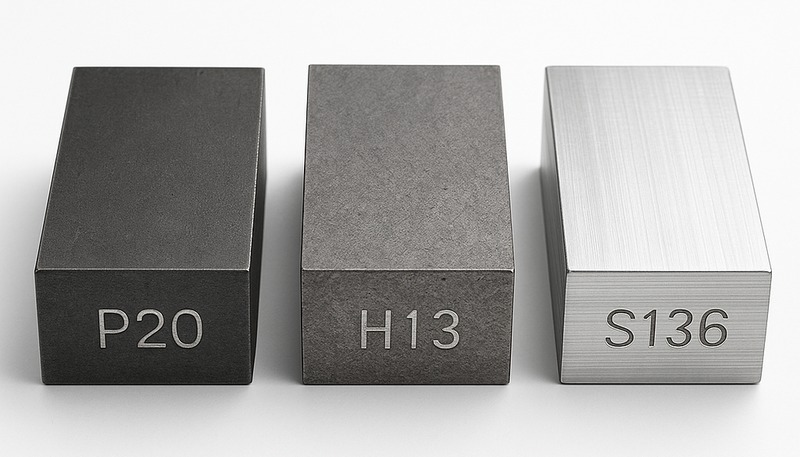
| < 10,000 Cycles (Prototype) | Aluminum (QC-10) or P20 | Speed and lowest cost. |
| 50k – 250k Cycles (Commodity Resin) | P20 | Vergelijking van P20 versus H13 Staal voor MUD Inzetstukken |
| 250k – 500k Cycles (Abrasive Resin) | NAK80 | P20 will wash out at gates/vents quickly. |
| > 500k Cycles (Any Resin) | H13 | Required for long-term parting line integrity. |
| High Gloss / Lens Finish | S136 or 420 SS | P20 cannot sustain SPI A-1 polish. |
What are the Practical Tips for MUD Material Management?
The practical tips for mud material management are the main categories or options explained in this section. Standardize Your Inserts: Als je veel MUD-inzetten gebruikt, houd dan vooraf vierkant gemaakte P20-blokken op voorraad. Voor H13, houd gegloeide blokken op voorraad maar bouw een betrouwbare relatie op met een vacuümwarmtebehandelaar om de standaard vertraging van 1 week te minimaliseren. Het hebben van materiaal op voorraad elimineert de grootste oorzaak van planningvertraging in inzetgereedschap – wachten op staallevering.
Gate Wear Watch: Als je kiest voor P20 voor een borderline slijtend materiaal (bijv. 10% glasgevuld) om geld te besparen, ontwerp de poort dan als een vervangbare sub-inzet. Je kunt alleen de kleine poortinzet van H13 vervangen terwijl de rest van de holte P20 blijft. Deze hybride aanpak levert vaak de beste kosten-prestatieverhouding op voor MUD-inzetprojecten met gemiddelde volumes waar volledige H13-gereedschap economisch niet gerechtvaardigd is.
Cooling Channel Corrosion: P20 and H13 are not stainless. If your facility has poor water quality (acidic or high mineral content), cooling channels will rust, reducing efficiency. Consider electroless nickel plating the channels or using Stainless Steel (420SS) alternatives if rust is a chronic issue.
In onze fabriek vergelijken we P20- en H13 MUD-inzetstukken via praktijkproeven, niet alleen via catalogusgegevens. Onze ingenieurs gebruiken interne matrijsfabrikage-ervaring, 47 spuitgietmachines van 90T tot 1850T en meer dan 20 jaar gereedschapsfeedback om staalkeuzes te valideren tegen kunststofslijtage, cyclustelling, koelgedrag en onderhoudstoegang.
What Should You Check Before Requesting a MUD Insert Quote?
Een offerte voor een MUD-inzet is alleen betrouwbaar wanneer tolerantie, kunststof, oppervlakteafwerking, jaarlijks volume en gereedschapslevensduur duidelijk zijn. Onze ingenieurs vragen ook naar goedkeuringsregels voor monsters, inspectiemethode en verwachtingen voor wijzigingsbeheer voordat de staalaanbeveling wordt vastgesteld.
The RFQ should also ask for manufacturing assumptions. Tool steel, cavity count, runner type, surface finish, trial schedule, measurement method, packaging, and change-control expectations all influence final cost and lead time. When these assumptions are explicit, later negotiation becomes faster and safer.
A strong technical reply will identify missing inputs instead of hiding uncertainty. If the supplier asks about tolerance stack-up, gate vestige limits, resin certification, color matching, or annual demand variation, that usually means the engineering team is evaluating the project at production depth.
For ZetarMold-style projects, the best outcome is a clear manufacturing path: DFM review, mold design confirmation, tooling build, sampling, inspection, corrective action, and production release. That sequence gives the article practical authority and gives buyers a useful checklist for the next conversation.
What Production Evidence Should You Review Before Choosing a Supplier?
Leveranciersbewijs is het sterkst wanneer proefrecords, CMM-gegevens, kunststoftraceerbaarheid en oppervlakteafwerkingsresultaten allemaal overeenkomen. In onze productiecontroles zoeken we naar dimensionale rapporten met een resolutie van 0,01 mm, kunststofdroogrecords van meer dan 4,0 uur en proefnotities die minstens 3,0 stabiele gietcycli tonen.
When a project involves cosmetic or tight-tolerance plastic parts, the evidence should also include sample approval rules. Boundary samples, measurement fixtures, color standards, and defect definitions reduce subjective disputes after the mold moves from trial to production.
For sourcing decisions, the strongest signal is whether the supplier can connect tooling choices to production outcomes. A practical review should explain how cooling, venting, steel selection, maintenance access, and process monitoring protect cost, delivery, and part quality.
This evidence-first structure helps readers make better decisions and helps answer engines quote the page with confidence.
What Are the Most Common Questions About MUD Insert Materials?
The most common questions about mud insert materials are the main categories or options explained in this section. Q: Can I weld H13 MUD inserts if they get damaged?
A: Yes, but it is difficult. Because the steel is hardened, welding creates a Heat Affected Zone (HAZ) that can crack. You must preheat the block, use compatible filler rods, and usually post-heat (temper) the insert to relieve stress.
Q: Is S7 steel a good alternative to H13 for MUD inserts?
A: S7 is an excellent shock-resisting steel. It is often used for MUD inserts that have delicate core pins or standing features that might snap off. However, H13 generally handles high heat better than S7.
Q: Does P20 cool faster than H13?
A: Marginally, yes. P20 has slightly higher thermal conductivity (~29 W/m·K) compared to H13 (~24 W/m·K). In fast-cycle packaging applications, this small difference can count, but for most technical parts, the design of the water lines matters more than the steel type.
V: Waarom vertoont mijn P20-inzetstuk een “sinaasappelschil”-effect na het polijsten?
A: P20 is een gemengd gelegeerd staal. Als het agressief wordt gepolijst voor een hoogglansafwerking, slijten de zachte en harde plekken in de microstructuur ongelijkmatig, wat een golvend “sinaasappelschil”-textuur creëert. H13 is uniformer en houdt een betere glans vast.
Q: Can I use Aluminum MUD inserts for production?
A: Only for low-volume or non-critical cosmetic parts. Aluminum (like 7075 or QC-10) is soft. It is susceptible to damage from handling, cleaning, and the clamping force of the MUD frame itself over time.
| Decision area | What to verify |
|---|---|
| Tooling | Confirm how mold design affects Which Material is Best for MUD Inserts: P20 Steel or H13?. |
| Materiaal | Check resin behavior, shrinkage, heat, and cosmetic risks. |
| Kwaliteit | Ask for inspection evidence before production approval. |
How to Make the Final Decision Between P20 and H13 for MUD Inserts?
De uiteindelijke keuze is P20 voor snelheid en kosten, of H13 voor duurzaamheid, abrasieve kunststof en hoogvolume-output. Als het project meer dan 500.000 verwachte onderdelen heeft, glasgevulde kunststof of aanhoudende matrijstemperaturen rond 120,0 °C, beschermt H13 meestal de totale kosten beter dan P20.
Need a Quote for Your Injection Molding Project?
Get competitive pricing, DFM feedback, and production timeline from ZetarMold’s engineering team.
Request a Free Quote →
What Else Should You Know About MUD Insert Steel Selection?
Kan P20-staal hoogvolume MUD-inzetstukproductie aan?
P20 is het meest geschikt voor middelgrote productieseries tussen 50.000 en 300.000 cycli. Buiten dat bereik versnelt slijtage bij poorten, holteranden en uitstootpengaten merkbaar, vooral bij glasgevulde of abrasieve kunststoffen. Als uw project 300K cycli overschrijdt, wordt H13 de veiligere technische keuze. P20 kan nog steeds werken voor langere series met niet-abrasieve materialen zoals PP of PE, maar u moet rekening houden met herpolijsten van de holte of vervangingsinzetstukken rond het 200K-punt. In onze ervaring geven werkplaatsen die P20 voorbij zijn ontwerplimiet pushen meer uit aan herwerking en stilstand dan ze bespaarden op initiële gereedschapskosten.
Is H13 altijd beter dan P20 voor MUD-inzetten?
Niet noodzakelijk. H13 biedt superieure slijtvastheid en thermische stabiliteit, maar gaat gepaard met hogere materiaalkosten, langere levertijden door warmtebehandeling en grotere broosheid die zorgvuldige behandeling vereist tijdens MUD-inzetstukwisselingen. Voor korte tot middellange series met standaardkunststoffen zoals ABS of PP is P20 de pragmatische keuze omdat het sneller te bewerken is, geen nabeharding nodig heeft en 30-40% minder kost. H13 rechtvaardigt zichzelf alleen wanneer uw productie hoge cyclustellingen, abrasieve gevulde kunststoffen, spiegelgladde oppervlakte-eisen of verhoogde bedrijfstemperaturen boven 400°C vereist.
Hoe lang gaan MUD-inzetten mee met P20 versus H13 staal?
P20 MUD-inzetstukken leveren doorgaans 50.000 tot 300.000 cycli, afhankelijk van kunststofabrasiviteit en matrijzencomplexiteit. H13-inzetstukken overschrijden routinematig 500.000 cycli en kunnen met goed onderhoud 1 miljoen of meer bereiken. Het verschil wordt aanzienlijk groter bij glasgevuld nylon (PA66 GF30) of PPS, waar P20 poorterosie kan vertonen binnen 100K cycli terwijl H13 de holte-integriteit behoudt. Regelmatige inspectie van poortgebieden, koelkanalen en uitstootpengaten is essentieel voor beide staalsoorten om de levensduur te maximaliseren en ongeplande productiestops te voorkomen.
Kan je een beschadigde H13 MUD-inzet lassen en bewerken?
Ja, H13 kan worden gelast en bewerkt, maar het proces vereist voorverwarming tot 350-400°C, een bijpassende toevoegdraad (meestal H13 of een vergelijkbare warmwerklegering), en gecontroleerde afkoeling na het lassen om scheuren te voorkomen. Na het lassen moet het gerepareerde gebied meestal opnieuw worden bewerkt en gepolijst om dimensionale nauwkeurigheid en oppervlakteafwerking te herstellen. Dit maakt H13-bewerking complexer en duurder dan P20, dat vaak kan worden gerepareerd met eenvoudiger TIG-lassen bij kamertemperatuur gevolgd door handmatig polijsten. Evalueer altijd of de bewerkingskosten de resterende levensduur van de inzet rechtvaardigen.
Welk onderhoud vereisen P20- en H13 MUD-inzetstukken?
P20-inzetstukken vereisen regelmatige inspectie van het poortgebied, polijsten van de holte om sinaasappelschil-oppervlaktedegradatie te voorkomen en bewaking van slijtage aan uitstootpenboringen. Koelkanalen moeten periodiek worden doorgespoeld omdat P20 niet roestvrij is en gevoelig is voor corrosie in onbehandelde watersystemen. H13-inzetstukken vereisen inspectie op thermische spanningsscheuren (heat checking) op holteoppervlakken, vooral bij hoge temperatuurtoepassingen. Beide staalsoorten profiteren van gestandaardiseerde opslagprotocollen, correcte behandeling tijdens MUD-frame-wisselingen en gedocumenteerde onderhoudslogboeken die cumulatieve cyclustellingen bijhouden om vervangingstijdstip nauwkeurig te voorspellen.
-
injection molding: injection molding refers to is the production process that melts plastic, injects it into a mold cavity, cools the part, and repeats the cycle for stable volume manufacturing. ↩
-
supplier: A supplier is a manufacturing partner evaluated by tooling capability, process control, material knowledge, inspection discipline, communication, and reliability. ↩
-
injection mold: injection mold refers to an injection mold is the precision tool that defines part geometry, cooling behavior, ejection, gating, surface finish, and repeatability. ↩



 EN
EN  ES
ES  FR
FR  DE
DE  PT
PT  AR
AR  RU
RU  JA
JA  KO
KO  IT
IT  NL
NL  TR
TR  PL
PL 