Was kennzeichnet P20 und H13 im Zusammenhang mit MUD-Einsätzen?
P20 und H13 sind Stähle für MUD-Einsätze beim Spritzgießen1 und bei der Spritzgießwerkzeugkonstruktion. P20 ermöglicht mittlere Stückzahlen schneller und kostengünstiger, während H13 für abrasive Werkstoffe oder hohe Zykluszahlen widerstandsfähiger ist. Vor der Empfehlung eines Stahls prüft unser Werk außerdem die angestrebte Zykluszahl, den Füllstoffanteil des Kunststoffs, die Wärmebelastung, die Polierklasse, die Fähigkeiten des Lieferanten2 und das Stillstandsrisiko.
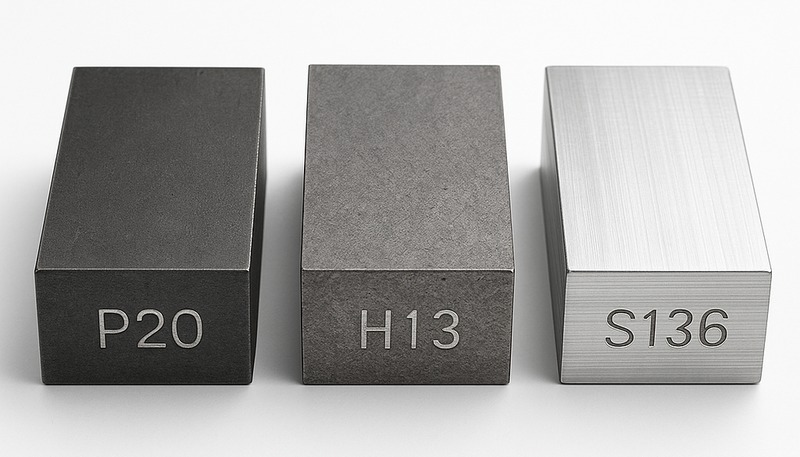
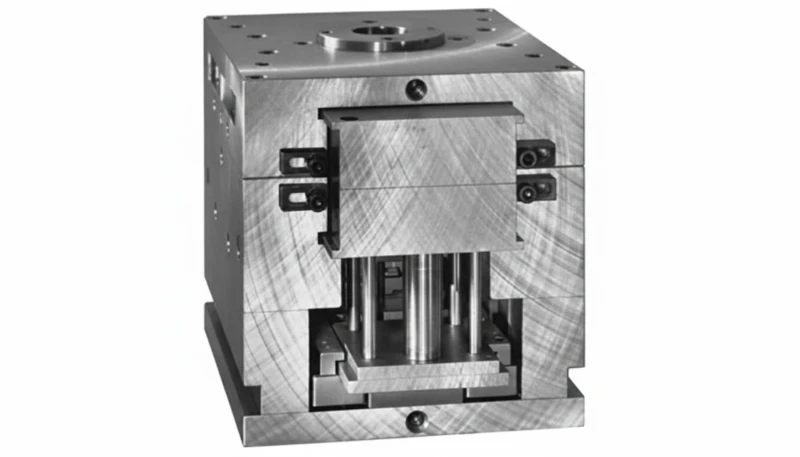
P20 und H13 sind die beiden vorherrschenden Werkzeugstähle für Einsatzrahmen des Master Unit Die (MUD). P20 ist ein vorgehärteter Formenstahl (28–32 HRC), der für schnelle Durchlaufzeiten und mittlere Serien optimiert ist. H13 ist dagegen ein Warmarbeitsstahl (nach der Wärmebehandlung 48–52 HRC), der für hohe Stückzahlen sowie abrasive und thermisch anspruchsvolle Anwendungen entwickelt wurde. Die richtige Wahl hängt von Ihrer Zielzykluszahl, dem Kunststofftyp und den Anforderungen an die Oberflächengüte ab.
Wenn Sie Anbieter vergleichen oder die Beschaffung planen, behandelt unser Leitfaden zur Lieferantensuche die RFQ-Vorbereitung, Qualifizierung und Prüfung kommerzieller Risiken.
- P20 ist vorgehärtet (28–36 HRC), benötigt keine Wärmebehandlung und eignet sich für mittlere Serien (50K–300K Zyklen) mit Standardkunststoffen.
- H13 wird an Luft gehärtet (44–52 HRC), bewährt sich in abrasiven Umgebungen und bei hohen Temperaturen und erreicht eine Lebensdauer von 500K–1M+ Zyklen.
- Wählen Sie P20 für kurze Lieferzeit und geringe Kosten; wählen Sie H13 für Haltbarkeit und Oberflächengüte.
- Beide Stähle erfordern eine sachgerechte Wartung: Achten Sie auf Anschnittverschleiß bei P20 und Wärmerisse bei H13.
- Standardisieren Sie bei MUD-Einsätzen Ihre Einsatzbibliothek und stimmen Sie den Stahl auf Kunststoff und Zykluszahl ab.
Für einen breiteren Überblick über die Spritzgießwerkzeugkonstruktion behandelt unser zentraler Leitfaden Werkzeugaufbau, Temperaturführung und Zielkonflikte bei der Fertigungsgerechtigkeit.
Bei Werkstoffen für Schnellwerkzeuge läuft die Wahl häufig auf zwei bewährte Branchenstandards hinaus: die Werkzeugstähle P20 und H13. Das Verständnis ihrer grundlegenden metallurgischen Zustände ist für die Werkstoffauswahl und den Stahlvergleich bei Spritzgießwerkzeugen3 entscheidend.
P20-Werkzeugstahl (AISI P20 / DIN 1.2311): Ein niedriglegierter Formenstahl, der üblicherweise vorgehärtet geliefert wird (28–32 HRC). Er verbindet Zähigkeit mit Härte und kann daher ohne anschließende Wärmebehandlung direkt auf die endgültige Werkzeuggeometrie bearbeitet werden. Dadurch ist er der Standard für „Überbrückungswerkzeuge“ und universelle P20-Stahlformen.
H13-Werkzeugstahl (AISI H13 / DIN 1.2344): Ein Warmarbeitsstahl, der zur Bearbeitung im geglühten (weichen) Zustand geliefert wird. Nach der Grobbearbeitung der Geometrie muss er wärmebehandelt (gehärtet und angelassen) werden, um seine Arbeitshärte von üblicherweise 48–52 HRC zu erreichen; anschließend folgen Fertigschleifen und Polieren. H13-MUD-Einsätze sind der Standard für Langlebigkeit und Beständigkeit gegen thermische Ermüdung.
Wie unterscheiden sich P20 und H13 technisch?
P20 lässt sich leichter bearbeiten als H13, während H13 härter und verschleißfester ist. P20 liegt üblicherweise bei etwa 28–32 HRC und ermöglicht eine schnellere Bearbeitung; H13 wird für höhere Verschleißfestigkeit und heißere Formbedingungen auf etwa 44–52 HRC wärmebehandelt.
Technische Vergleichstabelle P20 vs. H13
| Eigentum | P20 (vorgehärtet) | H13 (gehärtet) |
|---|---|---|
| Typische Härte | 28–32 HRC | 48–52 HRC |
| Bearbeitbarkeit | Gut; im vorhandenen Zustand bearbeitet. | Im gehärteten Zustand schlecht; erfordert EDM oder Hartfräsen. |
| Abnutzungswiderstand | Mäßig; für nicht abrasive Harze geeignet. | Hervorragend; für Glas- und Mineralfüllstoffe geeignet. |
| Wärmeleitfähigkeit | ≈29 W/m·K (bessere Kühlung). | ~24 W/m·K (etwas niedriger). |
| Polierbarkeit | Gut (SPI A-3 / B-1). | Hervorragend (SPI A-2 / A-1). |
| Schweißbarkeit | Mittelmäßig; erfordert sorgfältiges Vor- und Nachwärmen. | Gut; bei größeren Reparaturen jedoch Glühen/erneutes Härten erforderlich. |
| Relative Kosten | Niedriger (Material + Verarbeitung). | Höher (aufgrund der Wärmebehandlungs- und Schleifschritte). |
"H13-Stahl ist für jede Spritzgussanwendung mit glasfaserverstärktem Nylon zwingend erforderlich."True
Glasfasern sind stark abrasiv und tragen weiche Stähle wie P20 ab, sodass Anschnitt- und Kavitätsdetails innerhalb weniger tausend Zyklen zerstört werden; gehärteter H13 ist erforderlich, um diesem Verschleiß standzuhalten.
"MUD-Einsätze aus P20 eignen sich nur für Prototypen und können nicht für die Produktion verwendet werden."False
50k – 250k Zyklen (Standardharz)
Wann sollten Sie P20 für MUD-Einsätze wählen?
P20 ist das Rückgrat der Werkstoffe für Schnellwerkzeuge, weil Geschwindigkeit und Kosteneffizienz im Vordergrund stehen.
Vorteile
Kurze Markteinführungszeit: Da keine Wärmebehandlung erforderlich ist, kann ein Werkzeugbaubetrieb einen P20-Einsatz bearbeiten und innerhalb weniger Tage auf die Maschine bringen.
Kosteneffizienz: Logistik und Kosten einer Vakuumwärmebehandlung entfallen.
Reparierbarkeit: Kleinere Schäden lassen sich häufig schweißen und von Hand nacharbeiten, ohne den Werkzeugaufbau vollständig zu demontieren.
Benachteiligungen
Geringere Verschleißfestigkeit: Nicht für abrasive Werkstoffe geeignet (Glasfaser > 10 %).
Grenzen der Oberflächengüte: Der Stahl lässt sich zwar polieren, kann bei Hochglanzpolitur (SPI A-1) jedoch „Orangenhaut“ oder Grübchen zeigen.
Optimale Anwendungsszenarien
Mittlere Produktionsserien: 50.000 bis 300.000 Zyklen.
Standardkunststoffe: Polypropylen (PP), Polyethylen (PE), ABS, Polystyrol (PS).
Brückenwerkzeug: Formen, die sofort benötigt werden, während eine Produktionsform mit hoher Kavitätenzahl gebaut wird.
Wann sollten Sie H13 für MUD-Einsätze wählen?
H13 für MUD-Einsätze ist die richtige Wahl, wenn Stückzahl, Toleranz, Werkzeugbudget oder Konstruktionsflexibilität wichtiger sind als die maximale Ausbringung. H13-MUD-Einsätze sind eine Investition in Langlebigkeit und Qualität und machen das MUD-System zu einer ernst zu nehmenden Produktionsplattform statt nur zu einem Prototypenwerkzeug.
Vorteile
Hohe Standzeit: Bei ordnungsgemäßer Wartung sind mehr als 1 Million Zyklen möglich.
Abriebfestigkeit: Der hohe Chrom- und Molybdängehalt ermöglicht den Einsatz mit abrasiven Füllstoffen.
Hohe Polierfähigkeit: Eine optische Oberfläche in Linsenqualität (SPI A-1) lässt sich ohne Lochfraß erzielen.
Temperaturschockbeständigkeit: Widersteht Hitzerissen (Mikrorissen), die durch schnelle Aufheiz- und Abkühlzyklen entstehen.
Benachteiligungen
Längere Vorlaufzeit: Erfordert Schruppbearbeitung -> Wärmebehandlung (extern, 3-5 Tage) -> Fertigschleifen/Hartfräsen.
Sprödigkeit: Gehärteter Stahl neigt eher zu Rissen, wenn der MUD-Einsatz scharfe Ecken oder dünne Wände aufweist und hohen Schließkräften ausgesetzt ist.
Optimale Anwendungsszenarien
Großserienproduktion: 500.000 bis 1.000.000+ Zyklen.
Technische Kunststoffe: Glasfaserverstärktes Nylon (PA66 GF30), PBT, PPS, Polycarbonat (PC).
Optische Teile: Linsen oder dekorative Abdeckungen, die Hochglanzoberflächen erfordern. Wenn die Oberflächenqualität ausschlaggebend ist – etwa bei Lichtleitern für Fahrzeuge, Fenstern medizinischer Geräte oder Displayrahmen von Unterhaltungselektronik –, ist H13 die einzig praktikable Wahl. Sein gleichmäßiges Gefüge lässt sich auf SPI A-1 polieren, ohne den Orangenschaleneffekt, der P20 bei Hochglanzanwendungen beeinträchtigt. Die zusätzlichen Kosten der Wärmebehandlung amortisieren sich durch weniger Ausschuss und weniger Nachpolierzyklen der Kavität.
"Die Wärmebehandlung von H13 MUD-Einsätzen verändert deren Abmessungen und erfordert anschließendes Schleifen."True
Der Härteprozess verursacht eine leichte Maßveränderung; die Einsätze müssen mit Bearbeitungszugabe („steel safe“) gefertigt und nach der Wärmebehandlung präzisionsgeschliffen werden, damit sie in den MUD-Rahmen passen.
"P20 lässt sich einfach verchromen und verhält sich dann exakt wie massiver H13."False
Eine Verchromung erhöht zwar die Oberflächenhärte, doch der Grundwerkstoff (P20) bleibt weich. Bei hohem Einspritzdruck oder Stoßbelastung kann die weiche „Haut“ nachgeben und die Beschichtung aufreißen.
Wie erfolgt die Auswahl anhand von Zykluszahl und Harz?
P20 eignet sich am besten für weniger als 300,000 Zyklen, während H13 oberhalb von 500,000 Zyklen oder bei abrasivem Harz die sicherere Wahl ist. Bei unseren Angebotsprüfungen führen ein Toleranzziel von 0.02 mm, ein Harz mit 35.0% Glasfaseranteil oder eine Werkzeugtemperatur über 120.0 °C in der Regel zu einer Empfehlung für H13.
Entscheidungsmatrix für die Auswahl
| Projektanforderung | Empfohlener Stahl | Grund |
|---|---|---|
| < 10,000 Zyklen (Prototyp) | Aluminium (QC-10) oder P20 | Schnelligkeit und niedrigste Kosten. |
| 50k – 250k Zyklen (Standardkunststoff) | P20 | Vergleich von P20- und H13-Stahl für MUD-Einsätze |
| 250.000 – 500.000 Zyklen (abrasiver Kunststoff) | NAK80 | P20 wird an Anschnitten/Entlüftungen schnell ausgewaschen. |
| > 500k Zyklen (jedes Harz) | H13 | Für die langfristige Unversehrtheit der Trennlinie erforderlich. |
| Hochglanz / Linsenfinish | S136 oder Edelstahl 420 | P20 ist für eine SPI A-1-Politur nicht geeignet. |
Welche praktischen Tipps gibt es für das MUD-Materialmanagement?
Die praktischen Hinweise für das Materialmanagement bei MUD sind die wichtigsten in diesem Abschnitt erläuterten Kategorien oder Möglichkeiten. Einsätze standardisieren: Wenn Sie viele MUD-Einsätze verwenden, halten Sie vorgerichtete P20-Blöcke auf Lager. Lagern Sie für H13 geglühte Blöcke, bauen Sie jedoch eine zuverlässige Beziehung zu einem Vakuumhärter auf, um die übliche Verzögerung von 1 Woche zu minimieren. Vorrätiges Material beseitigt die größte einzelne Ursache für Terminverzug bei Einsatzwerkzeugen – das Warten auf die Stahllieferung.
Anschnittverschleiß überwachen: Wenn Sie aus Kostengründen P20 für ein grenzwertig abrasives Material (z. B. 10 % Glasfaseranteil) wählen, gestalten Sie den Anschnitt als austauschbaren Untereinsatz. So können Sie nur den kleinen Anschnitteinsatz aus H13 ersetzen und den Rest der Kavität aus P20 beibehalten. Dieser hybride Ansatz bietet bei MUD-Einsatzprojekten mittlerer Stückzahl, für die ein vollständiges H13-Werkzeug wirtschaftlich nicht gerechtfertigt ist, häufig das beste Kosten-Leistungs-Verhältnis.
Korrosion der Kühlkanäle: P20 und H13 sind keine rostfreien Stähle. Bei schlechter Wasserqualität in Ihrem Betrieb (sauer oder hoher Mineralgehalt) rosten die Kühlkanäle, wodurch ihre Effizienz sinkt. Erwägen Sie eine chemische Vernickelung der Kanäle oder Alternativen aus rostfreiem Stahl (420SS), wenn Rost ein chronisches Problem darstellt.
In unserem Werk vergleichen wir P20- und H13-MUD-Einsätze anhand realer Werkzeugversuche und nicht nur anhand von Katalogdaten. Unsere Ingenieure nutzen die Erfahrung aus dem eigenen Formenbau, 47 Spritzgießmaschinen von 90T bis 1850T sowie mehr als 20 Jahre Rückmeldungen aus dem Werkzeugbetrieb, um die Stahlauswahl anhand von Harzverschleiß, Zykluszahl, Kühlverhalten und Wartungszugänglichkeit zu validieren.
Was sollten Sie vor der Anfrage eines Angebots für einen MUD-Einsatz prüfen?
Ein Angebot für einen MUD-Einsatz ist nur belastbar, wenn Toleranz, Harz, Oberflächengüte, Jahresmenge und Werkzeugstandzeit eindeutig festgelegt sind. Vor der endgültigen Stahlempfehlung klären unsere Ingenieure außerdem die Regeln für die Musterfreigabe, die Prüfmethode und die Anforderungen an die Änderungskontrolle.
Die Anfrage sollte auch nach den Fertigungsannahmen fragen. Werkzeugstahl, Kavitätszahl, Angusstyp, Oberflächengüte, Versuchsplan, Messverfahren, Verpackung und Erwartungen an die Änderungskontrolle beeinflussen Endkosten und Lieferzeit. Sind diese Annahmen ausdrücklich festgehalten, werden spätere Verhandlungen schneller und sicherer.
Eine fundierte technische Antwort benennt fehlende Angaben, statt Unsicherheit zu verbergen. Fragt der Lieferant nach Toleranzketten, Grenzwerten für Anschnittreste, Harzzertifizierung, Farbabstimmung oder Schwankungen des Jahresbedarfs, deutet dies meist darauf hin, dass das Ingenieurteam das Projekt in Produktionstiefe bewertet.
Für Projekte im Stil von ZetarMold ist ein klarer Fertigungsweg das beste Ergebnis: DFM-Prüfung, Bestätigung der Formkonstruktion, Werkzeugbau, Bemusterung, Prüfung, Korrekturmaßnahmen und Produktionsfreigabe. Diese Abfolge verleiht dem Artikel praktische Aussagekraft und bietet Käufern eine nützliche Checkliste für das nächste Gespräch.
Welche Produktionsnachweise sollten Sie vor der Auswahl eines Lieferanten prüfen?
Lieferantennachweise sind am aussagekräftigsten, wenn Versuchsprotokolle, CMM-Daten, Harzrückverfolgbarkeit und Oberflächenergebnisse übereinstimmen. Bei unseren Produktionsprüfungen erwarten wir Maßberichte mit einer Auflösung von 0.01 mm, Harztrocknungsprotokolle über mehr als 4.0 Stunden und Versuchsnotizen mit mindestens 3.0 stabilen Spritzgießzyklen.
Bei Projekten mit Sichtteilen oder eng tolerierten Kunststoffteilen sollten die Nachweise auch Regeln für die Musterfreigabe enthalten. Grenzmuster, Messvorrichtungen, Farbstandards und Fehlerdefinitionen verringern subjektive Streitfälle nach dem Übergang des Werkzeugs von der Erprobung in die Produktion.
Das stärkste Signal bei Beschaffungsentscheidungen ist, ob der Lieferant Werkzeugentscheidungen mit Produktionsergebnissen verknüpfen kann. Eine praxisnahe Prüfung sollte erläutern, wie Kühlung, Entlüftung, Stahlauswahl, Wartungszugang und Prozessüberwachung Kosten, Liefertermine und Teilequalität absichern.
Diese evidenzbasierte Struktur hilft Lesern, bessere Entscheidungen zu treffen, und ermöglicht Antwortsystemen, die Seite verlässlich zu zitieren.
Was sind die häufigsten Fragen zu Werkstoffen für MUD-Einsätze?
Die häufigsten Fragen zu Werkstoffen für MUD-Einsätze sind die wichtigsten in diesem Abschnitt erläuterten Kategorien oder Möglichkeiten. F: Kann ich beschädigte H13-MUD-Einsätze schweißen? A: Ja, aber es ist schwierig. Da der Stahl gehärtet ist, entsteht beim Schweißen eine Wärmeeinflusszone (WEZ), die reißen kann. Sie müssen den Block vorwärmen, kompatible Schweißzusätze verwenden und den Einsatz in der Regel anschließend erwärmen (anlassen), um Spannungen abzubauen.
F: Ist S7-Stahl eine gute Alternative zu H13 für MUD-Einsätze? A: S7 ist ein hervorragender schlagzäher Stahl. Er wird häufig für MUD-Einsätze mit empfindlichen Kernstiften oder freistehenden Konturen verwendet, die abbrechen könnten. H13 ist jedoch im Allgemeinen besser für hohe Temperaturen geeignet als S7.
F: Kühlt P20 schneller als H13? A: Geringfügig, ja. P20 hat mit ~29 W/m·K eine etwas höhere Wärmeleitfähigkeit als H13 mit ~24 W/m·K. Bei schnell laufenden Verpackungsanwendungen kann dieser kleine Unterschied eine Rolle spielen, doch bei den meisten technischen Teilen ist die Auslegung der Wasserkanäle wichtiger als die Stahlsorte.
F: Warum zeigt mein P20-Einsatz nach dem Polieren eine „Orangenschale“? A: P20 ist ein mischlegierter Stahl. Bei aggressivem Polieren auf Hochglanz nutzen sich die weichen und harten Bereiche des Gefüges ungleichmäßig ab, wodurch eine wellige „Orangenschalen“-Struktur entsteht. H13 ist gleichmäßiger und behält eine bessere Politur.
F: Kann ich MUD-Einsätze aus Aluminium für die Produktion verwenden? A: Nur für kleine Stückzahlen oder optisch unkritische Teile. Aluminium (wie 7075 oder QC-10) ist weich. Es kann im Laufe der Zeit durch Handhabung, Reinigung und die Schließkraft des MUD-Rahmens selbst beschädigt werden.
| Entscheidungsbereich | Was zu prüfen ist |
|---|---|
| Werkzeugbau | Prüfen Sie, wie sich die Formkonstruktion auf die Frage auswirkt, welcher Werkstoff für MUD-Einsätze besser geeignet ist: P20-Stahl oder H13. |
| Werkstoff | Prüfen Sie Harzverhalten, Schwindung, Wärme und optische Risiken. |
| Qualität | Fordern Sie vor der Produktionsfreigabe Prüfnachweise an. |
Wie man die finale Entscheidung zwischen P20 und H13 für MUD-Inserts trifft?
Die finale Wahl ist P20 für Geschwindigkeit und Kosten oder H13 für Langlebigkeit, abrasives Harz und hohe Ausstoßvolumina. Wenn das Projekt mehr als 500.000 erwartete Teile, glasgefülltes Harz oder konstante Formtemperaturen um 120,0 °C hat, schützt H13 meist die Gesamtkosten besser als P20.
Benötigen Sie ein Angebot für Ihr Spritzgießprojekt?
Erhalten Sie wettbewerbsfähige Preise, DFM-Feedback und einen Produktionszeitplan vom Ingenieurteam von ZetarMold.
Kostenloses Angebot anfordern →
Was sollte man sonst über die Stahlauswahl für MUD-Inserts wissen?
Eignet sich P20-Stahl für die Großserienfertigung von MUD-Einsätzen?
P20 eignet sich am besten für mittlere Produktionsserien zwischen 50,000 und 300,000 Zyklen. Oberhalb dieses Bereichs beschleunigt sich der Verschleiß an Anschnitten, Kavitätskanten und Auswerferstiftbohrungen merklich, insbesondere bei glasfaserverstärkten oder abrasiven Harzen. Wenn Ihr Projekt mehr als 300K Zyklen umfasst, ist H13 die technisch sicherere Wahl. P20 kann bei nicht abrasiven Materialien wie PP oder PE auch für längere Serien eingesetzt werden; Sie sollten jedoch um die Marke von 200K eine Nachpolitur der Kavität oder Ersatzeinsätze einplanen. Unserer Erfahrung nach geben Betriebe, die P20 über seine Auslegungsgrenze hinaus einsetzen, mehr für Nacharbeit und Stillstand aus, als sie bei den anfänglichen Werkzeugkosten eingespart haben.
Ist H13 für MUD-Einsätze immer besser als P20?
Nicht unbedingt. H13 bietet eine überlegene Verschleißfestigkeit und thermische Stabilität, ist jedoch mit höheren Materialkosten, längeren Lieferzeiten aufgrund der Wärmebehandlung und größerer Sprödigkeit verbunden, die beim Wechsel von MUD-Einsätzen eine sorgfältige Handhabung erfordert. Für kurze bis mittlere Serien mit Standardharzen wie ABS oder PP ist P20 die pragmatische Wahl, da es sich schneller bearbeiten lässt, keine nachträgliche Härtung benötigt und 30-40% weniger kostet. H13 rechtfertigt sich nur, wenn Ihre Produktion hohe Zykluszahlen, abrasive gefüllte Harze, hochglanzpolierte Oberflächen oder erhöhte Betriebstemperaturen über 400°C erfordert.
Wie lange halten MUD-Einsätze aus P20- gegenüber H13-Stahl?
P20-MUD-Einsätze erreichen je nach Abrasivität des Harzes und Formkomplexität üblicherweise 50,000 bis 300,000 Zyklen. H13-Einsätze überschreiten regelmäßig 500,000 Zyklen und können bei ordnungsgemäßer Wartung 1 Million oder mehr erreichen. Bei glasfaserverstärktem Nylon (PA66 GF30) oder PPS wird der Unterschied deutlich größer: P20 kann bereits innerhalb von 100K Zyklen Angussverschleiß zeigen, während H13 die Kavitätsintegrität erhält. Die regelmäßige Kontrolle von Angussbereichen, Kühlkanälen und Auswerferstiftbohrungen ist bei beiden Stählen entscheidend, um die Standzeit zu maximieren und ungeplante Produktionsstopps zu vermeiden.
Kann man einen beschädigten H13-MUD-Einsatz schweißen und überarbeiten?
Ja, H13 kann geschweißt und nachgearbeitet werden, doch das Verfahren erfordert Vorwärmen auf 350-400°C, einen passenden Schweißzusatz (üblicherweise H13 oder eine ähnliche Warmarbeitslegierung) und kontrolliertes Abkühlen nach dem Schweißen, um Risse zu vermeiden. Nach dem Schweißen muss der reparierte Bereich meist erneut bearbeitet und poliert werden, um Maßgenauigkeit und Oberflächenqualität wiederherzustellen. Dadurch ist die Nacharbeit von H13 komplexer und teurer als bei P20, das häufig durch einfacheres WIG-Schweißen bei Raumtemperatur und anschließendes Handpolieren repariert werden kann. Prüfen Sie stets, ob die Nacharbeitskosten durch die verbleibende Lebensdauer des Einsatzes gerechtfertigt sind.
Welche Wartung benötigen P20- und H13-MUD-Einsätze?
P20-Einsätze erfordern regelmäßige Prüfungen des Anschnittbereichs, ein Polieren der Kavität zur Vermeidung einer orangenhautartigen Oberflächenschädigung und die Überwachung des Verschleißes der Auswerferstiftbohrungen. Die Kühlkanäle sollten regelmäßig gespült werden, da P20 kein Edelstahl ist und in unbehandelten Wassersystemen zu Korrosion neigt. H13-Einsätze erfordern Prüfungen der Kavitätsoberflächen auf thermische Spannungsrisse, insbesondere bei Hochtemperaturanwendungen. Beide Stähle profitieren von standardisierten Lagerungsprotokollen, einer sachgerechten Handhabung beim Wechsel von MUD-Rahmen und dokumentierten Wartungsprotokollen, die die kumulierte Zykluszahl erfassen, um den Austauschzeitpunkt genau vorherzusagen.
Spritzgießen: Spritzgießen bezeichnet das Produktionsverfahren, bei dem Kunststoff geschmolzen, in einen Formhohlraum eingespritzt, das Teil abgekühlt und der Zyklus für eine stabile Serienfertigung wiederholt wird. ↩
Lieferant: Ein Lieferant ist ein Fertigungspartner, der anhand seiner Werkzeugkompetenz, Prozesskontrolle, Materialkenntnis, Prüfdisziplin, Kommunikation und Zuverlässigkeit bewertet wird. ↩
Spritzgießform: Eine Spritzgießform ist das Präzisionswerkzeug, das Teilegeometrie, Kühlverhalten, Entformung, Anschnitt, Oberflächenqualität und Wiederholgenauigkeit bestimmt. ↩