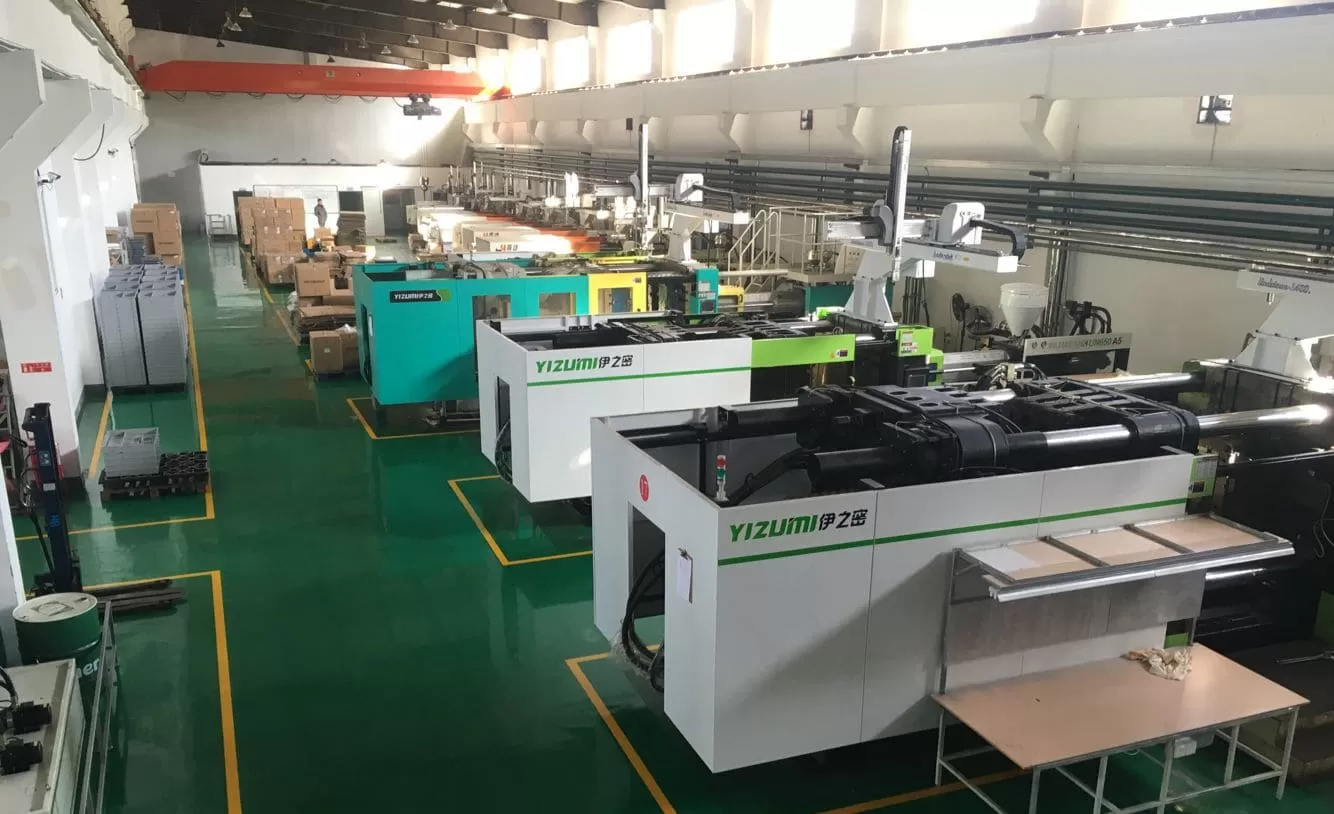
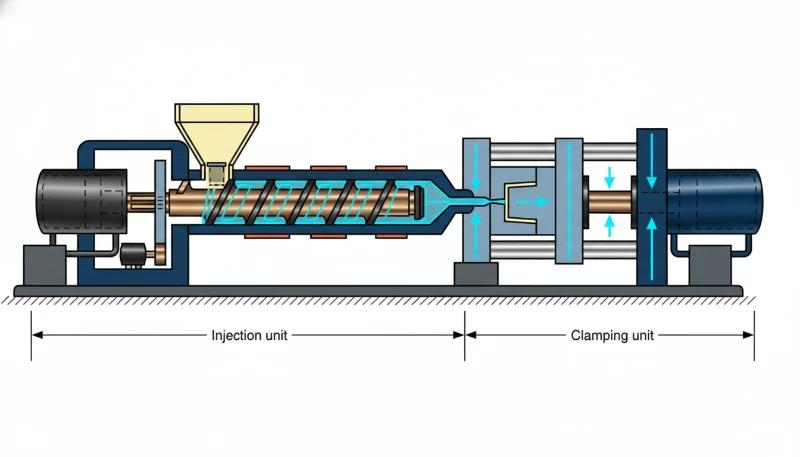
Ti servono 200 grandi alloggiamenti in poliuretano1 per un progetto di involucro industriale. I preventivi per lo stampaggio a iniezione tradizionale indicano $45.000 per il solo stampo: ripartiti su 200 pezzi, equivalgono a $225 per unità solo per lo stampo. Lo stampaggio a iniezione reattiva (RIM) può ridurre tale costo del 60–80%, offrendo pezzi con prestazioni strutturali comparabili. Questa guida tratta chimica, parametri di processo, opzioni dei materiali, compromessi economici e criteri decisionali concreti per scegliere il RIM rispetto allo stampaggio a iniezione convenzionale.
- Il RIM forma le parti attraverso una reazione chimica, non attraverso fusione e raffreddamento
- I costi degli stampi sono inferiori del 60–80% rispetto allo stampaggio a iniezione tradizionale
- Ideale per parti grandi (>12 pollici) a volumi bassi o medi (50–5.000 unità)
- Limitato principalmente a materiali termoindurenti a base di poliuretano
- Le pressioni di iniezione sono inferiori del 90–95% rispetto allo stampaggio a iniezione termoplastica
| Parametro | Valore tipico |
|---|---|
| Pressione di iniezione | 50–200 psi (3.4–13.8 bar) |
| Temperatura dello stampo | 100–180 °F (40–80 °C) |
| Materiale principale | Poliuretano (PU) |
| Dimensione Ideale del Pezzo | > 12 pollici (300 mm) |
| Intervallo di Volume Tipico | 50–5.000 unità/anno |
| Costo dello stampo vs stampaggio a iniezione | 60–80% inferiore |
Cos’è lo Stampaggio a Iniezione per Reazione (RIM)?
Lo stampaggio a iniezione reattiva (RIM) è definito da funzione, vincoli e compromessi illustrati in questa sezione. Se stai confrontando fornitori o pianificando gli acquisti, la nostra guida alla selezione dei fornitori di stampaggio a iniezione tratta preparazione delle RFQ, qualificazione e controlli sui rischi commerciali.
Lo stampaggio a iniezione reattiva (RIM) è un processo produttivo a bassa pressione nel quale due componenti chimici liquidi — solitamente un poliolo e un isocianato — vengono dosati, miscelati per impatto ad alta pressione e iniettati in uno stampo chiuso, dove reagiscono formando un pezzo termoindurente2 solido. A differenza dello stampaggio a iniezione convenzionale, che fonde granuli di plastica solidi e li spinge nello stampo a 5.000–20.000 psi, il RIM crea il pezzo mediante la chimica, non mediante calore e pressione.
La distinzione chiave: lo stampaggio a iniezione tradizionale è un processo fisico (fusione → riempimento → raffreddamento → espulsione). Il RIM è un processo chimico (miscelazione → reazione → indurimento → smontaggio). Questa differenza fondamentale guida ogni vantaggio e limitazione che segue.
Il RIM è stato sviluppato alla fine degli anni ‘60 e ha ottenuto ampia diffusione nell’industria automobilistica durante gli anni ‘70 e ‘80 per produrre paraurti, pannelli della carrozzeria e componenti interni. Oggi rimane il processo preferito per pezzi grandi e complessi in poliuretano² a volumi per cui gli stampi per lo stampaggio a iniezione tradizionale non sono economicamente giustificati.
Come Funziona il Processo RIM Passo per Passo?
Il processo RIM è una sequenza di cinque fasi: dosaggio, miscelazione, riempimento, polimerizzazione ed estrazione del pezzo reattivo in poliuretano. La sequenza seguente confronta il RIM con il ciclo di una pressa a vite per stampaggio a iniezione, aiutando gli ingegneri a diagnosticare i problemi di qualità e ottimizzare i tempi ciclo.
Fase 1: stoccaggio dei materiali e controllo della temperatura. I due componenti — di solito una miscela di polioli (Componente A) e un isocianato (Componente B) — sono conservati in serbatoi riscaldati separati a temperature controllate, generalmente 80–120 °F (27–49 °C). La stabilità termica è importante perché le variazioni di viscosità influiscono direttamente sulla qualità della miscelazione. Uno scostamento di 10 °F può modificare la viscosità del 15–25%, causando una miscelazione incompleta.
Fase 2: dosaggio e miscelazione ad alta pressione. All’avvio del ciclo, pompe dosatrici di precisione erogano i due componenti nel rapporto specificato, comunemente 1:1 in volume, ma da 100:30 a 100:200 a seconda della formulazione. I flussi si incontrano in una testa di miscelazione per impatto ad alta pressione a 1.500–3.000 psi. L’energia dell’impatto genera una miscelazione turbolenta in millisecondi, senza bisogno di un agitatore meccanico.
Fase 3: riempimento dello stampo. La miscela liquida fluisce in uno stampo chiuso a pressione relativamente bassa (50–200 psi). Poiché la miscela reagente ha una bassa viscosità, simile a quella dell’acqua, riempie facilmente geometrie complesse e sezioni a parete sottile. Lo stampo viene generalmente riscaldato a 100–180 °F per accelerare la reazione di polimerizzazione.
Fase 4: reazione chimica e polimerizzazione. Nello stampo si verifica una reazione esotermica3 quando poliolo e isocianato formano legami incrociati. Il materiale si espande leggermente, con azione schiumogena nel RIM a schiuma strutturale, riempie ogni dettaglio dello stampo e polimerizza fino allo stato solido finale. A seconda della formulazione, il tempo di polimerizzazione varia da 1 a 10 minuti. Internamente l’esotermia può raggiungere 250–350 °F, anche se lo stampo resta relativamente freddo.
Fase 5: estrazione e post-lavorazione. Raggiunto il tempo di estrazione⁴, lo stampo si apre e il pezzo viene rimosso. I pezzi RIM richiedono generalmente una post-polimerizzazione di 24–48 ore a temperatura ambiente per raggiungere le proprietà meccaniche complete. Rifilatura delle bave, finitura superficiale e verniciatura sono operazioni secondarie comuni.
Quali Materiali Vengono Utilizzati nel RIM?
Il panorama dei materiali per il RIM è molto più ristretto rispetto allo stampaggio a iniezione termoplastica. Mentre lo stampaggio a iniezione termoplastico offre migliaia di gradi di resina in dozzine di famiglie polimeriche, il RIM è dominato dalla chimica del poliuretano. Questo è sia il suo punto di forza (ottimizzazione approfondita all’interno del PU) sia il suo limite (non è possibile processare nylon, policarbonato o PEEK con una macchina RIM).

Elastomeri poliuretanici (PU). Il materiale più usato nel RIM. I pezzi in PU elastomerico solido vanno da Shore A 50, morbido e gommoso, a Shore D 80, duro e rigido. Sono impiegati per rivestimenti di paraurti, estensioni dei parafanghi e alloggiamenti industriali. Modulo flessionale tipico: 5.000–300.000 psi.
PU a schiuma strutturale⁵. Introducendo un agente espandente, spesso acqua che reagisce con l’isocianato in eccesso formando CO₂, il RIM produce pezzi con nucleo cellulare e pelle compatta. Il peso diminuisce del 10–30% mantenendo la rigidità. Lo spessore può raggiungere 0,5 pollici senza risucchi, risultato difficile per lo stampaggio a iniezione dei termoplastici.
RIM rinforzato (RRIM). L’aggiunta di fibre di vetro macinate, generalmente il 10–25% in peso, o cariche minerali al componente poliolico aumenta rigidità, stabilità dimensionale e resistenza termica. I pezzi RRIM hanno un modulo flessionale 2–4× superiore al PU non caricato e sono adatti a componenti automobilistici semistrutturali come rivestimenti dei cassoni dei pickup e pannelli porta.
Sistemi non PU. Meno comuni ma disponibili sul mercato: poliurea, con polimerizzazione più rapida e maggiore stabilità termica; copolimeri a blocchi di nylon, per applicazioni a temperatura più elevata; diciclopentadiene (DCPD), usato per pezzi molto grandi come i pannelli delle macchine agricole. Rappresentano meno del 15% della produzione RIM totale.
| Sistema Materiale | Densità (g/cm³) | Modulo di Flessione (psi) | Uso tipico |
|---|---|---|---|
| Elastomero PU Solido | 1.0–1.2 | 5,000–50,000 | Fascioni paraurti, guarnizioni |
| Poliuretano a schiuma strutturale | 0.4–0.8 | 20,000–100,000 | Pannelli, involucri |
| RRIM (25% vetro) | 1.2–1.4 | 100,000–300,000 | Pannelli porta, parafanghi |
| Poliurea | 1.0–1.1 | 15,000–80,000 | Coperture ad alta temperatura |
| DCPD | 1.0–1.1 | 200,000–350,000 | Grandi pannelli per attrezzature |
Quali sono i Vantaggi del RIM?
I vantaggi del RIM sono le principali categorie o opzioni spiegate in questa sezione. Il RIM offre vantaggi specifici che lo rendono la scelta ingegneristica corretta per determinate applicazioni — e quella sbagliata per altre. Ecco cosa fa veramente bene, sulla base di dati di produzione reali, non di affermazioni di marketing.
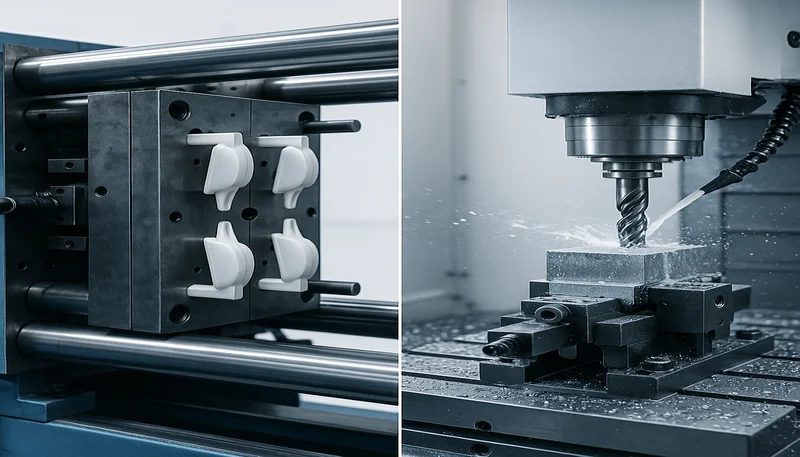
Basso costo degli stampi. Gli stampi RIM operano a 50–200 psi, rispetto ai 5.000–20.000 psi dello stampaggio a iniezione dei termoplastici. Possono quindi essere costruiti in alluminio, resina epossidica colata o perfino resine stampate in 3D per la prototipazione. Uno stampo RIM di produzione in acciaio per un pezzo di media complessità costa $5.000–$25.000, contro $30.000–$150.000 per uno stampo a iniezione comparabile. Sotto 1.000 unità, questa differenza rende spesso il RIM la scelta economicamente razionale.
Capacità di produrre pezzi grandi. Il RIM gestisce pezzi poco pratici per lo stampaggio a iniezione standard. Rivestimenti di paraurti lunghi fino a 6 piedi, pannelli per macchine agricole e involucri di apparecchiature medicali sono applicazioni RIM comuni. La bassa pressione di riempimento riduce al minimo la forza di chiusura: una chiusura da 10 tonnellate può produrre pezzi che nello stampaggio termoplastico richiederebbero 500 tonnellate.

Libertà di progettazione. Grazie alla viscosità simile all’acqua del liquido reagente, il RIM riempie sottosquadri, nervature sottili e geometrie complesse senza il compattamento ad alta pressione richiesto dallo stampaggio termoplastico. Sono gestibili variazioni di spessore 3:1 nello stesso pezzo. Inserti, boccole filettate e rinforzi strutturali possono essere inglobati in un solo ciclo.
Incapsulamento. Il RIM incapsula naturalmente inserti metallici, componenti elettronici e strutture di rinforzo. La bassa pressione di iniezione, inferiore a 200 psi, non danneggia l’elettronica sensibile. È quindi ideale per involucri di dispositivi medicali con PCB integrati, componenti automobilistici con staffe metalliche e involucri industriali con schermatura EMI incorporata.
Convenienza nei bassi volumi. Per serie annue da 50 a 2.000 unità, il RIM offre spesso un costo totale per pezzo inferiore allo stampaggio a iniezione in piccoli volumi, considerando l’ammortamento dello stampo. Il punto di pareggio rispetto allo stampaggio termoplastico si colloca generalmente tra 2.000 e 5.000 unità, a seconda di geometria e materiale.
Presso ZetarMold, incontriamo regolarmente clienti che richiedono preventivi per stampaggio a iniezione a basso volume per componenti che sarebbero più adatti al RIM. Quando un cliente necessita di 300 unità di un involucro da 500 mm e i preventivi superano i 40.000€ per gli utensili in acciaio, spieghiamo il compromesso onesto: le nostre 45 presse a iniezione da 90T–1850T sono ottimizzate per volumi di produzione termoplastica di 1.000+ unità. Per lotti inferiori a 1.000 unità di grandi componenti in poliuretano, il RIM è la scelta economicamente corretta, anche se rimanderemmo quel lavoro a un'officina RIM specializzata. Aiutare i clienti a trovare il processo giusto, anche quando non è il nostro, costruisce una fiducia a lungo termine e spesso li riporta da noi per programmi termoplastici su scala produttiva.
Quali sono i limiti del RIM?
I limiti del RIM sono le principali categorie descritte in questa sezione. Ogni processo produttivo presenta vincoli. Comprendere i limiti del RIM è importante quanto conoscerne i punti di forza, perché scegliere il processo sbagliato è molto più costoso che scegliere quello corretto.
Scelta limitata dei materiali. Il RIM è quasi esclusivamente limitato ai sistemi poliuretanici. Se l’applicazione richiede la resistenza chimica del PPS, la trasparenza del PMMA, la stabilità dimensionale del PEEK o l’economicità del polipropilene, il RIM non è adatto. È il motivo più comune per cui gli ingegneri abbandonano il RIM dopo la valutazione iniziale.
Tempo ciclo. I cicli RIM durano 2–10 minuti, rispetto ai 10–60 secondi dello stampaggio a iniezione dei termoplastici. La reazione chimica richiede più tempo del raffreddamento della plastica fusa. Per produzioni superiori a 5.000 unità/anno, ciò rende il RIM antieconomico indipendentemente dal risparmio sullo stampo.
Finitura superficiale. Sebbene i pezzi RIM possano essere verniciati secondo gli standard automobilistici di Classe A, la superficie grezza stampata presenta generalmente segni di flusso, porosità e variazioni cromatiche. Per ottenere superfici estetiche occorrono primer, stuccatura e verniciatura, con costi e tempi aggiuntivi. Se serve una superficie estetica direttamente dallo stampo, è preferibile lo stampaggio termoplastico con stampi in acciaio lucidato.
Riciclabilità. I poliuretani termoindurenti non possono essere rifusi e rilavorati. Diversamente dagli scarti termoplastici, macinabili e riutilizzabili, canali, bave e pezzi RIM scartati finiscono in discarica o richiedono un riciclo chimico specializzato. È un limite concreto per le aziende con obiettivi di sostenibilità.
"Le attrezzature RIM costano il 60–80% in meno rispetto a quelle per lo stampaggio a iniezione di termoplastici con geometrie dei pezzi equivalenti."True
Il RIM opera a 50–200 psi contro i 5.000–20.000 psi dello stampaggio a iniezione delle termoplastiche, consentendo l'uso di stampi in alluminio o epossidici invece che in acciaio temprato. Uno stampo RIM di media complessità costa $5.000–$25.000 contro i $30.000–$150.000 di uno stampo per iniezione.
"Il RIM può produrre pezzi in qualsiasi polimero, compresi termoplastici tecnici come PEEK, PPS e policarbonato."False
Il RIM è fondamentalmente limitato a polimeri termoindurenti che si induriscono attraverso reazioni chimiche — principalmente poliuretani, poliuree e alcuni sistemi speciali. I termoplastici ingegneristici richiedono fusione e raffreddamento, che è il dominio della tradizionale stampaggio a iniezione.
Come si confronta il RIM con lo stampaggio a iniezione tradizionale?
Il RIM è più competitivo dello stampaggio a iniezione tradizionale quando i compromessi di costo, tempi e qualità indicati di seguito corrispondono alle esigenze del programma. Rispetto allo stampaggio tradizionale, accetta cicli più lenti e una scelta di materiali più ristretta in cambio di pressione, costo dello stampo e difficoltà produttive inferiori per pezzi grandi. Nella nostra esperienza di preventivazione, la decisione dipende solitamente da volume, dimensioni del pezzo, requisiti del materiale e standard di finitura. Per confrontare i tempi ciclo, metti a confronto la polimerizzazione RIM di 2–10 minuti con il tempo di produzione dello stampaggio a iniezione standard.
| Fattore | RIM | Stampaggio a iniezione tradizionale |
|---|---|---|
| Pressione di iniezione | 50–200 psi | 5,000–20,000 psi |
| Costo tipico dell'attrezzaggio | $5,000–$25,000 | $30,000–$150,000 |
| Tempo di ciclo | 2–10 minuti | 10–60 secondi |
| Opzioni di materiale | PU, poliurea, DCPD | 100+ termoplastici |
| Dimensioni massime del componente | 6+ piedi (2m) | Limitato dalla tonnellatura della pressa |
| Punto Ottimale di Volume | 50–5.000 unità/anno | 1.000–1.000.000+ unità/anno |
| Finitura Superficiale (così come stampata) | Richiede verniciatura | Classe A ottenibile |
| Intervallo di Spessore della Parete | 0,125–0,5 pollici | 0,02–0,5 pollici |
| Riciclabilità | Non riciclabile (termoindurente) | Rettificato e riutilizzato |
La soglia critica è il volume. Sotto 2,000 unità, il risparmio sugli stampi offerto dal RIM compensa generalmente il ciclo più lento e il maggiore costo del materiale per pezzo. Sopra 5,000 unità, i cicli più rapidi e i minori costi dei materiali dello stampaggio a iniezione di termoplastici prevalgono nettamente. Tra 2,000–5,000 unità, la decisione dipende dalla complessità del pezzo, dai requisiti del materiale e dalla finitura superficiale richiesta.
La dimensione del componente è la seconda variabile chiave. Per componenti più grandi di 12 pollici (300 mm), il RIM spesso non ha alternative termoplastiche valide a bassi volumi. Il costo di un utensile per stampaggio a iniezione di grande formato (che richiede una pressa di 1.000+ tonnellate) può superare $200.000, mentre un utensile RIM comparabile rimane sotto $30.000. Questo è il motivo per cui l’industria automobilistica ha utilizzato il RIM per decenni per fasce dei paraurti, anche su veicoli prodotti in massa.

"Per volumi di produzione inferiori a 2,000 unità all'anno, il RIM offre in genere un costo totale per pezzo inferiore rispetto allo stampaggio a iniezione di materiali termoplastici."True
Uno stampo RIM da $20,000 ammortizzato su 1,000 unità aggiunge $20/unità al costo dell'attrezzatura. Uno stampo a iniezione da $100,000 ammortizzato sullo stesso volume aggiunge $100/unità. Anche considerando il maggiore costo del materiale per pezzo del RIM, il costo unitario totale è inferiore per volumi sotto le 2,000 unità.
"Il RIM produce pezzi con precisione dimensionale e finitura superficiale identiche a quelle dello stampaggio a iniezione con stampi in acciaio."False
I componenti RIM raggiungono generalmente tolleranze di ±0.010–0.030 pollici rispetto a ±0.002–0.005 pollici per lo stampaggio a iniezione di precisione. Le superfici RIM così modellate richiedono primer e verniciatura per qualità estetica, mentre gli utensili per stampaggio a iniezione in acciaio lucidato possono fornire superfici di Classe A direttamente.
Quali Sono le Applicazioni RIM Più Comuni?
Le applicazioni RIM più comuni sono le principali categorie o opzioni spiegate in questa sezione. Il RIM ha conquistato nicchie specifiche dove la sua combinazione di basso costo utensile, capacità per componenti grandi e libertà di design crea vantaggi evidenti. Queste non sono applicazioni teoriche — rappresentano dove il RIM è utilizzato attivamente nella produzione oggi.
Settore automobilistico. I rivestimenti dei paraurti restano la maggiore applicazione RIM a livello mondiale. Altri usi includono estensioni dei parafanghi, spoiler, supporti dei cruscotti, pannelli porta e rivestimenti dei cassoni dei pickup. Il settore automobilistico rappresenta circa il 65% del volume totale della produzione RIM.
Apparecchiature medicali. I grandi involucri per macchine per risonanza magnetica, scanner TC e robot chirurgici sono candidati ideali per il RIM. Sono generalmente grandi, oltre 300 mm, richiesti in bassi volumi, 100–500 unità/anno, e devono incapsulare componenti elettronici. La bassa pressione di iniezione evita danni a cablaggi e sensori incorporati.
Involucri industriali. Custodie per quadri di comando, scatole di derivazione elettrica e coperture per macchine edili e agricole. La possibilità di inglobare inserti metallici per il fissaggio e la resistenza a urti e agenti chimici rendono il RIM adatto agli ambienti difficili.
Settore aerospaziale. Pannelli interni, condotti e carenature per aeromobili. L’intrinseca ritardanza di fiamma del poliuretano, se formulato con additivi adeguati, e la capacità di soddisfare i requisiti FAA su fumo e tossicità rendono il RIM una scelta pratica per componenti aerospaziali interni in bassi volumi.
Elettronica di consumo. Grandi involucri per macchine da gioco, bancomat e chioschi. Quando le serie sono inferiori a 1.000 unità e i pezzi superano le dimensioni gestibili dallo stampaggio a iniezione standard, il RIM offre un compromesso conveniente tra stampaggio a iniezione e vetroresina laminata a mano.
Quando Scegliere la RIM per il Tuo Progetto?
Dopo aver letto i vantaggi, le limitazioni e i confronti sopra riportati, il quadro decisionale si riduce a una lista di controllo pratica. Ecco quando il RIM è la scelta giusta — e quando non lo è.
Scegli il RIM quando: il volume annuo è inferiore a 5.000 unità, il pezzo supera 12 pollici in almeno una dimensione, servono proprietà offerte dal poliuretano, come resistenza agli urti, flessibilità o isolamento in schiuma, e il budget per lo stampo è limitato. Se sono vere tre condizioni su quattro, il RIM merita una valutazione approfondita.
Non scegliere il RIM quando: servono più di 10.000 unità l’anno, perché il tempo ciclo annulla la convenienza; sono richiesti termoplastici tecnici, come i materiali per stampi a iniezione quali PEEK, PPS o policarbonato; serve una finitura di Classe A senza verniciatura; oppure occorrono tolleranze strette, ±0,005 pollici o migliori. In questi casi, lo stampaggio a iniezione dei termoplastici è il processo corretto.
Zona intermedia (2.000–5.000 unità): la decisione richiede un modello dei costi dettagliato. Crea un foglio di calcolo che confronti: (1) costo dello stampo ammortizzato sul volume totale previsto, (2) costo del materiale per pezzo, (3) tempo ciclo × tariffa macchina e (4) operazioni secondarie, verniciatura per il RIM ed eventuali modifiche allo stampo per lo stampaggio a iniezione. In base alla nostra esperienza, per la maggior parte dei pezzi di media complessità il punto di svolta è circa 3.000–3.500 unità.
Quali Sono le Domande Più Frequenti sullo Stampaggio a Iniezione a Reazione?
Qual è la differenza tra RIM e stampaggio a iniezione?
Il RIM utilizza componenti chimici liquidi — tipicamente un poliolo e un isocianato — che reagiscono e polimerizzano all’interno dello stampo per formare parti termoindurenti solide, operando a una pressione di iniezione di soli 50-200 psi. Lo stampaggio a iniezione tradizionale fonde granuli termoplastici solidi e li forza in uno stampo a 5.000-20.000 psi, per poi raffreddarli per solidificarli. Il RIM offre costi di utensilatura sostanzialmente inferiori (60-80% in meno) e gestisce parti molto più grandi dello stampaggio a iniezione standard, ma è limitato a materiali a base di poliuretano e tempi di ciclo di 2-10 minuti contro i 10-60 secondi dello stampaggio a iniezione termoplastico. Lo stampaggio a iniezione offre una selezione di materiali più ampia tra oltre 100 termoplastici, cicli di produzione più rapidi e tolleranze dimensionali più strette.
Quanto costa l’utensilatura RIM rispetto allo stampaggio a iniezione?
Le attrezzature RIM costano generalmente $5,000–$25,000 per pezzi di media complessità, contro $30,000–$150,000 per stampi a iniezione termoplastica equivalenti: una riduzione del 60–80%. La differenza deriva dalla bassa pressione operativa del RIM (meno di 200 psi contro 5,000–20,000 psi per IM), che consente di costruire stampi in alluminio, resina epossidica colata o compositi invece che in acciaio temprato per utensili. Per prototipi e serie molto brevi, gli stampi RIM stampati in 3D possono costare meno di $1,000. Il compromesso è che gli stampi RIM si usurano più rapidamente degli stampi a iniezione in acciaio e durano in genere 5,000–20,000 cicli, contro 100,000+ per gli utensili in acciaio temprato.
Quali tipi di parti sono più adatte per il RIM?
I candidati ideali per il RIM sono parti di grandi dimensioni che superano i 12 pollici (300 mm) in qualsiasi direzione, necessarie in volumi di produzione da bassi a medi di 50-5.000 unità all’anno, dove le proprietà del materiale in poliuretano soddisfano i requisiti dell’applicazione. Esempi comuni includono paraurti e pannelli della carrozzeria automobilistici, custodie per apparecchiature mediche come macchine per risonanza magnetica e TAC, involucri per pannelli di controllo industriali e componenti interni per l’aerospaziale. Anche le parti che richiedono l’incapsulamento di inserti metallici, componenti elettronici o rinforzi strutturali sono ottimi candidati per il RIM perché la bassa pressione di iniezione (sotto i 200 psi) non danneggia l’hardware incorporato durante lo stampaggio.
Il RIM può produrre parti con tolleranze strette?
Il RIM raggiunge tolleranze tipiche di ±0.010–0.030 inch (0.25–0.75 mm), adeguate per molti alloggiamenti strutturali, involucri e pannelli. Tuttavia, non raggiunge le prestazioni dello stampaggio a iniezione di materiali termoplastici con stampi in acciaio temprato, che può ottenere ±0.002–0.005 inch (0.05–0.13 mm). Se l’applicazione richiede accoppiamenti di precisione per cuscinetti, superfici di tenuta per guarnizioni, interfacce di accoppiamento strette tra più pezzi oppure indicazioni di quotatura e tolleranza geometrica (GD&T) inferiori a ±0.010 inch, lo stampaggio a iniezione tradizionale con attrezzature in acciaio è il processo produttivo più appropriato.
Il RIM è rispettoso dell’ambiente?
Il RIM ha un profilo ambientale misto che richiede una valutazione onesta. Sul lato positivo, il RIM produce scarti materiali minimi durante la lavorazione perché i reagenti liquidi riempiono con precisione la cavità dello stampo, e il processo utilizza significativamente meno energia per pezzo grazie a temperature (100–180 °F) e pressioni operative (50–200 psi) più basse rispetto allo stampaggio a iniezione termoplastica. Tuttavia, i poliuretani termoindurenti non possono essere riciclati con mezzi meccanici convenzionali — scarti, canali di colata, bave e pezzi a fine vita non possono essere rifusi e rilavorati come i termoplastici. Esistono processi di riciclo chimico per i poliuretani, ma non sono ancora ampiamente disponibili su scala commerciale, il che significa che attualmente la maggior parte dei rifiuti RIM finisce in discarica.
Quanto tempo impiega una parte RIM per polimerizzare?
I tempi di ciclo RIM variano da 2 a 10 minuti per stampata, a seconda dello spessore della parte, della formulazione del materiale, della temperatura dello stampo e della complessità della parte. Parti a parete sottile sotto i 6 mm di spessore possono essere estratte dallo stampo in 2-3 minuti con formulazioni di poliurea a reazione rapida, mentre parti strutturali in schiuma spesse oltre i 12 mm possono richiedere 8-10 minuti per una sufficiente resistenza a verde prima della rimozione sicura. Dopo l’estrazione dallo stampo, le parti RIM richiedono tipicamente una post-polimerizzazione a temperatura ambiente per 24-48 ore per raggiungere le piene proprietà meccaniche specificate. Questo passaggio di post-polimerizzazione è essenziale: le parti maneggiate o caricate prima del completamento della post-polimerizzazione possono mostrare deformazione permanente o ridotta resistenza all’impatto.
È possibile sovrastampare o stampare con inserti tramite RIM?
Sì, il RIM supporta naturalmente l’incapsulamento di inserti metallici, componenti elettronici, elementi di fissatura filettati e rinforzi strutturali in un’unica operazione di stampaggio. La bassa pressione di iniezione (sotto i 200 psi) non sposta né danneggia gli inserti preposizionati durante il riempimento dello stampo. A differenza della sovrastampa termoplastica, che richiede una seconda unità di iniezione, un controllo preciso della temperatura e un’attenta gestione della compatibilità dei materiali, l’incapsulamento RIM avviene in un’unica fase senza necessità di legame chimico tra gli strati. Ciò rende il RIM particolarmente efficace per custodie di dispositivi medici con elettronica incorporata, componenti automobilistici con staffe metalliche preposizionate e involucri industriali con schermatura EMI integrata o punti di fissaggio filettati.
poliuretano: Il poliuretano (PU) è un polimero versatile ottenuto facendo reagire diisocianati e polioli, disponibile come schiuma flessibile, schiuma rigida ed elastomero, con un'ampia gamma di durezze e proprietà meccaniche. ↩
termoindurente: Un termoindurente è un polimero che durante la polimerizzazione subisce una reazione chimica irreversibile, formando una struttura molecolare permanentemente reticolata che non può essere rifusa o rimodellata. ↩
reazione esotermica: Una reazione esotermica è un processo chimico che rilascia energia nell'ambiente sotto forma di calore, nel quale l'energia totale dei prodotti è inferiore a quella dei reagenti. ↩