

If you’re specifying a material for a structural part that needs to hold its shape under load, at temperature, and over time — glass-filled nylon1 is probably on your shortlist. Adding glass fibers to nylon transforms it from a tough-but-flexible engineering plastic into something that competes with die-cast aluminum.
But the injection molding process for glass-filled grades is a different animal compared to unfilled nylon. Higher melt viscosity, aggressive tool wear, anisotropic shrinkage2[^2], and fiber-length sensitivity mean you need to get your parameters right — or your parts will tell you loud and clear.
This guide walks through what actually matters when molding glass-filled nylon, based on two decades of running these materials on real production floors. At ZetarMold, we run 47 stampaggio a iniezione machines (90T–1850T) with 400+ materials in our Shanghai facility.
- Glass-filled nylon adds 30–200% more stiffness vs. unfilled grades
- Moisture must be below 0.1% before processing — dry 4–6 hours at 80°C
- Melt temps range from 260–300°C depending on PA6 vs. PA66
- Fiber orientation causes anisotropic shrinkage — design gates accordingly
- Mold wear is 3–5× higher than unfilled nylon — use hardened tool steel
What Is Glass-Filled Nylon and Why Does It Matter?
Glass-filled nylon is polyamide reinforced with short glass fibers, delivering up to 200% more stiffness and HDT above 250°C. If you are comparing vendors, our fornitore di stampaggio a iniezione sourcing guide covers RFQ prep and qualification.
Glass-filled nylon[^1] is standard polyamide (usually PA6 or PA66) mixed with short glass fibers at loadings of 10%, 20%, 30%, or 45% by weight. The result is a composite thermoplastic that’s dramatically stiffer, stronger, and more dimensionally stable than its unfilled base.
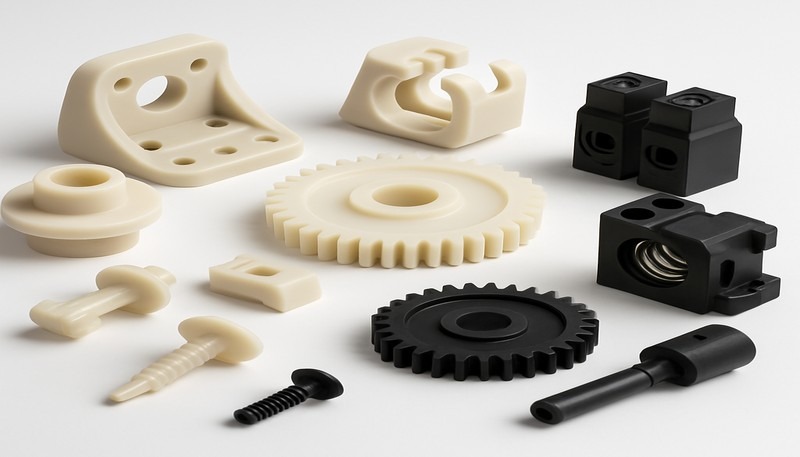
In our shop, PA6 GF303 and PA66 GF30 are among the top five most-molded materials. They show up in automotive under-hood components, electrical housings, power tool casings, industrial fittings, and consumer-grade structural brackets.
The economics are clear: you get metal-like rigidity at plastic-processing speeds, and total part cost often undercuts die-casting or CNC billet when volumes cross the 5,000-unit threshold.
At ZetarMold, we run 47 injection molding machines (90T–1850T) with experience across 400+ materials — PA6 GF30 and PA66 GF30 are among the top five most-molded grades in our Shanghai facility.
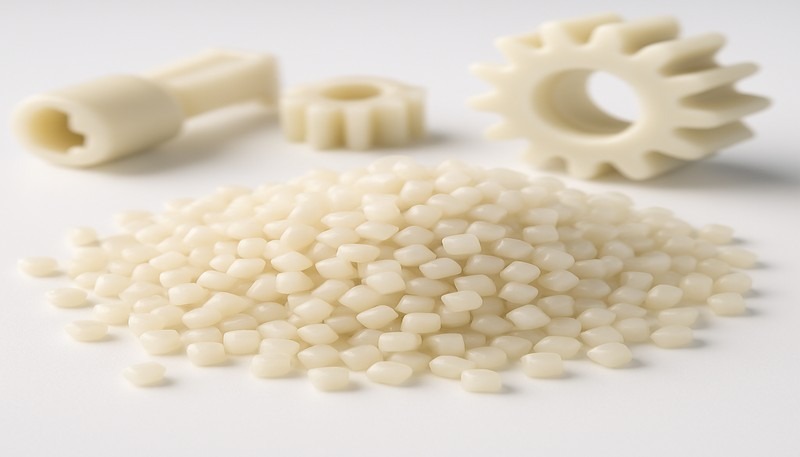
But here’s what datasheets won’t tell you — the glass fibers orient in the flow direction during injection. This means your part shrinks differently along the flow path versus across it, and this anisotropic shrinkage is the single biggest processing challenge with these materials.
What Are the Key Material Properties of Glass-Filled Nylon?
When you add 30% glass fiber to PA66, tensile strength jumps from roughly 80 MPa to 185 MPa — a 130% increase. Flexural modulus goes from about 2.9 GPa to 9.0 GPa, meaning the material is three times stiffer.
Heat deflection temperature (HDT) at 1.8 MPa climbs from around 75°C to over 250°C, which is a game-changer for under-hood automotive and electrical applications.
But there are trade-offs. Impact strength drops because glass fibers create stress concentrators. Elongation at break falls from 50%+ to around 3%, meaning the part won’t bend before it breaks. The surface finish is noticeably rougher too.
| Proprietà | PA6 Unfilled | PA6 GF30 | PA66 GF30 |
|---|---|---|---|
| Resistenza alla trazione (MPa) | 79 | 170 | 185 |
| Flexural Modulus (GPa) | 2.8 | 8.5 | 9.0 |
| HDT @ 1.8 MPa (°C) | 65 | 215 | 255 |
| Notched Izod (J/m) | 55 | 110 | 105 |
| Shrinkage – Flow (%) | 1,0–1,4 | 0.3–0.5 | 0.2–0.5 |
| Shrinkage – Transverse (%) | 1,0–1,4 | 0.7–1.0 | 0.6–1.0 |
| Melt Temp Range (°C) | 230–260 | 260–290 | 275–300 |
| Density (g/cm3) | 1.13 | 1.35 | 1.37 |
Notice the shrinkage difference between flow and transverse directions. In PA6 GF30, you might see 0.3% shrinkage in the flow direction but 0.9% across it. This three-fold differential is what makes mold design for glass-filled nylon a specialized skill.
What Processing Parameters Control Glass-Filled Nylon Molding?
Drying, melt temperature, mold temperature, and injection speed are the four parameters that control GF nylon quality. These parameters are less forgiving than unfilled nylon, so tight process control is essential.
Drying: Non-Negotiable
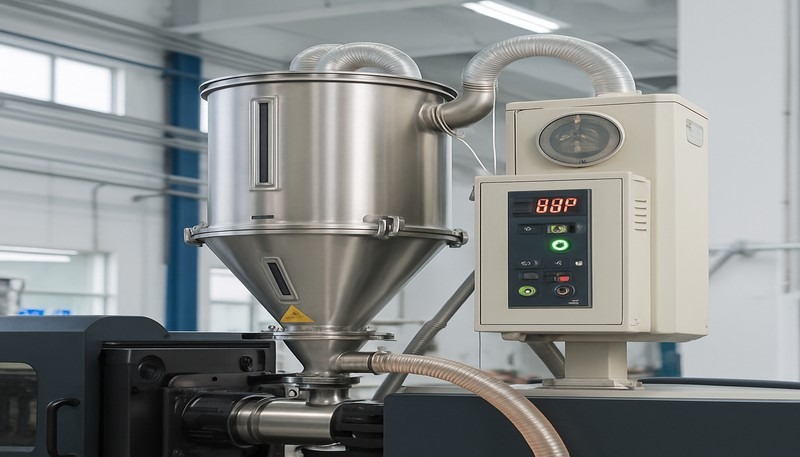
Nylon is hygroscopic — it absorbs moisture from the air. Glass fibers don’t change that. You must use a desiccant dryer and dry the material at 75–85°C for 4–6 hours to bring moisture below 0.1%. Skip this and you’ll get silver streaks, splay marks, and reduced molecular weight from hydrolysis.
We’ve seen incoming material at 0.4% moisture that looked dry to the naked eye — it wasn’t. Always verify with a moisture analyzer before running.
Temperatura di fusione
For PA6 GF30, shoot for 260–285°C. For PA66 GF30, you need 275–300°C. The higher end gives better flow and fiber wetting but increases thermal degradation risk.
At our Shanghai facility, we typically run PA66 GF30 at 285–295°C — that sweet spot gives good surface finish without burning off the sizing on the glass fibers.
Temperatura dello stampo
Run mold temperature at 80–100°C for glass-filled grades. Higher mold temps improve crystallinity, surface finish, and dimensional stability. But they extend cycle time.
For tight-tolerance parts, we’ll run 90°C minimum. Below 70°C, you’re asking for post-mold warpage and inconsistent mechanical properties — the outer skin crystallizes differently from the core.
Velocità e pressione di iniezione
Glass-filled nylon has higher melt viscosity, so you need 20–30% more injection pressure than unfilled grades. Faster injection speeds help maintain fiber length and reduce weld-line weakness.
But too fast and you’ll get jetting or flash on thin-wall parts. We usually start with a moderate-fast speed profile and adjust based on short-shot analysis.
How Does Glass Fiber Content Affect Shrinkage and Dimensional Stability?
This is where glass-filled nylon really earns its premium price. Unfilled PA66 shrinks about 1.0–1.4% in all directions. Add 30% glass fiber, and shrinkage in the flow direction drops to 0.2–0.5%.
For tight-tolerance parts like gear housings, sensor brackets, and connector inserts, this predictability is worth every penny of the material premium.
But transverse shrinkage only drops to about 0.6–1.0%. So your cavity design needs to account for differential shrinkage — you’re essentially building asymmetric compensation into the tool steel.
At our in-house stampo a iniezione manufacturing facility, our 8 senior engineers have learned to predict this behavior through years of tooling iteration. The key factors are fiber percentage, part geometry, gate location, and processing conditions.
For production parts requiring ±0.05 mm tolerances, we recommend PA66 GF30 or higher, processed with mold temperature above 85°C, and validated through first-article inspection using CMM measurement.
What Design Guidelines Should You Follow for Glass-Filled Nylon Parts?
Keep walls between 2 and 3 mm, use radii above 0.5 mm, and add 1–3° draft — these are the essential design guidelines for glass-filled nylon parts. Glass fibers increase shrinkage anisotropy and tool wear, so standard unfilled-nylon rules do not apply.
Wall Thickness: Keep It Uniform
Uniform wall thickness is always important in injection molding, but critical with glass-filled nylon. Thickness transitions create differential cooling and shrinkage rates, which create warpage. Fibers orient differently in thick vs. thin sections too.
We recommend 2.0–3.5 mm nominal wall. Below 1.5 mm, you’ll struggle with filling and fiber breakage. Above 4.0 mm, you’ll see sink marks and excessive cycle times.
Radii: Generous, Always
Glass fibers create stress concentrators at sharp internal corners. Minimum 0.5 mm internal radius, 1.0 mm preferred. We’ve seen failure rates drop 40%+ by increasing internal radii from 0.3 mm to 1.0 mm.
The fibers can’t negotiate sharp corners — they pile up and create resin-rich and fiber-rich zones, both of which are weak points.
Draft Angles: More Than You Think
Glass-filled nylon is abrasive, which means the part grabs the cavity surface during ejection. Minimum 1.5° draft, preferably 2–3°, especially on textured surfaces.
The cost of a few extra degrees of draft is nothing compared to parts sticking, scoring, or cracking during ejection.
Rib and Boss Design
Ribs should be 50–75% of nominal wall thickness. With glass-filled nylon, thinner ribs (50–60%) are safer because the material is already stiff. Bosses should follow the same ratio with coring to reduce mass.
What Are the Most Common Defects and How Do You Fix Them?
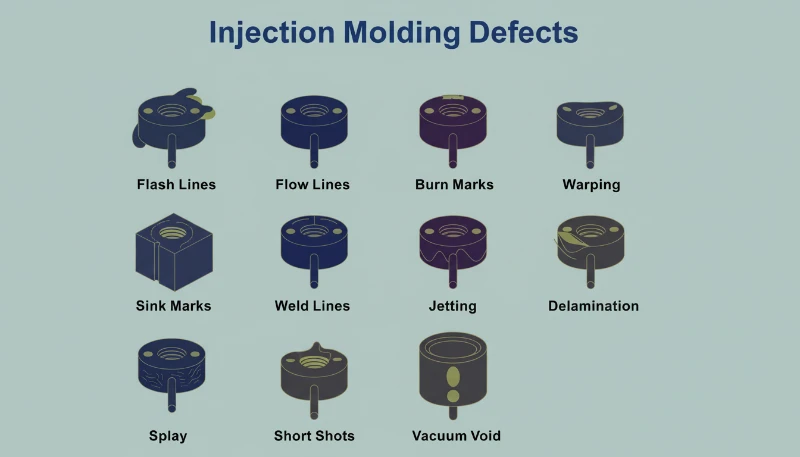
Fiber exposure, warp, weld lines, and moisture streaks are the four most common GF nylon defects — and most are preventable. Here is what causes each one and how we fix them in production.
Fiber Exposure and Poor Surface Finish
Those glass fibers poking through the surface mean the resin didn’t fully encapsulate the fibers at the cavity wall. Causes: mold temperature too low, injection speed too slow, or insufficient packing pressure.
Fix: raise mold temp to 90–100°C, increase injection speed, and ensure adequate hold pressure at 60–80% of injection pressure. For cosmetic A-surfaces, consider a polished cavity finish and a slight texture that masks the fiber pattern.
Warp and Dimensional Variation
Usually caused by differential shrinkage between flow and transverse directions, compounded by non-uniform wall thickness.
Fix: redesign for uniform walls, reposition gates for balanced flow, increase mold temperature, and consider post-mold annealing at 150–170°C for 30–60 minutes to relieve internal stresses.
Linee di saldatura
Glass fibers don’t cross weld lines — they orient parallel to the flow front, so the weld-line area is essentially unfilled nylon with much lower strength.
Fix: minimize weld lines through intelligent gate placement, position them in non-critical areas, and use higher melt and mold temperatures to improve knit strength.
Moisture-Related Defects
Silver streaks, splay, bubbles, and reduced mechanical properties. The fix is always the same: dry the material properly to below 0.1% moisture.
At our facility, IQC verifies material moisture content before any production run. We use closed-loop hopper loaders that maintain dry air throughout the run.
How Do You Choose Between PA6 GF and PA66 GF Grades?
Use PA6 GF30 for cost-sensitive parts below 150°C; choose PA66 GF30 for higher temperatures or better chemical resistance. Both grades at 30% glass fiber loading deliver excellent stiffness — the key difference is thermal performance.
Choose PA6 GF30 when cost is the primary driver (PA6 resin is typically 10–15% cheaper), the part operates below 150°C continuously, or you need slightly better impact resistance. PA6 GF30 is our go-to for consumer electronics housings and non-critical structural parts.
Choose PA66 GF30 when the part operates above 150°C (automotive under-hood, electrical contact carriers), chemical resistance matters, dimensional stability at elevated temperature is critical, or you need higher tensile strength and creep resistance.
For both grades, 30% glass fiber is the sweet spot. 10–15% gives modest improvements. 40–45% maximizes stiffness but comes with poor surface finish, very high viscosity, and aggressive tool wear.
Glass Filled Nylon vs. Unfilled Nylon: When Does the Upgrade Pay Off?
The GF nylon upgrade pays off when the part needs tensile strength above 80 MPa, operating temps above 100°C, or shrinkage below 0.4%. The material costs 20–40% more per kilogram, but the total part cost often breaks even.
The upgrade pays off when the part bears structural loads unfilled nylon can’t handle at the required deflection limit, dimensional stability across temperature ranges matters, or the part operates where unfilled nylon’s HDT of 65–75°C is insufficient.
The upgrade is a waste when the part is purely cosmetic, unfilled nylon already meets the spec, or the volume is too low to justify the tooling wear premium. We’ve talked clients out of glass-filled nylon more than once — it’s the honest recommendation.
One more consideration: tool life. Glass-filled nylon is abrasive — those fibers act like microscopic sandpaper. Expect 3–5× more cavity wear. At our mold manufacturing facility, we default to hardened steel (H13 or S7) for any GF nylon tooling, which is why our molds deliver 500,000+ shots before major maintenance.
From a sourcing perspective, glass-filled nylon is widely available from major suppliers including DuPont (Zytel), BASF (Ultramid), and EMS-Grivory. Lead times for standard PA6 GF30 and PA66 GF30 grades are typically 2–4 weeks, but specialty grades like PA66 GF45 or UV-stabilized compounds can take 8–12 weeks. Plan your material procurement early — we’ve seen projects delayed because the specified GF grade was on allocation during peak automotive season.
“Glass-filled nylon requires the same drying procedure as unfilled nylon.”Vero
True. The nylon matrix remains hygroscopic regardless of fiber content. Moisture can also get trapped at the fiber-resin interface. Both grades require drying to below 0.1% moisture before processing.
“Glass-filled nylon parts always have better surface finish than unfilled nylon.”Falso
False. Glass fibers create a matte, rough surface. Unfilled nylon produces a smoother, glossier finish. If cosmetics matter, unfilled grades or surface treatments are preferred.
Understanding how glass-filled nylon behaves during processing requires hands-on experience with the material across different part geometries and wall thicknesses. The fiber orientation patterns change with every gate relocation, wall thickness adjustment, or processing parameter shift. In our Shanghai facility, our engineers have documented these behavioral patterns across thousands of production runs, building an empirical database that helps us predict and prevent common defects before they occur in production.
“Il ritiro del nylon caricato con vetro differisce tra le direzioni di flusso e trasversale.”Vero
Vero. Le fibre di vetro si orientano nella direzione del flusso durante l'iniezione, creando un ritiro anisotropo — tipicamente 0,3% in flusso contro 0,8% trasversale per il PA6 GF30. Questo differenziale è la sfida più grande nella progettazione degli stampi per questi materiali.
“Un contenuto più elevato di fibre di vetro produce sempre un pezzo più resistente.”Falso
Falso. Mentre rigidità e resistenza alla trazione aumentano con il contenuto di fibra, la resistenza all'impatto può stabilizzarsi o diminuire. Con un carico del 45%, la fragilità e le difficoltà di lavorazione aumentano significativamente. Il 30% rimane la scelta più equilibrata per la maggior parte delle applicazioni.
Domande frequenti
Domande frequenti
Qual è la temperatura di stampaggio a iniezione per il nylon caricato con vetro?
Per il PA6 GF30, l'intervallo di temperatura di fusione è 260–285°C. Per il PA66 GF30, utilizzare 275–300°C. La temperatura dello stampo dovrebbe essere mantenuta a 80–100°C per una cristallinità e una finitura superficiale ottimali. Verificare sempre con la scheda tecnica della specifica gradazione, poiché le formulazioni del produttore possono variare di più o meno 10°C. Lavorare troppo caldo degrada il trattamento delle fibre; lavorare troppo freddo causa una scarsa bagnatura delle fibre e difetti superficiali. Nella nostra struttura di Shanghai, miriamo tipicamente al centro di ogni intervallo e regoliamo in base ai test di colpo corto e ai risultati dell'ispezione del primo pezzo.
In che modo il contenuto di fibre di vetro influisce sul ritiro del nylon?
Le fibre di vetro riducono drasticamente il ritiro nella direzione del flusso — da circa 1,2% per il PA66 non caricato fino a 0,3% per il PA66 GF30. Tuttavia, il ritiro trasversale scende solo a circa 0,7–0,9%, creando un comportamento anisotropo significativo che deve essere considerato nella progettazione dello stampo. Un contenuto di fibre più alto riduce ulteriormente il ritiro complessivo ma aumenta il differenziale tra le direzioni di flusso e trasversale. Ciò significa che un pezzo in PA66 GF45 potrebbe ritirarsi solo dello 0,2% in flusso ma comunque dello 0,6% in trasversale, rendendo la previsione dimensionale ancora più complessa per il progettista dello stampo.
Si può sovrastampare nylon caricato con vetro con TPE o TPU?
Sì, il nylon caricato con vetro (tipicamente PA6 GF30) è comunemente utilizzato come substrato rigido in applicazioni a due colpi o sovrastampaggio, con TPE o TPU come materiale morbido sovrastampato. L'adesione dipende dalla compatibilità chimica tra il substrato e il materiale sovrastampato, nonché dalla corretta preparazione della superficie del substrato e dalla gestione della temperatura durante il secondo colpo. Il contenuto di fibre di vetro può ridurre la resistenza del legame meccanico rispetto ai substrati in nylon non caricato perché le fibre riducono la superficie disponibile per l'incastro chimico con lo strato di TPE o TPU.
Cosa causa la visibilità delle fibre sulla superficie dei pezzi in nylon caricato con vetro?
L'esposizione delle fibre si verifica quando la matrice resinosa non incapsula completamente le fibre di vetro sulla superficie della cavità durante la fase di compattazione. Cause comuni includono una bassa temperatura dello stampo sotto gli 80°C, una velocità di iniezione lenta che non allontana le fibre dalla parete della cavità, una pressione di compattazione insufficiente e un alto contenuto di fibre superiore al 30%. Le soluzioni più efficaci sono aumentare la temperatura dello stampo a 90–100°C e aumentare la velocità di iniezione. Per i pezzi che richiedono una qualità estetica di superficie A, una finitura lucidata della cavità combinata con una trama sottile può aiutare a mascherare la trasparenza delle fibre intrinseca che producono le gradazioni caricate con vetro.
La nylon caricata con vetro è adatta per applicazioni a contatto con alimenti?
La nylon caricata con vetro può essere conforme FDA quando si utilizza una resina base di grado alimentare e un dimensionamento appropriato delle fibre, ma non tutti i gradi di nylon caricato con vetro possiedono la certificazione per il contatto con alimenti. Le fibre di vetro stesse sono inerti — la conformità dipende interamente dalla matrice di nylon e da eventuali additivi o coloranti utilizzati nel composto. Verificare sempre la documentazione di conformità FDA o UE 10/2011 del grado specifico dal fornitore del materiale. Se è richiesta sicurezza alimentare, specificatelo in anticipo affinché il vostro stampatore approvvigioni materiale certificato e mantenga la documentazione di tracciabilità appropriata durante tutto il processo produttivo.
Come si previene la deformazione nelle parti stampate a iniezione in nylon caricato con vetro?
Prevenire la deformazione richiede un approccio a più livelli: progettare per uno spessore uniforme della parete tra 2,0 e 3,5 mm, utilizzare ampi raggi interni di almeno 1,0 mm, posizionare gli attacchi per creare schemi di flusso bilanciati, mantenere la temperatura dello stampo sopra gli 85°C per tutto il ciclo e garantire un adeguato tempo di raffreddamento prima dell'espulsione. Per i pezzi che già mostrano deformazione in produzione, la ricottura post-stampaggio a 150–170°C per 30-60 minuti può alleviare le tensioni interne e migliorare la planarità. La strategia più efficace è affrontare la deformazione durante la revisione del progetto dello stampo, piuttosto che cercare di correggerla solo attraverso aggiustamenti di processo.
Quale acciaio per utensili è consigliato per stampi in nylon caricato con vetro?
Si consigliano acciai per utensili temprati come H13 a 48–52 HRC o S7 per stampi di produzione che lavorano nylon caricato con vetro. Le fibre di vetro abrasive causano un'usura da tre a cinque volte maggiore rispetto al nylon non caricato, il che significa che l'acciaio per utensili standard P20 mostrerà erosione della cavità e spostamento dimensionale molto prima. Per produzioni ad alto volume superiori a 500.000 colpi, considerare rivestimenti PVD come TiN o TiCN sulle superfici della cavità per prolungare la vita dello stampo. L'investimento iniziale in acciaio temprato si ripaga attraverso una riduzione dei tempi di fermo per manutenzione e una qualità del pezzo più consistente durante la vita dello stampo.
Il nylon caricato con vetro richiede una vite di iniezione speciale?
Una vite generica con un rapporto di compressione da 2,5:1 a 3,0:1 funziona bene per la maggior parte dei gradi di nylon caricato con vetro. Evitare rapporti di compressione molto elevati superiori a 3,5:1, che causano un'eccessiva rottura delle fibre e riducono il rinforzo meccanico che le fibre forniscono. Materiali resistenti all'usura per vite e cilindro, come rivestimenti bimetallici o componenti rivestiti in Xaloy, sono fortemente raccomandati per produzioni di lunga durata a causa della natura abrasiva delle fibre di vetro. Sostituire una vite consumata a metà produzione è molto più costoso che specificare componenti resistenti all'usura fin dall'inizio.
Avete bisogno di un partner affidabile per il vostro progetto di stampaggio a iniezione in nylon caricato con vetro? ZetarMold lavora con gradi di nylon caricato con vetro dal 2005 nella nostra sede di Shanghai. Con 47 macchine (90T–1850T), un stampo a iniezione negozio, e 8 ingegneri senior, stampiamo quotidianamente componenti in PA6 GF30 e PA66 GF30 per clienti automotive, elettronici e industriali di tutto il mondo. Richiedi un preventivo gratuito e lascia che il nostro team di ingegneri esamini il tuo progetto.
-
glass-filled nylon: nylon caricato con vetro si riferisce al nylon (PA6 o PA66) rinforzato con fibre di vetro corte, tipicamente dal 10% al 45% in peso, per migliorare rigidità, resistenza e resistenza al calore. ↩
-
anisotropic shrinkageritiro anisotropo si riferisce al ritiro differenziale nelle direzioni di flusso rispetto a quelle trasversali causato dall'orientamento delle fibre durante l'iniezione, che richiede un'attenta compensazione nella progettazione dello stampo. ↩
-
PA6 GF30PA6 GF30 si riferisce al poliammide 6 con un contenuto di fibre di vetro del 30% — una gradazione comune che bilancia prestazioni meccaniche e lavorabilità per applicazioni strutturali. ↩



 EN
EN  ES
ES  FR
FR  DE
DE  PT
PT  AR
AR  RU
RU  JA
JA  KO
KO  IT
IT  NL
NL  TR
TR  PL
PL 