Les bulles dans les pièces moulées ne constituent pas un défaut unique. Elles peuvent provenir d’air emprisonné près d’une ligne de soudure, d’humidité transformée en gaz, d’une résine décomposée, d’une mauvaise évacuation des gaz1 ou d’une cavité sous vide2 interne causée par le retrait. Augmenter systématiquement la pression peut masquer un symptôme et en créer trois autres.
Ce guide propose une méthode d’usine pour diagnostiquer les bulles du moulage par injection. Identifiez d’abord leur type, puis corrigez dans l’ordre le séchage, les réglages machine, le seuil, les évents du moule ou la conception de la pièce. Vous réduirez les essais et éviterez d’accuser trop tôt le moule d’injection.
- Identifiez le type de bulle avant de modifier la pression.
- L’humidité, l’air emprisonné et les vides nécessitent des corrections différentes.
- La ventilation et l’emplacement du seuil déterminent souvent la réussite.
- Les relevés de séchage comptent davantage que la mémoire de l’opérateur.
- Les modifications de conception surpassent les réglages héroïques du procédé.
Quelles sont les causes des bulles d’air dans les pièces moulées par injection ?
Les bulles d’air sont causées par des gaz piégés, l’humidité de la matière, la dégradation de la matière fondue, un compactage insuffisant ou une géométrie qui empêche l’évacuation des gaz. La première étape consiste à déterminer si la bulle se trouve près de la surface, dans une paroi épaisse, en fin d’écoulement, autour d’une nervure ou près du point d’injection.
Une véritable poche d’air3 apparaît généralement à la rencontre de deux fronts de matière ou dans la dernière zone remplie. Le plastique enferme le gaz avant son évacuation. Une bulle, brûlure, manque ou zone brillante fragile peut apparaître. Si l’emplacement suit l’écoulement à chaque cycle, vérifiez l’air et les évents avant la résine.
Une cavité due au vide se comporte différemment. Elle se forme souvent à l’intérieur d’un bossage épais, à la base d’une nervure ou dans une paroi massive, lorsque l’extérieur se solidifie en premier tandis que le centre continue de se rétracter. La surface peut sembler acceptable, mais la découpe de la pièce révèle un espace creux. D’après notre expérience, les cavités dues au vide sont fréquentes lorsque les acheteurs demandent des parois épaisses pour gagner en résistance, puis s’interrogent sur la présence de bulles internes dans la pièce.
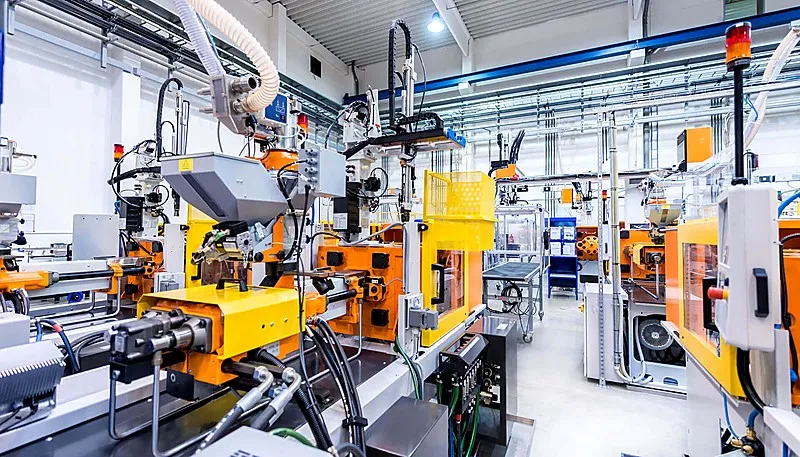
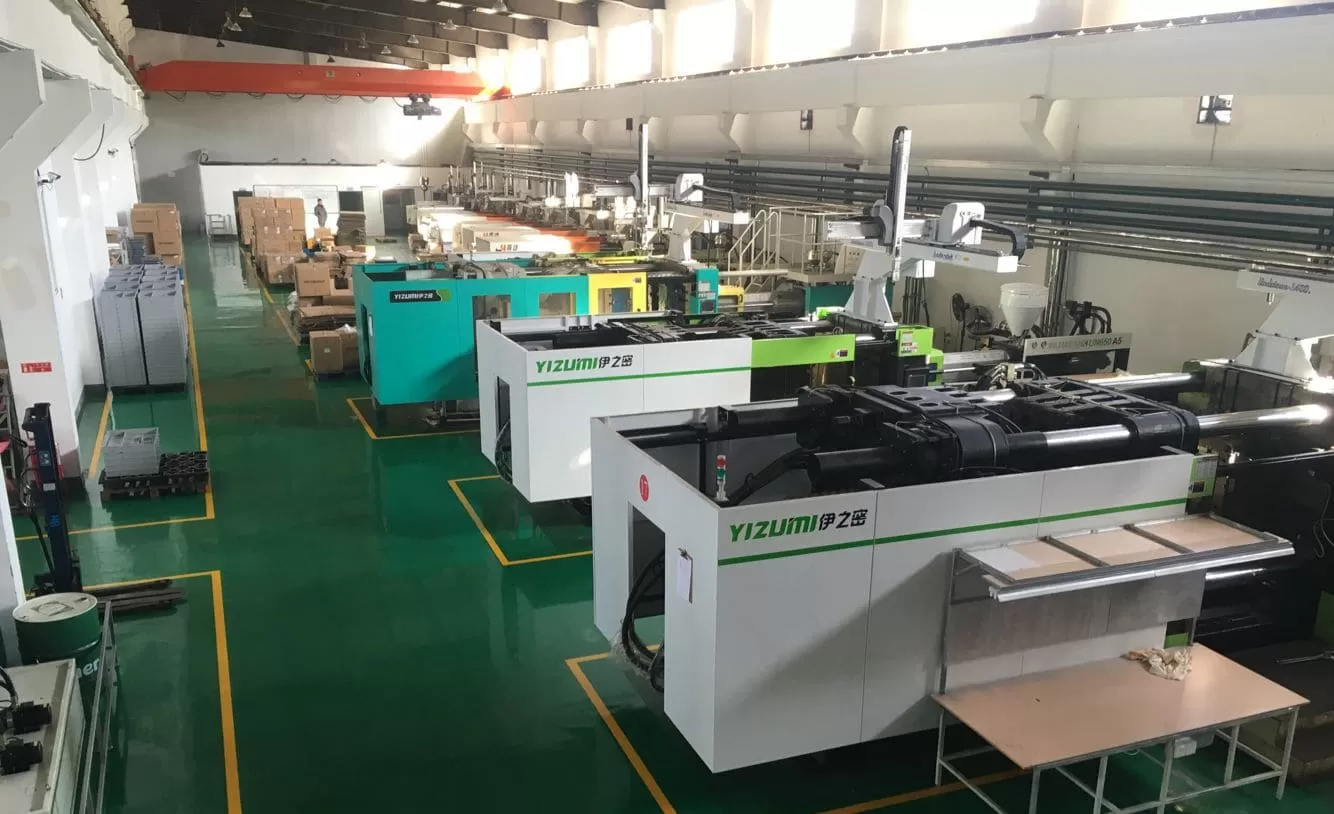
Dans notre usine de Shanghai, ZetarMold exploite 47 presses à injecter de 90T à 1850T et possède une expérience de plus de 400 matières plastiques. Cette diversité est importante, car des bulles dans un petit capot en ABS, une grande coque en PP et un boîtier en nylon chargé de fibres de verre peuvent avoir des causes racines différentes même si le défaut semble similaire.
"L’emplacement de la bulle est l’indice le plus rapide pour trouver la cause racine."True
Une bulle en fin de remplissage indique de l’air emprisonné ou une mauvaise mise à l’air, tandis qu’une bulle à l’intérieur d’une section épaisse signale un problème de retrait, de compactage ou de déséquilibre du refroidissement.
"Toutes les bulles peuvent être corrigées en augmentant la pression d'injection."False
Une pression plus élevée peut corriger certains vides liés au compactage, mais elle peut aggraver les bavures, les contraintes, les brûlures, l’échauffement par cisaillement et le surcompactage si la cause racine est l’humidité ou l’air emprisonné.
Comment distinguer l’air piégé de l’humidité ou des vides sous vide ?
L’air emprisonné apparaît toujours au même endroit, l’humidité est souvent aléatoire et les vacuoles sont généralement cachées dans les géométries épaisses. Utilisez l’emplacement, le moment d’apparition, l’examen en coupe, les relevés de séchage et la réponse du procédé pour les distinguer.
Commencez par un simple essai de coupe. Tranchez la pièce au niveau du défaut et inspectez la paroi. Si l’espace creux se trouve au centre d’une zone épaisse, traitez d’abord le retrait ou le compactage. Si la bulle débouche à la surface ou se situe près de la fin du remplissage, inspectez les évents, les lignes de soudure et les hésitations d’écoulement. Si le défaut évolue après un séchage approprié, l’humidité faisait probablement partie du problème.
Un registre de séchage n’est pas un document purement administratif. Les matériaux hygroscopiques comme le nylon, le PC, l’ABS, le PBT et le TPU peuvent libérer de la vapeur pendant le moulage lorsque leur teneur en humidité est trop élevée. Même les matériaux non hygroscopiques peuvent conserver de l’humidité en surface s’ils sont stockés au froid ou exposés à l’air humide. Pour chaque analyse de bulles, nous recommandons d’enregistrer la température et la durée de séchage, le point de rosée, le temps d’exposition dans la trémie et le lot de résine.
N’ignorez ni les odeurs ni la décoloration. Si la matière sent le brûlé, jaunit ou présente des points noirs, la bulle peut provenir d’une dégradation plutôt que de l’air ordinaire. Une température de fourreau excessive, un long temps de séjour, une vitesse de vis élevée, des zones mortes dans le fourreau ou un rebroyé contaminé peuvent tous produire du gaz avant que le plastique n’atteigne l’empreinte.
| Symptôme | Cause probable | Premier contrôle |
|---|---|---|
| Bulle en fin de remplissage | Poche d’air | Profondeur des évents et trajet d’écoulement |
| Traces d'argenture aléatoires | Humidité ou substances volatiles | Registre de séchage et stockage de la résine |
| Noyau creux interne | Retassure interne sous vide | Épaisseur de paroi et compactage |
| Bulle brûlée | Compression du gaz | Évacuation de l’air et vitesse d’injection |
Après le premier classement, conservez un tableau d’échantillons. Placez-y une pièce issue de chaque réglage d’essai et inscrivez à côté le lot de résine, le relevé de séchage, la température de la matière fondue, le profil de vitesse d’injection, la pression de maintien et le numéro d’empreinte. Cette habitude simple évite à l’équipe de débattre sur la base de ses souvenirs. Elle montre également si une correction est reproductible ou si une injection chanceuse est, aujourd’hui encore, prise à tort pour un procédé stable en production normale. Conservez ensemble et en sécurité les photos, les échantillons découpés et les réglages afin de pouvoir les comparer ultérieurement lors de la revue d’équipe.
Comment régler les paramètres du procédé pour éliminer les bulles ?
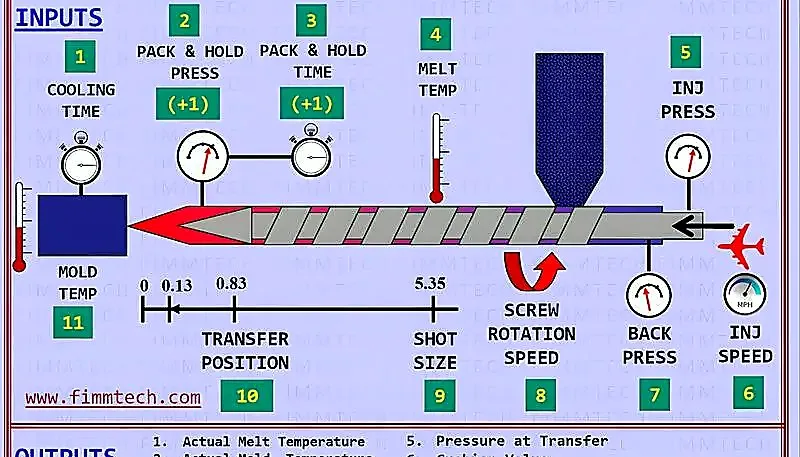
Les réglages du procédé ne doivent être ajustés qu’après confirmation du séchage du matériau et du type de défaut. En cas d’air emprisonné, réduisez la vitesse d’injection excessive près de la fin du remplissage ou utilisez une injection par paliers. Pour les vides dus au retrait, améliorez la pression de compactage, le temps de maintien, la maîtrise du gel du seuil et l’équilibre du refroidissement.
La séquence sûre consiste à régler d’abord le séchage, puis le profil de vitesse, le compactage et le maintien, la température de fusion, et enfin la température du moule. Modifier les cinq paramètres simultanément produit un beau rapport d’essai, mais un relevé des causes profondes inutilisable. Conservez un réglage de référence, ajustez une seule variable et marquez les échantillons avec le numéro exact du cycle.
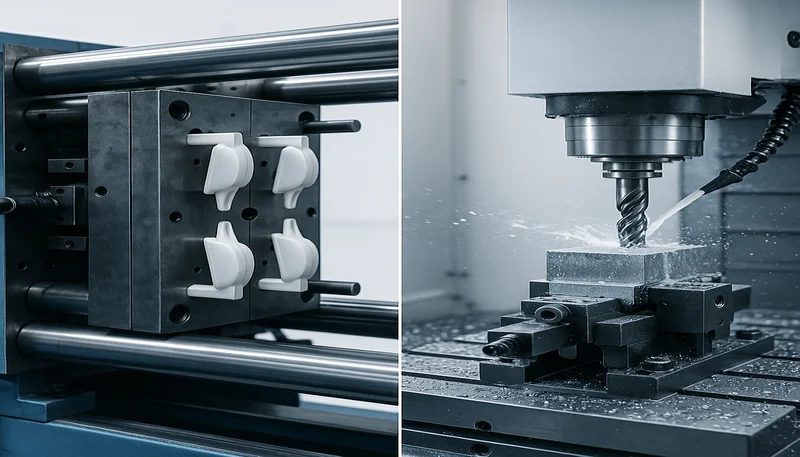
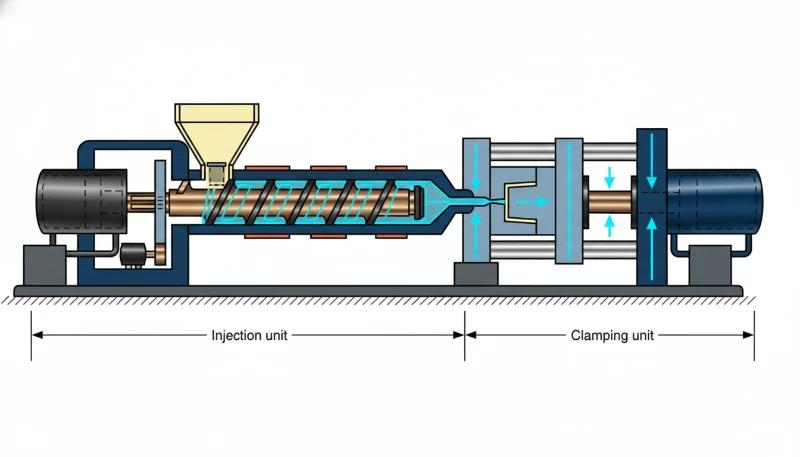
Moule d’injection et produit moulé par injection
Les réglages de maintien corrigent une cavité sous vide. Augmentez prudemment la pression, prolongez le maintien jusqu’au gel du seuil et vérifiez la stabilité du matelas. Une fois le seuil gelé, prolonger ne sert plus à rien. Reliez la correction au temps de production du moulage par injection, car maintien et refroidissement prolongés modifient coût et rendement.
"Un profil de vitesse d'injection par paliers peut réduire les poches d'air en fin de remplissage."True
Ralentir le front de matière près de la dernière zone remplie peut réduire la compression du gaz et donner plus de temps aux évents pour évacuer l’air déplacé.
"Un temps de maintien plus long élimine toujours les vides internes."False
Le temps de maintien n’est efficace que tant que le point d’injection reste ouvert. S’il est déjà solidifié, la pression ne peut plus atteindre la matière qui se rétracte dans la pièce.
Le poids de la pièce constitue ici un indicateur de procédé utile. Si une pression de maintien plus élevée augmente le poids de la pièce et réduit la bulle, le compactage était probablement insuffisant. Si le poids cesse d’augmenter mais que la cavité subsiste, le seuil est peut-être déjà figé ou la section épaisse trop isolée du seuil. Cette distinction est importante, car le premier cas relève du réglage tandis que l’autre peut exiger une modification du seuil ou de la conception. Conservez ensemble les échantillons et les poids des pièces afin que l’équipe suivante puisse reproduire la même conclusion sans devoir ensuite se fier à des suppositions.
Quand le moule nécessite-t-il des modifications de mise à l’air ou du point d’injection ?
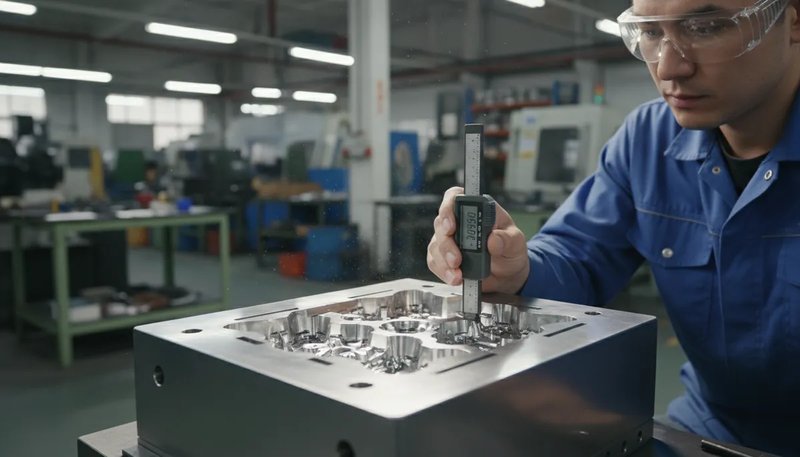
Une mise à l’air du moule est nécessaire lorsque la bulle réapparaît au même endroit après le séchage et le réglage du procédé. Un emplacement stable traduit un comportement d’écoulement stable. Si le même angle, bout de nervure, bossage ou ligne de soudure présente systématiquement un défaut, le moule indique l’endroit où l’air est piégé.
Les évents doivent être placés dans la zone réellement remplie en dernier, et pas seulement là où le concepteur l’avait estimé lors de la fabrication de l’outillage. La simulation d’écoulement est utile, mais les études par tirs incomplets sont souvent plus pratiques en atelier. Remplissez la pièce à 80%, 90% et 95%, puis observez où le front de matière s’arrête et où l’air ne dispose d’aucune voie d’évacuation.
L’emplacement du seuil est également important. Un seuil qui dirige l’écoulement autour d’une nervure haute ou dans une poche borgne peut emprisonner de l’air même si la profondeur de l’évent est correcte. Déplacer le seuil, ajouter une languette de débordement, modifier l’équilibrage des canaux ou améliorer la mise à l’air au plan de joint peut être plus fiable que de tenter de forcer le gaz à travers une section fermée. Pour les acheteurs, c’est pourquoi une revue DFM précoce est préférable à une réparation tardive de l’outillage.
Pour comparer des fournisseurs sur un projet esthétique ou étanche, demandez leur méthode de diagnostic des bulles avant d’attribuer l’outillage. Un bon guide d’approvisionnement vérifie qu’ils savent expliquer l’évacuation des gaz, le séchage et le maintien, au lieu de promettre une correction facile de tous les défauts.
Comment la conception de la pièce peut-elle prévenir les bulles avant la fabrication de l’outillage ?
Une conception évitant les bulles repose principalement sur des parois uniformes, des trajets d’écoulement ouverts et une géométrie permettant à l’air de s’échapper. Évitez les sections épaisses, les poches borgnes, les mauvaises transitions de nervures et les longs trajets qui emprisonnent le gaz. Une conception qui paraît robuste en CAO peut être difficile à compacter et à éventer une fois réalisée en acier.
Commencez par l’épaisseur de paroi. Les bossages et nervures épais créent des centres de retrait, et les transitions brusques freinent l’écoulement. Préférez évidements, nervures, goussets et transitions progressives aux blocs pleins. Si une zone épaisse est inévitable, placez le seuil pour que la pression de maintien l’atteigne avant son gel et examinez tôt le retrait du moule.
La dépouille et la texture peuvent aussi influer sur le diagnostic des bulles. Une texture rugueuse peut masquer de petites traces de gaz en surface, mais ne supprime pas l’air emprisonné. Les nervures profondes peuvent nécessiter des évents supplémentaires ou une évacuation près des éjecteurs. Les parois minces peuvent exiger une vitesse supérieure, mais celle-ci peut comprimer davantage le gaz si le trajet d’évacuation est insuffisant.
La meilleure question à poser lors de la revue est simple : où ira l’air ? Si personne ne peut y répondre avant l’usinage de l’acier, attendez-vous à des retards lors des essais. Indiquez sur la revue DFM les dernières zones remplies, les lignes de soudure, les sections épaisses et les surfaces d’aspect. Ce seul plan évite souvent plusieurs jours de tâtonnements sur la machine.
Quelle est la méthode de dépannage la plus rapide pour les bulles ?
Le processus de dépannage le plus rapide pour les bulles est défini par la fonction, les contraintes et les compromis expliqués dans cette section. Il consiste à classer la bulle, vérifier le séchage, réaliser une étude de remplissage incomplet, régler une seule variable de procédé, puis seulement modifier le moule. Cet ordre évite de poursuivre une mauvaise cause et préserve l’utilité de l’analyse pour les productions futures.
Suivez cette séquence : inspecter l’emplacement, découper la pièce, confirmer la résine et le séchage, vérifier la propreté des évents, effectuer des injections partielles, régler la vitesse d’injection, vérifier le compactage, puis décider si l’outil exige des modifications des évents ou du point d’injection. Si le produit est déjà fabriqué en série, tenez une cartographie des défauts par numéro d’empreinte afin de déterminer si le problème est propre à une empreinte ou concerne l’ensemble du système.
ZetarMold possède plus de 20 ans d’expérience dans le moulage et l’outillage ; notre équipe traite donc les bulles comme un problème système, et non comme un simple réglage de machine. Envoyez le grade de résine, le plan de la pièce, l’épaisseur de paroi, des photos des bulles et la fiche de procédé actuelle si vous souhaitez une analyse DFM et procédé pratique avant le prochain essai.
Questions fréquemment posées
Quelle est la cause la plus courante des bulles d’air dans les pièces moulées par injection ?
La cause la plus courante dépend de l’emplacement de la bulle, mais l’air emprisonné et l’humidité sont les deux premiers points à vérifier. Si le défaut se situe en fin de remplissage ou près d’une ligne de soudure, inspectez l’éventation et le trajet d’écoulement. Si le défaut apparaît de manière aléatoire avec des stries argentées ou des marbrures, vérifiez le séchage et le stockage de la résine. Si la bulle se trouve à l’intérieur d’une paroi épaisse, traitez-la comme une retassure interne sous vide causée par le retrait ou un compactage insuffisant. L’emplacement, la répétabilité et l’examen en coupe doivent guider la première correction.
Un séchage insuffisant peut-il provoquer des bulles dans les pièces en plastique moulées ?
Oui, un séchage insuffisant peut créer des bulles, des marques d’éventail, des stries argentées et des surfaces fragiles, en particulier dans les matériaux hygroscopiques tels que le nylon, le PC, l’ABS, le PBT et le TPU. L’humidité se transforme en vapeur lorsque la résine atteint sa température de fusion. Ce gaz s’étire alors le long du trajet d’écoulement ou s’accumule près de la surface. Vérifiez toujours la température et la durée de séchage, le point de rosée et l’exposition dans la trémie avant de modifier le moule. Si le séchage corrige le défaut, n’usinez pas l’acier. Conservez les données de séchage avec le dossier de production pour assurer la traçabilité.
Comment les évents du moule éliminent-ils les bulles d’air ?
Les évents du moule corrigent les bulles d’air en offrant à l’air déplacé une voie d’évacuation contrôlée avant que la matière fondue ne ferme l’empreinte. Les évents sont généralement placés sur les plans de joint, les dernières zones remplies, les zones d’éjection, les inserts ou les languettes de débordement. Leur profondeur doit permettre l’évacuation du gaz sans créer de bavure. Si l’évent est sale, trop peu profond ou mal placé, la poche d’air demeure même lorsque la pression d’injection augmente. La maintenance des évents doit faire partie de l’entretien régulier de l’outillage, notamment après de longues séries de production.
Pourquoi les pièces plastiques épaisses présentent-elles des vides internes ?
Les pièces en plastique épaisses présentent des vides internes parce que leur surface extérieure se solidifie en premier, tandis que le centre continue de se rétracter en refroidissant. Si la pression de compactage ne peut pas alimenter davantage de matière fondue dans la zone qui se rétracte, le centre se désolidarise et forme un espace creux. Il ne s’agit pas toujours d’une véritable bulle d’air. Une meilleure conception des parois, des seuils plus grands ou mieux placés, une pression de maintien prolongée et un refroidissement mieux équilibré sont des corrections courantes. Il est souvent nécessaire d’ouvrir la pièce par découpe pour confirmer clairement le véritable type de défaut.
Dois-je augmenter la pression d’injection pour éliminer les bulles ?
N’augmentez la pression d’injection qu’après avoir identifié le type de bulle. Une pression plus élevée peut corriger un vide de compactage si le seuil est encore ouvert, mais elle ne séchera pas une résine humide et ne créera pas un évent manquant. Une pression excessive peut provoquer des bavures, des contraintes, un surcompactage et une éjection difficile. Un essai contrôlé doit ajuster la pression avec le temps de maintien, le gel du seuil et les données de poids de la pièce. N’utilisez jamais la pression comme première correction à l’aveugle, car elle peut rapidement masquer les indices pendant les essais.
Quand faut-il modifier le moule d’injection pour éliminer les bulles ?
Modifiez le moule lorsque les bulles se répètent au même endroit après le séchage, le nettoyage des évents et des réglages raisonnables du procédé. Un emplacement de défaut fixe signifie généralement que le chemin de l’air, l’emplacement du seuil, l’épaisseur de paroi ou la position de l’évent est incorrect. Avant d’usiner l’acier, effectuez des injections incomplètes, repérez les dernières zones remplies et confirmez le défaut par numéro d’empreinte. La modification de l’outillage doit reposer sur des preuves, non sur la frustration. Le changement d’acier le moins coûteux est celui qu’étayent les données et que les échantillons d’essai valident avant l’approbation finale.
évacuation des gaz : Méthode de conception du moule permettant à l’air déplacé et aux substances volatiles de sortir de l’empreinte pendant le remplissage. ↩
cavité sous vide : Espace creux interne causé par un retrait irrégulier ou un maintien insuffisant après le gel de la surface. ↩
poche d’air : Volume de gaz emprisonné qui ne peut pas quitter l’empreinte avant que la matière fondue ne l’enferme. ↩