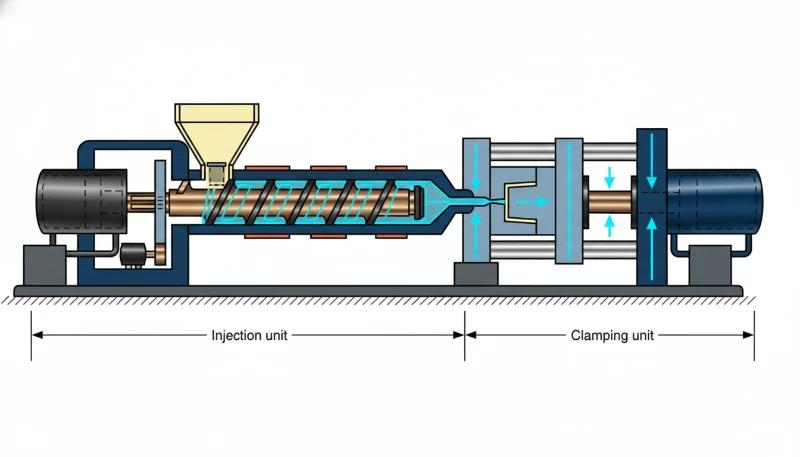
- El moldeo por inyección sobresale en la producción de alto volumen de piezas plásticas complejas con tolerancias ajustadas (±0.002″).
- El costo inicial de la herramienta (10K–200K+) es la única gran barrera, requiriendo más de 5.000 piezas para alcanzar el punto de equilibrio.
- La selección de materiales abarca más de 400 termoplásticos, pero cada material exige parámetros de procesamiento específicos.
- Las restricciones de diseño, como el espesor de pared uniforme y los ángulos de desmoldeo, son no negociables para la fabricabilidad.
- La selección del socio importa más que la optimización del proceso — un taller de moldes inadecuado cuesta más de lo que cualquier ajuste de diseño ahorra.
Para los lectores que comparan opciones de moldeo por inyección1, este artículo conecta el molde de inyección2, el comportamiento del material plástico3, el abastecimiento de proveedores y las decisiones de control de calidad que determinan si un proyecto puede pasar del diseño a la producción repetible.
¿Qué hace que el moldeo por inyección valga la inversión?
El moldeo por inyección vale la inversión cuando necesitas más de 5.000 piezas idénticas, y es una mala elección cuando solo necesitas 50 prototipos. El intercambio central es simple: pagas un alto costo inicial de herramienta a cambio de un costo por pieza extremadamente bajo en volumen.
Para obtener una visión más amplia, nuestra guía completa de moldeo por inyección cubre los fundamentos del proceso, el comportamiento del material y las decisiones de producción.
"“El moldeo por inyección puede producir piezas con tolerancias de ±0.002 inches.”"True
Con un diseño de molde adecuado y control de proceso, el moldeo por inyección logra rutinariamente tolerancias de ±0,002" (±0,05 mm). La tolerancia comercial estándar es de ±0,005".
"“El moldeo por inyección es rentable para producir tan solo 500 piezas idénticas.”"False
A 500 piezas, solo la amortización del utillaje puede añadir $20–$400 por pieza, haciendo que el mecanizado CNC o la fundición de uretano sean mucho más económicos. El punto de equilibrio típico es de 5,000+ piezas.
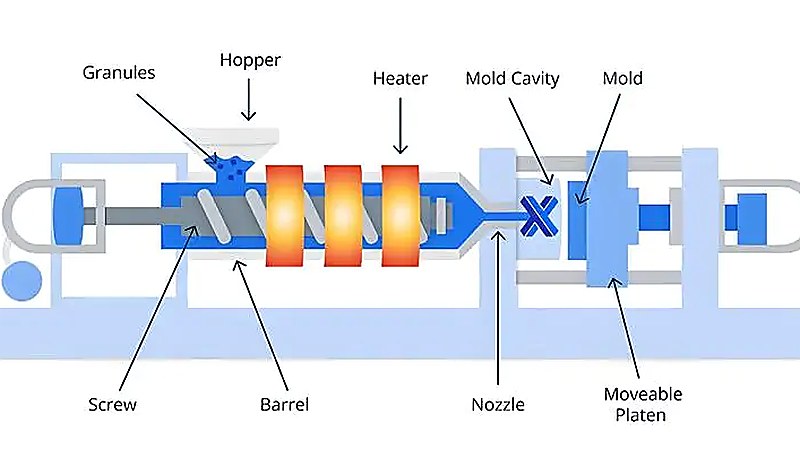
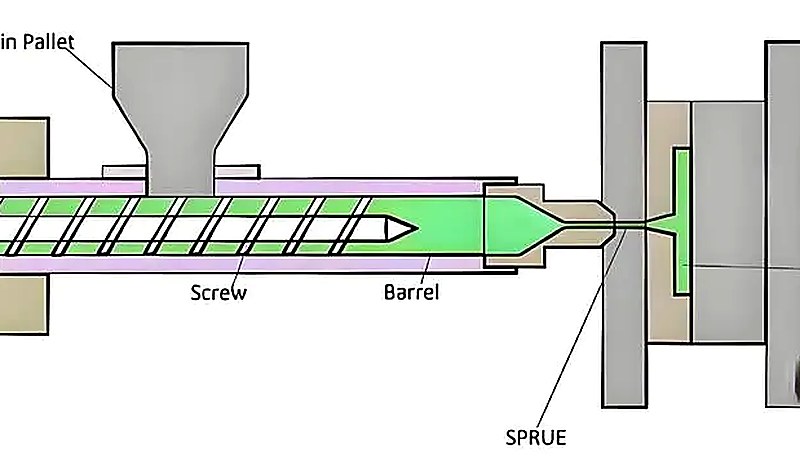
El proceso funciona fundiendo gránulos termoplásticos, inyectando el material fundido en una cavidad de molde de acero bajo alta presión, enfriándolo y expulsando la pieza terminada. Un solo ciclo puede llevar tan solo 8 segundos para una pieza pequeña, o más de 60 segundos para un componente estructural grande. Esa velocidad, repetida miles o millones de veces, es de donde proviene la rentabilidad económica.
El proceso domina la fabricación en masa de componentes plásticos. Aproximadamente el 80% de todas las piezas plásticas fabricadas hoy se hacen mediante moldeo por inyección. Desde los salpicaderos de automóviles hasta las jeringas médicas o la carcasa del teléfono en tu bolsillo, el proceso está en todas partes.
Pero “en todas partes” no significa “siempre adecuado”. El moldeo por inyección requiere herramientas de precisión, selección cuidadosa de materiales y control riguroso del proceso. Cuando se cumplen esas condiciones, ofrece una consistencia y complejidad inigualables. Cuando no se cumplen, produce desechos.
¿Cuáles son las ventajas clave del moldeo por inyección?
Las ventajas clave son velocidad, precisión y variedad de materiales. Producción de alto volumen (miles de piezas por día desde un solo molde), geometrías complejas en una sola operación y acceso a más de 400 materiales termoplásticos — cada uno con implicaciones directas para tus decisiones de abastecimiento.
"“Un solo molde de inyección puede durar más de un millón de ciclos de producción.”"True
Los moldes de acero endurecido (H13, S7) que procesan materiales no abrasivos pueden superar 1.000.000 de ciclos con un mantenimiento adecuado. Los moldes estándar P20 suelen alcanzar entre 100.000 y 500.000 ciclos.
"“Los cambios de diseño después de fabricar el molde son rápidos y económicos.”"False
Los cambios de diseño posteriores al utillaje oscilan entre $1,000–$15,000+ dependiendo de la complejidad. Añadir acero (eliminar plástico) es más fácil que quitar acero (añadir plástico), pero ambos requieren retrabajar el molde.
Eficiencia en alto volumen
Una vez construido y cualificado el molde, los tiempos de ciclo se miden en segundos. Un molde de una cavidad que produce una carcasa de ABS de 50 gramos podría tener un ciclo de 15 segundos. Eso son 240 piezas por hora, 5.760 piezas por día en una máquina. Los moldes multicavidad multiplican esa cifra aún más: un molde de 4 cavidades con el mismo tiempo de ciclo produce casi 23.000 piezas por día.
El costo por pieza en volumen es notablemente bajo. El costo del material a menudo domina entre $0.50 y $5.00 por pieza, dependiendo del grado de resina y el peso de la pieza. El tiempo de máquina y la mano de obra añaden otros $0.10–$0.50. Para piezas simples en alto volumen, el costo total de fabricación puede caer por debajo de $0.10 por unidad.
Geometrías complejas en una sola operación
Características que requerirían múltiples configuraciones en una máquina CNC — nervaduras, columnas, cierres a presión, bisagras vivas, roscas internas — pueden moldearse en una sola operación. Esto no solo ahorra tiempo; elimina por completo pasos de montaje. Una sola pieza moldeada puede reemplazar un conjunto de tres o cuatro componentes separados.
Dicho esto, la complejidad tiene límites. Los contramoldes requieren acciones laterales o expulsores, lo que aumenta el coste del molde en un 30–80%%. Las roscas internas requieren mecanismos de desenroscado. Los profundos calados necesitan una gestión cuidadosa del ángulo de desmoldeo. La capacidad de ingeniería del taller de moldes determina directamente lo que es factible, y por eso la selección del socio importa tanto.
Repetibilidad y tolerancias ajustadas
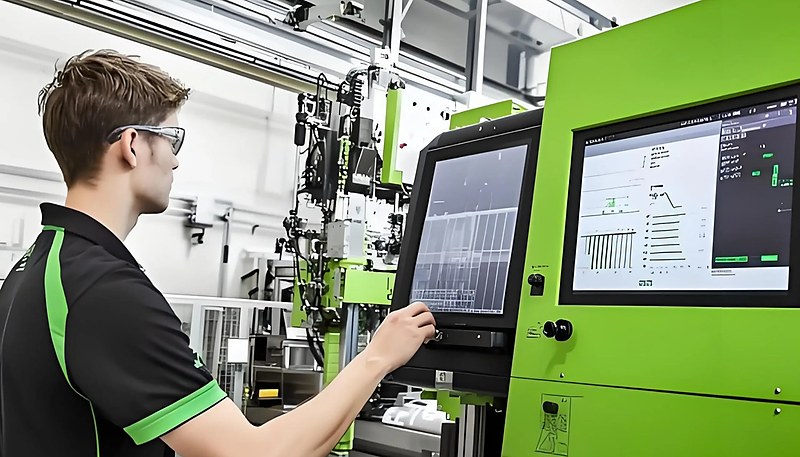
Un molde bien mantenido en una máquina correctamente calibrada, donde el cilindro, la tolva y el tornillo que se muestran en el esquema están dentro de las especificaciones, mantiene tolerancias dimensionales de ±0,005” (±0,127 mm) de forma rutinaria y ±0,002” (±0,05 mm) con un control cuidadoso del proceso y un diseño de molde de inyección de precisión. La variación entre disparos en un proceso estable se mide en milésimas de pulgada. Esa consistencia se mantiene a lo largo de miles, cientos de miles o millones de ciclos, siempre que se mantenga el molde.
En nuestros más de 20 años de experiencia en producción, esta repetibilidad es crítica en industrias reguladas. Las carcasas de dispositivos médicos, los componentes de seguridad automotriz y los productos electrónicos de consumo dependen de que la pieza número 100.000 sea dimensionalmente idéntica a la pieza número 1.
Enorme selección de materiales
Hay más de 400 grados comerciales de termoplásticos disponibles para moldeo por inyección, desde resinas comunes como PP y HDPE hasta grados de ingeniería como PEEK y PEI. La elección del material impulsa prácticamente todas las decisiones posteriores — tiempo de ciclo, temperatura del molde, requisitos de secado, compensación de contracción y rendimiento en uso final.
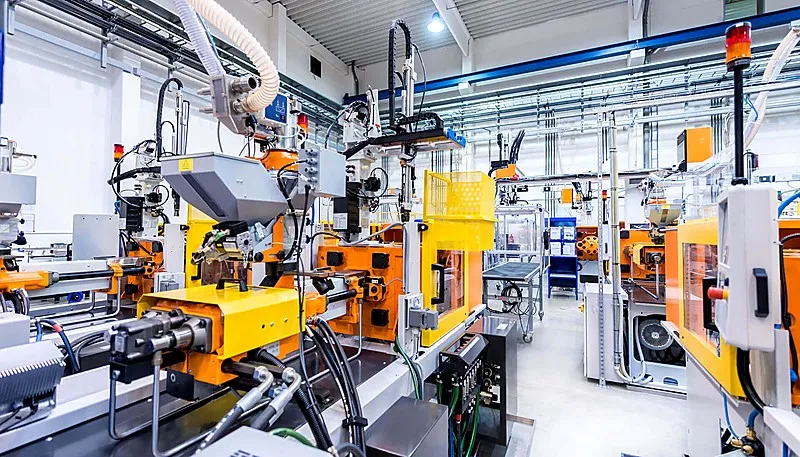
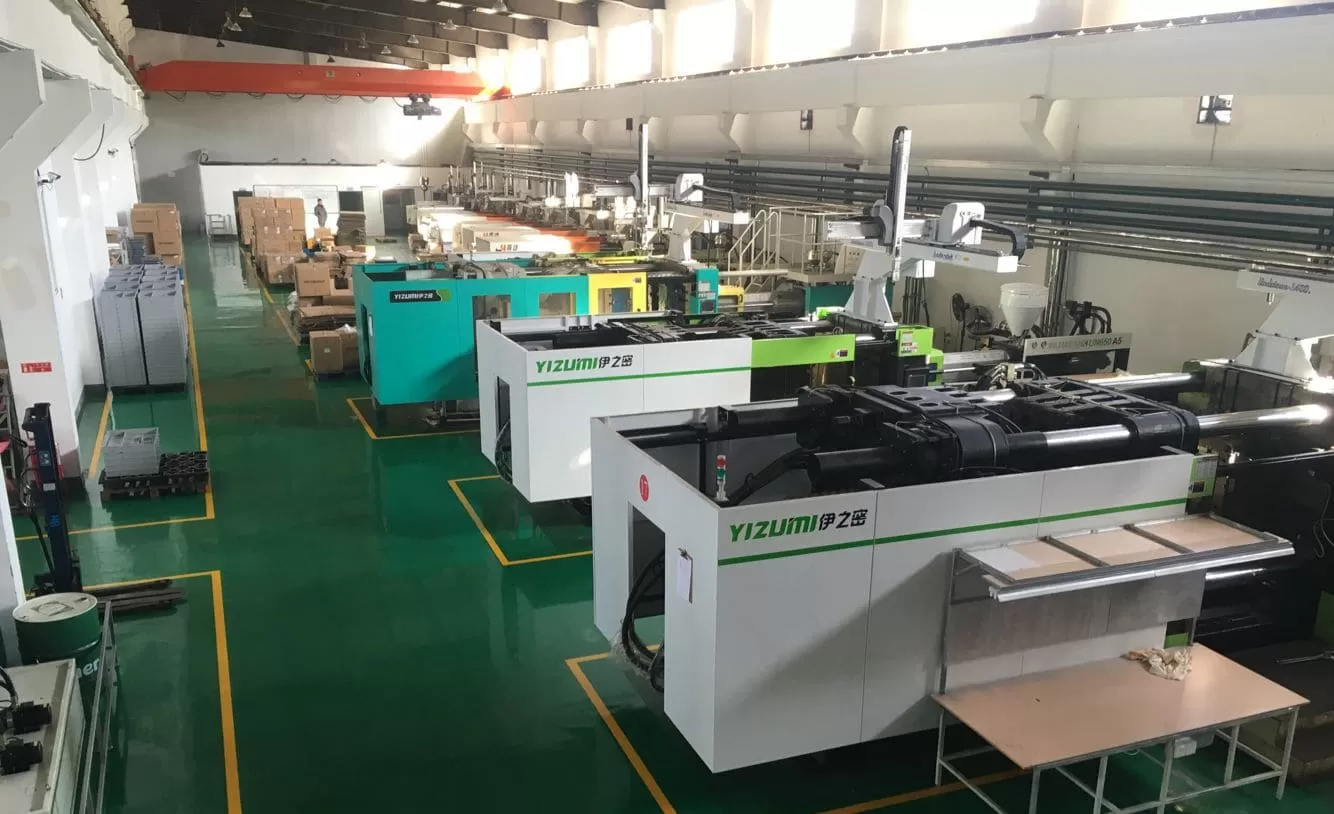
En nuestra propia instalación de producción, procesamos más de 400 materiales diferentes en 47 máquinas de moldeo por inyección, que van desde TPE flexibles para agarres sobremoldeados hasta nailon con fibra de vidrio para componentes estructurales automotrices. El rango de tonelaje de 90T a 1850T significa que manejamos todo, desde un clip médico de 2 gramos hasta una pieza automotriz o industrial de 10 kg, sin forzar el proyecto a un tamaño de prensa incorrecto.
Postprocesado mínimo
A diferencia del mecanizado CNC, que produce virutas y requiere operaciones de acabado, el moldeo por inyección produce piezas de forma neta directamente del molde. Las operaciones secundarias — cuando son necesarias — normalmente se limitan a desbarbar, acabado superficial (textura o pintura) y montaje (instalación de insertos, soldadura ultrasónica). Para muchas piezas, el único postprocesado es separar el canal de alimentación.
¿Cuáles son las principales desventajas del moldeo por inyección?
Las principales desventajas son el alto costo inicial de herramientas, largos tiempos de entrega, reglas de diseño estrictas y mala economía por debajo de 5,000 piezas. Los ingenieros que cambian de CNC o impresión 3D a menudo se ven sorprendidos por estas limitaciones.
Alto costo inicial de herramientas
Un molde de producción de una cavidad en acero P20 cuesta $10,000–$30,000 para una pieza simple. Un molde multicavidad con acciones laterales, expulsores y tolerancias estrechas puede superar fácilmente $100,000. Los moldes complejos para automoción o medicina suelen alcanzar $150,000–$250,000.
Este coste no es solo por el acero y el mecanizado. Incluye diseño del molde, análisis de flujo, múltiples revisiones (muestras T0, T1, T2) y tratamiento superficial. El molde es la inversión única más grande en un proyecto de moldeo por inyección, y no es recuperable — no se puede reutilizar un molde diseñado para una geometría de pieza para otra.
Plazos de entrega largos para la herramienta
La fabricación del molde tarda de 4 a 12 semanas dependiendo de la complejidad. Un molde simple de aluminio de una cavidad podría estar listo en 3–4 semanas. Un molde de producción de acero con múltiples acciones laterales suele tardar de 8 a 12 semanas. Durante ese tiempo, se está gastando dinero sin producir piezas.
Este plazo de entrega es la razón por la que la creación de prototipos y la producción de bajo volumen suelen usar moldes de aluminio (más blandos, más rápidos de cortar, vida útil más corta) o procesos alternativos. Los moldes de producción son la herramienta adecuada para el trabajo adecuado — pero solo cuando se tiene tiempo para invertir.
Las restricciones de diseño no son negociables
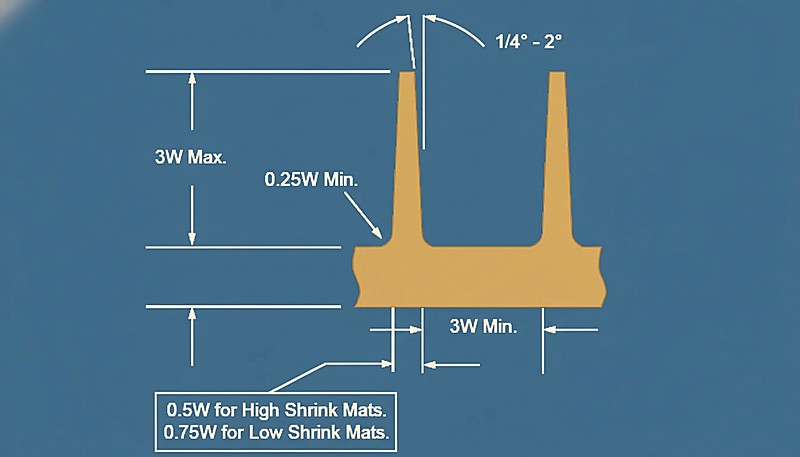
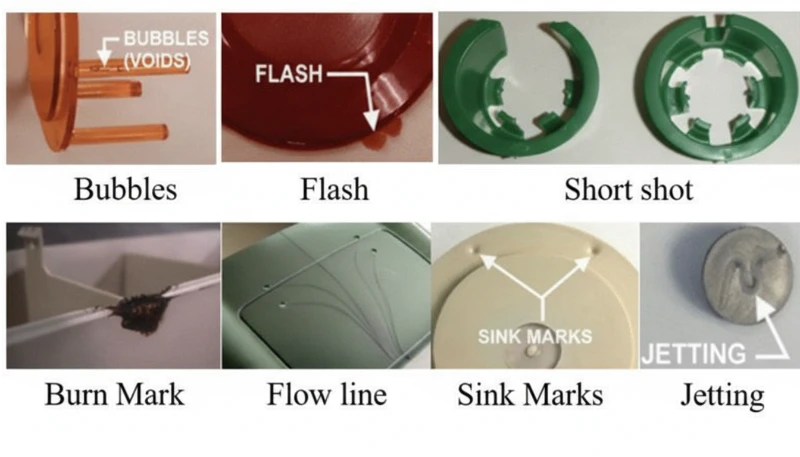
El moldeo por inyección impone reglas de diseño estrictas que no se pueden eludir. El grosor uniforme de la pared es crítico; las variaciones causan marcas de hundimiento, deformación y enfriamiento desigual. Se requieren ángulos de desmoldeo de 1 a 3° por lado para la expulsión de la pieza. Las esquinas internas afiladas crean concentradores de tensión y deben redondearse.
Hemos visto innumerables proyectos donde los clientes subestimaron estas reglas. Estas no son sugerencias — las piezas que las violan o fallan en el moldeo (inyecciones cortas, marcas de hundimiento, adherencia al molde) o fallan en uso (grietas en concentradores de tensión). Un buen diseño de molde puede mitigar algunos problemas, pero no puede corregir una geometría de pieza fundamentalmente mala.
Cambios de diseño difíciles y costosos
Una vez que se corta un molde de acero, los cambios de diseño son costosos. Agregar material (acero seguro) es relativamente simple: se retira acero de la cavidad. Eliminar material (agregar acero) requiere soldadura o inserción, lo que debilita el molde y cuesta más. Los cambios importantes en la geometría pueden requerir reconstruir secciones completas del molde.
En la práctica, esto significa que debe congelar el diseño de su pieza antes de comprometerse con un molde de producción. Los cambios tardíos causan más que sobrecostes: introducen defectos como marcas de hundimiento, rebabas y formación de burbujas que requieren retrabajos adicionales del molde. La mayor fuente de sobrecostes en el molde son los cambios de diseño después del muestreo T0. Cada iteración tras el inicio de la herramienta es una orden de cambio con un precio.
No es económico para bajos volúmenes
El punto de equilibrio entre el moldeo por inyección y procesos alternativos depende de la complejidad de la pieza, pero una regla general: por debajo de 5.000 unidades, la amortización de la herramienta hace que el moldeo por inyección sea más caro por pieza que el mecanizado CNC, la impresión 3D o el moldeo de uretano.
Para un molde de $20.000, aquí está la cuenta: a 5.000 piezas, la herramienta añade $4.00 por pieza. A 50.000 piezas, añade $0.40. A 500.000 piezas, baja a $0.04. La curva de coste es empinada —y ese es el punto. El moldeo por inyección recompensa el volumen con creces.
¿Cuándo tiene sentido económico el moldeo por inyección?
El punto de equilibrio para el moldeo por inyección es de 5.000 a 10.000 unidades cuando se necesita consistencia y complejidad. La siguiente tabla desglosa los factores de decisión.
| Factor | Elija Moldeo por Inyección Cuando | Considere alternativas cuando |
|---|---|---|
| Volumen anual | >10,000 piezas/año | <5,000 piezas en total |
| Complejidad de las piezas | Múltiples características (nervaduras, refuerzos, cierres de presión) | Geometría simple, pocas características |
| Requisitos del material | Se necesitan propiedades termoplásticas específicas | La flexibilidad del material es aceptable |
| Necesidades de tolerancia | ±0.005″ o más ajustado, consistente en todas las piezas | Tolerancias amplias, ajuste manual aceptable |
| Cronología | Puede esperar de 6 a 12 semanas para la fabricación de herramientas | Necesita piezas en días o semanas |
Un factor que a menudo se pasa por alto: el coste de no moldear por inyección. Si está mecanizando por CNC 50.000 piezas al año a partir de barras, solo el desperdicio de material (generación de virutas del 60–80%) puede superar el coste de construir un molde. Hemos visto proyectos donde el cambio de CNC a moldeo pagó la herramienta dentro de la primera corrida de producción.
Comprender estas compensaciones le ayuda a decidir cuándo el moldeo por inyección tiene sentido financiero para su producción. La clave es emparejar el proceso con sus requisitos de volumen, complejidad y cronograma.
¿Cómo se compara el moldeo por inyección con los procesos alternativos?
En comparación con el mecanizado CNC, la impresión 3D y el moldeo por soplado, el moldeo por inyección gana en coste por pieza en volumen, pero pierde en inversión inicial. La elección correcta depende de su volumen, plazo y requisitos geométricos.
Moldeo por Inyección vs. Mecanizado CNC
El mecanizado CNC corta piezas de bloques sólidos de plástico o metal. No requiere herramientas, ofrece tolerancias excelentes (±0.001″) y maneja cambios de diseño al instante. Pero el desperdicio de material es enorme para geometrías complejas, el costo por pieza no disminuye con el volumen y las geometrías están limitadas por el acceso de la herramienta.
Según nuestra experiencia, el moldeo por inyección resulta más económico que el CNC con aproximadamente 5.000 piezas de la misma geometría. El CNC sigue siendo la mejor opción por debajo de 1000 piezas o cuando el proyecto requiere metal en lugar de plástico. Para obtener orientación sobre cómo encontrar el socio de fabricación adecuado, consulte nuestra guía de abastecimiento de moldeo por inyección.
Moldeo por inyección vs. Moldeo por soplado
La impresión 3D (FDM, SLA, SLS) construye piezas capa por capa sin herramientas. Maneja geometrías literalmente imposibles de moldear (canales internos, estructuras de celosía). Pero el acabado superficial es pobre, las propiedades mecánicas son inferiores a las piezas moldeadas y la velocidad de producción por pieza es glacial en comparación con el moldeo.
La impresión 3D gana para prototipos, geometrías internas complejas y piezas verdaderamente únicas. El moldeo por inyección gana para cualquier pieza de la que necesite más de 100 unidades.
Moldeo por inyección vs. Moldeo por soplado
El moldeo por soplado sobresale en piezas huecas: botellas, tanques, contenedores. Las herramientas son más baratas, pero la geometría se limita a formas huecas con tolerancias relativamente amplias.
El moldeo por soplado gana para contenedores y piezas huecas. El moldeo por inyección gana para todo lo demás: piezas sólidas, características de tolerancia estrecha y geometrías complejas que requieren un flujo de fundido controlado a través del cañón hacia una cavidad de precisión, como se muestra en el diagrama de la máquina de moldeo por inyección. La presión del aire por sí sola no puede lograr el detalle y la consistencia que proporciona un molde cerrado.
¿Cómo puedes minimizar las desventajas?
La mejor estrategia para minimizar las desventajas del moldeo por inyección es mediante la revisión DFM, moldes prototipo y acero de molde de tamaño adecuado. Estas son estrategias que usamos diariamente en nuestras 47 máquinas de moldeo por inyección en nuestra instalación de Shanghái.
Comience con una Revisión DFM Adecuada
La revisión del Diseño para Fabricación (DFM) antes de que comiencen las herramientas es la actividad con mayor retorno de la inversión en cualquier proyecto de moldeo por inyección. Una guía de diseño de moldes adecuada detecta problemas de espesor de pared, configuraciones de socavado imposibles y ángulos de desmoldeo inadecuados antes de cortar el acero. Repararlos en CAD lleva unos minutos. Arreglarlos en un molde lleva semanas y miles de dólares.
En nuestra instalación de Shanghái, nuestros 8 ingenieros senior —cada uno con más de 10 años de experiencia— revisan cada diseño de molde antes de que comience la fabricación. Esto no es un servicio de valor añadido; es una estrategia de supervivencia. El coste de una revisión de DFM se mide en horas de tiempo de ingeniería. El coste de omitirla se mide en revisiones de molde y retrasos en la producción.
Nuestra fábrica de Shanghái opera 47 máquinas de moldeo por inyección de 90T a 1850T con una instalación de fabricación de moldes interna, lo que nos permite controlar todo el flujo de trabajo, desde el diseño del molde hasta la inspección del primer artículo, bajo un mismo techo.
Use Herramientas Prototipo para Validación
Antes de comprometerse con un molde de producción, considere un molde prototipo de aluminio. Cuesta $3,000–$8,000, toma 2–3 semanas y le da piezas moldeadas reales para pruebas funcionales. Sí, la cavidad de aluminio se desgastará después de 1,000–5,000 disparos. Pero si detecta un defecto de diseño que habría requerido una revisión del molde de acero, ya se pagó diez veces por sí mismo.
Optimice el diseño de la compuerta temprano
El tipo, tamaño y ubicación de la compuerta afectan la ubicación de la línea de soldadura, la longitud de flujo, la presión de empaquetado y la apariencia cosmética. Cambiar la compuerta después de construir el molde es posible pero costoso. Simular ubicaciones de compuertas con análisis de flujo de molde antes de cortar acero es un paso estándar en cualquier instalación competente de moldeo por inyección.
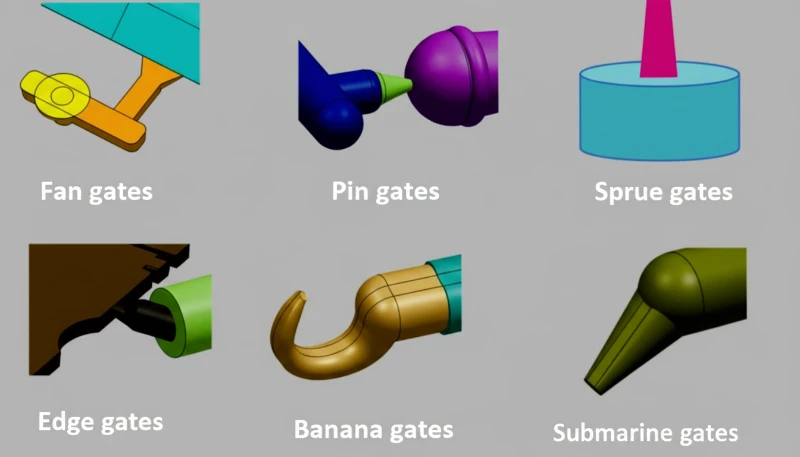
Los tipos de compuerta comunes —compuertas de borde, compuertas submarinas, compuertas de punta caliente, compuertas de válvula— tienen cada uno casos de uso específicos. No existe una compuerta universal “mejor”; la elección correcta depende de la geometría de la pieza, el material, los requisitos cosméticos y el volumen de producción.
Elija el Material del Molde Correcto
No todos los proyectos necesitan un molde de acero endurecido. Aquí hay una guía práctica: los moldes de aluminio funcionan para menos de 10,000 piezas. El acero P20 funciona para 100,000–500,000 piezas. El acero endurecido H13 o S7 funciona para millones de piezas. Especificar en exceso el acero del molde es una forma común de desperdiciar dinero en herramientas.
En la fábrica ZetarMold de Shanghái, operamos 47 máquinas de moldeo por inyección de 90T a 1850T y admitimos más de 400 materiales plásticos. Nuestra instalación interna de fabricación de moldes y 8 ingenieros senior conectan la revisión de DFM, la fabricación de herramientas, el muestreo y la optimización de procesos antes del lanzamiento de la producción.
Acerca de ZetarMold: su fabricante de moldeo por inyección
¿Busca un fabricante confiable de moldeo por inyección? ZetarMold entrega más de 100 moldes de precisión mensualmente con experiencia en más de 400 materiales. Solicite un presupuesto gratuito →
Preguntas frecuentes
¿Cuál es el volumen mínimo para que el moldeo por inyección sea rentable?
Generalmente, 5,000–10,000 unidades es el punto de equilibrio donde la amortización de herramientas se vuelve razonable. Por debajo de eso, el mecanizado CNC o el moldeo por uretano suelen ser más económicos por pieza. El umbral exacto depende de la complejidad de la pieza: una pieza simple podría alcanzar el equilibrio a 3,000 unidades, mientras que un molde complejo de múltiples cavidades podría necesitar 20,000+ para justificar la inversión.
¿Cuánto dura un molde de inyección?
La vida útil del molde depende del grado de acero y de la naturaleza abrasiva del material que se está moldeando. Un molde de acero P20 que procesa polipropileno sin relleno puede producir más de 500,000 piezas antes de requerir un mantenimiento significativo. El mismo molde procesando nailon con fibra de vidrio puede necesitar renovación después de 100,000–200,000 piezas. Los moldes de acero endurecido (H13, S7) pueden superar 1 millón de disparos con el mantenimiento adecuado.
¿Puede el Moldeo por Inyección Producir Piezas con Rosca?
Sí. Los tornillos externos pueden moldearse utilizando acciones laterales o núcleos rotativos (moldes de desenroscado). Los tornillos internos requieren mecanismos de desenroscado que añaden una complejidad y costo significativos al molde — normalmente $5,000–$15,000 adicionales dependiendo del tamaño del tornillo y del número. Para aplicaciones de bajo volumen, los insertos para tornillos (instalados ultrasonicamente o térmicamente) son generalmente más económicos.
¿Qué materiales no pueden moldearse por inyección?
Habiendo trabajado con más de 400 grados de termoplásticos, podemos confirmar: los termoestables (epoxis, fenólicos, siliconas) no pueden procesarse en máquinas de moldeo por inyección de termoplásticos estándar — requieren equipos especializados de moldeo por transferencia o compresión. Dentro de los termoplásticos, muy pocos materiales comunes son realmente “no moldables”. El PTFE (Teflon) es una excepción — su viscosidad de fusión extremadamente alta hace que el moldeo por inyección convencional sea impráctico, por lo que normalmente se procesa mediante compresión o extrusión por émbolo.
¿Cómo afecta el tamaño de la pieza la elección del moldeo por inyección?
El tamaño de la pieza determina el tonelaje de máquina requerido. Un clip electrónico pequeño podría necesitar solo una máquina de 50T. Un parachoques grande de automóvil requiere 1,500T o más. La disponibilidad de tonelaje de máquina es una limitación práctica — no todos los moldeadores tienen equipos de gran tonelaje. En nuestro propio taller, la máquina de 1850T maneja piezas de hasta 10 kg, lo que cubre la mayoría de las aplicaciones automotrices e industriales.
¿Es el moldeo por inyección ambientalmente amigable?
El proceso en sí es relativamente eficiente — los canales de desecho y las piezas rechazadas pueden ser trituradas y reprocesadas para aplicaciones no críticas (retriturado). Sin embargo, el impacto ambiental depende en gran medida del material. Los termoplásticos basados en bioproductos y con contenido reciclado están cada vez más disponibles. La mayor pregunta ambiental es el fin de la vida útil: los termoplásticos son teóricamente reciclables, pero los conjuntos de materiales mixtos generalmente no lo son.
¿Qué tolerancias puede alcanzar el moldeo por inyección?
Las tolerancias comerciales estándar son ±0.005″ (±0.127 mm) para dimensiones menores de 1 pulgada. Las tolerancias finas de ±0.002″ (±0.05 mm) son alcanzables con un control cuidadoso del proceso y diseño del molde. Las tolerancias en dimensiones mayores escalan con el tamaño — normalmente ±0.1–0.3% de la dimensión nominal. Tolerancias más estrechas son posibles pero aumentan el costo del molde y requieren un monitoreo del proceso más riguroso.
Preguntas frecuentes
¿Cuál es el factor más importante al decidir entre moldeo por inyección y otros procesos?
El factor más importante es el volumen de producción anual. El moldeo por inyección requiere una inversión inicial en herramientas que oscila entre USD 10,000 y USD 250,000, la cual solo se amortiza efectivamente por encima de 5,000 a 10,000 unidades por lote. Por debajo de ese umbral, el mecanizado CNC o la impresión 3D ofrecen un costo por pieza más bajo con un tiempo de comercialización significativamente más rápido. Para los compradores que evalúan opciones de fabricación, el umbral de volumen es el primer cálculo a realizar; la complejidad de la pieza y la selección del material son consideraciones secundarias que solo importan después de que el volumen justifica la elección del proceso. Esto evita que el gasto inicial en herramientas se convierta en una trampa de costo fijo.
¿Cómo deberían los compradores evaluar un proveedor de moldeo por inyección?
Evalúe a los proveedores en tres dimensiones: capacidad técnica, calidad de comunicación e infraestructura de producción. La capacidad técnica significa diseño de molde interno con software de análisis de flujo y proceso de revisión de DFM. La calidad de comunicación significa dominio del inglés para discusiones de ingeniería, no solo para ventas. La infraestructura de producción significa un rango de tonelaje de máquina que cubra el tamaño de su pieza, experiencia en procesamiento de materiales con su resina específica y sistemas de gestión de calidad como ISO 9001. Un proveedor que no pueda explicar su ventana de proceso o mostrar muestras de producción relevantes es un riesgo independientemente del precio.
¿Cuando requiere un proyecto de moldeo por inyección revisión del proveedor durante la producción?
La revisión del proveedor es crítica en tres etapas de producción: la inspección del primer artículo después de la finalización del molde confirma que la cavidad produce piezas dentro de la especificación dimensional, la calificación de producción establece los parámetros del proceso para la consistencia entre disparos, y cualquier cambio en el grado de resina, colorante o geometría de la pieza activa una revalidación obligatoria. Omitir estas revisiones es la causa más común de disputas de calidad entre compradores y moldeadores. Un proveedor disciplinado programará proactivamente estos puntos de control en lugar de esperar que los problemas aparezcan durante la producción en volumen. Esto mantiene los criterios de aceptación visibles antes del envío.
¿Por qué la calidad del diseño del molde determina el éxito del moldeo por inyección?
El diseño del molde determina la eficiencia de enfriamiento, la ubicación de la entrada, la evacuación del aire y la fiabilidad de la expulsión, todo lo cual afecta directamente la calidad de la pieza, el tiempo de ciclo y el costo de producción. Un molde mal diseñado produce defectos (marcas de hundimiento, alabeo, piezas incompletas) que ningún ajuste de proceso puede corregir completamente. Un buen diseño de molde incluye una disposición adecuada de los canales de enfriamiento, un tipo y ubicación apropiados de la entrada, ángulos de desmoldeo suficientes y una acomodación uniforme del espesor de la pared. Invertir en análisis de flujo del molde antes de cortar el acero típicamente ahorra del 10 al 30% del costo total de la herramienta al prevenir revisiones.
¿Cómo puede ZetarMold ayudar con las decisiones de moldeo por inyección?
ZetarMold proporciona diseño de molde integrado, herramientas y producción de moldeo por inyección desde su instalación en Shanghai. Con 47 máquinas que abarcan de 90T a 1850T, un taller de moldes interno que produce más de 100 moldes mensuales y experiencia práctica con más de 400 materiales termoplásticos, el equipo de ingeniería ofrece revisión de DFM, simulación de flujo de molde y optimización de proceso como servicios de proyecto estándar, no como complementos opcionales. Solicite una cotización para recibir comentarios específicos de DFM y un cronograma de producción realista para la geometría de su pieza y los requisitos de material. Esto hace que la siguiente decisión de sourcing sea más rápida y basada en evidencias.
Moldeo por inyección: el moldeo por inyección se refiere al proceso de producción que funde el plástico, lo inyecta en una cavidad del molde, enfría la pieza y repite el ciclo para una fabricación en volumen estable. ↩
molde de inyección: molde de inyección se refiere a un molde de inyección es la herramienta de precisión que define la geometría de la pieza, el comportamiento de enfriamiento, la expulsión, la entrada, el acabado de la superficie y la repetibilidad. ↩
Plástico: El plástico es una familia de materiales cuyo flujo, contracción, fuerza, resistencia al calor, calidad cosmética, tiempo de ciclo y rendimiento a largo plazo dan forma a las decisiones de moldeo. ↩