Ir al contenido
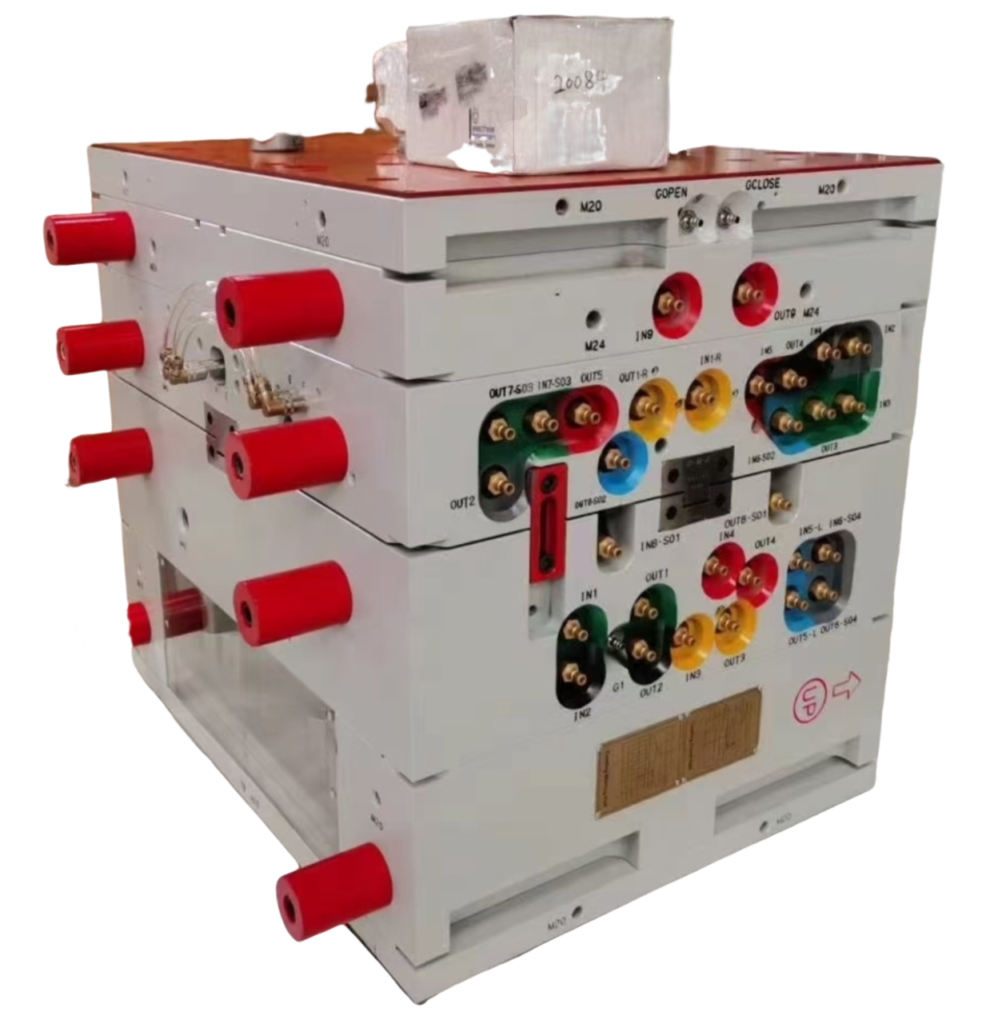
moldeo por inyección de reacción1 is useful when a buyer needs a large, light, thick, or impact-resistant plastic part that does not fit the usual high-pressure thermoplastic molding playbook. The process looks familiar from the outside because liquid material enters a closed tool, but the real work happens through chemistry inside the cavity.
The practical question is not whether RIM is newer or more advanced than ordinary moldeo por inyección. The better question is whether the part size, wall thickness, material behavior, cosmetic target, annual volume, and tooling budget make low-pressure reactive molding a lower-risk route than thermoplastic molding, CNC machining, casting, or composites.
This guide explains how the process works, where it performs well, which material and tooling risks matter, and how procurement teams should compare suppliers before asking for a quote. It is written for engineers and buyers who need an honest manufacturing answer, not a brochure definition.
- RIM uses low-viscosity reactive liquids, not melted pellets.
- It fits large, thick, complex, and impact-resistant parts.
- Tooling can be cheaper, but chemistry risk is higher.
- Material choice must match cure, stiffness, and surface needs.
- Supplier review should test both tooling and process control.
¿Qué es el moldeo por inyección de reacción?
Reaction injection molding is defined by the function, constraints, and tradeoffs explained in this section. Reaction injection molding is a low-pressure molding process where two or more liquid components are metered, mixed, and injected into a closed mold cavity, then chemically react to form a finished polymer part. In many programs the material is polyurethane2, but the same manufacturing logic can apply to other reactive systems.
The key difference is that RIM does not rely on pushing a high-viscosity molten thermoplastic through a narrow gate. The liquid mix flows more easily, so the mold can often be filled at lower pressure. That helps when the part is large, has thick sections, or needs design freedom that would be expensive in conventional tooling.
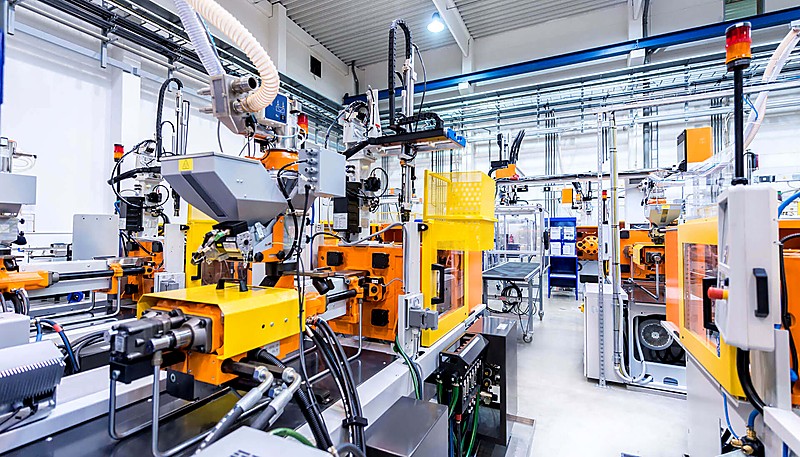
Do not confuse lower pressure with lower engineering discipline. The reaction must fill the tool before viscosity rises too far, and the mold temperature, mix ratio, injection timing, venting, and cure time must stay consistent. A small error in chemistry can create soft spots, poor surface quality, dimensional shift, weak corners, or parts that look fine but fail in use.
“RIM can reduce tooling pressure compared with standard thermoplastic molding.”Verdadero
The liquid components used in reaction injection molding usually flow with lower viscosity before they cure. That can reduce clamp pressure and make large-part tooling more practical, especially when the part has thick walls or broad projected area.
“Lower injection pressure means the project is automatically easy.”Falso
RIM shifts the risk from melt pressure to chemistry, timing, venting, surface control, and cure stability. A weak process window can still create scrap, repeated trials, and late tool changes.
How does the RIM process work?
The RIM process starts with two material streams, commonly a polyol side and an isocyanate side for polyurethane parts. The supplier meters both streams at a controlled ratio, mixes them quickly, injects the mixture into an molde de inyección, and lets the reaction cure inside the cavity.
A good process plan defines the mix ratio, material temperature, mold temperature, shot size, injection time, venting path, demolding time, and post-cure requirements. If the part has inserts, ribs, bosses, sealing faces, or cosmetic surfaces, the team also needs a clear loading and handling method before sampling starts.
In our experience, most RIM failures are not caused by one dramatic mistake. They come from small mismatches: the material starts to thicken before a far corner fills, the vent is too weak, the tool is too cold near a thick section, or the demolding step bends a still-warm feature. These issues need process evidence, not guesswork.
| RIM control point | Why it matters | Buyer question |
|---|---|---|
| Mix ratio | Controls cure and mechanical properties | How is ratio monitored during production? |
| Temperatura del molde | Affects flow, surface, and cure | Where are temperature zones measured? |
| Ventilación | Prevents trapped gas and burn marks | How are far corners vented? |
| Demolding time | Controls distortion and cycle time | What data proves safe release time? |
When should engineers choose reaction injection molding?
Engineers should consider RIM when the part is too large, too thick, too impact-sensitive, or too geometry-heavy for a simple thermoplastic quote. Typical examples include enclosures, covers, housings, bumpers, medical equipment panels, industrial machine guards, vehicle components, and parts that need a tough skin with moderate tooling cost.
The strongest use case is a medium-volume program where tooling cost, part size, impact resistance, and design flexibility matter more than the fastest possible cycle time. If annual volume is very high and the part fits thermoplastic rules, standard molding may still win. If volume is very low, CNC or casting may be safer.
We usually tell buyers to compare the full project cost, not only the mold price. RIM tooling may be less expensive because fill pressure is lower, but material price, cure time, labor, surface finishing, and quality control can change the final economics. A cheap tool with unstable chemistry is not a bargain.
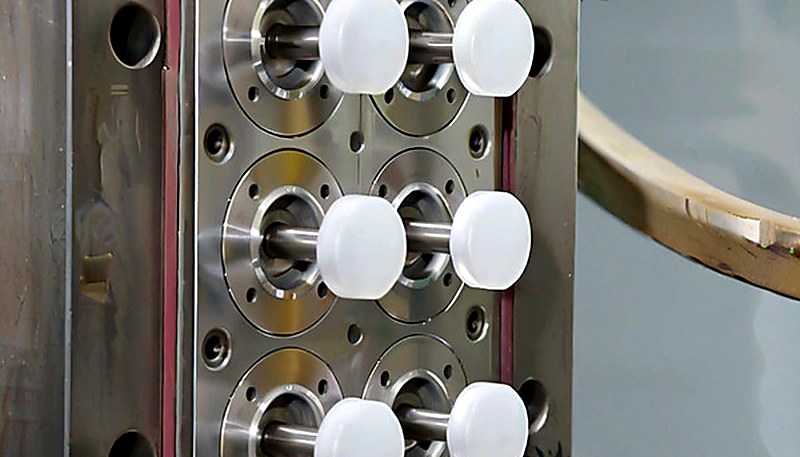
RIM is also attractive when a part needs thick walls without the sink, stress, or cooling penalties that would be painful in standard molding. That does not mean unlimited thickness is free. Thick areas still need flow planning, cure control, dimensional allowance, and a release strategy that protects corners and bosses.
For sourcing teams, the decision should be written as a manufacturing tradeoff: part performance, expected volume, cosmetic class, tolerance target, tooling budget, lead time, and production repeatability. If the supplier cannot explain that tradeoff, the quote is probably just a price, not an engineering answer.
Which materials are used in reaction injection molding?
The main RIM materials are polyurethane and other reactive thermoset systems chosen for impact resistance, stiffness, density, and surface quality. A thermoset polymer3 system is different from a thermoplastic pellet, so buyers should confirm the exact chemistry instead of assuming it behaves like ABS, PC, PP, or nylon.
Material selection should start from the part function. Does the part need impact resistance, structural stiffness, a smooth painted surface, chemical resistance, temperature stability, energy absorption, or light weight? The answer changes the formulation, mold temperature, cure time, insert strategy, and quality inspection method.
If the buyer needs UL, medical, automotive, outdoor, or chemical exposure performance, the supplier should not promise from memory. Ask for material data, processing assumptions, sample testing, and any secondary finish requirement. RIM can make strong and attractive parts, but the material system must be chosen for the real environment.
In our Shanghai factory, our 20+ years of tooling and injection molding experience, 47 injection molding machines from 90T to 1850T, in-house mold manufacturing, 400+ plastic material experience, and ISO 9001, ISO 13485, ISO 14001, and ISO 45001 systems help our engineers compare RIM candidates against thermoplastic molding, prototype tooling, and production control needs before quoting.
How should the mold be designed for RIM parts?
A RIM mold is designed around flow, venting, cure, release, and surface expectations. Because the material enters as a reactive liquid, the tool may not need the same pressure rating as a thermoplastic production mold, but it still needs accurate shutoffs, stable temperature control, clean vents, and a predictable parting line.
Large covers and housings often fail when the mold design treats cosmetic faces as an afterthought. Gate location, knit behavior, air removal, insert loading, and demolding direction all affect the surface. If the part will be painted, textured, bonded, or assembled against another component, those requirements should be visible on the drawing.
Tolerance planning should also be realistic. RIM can produce repeatable parts, but cure shrinkage, wall thickness, material formulation, and fixture method influence final dimensions. The supplier should separate functional dimensions from cosmetic dimensions and explain how first samples will be measured before approving production.
“Venting and temperature control can decide whether a RIM part fills cleanly.”Verdadero
Reactive liquids can trap gas or cure unevenly if the mold does not control air escape and heat. Good vent placement and stable mold temperature help protect surface quality, far-corner fill, and repeatable cure.
“RIM molds do not need serious engineering because pressure is lower.”Falso
Lower pressure does not remove the need for correct shutoff, parting line control, inserts, venting, temperature balance, and release planning. Weak tooling decisions still create scrap and rework.
How does RIM compare with standard injection molding?
RIM is different from standard injection molding because it uses reactive liquids and lower pressure instead of melted thermoplastic pellets. Standard thermoplastic molding is usually better for high-volume small or medium parts, tight cycles, broad resin availability, and repeatable pellet processing. RIM is stronger when the part is large, thick, impact-oriented, or difficult to justify with a high-pressure steel tool.
The buyer should not choose by process name. Choose by constraints. If the project needs fast cycle time, commodity resin, and millions of units, a standard molding route is likely stronger. If it needs a large complex housing with moderate volume and lower tooling pressure, RIM deserves a serious review. For thermoplastic alternatives, also compare the required máquina de moldeo por inyección de tornillo setup before locking the route.
A sourcing mistake we see often is comparing a RIM quote and a thermoplastic quote without normalizing the assumptions. One quote may include painting, fixture inspection, and post-cure handling, while the other only includes molded blanks. Use a structured supplier sourcing guide so each supplier answers the same technical scope, including how cycle assumptions differ from tiempo de producción del moldeo por inyección planning.
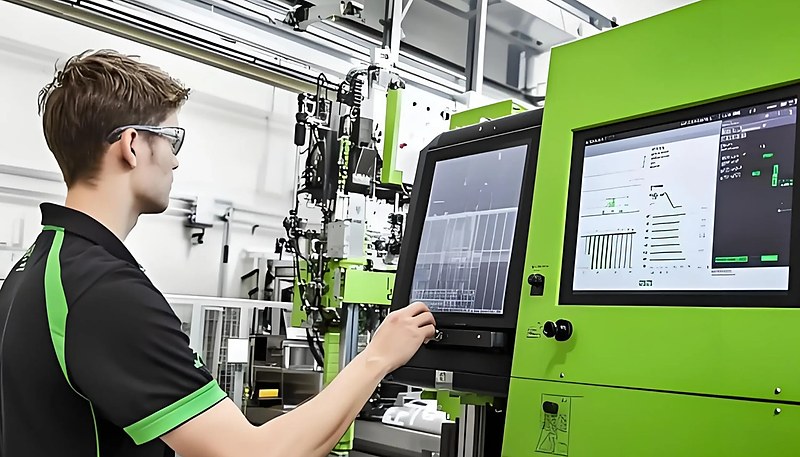
How should buyers qualify a RIM supplier?
A RIM supplier is qualified by evidence of process control, tooling review, material selection, inspection planning, and sample correction discipline. The supplier should be able to explain how it controls mix ratio, shot size, mold temperature, venting, demolding time, and nonconforming parts during production.
Send the same RFQ package to each supplier: 3D file, 2D drawing, material target, surface requirement, expected annual volume, tolerance priorities, assembly function, testing standard, and cosmetic acceptance rules. Without this package, the supplier may quote a mold that is cheap on paper but cannot support the real part.
Before approving a mold build, ask for a short DFM note covering gate location, vent plan, parting line, insert handling, critical dimensions, material risks, and sample inspection. That document does not need to be fancy. It just needs to prove the supplier has thought through the job before steel or aluminum is cut.
Need help comparing RIM with standard molding? Send ZetarMold your drawings, volume target, material requirement, and surface standard. Our engineering team can review tooling risk, process route, material options, and quote assumptions before you commit to a mold.
Frequently Asked Questions About Reaction Injection Molding?
¿Para qué se utiliza la moldura por inyección de reacción?
Reaction injection molding is used for large, thick, complex, or impact-resistant plastic parts where low-pressure reactive material flow is useful. Common examples include housings, panels, covers, bumpers, guards, medical equipment shells, and industrial enclosures. It is strongest when the buyer needs design freedom and moderate production volume, but still wants repeatable molded parts rather than one-off machining or manual fabrication. It is also useful when tooling pressure, broad part area, or wall thickness would make a standard thermoplastic mold expensive or risky. For buyers, the best fit usually appears when the part is too large for easy high-pressure molding but still needs repeatable production quality.
¿Es el moldeo por inyección de reacción lo mismo que el moldeo de poliuretano?
No. Polyurethane is a common material family used in reaction injection molding, but RIM describes the manufacturing process, not only one material. Many RIM programs use polyurethane chemistry because it can be tuned for toughness, flexibility, density, and surface feel. The buyer should still confirm the exact formulation, cure behavior, testing requirements, and whether the material matches the real operating environment. A supplier should explain both the chemistry and the production controls, because the same material name can hide different performance assumptions. Ask for the material data sheet, expected cure window, and any finishing limits before treating two polyurethane quotes as equal.
¿Es RIM más barato que el moldeo por inyección estándar?
RIM can be cheaper on tooling for certain large or thick parts because the process uses lower fill pressure than standard thermoplastic molding. That does not guarantee a lower total project cost. Material price, cure time, post-processing, painting, inspection, and scrap risk can change the economics. A useful quote should compare the complete manufacturing route, not only the mold price. Buyers should ask whether the quote includes sampling, fixtures, surface finishing, dimensional reports, packaging, and expected correction loops after first articles. A low mold price is only useful if the production process can hold dimensions and surface quality.
¿Cuáles son los principales riesgos en el moldeo por inyección de reacción?
The main risks are poor mix ratio control, trapped air, unstable mold temperature, cure variation, weak surface quality, dimensional movement, and unrealistic demolding assumptions. Some of these problems only appear after sampling because the part may look acceptable but fail assembly or mechanical testing. Buyers should ask for process-control evidence, sample inspection plans, and a clear correction path before approving production. The safest RFQ makes critical dimensions, cosmetic limits, test conditions, and assembly requirements visible before the mold concept is finalized. If those details are missing, the supplier may quote the wrong tool, process window, or inspection method.
¿Cómo debo solicitar un presupuesto para un proyecto RIM?
Send a complete RFQ package with 3D files, 2D drawings, material expectations, annual volume, cosmetic standards, critical dimensions, testing requirements, assembly function, and target lead time. Also explain whether you are comparing RIM against standard injection molding, CNC, casting, or composites. That context helps the supplier recommend the right process route instead of forcing the project into the wrong mold design. If the project is early, share the failure risks you already worry about, such as impact load, surface finish, warpage, or assembly fit. A better supplier will answer those risks before pushing you toward a tooling deposit.
-
reaction injection molding: Reaction injection molding is a manufacturing process in which two or more low-viscosity liquid components react inside a mold cavity to form a polymer part. ↩
-
polyurethane: Polyurethane is a polymer family made by reacting isocyanates with polyols, often used when parts need toughness, flexibility, or energy absorption. ↩
-
thermoset polymer: A thermoset polymer is a material that cures into a cross-linked structure and normally cannot be remelted like a thermoplastic after curing. ↩


 EN
EN  ES
ES  FR
FR  DE
DE  PT
PT  AR
AR  RU
RU  JA
JA  KO
KO  IT
IT  NL
NL  TR
TR  PL
PL