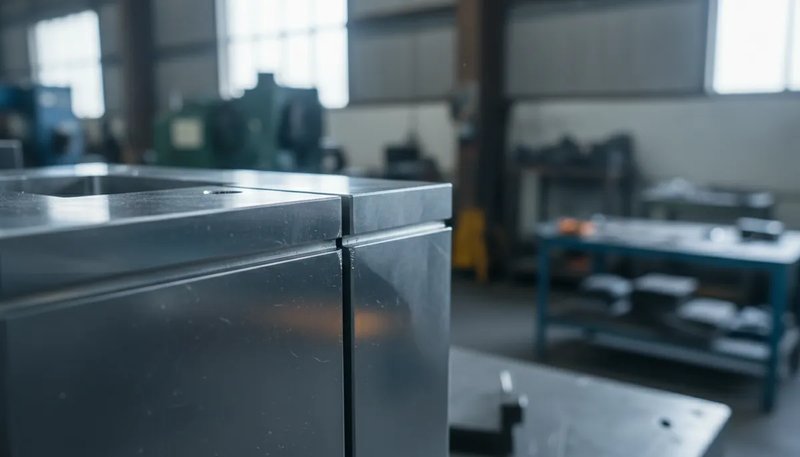
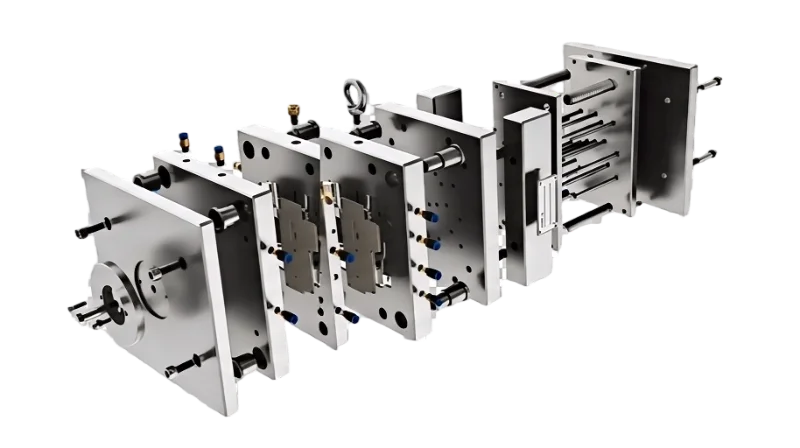
El moldeo por inserción1 es un proceso de moldeo por inyección en el que un inserto previamente colocado —normalmente metálico— se sobremoldea con plástico para formar una única pieza integrada. A diferencia del moldeo por inyección convencional, el inserto se carga en la cavidad antes de cada ciclo y la resina fundida fluye a su alrededor, uniéndose mecánicamente y, con la elección adecuada de materiales, también químicamente.
En nuestros 20+ años ejecutando proyectos de moldeo por inserción en ZetarMold, hemos visto cómo este proceso elimina operaciones secundarias de montaje, reduce el número de piezas hasta 60% y mejora la resistencia de las roscas en aplicaciones que van desde conectores de automoción hasta carcasas de dispositivos médicos. Esta guía aborda el proceso, los materiales, las reglas de diseño y los errores habituales que encontramos en fábrica.
Si está diseñando una pieza que combina la resistencia del metal con la versatilidad del plástico —un punto de montaje roscado en la carcasa de un sensor, un casquillo de latón en un conjunto de engranajes o un contacto eléctrico integrado en un conector—, el moldeo por inserción es casi con toda seguridad el proceso adecuado. Las decisiones de ingeniería clave giran en torno al material del inserto, la selección de la resina, las relaciones de espesor de pared y el diseño del molde para retener el inserto.
- El moldeo por inserción une insertos metálicos al plástico durante el ciclo de inyección, sin necesidad de montaje posterior.
- Los insertos roscados mejoran la durabilidad de la fijación frente a los tornillos autorroscantes en plástico.
- Las prensas verticales utilizan la gravedad para mantener los insertos en su posición durante el cierre del molde.
- La selección de materiales para el moldeo por inserción debe tener en cuenta la diferencia de expansión térmica entre el inserto y la resina.
- El diseño para moldeo por insertos requiere un espesor de pared ≥1.5× el diámetro del inserto para garantizar el llenado y la resistencia de la unión.
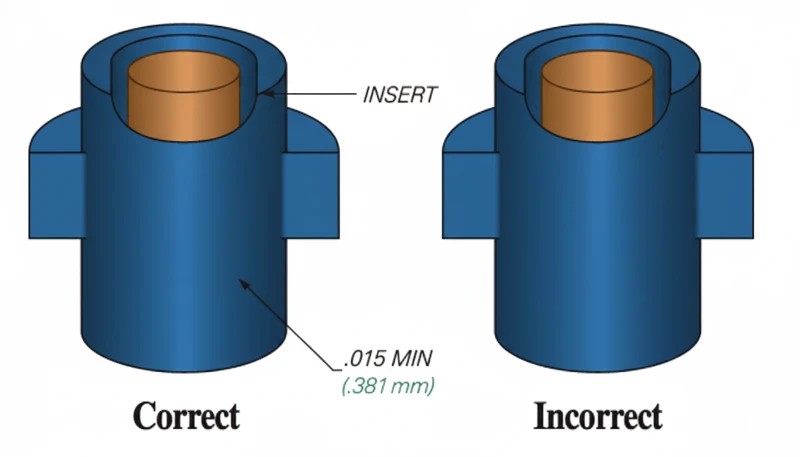
Correcto vs incorrecto diseño de inserción
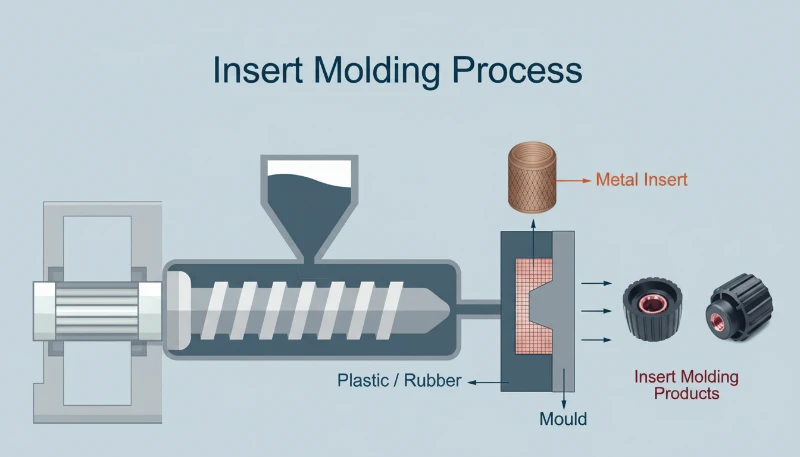
El moldeo por inserción es un proceso de fabricación que encapsula un inserto colocado previamente dentro de plástico fundido para formar un único componente integrado. A diferencia del moldeo por inyección estándar, el inserto se carga en la cavidad del molde antes de cada ciclo y la resina fundida fluye a su alrededor durante la inyección, creando una unión mecánica permanente. Este proceso se utiliza ampliamente en la fabricación de productos de automoción, médicos y electrónicos para combinar la resistencia del metal con la versatilidad del plástico en una sola etapa de producción.
El proceso funciona como el moldeo por inyección estándar, con una diferencia fundamental: antes de que el molde se cierre y comience la inyección, el operario o un brazo robótico coloca un inserto en un alojamiento específico o sobre pasadores de centrado dentro de la cavidad. Una vez cerrado el molde, el termoplástico fundido fluye alrededor del inserto y lo encapsula. Tras el enfriamiento y la expulsión, el inserto queda bloqueado mecánicamente en la pieza de plástico. La unión puede ser puramente mecánica (las contrasalidas, el moleteado o los orificios del inserto permiten que el plástico fluya y quede bloqueado) o reforzarse mediante promotores de adherencia en la resina.
En la práctica, muchos trabajos de moldeo por inserción se realizan en máquinas verticales de moldeo por inyección, no horizontales. Una prensa vertical permite que la gravedad mantenga el inserto en posición durante el cierre del molde y reduce el riesgo de desplazamiento. En nuestra fábrica de Shanghái operamos 47 máquinas de moldeo por inyección de 90T a 1850T, y varias prensas verticales están dedicadas a series de moldeo por inserción para clientes de automoción y electrónica.
"El moldeo por inserción puede producir piezas multimaterial en un solo ciclo de moldeo, eliminando el ensamblaje secundario."True
Como el inserto se coloca antes de la inyección, el plástico se adhiere a su alrededor durante el mismo ciclo; después no se necesita ningún paso de encolado, ajuste a presión o soldadura ultrasónica.
"El moldeo por inserción siempre requiere una máquina de moldeo por inyección horizontal."False
Muchas operaciones de moldeo con insertos utilizan específicamente prensas verticales porque la gravedad mantiene los insertos en sus posiciones designadas durante el cierre del molde.
¿Qué materiales se utilizan en el moldeo con insertos?
Los principales materiales utilizados en el moldeo por insertos son resinas termoplásticas (PA, PBT, PPS, PEEK) e insertos de latón, acero o acero inoxidable. La resina se selecciona según sus características de adherencia, estabilidad térmica y requisitos mecánicos, mientras que el material del inserto depende de la aplicación—latón para roscas, acero para cargas estructurales y acero inoxidable para resistir la corrosión. Gestionar la diferencia de expansión térmica entre metal y plástico es el principal reto de materiales en cualquier proyecto de moldeo por insertos.
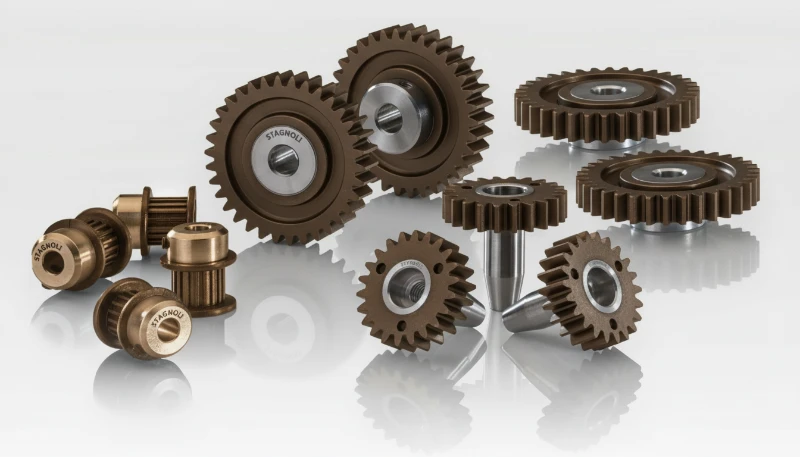
El latón es el material predominante para insertos en aplicaciones roscadas porque se mecaniza con facilidad, resiste la corrosión y admite moleteados que mejoran el bloqueo mecánico. Para aplicaciones estructurales que soportan cargas, se prefieren los insertos de acero endurecido. En cuanto a las resinas, en ZetarMold hemos trabajado con más de 400 materiales y, para el moldeo por inserción, solemos recomendar nailon reforzado con fibra de vidrio (PA6-GF30) o PPS cuando se requieren una alta estabilidad dimensional y una fuerte retención del inserto.
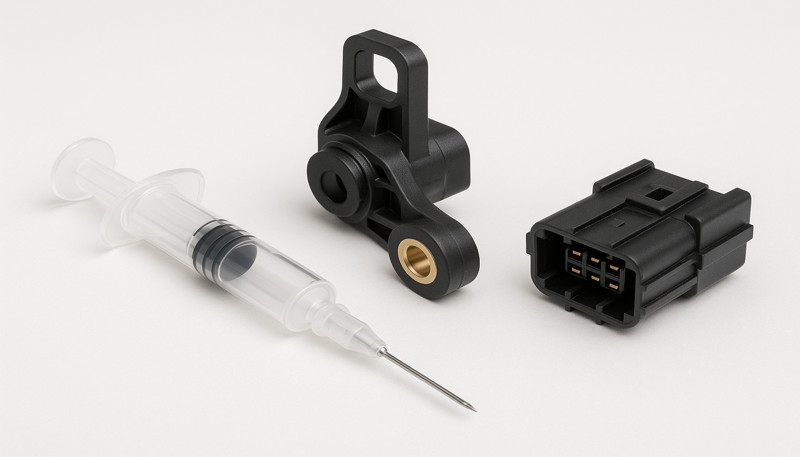
¿Cuáles son las principales ventajas del moldeo con insertos?
Las principales ventajas del moldeo con insertos son la reducción del coste de montaje, un mejor rendimiento de las roscas y la consolidación de piezas. En lugar de moldear una pieza de plástico e instalar después un inserto roscado mediante soldadura ultrasónica o inserción térmica en una operación independiente, el inserto se integra durante el ciclo de inyección y la pieza queda lista inmediatamente después de expulsarla del molde.
Los insertos roscados de latón moldeados en plástico proporcionan hasta 5 veces la resistencia al arrancamiento2 de los tornillos autorroscantes en el mismo material. Esto es fundamental cuando la pieza se montará y desmontará repetidas veces, como en carcasas de electrónica de consumo, sensores de automoción y dispositivos médicos. La consolidación de piezas también aporta grandes ventajas: hemos visto diseños en los que 4-6 componentes separados se redujeron a una sola pieza moldeada por inserción, disminuyendo la mano de obra de montaje y la complejidad del inventario.
La reducción de peso es una ventaja secundaria pero significativa. Al sustituir componentes de metal macizo por construcciones de plástico con insertos, a menudo puede reducir el peso de la pieza en un 30-50% y mantener o mejorar el rendimiento estructural en los puntos críticos de montaje. Por eso los ingenieros de automoción y aeroespaciales especifican cada vez más soluciones moldeadas con insertos.
"Los insertos roscados de latón moldeados en plástico proporcionan hasta 5× la resistencia a la extracción de los tornillos autorroscantes."True
Los ensayos de extracción demuestran sistemáticamente que los insertos sobremoldeados distribuyen la carga sobre una superficie mayor, por lo que resisten mucho mejor el arrancamiento durante ciclos de montaje repetidos.
"El moldeo por inserción solo es útil para aplicaciones de elementos de fijación roscados."False
Los insertos también se utilizan para contactos eléctricos, blindajes RF, superficies de apoyo, disipadores de calor y refuerzo estructural, allí donde se necesita una propiedad que el plástico por sí solo no puede aportar.
¿En qué se diferencia el moldeo por inserción del sobremoldeo?
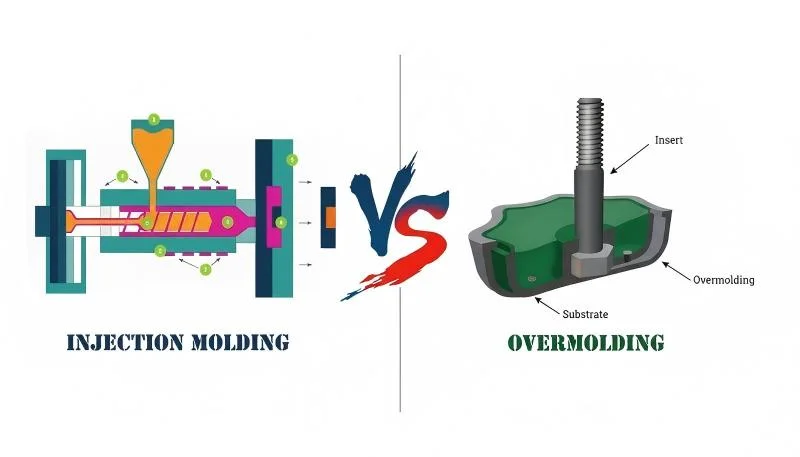
La diferencia principal es que el moldeo por inserción une un inserto rígido al plástico, mientras que el sobremoldeo3 une una segunda capa plástica sobre un sustrato moldeado. El primero suele unir metal con plástico; el segundo, plástico con plástico, a menudo un sustrato rígido con una capa de agarre blanda de TPE o TPU. Ambos producen piezas multimaterial, pero sus equipos, moldes y parámetros de proceso difieren considerablemente.
Según nuestra experiencia, la confusión surge porque ambos procesos producen piezas multimaterial. La diferencia práctica en la fábrica es la siguiente: el moldeo con insertos suele realizarse en prensas verticales con carga manual o robótica de los insertos entre ciclos, mientras que el sobremoldeo suele realizarse en moldes rotativos o de varias estaciones, donde el sustrato se moldea en una estación y el material de sobremoldeo se inyecta en la siguiente. Si intenta unir un casquillo metálico roscado a una carcasa de plástico, se trata de moldeo con insertos. Si añade una empuñadura de caucho a un mango de plástico, se trata de sobremoldeo.
¿Cuáles son las reglas de diseño para el moldeo con insertos?
El espesor de pared alrededor del inserto es la regla de diseño más importante. La pared de plástico debe medir al menos 1.5× el diámetro del inserto para evitar rechupes, huecos y grietas durante el enfriamiento. Las paredes delgadas alrededor de un inserto grande de latón se contraerán de manera desigual, lo que provocará rechupes visibles en la superficie estética y una posible debilidad estructural. Recomendamos un espesor de pared mínimo de 1.5 mm alrededor de cualquier inserto, preferiblemente de 2.0 mm para materiales con fibra de vidrio.
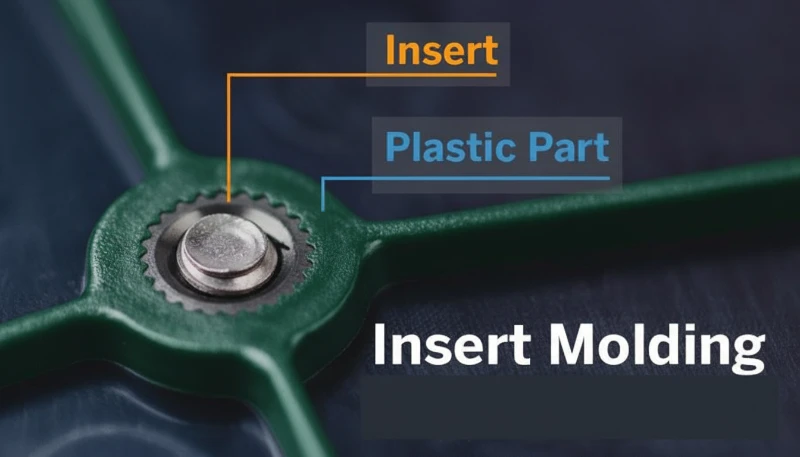
El diseño del propio inserto importa tanto como la geometría del plástico. Los insertos moleteados o ranurados proporcionan un enclavamiento mecánico que aumenta drásticamente la resistencia a la extracción y al giro. Los orificios pasantes del inserto permiten que el plástico fluya a través de ellos y forme un bloqueo mecánico. Evite los insertos cilíndricos lisos sin características de retención, salvo que dependa únicamente de la unión adhesiva. Los ángulos de desmoldeo de las paredes de plástico (1-2° como mínimo) garantizan una expulsión limpia sin dañar la unión del inserto.
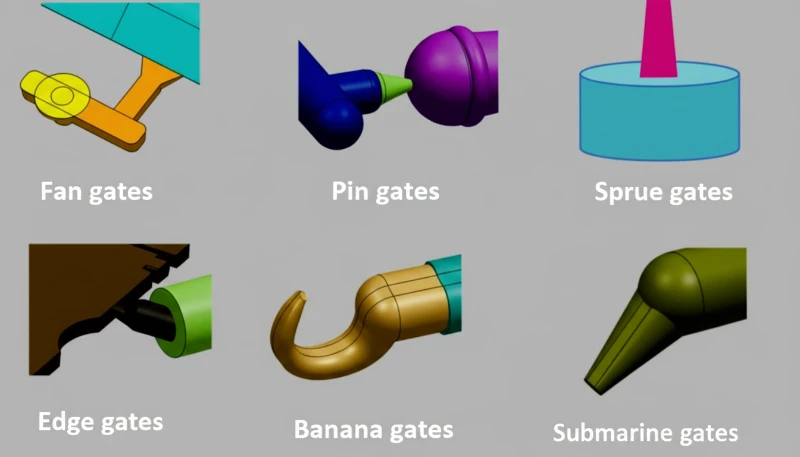
La ubicación de la entrada es otro error frecuente que observamos. La entrada debe dirigir el flujo para que la resina llene uniformemente alrededor del inserto, en vez de golpear primero un lado, lo que puede desplazar el inserto o causar una encapsulación incompleta. Merece la pena ejecutar un software de simulación (Moldflow) para cualquier pieza sobremoldeada con insertos que tenga tolerancias posicionales estrictas. El coste de unas horas de simulación es insignificante frente al de modificar un molde.
"Ejecutar una simulación Moldflow antes de cortar el acero puede evitar el desplazamiento de insertos y los problemas de llenado, cuya corrección después del mecanizado resulta costosa."True
La simulación identifica desequilibrios de flujo, bolsas de aire y líneas de soldadura cerca de los insertos por una fracción del coste de modificar el molde.
"Los insertos cilíndricos lisos sin ranuras proporcionan una retención suficiente para la mayoría de las aplicaciones de moldeo por inserción."False
Sin moleteado, ranuras ni orificios pasantes, los insertos lisos dependen por completo de la fricción del ajuste por contracción, que se degrada con los ciclos térmicos y la vibración.
¿Cómo se realiza el moldeo con insertos en la planta de producción?
Los dos métodos utilizados en planta son la carga manual y la carga robótica automatizada. La carga manual es adecuada para volúmenes bajos o medios, mientras que los sistemas automatizados son rentables para series de 5,000+ piezas y verifican mediante sensores la posición del inserto antes de cada cierre del molde. Ambos métodos funcionan en prensas de inyección verticales que utilizan la gravedad para mantener los insertos en su posición durante el cierre del molde y la inyección.
Para volúmenes mayores, la carga automatizada mediante robots o alimentadores de tazón reduce el tiempo de ciclo y mejora la uniformidad. Un robot de recogida y colocación carga los insertos en el molde en menos de 2 segundos, y el sistema verifica mediante sensores la presencia del inserto antes de cerrar el molde. Esto elimina el riesgo de ejecutar un ciclo sin inserto, lo que daña la superficie del molde, y reduce considerablemente el coste de mano de obra por pieza. En nuestras instalaciones, las celdas automatizadas de moldeo por inserción alcanzan habitualmente tiempos de ciclo dentro del 10-15% de los ciclos de moldeo por inyección estándar para la misma geometría de pieza.
¿Qué sectores utilizan más el moldeo con insertos?
La automoción es el mayor consumidor por volumen de piezas con insertos moldeados. Las carcasas de sensores, bloques de conectores, portafusibles y soportes de montaje utilizan insertos roscados de latón o acero moldeados en carcasas de PA o PBT. El requisito clave es la durabilidad de la rosca: los componentes de automoción se montan, mantienen y a veces desmontan durante una vida útil del vehículo de 15 años, por lo que no son aceptables los tornillos autorroscantes directamente sobre plástico.
La fabricación de dispositivos médicos es la segunda aplicación principal. Los componentes de dispositivos implantables, los mangos de instrumentos quirúrgicos y las carcasas de equipos de diagnóstico utilizan el moldeo por inserción por su capacidad para crear conjuntos multimaterial sellados y esterilizables. La electrónica de consumo ocupa el tercer lugar; piense en los insertos roscados de latón del chasis de su portátil, que permiten apretar tornillos repetidamente sin dañar la rosca. Los equipos industriales, el sector aeroespacial y la defensa completan la lista, donde los casquillos y las superficies de apoyo moldeados por inserción sustituyen a componentes metálicos mecanizados con menos peso y coste.
En nuestra fábrica de Shanghái operamos 47 máquinas de moldeo por inyección de 90T a 1850T y contamos con 20+ años de experiencia procesando más de 400 materiales, incluidos los nailones reforzados con fibra de vidrio y los grados de PPS para altas temperaturas más utilizados en la producción de moldeo por inserción.
¿Cuáles son los defectos habituales del moldeo por inserción y cómo se previenen?
Los tres defectos que vemos con mayor frecuencia son el desplazamiento del inserto, los rechupes alrededor de los insertos y el llenado incompleto. El desplazamiento del inserto se produce cuando la presión de inyección lo empuja fuera de su posición: la resina golpea un lado del inserto antes que el otro, lo que genera una fuerza asimétrica. La prevención comienza con elementos adecuados de posicionamiento del inserto en el molde (pasadores, alojamientos o soportes magnéticos) y una ubicación del punto de inyección que equilibre el flujo alrededor del inserto.
Los rechupes aparecen cuando el espesor de pared alrededor del inserto es demasiado fino en relación con el diámetro del inserto. La sección de plástico más gruesa próxima al inserto se enfría y contrae más que la pared circundante, más fina, lo que crea una depresión visible. Las soluciones habituales son aumentar el espesor de pared a 1.5-2.0× el diámetro del inserto, añadir nervaduras para aportar rigidez o utilizar una resina espumante. Un llenado incompleto alrededor del inserto suele indicar que este bloquea la trayectoria de flujo; se soluciona reubicando la entrada o añadiendo canales de flujo alrededor del inserto.
Las grietas alrededor del inserto después del enfriamiento son un problema de tensión térmica. Se producen cuando el inserto metálico y la resina plástica tienen coeficientes de expansión térmica (CTE) muy diferentes y la pieza se enfría demasiado rápido. Las soluciones incluyen usar un grado de resina con menor CTE (los grados reforzados con fibra de vidrio ayudan), precalentar los insertos para reducir la diferencia de temperatura y ralentizar el ciclo de enfriamiento. En nuestro taller, precalentar los insertos a 80-120°C es una práctica estándar para trabajos de moldeo con insertos de PEEK y PPS.
¿Cómo elegir un proveedor de moldeo con insertos?
Los cuatro criterios clave son la capacidad de la prensa vertical, la experiencia en la manipulación de insertos, el conocimiento de materiales y la documentación de calidad. No todos los moldeadores por inyección están equipados para el moldeo por inserción: la necesidad de una prensa vertical, los dispositivos de carga de insertos y la validación del proceso son capacidades especializadas. Pregunte si el proveedor dispone de celdas dedicadas al moldeo por inserción y cuál es su tolerancia posicional típica de los insertos en las series de producción.
El conocimiento de los materiales importa porque la combinación inserto-resina determina la calidad de la unión. Un proveedor con experiencia en su familia específica de resinas (PA, PBT, PPS o PEEK) conocerá la temperatura del molde, la velocidad de inyección y el perfil de enfriamiento adecuados para evitar los defectos descritos. La documentación de calidad —informes de inspección de nivel PPAP, datos dimensionales CMM y resultados de ensayos de arrancamiento— distingue a un proveedor cualificado de otro que solo fabrica las piezas. Para orientarse, consulte nuestra guía de búsqueda de proveedores.
"Precalentar los insertos metálicos a 80-120°C reduce la tensión térmica y evita grietas en resinas de alto rendimiento como PEEK y PPS."True
El precalentamiento reduce la diferencia de temperatura entre la resina fundida y el inserto, lo que permite un enfriamiento más gradual y una menor tensión residual en la interfaz de unión.
"Cualquier moldeador por inyección con prensas horizontales puede realizar moldeo por inserción sin equipos especializados."False
El moldeo por inserción suele requerir prensas verticales, útiles para cargar insertos, brazos robóticos de carga y detección de presencia del inserto verificada por sensores—equipos de los que carecen la mayoría de talleres estándar de moldeo por inyección.
Preguntas frecuentes
Preguntas frecuentes
¿Cuál es la diferencia entre el moldeo con insertos y el sobremoldeo?
En el moldeo por inserción se coloca un inserto sólido preformado (normalmente metálico) en el molde antes de la inyección, mientras que en el sobremoldeo se inyecta una segunda capa de plástico sobre un sustrato plástico ya moldeado. El moldeo por inserción crea uniones de metal con plástico; el sobremoldeo crea uniones de plástico con plástico. Ambos producen piezas multimaterial, pero el equipo, el utillaje y los parámetros del proceso difieren considerablemente. El moldeo por inserción suele realizarse en prensas verticales con carga manual o robótica de insertos, mientras que el sobremoldeo emplea a menudo moldes giratorios o multiestación, en los que primero se moldea el sustrato y después se inyecta el material de sobremoldeo.
¿Qué materiales funcionan mejor para el moldeo por inserción?
En cuanto a la resina, el nailon reforzado con fibra de vidrio (PA6-GF30), el PBT, el PPS y el PEEK son las opciones más utilizadas porque ofrecen estabilidad dimensional, resistencia química y una sólida retención de los insertos. En cuanto a estos últimos, el latón predomina en las aplicaciones roscadas por su excelente maquinabilidad y resistencia a la corrosión, mientras que se prefiere el acero endurecido para las cargas estructurales. La consideración clave es adaptar la tasa de contracción de la resina y el coeficiente de expansión térmica (CTE) al material del inserto para evitar grietas, aflojamiento o inestabilidad dimensional después de la refrigeración en producción.
¿Puede realizarse el moldeo por insertos en una prensa horizontal estándar?
Sí, el moldeo por inserción puede realizarse en una prensa horizontal estándar, pero se prefieren claramente las prensas verticales porque la gravedad mantiene los insertos en su posición durante el cierre del molde y reduce el riesgo de desplazamiento. Las prensas horizontales requieren elementos magnéticos o mecánicos de retención del inserto integrados en el molde, lo que añade complejidad y coste al utillaje. Para series de prototipos de bajo volumen, a veces se utilizan prensas horizontales con carga manual; sin embargo, para volúmenes de producción superiores a unos pocos miles de piezas, una configuración específica de prensa vertical casi siempre resulta más fiable y rentable para obtener una calidad constante.
¿Qué grado de precisión puede alcanzar la tolerancia posicional de un inserto?
Con un diseño adecuado del molde que utilice pasadores de posicionamiento, alojamientos mecanizados con precisión o soportes magnéticos, y con procedimientos controlados de carga de insertos, se puede lograr en entornos de producción una tolerancia posicional de más o menos 0.05 mm. La tolerancia de producción estándar es de más o menos 0.1 mm para la mayoría de las aplicaciones comerciales. Para alcanzar tolerancias más estrechas se requiere la carga robotizada de insertos con sistemas de verificación por visión artificial, lo que aumenta el coste de los equipos, pero mejora considerablemente la uniformidad y reduce las tasas de desecho, especialmente en aplicaciones de automoción y dispositivos médicos donde la precisión dimensional está estrictamente regulada y documentada.
¿Cuál es la cantidad mínima de pedido para el moldeo por inserción?
El MOQ depende principalmente del método de carga de los insertos y de la complejidad general de la pieza. La carga manual de insertos es adecuada para series de 500 a 1,000 piezas y reduce los costes de utillaje, ya que no requiere equipos robotizados. La carga automatizada resulta rentable a partir de 5,000 piezas, cuando el menor coste de mano de obra por pieza justifica la inversión en automatización. El principal factor de coste siempre es el molde: un molde de inserción con elementos de posicionamiento suele costar entre un 10 y un 20 por ciento más que un molde de inyección estándar.
¿Cómo se evita que los insertos se desplacen durante la inyección?
La prevención requiere combinar una retención adecuada del inserto en el molde mediante pasadores de posicionamiento, alojamientos de precisión o soportes magnéticos; una ubicación equilibrada de la compuerta para que la resina fluya uniformemente alrededor de ambos lados del inserto al mismo tiempo; una velocidad de inyección controlada para evitar una presión asimétrica que desplace el inserto; y una verificación mediante sensores que confirme que el inserto está presente y correctamente colocado antes de que se cierre el molde y comience la inyección. Precalentar los insertos antes de cargarlos también puede ayudar al reducir el choque térmico que a veces contribuye a su movimiento durante la fase inicial de contacto con la resina.
¿Es más caro el moldeo de insertos que instalar los insertos después del moldeo?
El coste por pieza suele ser inferior porque el moldeo con insertos elimina una operación de montaje secundaria, como la soldadura ultrasónica o el remachado térmico. Sin embargo, el coste inicial del molde es mayor debido a los elementos de posicionamiento de los insertos y a un utillaje potencialmente más complejo. El punto de equilibrio suele situarse entre 1,000 y 2,000 piezas. Por debajo de ese volumen, puede resultar más económico instalar los insertos después del moldeo con un molde más sencillo. Por encima de ese volumen, el moldeo con insertos ofrece un menor coste total y mejora la uniformidad de la calidad porque todas las piezas se fabrican en las mismas condiciones de moldeo controladas.
¿Qué pruebas de calidad se realizan en las piezas moldeadas con insertos?
Las pruebas de calidad estándar incluyen la inspección dimensional mediante máquinas de medición por coordenadas (CMM), la inspección visual para detectar rechupes y llenado incompleto, ensayos de fuerza de extracción de los insertos roscados para verificar la resistencia de retención, ensayos de par de extracción para confirmar el bloqueo rotacional, análisis de secciones transversales para verificar el encapsulado plástico completo alrededor del inserto y, en algunos casos, ensayos de ciclos térmicos o vibración para aplicaciones de automoción y aeroespaciales. La documentación PPAP con todos estos resultados de ensayo es una práctica habitual en la cadena de suministro de automoción y se exige cada vez más en la fabricación de dispositivos médicos.
¿Necesita un presupuesto para su proyecto de moldeo con insertos?
Obtenga precios competitivos, observaciones de DFM y un calendario de producción del equipo de ingeniería de ZetarMold. Operamos 47 prensas de 90T a 1850T, procesamos 400+ materiales y contamos con 20+ años de experiencia en moldeo por inserción, con sistemas de calidad certificados según ISO 9001 / ISO 13485. Nuestra planta interna de fabricación de moldes admite 100+ juegos de moldes al mes, por lo que el utillaje de moldeo por inserción permanece bajo un mismo techo.
Solicite un presupuesto gratuito
moldeo por inserción: proceso de fabricación en el que se coloca un inserto preformado en la cavidad de un molde y se encapsula con plástico fundido durante el ciclo de inyección para crear un único componente integrado. ↩
resistencia al arrancamiento: fuerza axial necesaria para extraer un inserto roscado de su material anfitrión, medida en newtons o libras-fuerza, y métrica estándar para evaluar la retención del inserto. ↩
sobremoldeo: proceso de moldeo por inyección en dos etapas en el que primero se moldea una pieza sustrato y después se inyecta sobre ella un segundo material para crear un componente multicapa o multimaterial. ↩