““El tiempo de producción es el mismo independientemente de la cantidad del pedido.””
Este artículo desglosa cada fase del plazo de entrega del moldeo por inyección —desde la revisión DFM hasta la fabricación del molde, el muestreo y la producción— con intervalos de tiempo específicos para cada etapa. También explicaré qué fases son fijas (tiempo de mecanizado y limitaciones físicas) y cuáles son negociables (prioridad de programación, horas extra y procesamiento en paralelo). El objetivo es ofrecerle suficiente detalle para planificar con confianza el calendario de su proyecto y cuestionar los plazos de entrega innecesariamente largos cotizados por un proveedor.
- El plazo total del moldeo por inyección oscila entre 4 y 12 semanas
- La fabricación del molde consume el 60–70% del plazo total
- Las herramientas de aluminio reducen el tiempo de fabricación del molde entre un 40 y un 50 %
- El muestreo y la aprobación suelen añadir 5–10 días laborables
- El procesamiento en paralelo puede ahorrar 2–3 semanas en proyectos urgentes
¿Cuál es el plazo habitual del moldeo por inyección?
El plazo habitual del moldeo por inyección viene determinado por la función, las restricciones y las compensaciones explicadas en esta sección. Un proyecto estándar —desde la aprobación del CAD hasta el primer envío de producción— tarda entre 6 y 10 semanas con un molde de acero de una cavidad y entre 4 y 7 semanas con uno de aluminio de una cavidad. Los moldes multicavidad, las herramientas de sobremoldeo y los moldes con acciones laterales complejas añaden entre 2 y 4 semanas a la fase de utillaje. Tras la aprobación del molde, el plazo de producción es de 2 a 4 semanas, según la cantidad del pedido, la disponibilidad del material y la programación de las máquinas.
Estos intervalos suponen que el comprador responde a los comentarios de la revisión DFM y a las solicitudes de aprobación de muestras en un plazo de 24–48 horas. Cada día de retraso en la respuesta añade un día al calendario. Según nuestra experiencia, la principal causa de incumplimiento de plazos no son los retrasos en la fabricación del molde, sino el intercambio entre comprador y proveedor durante la revisión DFM y la aprobación de muestras.
¿Cuáles son las fases de fabricación de un molde de inyección?
Las fases de fabricación de moldes de inyección son las categorías u opciones principales que se explican en esta sección. La fabricación de moldes se divide en siete fases diferenciadas, cada una con un intervalo de tiempo previsible. Comprender estas fases ayuda a identificar en qué puntos puede su proveedor acortar el plazo y en cuáles no.
| Fase | Duración | ¿Compresible? |
|---|---|---|
| Revisión de DFM y diseño del molde | 3–7 días | Sí (comentarios rápidos del comprador) |
| Adquisición de material | 3–10 días | Parcialmente (acero estándar en existencias) |
| Desbaste y acabado CNC | 7–15 días | Limitado (tiempo de mecanizado) |
| EDM y corte por hilo | 3–7 días | Limitado |
| Pulido y montaje | 3–5 días | Parcialmente |
| Prueba del molde (muestreo T1) | 1–3 días | No (requiere tiempo de máquina) |
| Inspección dimensional | 1–2 días | No. |
La fase individual más larga es el mecanizado CNC, que no puede acortarse mucho más allá de realizar turnos extraordinarios. La fase de revisión DFM es donde más tiempo se pierde, no porque el proveedor sea lento, sino porque el comprador tarda días en responder a las solicitudes de cambios de diseño. Una revisión DFM que debería durar 3 días puede alargarse fácilmente a 10 días si el equipo de ingeniería del comprador revisa los cambios en reuniones semanales en vez de hacerlo en tiempo real.
¿Cuánto tarda en construirse cada tipo de molde?
Esta sección trata sobre cuánto tiempo lleva construir cada tipo de molde y su impacto en costo, calidad, tiempo o riesgo de suministro. El tipo y complejidad del molde determinan directamente el plazo de construcción. Un molde de aluminio de una cavidad, simple, puede tener muestras en 7–10 días laborables. Un molde de acero de una cavidad con la misma geometría toma 15–20 días. Agregar accionamientos laterales añade 5–10 días. Agregar una segunda cavidad (molde familiar o multicavidad) añade otros 5–7 días por cavidad adicional.
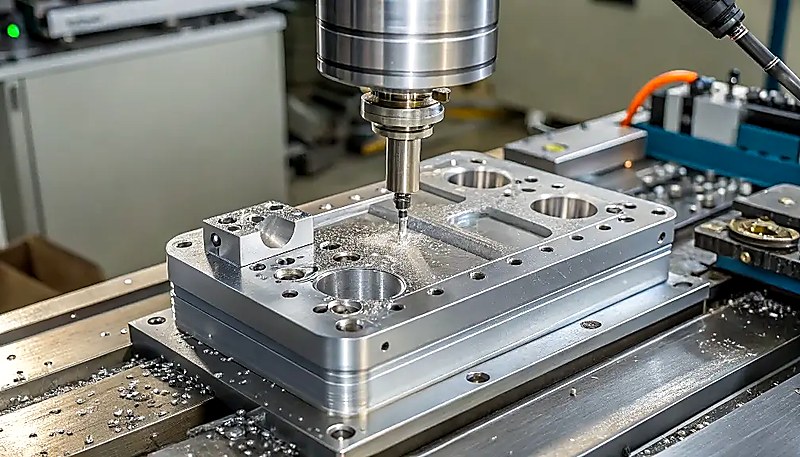
Las herramientas de sobremoldeo tardan entre 30 y 45 días porque requieren dos conjuntos de cavidades (o un mecanismo giratorio) y deben probarse en dos etapas — primero la inyección del sustrato y después la del sobremoldeo. En nuestras instalaciones de Shanghái fabricamos más de 100 moldes al mes y dedicamos líneas de producción específicas a las herramientas de sobremoldeo para mantener el rendimiento pese a la complejidad añadida.
"“Elegir utillaje de aluminio en lugar de acero puede reducir el tiempo de fabricación del molde entre un 40 y un 50%.”"True
El aluminio se mecaniza 3–5x más rápido que el acero endurecido, no requiere tratamiento térmico y se pule con mayor rapidez. Un molde de aluminio de una sola cavidad que tarda 7 días en mecanizarse necesitaría 15–20 días en acero P20 y 20–25 días en H13 endurecido. La contrapartida es la vida útil: el aluminio resulta idóneo para 1,000–10,000 inyecciones, frente a más de 500,000 para el acero endurecido.
"“Un proveedor que promete entregar en 7 días un molde de acero multicavidad complejo está siendo realista.”"False
Un molde de acero multicavidad con acciones laterales no puede mecanizarse, erosionarse por EDM, pulirse, montarse y muestrearse físicamente en 7 días. Ese plazo solo es posible para moldes de aluminio de una cavidad sin acciones laterales. Los proveedores que cotizan plazos de moldes de acero irrealmente rápidos recortan la calidad o prevén entregar tarde.
¿Cómo afectan el muestreo y la aprobación al calendario?
Una vez construido el molde, el muestreo (también denominado T1 — primera prueba) añade 3–7 días laborables al plazo. El molde se monta en una prensa, se configuran los parámetros y se realizan entre 50 y 200 inyecciones de muestra. A continuación, estas piezas se miden con respecto al modelo CAD mediante equipos CMM y los datos dimensionales se comunican al comprador para su aprobación.
En la práctica, alrededor del 60% de las primeras pruebas requiere al menos una modificación del molde antes de que las piezas superen la inspección dimensional. Las modificaciones más habituales son ajustes con margen de acero (añadir o retirar material de las dimensiones de la cavidad), cambios en el tamaño de la compuerta e incorporación de ventilaciones. Cada ciclo de modificación añade entre 3 y 5 días laborables, y normalmente solo hay uno porque los fabricantes de moldes experimentados incorporan márgenes de seguridad de acero en el primer mecanizado.
La clave para aprobar rápidamente las muestras es definir criterios de aceptación claros antes de fabricar el molde. Si especifica «se requiere un informe dimensional completo antes de la aprobación» en la fase de presupuesto, el proveedor puede reservar tiempo de CMM con antelación y entregar el informe en las 24 horas posteriores a la prueba. Si los criterios quedan ambiguos, el intercambio sobre qué constituye una pieza aceptable añade días o semanas.
¿Qué determina el plazo de producción tras aprobar el molde?
Esta sección trata sobre cómo determinar el plazo de producción después de la aprobación del molde y su impacto en el costo, calidad, tiempo o riesgo de suministro. Una vez que el molde está aprobado (las muestras T1 pasan o el comprador firma), el plazo de producción depende de cuatro factores: cantidad del pedido, plazo del material, programación de máquinas y requisitos de postprocesamiento (ensamblaje, pintura, galvanización).
Para resinas de ingeniería estándar (ABS, PP, PC, PA6) en color natural, suele haber existencias y la producción puede comenzar 3–5 días después de la aprobación. Para grados especiales (ignífugos, con fibra de vidrio, médicos o colores personalizados), la compra añade 7–14 días. Confirme siempre la disponibilidad antes de prometer al cliente una fecha.
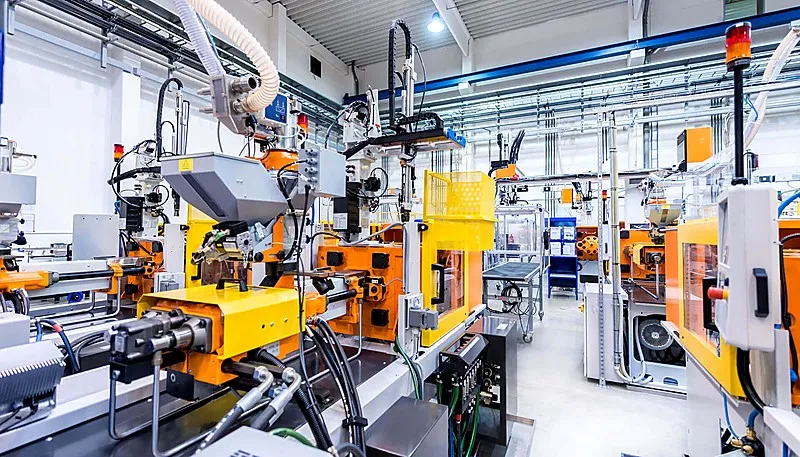
La programación de máquinas es la siguiente variable. Una fábrica que opera 47 máquinas de moldeo por inyección tiene más flexibilidad de programación que una que opera 10. En ZetarMold, nuestro rango de tonelaje (90T a 1850T) cubre la mayoría de los tamaños de piezas, lo que significa que su molde no se queda en una cola esperando la única máquina que se ajusta; generalmente hay de 3 a 5 máquinas candidatas disponibles dentro de la banda de tonelaje requerida. Para pedidos urgentes, ejecutamos turnos extras en máquinas dedicadas para comprimir la ventana de producción.
"“Definir criterios de aceptación claros antes de iniciar la fabricación del molde puede ahorrar 1–2 weeks de idas y venidas durante la aprobación de muestras.”"True
Cuando ambas partes acuerdan qué constituye una pieza conforme (tolerancias dimensionales, normas de acabado superficial y certificaciones de materiales) antes de cortar el acero, la revisión de muestras se convierte en una comprobación binaria de aprobación o rechazo, en lugar de una negociación. Los proveedores pueden programar con antelación los recursos de inspección y el equipo de ingeniería del comprador sabe exactamente qué datos recibirá.
"“El plazo de producción es el mismo independientemente de la cantidad del pedido.”"False
Tiempo de Entrega del Moldeo por Inyección: Desglose Fase por Fase
La planificación de ZetarMold utiliza 47 máquinas de moldeo por inyección de 90T a 1850T, una instalación interna de fabricación de moldes y una capacidad de más de 100 moldes por mes para reducir los intervalos de programación. En nuestra planificación de producción, el equipo verifica la construcción del molde, muestras, tonelaje de máquina y etapas IQC/FQC/OQC antes de confirmar una promesa de plazo.
¿Cómo puede reducir el plazo del moldeo por inyección?
Las estrategias más eficaces para reducir el plazo de entrega se centran en las fases que pueden comprimirse: revisión DFM, adquisición de materiales y programación. Estas son las tácticas que funcionan en la práctica, ordenadas por impacto.
1. Responder a los comentarios de DFM en un plazo de 24 horas. Esto por sí solo puede ahorrar 5–10 días en un proyecto típico. Designe a un único responsable de la toma de decisiones que pueda aprobar cambios de diseño sin esperar a reuniones de comité.
2. Utilice utillaje de aluminio para piezas con volúmenes inferiores a 10.000 unidades. El aluminio reduce un 40–50% el tiempo de fabricación del molde y proporciona piezas plenamente funcionales para producción puente o moldeo por inyección de bajo volumen1 tiradas.
3. Pida los materiales por adelantado durante el diseño del molde. No espere a que el molde esté terminado para pedir la resina. Haga el pedido de material cuando se apruebe el diseño del molde; los materiales llegarán mientras se mecaniza el molde, lo que elimina la demora de aprovisionamiento.
4. Realice la revisión DFM y el diseño del molde en paralelo con la adquisición del material. Estos dos flujos son independientes y no deben ser secuenciales.
5. Elija un proveedor con utillaje y producción internos bajo un mismo techo. Enviar un molde entre un taller de utillaje y una fábrica de moldeo añade 3–5 días de logística. Cuando el fabricante del molde y el moldeador son la misma empresa, el molde pasa del banco de utillaje a la prensa en horas, no en días. Utilice un Guía de abastecimiento de proveedores de moldeo por inyección para comparar la coordinación de la fábrica, la responsabilidad sobre la oferta y el riesgo de calendario antes de adjudicar el proyecto.
¿Cuál es un ejemplo realista de plazo integral?
Un ejemplo realista de plazo integral viene definido por la función, las restricciones y las compensaciones explicadas en esta sección. Veamos el cronograma de un proyecto real para un molde de acero de una cavidad que produce 5,000 piezas de nailon reforzado con fibra de vidrio (PA6-GF30). Se trata de un componente industrial típico de complejidad media — de aproximadamente 120mm × 80mm × 40mm, con dos correderas de acción lateral, un inserto roscado de latón y una superficie A pulida.
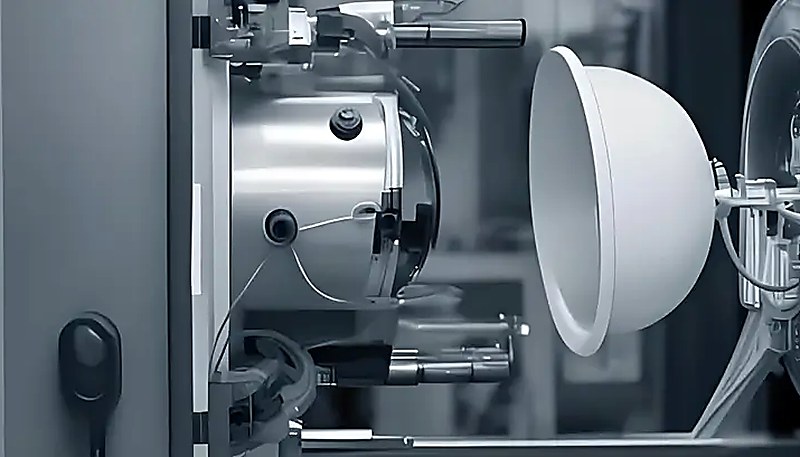
Semana 1: revisión DFM y diseño de moldes2. El equipo de ingeniería revisa el archivo CAD, identifica problemas con el ángulo de desmoldeo en dos elementos y propone una ubicación para la compuerta. El comprador aprueba el diseño con una modificación. Simultáneamente, se realiza el pedido del material PA6-GF30.
Semanas 2–3: mecanizado CNC, EDM para los alojamientos de las correderas y corte por hilo para los alojamientos de los insertos. Los bloques de acero se desbastan por CNC, se terminan en rectificadoras de precisión y se ajusta el mecanismo de corredera. La base del molde se ensambla y alinea.
Semana 4: pulido (SPI A-2 en la superficie A y acabado por electroerosión en la superficie B), montaje final e instalación en una prensa de 200T para el muestreo T1. Se realizan las primeras inyecciones, se extraen 50 muestras y comienza la medición por CMM.
Semana 5: El comprador revisa el informe dimensional. Se necesita un ajuste seguro para el acero (profundidad de la cavidad +0.05mm). El molde se retira, modifica, vuelve a pulir y se muestrea de nuevo (T2) en un plazo de 4 días laborables. Las muestras T2 son conformes. El comprador las aprueba.
Semana 6: serie de producción. 5,000 piezas moldeadas, inspección visual del 100%, comprobaciones dimensionales aleatorias según el plan de muestreo AQL. Piezas embaladas y enviadas FOB Shanghái.
Total: 6 semanas desde la aprobación del CAD hasta el envío. Con moldes de aluminio y una pieza más sencilla (sin correderas), se reduce a 3–4 semanas.
Con 8 ingenieros sénior y una instalación interna de moldeo por inyección3 planta de fabricación de moldes que produce más de 100 juegos de moldes al mes, ZetarMold gestiona todo el proceso —DFM, construcción del molde, muestreo, producción, QC y envío— desde nuestra fábrica de Shanghai. Para los proyectos que lo necesitan, nuestros más de 30 gestores de proyectos de habla inglesa proporcionan actualizaciones diarias del progreso para que siempre sepa exactamente en qué punto del calendario se encuentra su molde.
¿Cuáles son las preguntas más frecuentes sobre el plazo de fabricación por moldeo por inyección?
¿Cuánto tiempo se tarda en fabricar un molde de inyección?
Un molde de acero de una sola cavidad tarda entre 15 y 25 días laborables en fabricarse. Un molde de aluminio de una sola cavidad tarda entre 7 y 10 días. Los moldes multicavidad, con acciones laterales o para sobremoldeo añaden entre 5 y 15 días según su complejidad. La fase de mecanizado CNC es la etapa individual más larga y no puede acortarse de forma significativa.
¿Puede reducirse el plazo del moldeo por inyección a menos de 2 semanas?
Solo para piezas sencillas con utillaje de aluminio. Un molde de aluminio de una sola cavidad y sin mecanismos laterales puede fabricarse y probarse en 7–10 días laborables, y las piezas de producción pueden obtenerse entre 3 y 5 días después. Para cualquier pieza más compleja, 3 semanas es el mínimo realista.
¿Qué causa retrasos en el moldeo por inyección?
Las tres causas más habituales son: la lentitud de los comentarios del comprador sobre los cambios de DFM o la aprobación de muestras, los retrasos en el aprovisionamiento de resinas especiales y los conflictos de programación de la fábrica durante la temporada alta (normalmente Q3 y Q4). La falta de comunicación interna entre los equipos de compras e ingeniería del comprador también contribuye de forma significativa.
¿Cómo afecta la complejidad del molde al plazo de entrega?
Cada corredera de acción lateral añade aproximadamente 5–7 días a la fabricación del molde. Los expulsores inclinados añaden 3–5 días. Los insertos roscados (mecanismos de desenroscado) añaden 7–10 días. Los moldes multicavidad añaden 3–5 días por cada cavidad adicional. Un molde con dos correderas y un expulsor inclinado tarda aproximadamente el doble que un molde de apertura y cierre del mismo tamaño.
¿Cuál es la diferencia entre el muestreo T1 y T2?
T1 (primera prueba) es el ensayo inicial del molde. T2 es la segunda prueba tras realizar las modificaciones identificadas durante T1. Aproximadamente el 60% de los moldes requiere al menos un ciclo de modificación. Cada prueba añade 3–5 días laborables al calendario. Los fabricantes de moldes con experiencia incorporan márgenes seguros de mecanizado en el acero para minimizar el número de ciclos de modificación.
¿Afecta la cantidad del pedido al plazo de producción?
Sí. Un pedido de 500 piezas puede completarse en un solo turno (el mismo día tras la preparación). Un pedido de 50,000 piezas requiere programar varios días o semanas de producción y coordinarse con otros pedidos de la máquina. Por encima de 5,000 piezas, el plazo de producción aumenta de forma aproximadamente lineal con la cantidad.
¿Con qué rapidez puede obtener un presupuesto de moldeo por inyección?
La mayoría de los proveedores presentan presupuestos iniciales en un plazo de 24–72 horas tras recibir un archivo CAD 3D y una hoja de especificaciones. Los presupuestos detallados que incluyen opciones de moldeo por inyección de bajo volumen y compromisos de plazo suelen tardar entre 3 y 5 días laborables porque requieren un análisis DFM y una evaluación de viabilidad del diseño del molde.
¿Cuánto tiempo suele tardar el moldeo por inyección?
El moldeo por inyección suele tardar de 4 a 10 semanas desde la revisión DFM hasta la producción aprobada, pero el calendario exacto depende de la complejidad del molde, disponibilidad del material, rondas de muestras y cantidad del pedido. Las herramientas simples de prototipo pueden avanzar más rápido, mientras que los moldes de producción multicavidad endurecidos necesitan más tiempo de maquinado, pulido, ajuste y validación. El método de planificación más seguro es separar el tiempo de construcción del molde, tiempo de muestras T1, tiempo de modificación y tiempo de producción masiva, en lugar de solicitar una única fecha de entrega. Esto hace que las promesas del proveedor sean más fácilmente auditables y ayuda a comparar cotizaciones de diferentes proveedores en términos iguales.
¿Se puede reducir el plazo de fabricación por moldeo por inyección?
Sí, el plazo de fabricación por moldeo por inyección puede reducirse cuando el comprador proporciona archivos 3D completos, dibujos 2D, requisitos de material, notas de tolerancia, requisitos de acabado superficial y objetivos de volumen anual antes de la cotización. Los mayores retrasos generalmente provienen de dibujos poco claros, cambios tardíos de diseño, decisiones de material faltantes y aprobación de muestras lenta. Una revisión DFM temprana, compra paralela de material, plazos realistas para muestras y retroalimentación rápida de ingeniería pueden reducir el plazo sin forzar atajos riesgosos en la fabricación de herramientas o inspección de calidad. Esto protege la velocidad de lanzamiento y la fiabilidad de la pieza conjuntamente, lo cual es más importante que ahorrar unos días a costa del riesgo de defectos.
¿Qué causa los retrasos más comunes en la entrega de moldes?
Los retrasos más comunes en la entrega de moldes son cambios de diseño después del corte del acero, requisitos de tolerancia poco claros, datos de material faltantes, accionamientos laterales complejos, cambios de textura o pulido, y muestras T1 que revelan problemas de contracción, deformación, rebabas o ensamblaje. La capacidad del proveedor también importa porque los recursos de EDM, CNC, ajuste y verificación pueden convertirse en cuellos de botella durante temporadas altas. Un proceso DFM sólido reduce estos riesgos identificando problemas de entrada, refrigeración, desmoldeo, nervios y línea de separación antes que el molde entre en maquinado completo. Una aprobación clara de propiedad y criterios de aceptación definidos también previenen tiempos de espera evitables.
¿La cantidad del pedido afecta el plazo de fabricación por moldeo por inyección?
Sí, la cantidad del pedido afecta el plazo de fabricación por moldeo por inyección después de que el molde ha sido aprobado. Una pequeña prueba piloto puede terminar en horas después del ajuste de la máquina, pero un pedido de producción grande requiere mayor asignación de máquina, más preparación de resina, más muestras de QC, planificación de embalaje y, en ocasiones, múltiples turnos. El plazo de fabricación de herramientas está principalmente impulsado por la complejidad del diseño y fabricación del molde, mientras que el plazo de producción está impulsado por el tiempo de ciclo, número de cavidades, disponibilidad de máquinas, frecuencia de inspección de calidad y requisitos de embalaje. Los compradores siempre deben separar las fechas de fabricación de herramientas y producción cuando planifican sus calendarios de proyecto.
¿Cómo deben planificar los compradores un proyecto urgente de moldeo por inyección?
Los compradores deben planificar un proyecto urgente de moldeo por inyección mediante la consolidación del diseño temprano, aprobando los requisitos de material y superficie antes de comenzar la fabricación de herramientas, compartiendo las fechas de lanzamiento objetivo y solicitando al proveedor que muestre un calendario por etapas. El calendario debe cubrir la revisión DFM, diseño del molde, corte del acero, CNC y EDM, ajuste, muestras T1, modificación, aprobación y producción. Si el plazo es muy ajustado, enfóquese en reducir los retrasos de aprobación y simplificar características no críticas en lugar de omitir verificaciones del molde o validación de muestras. La urgencia nunca debe eliminar las etapas esenciales de calidad del proceso.
moldeo por inyección de bajo volumen: es un método de producción que utiliza utillaje simplificado o de aluminio para fabricar lotes pequeños de piezas, normalmente de 50 a 10,000 unidades, sin el coste de los moldes de acero para producción a gran escala. ↩
diseño del molde: se refiere al proceso de ingeniería para crear la cavidad, el núcleo, los canales de enfriamiento y el sistema de expulsión de un molde de inyección, que afecta directamente a la calidad de la pieza y a la eficiencia de producción. ↩
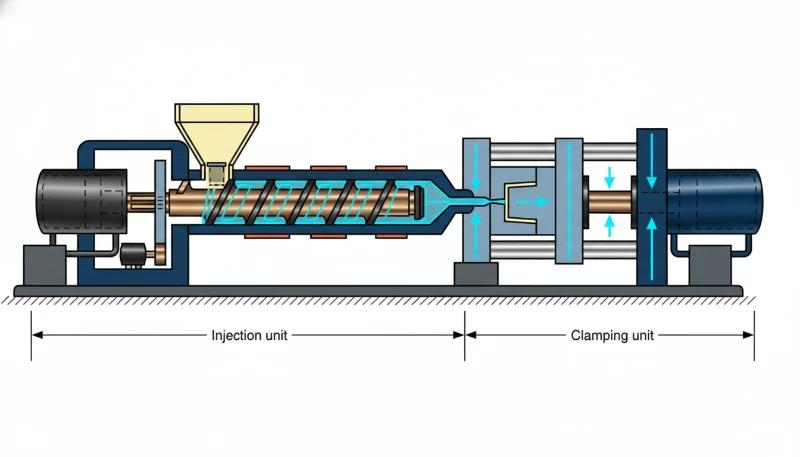
moldeo por inyección: es un proceso de fabricación en el que se inyecta resina termoplástica fundida a presión en la cavidad de un molde metálico, se enfría hasta solidificar y se expulsa como pieza terminada. ↩