- Kosten ($/kg)
- Die Dichte von PP (0.905 g/cm3) ist 14% niedriger als die von ABS, wodurch die Materialkosten um 25-35% sinken
- Verzug aufgrund unterschiedlicher Schwindung ist der häufigste PP-Fehler - erfordert gleichmäßige Kühlung
- PP muss im Gegensatz zu ABS nicht vorgetrocknet werden und spart dadurch 2-4 Stunden Produktionszeit
- Filmscharniere aus PP überstehen mehr als 1 Million Biegezyklen ohne Versagen
Was ist PP-Spritzgießen?
Beim PP-Spritzgießen1 wird Polypropylenharz auf 200–260 °C erhitzt und unter Druck in eine gekühlte Metallkavität eingespritzt, um fertige Bauteile herzustellen. Polypropylen ist ein teilkristalliner Thermoplast, der wegen seiner geringen Dichte, Chemikalienbeständigkeit und Dauerfestigkeit geschätzt wird. Auf PP entfallen etwa 25 % der weltweiten Kunststoffproduktion; damit liegt es hinter Polyethylen an zweiter Stelle und wird in Automobil-, Medizin- und Konsumgüteranwendungen eingesetzt.
Einen breiteren Überblick über Verfahrensgrundlagen, Werkstoffverhalten und Produktionsentscheidungen bietet unser vollständiger Leitfaden zum Spritzgießen.
In unserem Werk in Shanghai basiert die PP-Prozessvalidierung auf 47 Spritzgießmaschinen von 90T bis 1850T und mehr als 20 Jahren Werkzeug- und Formgebungserfahrung. Für PP-Teile ermöglicht diese Bandbreite unseren Ingenieuren, Füllbalance, Nachdruckverhalten, Schrumpfung und Kühlverhalten zu vergleichen, bevor ein Projekt von der DFM-Prüfung in die Produktion übergeht.
Wenn Sie Anbieter vergleichen oder die Beschaffung planen, behandelt unser Beschaffungsleitfaden für Spritzgießanbieter die Vorbereitung von Angebotsanfragen, die Lieferantenqualifizierung und die Bewertung kommerzieller Risiken bei PP-Projekten.
Werkseinblick: Für PP-Spritzgießprojekte validiert unser Werk in Shanghai das Materialverhalten über 47 Spritzgießmaschinen von 90T bis 1850T hinweg und nutzt mehr als 20 Jahre Werkzeug- und Formgebungserfahrung, um Nachdruck, Kühlung und Schrumpfungskontrolle vor Produktionsfreigabe abzustimmen.
"PP muss vor dem Formen nicht vorgetrocknet werden, während ABS 2-4 Stunden bei 80-85C benötigt."True
Richtig. Die Feuchtigkeitsaufnahme von PP liegt unter 0.01% und damit weit unter dem Schwellenwert, ab dem eine Trocknung erforderlich ist. ABS nimmt 0.2-0.4% Feuchtigkeit auf und zeigt ohne Trocknung Oberflächenfehler wie Silberschlieren. Dadurch bietet PP einen Produktionszeitvorteil von 2-4 Stunden.
"PP hat eine höhere Schlagzähigkeit als ABS und Nylon."False
Falsch. PP weist eine geringere Schlagzähigkeit (3-5 kJ/m2) als ABS (15-25 kJ/m2) und Nylon (5-10 kJ/m2) auf. PP zeichnet sich bei Dichte, Kosten und chemischer Beständigkeit aus, doch ABS und Nylon bieten bei schlagbeanspruchten Teilen eine höhere Zähigkeit.
PP-Teile machen rund 25 % aller weltweit hergestellten Kunststoffkomponenten aus und liegen damit nur hinter Polyethylen. Das Material eignet sich hervorragend für Anwendungen mit wiederholter mechanischer Belastung, Chemikalienkontakt oder Dampfsterilisation. Typische spritzgegossene PP-Produkte sind Autobatteriegehäuse, Lebensmittelbehälterdeckel mit integrierten Filmscharnieren, Spritzenkörper für medizinische Anwendungen und Waschmaschinentrommeln. Seine branchenübergreifende Vielseitigkeit macht PP zu einem der kostengünstigsten verfügbaren technischen Thermoplaste.
Was sind die wichtigsten Eigenschaften von Polypropylen?
Polypropylen hat einen Schmelzpunkt von 160-170°C, eine Dichte von 0.905 g/cm3 und eine Zugfestigkeit von 30-40 MPa. Aufgrund dieser Eigenschaften ist es 25-35% leichter als ABS und bietet zugleich eine für die meisten Konsumgüter- und Automobilanwendungen ausreichende strukturelle Steifigkeit. PP ist bei Raumtemperatur beständig gegen Säuren, Basen und die meisten organischen Lösungsmittel.
Die Feuchtigkeitsaufnahme von PP liegt typischerweise unter 0,01 %, sodass vor dem Formen üblicherweise keine Vortrocknung erforderlich ist. Bei Teilen mit engen Toleranzen empfehlen wir als Sicherheitsmaßnahme 1–2 Stunden bei 80 °C. Diese geringe Feuchtigkeitsempfindlichkeit spart gegenüber hygroskopischen Materialien wie ABS oder Nylon erhebliche Produktionszeit.
PP weist außerdem ausgezeichnete elektrische Isolationseigenschaften auf und eignet sich daher für Elektronikgehäuse und Kabelsteckverbinder. Das Material hat in Luft eine Dauergebrauchstemperatur von bis zu 100°C; die Wärmeformbeständigkeit (HDT) liegt je nach Typ und Verstärkung zwischen 55-110°C. Glasfasergefüllte PP-Typen (PP-GF30) können HDT-Werte über 150°C erreichen und erweitern den Einsatzbereich auf Automobilkomponenten im Motorraum und Elektrogehäuse, die erhöhten Betriebstemperaturen ausgesetzt sind.
PP ist in mehreren, auf bestimmte Anwendungen zugeschnittenen Typen erhältlich. Homopolymer-PP bietet die höchste Steifigkeit und Zugfestigkeit. Copolymer-PP (Random- oder Blockcopolymer) bietet eine verbesserte Schlagzähigkeit, insbesondere bei niedrigen Temperaturen, und eignet sich damit für tiefkühlgeeignete Behälter und Automobilkomponenten, die kalten Klimabedingungen ausgesetzt sind. Mit Talkum, Calciumcarbonat oder Glasfasern gefüllte Typen verbessern Steifigkeit, Wärmebeständigkeit und Maßstabilität für strukturelle Anwendungen und Anwendungen im Motorraum.
Die Kenntnis dieser Werkstoffeigenschaften hilft Ingenieuren, für jede Anwendung den richtigen PP-Typ auszuwählen. Homopolymere, Copolymere und verstärkte Typen bieten jeweils unterschiedliche Leistungsprofile, die zu verschiedenen Anforderungen in der Automobil-, Medizin- und Konsumgüterindustrie passen.
Welche Prozessparameter eignen sich am besten für PP?
Die Schmelzetemperatur auf 200–260 °C und die Formtemperatur auf 20–50 °C einstellen. Die Einspritzgeschwindigkeit sollte mittel bis hoch sein, um die Kavität vollständig zu füllen, ohne übermäßige Schererwärmung zu erzeugen. PP besitzt bei Verarbeitungstemperatur eine relativ niedrige Viskosität, sodass ein mäßiger Einspritzdruck von 70–120 MPa üblicherweise ausreicht.
Nachdruck bei 40-60% des Einspritzdruckes kompensiert die Schrumpfung während der Abkühlung. Die Nachdruckzeit sollte bis zum Verschluss des Angusses fortgesetzt werden, typisch 2-5 Sekunden, abhängig von der Angussgröße und Wanddicke. Bei PP-Projekten validiert unser Team die Nachdruckreaktion über 47 Spritzgießmaschinen von 90T bis 1850T, dann optimiert Drucktransfer und Abkühlungsbalance, um vermeidbare Zykluszeitverluste zu reduzieren.
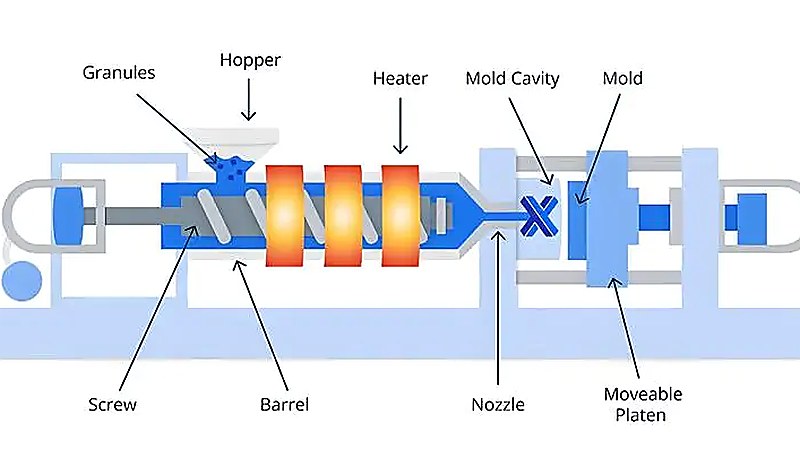
Die Kühlzeit dominiert den PP-Spritzgießzyklus und macht typischerweise 50–70 % der gesamten Zyklusdauer aus. Eine schnellere Kristallisation2 bei niedrigeren Werkzeugtemperaturen verkürzt die Zykluszeit, kann jedoch zu höheren Eigenspannungen und geringerer Maßstabilität führen. Bei Strukturbauteilen mit engen Toleranzen sollte die Werkzeugtemperatur über 40 °C gehalten werden, um eine kontrollierte Kristallisation zu ermöglichen. Bei Standardteilen, für die Geschwindigkeit Vorrang hat, sind Werkzeugtemperaturen von 20–30 °C akzeptabel.
Ein Staudruck von 5-15 MPa gewährleistet eine gleichmäßige Schmelzehomogenität, indem er ein stoßweises Vorlaufen der Schnecke verhindert und bei Verwendung von Masterbatch-Pigmenten eine gleichmäßige Farbverteilung sicherstellt. Die Schneckendrehzahl sollte so eingestellt werden, dass die Plastifizierung vor dem nächsten Einspritzzyklus vollständig abgeschlossen ist. Für PP bietet eine Universalschnecke mit einem Verdichtungsverhältnis von 2.5-3.0:1 ausreichendes Aufschmelzen und Mischen. Das Zylindertemperaturprofil sollte von der Einzugszone (180-200°C) bis zur Düse (220-250°C) allmählich ansteigen, um ein vorzeitiges Aufschmelzen zu verhindern und ein gleichmäßiges Schussgewicht sicherzustellen. Ein korrektes Zylindertemperaturprofil gewährleistet gleichbleibende Schmelzequalität, reproduzierbare Schussgewichte und minimale Materialschädigung bei langen Produktionsläufen von Polypropylenbauteilen.
Auch die Schneckenkonstruktion spielt für die Verarbeitungsqualität von PP eine wichtige Rolle. Eine Universalschnecke mit einem Verdichtungsverhältnis von 2,5–3,0:1 und einem L/D-Verhältnis von mindestens 20:1 gewährleistet bei den meisten PP-Typen ein gleichmäßiges Aufschmelzen. Für glasfaser- oder mineralgefüllte PP-Compounds empfiehlt sich eine Mischsektion oder eine Schnecke nach Maddock-Bauart, damit der Füllstoff vor dem Einspritzen in die Formkavität homogen in der Schmelze verteilt ist.
"PP-Filmscharniere können mehr als 1 Million Zyklen ohne Ausfall überstehen."True
Richtig. PP besitzt aufgrund seiner teilkristallinen Struktur eine außergewöhnliche Dauerbiegefestigkeit. Wird ein Filmscharnier mit der richtigen Anschnittposition und Fließrichtung geformt, richten sich die Molekülketten über das Scharnier hinweg aus und ermöglichen Millionen Biegezyklen.
"Die Schwindung von PP ist beim Abkühlen in alle Richtungen gleichmäßig."False
Falsch. PP weist eine anisotrope Schwindung3 auf: 1.5-2.0% in Fließrichtung und 1.0-1.5% quer zur Fließrichtung. Diese Differenz verursacht Verzug, sofern sie nicht durch gleichmäßige Kühlung und eine gezielte Anschnittpositionierung ausgeglichen wird.
Wie schneidet PP im Vergleich zu anderen Thermoplasten ab?
PP ist leichter, günstiger und chemikalienbeständiger als die meisten technischen Thermoplaste, tauscht jedoch dafür Schlagzähigkeit ein. Mit 0,905 g/cm³ ist PP 14 % leichter als ABS (1,05 g/cm³) und 30-40 % günstiger pro Kilogramm. PP bietet eine bessere Chemikalienbeständigkeit als sowohl ABS als auch HDPE, mit ausgezeichneter Beständigkeit gegen Säuren, Laugen und organische Lösungsmittel. ABS bietet jedoch eine überlegene Schlagzähigkeit und Oberflächengüte.
Im Vergleich zu Nylon nimmt PP deutlich weniger Feuchtigkeit auf, was zu einer besseren Maßstabilität in feuchten Umgebungen führt. Nylon bietet eine höhere Zugfestigkeit und Verschleißfestigkeit. HDPE bietet bessere Flexibilität und Spannungsrissbeständigkeit, jedoch eine geringere Steifigkeit. Wählen Sie PP, wenn Kosten, Gewicht und Chemikalienbeständigkeit die wichtigsten Anforderungen sind.
| Eigentum | PP | ABS | HDPE | Polyamid 6 |
|---|---|---|---|---|
| Dichte (g/cm3) | 0.905 | 1.05 | 0.95 | 1.13 |
| Schmelzetemperatur (C) | 160-170 | 220-250 | 130-135 | 220-260 |
| Zugfestigkeit (MPa) | 30-40 | 40-50 | 25-45 | 70-85 |
| Feuchtigkeitsaufnahme | <0.01% | 0.2-0.4% | <0.01% | 1.5-2.0% |
| Kosten ($/kg) | 1.2-1.6 | 2.0-2.8 | 1.3-1.7 | 3.0-4.5 |
Welche typischen Fehler treten beim PP-Spritzgießen auf?
Schnittbildillustration einer mechanischen Vorrichtung zur Flüssigkeitsverarbeitung und -vermischung
Einfallstellen entstehen, wenn dicke Bereiche ungleichmäßig abkühlen und sich Vertiefungen an der Oberfläche bilden. Erhöhen Sie Verdichtungsdruck und Nachdruckzeit, um mehr Material in dicke Bereiche zu drücken. Fließlinien entstehen, wenn das Harz am Anschnitt zu schnell abkühlt. Erhöhen Sie die Werkzeugtemperatur oder die Einspritzgeschwindigkeit, um sie zu beseitigen. Kurzschüsse treten auf, wenn die Kavität nicht vollständig gefüllt wird.
Um unvollständige Füllungen zu beheben, erhöhen Sie den Einspritzdruck und prüfen Sie, ob die Entlüftung ausreicht. In mehr als 20 Jahren Produktionserfahrung mit PP haben wir festgestellt, dass eine gleichmäßige Werkzeugtemperatur und eine korrekte Entlüftung den größten Einfluss auf die Fehlerreduzierung haben. Die meisten Fehler bei PP sind auf ungleichmäßige Kühlung oder unzureichenden Druck zurückzuführen.
Ein weiteres häufig auftretendes Problem ist die Freistrahlbildung, bei der geschmolzenes PP mit hoher Geschwindigkeit durch den Anschnitt schießt und schlangenförmige Muster auf der Bauteiloberfläche erzeugt. Dies geschieht, wenn der Anschnitt im Verhältnis zur Wanddicke zu klein ist. Eine Vergrößerung des Anschnittdurchmessers oder eine Verringerung der Einspritzgeschwindigkeit während der anfänglichen Füllphase beseitigt die Freistrahlbildung. Aufgrund der niedrigen Viskosität von PP bei Verarbeitungstemperaturen ist auch Gratbildung problematisch. Sorgen Sie für eine ausreichende Schließkraft und prüfen Sie die Ausrichtung der Trennlinie, um Gratbildung zu verhindern.
Wie können Sie die PP-Werkzeugkonstruktion optimieren?
Die drei Schlüssel zum PP-Formendesign sind gleichmäßige Wandstärke zwischen 1,5-4,0 mm, Angussplatzierung, die Fluss und Nachdruck ausbalanciert, und konforme Kühlkanäle, die die Kristallisationsrate steuern. Verwenden Sie ausreichende Schrägungswinkel von 1-2 Grad für einfachen Auswurf, da PP einen relativ hohen Reibungskoeffizienten auf polierten Stahloberflächen aufweist. Ungleichmäßige Wandstärke in PP-Formen führt zu unterschiedlichen Abkühlraten, die Verzug und Einfallstellen verursachen, besonders bei teilkristallinen Materialien, bei denen die Schrumpfung zwischen dünnen und dicken Bereichen erheblich variiert.
Die Angussplatzierung ist bei PP aufgrund seiner spezifischen Schmelzflusseigenschaften während der Kavitätenfüllung entscheidend. Zentralangüsse eignen sich am besten für symmetrische Teile, während Randangüsse für flache Geometrien geeignet sind. Dimensionieren Sie Angüsse mit 50-70 % der Wandstärke, um ein Einfrieren vor Abschluss des Nachdruckvorgangs zu verhindern. Sorgen Sie für eine ausreichende Entlüftung an allen Schweißnahtstellen und Füllendpositionen. Bei PP-Living-Hinge-Anwendungen muss der Anguss so positioniert werden, dass der Polymerfluss die Scharniere senkrecht zur Biegeachse überquert, um eine optimale Ausrichtung der Molekülketten und maximale Biegebeständigkeit zu erreichen.
In unserem Shanghai Werk betreiben wir 47 Spritzgießmaschinen von 90T bis 1850T. Mit über 20 Jahren Erfahrung in der Verarbeitung von mehr als 400+ Kunststoffmaterialien haben wir jede PP-Formherausforderung gesehen – von Verzug in dünnwandigen Verpackungen bis zu Einfallstellen in dickwandigen Gehäusen. Unsere Empfehlung: beginnen Sie immer mit einer moderaten Schmelztemperatur (210–230 °C) und einem Nachdruck von etwa 60–80% des Einspritzdruckes, dann passen Sie basierend auf der Angussverschlusszeit an.
Die Auslegung der Kühlkanäle wirkt sich unmittelbar auf die Qualität von PP-Bauteilen aus. Gleichmäßige, der Bauteilgeometrie folgende Kühlkanäle steuern die Kristallisationsgeschwindigkeit und minimieren Verzug. Unser Team aus acht erfahrenen Ingenieuren ist auf die PP-Werkzeugkonstruktion für Fahrzeuginnenräume, Medizinprodukte und Konsumgüterverpackungen spezialisiert. Eine sachgerechte Kühlkanalanordnung kann die Zykluszeit um 15–25 % verkürzen und zugleich die Maßhaltigkeit über mehrere Produktionsläufe verbessern.
Wann sollten Sie PP für Ihr Projekt wählen?
PP ist die richtige Wahl, wenn Ihre Anwendung niedrige Kosten, geringes Gewicht, Chemikalienbeständigkeit oder hochzyklische Living Hinges erfordert. Es glänzt in Automobilinnenräumen, Lebensmittelbehältern, Verschlüssen und Deckeln, medizinischen Einwegartikeln und Konsumgütern. Seine geringe Dichte von 0,905 g/cm³ reduziert die Versandkosten um 10-15 % im Vergleich zu ABS-Äquivalenten, während die Chemikalienbeständigkeit die Produktlebensdauer in anspruchsvollen Umgebungen sichert. PP lässt sich auch problemlos auf Standard-Spritzgießmaschinen verarbeiten, ohne spezielle Trocknungssysteme, was den Kapitalbedarf für Ausrüstung und die betriebliche Komplexität reduziert.
PP ist das bevorzugte Material für Living-Hinge-Anwendungen aufgrund seiner außergewöhnlichen Ermüdungsbeständigkeit. Ein richtig gestalteter PP-Living-Hinge kann über 1 Million Zyklen flexen, ohne zu versagen. Die semi-kristalline Molekularstruktur richtet sich während des Formfüllprozesses über den dünnen Hinge-Web aus, wodurch eine außergewöhnliche Ermüdungsresistenz entsteht. Betrachten Sie ABS oder Polycarbonat für stoßkritische Komponenten und Nylon für Verschleißanwendungen, die hohe mechanische Festigkeit benötigen.
Unsere Shanghai Fabrik verarbeitet über 400 Materialien einschließlich aller Haupt-PP-Typen – Homopolymer, Random Copolymer, Block Copolymer und Glasgefüllte PP-Compounds. Mit 120+ Produktionsmitarbeitern und über 20 Jahren Erfahrung passen wir die Materialauswahl auf Ihre spezifischen Anwendungsanforderungen an. Fordern Sie eine Materialberatung mit unserem Ingenieurteam, um festzustellen, ob PP die optimale Wahl für Ihre Projektgeometrie und Leistungsziele ist.
Die Kostenanalyse spricht typischerweise für PP bei Produktionsmengen über 10.000 Einheiten. Bei geringeren Stückzahlen kann der Materialkostenvorteil die Werkzeuginvestition nicht ausgleichen. Für Hochvolumenproduktionen über 100.000 Einheiten bietet PP aufgrund seiner geringeren Materialkosten, schnelleren Zykluszeiten durch niedrigere Schmelztemperaturen und reduziertem Energieverbrauch während der Verarbeitung signifikante Stückkosteneinsparungen.
Die Werkzeugkosten für PP-Formen sind vergleichbar mit anderen Thermoplasten, typisch $5.000-30.000, abhängig von der Bauteilkomplexität und der Kavitätenzahl. Die Gesamtkosten pro Bauteil für PP-Spritzgießen können 20-40% niedriger sein als bei vergleichbaren ABS-Bauteilen bei Volumen über 50.000 Einheiten. Bei der Evaluierung von PP für Ihr Projekt, berücksichtigen Sie die Gesamtbetriebskosten einschließlich Material, Bearbeitung, Werkzeugabschreibung und Sekundäroperationen wie Montage oder Oberflächenveredelung.
Häufig gestellte Fragen
Welche Temperatur ist für das PP-Spritzgießen erforderlich?
Stellen Sie für Standard-PP-Typen die Massetemperatur auf 200-260C und die Werkzeugtemperatur auf 20-50C ein. Die teilkristalline Struktur von PP erfordert sowohl beim Einspritzen als auch beim Kühlen eine präzise Temperaturregelung, um eine ordnungsgemäße Kristallisation und optimale mechanische Eigenschaften zu erzielen. Höhere Werkzeugtemperaturen ergeben Teile mit besserer Oberflächengüte und höherer Maßhaltigkeit; niedrigere Temperaturen verkürzen die Zykluszeit, können aber das Verzugsrisiko erhöhen. Erhöhen Sie bei glasfaserverstärkten PP-Typen die Massetemperatur auf 240-280C, um eine ordnungsgemäße Faserbenetzung und gleichmäßige Verteilung in der gesamten Bauteilgeometrie zu gewährleisten.
Muss PP vor dem Formen getrocknet werden?
PP muss aufgrund seiner geringen Feuchtigkeitsaufnahme von unter 0.01% unter Standardbedingungen üblicherweise nicht vorgetrocknet werden. Für Präzisionsteile mit engen Toleranzen oder kritischen Oberflächenanforderungen empfehlen wir vorsichtshalber 1-2 Stunden bei 80C, um während der Lagerung angesammelte Oberflächenfeuchtigkeit zu entfernen. Dies ist deutlich kürzer als die für ABS erforderlichen 2-4 Stunden bei 80-85C zur Vermeidung von Silberschlieren. Der geringere Trocknungsbedarf verschafft PP bei der Großserienfertigung einen spürbaren Vorteil hinsichtlich Produktionszeit und Energiekosten.
Warum verzieht sich PP beim Spritzgießen?
PP verzieht sich hauptsächlich aufgrund anisotroper Schwindung während der Abkühlphase des Spritzgießens. Das Material schrumpft in Fließrichtung um 1.5-2.0 %, quer zur Fließrichtung dagegen nur um 1.0-1.5 %. Diese unterschiedliche Kontraktion erzeugt innere Spannungen, durch die sich das Teil nach dem Auswerfen aus dem Werkzeug biegt, wölbt oder verdreht. Wirksame Lösungen sind gleichmäßig ausgelegte Kühlkanäle, strategisch platzierte Anschnitte zum Ausgleichen der Fließbilder, eine konstante Werkzeugtemperatur auf beiden Hälften und eine durchgehend einheitliche Wanddicke aller Merkmale.
Wie schneidet PP gegenüber ABS beim Spritzgießen ab?
PP ist mit 0.905 g/cm3 gegenüber 1.05 g/cm3 bei ABS 14% leichter, pro Kilogramm etwa 30-40% günstiger und muss vor dem Spritzgießen nicht vorgetrocknet werden, wodurch pro Charge 2-4 Stunden Produktionszeit eingespart werden. PP bietet zudem eine höhere chemische Beständigkeit gegen Säuren, Basen und die meisten organischen Lösungsmittel bei Raumtemperatur. ABS weist jedoch mit 15-25 gegenüber 3-5 kJ/m2 Kerbschlagzähigkeit eine deutlich höhere Schlagzähigkeit, eine bessere Oberflächenqualität zum Lackieren und eine einfachere Nachbearbeitung auf. Wählen Sie PP für kostensensible, chemikalienbeständige Teile und ABS für Anwendungen mit hohen Anforderungen an die Schlagfestigkeit.
Kann PP für Filmscharniere verwendet werden?
Ja, PP gilt aufgrund seiner teilkristallinen Molekularstruktur allgemein als Standardwerkstoff für spritzgegossene Filmscharniere. Die Polymerketten richten sich während der Formfüllung über den dünnen Scharnierbereich hinweg aus und erzeugen am Biegepunkt eine außergewöhnliche Dauerfestigkeit. Ein korrekt konstruiertes PP-Filmscharnier kann über 1 Million Biegezyklen ohne Ausfall oder sichtbare Schädigung überstehen und ist damit die bevorzugte Wahl für Flaschenverschlüsse, Klappverpackungen, Brillenetuis und Klappdeckelbehälter. Entscheidend ist die richtige Anschnittposition, damit die Strömung das Scharnier rechtwinklig durchquert.
Was sind die häufigsten Fehler beim Spritzgießen von PP?
Die vier häufigsten Fehler beim PP-Spritzgießen sind Verzug durch anisotrope Schwindung bei ungleichmäßiger Kühlung, Einfallstellen durch unzureichenden Nachdruck in dicken Wandbereichen, Fließlinien, wenn das Material nahe dem Anschnitt zu schnell abkühlt, und Nichtfüllungen, wenn die Kavität wegen unzureichenden Drucks nicht vollständig gefüllt wird. Die meisten PP-Spritzgießfehler lassen sich direkt auf eine ungleichmäßige Kühlverteilung oder unzureichenden Nachdruck zurückführen. Eine ordnungsgemäße Regelung der Werkzeugtemperatur und ausreichende Entlüftung an den Fließwegenden beheben den Großteil der Qualitätsprobleme in der Produktion.
Für welche Anwendungen wird PP-Spritzguss eingesetzt?
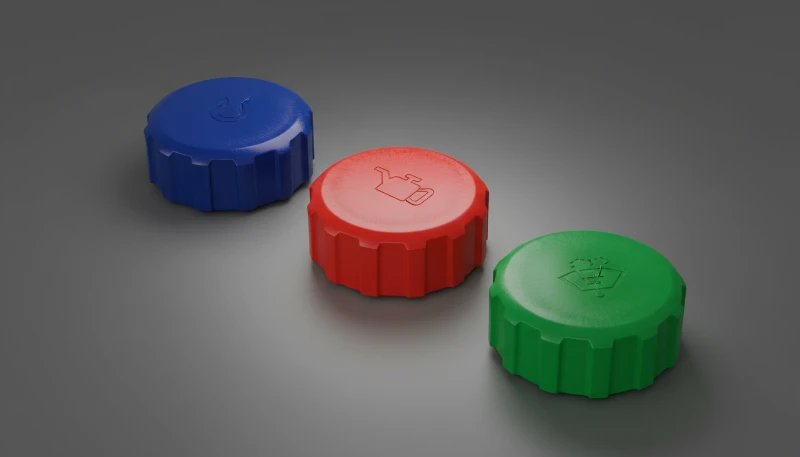
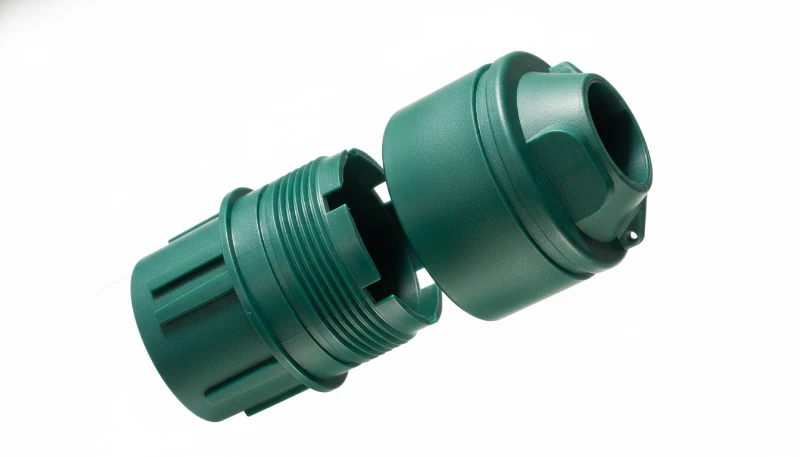
PP-Spritzgießen wird für Fahrzeuginnenräume eingesetzt, darunter Armaturenbretter, Türverkleidungen, Batteriegehäuse, Stoßfängerverkleidungen und HVAC-Gehäuse. Anwendungen in Lebensmittelverpackungen umfassen mikrowellengeeignete Behälter, Kappen und Verschlüsse, Flaschenkisten und Joghurtbecher. In der Medizintechnik wird PP für Spritzenkörper, Probenbecher und Diagnosegehäuse verwendet. Bei Konsumgütern reicht das Spektrum von Gerätegehäusen über Aufbewahrungsbehälter bis zu Gartenmöbeln. Industriekomponenten umfassen Chemikalientanks, Rohrverschraubungen, Pumpen- und Filtergehäuse. PP wird gewählt, wenn Chemikalienbeständigkeit, niedrige Materialkosten, geringes Gewicht oder wiederholte Biegung im Vordergrund stehen.
Spritzgießen: Spritzgießen ist ein reproduzierbares Fertigungsverfahren, bei dem geschmolzenes Polymer in eine Präzisionskavität eingespritzt wird, um in großen Stückzahlen gleichbleibende Kunststoffteile herzustellen. ↩
Kristallisation: Kristallisation bezeichnet die Bildung geordneter kristalliner Bereiche in teilkristallinen Polymeren wie PP beim Abkühlen aus der Schmelze. Die Kristallisationsgeschwindigkeit beeinflusst mechanische Eigenschaften, Schwindungsverhalten und Oberflächenqualität und wird durch Werkzeugtemperatur und Abkühlgeschwindigkeit gesteuert. ↩
Anisotrope Schwindung: Anisotrope Schwindung bezeichnet eine ungleichmäßige Schwindung in verschiedenen Richtungen, wie sie für teilkristalline Polymere wie PP typisch ist. Unterschiedliche Kontraktionsraten in Fließ- und Querfließrichtung verursachen dabei Verzug. ↩