- PP injection temperature ranges 200-260°C with mold temperature at 20-50°C
- PP density (0.905 g/cm3) is 14% lower than ABS, reducing material cost by 25-35%
- Warpage from differential shrinkage is the most common PP defect – requires uniform cooling
- PP requires no pre-drying unlike ABS, saving 2-4 hours of production time
- PP flex hinges made from PP can flex over 1 million cycles without failure
What Is PP Injection Molding?
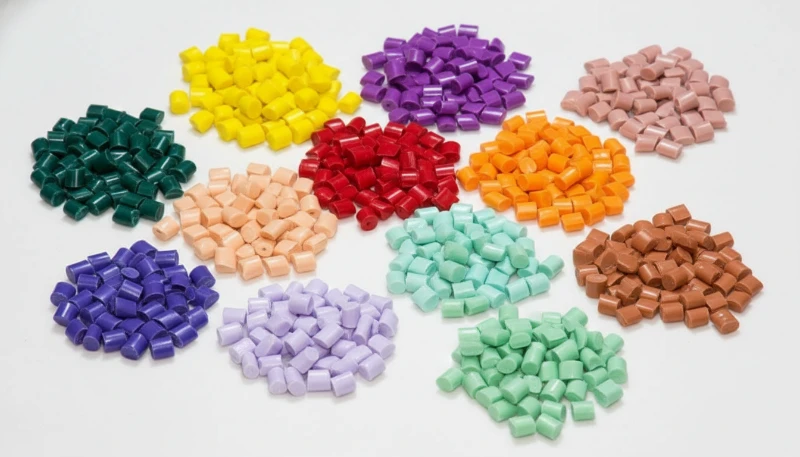
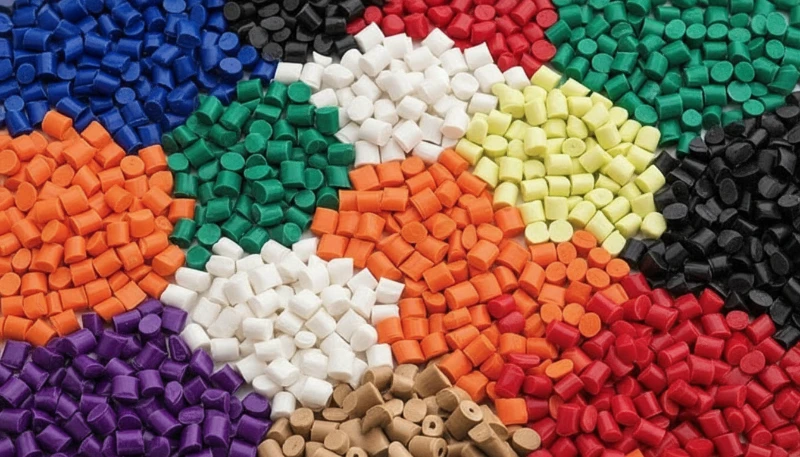
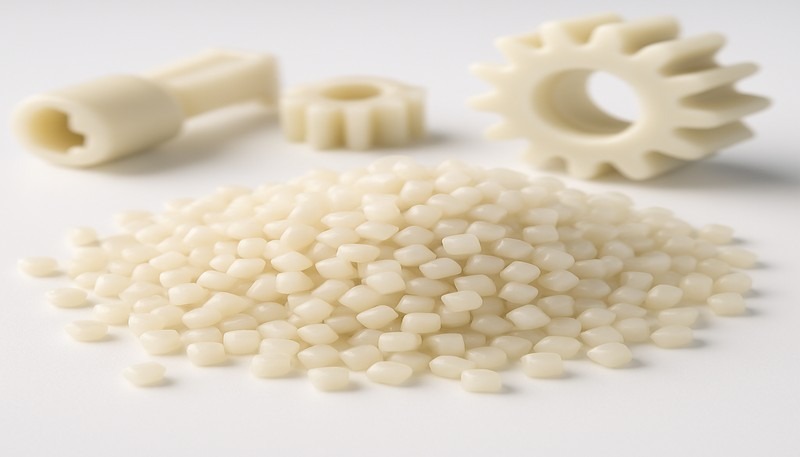
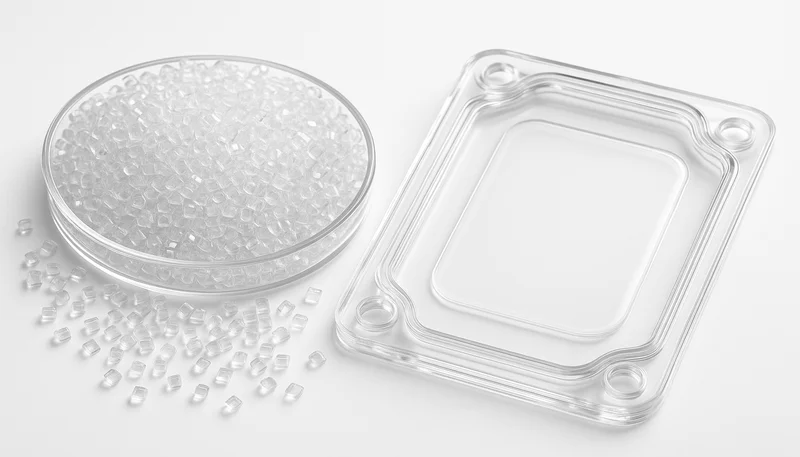
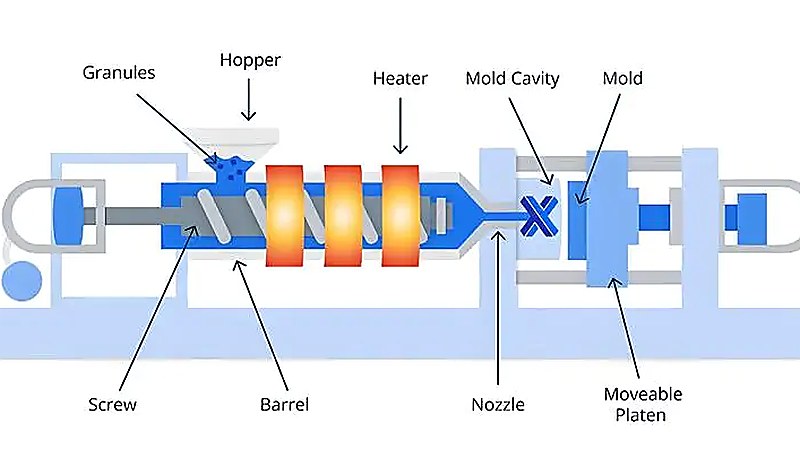
PP injection molding1 heats polypropylene resin to 200–260 °C and injects it under pressure into a cooled metal cavity to form finished parts. Polypropylene is a semi-crystalline thermoplastic valued for its low density, chemical resistance, and fatigue endurance. PP accounts for roughly 25% of global plastic production, second only to polyethylene, and is used across automotive, medical, and consumer applications.
For a broader view, our injection molding complete guide covers process fundamentals, material behavior, and production decisions.
In our Shanghai factory, PP process validation is based on 47 injection molding machines from 90T to 1850T and more than 20 years of tooling and molding experience. For PP parts, that range lets our engineers compare fill balance, packing response, shrinkage, and cooling behavior before a project moves from DFM review into production.
If you are comparing vendors or planning procurement, our injection molding supplier sourcing guide covers RFQ preparation, supplier qualification, and commercial risk assessment for PP projects.
Factory Insight: For PP injection molding projects, our Shanghai factory validates material behavior across 47 injection molding machines from 90T to 1850T, using more than 20 years of tooling and molding experience to tune packing, cooling, and shrinkage control before production release.
“PP requires no pre-drying before molding, unlike ABS which needs 2-4 hours at 80-85C.”True
True. PP moisture absorption is below 0.01%, far below the threshold where drying is necessary. ABS absorbs 0.2-0.4% moisture and shows surface defects like splay if not dried. This gives PP a 2-4 hour production time advantage.
“PP has higher impact resistance than ABS and nylon.”False
False. PP has lower impact strength (3-5 kJ/m2) compared to ABS (15-25 kJ/m2) and nylon (5-10 kJ/m2). PP excels in density, cost, and chemical resistance, but ABS and nylon provide superior toughness for impact-critical parts.
PP parts account for roughly 25% of all plastic components produced globally, second only to polyethylene. The material excels in applications requiring repeated mechanical stress, chemical exposure, or steam sterilization. Common PP injection molded products include automotive battery cases, food container lids with integrated living hinges, medical syringe bodies, and washing machine drums. Its versatility across industries makes it one of the most cost-effective engineering thermoplastics available.
What Are the Key Properties of Polypropylene?
Polypropylene has a melting point of 160-170°C, density of 0.905 g/cm3, and tensile strength of 30-40 MPa. These properties make it 25-35% lighter than ABS while maintaining adequate structural rigidity for most consumer and automotive applications. PP resists acids, bases, and most organic solvents at room temperature.
Moisture absorption for PP is typically below 0.01%, meaning it usually does not require pre-drying before molding. For tight-tolerance parts, we recommend 1-2 hours at 80°C as a safety measure. This low moisture sensitivity saves significant production time compared to hygroscopic materials like ABS or nylon.
PP also exhibits excellent electrical insulation properties, making it suitable for electronic enclosures and cable connectors. The material has a continuous use temperature of up to 100°C in air, with heat-deflection temperature (HDT) ranging from 55-110°C depending on the grade and reinforcement. Glass-filled PP grades (PP-GF30) can achieve HDT values above 150°C, expanding the application range to under-hood automotive components and electrical housings exposed to elevated operating temperatures.
PP is available in several grades tailored to specific applications. Homopolymer PP offers the highest stiffness and tensile strength. Copolymer PP (random or block) provides improved impact resistance, especially at low temperatures, making it suitable for freezer-grade containers and automotive components exposed to cold climates. Filled grades with talc, calcium carbonate, or glass fiber enhance stiffness, heat resistance, and dimensional stability for structural and under-hood automotive applications.
Understanding these material properties helps engineers select the right PP grade for each application. Homopolymer, copolymer, and reinforced grades each offer distinct performance profiles that match different end-use requirements across automotive, medical, and consumer markets.
What Process Parameters Work Best for PP?
Set melt temperature between 200-260°C with mold temperature at 20-50°C. Injection speed should be medium-high to ensure complete cavity filling without excessive shear heating. PP has a relatively low viscosity at processing temperatures, so moderate injection pressure (70-120 MPa) is usually sufficient.
Packing pressure at 40-60% of injection pressure compensates for shrinkage during cooling. Holding time should continue until the gate freezes, typically 2-5 seconds depending on gate size and wall thickness. On PP projects, our team validates packing response across 47 injection molding machines from 90T to 1850T, then tunes pressure transfer and cooling balance to reduce avoidable cycle-time loss.
Cooling time dominates the PP injection cycle, typically accounting for 50-70% of total cycle duration. Faster crystallization2 at lower mold temperatures reduces cycle time but may produce parts with higher internal stress and reduced dimensional stability. For structural parts requiring tight tolerances, maintain mold temperature above 40°C to allow controlled crystallization. For commodity parts where speed is the priority, mold temperatures of 20-30°C are acceptable.
Back pressure of 5-15 MPa ensures consistent melt homogeneity by preventing screw surging and ensuring uniform color dispersion when using masterbatch pigments. Screw speed should be set to ensure complete plastication before the next injection cycle. For PP, a general-purpose screw with a compression ratio of 2.5-3.0:1 provides adequate melting and mixing. Barrel temperature profile should gradually increase from feed zone (180-200°C) to nozzle (220-250°C) to prevent premature melting and ensure consistent shot-to-shot weight uniformity. Proper barrel temperature profiling ensures consistent melt quality, shot-to-shot weight repeatability, and minimal material degradation during extended production runs of polypropylene components.
Screw design also plays an important role in PP processing quality. A general-purpose screw with compression ratio of 2.5-3.0:1 and L/D ratio of at least 20:1 provides consistent melting for most PP grades. For glass-filled or mineral-filled PP compounds, consider a mixing section or Maddock-style screw to ensure homogeneous filler distribution throughout the melt before injection into the mold cavity.
“PP living hinges can flex over 1 million cycles without failure.”True
True. PP has exceptional fatigue endurance due to its semi-crystalline structure. When a living hinge is molded with the correct gate location and flow orientation, the molecular chains align across the hinge, enabling millions of flex cycles.
“PP shrinkage is uniform in all directions during cooling.”False
False. PP exhibits anisotropic shrinkage3, shrinking 1.5-2.0% in the flow direction and 1.0-1.5% perpendicular to flow. This differential causes warpage unless compensated by uniform cooling and strategic gate placement.
How Does PP Compare to Other Thermoplastics?
PP is lighter, cheaper, and more chemically resistant than most engineering thermoplastics, though it trades impact strength for these advantages. At 0.905 g/cm3, PP is 14% lighter than ABS (1.05 g/cm3) and 30-40% cheaper per kilogram. PP offers better chemical resistance than both ABS and HDPE, with excellent resistance to acids, alkalis, and organic solvents. However, ABS provides superior impact strength and surface finish quality.
Compared to nylon, PP has significantly lower moisture absorption, which translates to better dimensional stability in humid environments. Nylon provides higher tensile strength and wear resistance. HDPE offers better flexibility and stress crack resistance but lower stiffness. Choose PP when cost, weight, and chemical resistance are the primary requirements.
| Property | PP | ABS | HDPE | Nylon 6 |
|---|---|---|---|---|
| Density (g/cm3) | 0.905 | 1.05 | 0.95 | 1.13 |
| Melt Temp (C) | 160-170 | 220-250 | 130-135 | 220-260 |
| Tensile (MPa) | 30-40 | 40-50 | 25-45 | 70-85 |
| Moisture Abs. | <0.01% | 0.2-0.4% | <0.01% | 1.5-2.0% |
| Cost ($/kg) | 1.2-1.6 | 2.0-2.8 | 1.3-1.7 | 3.0-4.5 |
What Common Defects Occur in PP Injection Molding?
Warpage is the most common PP defect, caused by anisotropic shrinkage where PP shrinks more in the flow direction than perpendicular to it. Uniform cooling and strategic gate placement help balance differential shrinkage across the part. Using mold temperature controllers on both halves of the mold is essential.
Sink marks appear when thick sections cool unevenly, creating surface depressions. Increase packing pressure and holding time to push more material into thick areas. Flow lines result from resin cooling too quickly at the gate. Raise mold temperature or increase injection speed to eliminate them. Short shots occur when the cavity does not fill completely.
To fix short shots, increase injection pressure and verify adequate venting. In our 20+ years of factory experience processing PP, we have found that mold temperature uniformity and proper venting are the two most impactful factors for defect reduction. Most PP defects trace back to uneven cooling or insufficient pressure.
Another frequently encountered issue is jetting, which occurs when molten PP shoots through the gate at high velocity and creates snake-like patterns on the part surface. This happens when gate size is too small relative to wall thickness. Increasing gate diameter or reducing injection speed during the initial filling stage eliminates jetting. Flash is another concern with PP due to its low viscosity at processing temperatures. Ensure proper clamping force and check parting line alignment to prevent flash formation.
How Can You Optimize PP Mold Design?
The three keys to PP mold design are uniform wall thickness between 1.5-4.0 mm, gate placement that balances flow and packing, and conformal cooling channels that control crystallization rate. Use adequate draft angles of 1-2 degrees for easy ejection, since PP has a relatively high coefficient of friction against polished steel surfaces. Non-uniform wall thickness in PP molds creates differential cooling rates that lead to warpage and sink marks, especially in semi-crystalline materials where shrinkage varies significantly between thin and thick sections.
Gate placement is critical for PP due to its specific melt flow characteristics during cavity filling. Center gates work best for symmetrical parts, while edge gates suit flat geometries. Size gates at 50-70% of wall thickness to prevent freeze-off before packing is complete. Ensure proper venting at all weld line locations and end-of-fill positions. For PP living hinge applications, the gate must be positioned so polymer flow crosses the hinge perpendicular to the bend axis to achieve optimal molecular chain alignment and maximum flex endurance.
In our Shanghai factory, we run 47 injection molding machines from 90T to 1850T. With 20+ years of experience processing over 400+ plastic materials, we have seen every PP molding challenge — from warpage in thin-wall packaging to sink marks in thick gear housings. Our recommendation: always start with a moderate melt temperature (210–230 °C) and a holding pressure around 60–80% of injection pressure, then adjust based on gate freeze-off time.
Cooling channel design directly affects PP part quality. Uniform cooling channels following the part geometry control the crystallization rate and minimize warpage. Our team of 8 senior engineers specializes in PP mold design across automotive interiors, medical devices, and consumer packaging applications. Proper cooling channel layout can reduce cycle time by 15-25% while improving dimensional consistency across production runs.
When Should You Choose PP for Your Project?
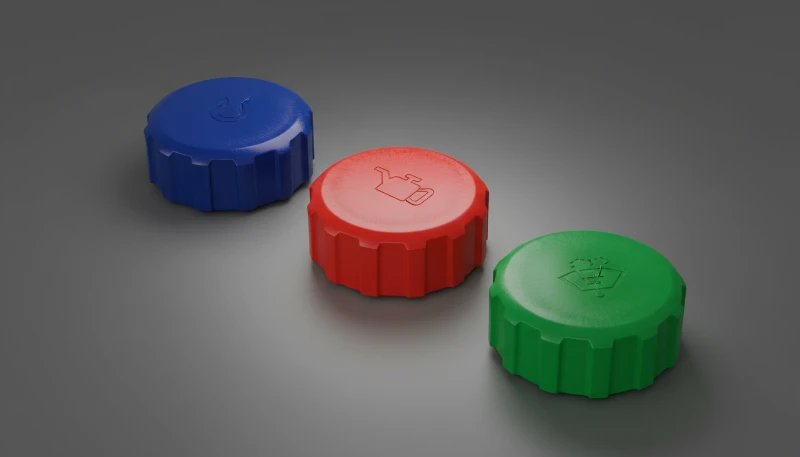
PP is the right choice when your application demands low cost, light weight, chemical resistance, or high-cycle living hinges. It excels in automotive interiors, food containers, caps and closures, medical disposables, and consumer goods. Its low density of 0.905 g/cm reduces shipping costs by 10-15% compared to ABS equivalents, while chemical resistance ensures product longevity in demanding environments. PP also processes easily on standard injection molding equipment without specialized drying systems, reducing capital equipment requirements and operational complexity.
PP is the material of choice for living hinge applications due to its exceptional fatigue endurance. A properly designed PP living hinge can flex over 1 million cycles without failure. The semi-crystalline molecular structure aligns across the thin hinge web during mold filling, creating exceptional fatigue resistance. Consider ABS or polycarbonate for impact-critical components, and nylon for wear applications requiring high mechanical strength.
Our Shanghai factory processes over 400 materials including all major PP grades — homopolymer, random copolymer, block copolymer, and glass-filled PP compounds. With 120+ production staff and 20+ years of experience, we match material selection to your specific application requirements. Request a material consultation with our engineering team to determine if PP is the optimal choice for your project geometry and performance targets.
Cost analysis typically favors PP for production volumes above 10,000 units. At lower volumes, the material cost advantage may not offset tooling investment. For high-volume production runs exceeding 100,000 units, PP delivers significant per-part savings due to its lower material cost, faster cycle times from lower melting temperatures, and reduced energy consumption during processing.
Tooling costs for PP molds are comparable to other thermoplastics, typically $5,000-30,000 depending on part complexity and cavity count. The overall cost per part for PP injection molding can be 20-40% lower than equivalent ABS parts in volumes above 50,000 units. When evaluating PP for your project, factor in total cost of ownership including material, processing, tooling amortization, and secondary operations like assembly or surface finishing.
Frequently Asked Questions
What temperature is needed for PP injection molding?
Set melt temperature to 200-260C and mold temperature to 20-50C for standard PP grades. The semi-crystalline structure of PP requires precise temperature control during both injection and cooling phases to achieve proper crystallization and optimal mechanical properties. Higher mold temperatures produce parts with better surface finish and improved dimensional stability, while lower temperatures reduce cycle time but may increase warpage risk. For glass-filled PP grades, increase melt temperature to 240-280C to ensure proper fiber wetting and uniform dispersion throughout the molded part geometry.
Does PP need drying before molding?
PP typically does not require pre-drying due to its low moisture absorption rate below 0.01% at standard conditions. For precision parts with tight tolerances or critical surface requirements, we recommend 1-2 hours at 80C as a safety measure to eliminate any surface moisture accumulated during storage. This is significantly less drying time than ABS, which requires 2-4 hours at 80-85C to prevent splay marks. The reduced drying requirement gives PP a meaningful production time and energy cost advantage in high-volume manufacturing operations.
Why does PP warp during injection molding?
PP warps primarily due to anisotropic shrinkage during the cooling phase of injection molding. The material shrinks 1.5-2.0% in the flow direction compared to only 1.0-1.5% in the cross-flow direction. This differential contraction creates internal stresses that cause the part to bend, bow, or twist after ejection from the mold. Effective solutions include designing uniform cooling channels, placing gates strategically to balance flow patterns, maintaining consistent mold temperature on both halves, and designing all features with uniform wall thickness throughout.
How does PP compare to ABS for injection molding?
PP is 14% lighter at 0.905 g/cm3 versus 1.05 g/cm3 for ABS, approximately 30-40% cheaper per kilogram, and requires no pre-drying before molding, saving 2-4 hours of production time per batch. PP also offers superior chemical resistance to acids, bases, and most organic solvents at room temperature. However, ABS provides significantly higher impact strength at 15-25 versus 3-5 kJ/m2 notched Izod, better surface finish for painting, and easier post-processing. Choose PP for cost-sensitive chemical-resistant parts and ABS for impact-critical applications.
Can PP be used for living hinges?
Yes, PP is universally recognized as the standard material for injection molded living hinges due to its semi-crystalline molecular structure. Polymer chains align across the thin hinge section during mold filling, creating exceptional fatigue endurance at the flex point. A properly designed PP living hinge can flex over 1 million cycles without failure or visible degradation, making it the preferred choice for bottle caps, clamshell packaging, eyeglass cases, and flip-top containers. The critical requirement is ensuring correct gate location so flow crosses the hinge perpendicularly.
What are the most common PP injection molding defects?
The four most common defects in PP injection molding are warpage caused by anisotropic shrinkage during uneven cooling, sink marks from insufficient packing pressure in thick wall sections, flow lines appearing when resin cools too quickly near the gate area, and short shots occurring when the cavity does not fill completely due to insufficient pressure. Most PP molding defects trace directly back to uneven cooling distribution or insufficient packing pressure. Proper mold temperature control and adequate venting at end-of-fill locations resolve the majority of production quality issues.
What applications use PP injection molding?
PP injection molding serves automotive interiors including dashboards, door panels, battery cases, bumper fascia, and HVAC housings. Food packaging applications include microwave-safe containers, caps and closures, bottle crates, and yogurt cups. Medical device uses span syringe bodies, specimen cups, and diagnostic housings. Consumer goods applications cover appliance housings, storage containers, and garden furniture. Industrial components include chemical tanks, pipe fittings, pump housings, and filter housings. PP is selected when chemical resistance, low material cost, light weight, or repeated flexing are primary requirements.
-
injection molding: Injection molding is a repeatable manufacturing process that injects molten polymer into a precision mold cavity to produce consistent plastic parts at scale. ↩
-
crystallization: crystallization refers to is the formation of ordered crystalline regions in semi-crystalline polymers like PP when cooled from the melt state. The crystallization rate affects mechanical properties, shrinkage behavior, and surface quality, and is controlled by mold temperature and cooling rate. ↩
-
anisotropic shrinkage: Anisotropic shrinkage refers to non-uniform shrinkage in different directions, typical in semi-crystalline polymers like PP, causing warpage due to differential contraction rates between flow and cross-flow directions. ↩