You’ve got a quote from a Chinese injection molding factory, and the price looks almost too good. $8,000 for a production mold that would cost $25,000 in the US. Your boss says “go for it.” Your gut says “slow down.” This article is about what your gut already knows — how to properly vet an injection molding factory in China before you wire money. The one rule I’d print out and stick on the wall: if you can’t verify it, don’t trust it.
- Always request ISO certificate originals, not scanned copies.
- Machine count means nothing without verifying tonnage range and machine age.
- A factory audit — virtual or in-person — is non-negotiable for first orders.
- Communication speed and quality predict project outcomes better than price.
- Demand a trial run before committing to production volume.
Why Does Vetting a Chinese Injection Molding Factory Matter?
Vetting a Chinese injection molding factory is the difference between a reliable partner and a $50,000 lesson in false economies. If you cannot verify it, do not trust it.
““Requesting 10-20 trial samples instead of just 3 gives you meaningful data on process stability.””True
Three samples can look perfect by coincidence. Measuring critical dimensions across 10-20 shots reveals the actual process variation and capability. If the standard deviation is high, the factory’s process is unstable — even if individual parts happen to be in tolerance.
““A factory with 50 injection molding machines is always a better choice than one with 20 machines.””False
Machine count alone is misleading. What matters is how many machines are in your required tonnage range and how many are actually available for your project. A factory with 20 well-maintained machines in your tonnage range outperforms one with 50 machines that are all committed to other jobs or outside your specifications.
The difference between a good mold partner and a bad one isn’t the price — it’s the hidden costs you discover three months later. I’ve seen companies lose $50,000 on a mold that never produced a usable part, then spend another $30,000 on emergency tooling at a different supplier because their first choice couldn’t hold tolerance.
Here’s the uncomfortable truth: injection molding is a precision process, and precision costs money. When a factory quotes you 60% below market rate, something is missing from that quote. It might be proper steel, it might be adequate testing cycles, or it might be the engineering support that prevents problems before they happen.
The vetting process isn’t about finding the cheapest supplier. It’s about finding a supplier whose actual capabilities match your project requirements. That means looking past the sales pitch and into the machines, the people, and the systems.
What Red Flags Should You Watch For During First Contact?
The three biggest red flags are saying yes to everything, skipping DFM review, and vague process descriptions. A capable factory asks questions and pushes back on unrealistic specs. In our experience, how a factory communicates in the first 48 hours predicts the entire project trajectory.
Before you even get to factory audits and certificate checks, the initial conversation tells you a lot. In our experience, how a factory communicates in the first 48 hours predicts the entire project trajectory.
““An NNN agreement drafted under Chinese law provides stronger IP protection than a standard Western NDA.””True
NNN agreements (Non-Disclosure, Non-Use, Non-Circumvention) drafted under Chinese law are specifically designed for manufacturing relationships and are enforceable in Chinese courts. Standard Western NDAs often lack jurisdiction clauses recognized by Chinese courts.
““ISO 90011 certification guarantees that every part from a factory will meet your specifications.””False
ISO 9001 certifies that a quality management system exists — not that every part meets your specs. Certification means documented processes are in place, but actual quality depends on execution. Trial runs and dimensional data remain essential for verifying real capability.
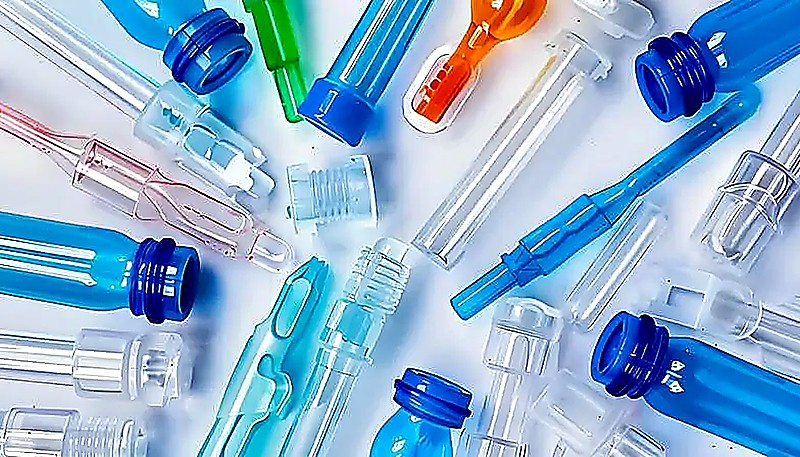
Red flag #1: They say yes to everything. If you ask “can you mold PEEK with 0.05mm tolerance?” and the answer is an immediate “yes, no problem” — that’s not confidence, that’s inexperience. A capable factory will ask follow-up questions: about part geometry, annual volume, wall thickness, and gate location preferences. They’ll push back on unrealistic tolerances and suggest alternatives. That pushback is a green flag, not a red one.
Red flag #2: No DFM feedback. Send them a 3D file and see what comes back. A good factory returns a DFM report within 3-5 days, flagging undercuts, thin walls, and draft angle issues. A factory that just quotes without reviewing the part geometry is quoting blind — and you’ll pay for that later in mold modifications.
Red flag #3: They can’t explain their process. Ask them to walk you through their injection mold manufacturing flow — from design review to T1 samples. If the answer is vague or consists of buzzwords without specifics, they’re probably subcontracting the work they can’t handle.
How Do You Verify Factory Certifications?
Factory certifications are verified by requesting certificate numbers and issuing bodies, then checking them through the registrar’s database. Legitimate factories welcome this process.
Every factory claims ISO certification. Here’s how to actually verify it. Ask for the certificate number and issuing body, then check it. Legitimate ISO 9001 certificates are issued by accredited registrars and can be verified through databases like the IAF (International Accreditation Forum) or the registrar’s own website.
Specifically, ask for these documents:
ISO 9001 2015 — the baseline quality management standard. If a factory does not have this, walk away.
ISO 13485 — critical if you’re making medical device components.
ISO 14001 — environmental management. Important if your company has sustainability requirements.
ISO 45001 — occupational health and safety. A factory that takes care of its workers generally takes care of its products.
The most critical standard to verify is ISO 9001 — it forms the baseline quality management framework that everything else builds on.
When a factory says “we have all certifications,” ask to see the originals. Not a photo, not a PDF with the expiry date cropped out. A legitimate factory will gladly provide certificate numbers, issue dates, and scope descriptions.
What Should You Look For During a Factory Audit?
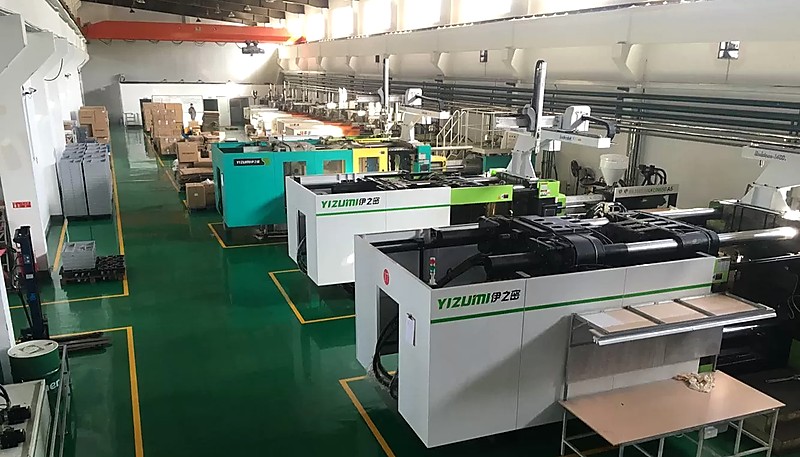
Factory audit priorities are machine condition, QC lab setup, material storage, and certification originals. An SGS Supplier Audit2 can independently verify these points if you cannot visit in person.
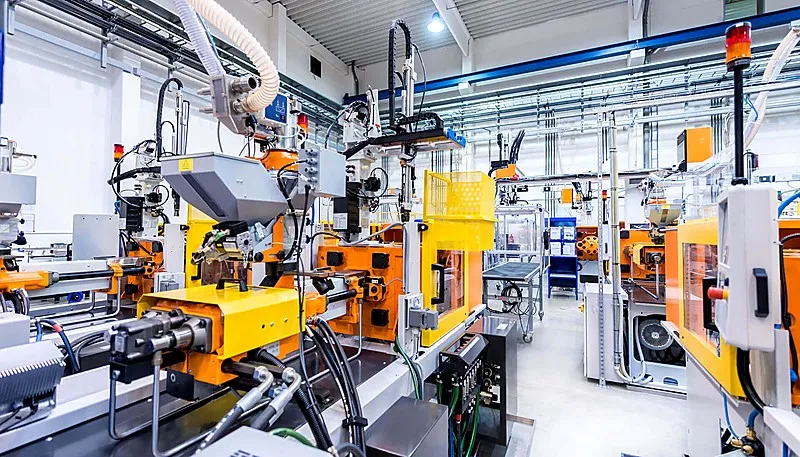
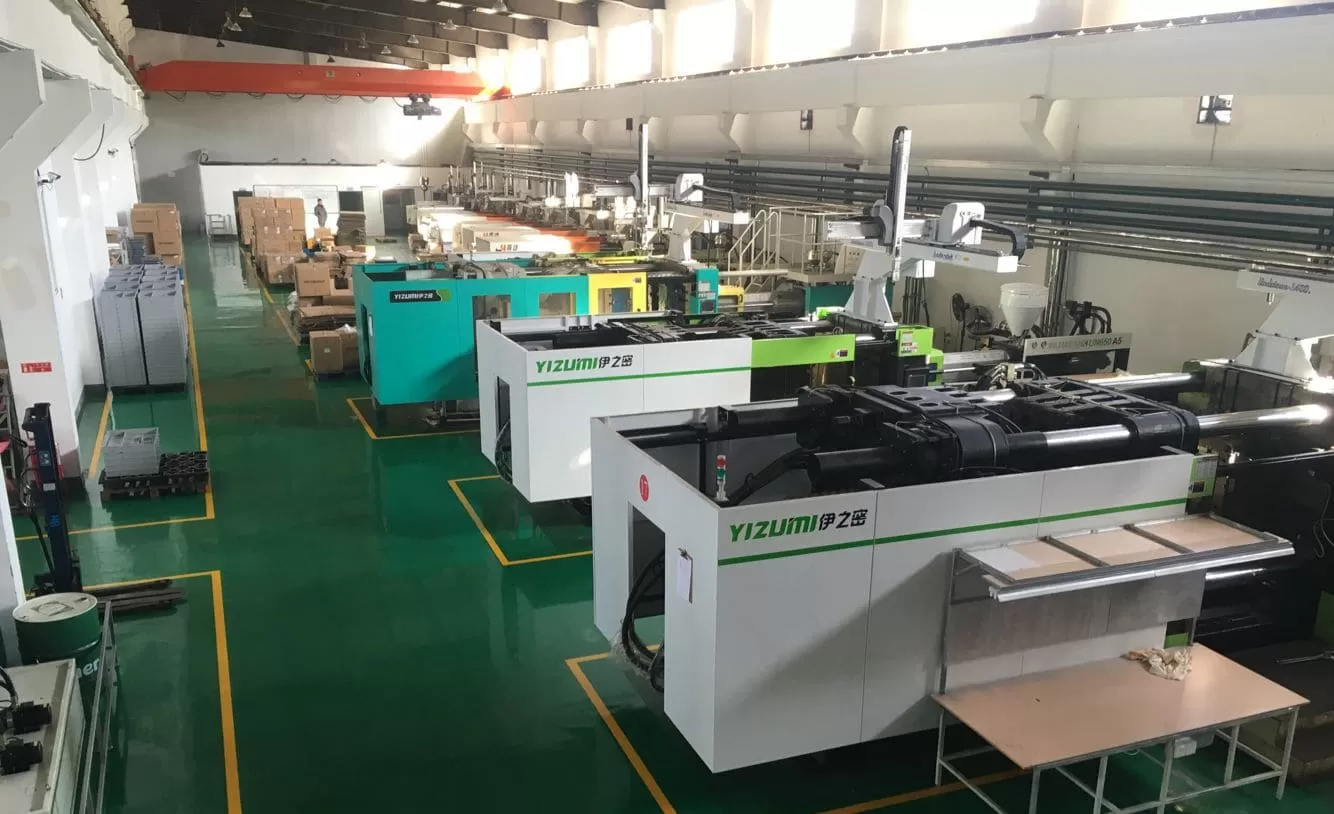
Check the machines, not the lobby. Some factories invest heavily in the reception area and skip machine maintenance. In our factory, we maintain machines from 90T to 1850T, and every machine has a maintenance log you can ask to see. Look at the injection molding machines: are they running? Are the tonnage plates readable? A factory that runs 45+ machines should be able to tell you exactly which machine will run your part.
Count what matters. Total machine count is a vanity metric. What you need to know is: how many machines are in your required tonnage range, and how many are actually available (not committed to other long-running production jobs). A factory with 50 machines but only 2 in your tonnage range isn’t as capable as it sounds.
Inspect the QC area. A proper QC setup includes calibrated measurement equipment — CMM machines, profile projectors, hardness testers. Ask to see their latest calibration certificates. If the QC area is a desk with a caliper and a go/no-go gauge, you’re dealing with a shop that inspects by eye, not by data.
How Do You Evaluate Real Production Capacity?
Production capacity is verified by checking three things: tonnage range on the floor, in-house mold shop capability, and material drying equipment. First, understand the tonnage range. A factory that runs machines from 90T to 1850T can handle everything from small precision connectors to large automotive panels. If your part needs a 500T machine and their largest is 300T, no amount of engineering can bridge that gap. Ask specifically: “What is your tonnage range, and how many machines do you have in the 200T-800T range?” That’s where most production parts fall.
First, understand the tonnage range. A factory that runs machines from 90T to 1850T can handle everything from small precision connectors to large automotive panels. If your part needs a 500T machine and their largest is 300T, no amount of engineering can bridge that gap. Ask specifically: “What is your tonnage range, and how many machines do you have in the 200T-800T range?” That’s where most production parts fall.
Second, look at the mold shop. A factory that can only do sourcing but not mold building is a middleman. In-house mold manufacturing means faster iteration cycles, lower modification costs, and better control over tooling quality. For a structured approach to injection molding supplier sourcing, see our comprehensive guide.
Third, check the material inventory and drying equipment. A factory that works with 400+ materials has the drying ovens, hopper loaders, and material handling infrastructure to switch between hygroscopic materials (nylon, polycarbonate, TPU) without contamination. That’s not trivial — improper drying alone accounts for roughly 30% of molding defects in my experience.
When Should You Request a Trial Run?
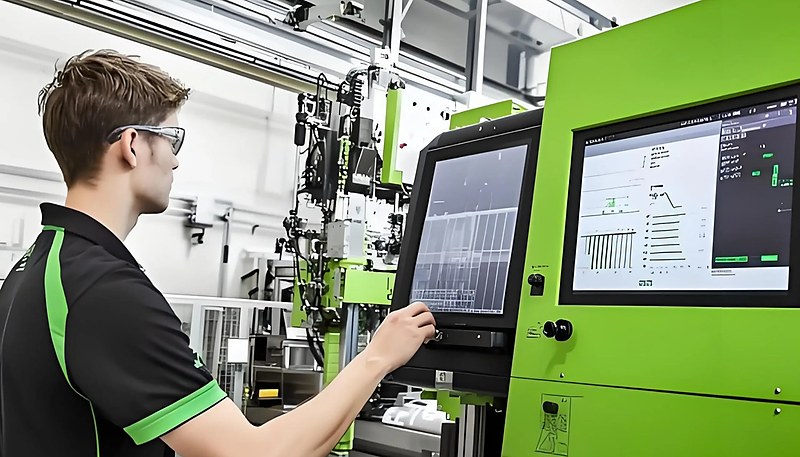
Always request a trial run before committing to production volume. It reveals dimensional capability, surface quality, and material consistency that no factory tour can show. A factory can show you certifications, clean machines, and impressive client lists — but the trial run is where the rubber meets the road.
Always. The trial run is your single most valuable vetting tool. Here’s why: a factory can show you certifications, clean machines, and impressive client lists — but the trial run is where the rubber meets the road.
A proper trial run should produce T1 samples for validation (first shots from the completed mold) that you can measure against your drawings. What to look for:
Dimensional accuracy: Measure critical dimensions against your tolerances. If a factory quotes ±0.05mm but delivers ±0.15mm on the first try, their process control is weaker than claimed.
Surface finish: Check for sink marks, weld lines, flash, and flow marks.
Consistency across shots: Ask for 10-20 samples, not just 3. Measure the same dimension on all of them. High variation between shots indicates poor process stability.
Material certification: The trial parts should come with a material certificate of conformance (CoC) showing the actual resin batch used.
The trial run also reveals how the factory communicates about problems. Every first shot has issues — flash here, a sink mark there. What matters is how they diagnose the root cause and whether their proposed fix makes engineering sense.
How Do You Protect Your IP When Sharing Designs?
NNN agreements are the first line of defense when sharing designs with a Chinese factory. Control data sharing in stages and file a Chinese design patent before production starts.
This is the question I get asked most often, and the honest answer is: you can’t eliminate risk entirely, but you can reduce it to an acceptable level with the right steps.
Step 1: Sign an NNN agreement. Not an NDA — an NNN (Non-Disclosure, Non-Use, Non-Circumvention). Standard Western NDAs are weak in Chinese courts. An NNN agreement drafted under Chinese law, in both English and Chinese, with specific penalties for each type of breach, gives you actual legal teeth. For U.S. companies, BIS China Compliance3 guidance outlines additional due diligence requirements for export controls when sharing technical data internationally.
Step 2: Control the data flow. Don’t send complete CAD files to every factory you’re evaluating. Start with screenshots, basic dimensions, and material requirements. Only share full CAD data with your shortlisted factory after the NNN is signed.
Step 3: Register your design in China. China follows a “first to file” system for design patents. If you’re producing a consumer product, file a Chinese design patent before you start production. It costs roughly $500-1,000 and gives you enforceable rights if a factory tries to copy your product.
What Does a Reliable Long-Term Mold Partner Look Like?
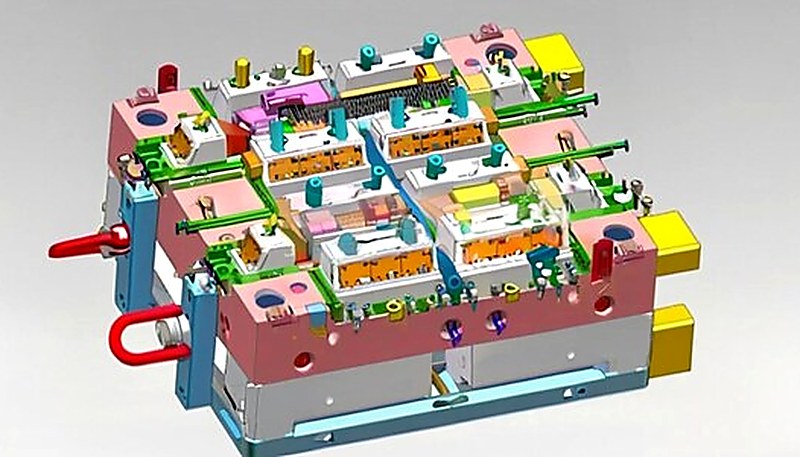
A reliable long-term mold partner is a factory that challenges weak designs, responds fast, and invests in skilled people. After vetting suppliers over 20 years, these three traits separate the best from the rest.
They tell you what you do not want to hear. A good factory will tell you when your design is manufacturable but not optimal. They will say “we can mold this, but if you increase the draft angle by 0.5 degrees, we can cut cycle time by 15%.” That kind of proactive engineering advice is worth more than any cost savings on the initial quote.
They respond when things go wrong. Every project has problems. The question is what happens at 11 PM when the T3 samples show a new defect that wasn’t on the T1 parts. A responsive factory gets back to you within 24 hours with a root cause analysis and a corrective action plan.
They invest in people, not just machines. A factory with 120+ experienced production workers, senior engineers who’ve been there for years, and a dedicated English-speaking project management team will outperform a bigger factory with high turnover every time. Machines don’t solve problems — people do.
The bottom line: vetting is not a one-time event. The factories that pass your initial audit need to maintain that standard project after project. Set up quarterly quality reviews, track on-time delivery rates, and don’t be afraid to re-audit if quality starts slipping. The best supplier relationships are built on verification, not trust.
What Are the Most Common Questions About Vetting Chinese Factories?
What Certifications Should a Chinese Injection Molding Factory Have?
At minimum, ISO 9001:2015 is non-negotiable — it forms the baseline quality management framework that every legitimate injection molding factory should have in place. For medical device components, ISO 13485 is required. Environmental compliance through ISO 14001 matters if your company has sustainability targets or ESG reporting requirements. For automotive applications, IATF 16949 is the relevant industry standard. Always request certificate numbers with issuing body details, then verify them independently through the registrar online database rather than relying solely on the factory claims.
How Long Does a Factory Audit Take?
A thorough factory audit takes 4-6 hours on-site, systematically covering the production floor, QC laboratory, raw material storage area, and documentation review room. Budget another 1-2 hours for the initial welcome meeting and a final wrap-up discussion of your findings. If someone offers to show you the entire factory in under 45 minutes, they are definitely not showing you everything important. A proper audit should include watching machines run under production load, checking calibration stickers on all measurement tools, reviewing recent quality incident reports, and meeting the engineering team.
Should I Visit the Factory in Person?
For orders above 20,000 USD, an in-person visit is well worth the travel investment. For smaller orders, a live video walkthrough with a factory representative is a practical and cost-effective alternative that still reveals a lot. During any video tour, ask them to show specific machines by tonnage rating, walk through the QC measurement area, and open raw material storage containers to check labeling. Third-party audits from SGS or TUV provide another independent verification option that gives you professional documentation without requiring international travel on your part.
What Is a Reasonable Lead Time for T1 Samples?
Standard lead time for T1 samples is 25-35 days for a single-cavity test mold. Complex multi-cavity production molds or those requiring lifters, sliders, and core pulls can take 40-60 days to complete. If a factory promises T1 samples in under 20 days for a new mold, you should question whether they are cutting corners on mold design review or material selection. Always build in 3-5 days for a proper DFM review before mold construction begins, and factor in additional shipping time for international sample delivery to your quality inspection team.
How Do I Know if a Factory Is Subcontracting My Mold?
Ask to physically see their mold manufacturing shop floor. If they cannot show you CNC machining centers, EDM sinker machines, wire cutters, and polishing stations all operating on-site, they are very likely outsourcing your mold to a third-party workshop. This hidden outsourcing adds cost, reduces your direct quality control, and makes future engineering modifications significantly slower and more expensive. A factory with genuine in-house mold manufacturing capability can iterate on design changes faster, hold tighter dimensional tolerances, and provide ongoing maintenance support throughout the entire production lifecycle.
What Payment Terms Should I Negotiate?
Typical payment terms are 30-50 percent deposit with the remaining balance due upon sample approval and dimensional report confirmation. Never agree to pay 100 percent upfront regardless of the discount offered. For established supplier relationships with a proven track record, you can negotiate milestone-based payments tied to specific deliverables like deposit, T1 sample approval, and final production batch delivery. Letters of credit from your bank are a secure option for large orders. Always tie final payment to measurable quality acceptance criteria clearly documented in your purchase order agreement.
Can I Trust Factory References They Provide?
Only partially — factory-provided references are always pre-screened and will invariably be overwhelmingly positive. A much more effective approach is to ask for references specifically in your own industry or with similar part complexity and material requirements to yours. Then contact those references directly and ask pointed questions about communication responsiveness, actual on-time delivery performance, and most importantly how the factory handled quality problems when they inevitably occurred. Major industry trade shows like NPE or Chinaplas are also excellent places to gather candid independent feedback.
What Should a Mold Quotation Include?
A complete mold quotation must specify: mold base steel type, cavity and core steel type, expected mold life in total shots, surface finish standard, number of cavities, number of included modification rounds, and delivery terms (FOB or EXW). It should also itemize any secondary operations, custom packaging requirements, and annual volume assumptions that affect unit pricing. Vague quotes showing only a single total price without any breakdown are a significant red flag — always insist on receiving an itemized, detailed quotation before signing any agreement.
Ready to Vet Your Next Injection Molding Partner?
The right injection molding partner is one you have properly vetted through factory audits, trial runs, and certification verification. At ZetarMold, we have been manufacturing injection molds and molded parts in Shanghai since 2005. With 47 machines, in-house mold manufacturing, and 30+ English-speaking project managers, we are set up to handle your project from DFM review through production delivery. Get a free quote and see what transparent pricing and proper engineering support actually looks like.
-
ISO 9001: refers to ISO 9001 Quality Management Systems — the internationally recognized standard for quality management, certifying that a factory has documented processes, continuous improvement systems, and consistent product output. ↩
-
SGS Supplier Audit: refers to SGS Supplier Audit — a third-party factory audit methodology covering manufacturing capability, quality systems, and regulatory compliance, conducted by SGS, one of the world’s leading inspection and verification companies. ↩
-
BIS China Compliance: refers to U.S. Bureau of Industry and Security China Compliance Guidance — U.S. government guidance on export controls and due diligence requirements when sourcing manufactured goods from China. ↩