Zum Inhalt springen
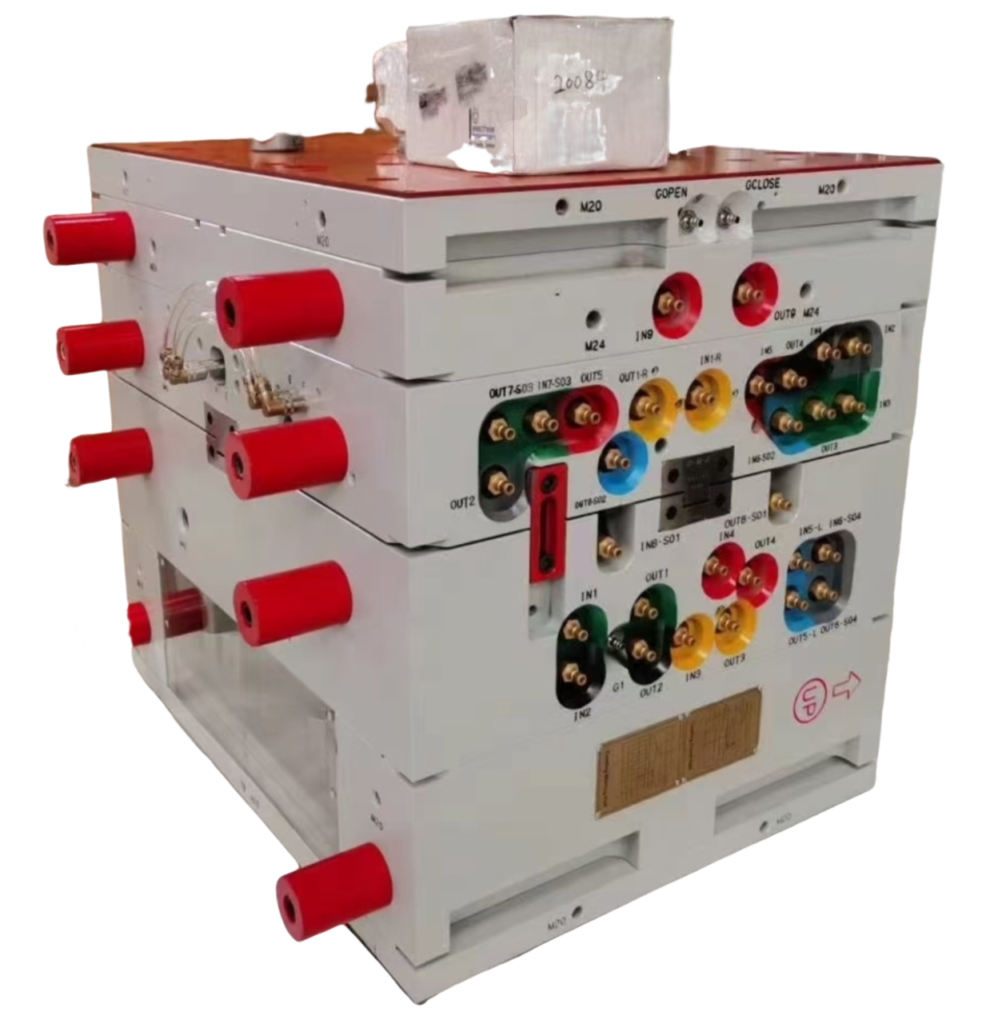
Kernziehen1 in Spritzgießen ist ein Formmechanismus, der innere Kerne zurückzieht, um Teile mit Hinterschneidungen, inneren Gewinden und Seitenöffnungen freizugeben, die die normale Formöffnungsrichtung nicht formen kann. Ohne sie wären teure Nachbearbeitungen nötig – oder viele komplexe Geometrien ließen sich einfach nicht in Serie fertigen. Nach unserer Erfahrung bei ZetarMold gehört Kernzug zu den drei wichtigsten Werkzeugmerkmalen, die ein gutes von einem hervorragenden Formenbau unterscheiden.
- Kernziehmechanismen ermöglichen es Formen, Hinterschneidungen, Seitenöffnungen und innere Gewinde zu formen, die durch normale Formöffnung nicht erzeugt werden können
- Es gibt drei Haupttypen: hydraulisch, mechanisch und pneumatisch – jeder für unterschiedliche Kraft- und Präzisionsanforderungen geeignet
- Der Kernzug erhöht die Werkzeugkosten um 15-30%, eliminiert aber oft sekundäre Bearbeitungsvorgänge vollständig
- Die richtige zeitliche Abfolge der Kernzugsteuerung ist entscheidend, um Teilefehler und Werkzeugschäden zu vermeiden
- Ausreichende Abzugswinkel und Wanddicke um kerngezogene Merkmale reduzieren die Fehlerrate deutlich
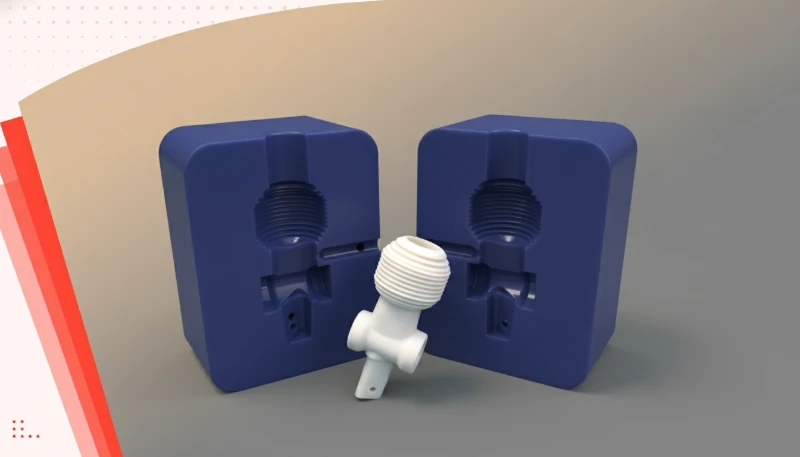
Was ist Kernzug beim Spritzgießen?
Ein Kernzug ist ein beweglicher Spritzgussform Abschnitt, der vor dem Auswerfen zurückgezogen wird, um Hinterschnitte, Innengewinde, Seitenlöcher oder versenkte Schlitze freizugeben. Der Kern bleibt während des Einspritzens in Position und wird vor oder während der Werkzeugöffnung zurückgezogen, damit das Teil frei ausgeworfen werden kann. In der Praxis werden Kernzüge durch Hydraulikzylinder betätigt, mechanischer Winkelstift2s oder pneumatische Systeme.
Die Wahl hängt von der benötigten Kraft, den Zykluszeitbeschränkungen und der Teilgeometrie ab. In unserem Werk in Shanghai bauen wir regelmäßig Werkzeuge mit bis zu acht unabhängigen Kernzügen an einem einzigen Werkzeug für Automobil- und Medizinteile.
In unserem Shanghai Werk verfügen wir über 47 Spritzgießmaschinen von 90T bis 1850T, was uns die Flexibilität gibt, Kernziehformen für eine breite Palette von Teilgrößen und Materialien zu betreiben.
Der Kernzugmechanismus unterscheidet sich vom Standard-Auswerfersystem. Während Auswerfer das Teil nach dem Öffnen aus dem Werkzeug drücken, ziehen Kernzüge interne Formelemente vor oder während des Werkzeugöffnens zurück. Diese Abfolge – zuerst Kernrückzug, dann Werkzeugöffnung, dann Auswerfen – ermöglicht Hinterschneidungen, ohne das Teil zu beschädigen.
Kernzüge sind besonders häufig bei Automobilsteckverbindern, Gehäusen für medizinische Geräte, Gehäusen für Unterhaltungselektronik und allen Anwendungen, bei denen interne Clips, Schnappverbindungen oder Gewindeeinsätze direkt in das Teil eingespritzt werden, anstatt als Nachbearbeitung hinzugefügt zu werden.
Warum wird Kernzug beim Spritzgießen verwendet?
Der Hauptgrund ist einfach: Standard-Spritzgusswerkzeuge können nur Teile freigeben, die keine Merkmale senkrecht zur Werkzeugöffnungsrichtung haben. Jede Hinterschneidung, jedes Innengewinde oder jedes Seitenloch erfordert einen Mechanismus, um den Formstahl zurückzuziehen, bevor das Teil ausgeworfen werden kann. Ohne Kernzug stehen Herstellern drei schlechte Alternativen gegenüber. Erstens, das Teil umgestalten, um Hinterschneidungen zu eliminieren – was oft die Funktionalität beeinträchtigt. Zweitens, einen sekundären Bearbeitungsvorgang hinzufügen, um das Merkmal nach dem Spritzguss zu erzeugen – was Kosten, Zeit und potenzielle Qualitätsschwankungen erhöht. Drittens, einen losen Einsatz verwenden, den ein Bediener jeden Zyklus manuell einlegt und entfernt – was die Produktion erheblich verlangsamt und Inkonsistenzen einführt. Der Kernzug löst alle drei Probleme gleichzeitig.
Die Struktur wird mit voller Präzision direkt geformt, die Zykluszeit bleibt automatisiert und keine Nachbearbeitung ist nötig. Bei Großserien komplexer Teile amortisiert sich die Investition in Kernzugwerkzeuge typischerweise innerhalb der ersten 10.000 bis 50.000 Zyklen, abhängig von der Teilekomplexität.
| Benefit | Ohne Kernzug | Mit Kernzug |
|---|---|---|
| Innengewinde | Nachträgliche Gewindebearbeitung | Direkt geformt, keine zusätzlichen Kosten |
| Seitenlöcher | Nachformbohren | Während des Spritzzyklus geformt |
| Hinterschnitt-Clips | Teilneukonstruktion oder lose Einlage | Automatische Formung und Freigabe |
| Zykluskonsistenz | Manuelle Einlegeplatzierung variiert | Vollautomatisierung, wiederholbare Ergebnisse |
| Tooling cost | Geringere Anfangskosten, höhere Kosten pro Teil | Höhere Anfangskosten, niedrigere Kosten pro Teil |
„Kernziehmechanismen ermöglichen Spritzformen, Teile mit Merkmale zu produzieren, die mit Standard-Zweiplattenformen unmöglich sind.“Wahr
Richtig. Kernziehmechanismen ziehen innere Formelemente zurück, ermöglichen Hinterschneidungen, innere Gewinde und Seitenöffnungen, die die normale Formöffnungsrichtung nicht freigeben kann.
„Kernziehen ist nur für sehr große spritzgeformte Teile notwendig.“Falsch
Falsch. Kernziehen wird für Teile aller Größen verwendet – von mikrogeformten medizinischen Komponenten unter 5mm bis zu großen Automobilteilen. Der entscheidende Faktor ist die Teilgeometrie (Hinterschneidungen, Gewinde, Seitenöffnungen), nicht die Teilgröße.
Welche Arten von Kernziehmechanismen gibt es im Spritzgießen?
Es gibt drei primäre Kernzieh-Antriebsmethoden im Spritzgießen: hydraulisch, mechanisch und pneumatisch. Jede hat spezifische Vorteile, und die richtige Wahl hängt von Kraftbedarf, Zykluszeitbeschränkungen, Formgröße und Wartungsaspekten ab. hydraulisches Kernziehen3 ist der häufigste Typ für mittlere bis große Formen und Hochkraft-Anwendungen. Hydraulikzylinder sind auf der Form montiert und mit dem Hydrauliksystem der Maschine verbunden. Sie bieten hohe Rückzugskräfte – typisch 5 bis 50+ Tonnen – ideal für große Kerne, Mehrkavitätenformen und Anwendungen, wo der Kern signifikante Packungsdruck überwinden muss vor dem Rückzug. Hauptvorteile sind hohe Kraftkapazität und präzise Geschwindigkeitskontrolle.
Die Nachteile sind mögliche Ölleckagen (ein Problem in Reinraumumgebungen), etwas langsamere Reaktionszeiten im Vergleich zu mechanischen Systemen und der Bedarf an Hydraulikleitungen, die die Werkzeuginstallation verkomplizieren.
„Kernziehmechanismen können die Notwendigkeit nachträglicher Bearbeitungsoperationen für viele spritzgeformte Teile eliminieren.“Wahr
Richtig. Der Kernzug ermöglicht es, Merkmale wie Innengewinde, Seitenbohrungen und Hinterschneidungen direkt während des Spritzzyklus zu formen. Dies eliminiert kostspielige sekundäre Bohr-, Gewindeschneid- oder Fräsarbeiten, reduziert sowohl die Stückkosten als auch die Qualitätsschwankungen. In Produktionsumgebungen kann ein einzelnes Kernzug-Merkmal im Vergleich zur Nachbearbeitung $0,50–$5,00 pro Teil einsparen.
“Adding core pull to a mold always increases cycle time significantly.”Falsch
Falsch. Mechanische Kernzüge ziehen sich gleichzeitig mit dem Werkzeugöffnen zurück und fügen keine Zykluszeit hinzu. Hydraulische und pneumatische Systeme fügen 2–5 Sekunden pro Zug hinzu, was oft durch die sekundären Operationen, die sie eliminieren, ausgeglichen wird.
Mechanischer Kernzug verwendet Winkelschräubstifte (auch Hornstifte genannt), Auswerfer oder Gelenkverbindungen, die durch die Öffnungsbewegung des Werkzeugs selbst angetrieben werden. Wenn sich das Werkzeug öffnet, zwingt der schräge Stift den Kernschlitten zur seitlichen Bewegung. Es wird keine externe Energiequelle benötigt – der Mechanismus ist selbsttätig. Mechanische Kernziehvorrichtungen sind ideal für kleine bis mittlere Werkzeuge mit mäßigen Hinterschneidungstiefen (typischerweise unter 30 mm). Sie sind zuverlässig, wartungsarm und haben keine Zykluszeitverlängerung, da der Kern gleichzeitig mit dem Öffnen des Werkzeugs zurückgezogen wird. Allerdings ist der Rückzugsweg durch die Geometrie des Winkelschräubstifts begrenzt, und die Kraft ist durch die Öffnungskraft des Werkzeugs eingeschränkt.
Sie erfordern auch präzise Bearbeitung – ein schlecht passender Winkeldorn verschleißt schnell und erzeugt Grat am Teil. In unserer Werkstatt verwenden wir mechanische Kernzüge für etwa 40% unserer Werkzeuge – insbesondere Gehäuse für Unterhaltungselektronik und kleine Automobilsteckverbinder, bei denen die Hinterschneidungstiefe moderat ist und die Zyklusgeschwindigkeit entscheidend ist.
Unsere hauseigene Formenbaufertigung produziert über 100 Formensätze pro Monat, darunter viele mit Mehrachsen-Kernzug-Systemen, die komplett unter einem Dach entworfen und gebaut werden.
Pneumatische Kernziehung verwendet Druckluft, um kleine Zylinder zu betätigen, die Kerne zurückziehen. Pneumatische Systeme sind sauber (kein Hydrauliköl), schnellwirkend und relativ kostengünstig. Sie eignen sich am besten für Anwendungen mit geringer Kraft – kleine Kerne, dünnwandige Merkmale oder mikrogießte Teile, bei denen die benötigte Rückzugskraft unter 500 kg liegt.
Die Einschränkung ist die Kraft: Druckluft bei typischem Werkstattdruck (6–8 bar) kann nicht die Rückzugskräfte erzeugen, die für große Kerne oder Hochdruck-Pack-Situationen benötigt werden. Pneumatische Kernzüge sind auch empfindlich gegenüber Druckschwankungen, was zu inkonsistenter Kernpositionierung führen kann, wenn das Werkstattluftsystem nicht gut geregelt ist.
| Merkmal | Hydraulic | Mechanical | Pneumatisch |
|---|---|---|---|
| Kraftkapazität | Hoch (5–50+ Tonnen) | Mittel (Formöffnungskraft) | Niedrig (unter 500 kg) |
| Geschwindigkeit | Mittel | Schnell (gleichzeitig mit Öffnen) | Schnell |
| Sauberkeit | Risiko von Ölleckagen | Sauber | Sauber |
| Wartung | Dichtungen, Schläuche, Zylinder | Verschleiß an Schrägstiften | Dichtungen, Luftleitungen |
| Best for | Große Formen, hohe Kraft | Kleine bis mittlere Hinterschneidungen | Mikroteile, geringe Kraft |
| Kostenauswirkung | Hoch (+25–40%) | Mittel (+15–25%) | Niedrig (+10–15%) |
Wie beeinflusst Kernziehen die Formkonstruktion und Kosten?
Dieser Abschnitt behandelt, wie Kernzug das Formendesign und die Kosten beeinflusst, sowie seine Auswirkungen auf Kosten, Qualität, Zeitplan oder Beschaffungsrisiko. Kernzug beeinflusst das Formendesign und die Kosten durch zusätzliche bewegliche Stahlteile, Verriegelungsflächen, Hubfreigabe, Verschleißkomponenten und Ablaufsteuerung. Im Vergleich zur Basis- Schritte des Spritzgießens, ein Kernzugwerkzeug muss auch die Kerntiming, die Seitenlastbeständigkeit, die Kühlung um den Schieber und den Wartungszugang validieren. Die zusätzlichen Kosten sind gerechtfertigt, wenn sie die Nachbearbeitung eliminiert oder Geometrien ermöglicht, die sonst nicht geformt werden können.
Kernzüge erzeugen internen Stahl, der mit Standardkühlkanälen schwer zu erreichen ist. In vielen Fällen werden Beryllium-Kupfer-Einsätze oder konforme Kühlung (über 3D-gedruckte Werkzeugeinsätze) verwendet, um die Zykluszeit beizubehalten. Ohne ausreichende Kühlung um den Kern erhöhen sich die Zykluszeiten um 20–40%. Kostenseitig fügt ein einzelner hydraulischer Kernzug typischerweise 2.000–8.000 € zu den Werkzeugkosten hinzu, abhängig von Größe und Komplexität. Ein vollständiges Mehrachsen-Kernzugsystem an einem komplexen Automobilsteckverbinderwerkzeug kann 15.000–40.000 € hinzufügen. Wenn man jedoch die eliminierten sekundären Operationen berücksichtigt – die 0,50–5,00 € pro Teil kosten könnten – ist die Amortisationszeit bei Hochvolumenprogrammen meist in Wochen gemessen.
“Core pull mechanisms typically add 15-30% to mold base cost but eliminate expensive secondary operations.”Wahr
Richtig. Obwohl die anfängliche Formeninvestition höher ist, eliminiert die Vermeidung von Nachbearbeitung, Gewindeschneiden oder manuellem Einsatzhandling die Stückkosten für Produktionsmengen über 10.000 Einheiten erheblich.
“Core pull molds require significantly less maintenance than standard molds.”Falsch
Falsch. Kernziehwerkzeuge erfordern tatsächlich mehr Wartung aufgrund von Gleitverschleißflächen, hydraulischen Dichtungen und Zeitsteuerungsmechanismen. Austauschbare Verschleißplatten und ein geplanter Wartungsplan sind für eine gleichbleibende Produktionsqualität unerlässlich.
Wann sollte man Kernzug beim Spritzgießen einsetzen?
Kernzug ist nützlich, wenn das Teil Hinterschneidungen, Seitenbohrungen, Innengewinde, Bajonettmerkmale oder Schnappverschlüsse hat, die eine gerade Entformung blockieren. Die klarsten Anwendungsfälle sind Merkmale, die sonst Bohren, Abschrauben, manuelle Einsätze oder Neukonstruktion erfordern würden. Wenn die Sekundäroperation erhebliche Kosten verursacht oder die Merkmalstoleranz eng bleiben muss, ist der Kernzug in der Form meist die bessere Produktionswahl.
Der Versuch, diese Merkmale durch Nachbohren nach dem Spritzgießen hinzuzufügen, ist möglich, erhöht jedoch die Toleranzanhäufung und die Zykluszeit. Untergeschnittene Schnappverschlüsse und Clips. Unterhaltungselektronik, Medizingeräte und Automobilinnenräume verwenden häufig Schnappverbindungen zur Montage. Wenn diese Merkmale intern sind (nach innen gerichtet), sind Kernzüge der einzige Weg, sie in einem Schritt zu formen. Multimaterial- oder eingelegte Spritzgussteile. Wenn Metall-Einsätze oder elektronische Komponenten umspritzt werden, können Kernziehvorrichtungen den Einsatz während des Spritzgießens präzise halten und ihn freigeben, ohne das gespritzte Material zu stören.
Als Faustregel unseres Ingenieurteams: Wenn das Merkmal mehr als 0,10 € pro Teil an sekundären Kosten hinzufügt oder wenn die Positionstoleranz unter 0,1 mm liegen muss, ist der Kernzug im Werkzeug fast immer die richtige Wahl.
Mit mehr als 20 Jahren Erfahrung über 400+ Kunststoffmaterialien hinweg bewertet unser Ingenieursteam die Kernzug-Anforderungen während der DFM-Prüfung, um den kosteneffizientesten Mechanismus für jedes Projekt zu empfehlen.
Was sind häufige Probleme beim Kernzug im Spritzguss?
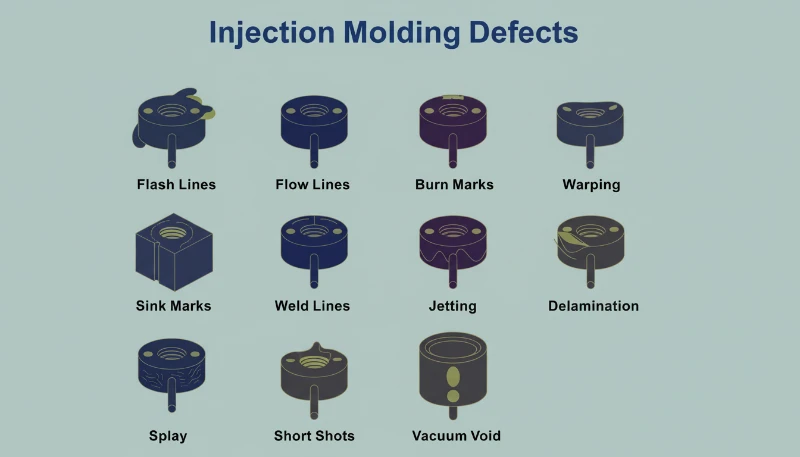
Kernzugmechanismen sind leistungsstark, aber sie führen Fehlerarten ein, die Standardformen nicht haben. Das vorherige Verständnis dieser Probleme hilft beim Formendesign und der Prozesseinrichtung. Grat an der Trennlinie. Der häufigste Fehler. Wenn der Kernschieber während des Einspritzens nicht sicher gegen den Hohlraum verriegelt, drückt der hohe Packdruck Material in den Spalt. Selbst ein 0,02 mm Spiel kann sichtbaren Grat erzeugen. Die Vermeidung erfordert präzise Bearbeitung der Verschleißplatten, ausreichende Verriegelungskraft und regelmäßige Wartung der Gleitflächen. Premature wear. Core slides cycle thousands of times per production run. The sliding surfaces — especially on mechanical angle-pin systems — wear progressively. As wear increases, clearances open up and flash appears.
Hardened steel wear plates (HRC 50+) and regular lubrication are essential. At ZetarMold, we specify replaceable wear plates on all core pull molds so maintenance does not require re-machining the main mold base. Timing errors. The core must retract at the right moment in the mold opening sequence. If it retracts too early (while the material is still soft), the part deforms. If it retracts too late (after the mold has opened enough to stress the undercut), the part cracks or the core is damaged. Modern injection molding machines handle this with programmable core pull sequences, but older machines require careful mechanical timing with limit switches.
Inadequate cooling around cores. Core pull mechanisms occupy space that would normally be used for cooling channels. Poor cooling in the core area leads to extended cycle times, sink marks, and dimensional instability — especially on thick-wall sections adjacent to core-pulled features.
“Flash on core pull parting lines is the most common defect in core pull molds.”Wahr
Correct. Even a 0.02mm clearance between the core slide and cavity can allow material to seep through under high packing pressure, producing visible flash that requires post-mold trimming.
“Core pull molds can ignore lubrication and wear planning because the side cores move only once per cycle.”Falsch
False. Core pull mechanisms create repeated sliding contact under load, so lubrication, wear plates, guide rails, and replaceable locking surfaces are essential. Ignoring wear planning increases flash risk, maintenance downtime, and long-term dimensional drift.
Wie plant man Kernzug beim Spritzgießen?
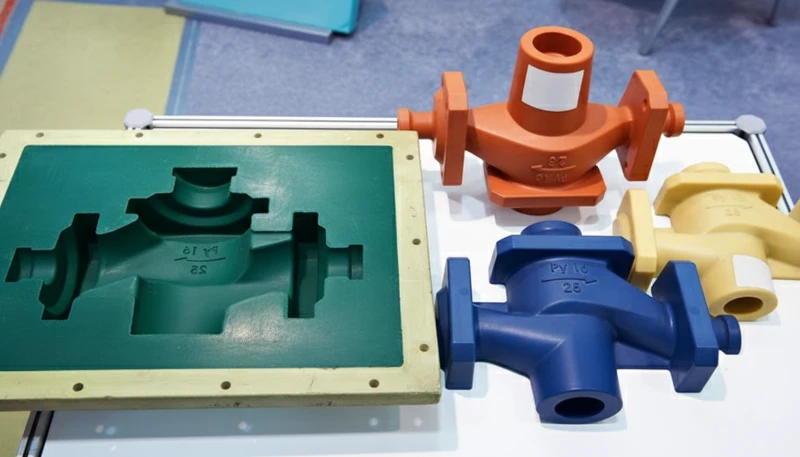
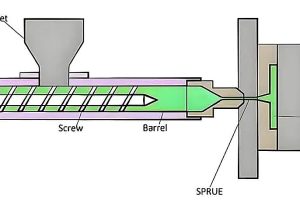
Good core pull design is planned during part design, not after the mold layout is almost finished. Engineers should confirm pull direction, stroke, shutoff angle, draft, cooling, and the available space around the Schneckenspritzgießmaschine setup before steel cutting. Early collaboration between product engineering and mold design prevents flash, galling, weak shutoffs, and slow cycle time.
This is especially important for textured or polished surfaces where the coefficient of friction is higher. Maintain uniform wall thickness. Core pulls create internal steel that displaces material flow. If the wall thickness around a core-pulled feature varies significantly, you will see sink marks on the cosmetic side. Design for uniform wall thickness or use ribs to compensate for thick sections. Plan for cooling access. During mold design, ensure that cooling channels can reach the core area. Baffles, bubblers, or heat pipes may be needed inside or adjacent to the core. Inadequate cooling is the number-one cause of cycle time penalties in core pull molds.
Specify replaceable wear components. Every core pull mold should have replaceable wear plates, guide rails, and locking blocks. These components will wear — that is expected. Making them replaceable turns a multi-day mold overhaul into a 2-hour maintenance swap. If you are working on injection molding supplier sourcing for a core pull project, make sure the DFM review specifically addresses core pull feasibility, wear planning, and cooling strategy before mold construction begins.
Häufig gestellte Fragen
What is the difference between core pull and lifters in injection molding?
Core pull and lifters both create undercut features, but they work differently. Core pulls retract linearly into the mold, making them ideal for deep undercuts, internal threads, and blind holes. Lifters pivot outward at an angle during ejection, which is better for shallow external undercuts. Core pulls handle deeper features but require more mold space and external actuation power. Lifters are more compact but limited in undercut depth and angle. In practice, many production molds combine both mechanisms to handle complex part geometries efficiently and minimize per-part cost.
How much does core pull add to mold cost?
Core pull typically adds 15-30% to the base mold cost. A single hydraulic core pull on a medium-size mold costs approximately $2,000-$8,000, while a full multi-axis system for a complex automotive connector can add $15,000-$40,000. This investment is offset by eliminating secondary operations that often cost $0.50-$5.00 per part. Payback typically occurs within 10,000-50,000 cycles for high-volume programs. Buyers should evaluate the total cost of ownership, including tooling amortization and per-part savings, rather than focusing solely on initial mold price.
Can core pull be used with all plastic materials?
Yes, core pull is compatible with all thermoplastic materials. However, the mechanism choice varies significantly by material. Glass-filled materials like PA6-GF30 generate higher packing pressures and require hydraulic core pulls with robust locking mechanisms to prevent flash. Soft, flexible materials like TPE or TPU may allow mechanical or pneumatic pulls since the material flexes slightly during core retraction. High-temperature engineering plastics such as PEEK or PPS may require special heat-resistant components for the core pull mechanism to maintain reliability over long production runs.
What maintenance does a core pull mold require?
Core pull molds require more maintenance than standard molds due to their additional moving components. Key tasks include lubricating sliding surfaces every 50,000-100,000 cycles, replacing wear plates every 200,000-500,000 cycles, checking hydraulic seals for leakage, and verifying timing sequences on programmable systems. Using replaceable wear components makes maintenance straightforward and minimizes production downtime. A well-maintained core pull mold can exceed one million cycles reliably. Establishing a preventive maintenance schedule during the mold design phase helps avoid unplanned stoppages and extends tool life significantly.
Is core pull necessary for threaded injection-molded parts?
For internal threads, yes. Core pull, specifically unscrewing cores, is almost always required to form precise thread profiles. The core forms the thread during injection and then unscrews or collapses before part ejection. For external threads, a split-cavity design may work instead. When thread precision must be under 0.1mm tolerance, an unscrewing core driven by a hydraulic motor or gear rack is preferred over a collapsible core. Threaded inserts can be overmolded as an alternative, but this adds material cost and an extra process step compared to molded-in-place threads.
How does core pull affect injection molding cycle time?
Mechanical core pulls add zero cycle time since they retract simultaneously with mold opening. Hydraulic pulls add 2-5 seconds per pull for the retract and lock sequence. Pneumatic pulls add 1-2 seconds. The overall impact depends on the number of pulls and whether they operate sequentially or simultaneously. Often, the cycle time added by core pull is less than the secondary operations it eliminates, such as drilling side holes or tapping threads. Engineers should compare total cycle time including any post-molding operations to make an accurate assessment.
What is the maximum undercut depth achievable with core pull?
There is no fixed maximum, but practical limits apply based on mechanism type and mold size. Mechanical angle-pin systems handle undercuts up to 30mm depth reliably. Hydraulic systems manage 50mm or more, with specialized applications reaching 100mm. Deeper undercuts require larger mechanisms, more mold space, and higher cost. Very deep undercuts may need two-stage retraction to prevent part damage during core withdrawal. The undercut angle also matters: steeper angles reduce the required retraction distance. Discuss your specific geometry with the tooling engineer early in the design phase.
Can core pull be retrofitted to an existing mold?
In most cases, no. Core pull requires dedicated space in the mold base for slides, cylinders, guide rails, and locking surfaces. A mold designed without core pull typically lacks this space entirely. Retrofitting requires remanufacturing significant mold portions, often costing 60-80% of a new mold price. Planning for core pull during the initial DFM review and mold design phase is far more cost-effective. If your product roadmap includes features needing undercuts, specify this requirement upfront so the tooling designer can allocate proper mold base space from the start.
Need a core pull mold for your next project? ZetarMold’s engineering team brings 20+ years of experience designing and building complex core pull molds for automotive, medical, and consumer applications. Get competitive pricing, full DFM analysis, and production timeline — all from our in-house tooling facility in Shanghai.
Request a Free Quote
-
core pull: core pull refers to mechanisms in injection molding create features that the normal mold opening direction cannot form, including undercuts and internal threads. ↩
-
mechanical angle pin: mechanical angle pin refers to (horn pin) core pulls use the mold opening motion to retract cores laterally, requiring no external power source. ↩
-
hydraulic core pull: hydraulic core pull refers to systems provide high retract forces (5-50+ tons) and are standard for medium-to-large molds with deep undercuts or multi-cavity layouts. ↩


 EN
EN  ES
ES  FR
FR  DE
DE  PT
PT  AR
AR  RU
RU  JA
JA  KO
KO  IT
IT  NL
NL  TR
TR  PL
PL