İçeriğe geç
Plastic injection molding stands as one of the most versatile and cost-effective manufacturing processes in modern industry. Whether you are producing medical devices, automotive components, or consumer electronics, Enjeksiyon kalıplama1 offers unmatched precision, speed, and scalability. After two decades working with this process, I have seen countless manufacturers choose injection molding for good reason: it delivers consistent quality at volumes that make financial sense. This guide breaks down the real benefits — not marketing fluff — so you can decide if it is the right fit for your next project.
- Injection molding achieves tolerances as tight as ±0.001 inches (±0.025 mm)
- Cycle times range from 10 to 60 seconds per shot
- Over 25,000 thermoplastic grades are available
- Material waste is below 5 percent with reusable regrind
- Cost per part drops dramatically above 1,000 units

Plastik Enjeksiyon Kalıplama Nedir?
Plastic injection molding is defined by the function, constraints, and tradeoffs explained in this section. If you are comparing vendors or planning procurement, our injection molding supplier sourcing guide covers RFQ prep, qualification, and commercial risk checks.
Plastic injection molding¹ is a manufacturing process where molten plastic material is injected under high pressure into a precisely machined mold cavity. Once the plastic cools and solidifies, the mold opens and the finished part is ejected. That is the simple version. In practice, it is a tightly controlled process involving temperature management, pressure profiling, and timing optimization that directly affects part quality. The process works with virtually any thermoplastic — from commodity polypropylene to high-performance PEEK — making it one of the most flexible manufacturing methods available. A typical injection molding cycle² takes between 10 and 60 seconds, which means a single machine can produce thousands of identical parts per day.
The key constraint is the upfront investment in tooling: a production mold can cost anywhere from $5,000 to over $100,000 depending on complexity. But once that mold is built, the per-part cost drops dramatically, which is why injection molding dominates high-volume plastic manufacturing across every industry from medical devices to automotive.
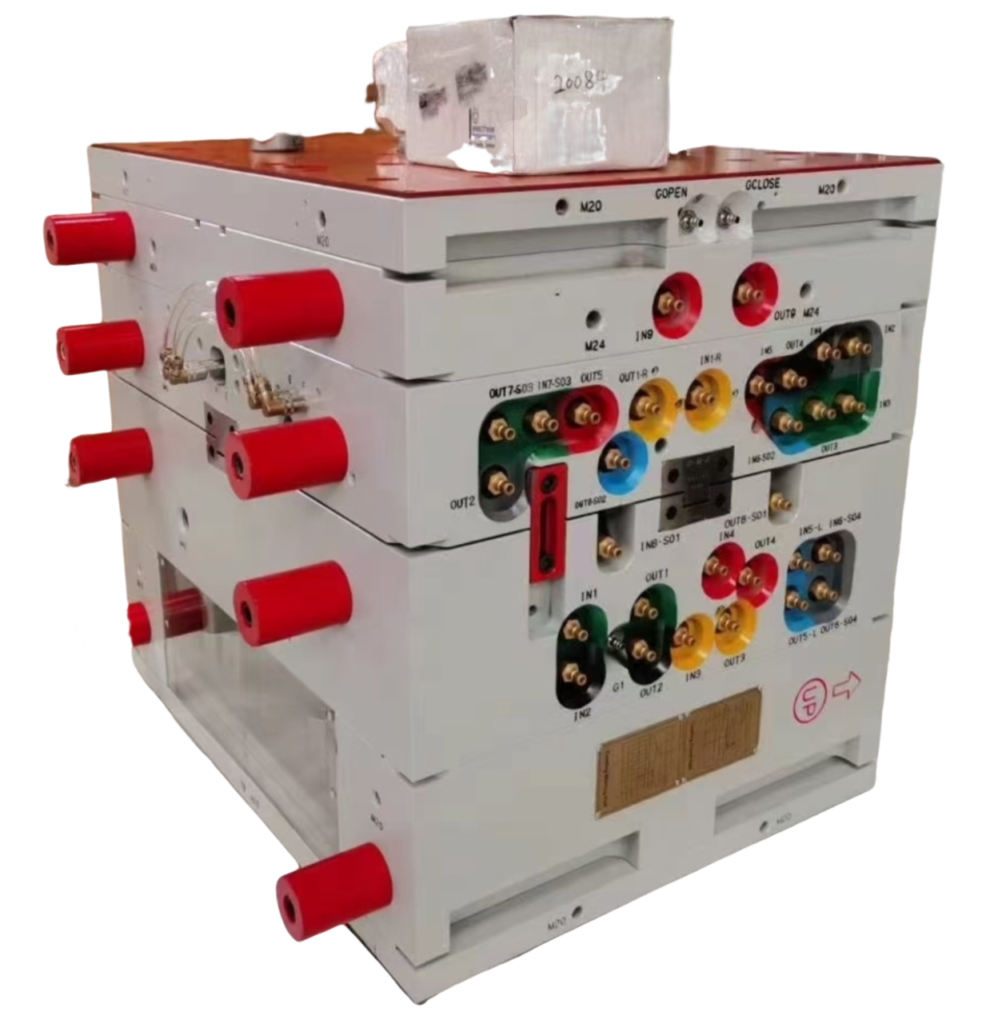
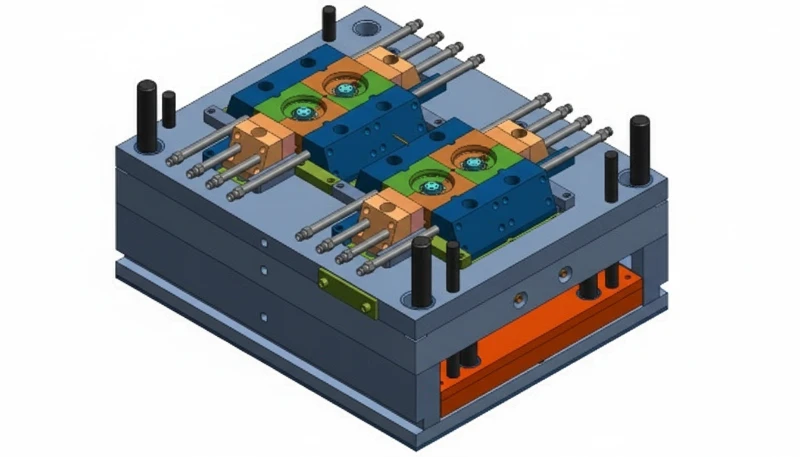
The process relies on three critical elements working in concert: the enjeksiyon kalıbı itself, the molding machine, and the process parameters. The mold defines the geometry, surface finish, and in many cases the structural integrity of the final part. The machine provides the clamping force to keep the mold closed under injection pressures that can reach 30,000 psi, while precisely controlling the melt temperature and injection speed. Process parameters — hold pressure, cooling time, injection velocity profile — separate good parts from scrap. Getting any one of these three elements wrong means dimensional issues, sink marks, warpage, or short shots. In our experience, roughly 70 percent of molding problems trace back to the mold design, not the machine settings.
That is why mold design review (DFM analysis) is the single most valuable step in any injection molding project.
With over 20 years of injection molding experience in our Shanghai factory, we’ve seen firsthand how proper process optimization eliminates the most common part defects.
How Does the Plastic Injection Molding Process Work?
The injection molding process works through a precise four-step cycle: first, plastic pellets are heated and melted in a barrel by a rotating screw. Second, the molten plastic is injected under high pressure into a closed mold cavity. Third, the material is held under pressure during packing to compensate for shrinkage as it cools. Fourth, once solidified, the mold opens and ejector pins push the part out. A typical cycle takes just 10 to 60 seconds, meaning a single machine with a 4-cavity mold can produce over 100,000 parts per day at full utilization.
The devil is in the details when it comes to process control. Melt temperature affects flow characteristics — too hot and you get flash and extended cooling times, too cold and you get short shots and high residual stress. Injection speed determines how well the material fills thin-wall sections, and it is not a single setting: modern machines use velocity profiles that ramp up for thick sections and slow down near the end of fill to prevent overpacking. Holding pressure and time control dimensional stability and sink mark prevention. Get the packing phase wrong, and you will see dimensional variation part-to-part that pushes your Tolerance2 out of spec.
Cooling time is typically the longest portion of the cycle, and it is the one most manufacturers want to reduce. Conformal cooling channels in the mold — a technique made practical by metal 3D printing — can cut cooling time by 30 to 50 percent compared to traditional drilled channels. For buyers, understanding these variables matters because they directly impact part quality, lead times, and ultimately your per-part cost. A molder who understands process optimization will deliver better parts faster and cheaper than one who just dials in settings by feel.
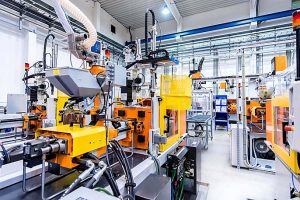
Our Shanghai facility operates 47 injection molding machines ranging from 90T to 1850T, giving us the flexibility to produce everything from micro connectors to large automotive panels.
What Are the Key Advantages of Plastic Injection Molding?
The key advantages of plastic injection molding are the main categories or options explained in this section. The key advantages of injection molding are high precision (tolerances to ±0.001 inches), fast cycle times (10 to 60 seconds), near-zero material waste (under 5 percent), excellent surface finish straight from the mold, and scalability from 500 to millions of units at low per-part cost. These benefits make it the dominant method for manufacturing plastic parts at production volume.
| Advantage | Typical Metric | Impact |
|---|---|---|
| Doğruluk | ±0.001 in | Medical and electronics |
| Çevrim süresi3 | 10–60 sec | 100K+ parts/month |
| Waste | <5% | Reusable regrind |
| Labor | Near-zero | Automated process |
| Finish | Class A | No secondary work |
Precision and Speed
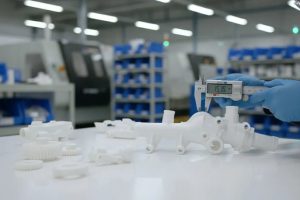
Let us dive deeper into the precision aspect. Injection molding achieves dimensional tolerances³ that rival CNC machining for many geometries — typically plus or minus 0.005 inches for standard production, and down to plus or minus 0.001 inches with precision molds. But here is what the spec sheets will not tell you: the real advantage is repeatability. Once a mold is dialed in, parts 1 and 100,000 are dimensionally identical. That consistency is critical for industries like medical devices, where a 0.1 mm variance could mean the difference between a part that fits an assembly and one that causes a field failure. Speed is another major advantage.
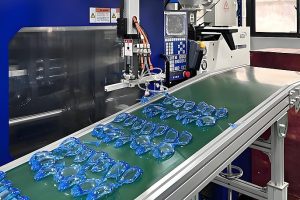
A single injection molding machine can produce hundreds of parts per hour with minimal human intervention. Compare that to CNC machining, where each part requires multiple setups and tool changes. The labor cost per part approaches zero once the process is running. Material efficiency is also noteworthy. Injection molding generates less than 5 percent waste on average, and most of that waste — runners and sprues — can be reground and reused in non-critical applications. Compare that to CNC machining, where material removal rates of 60 to 80 percent are common, and the cost advantage becomes clear, especially with expensive engineering resins.
“Injection molding can produce parts with tolerances as tight as ±0.001 inches (±0.025 mm).”Doğru
With proper mold design and process control, injection molding consistently achieves micron-level precision that rivals CNC machining.
“Injection molding is only cost-effective for runs of over 100,000 units.”Yanlış
Thanks to aluminum tooling and rapid mold techniques, injection molding can be economical at 500–1,000 units depending on part complexity.
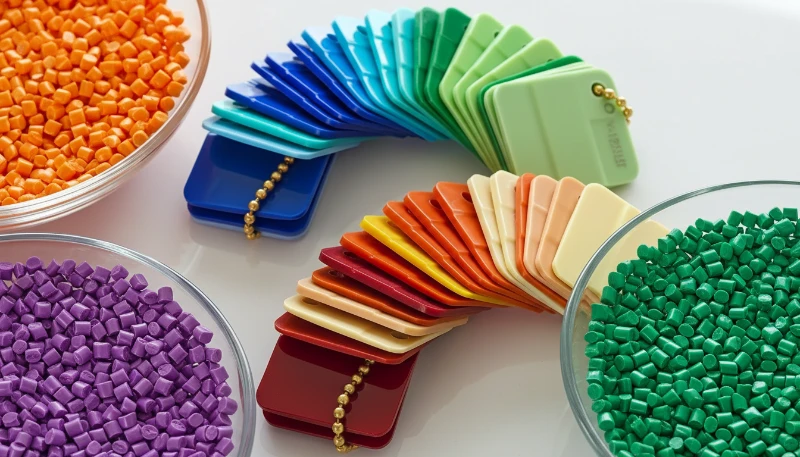
The design flexibility of injection molding opens up possibilities that other processes simply cannot match. You can mold threads, living hinges, snap fits, and undercuts directly into the part, eliminating secondary assembly operations. Multi-shot molding⁴ allows you to combine hard and soft materials in a single cycle — think of a toothbrush with a rigid core and a soft grip, made in one shot. Color matching is virtually unlimited: you can specify any Pantone color, and with proper pigment formulation, the molded part matches the target consistently across millions of units.
Surface finish options range from high-gloss (SPI A-1) to textured (SPI D-3), and the finish is built into the mold, meaning every single part has the same appearance without secondary processing. In-mold labeling, insert molding, and overmolding further expand what you can achieve in a single manufacturing step. For product designers, this means fewer parts in the assembly, fewer suppliers to manage, and faster time to market.
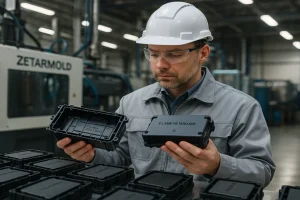
ZetarMold has experience with 400+ plastic materials, and material selection remains the single biggest lever for part quality. We have processed everything from commodity polypropylene to medical-grade PEEK, and each material brings its own processing window and design considerations.
What Materials Can Be Used in Injection Molding?
Injection molding accommodates an extensive range of thermoplastic materials, with over 25,000 commercial grades available from suppliers worldwide. This material diversity is one of the process is greatest strengths. You can mold commodity plastics like polypropylene and polyethylene for packaging and consumer goods at under $2 per kilogram. Engineering plastics like nylon (PA6, PA66), polycarbonate (PC), and acetal (POM) offer mechanical and thermal performance suitable for demanding applications at $3 to $10 per kilogram. High-performance polymers like PEEK, PEI (Ultem), and PPSU serve aerospace, medical, and oil-and-gas applications where temperature resistance above 200 degrees Celsius or chemical inertness is required — these materials can cost $50 to $200 per kilogram, making material efficiency even more important.
Elastomers like TPE and TPU can be molded for soft-touch grips, seals, and wearable devices. The key insight for buyers: do not over-specify. We regularly see designers default to polycarbonate when polypropylene would meet all functional requirements at one-fifth the material cost.
Material selection drives part performance more than any other single decision in the development process. Commodity plastics work well for housings, containers, and non-structural components. Engineering plastics step up when you need strength, stiffness, heat resistance, or chemical resistance. The difference between PA6 and PA66, for instance, is subtle on paper — PA66 has slightly higher temperature resistance and better mechanical properties — but it can determine whether a part survives in an under-hood automotive application. Filled and reinforced grades add another dimension: glass-filled nylon (PA66-GF30) is nearly three times stiffer than unfilled nylon, but it is also more abrasive to molds and anisotropic in shrinkage, which your mold designer needs to account for. Regulatory requirements further narrow the field.
Medical parts may need USP Class VI or ISO 10993 biocompatibility. Food-contact applications require FDA-compliant grades. UL94 flammability ratings dictate material choices for electrical enclosures. Working with a supplier who has experience across 400-plus materials saves significant trial and error in this selection process.
How Does Injection Molding Compare to Other Manufacturing Methods?
Injection molding is more competitive than other manufacturing methods when the cost, lead time, and quality tradeoffs below match your program needs. When evaluating manufacturing methods for plastic parts, injection molding consistently outperforms alternatives like CNC machining and 3D printing at production volumes above 500 units. The initial tooling investment is higher, but the per-part economics are dramatically better. The table below provides a direct comparison across the key factors that drive manufacturing decisions: cost, precision, speed, material range, and surface quality. Understanding these tradeoffs helps you select the right process for your specific project requirements and volume targets.
| Faktör | Enjeksiyon Kalıplama | CNC İşleme | 3D Baskı |
|---|---|---|---|
| Per-part cost (1K+ qty) | $0.10–$5.00 | $5–$50+ | $2–$30+ |
| Tolerance | ±0.001 in | ±0.0005 in | ±0.005–0.020 in |
| Çevrim süresi | 10–60 sec | 10–60 min | 30 min–12 hrs |
| Material range | 25,000+ grades | Metals & some plastics | Limited polymers |
| Surface finish | Excellent (as-molded) | Mükemmel | Layer lines visible |
“Injection molding can produce multi-material parts in a single cycle using multi-shot molding.”Doğru
Two-shot (2K) and three-shot molding combine different materials or colors in one automated cycle, eliminating secondary assembly.
“Injection molded parts always need significant post-processing after ejection.”Yanlış
Most injection molded parts are net-shape — they come off the mold ready to use, with gate marks being the only visible evidence of the process.
The breakeven analysis typically favors injection molding once quantities exceed 500 to 1,000 units, depending on part complexity. For a simple bracket that costs $20 to CNC machine, a $5,000 mold starts paying for itself at 250 parts. For a complex multi-cavity mold at $50,000, the breakeven might be 2,000 to 5,000 parts. At 10,000 units, injection molding is almost always the lowest-cost option. At 100,000 or more, the per-part cost advantage is overwhelming — often 10 to 50 times cheaper than machining. Where injection molding falls short is in the upfront timeline and investment. If you need 50 parts next week, 3D printing or CNC is your only realistic option.
If you need 50,000 parts per month for the next three years, injection molding is not just the best choice, it is the only choice that makes financial sense. For buyers, the critical question is: what is your total volume over the product lifetime? That number determines which process wins on economics.
Our in-house mold manufacturing facility operates under ISO 9001, ISO 13485, ISO 14001, and ISO 45001 systems, which means tighter tolerances and faster tooling iterations.
Sıkça Sorulan Sorular
What is the main advantage of plastic injection molding?
The main advantage of plastic injection molding is its ability to produce high-precision, complex parts at extremely low per-unit costs once the mold is made. Cycle times of 10 to 60 seconds allow a single machine to produce thousands of parts per day with consistent quality. For buyers, this means you get repeatable dimensions, excellent surface finish, and material flexibility — all without secondary machining. At production volumes above 1,000 units, no other plastic manufacturing method comes close on cost-per-part.
Is plastic injection molding suitable for small production runs?
Yes, injection molding can be cost-effective for runs as low as 500 to 1,000 units when you use aluminum tooling instead of hardened steel molds. Aluminum molds cost significantly less and can be produced in 1 to 2 weeks compared to 4 to 8 weeks for steel. While aluminum tooling has a shorter lifespan, typically 1,000 to 10,000 shots depending on material and complexity, it provides an excellent bridge for prototype-to-production runs or low-volume specialty parts. For under 100 parts, 3D printing may be more economical.
How accurate is plastic injection molding?
Injection molding typically achieves tolerances of plus or minus 0.005 inches (0.127 mm) for standard production, and can reach plus or minus 0.001 inches (0.025 mm) with precision molds and tight process control. Shrink rates vary by material — crystalline polymers like POM shrink 2 to 3 percent, while amorphous materials like PC shrink 0.5 to 0.8 percent. For buyers specifying critical dimensions, discuss mold compensation with your molder early in the design phase. In our facility, we hold critical dimensions within 0.02 mm on medical components.
What types of plastics can be injection molded?
The timeline from finalized CAD to first article inspection typically spans 4 to 12 weeks for steel production tooling, or 1 to 3 weeks for aluminum prototype molds. Mold design and manufacturing consume 60 to 70 percent of this timeline. T1 sampling (first shots) reveals fit and function, with 1 to 3 rounds of mold modifications common before approval. Once the mold is approved, production ramp-up takes days, not weeks. Working with a supplier that has in-house tooling, like our Shanghai facility with ISO 9001 certification, can compress the mold-build phase by 30 to 40 percent, getting you to production significantly faster than outsourcing tooling to a third party.
How much does an injection mold cost?
Injection mold costs range from 1,000 to over 100,000 USD depending on part complexity, number of cavities, material, and expected production volume. A simple single-cavity aluminum mold for prototyping might cost 1,000 to 3,000 dollars, while a multi-cavity hardened steel production mold for an automotive component can exceed 80,000 dollars. Factors that drive cost up include side-actions (lifters, sliders), tight tolerances, polished surface requirements, and multi-material (2K) tooling. Request a DFM review early — design changes before steel-cutting save significant money.
How long does injection molding take from design to production?
The timeline from finalized CAD to first article inspection typically spans 4 to 12 weeks for steel production tooling, or 1 to 3 weeks for aluminum prototype molds. Mold design and manufacturing consume 60 to 70 percent of this timeline. T1 sampling (first shots) reveals fit and function, with 1 to 3 rounds of mold modifications common before approval. Once the mold is approved, production ramp-up takes days, not weeks. Working with a supplier that has in-house tooling, like our Shanghai facility, can compress the mold-build phase by 30 to 40 percent.
Özet
Plastic injection molding delivers unmatched benefits for manufacturers seeking precision, efficiency, and scalability. From tolerances of plus or minus 0.001 inches to cycle times under 10 seconds, from over 25,000 material options to near-zero per-part labor costs, no other plastic manufacturing method matches its combination of speed, accuracy, and cost-effectiveness at volume. Whether you are producing micro-molded medical components or large automotive panels, the fundamentals remain the same: invest in quality tooling, select the right material, and work with a molder who understands process optimization. Ready to start your injection molding project? ZetarMold offers free DFM reviews, competitive tooling quotes, and full production services from our ISO-certified Shanghai facility.
With 47 machines ranging from 90T to 1850T and experience across 400-plus materials, we can handle everything from prototype bridge tooling to million-unit production runs. Get a Free Quote today and let our engineering team review your design for manufacturability. For more information, see our complete guide to injection molding.
-
Injection molding: Injection molding is a manufacturing process in which molten material is injected into a mold cavity, where it cools and solidifies into the final part shape. ↩
-
Tolerance: Tolerance refers to is the permissible variation in the dimensions of a manufactured part, typically expressed as a plus or minus value from the nominal dimension. ↩
-
Cycle time: Cycle time in injection molding refers to the total time required to complete one full molding cycle, from mold closing to part ejection. ↩




 EN
EN  ES
ES  FR
FR  DE
DE  PT
PT  AR
AR  RU
RU  JA
JA  KO
KO  IT
IT  NL
NL  TR
TR  PL
PL