コンテンツへスキップ
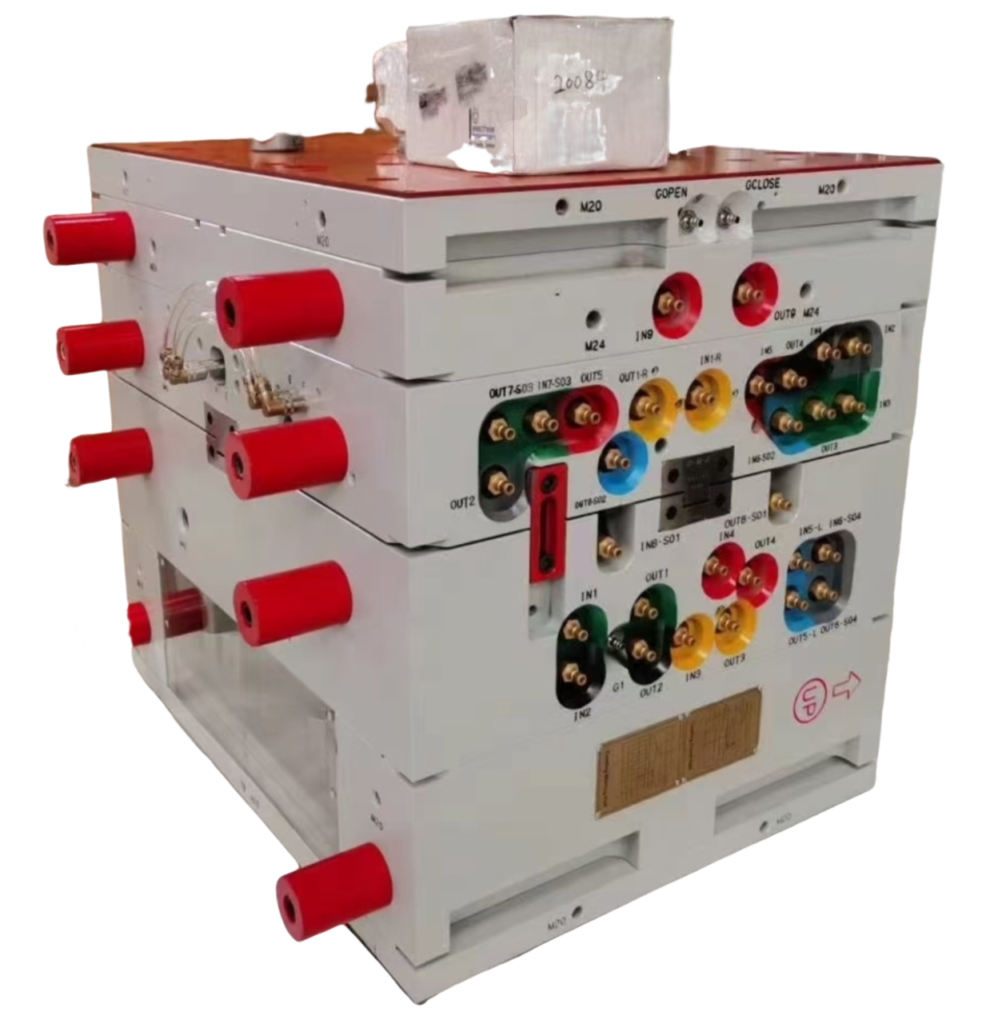
Plastic injection molding stands as one of the most versatile and cost-effective manufacturing processes in modern industry. Whether you are producing medical devices, automotive components, or consumer electronics, 射出成形1 offers unmatched precision, speed, and scalability. After two decades working with this process, I have seen countless manufacturers choose injection molding for good reason: it delivers consistent quality at volumes that make financial sense. This guide breaks down the real benefits — not marketing fluff — so you can decide if it is the right fit for your next project.
- Injection molding achieves tolerances as tight as ±0.001 inches (±0.025 mm)
- Cycle times range from 10 to 60 seconds per shot
- Over 25,000 thermoplastic grades are available
- Material waste is below 5 percent with reusable regrind
- Cost per part drops dramatically above 1,000 units

プラスチック射出成形とは?
Plastic injection molding is defined by the function, constraints, and tradeoffs explained in this section. If you are comparing vendors or planning procurement, our injection molding supplier sourcing guide covers RFQ prep, qualification, and commercial risk checks.
Plastic injection molding¹ is a manufacturing process where molten plastic material is injected under high pressure into a precisely machined mold cavity. Once the plastic cools and solidifies, the mold opens and the finished part is ejected. That is the simple version. In practice, it is a tightly controlled process involving temperature management, pressure profiling, and timing optimization that directly affects part quality. The process works with virtually any thermoplastic — from commodity polypropylene to high-performance PEEK — making it one of the most flexible manufacturing methods available. A typical injection molding cycle² takes between 10 and 60 seconds, which means a single machine can produce thousands of identical parts per day.
The key constraint is the upfront investment in tooling: a production mold can cost anywhere from $5,000 to over $100,000 depending on complexity. But once that mold is built, the per-part cost drops dramatically, which is why injection molding dominates high-volume plastic manufacturing across every industry from medical devices to automotive.
The process relies on three critical elements working in concert: the 射出成形金型 itself, the molding machine, and the process parameters. The mold defines the geometry, surface finish, and in many cases the structural integrity of the final part. The machine provides the clamping force to keep the mold closed under injection pressures that can reach 30,000 psi, while precisely controlling the melt temperature and injection speed. Process parameters — hold pressure, cooling time, injection velocity profile — separate good parts from scrap. Getting any one of these three elements wrong means dimensional issues, sink marks, warpage, or short shots. In our experience, roughly 70 percent of molding problems trace back to the mold design, not the machine settings.
That is why mold design review (DFM analysis) is the single most valuable step in any injection molding project.
With over 20 years of injection molding experience in our Shanghai factory, we’ve seen firsthand how proper process optimization eliminates the most common part defects.
How Does the Plastic Injection Molding Process Work?
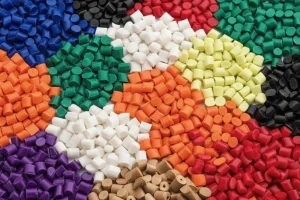
The injection molding process works through a precise four-step cycle: first, plastic pellets are heated and melted in a barrel by a rotating screw. Second, the molten plastic is injected under high pressure into a closed mold cavity. Third, the material is held under pressure during packing to compensate for shrinkage as it cools. Fourth, once solidified, the mold opens and ejector pins push the part out. A typical cycle takes just 10 to 60 seconds, meaning a single machine with a 4-cavity mold can produce over 100,000 parts per day at full utilization.
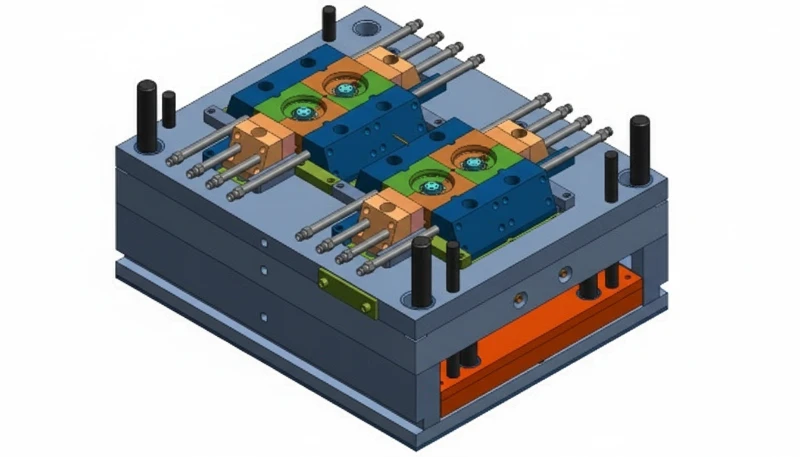
The devil is in the details when it comes to process control. Melt temperature affects flow characteristics — too hot and you get flash and extended cooling times, too cold and you get short shots and high residual stress. Injection speed determines how well the material fills thin-wall sections, and it is not a single setting: modern machines use velocity profiles that ramp up for thick sections and slow down near the end of fill to prevent overpacking. Holding pressure and time control dimensional stability and sink mark prevention. Get the packing phase wrong, and you will see dimensional variation part-to-part that pushes your Tolerance2 out of spec.
Cooling time is typically the longest portion of the cycle, and it is the one most manufacturers want to reduce. Conformal cooling channels in the mold — a technique made practical by metal 3D printing — can cut cooling time by 30 to 50 percent compared to traditional drilled channels. For buyers, understanding these variables matters because they directly impact part quality, lead times, and ultimately your per-part cost. A molder who understands process optimization will deliver better parts faster and cheaper than one who just dials in settings by feel.
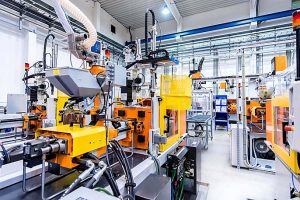
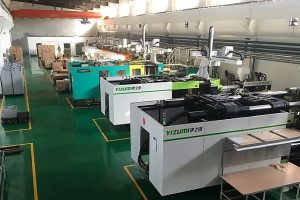
Our Shanghai facility operates 47 injection molding machines ranging from 90T to 1850T, giving us the flexibility to produce everything from micro connectors to large automotive panels.
What Are the Key Advantages of Plastic Injection Molding?
The key advantages of plastic injection molding are the main categories or options explained in this section. The key advantages of injection molding are high precision (tolerances to ±0.001 inches), fast cycle times (10 to 60 seconds), near-zero material waste (under 5 percent), excellent surface finish straight from the mold, and scalability from 500 to millions of units at low per-part cost. These benefits make it the dominant method for manufacturing plastic parts at production volume.
| Advantage | Typical Metric | Impact |
|---|---|---|
| 精度 | ±0.001 in | Medical and electronics |
| サイクルタイム3 | 10–60 sec | 100K+ parts/month |
| 廃棄物 | <5% | Reusable regrind |
| Labor | Near-zero | Automated process |
| Finish | Class A | No secondary work |
Precision and Speed
Let us dive deeper into the precision aspect. Injection molding achieves dimensional tolerances³ that rival CNC machining for many geometries — typically plus or minus 0.005 inches for standard production, and down to plus or minus 0.001 inches with precision molds. But here is what the spec sheets will not tell you: the real advantage is repeatability. Once a mold is dialed in, parts 1 and 100,000 are dimensionally identical. That consistency is critical for industries like medical devices, where a 0.1 mm variance could mean the difference between a part that fits an assembly and one that causes a field failure. Speed is another major advantage.
A single injection molding machine can produce hundreds of parts per hour with minimal human intervention. Compare that to CNC machining, where each part requires multiple setups and tool changes. The labor cost per part approaches zero once the process is running. Material efficiency is also noteworthy. Injection molding generates less than 5 percent waste on average, and most of that waste — runners and sprues — can be reground and reused in non-critical applications. Compare that to CNC machining, where material removal rates of 60 to 80 percent are common, and the cost advantage becomes clear, especially with expensive engineering resins.
“Injection molding can produce parts with tolerances as tight as ±0.001 inches (±0.025 mm).”真
With proper mold design and process control, injection molding consistently achieves micron-level precision that rivals CNC machining.
“Injection molding is only cost-effective for runs of over 100,000 units.”偽
Thanks to aluminum tooling and rapid mold techniques, injection molding can be economical at 500–1,000 units depending on part complexity.
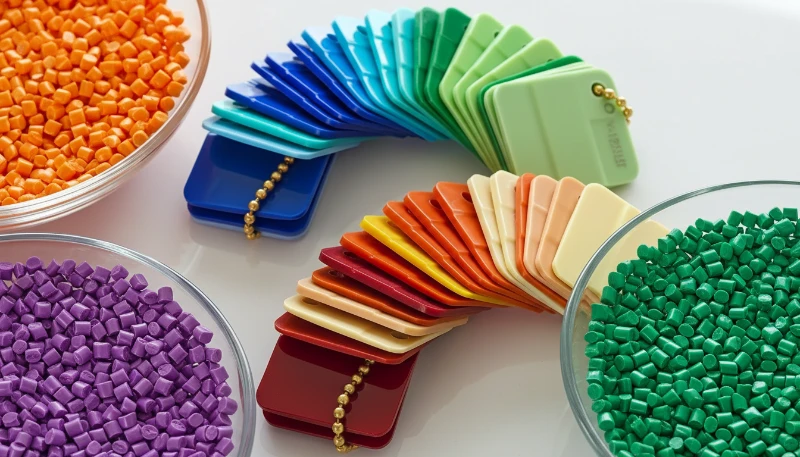
The design flexibility of injection molding opens up possibilities that other processes simply cannot match. You can mold threads, living hinges, snap fits, and undercuts directly into the part, eliminating secondary assembly operations. Multi-shot molding⁴ allows you to combine hard and soft materials in a single cycle — think of a toothbrush with a rigid core and a soft grip, made in one shot. Color matching is virtually unlimited: you can specify any Pantone color, and with proper pigment formulation, the molded part matches the target consistently across millions of units.
Surface finish options range from high-gloss (SPI A-1) to textured (SPI D-3), and the finish is built into the mold, meaning every single part has the same appearance without secondary processing. In-mold labeling, insert molding, and overmolding further expand what you can achieve in a single manufacturing step. For product designers, this means fewer parts in the assembly, fewer suppliers to manage, and faster time to market.
ZetarMold has experience with 400+ plastic materials, and material selection remains the single biggest lever for part quality. We have processed everything from commodity polypropylene to medical-grade PEEK, and each material brings its own processing window and design considerations.
射出成形にはどのような材料が使用できますか?
Injection molding accommodates an extensive range of thermoplastic materials, with over 25,000 commercial grades available from suppliers worldwide. This material diversity is one of the process is greatest strengths. You can mold commodity plastics like polypropylene and polyethylene for packaging and consumer goods at under $2 per kilogram. Engineering plastics like nylon (PA6, PA66), polycarbonate (PC), and acetal (POM) offer mechanical and thermal performance suitable for demanding applications at $3 to $10 per kilogram. High-performance polymers like PEEK, PEI (Ultem), and PPSU serve aerospace, medical, and oil-and-gas applications where temperature resistance above 200 degrees Celsius or chemical inertness is required — these materials can cost $50 to $200 per kilogram, making material efficiency even more important.
Elastomers like TPE and TPU can be molded for soft-touch grips, seals, and wearable devices. The key insight for buyers: do not over-specify. We regularly see designers default to polycarbonate when polypropylene would meet all functional requirements at one-fifth the material cost.
Material selection drives part performance more than any other single decision in the development process. Commodity plastics work well for housings, containers, and non-structural components. Engineering plastics step up when you need strength, stiffness, heat resistance, or chemical resistance. The difference between PA6 and PA66, for instance, is subtle on paper — PA66 has slightly higher temperature resistance and better mechanical properties — but it can determine whether a part survives in an under-hood automotive application. Filled and reinforced grades add another dimension: glass-filled nylon (PA66-GF30) is nearly three times stiffer than unfilled nylon, but it is also more abrasive to molds and anisotropic in shrinkage, which your mold designer needs to account for. Regulatory requirements further narrow the field.
Medical parts may need USP Class VI or ISO 10993 biocompatibility. Food-contact applications require FDA-compliant grades. UL94 flammability ratings dictate material choices for electrical enclosures. Working with a supplier who has experience across 400-plus materials saves significant trial and error in this selection process.
射出成形は他の製造方法と比較してどうですか?
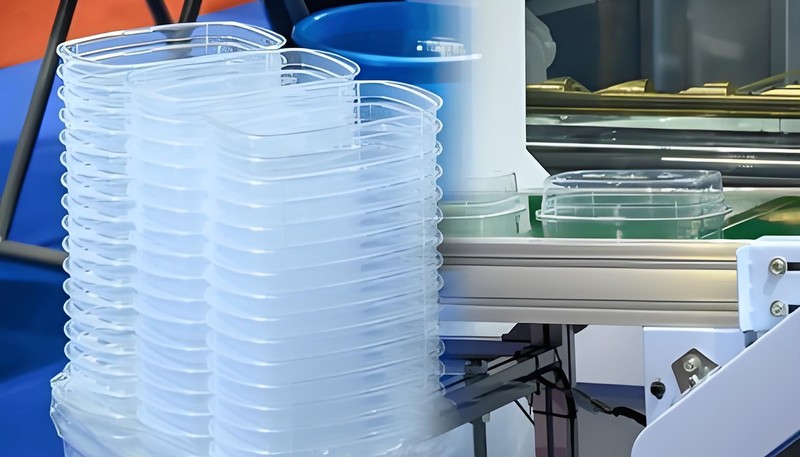
射出成形は、以下のコスト、リードタイム、品質のトレードオフがプログラムの要件に合致する場合、他の製造方法よりも競争力があります。プラスチック部品の製造方法を評価する際、射出成形は500個以上の生産量ではCNC加工や3Dプリントなどの代替方法を一貫して上回ります。初期の金型投資は高くなりますが、部品単価の経済性は劇的に優れています。以下の表は、製造判断を左右する主要要素—コスト、精度、速度、材料範囲、表面品質—について直接比較を示しています。これらのトレードオフを理解することで、特定のプロジェクト要件と生産目標に適したプロセスを選択できます。
| ファクター | 射出成形 | CNC加工 | 3Dプリンティング |
|---|---|---|---|
| 単体コスト(1,000個以上) | $0.10–$5.00 | $5–$50+ | $2–$30+ |
| Tolerance | ±0.001 in | ±0.0005インチ | ±0.005–0.020インチ |
| サイクルタイム | 10–60 sec | 10~60分 | 30分~12時間 |
| Material range | 25,000種以上のグレード | 金属及び一部のプラスチック | 対応ポリマーが限られる |
| Surface finish | 優良(成形時状態) | 素晴らしい | 層線が目視可能 |
「射出成形では、マルチショット成形を用いて1サイクルで多材料部品を製造できます。」真
2色(2K)成形および3色成形は、異なる材料や色を1回の自動サイクルで組み合わせ、二次組立を不要にします。
「射出成形部品は常に、取り出し後に大幅な後処理が必要である。」偽
ほとんどの射出成形部品はネットシェープです—金型から取り出した時点で使用可能であり、ゲート跡が唯一目に見える工程の痕跡となります。
損益分岐点分析では、通常、部品の複雑さに応じて数量が500~1,000個を超えると射出成形が有利になります。CNC加工で$20かかるシンプルなブラケットの場合、$5,000の金型は250個で元が取れ始めます。$50,000の複雑な多キャビティ金型の場合、損益分岐点は2,000~5,000個になる可能性があります。10,000個では、射出成形がほぼ常に最も低コストな選択肢です。100,000個以上では、部品単価の優位性は圧倒的で、しばしば加工より10~50倍安くなります。射出成形が劣るのは、初期のタイムラインと投資です。来週50個が必要な場合は、3DプリントまたはCNCが唯一現実的な選択肢です。
今後3年間にわたって月間50,000個の部品が必要な場合、射出成形は単に最良の選択肢というだけでなく、財務的に意味を成す唯一の選択肢です。購買担当者にとって重要な問いは、製品ライフサイクル全体での総生産数はいくらか?という点です。その数字が、経済性においてどの工程が優位かを決定します。
当社の社内金型製造施設はISO 9001、ISO 13485、ISO 14001、ISO 45001システムの下で運営されており、より厳しい公差と迅速な金型反復が可能です。
よくある質問
プラスチック射出成形の主な利点は何ですか?
プラスチック射出成形の主な利点は、金型が完成した後、極めて低い単価で高精度かつ複雑な部品を生産できる能力です。10~60秒のサイクルタイムにより、1台の機械で毎日数千個の部品を一貫した品質で生産できます。バイヤーにとってこれは、二次加工なしで再現性のある寸法、優れた表面仕上げ、材料の柔軟性が得られることを意味します。1,000個以上の生産量では、他のプラスチック製造方法は部品単価で比較になりません。
プラスチック射出成形は少量生産に適していますか?
はい、硬化鋼金型の代わりにアルミニウム金型を使用すれば、500~1,000個程度の生産量でも射出成形は費用対効果が高くなります。アルミニウム金型は大幅にコストが低く、鋼材の4~8週間に対し1~2週間で製造できます。アルミニウム金型は寿命が短く、通常は材料と複雑さに応じて1,000~10,000ショットですが、試作から生産への移行や少量の特殊部品には優れた橋渡しとなります。100個未満の場合は、3Dプリントの方が経済的かもしれません。
プラスチック射出成形の精度はどの程度ですか?
射出成形では、標準的な生産では通常±0.005インチ(0.127 mm)の公差を達成し、精密金型と厳格な工程管理により±0.001インチ(0.025 mm)に達することが可能です。収縮率は材料によって異なり、POMのような結晶性ポリマーは2~3%収縮する一方、PCのような非晶質材料は0.5~0.8%収縮します。重要な寸法を指定するバイヤーは、設計段階の早い段階で金型補正について成形業者と協議してください。当社の施設では、医療部品の重要な寸法を0.02 mm以内に維持しています。
どのような種類のプラスチックが射出成形できますか?
最終化されたCADから初品検査までのタイムラインは、鋼製生産金型の場合通常4~12週間、アルミプロトタイプ金型の場合は1~3週間かかります。金型設計と製造はこのタイムラインの60~70%を占めます。T1サンプリング(初回成形)で適合性と機能性が確認され、承認前に1~3回の金型修正が一般的です。金型が承認されると、生産立ち上げには数週間ではなく数日しかかかりません。当社の上海施設(ISO 9001認証取得)のように社内に金型製造設備を持つサプライヤーと協力することで、金型製作フェーズを30~40%短縮し、第三者への金型外注よりも大幅に早く生産に移行できます。
How much does an injection mold cost?
射出金型のコストは、部品の複雑さ、キャビティ数、材料、および予想生産量に応じて、1,000米ドルから100,000米ドル以上まで幅があります。プロトタイプ用のシンプルな単一キャビティアルミ金型は1,000~3,000ドル程度ですが、自動車部品用の多キャビティ焼入れ鋼製生産金型は80,000ドルを超える場合があります。コストを押し上げる要因には、サイドアクション(リフター、スライダー)、厳しい公差、研磨表面仕様、多材料(2K)金型などがあります。早期にDFMレビューを依頼してください—鋼材切削前の設計変更は大幅なコスト削減につながります。
設計から生産までの射出成形にはどのくらいの時間がかかりますか?
最終化されたCADから初品検査までのタイムラインは、鋼製生産用金型の場合は通常4~12週間、アルミニウム試作金型の場合は1~3週間です。金型設計と製造がこのタイムラインの60~70%を占めます。T1サンプリング(初回成形)で組み合わせと機能が確認され、承認前に1~3回の金型修正が行われるのが一般的です。金型が承認されれば、生産立ち上げは数週間ではなく数日で完了します。当社の上海施設のように社内金型設備を持つサプライヤーと協力することで、金型製作期間を30~40%短縮できます。
概要
プラスチック射出成形は、精密性、効率性、拡張性を求める製造業者に比類ない利点を提供します。±0.001インチの公差から10秒未満のサイクルタイム、25,000種類以上の材料オプションからほぼゼロの単体人件費まで、大量生産における速度、精度、コスト効率の組み合わせにおいて、他のプラスチック製造方法はこれを凌駕しません。マイクロ成形医療部品であれ大型自動車パネルであれ、基本原則は同じです:品質の高い金型に投資し、適切な材料を選択し、プロセス最適化を理解する成形業者と協力すること。射出成形プロジェクトを開始する準備はできていますか?ZetarMoldでは、無料のDFMレビュー、競争力のある金型見積もり、ISO認証を取得した上海施設からの完全な生産サービスを提供しています。
90トンから1850トンまでの47台の成形機と400種類以上の材料にわたる経験により、試作ブリッジ金型から数百万単位の生産ロットまで、あらゆるニーズに対応できます。 今日すぐ無料見積もりを取得 当社のエンジニアリングチームに製造適正のための設計レビューを行わせてください。詳細については、 complete guide to injection molding.



 EN
EN  ES
ES  FR
FR  DE
DE  PT
PT  AR
AR  RU
RU  JA
JA  KO
KO  IT
IT  NL
NL  TR
TR  PL
PL