Injection Molding Supplier Logistics Planning: Incoterms, Packaging, and Shipment Timing

• ZetarMold Engineering Guide
• Plastic Injection Mold Manufacturing Since 2005
• Built by ZetarMold engineers for buyers comparing mold and molding solutions.

When you source injection molded parts from overseas, the price your supplier quotes is only half the story. The other half — how your parts get packed, shipped, and delivered — can add 15–40% to your landed cost if you get it wrong. Logistics planning for 射出成形 orders is not an afterthought. It is a core part of your supplier sourcing strategy, and it starts the moment you sign the purchase order. This guide walks you through the three pillars of supplier logistics planning: Incoterms (who pays for what), packaging (how your parts survive the journey), and shipment timing (when your parts actually arrive).

Whether you are buying a single prototype mold or running monthly production shipments, these are the decisions that separate a smooth supply chain from a costly mess.

要点
  • Incoterms define cost and risk responsibilities — choose DDP for full service or FOB for control
  • Packaging must match part geometry: anti-static bags, VCI paper, and custom inserts prevent transit damage
  • Sea freight takes 25–40 days; air freight is 3–7 days but 4–8x more expensive
  • Plan 2–4 weeks of buffer for customs clearance, documentation, and port congestion
  • A logistics-ready supplier provides real-time tracking, photos before shipment, and proper export paperwork

What Are Incoterms and Why Do They Matter in Injection Molding?

Incoterms are standardized trade rules that define who pays for shipping, insurance, and customs in cross-border transactions. Published by the International Chamber of Commerce (ICC1)[fn:1], they are essential for injection molding because they determine your landed cost and risk exposure. Most orders between Chinese suppliers and Western buyers use EXW, FOB2, CIF, or DDP, each shifting cost and risk differently between buyer and seller.

FOB[fn:2] is the most common term for injection molding shipments: the supplier delivers goods to the port and loads them on the vessel, then you take over. CIF adds insurance and freight to FOB, but the supplier controls the carrier choice.

For a broader look at 射出成形金型設計, our pillar guide covers tooling structure, thermal control, and manufacturability tradeoffs.

Under EXW (Ex Works), the buyer pays for all freight and handles all customs, with risk transferring at the factory gate — best for buyers with their own logistics network. Under CIF, the supplier pays freight but you handle customs, and risk still transfers on board. DDP (Delivered Duty Paid) puts everything on the supplier including customs clearance, with risk transferring at your door — ideal for small orders and first-time buyers. The key insight: cheaper Incoterms (EXW, FOB) give you more control but require more logistics expertise. Full-service Incoterms (DDP) cost more but reduce your operational burden.

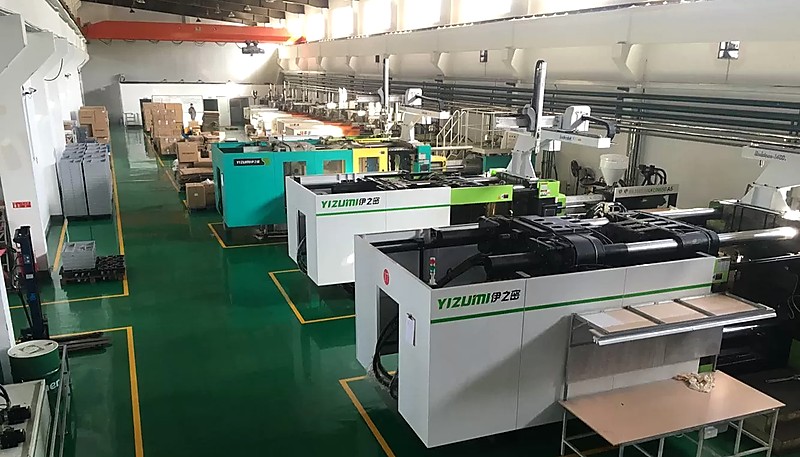
ZetarMold injection molding factory
Injection molding factory

For first-time buyers or small-volume orders, DDP often makes sense because the supplier already has established freight relationships and can negotiate better rates than you can.

🏭 ZetarMold Factory Insight
We have been shipping injection molded parts and molds worldwide since 2013, with discounted FedEx and DHL accounts for air and express shipments. For sea freight, we work with established freight forwarders who understand injection molded part handling requirements.

How Do You Choose the Right Incoterm for Molded Parts?

FOB is the best Incoterm for most injection molding orders. It balances cost control with manageable logistics responsibility, letting you choose carriers while the supplier handles port delivery.

For ongoing production runs exceeding ten thousand dollars per shipment, FOB or EXW lets you negotiate competitive rates with your own forwarder and consolidate shipments from multiple suppliers. Mold tooling shipments deserve special attention. A production mold can weigh 500 to 2,000 kg and requires a wooden crate, moisture protection, and shock indicators. Under FOB terms, you need to specify packaging requirements explicitly in your purchase order because the supplier default packaging may not meet your standards for an expensive tool. Under DDP, the supplier is incentivized to package properly because they bear the risk of damage during transit.

“FOB is the most commonly used Incoterm for injection molding shipments from China.”

FOB (Free On Board) is the default choice for most production orders. The supplier delivers to port, and the buyer controls freight from there.

“CIF is always cheaper than FOB because the supplier includes freight in the price.”

CIF may appear cheaper upfront, but the supplier marks up the freight cost and you lose carrier choice and rate negotiation leverage.

What Packaging Standards Protect Injection Molded Parts During Transit?

Injection molded parts are deceptively fragile during transit. A part that looks indestructible can warp, scratch, or collect static damage when packed improperly for a 30-day ocean journey. Proper packaging is not optional — it is a line item you should specify in your purchase order, not leave to chance. The right packaging strategy depends on part geometry, material, surface finish, and shipment mode. Inner packaging protects individual parts from cosmetic damage. For high-gloss or transparent parts like polycarbonate lenses, each part should be separated with tissue paper or PE film. For precision parts with tight tolerances, individual cavities in a custom-formed tray prevent contact and nesting.

Anti-static bags are essential for electronic housings and components with ESD-sensitive surfaces. Outer packaging provides structural protection during handling and stacking. Corrugated cartons rated for export shipping (double-wall or triple-wall) should be used for all ocean freight. Mold tooling requires wooden crates built to ISPM-153[fn:3] standards — this is a legal requirement, and non-compliant crates can be rejected at customs or quarantined for fumigation. Moisture protection is critical for both parts and molds. Silica gel desiccant packs should be included in every sealed bag. For mold shipments, VCI paper wrapped around the mold cavity surfaces prevents rust during ocean transit where humidity inside the container can reach 80 to 90 percent.

The key packaging materials for injection molded part shipments include: anti-static bags for ESD protection on electronic housings, PE film or tissue paper for surface scratch prevention on high-gloss and transparent parts, custom-formed trays for individual cavity separation on precision parts, VCI paper for corrosion inhibition on mold tooling, silica gel desiccant for moisture control in all ocean freight, double-wall corrugated cartons for structural protection in all export shipments, and ISPM-15[fn:3] compliant wooden crates for mold tooling and heavy parts.

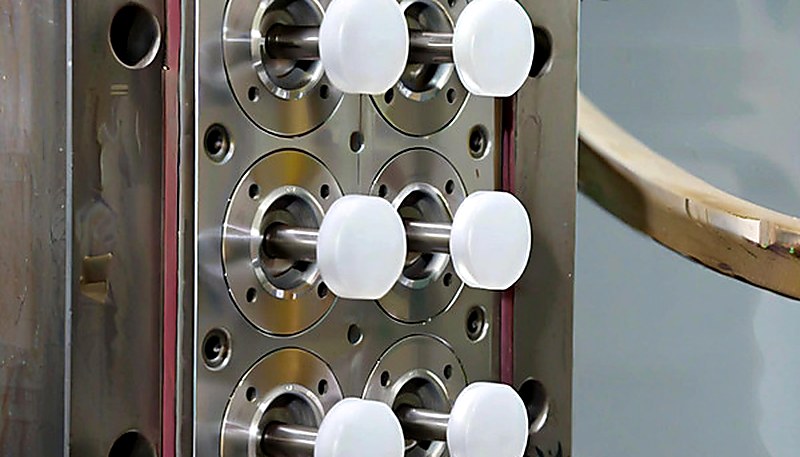
射出成形製品
射出成形製品

How Do You Plan Shipment Timing for Injection Molding Orders?

Shipment timing is the sum of three phases: production lead time, transit time, and clearance time. Add a two-week buffer to the total for reliable scheduling.

Sea freight from Shanghai or Shenzhen to the US West Coast takes 14 to 21 days; to the East Coast or Europe, expect 25 to 40 days. Air freight cuts this to 3 to 7 days but costs 4 to 8 times more per kilogram. Express courier (DHL, FedEx, UPS) is fastest at 2 to 5 days but is only economical for small packages under 50 kg. Clearance and final delivery add another 3 to 10 days on average. Customs clearance for properly documented shipments takes 1 to 3 days, but incomplete paperwork can cause delays of 1 to 3 weeks.

Factor in port congestion during peak season (August to October and January to February) which can add 5 to 15 days. The practical approach: for production orders, plan your total timeline as production lead time plus transit time plus clearance time plus a two-week buffer. For urgent prototype parts, use air freight or express courier and budget for the premium.

Sea freight FCL (full container load) takes 25–40 days at the lowest cost per kg, suited for large production orders over 15 CBM. Sea freight LCL (less than container load) takes 30–45 days at low cost, for small batches of 2–15 CBM. Air freight delivers in 3–7 days at medium-high cost, for urgent parts between 50 and 500 kg. Express courier delivers in 2–5 days at the highest cost per kg, suited only for samples and orders under 50 kg.

What Are Common Logistics Pitfalls When Sourcing from Overseas Suppliers?

The top pitfalls are missing packaging specs in the PO, skipping customs documentation, and underestimating peak season delays. Each adds weeks and extra costs.

Missing or incorrect HS codes, commercial invoices, or certificates of origin can delay clearance by days or weeks. Ask your supplier for a sample documentation package before your first shipment so you can verify it with your customs broker. Pitfall 3: Underestimating peak season delays. Ocean freight capacity tightens dramatically from August through October (pre-holiday rush) and January through February (Chinese New Year). During these periods, container availability drops, transit times increase, and freight rates spike 30 to 50 percent. If your project timeline hits peak season, book freight 4 to 6 weeks in advance instead of the usual 2 weeks. Pitfall 4: Consolidating without planning. If you buy from multiple suppliers, consolidating shipments into one container saves money.

But each supplier needs to deliver to the consolidation warehouse on time, and the warehouse needs to repack and load properly. One late supplier delays the entire container. Plan consolidation carefully and set clear delivery deadlines for each supplier.

“You should specify packaging requirements in your purchase order, not assume the supplier will pack properly.”

Suppliers default to cost-effective packaging. Explicit packaging requirements in the PO ensure your parts arrive undamaged.

“Express courier is the most cost-effective option for production orders over 100 kg.”

Express courier is only economical for packages under 50 kg. For production orders, sea freight or air freight is significantly cheaper per kilogram.

How Can You Optimize Freight Costs for Molded Components?

Freight cost optimization for injection molded parts is a game of density, timing, and volume. Plastic parts are relatively lightweight for their volume, which means you often hit the volumetric weight limit before the actual weight limit — and you pay for space you are not fully using. Strategy 1: Maximize container utilization. For sea freight, you pay per container (FCL) or per cubic meter (LCL). Nesting parts efficiently, using vacuum-sealed bags to reduce bulk, and stacking cartons to fill container height all reduce your cost per part. A 20-foot container holds about 25 to 28 CBM; a 40-foot container holds about 54 to 58 CBM. Strategy 2: Time your bookings. Freight rates fluctuate weekly.

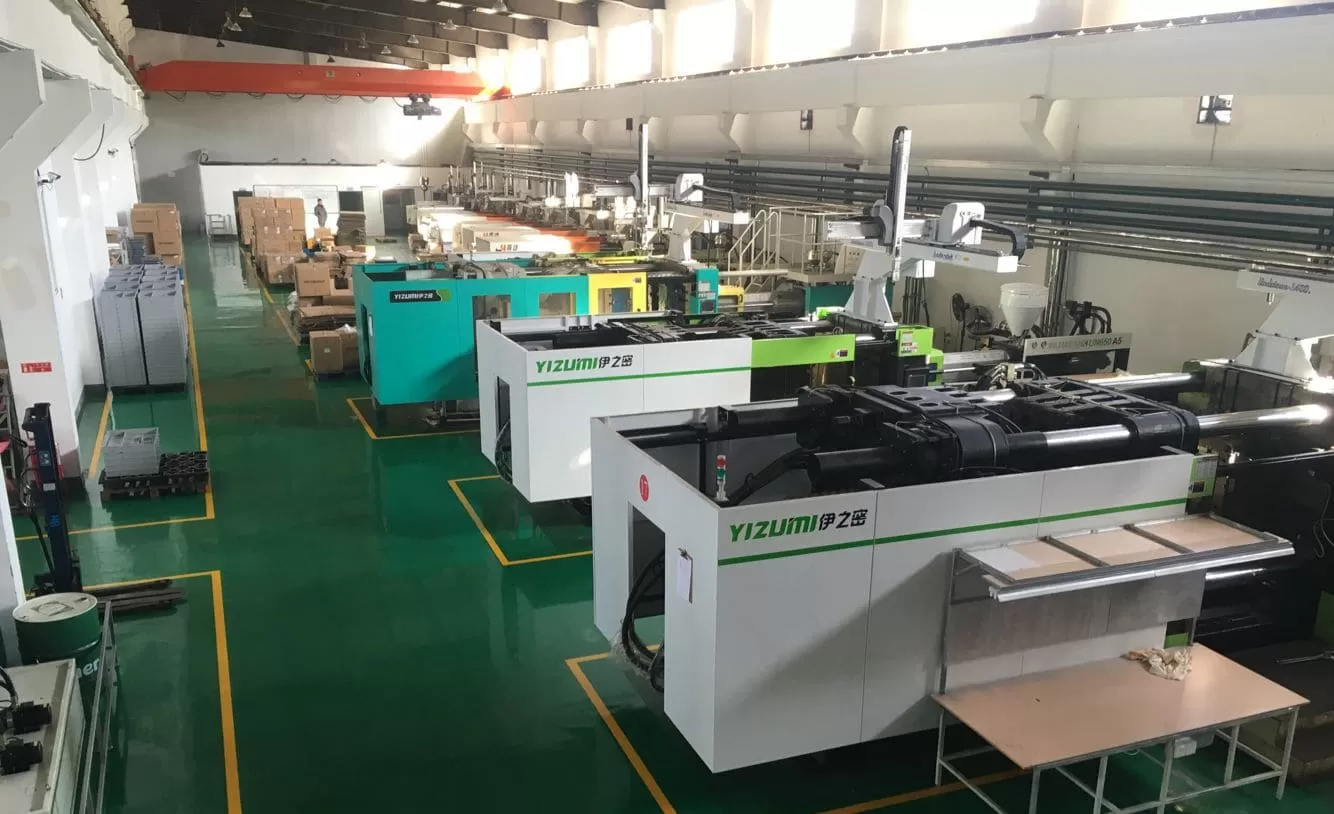
射出成形
射出成形
🏭 ZetarMold Factory Insight
With 20+ years of injection molding experience and 30+ English-speaking project managers, we coordinate logistics in real time with our buyers. Our team handles export documentation, packaging specifications, and shipment scheduling as part of the standard service.

Booking 3 to 4 weeks in advance during normal season gives you access to better rates. During peak season, early booking is not just cheaper — it guarantees you get a container at all. Strategy 3: Use supplier freight accounts strategically. Suppliers who ship frequently often have preferred rates with carriers. When ordering under DDP or CIF terms, ask the supplier to share their freight quote so you can compare it against your own forwarder rates. Some suppliers pass on genuine savings; others add a markup. Strategy 4: Consolidate and schedule regular shipments. If you have ongoing production, establish a monthly shipping schedule instead of shipping ad hoc. Forwarders offer better rates for regular, predictable volumes.

What Documentation Is Required for International Injection Molding Shipments?

Every international shipment needs a commercial invoice, packing list, bill of lading, and certificate of origin. Missing these is the top cause of customs delays.

This helps customs classify the shipment correctly and prevents misclassification as general machinery. The practical tip: create a documentation checklist for each destination country and send it to your supplier before the first shipment. Ask them to provide a complete documentation package for review at least five business days before the shipment date. This gives you time to catch errors before the goods leave the factory.

Additional documents depending on your destination: FDA or medical device certifications for medical-grade parts, UL certificates for electrical components, RoHS and REACH declarations for parts sold in the EU, and fumigation certificates for wooden packaging (ISPM-15 compliance proof).

“Missing or incorrect customs documentation is the number one cause of shipment delays for injection molded parts.”

Incomplete paperwork causes clearance delays of one to three weeks, incurring demurrage fees and missed deadlines.

“Air freight is always the best choice for international injection molding shipments.”

Air freight costs 4-8x more per kg than sea freight and is only justified for urgent samples or orders under 50 kg. For production volumes, sea freight is far more cost-effective.

How Do You Build a Logistics Timeline That Works?

The most reliable approach is to work backwards from your target in-hand delivery date. Subtract clearance time, transit time, and production lead time, then add a two-week buffer.

Step 4: Subtract production lead time (15 to 45 days depending on mold status and order volume). Step 5: Add a two-week buffer for unexpected delays. This gives you the latest possible order date. For ongoing production with monthly shipments, establish a rolling schedule. Place orders 6 to 8 weeks before the delivery date, stagger shipments to arrive every 3 to 4 weeks, and maintain a safety stock buffer of 2 to 4 weeks of demand.

Working backwards is the only reliable method because it forces you to confront the real timeline constraints upfront. For ongoing production with monthly shipments, establish a rolling schedule. Place orders 6 to 8 weeks before the delivery date, stagger shipments to arrive every 3 to 4 weeks, and maintain a safety stock buffer of 2 to 4 weeks of demand. This approach smooths out variability in transit times and production schedules. The key metric to track: on-time delivery rate. If your supplier consistently ships within 3 days of the agreed date, your logistics planning becomes predictable. If shipping dates slip by a week or more regularly, you need a more reliable supplier or a larger safety stock buffer.

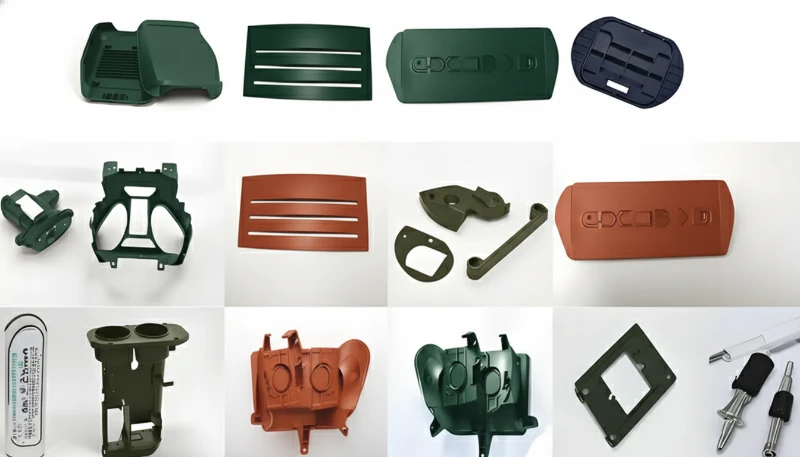
プラスチック射出成形部品
プラスチック射出成形部品

In our experience, a supplier with 30+ English-speaking project managers and 20+ years of export experience tends to maintain on-time delivery rates above 90 percent.

よくある質問

What is the best Incoterm for first-time injection molding buyers?

For first-time buyers, DDP (Delivered Duty Paid) is the best choice. The supplier handles freight, customs clearance, and delivery to your door. The trade-off is a higher unit cost. For orders under five thousand dollars, DDP is almost always the right call because the logistics savings outweigh the markup. Once you gain experience, switching to FOB gives you better cost control.

How long does sea freight take for injection molded parts from China?

Sea freight from China to the US West Coast takes 14 to 21 days; to the East Coast or Europe, 25 to 40 days. These are port-to-port times — customs clearance and inland delivery add another 5 to 10 business days. During peak seasons (August to October, Chinese New Year), add 5 to 15 extra days for port congestion.

What packaging is needed for mold tooling shipment?

Mold tooling shipments require specialized packaging to protect precision surfaces during transit. Use an ISPM-15 compliant wooden crate rated for the mold weight, which typically ranges from 500 to 2,000 kg for production molds. Wrap VCI (Vapor Corrosion Inhibitor) paper around all cavity surfaces to prevent rust during the ocean transit period where container humidity can reach 80 to 90 percent. Include silica gel desiccant packs inside the sealed crate, and attach shock indicators to the exterior so you can detect rough handling upon delivery. Always specify these requirements in your purchase order and request pre-shipment photos before the goods leave the factory.

How much does air freight cost for injection molded parts?

Air freight costs 4 to 8 times more per kilogram than sea freight. For a 100 kg shipment from Shanghai to the US, expect approximately 800 to 1,500 dollars for air freight versus 150 to 300 dollars for sea freight. Air freight is only justified for urgent prototypes, samples under 50 kg, or production emergencies.

What documents are required to import injection molded parts?

Essential documents: commercial invoice with correct HS code, packing list with weight and dimensions, bill of lading from the carrier, and certificate of origin. Depending on your industry, you may also need FDA certificates, UL listings, RoHS and REACH declarations, or fumigation certificates for wooden packaging. Request the complete package at least five business days before shipment.

When Should I Choose Air Freight Over Sea Freight for Injection Molded Parts?

Use air freight for shipments under 500 kg that are time-critical — prototypes, emergency replacements, or first articles needed within a week. The rule of thumb: if the cost of a delayed shipment in lost production or contractual penalties exceeds the air freight surcharge, fly it. Otherwise, plan ahead and use sea freight.

Can I consolidate shipments from multiple injection molding suppliers?

Yes. Your freight forwarder can arrange pickup from each supplier, consolidate at a central warehouse, and load into a single container. The key requirement: each supplier must deliver on time, because one late supplier delays the entire container. Set firm delivery deadlines and maintain clear communication with all parties.

Ready to streamline your injection molding logistics? ZetarMold ships molds and parts worldwide with established FedEx, DHL, and freight forwarder accounts. Our 30+ English-speaking project managers handle documentation, packaging, and real-time tracking. Get a free quote today.


  1. ICC: ICC refers to incoterms 2020 rules — official reference for international trade terms

  2. FOB: FOB (Free On Board) refers to an Incoterm where risk transfers when goods are loaded on the vessel at the port of shipment

  3. ISPM-15: ISPM-15 refers to International Standards for Phytosanitary Measures for wood packaging in international trade

最新の投稿
フェイスブック
ツイッター
LinkedIn
ピンタレスト
Mike Tangの写真
マイク・タン

Hi, I'm the author of this post, and I have been in this field for more than 20 years. and I have been responsible for handling on-site production issues, product design optimization, mold design and project preliminary price evaluation. If you want to custom plastic mold and plastic molding related products, feel free to ask me any questions.

私とつながる

クイック見積もり

図面および詳細要件を下記までお送りください。 

Emial:[email protected]

または下記のお問い合わせフォームにご記入ください:

クイック見積もり

図面および詳細要件を下記までお送りください。 

Emial:[email protected]

または下記のお問い合わせフォームにご記入ください:

クイック見積もり

図面および詳細要件を下記までお送りください。 

Emial:[email protected]

または下記のお問い合わせフォームにご記入ください:

クイック見積もり

図面および詳細要件を下記までお送りください。 

Emial:[email protected]

または下記のお問い合わせフォームにご記入ください:

クイック見積もり

図面および詳細要件を下記までお送りください。 

Emial:[email protected]

または下記のお問い合わせフォームにご記入ください:

ブランドのクイック見積もり

図面および詳細要件を下記までお送りください。 

Emial:[email protected]

または下記のお問い合わせフォームにご記入ください:

Спроситебыструюцитату。

Мы свяжемся с вами в течение одного рабочего дня, обратите внимание на письмо с суффиксом "[email protected]".

クイック見積もり

図面および詳細要件を下記までお送りください。 

Emial:[email protected]

または下記のお問い合わせフォームにご記入ください:

クイック見積もり

図面および詳細要件を下記までお送りください。 

Emial:[email protected]

または下記のお問い合わせフォームにご記入ください: