 Zum Inhalt springen

Plastic injection molding stands as one of the most versatile and cost-effective manufacturing processes in modern industry. Whether you are producing medical devices, automotive components, or consumer electronics, Spritzgießen1 offers unmatched precision, speed, and scalability. After two decades working with this process, I have seen countless manufacturers choose injection molding for good reason: it delivers consistent quality at volumes that make financial sense. This guide breaks down the real benefits — not marketing fluff — so you can decide if it is the right fit for your next project.
- Injection molding achieves tolerances as tight as ±0.001 inches (±0.025 mm)
- Cycle times range from 10 to 60 seconds per shot
- Over 25,000 thermoplastic grades are available
- Material waste is below 5 percent with reusable regrind
- Cost per part drops dramatically above 1,000 units

Was ist Kunststoff-Spritzgießen?
Plastic injection molding is defined by the function, constraints, and tradeoffs explained in this section. If you are comparing vendors or planning procurement, our injection molding supplier sourcing guide covers RFQ prep, qualification, and commercial risk checks.
Plastic injection molding¹ is a manufacturing process where molten plastic material is injected under high pressure into a precisely machined mold cavity. Once the plastic cools and solidifies, the mold opens and the finished part is ejected. That is the simple version. In practice, it is a tightly controlled process involving temperature management, pressure profiling, and timing optimization that directly affects part quality. The process works with virtually any thermoplastic — from commodity polypropylene to high-performance PEEK — making it one of the most flexible manufacturing methods available. A typical injection molding cycle² takes between 10 and 60 seconds, which means a single machine can produce thousands of identical parts per day.
The key constraint is the upfront investment in tooling: a production mold can cost anywhere from $5,000 to over $100,000 depending on complexity. But once that mold is built, the per-part cost drops dramatically, which is why injection molding dominates high-volume plastic manufacturing across every industry from medical devices to automotive.
The process relies on three critical elements working in concert: the Spritzgussform itself, the molding machine, and the process parameters. The mold defines the geometry, surface finish, and in many cases the structural integrity of the final part. The machine provides the clamping force to keep the mold closed under injection pressures that can reach 30,000 psi, while precisely controlling the melt temperature and injection speed. Process parameters — hold pressure, cooling time, injection velocity profile — separate good parts from scrap. Getting any one of these three elements wrong means dimensional issues, sink marks, warpage, or short shots. In our experience, roughly 70 percent of molding problems trace back to the mold design, not the machine settings.
That is why mold design review (DFM analysis) is the single most valuable step in any injection molding project.
With over 20 years of injection molding experience in our Shanghai factory, we’ve seen firsthand how proper process optimization eliminates the most common part defects.
How Does the Plastic Injection Molding Process Work?
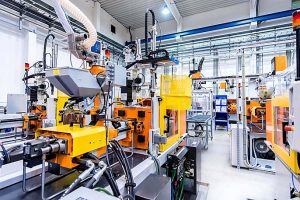
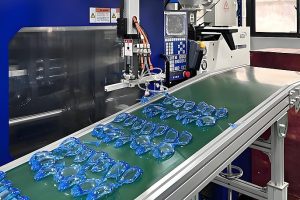
The injection molding process works through a precise four-step cycle: first, plastic pellets are heated and melted in a barrel by a rotating screw. Second, the molten plastic is injected under high pressure into a closed mold cavity. Third, the material is held under pressure during packing to compensate for shrinkage as it cools. Fourth, once solidified, the mold opens and ejector pins push the part out. A typical cycle takes just 10 to 60 seconds, meaning a single machine with a 4-cavity mold can produce over 100,000 parts per day at full utilization.
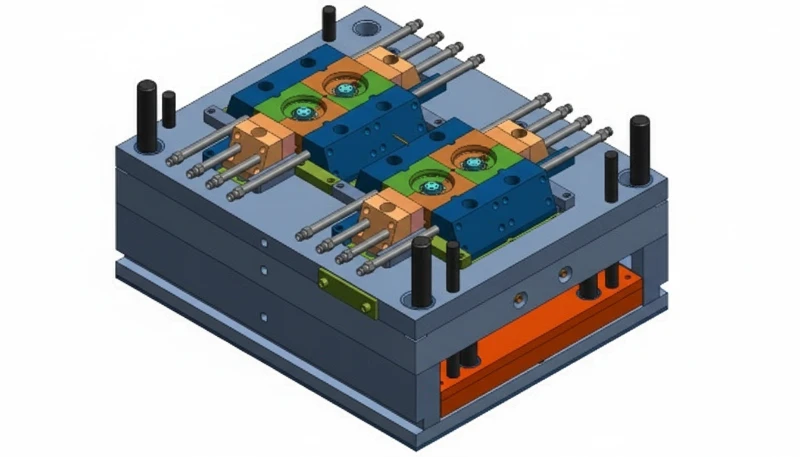
The devil is in the details when it comes to process control. Melt temperature affects flow characteristics — too hot and you get flash and extended cooling times, too cold and you get short shots and high residual stress. Injection speed determines how well the material fills thin-wall sections, and it is not a single setting: modern machines use velocity profiles that ramp up for thick sections and slow down near the end of fill to prevent overpacking. Holding pressure and time control dimensional stability and sink mark prevention. Get the packing phase wrong, and you will see dimensional variation part-to-part that pushes your Tolerance2 out of spec.
Cooling time is typically the longest portion of the cycle, and it is the one most manufacturers want to reduce. Conformal cooling channels in the mold — a technique made practical by metal 3D printing — can cut cooling time by 30 to 50 percent compared to traditional drilled channels. For buyers, understanding these variables matters because they directly impact part quality, lead times, and ultimately your per-part cost. A molder who understands process optimization will deliver better parts faster and cheaper than one who just dials in settings by feel.
Our Shanghai facility operates 47 injection molding machines ranging from 90T to 1850T, giving us the flexibility to produce everything from micro connectors to large automotive panels.
What Are the Key Advantages of Plastic Injection Molding?
The key advantages of plastic injection molding are the main categories or options explained in this section. The key advantages of injection molding are high precision (tolerances to ±0.001 inches), fast cycle times (10 to 60 seconds), near-zero material waste (under 5 percent), excellent surface finish straight from the mold, and scalability from 500 to millions of units at low per-part cost. These benefits make it the dominant method for manufacturing plastic parts at production volume.
| Advantage | Typical Metric | Impact |
|---|---|---|
| Genauigkeit | ±0.001 in | Medical and electronics |
| Zykluszeit3 | 10–60 sec | 100K+ parts/month |
| Waste | <5% | Reusable regrind |
| Labor | Near-zero | Automated process |
| Finish | Class A | No secondary work |
Precision and Speed
Let us dive deeper into the precision aspect. Injection molding achieves dimensional tolerances³ that rival CNC machining for many geometries — typically plus or minus 0.005 inches for standard production, and down to plus or minus 0.001 inches with precision molds. But here is what the spec sheets will not tell you: the real advantage is repeatability. Once a mold is dialed in, parts 1 and 100,000 are dimensionally identical. That consistency is critical for industries like medical devices, where a 0.1 mm variance could mean the difference between a part that fits an assembly and one that causes a field failure. Speed is another major advantage.
A single injection molding machine can produce hundreds of parts per hour with minimal human intervention. Compare that to CNC machining, where each part requires multiple setups and tool changes. The labor cost per part approaches zero once the process is running. Material efficiency is also noteworthy. Injection molding generates less than 5 percent waste on average, and most of that waste — runners and sprues — can be reground and reused in non-critical applications. Compare that to CNC machining, where material removal rates of 60 to 80 percent are common, and the cost advantage becomes clear, especially with expensive engineering resins.
“Injection molding can produce parts with tolerances as tight as ±0.001 inches (±0.025 mm).”Wahr
With proper mold design and process control, injection molding consistently achieves micron-level precision that rivals CNC machining.
“Injection molding is only cost-effective for runs of over 100,000 units.”Falsch
Thanks to aluminum tooling and rapid mold techniques, injection molding can be economical at 500–1,000 units depending on part complexity.
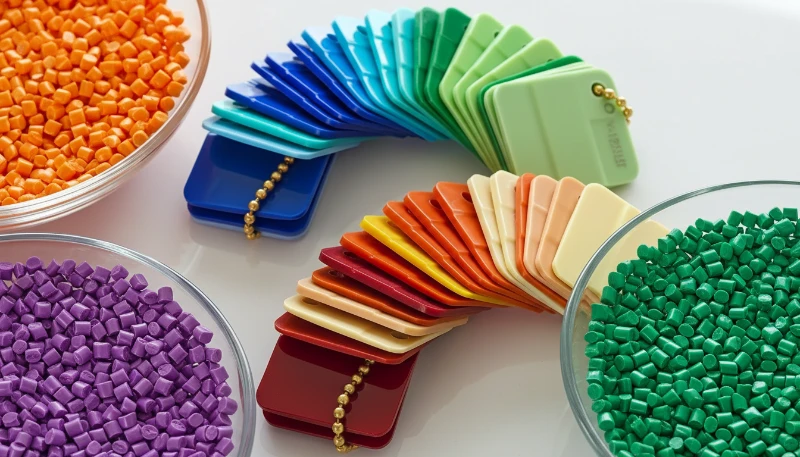
The design flexibility of injection molding opens up possibilities that other processes simply cannot match. You can mold threads, living hinges, snap fits, and undercuts directly into the part, eliminating secondary assembly operations. Multi-shot molding⁴ allows you to combine hard and soft materials in a single cycle — think of a toothbrush with a rigid core and a soft grip, made in one shot. Color matching is virtually unlimited: you can specify any Pantone color, and with proper pigment formulation, the molded part matches the target consistently across millions of units.
Surface finish options range from high-gloss (SPI A-1) to textured (SPI D-3), and the finish is built into the mold, meaning every single part has the same appearance without secondary processing. In-mold labeling, insert molding, and overmolding further expand what you can achieve in a single manufacturing step. For product designers, this means fewer parts in the assembly, fewer suppliers to manage, and faster time to market.
ZetarMold has experience with 400+ plastic materials, and material selection remains the single biggest lever for part quality. We have processed everything from commodity polypropylene to medical-grade PEEK, and each material brings its own processing window and design considerations.
What Materials Can Be Used in Injection Molding?
Injection molding accommodates an extensive range of thermoplastic materials, with over 25,000 commercial grades available from suppliers worldwide. This material diversity is one of the process is greatest strengths. You can mold commodity plastics like polypropylene and polyethylene for packaging and consumer goods at under $2 per kilogram. Engineering plastics like nylon (PA6, PA66), polycarbonate (PC), and acetal (POM) offer mechanical and thermal performance suitable for demanding applications at $3 to $10 per kilogram. High-performance polymers like PEEK, PEI (Ultem), and PPSU serve aerospace, medical, and oil-and-gas applications where temperature resistance above 200 degrees Celsius or chemical inertness is required — these materials can cost $50 to $200 per kilogram, making material efficiency even more important.
Elastomers like TPE and TPU can be molded for soft-touch grips, seals, and wearable devices. The key insight for buyers: do not over-specify. We regularly see designers default to polycarbonate when polypropylene would meet all functional requirements at one-fifth the material cost.
Material selection drives part performance more than any other single decision in the development process. Commodity plastics work well for housings, containers, and non-structural components. Engineering plastics step up when you need strength, stiffness, heat resistance, or chemical resistance. The difference between PA6 and PA66, for instance, is subtle on paper — PA66 has slightly higher temperature resistance and better mechanical properties — but it can determine whether a part survives in an under-hood automotive application. Filled and reinforced grades add another dimension: glass-filled nylon (PA66-GF30) is nearly three times stiffer than unfilled nylon, but it is also more abrasive to molds and anisotropic in shrinkage, which your mold designer needs to account for. Regulatory requirements further narrow the field.
Medical parts may need USP Class VI or ISO 10993 biocompatibility. Food-contact applications require FDA-compliant grades. UL94 flammability ratings dictate material choices for electrical enclosures. Working with a supplier who has experience across 400-plus materials saves significant trial and error in this selection process.
Wie schneidet Spritzguss im Vergleich zu anderen Fertigungsverfahren ab?
Spritzguss ist wettbewerbsfähiger als andere Fertigungsverfahren, wenn die unten aufgeführten Kompromisse bei Kosten, Lieferzeit und Qualität Ihren Projektanforderungen entsprechen. Bei der Bewertung von Fertigungsverfahren für Kunststoffteile schneidet Spritzguss bei Stückzahlen über 500 Einheiten durchweg besser ab als Alternativen wie CNC-Bearbeitung oder 3D-Druck. Die anfängliche Werkzeuginvestition ist höher, aber die Stückkosten sind deutlich günstiger. Die folgende Tabelle bietet einen direkten Vergleich der wichtigsten Faktoren, die Fertigungsentscheidungen beeinflussen: Kosten, Präzision, Geschwindigkeit, Materialauswahl und Oberflächenqualität. Das Verständnis dieser Kompromisse hilft Ihnen, den richtigen Prozess für Ihre spezifischen Projektanforderungen und Volumenziele auszuwählen.
| Faktor | Spritzgießen | CNC-Bearbeitung | 3D-Druck |
|---|---|---|---|
| Stückkosten (1K+ Menge) | $0.10–$5.00 | $5–$50+ | $2–$30+ |
| Tolerance | ±0.001 in | ±0,0005 Zoll | ±0,005–0,020 Zoll |
| Zykluszeit | 10–60 sec | 10–60 min | 30 Min.–12 Std. |
| Material range | 25.000+ Sorten | Metalle & einige Kunststoffe | Begrenzte Polymere |
| Surface finish | Ausgezeichnet (wie gegossen) | Ausgezeichnet | Schichtlinien sichtbar |
„Spritzguss kann mehrkomponentige Teile in einem einzigen Zyklus mittels Mehrfachspritzgießen fertigen.“Wahr
Zweikomponenten- (2K) und Dreikomponenten-Spritzgießen kombinieren verschiedene Materialien oder Farben in einem automatisierten Zyklus und eliminieren Nachmontage.
„Spritzgegossene Teile benötigen nach dem Auswerfen immer eine umfangreiche Nachbearbeitung.“Falsch
Die meisten spritzgegossenen Teile sind net-shape – sie kommen gebrauchsfertig aus der Form, wobei Angussmarkierungen das einzige sichtbare Zeichen des Prozesses sind.
Die Break-Even-Analyse spricht in der Regel für Spritzgießen, sobald die Stückzahlen 500 bis 1.000 Einheiten überschreiten, abhängig von der Teilekomplexität. Für eine einfache Halterung, die $20 für die CNC-Bearbeitung kostet, amortisiert sich eine $5.000-Werkzeugform ab 250 Teilen. Für eine komplexe Mehrkavitätenform von $50.000 könnte der Break-Even bei 2.000 bis 5.000 Teilen liegen. Bei 10.000 Einheiten ist Spritzgießen fast immer die kostengünstigste Option. Bei 100.000 oder mehr ist der Stückkostenvorteil überwältigend – oft 10- bis 50-mal günstiger als mechanische Bearbeitung. Wo Spritzgießen an Grenzen stößt, ist der anfängliche Zeitplan und die Investition. Wenn Sie nächste Woche 50 Teile benötigen, sind 3D-Druck oder CNC Ihre einzige realistische Option.
Wenn Sie 50.000 Teile pro Monat für die nächsten drei Jahre benötigen, ist Spritzguss nicht nur die beste Wahl, sondern auch die einzige, die finanziell sinnvoll ist. Für Käufer ist die entscheidende Frage: Wie hoch ist Ihre Gesamtstückzahl über die gesamte Produktlebensdauer? Diese Zahl bestimmt, welches Verfahren wirtschaftlich die Nase vorn hat.
Unsere interne Werkzeugfertigung arbeitet nach ISO 9001, ISO 13485, ISO 14001 und ISO 45001 Systemen, was engere Toleranzen und schnellere Werkzeugiterationen bedeutet.
Häufig gestellte Fragen
Was ist der Hauptvorteil von Kunststoff-Spritzguss?
Der Hauptvorteil des Spritzgussverfahrens für Kunststoffe ist seine Fähigkeit, hochpräzise, komplexe Teile bei extrem niedrigen Stückkosten herzustellen, sobald die Form gefertigt ist. Zykluszeiten von 10 bis 60 Sekunden ermöglichen es einer einzelnen Maschine, tausende Teile pro Tag mit gleichbleibender Qualität zu produzieren. Für Käufer bedeutet dies wiederholbare Abmessungen, hervorragende Oberflächengüte und Materialflexibilität – alles ohne Nachbearbeitung. Bei Produktionsmengen über 1.000 Einheiten kommt kein anderes Kunststofffertigungsverfahren an die Stückkosten heran.
Ist Kunststoff-Spritzguss für kleine Produktionsserien geeignet?
Ja, Spritzguss kann auch für Stückzahlen ab 500 bis 1.000 Teilen kosteneffektiv sein, wenn Sie Aluminium-Werkzeuge statt gehärteter Stahlformen verwenden. Aluminiumformen kosten deutlich weniger und können in 1 bis 2 Wochen gefertigt werden, verglichen mit 4 bis 8 Wochen für Stahlformen. Während Aluminium-Werkzeuge eine kürzere Lebensdauer haben (typischerweise 1.000 bis 10.000 Schüsse, abhängig von Material und Komplexität), bieten sie eine ausgezeichnete Lösung für Prototypen- bis Produktionsläufe oder Sonderteile in Kleinserie. Für unter 100 Teilen kann 3D-Druck wirtschaftlicher sein.
Wie genau ist Kunststoff-Spritzgießen?
Spritzguss erreicht typischerweise Toleranzen von plus/minus 0,005 Zoll (0,127 mm) für die Standardproduktion und kann mit Präzisionswerkzeugen und enger Prozesskontrolle bis zu plus/minus 0,001 Zoll (0,025 mm) erreichen. Schwindraten variieren je nach Material – kristalline Polymere wie POM schwinden um 2 bis 3 Prozent, während amorphe Materialien wie PC um 0,5 bis 0,8 Prozent schwinden. Käufer, die kritische Maße vorgeben, sollten frühzeitig in der Designphase die Werkzeugauslegung mit ihrem Spritzgießer besprechen. In unserer Einrichtung halten wir kritische Maße bei Medizinproduktkomponenten innerhalb von 0,02 mm.
Welche Kunststoffarten können spritzgegossen werden?
Der Zeitplan von der fertigen CAD-Datei bis zur Erstmusterprüfung beträgt typischerweise 4 bis 12 Wochen für Stahl-Produktionswerkzeuge oder 1 bis 3 Wochen für Aluminium-Prototypformen. Werkzeugkonstruktion und -fertigung nehmen 60 bis 70 Prozent dieser Zeit in Anspruch. T1-Proben (erste Spritzlinge) zeigen Passform und Funktion, wobei 1 bis 3 Runden von Werkzeugmodifikationen vor der Freigabe üblich sind. Nach Freigabe der Form dauert die Produktionshochfahrung Tage, nicht Wochen. Die Zusammenarbeit mit einem Lieferanten mit eigener Werkzeugfertigung, wie unserer ISO-9001-zertifizierten Einrichtung in Shanghai, kann die Werkzeugbauphase um 30 bis 40 Prozent verkürzen und Sie deutlich schneller zur Produktion bringen als das Auslagern der Werkzeugfertigung an einen Dritten.
How much does an injection mold cost?
Die Kosten für Spritzgießwerkzeuge liegen zwischen 1.000 und über 100.000 USD, abhängig von der Bauteilkomplexität, Anzahl der Kavitäten, Material und geplantem Produktionsvolumen. Eine einfache Ein-Kavitäten-Aluminiumform für Prototypen könnte 1.000 bis 3.000 USD kosten, während eine Mehrfachkavitäten-Stahlproduktionsform für ein Automobilteil über 80.000 USD kosten kann. Faktoren, die die Kosten erhöhen, sind seitliche Entformungshilfen (Lifter, Schieber), enge Toleranzen, polierte Oberflächenanforderungen und Mehrkomponenten (2K) Werkzeuge. Fordern Sie frühzeitig eine DFM-Prüfung an – Designänderungen vor dem Stahlfräsen sparen erheblich Geld.
Wie lange dauert Spritzgießen von der Konstruktion bis zur Produktion?
Der Zeitplan von fertigem CAD bis zur Erstmusterprüfung umfasst typischerweise 4 bis 12 Wochen für Stahl-Produktionswerkzeuge bzw. 1 bis 3 Wochen für Aluminium-Prototypenformen. Werkzeugkonstruktion und -fertigung nehmen 60 bis 70 Prozent dieser Zeit in Anspruch. T1-Muster (erste Schüsse) zeigen Passform und Funktion, wobei 1 bis 3 Runden Werkzeugmodifikationen vor der Freigabe üblich sind. Nach Werkzeugfreigabe dauert die Produktionshochfahrung Tage, nicht Wochen. Die Zusammenarbeit mit einem Lieferanten, der wie unsere Niederlassung in Shanghai über eine eigene Werkzeugfertigung verfügt, kann die Werkzeugbauphase um 30 bis 40 Prozent verkürzen.
Zusammenfassung
Kunststoff-Spritzgießen bietet unübertroffene Vorteile für Hersteller, die Präzision, Effizienz und Skalierbarkeit suchen. Von Toleranzen von plus/minus 0,001 Zoll bis zu Zykluszeiten unter 10 Sekunden, von über 25.000 Materialoptionen bis zu nahezu null Stückarbeitskosten – keine andere Kunststofffertigungsmethode kombiniert Geschwindigkeit, Genauigkeit und Wirtschaftlichkeit im Volumen. Ob Sie mikrogemoldete Medizinteile oder große Automobilpaneele produzieren – die Grundlagen bleiben gleich: Investieren Sie in hochwertiges Werkzeug, wählen Sie das richtige Material und arbeiten Sie mit einem Spritzgießer, der Prozessoptimierung versteht. Bereit für Ihr Spritzgießprojekt? ZetarMold bietet kostenlose DFM-Prüfungen, wettbewerbsfähige Werkzeugangebote und komplette Produktionsdienstleistungen aus unserer ISO-zertifizierten Einrichtung in Shanghai.
Mit 47 Maschinen von 90T bis 1850T und Erfahrung mit über 400 Materialien können wir alles bewältigen – von Prototypen-Bridge-Tooling bis zu Millionen-Serien. Erhalten Sie noch heute ein kostenloses Angebot und lassen Sie unser Ingenieursteam Ihr Design auf Fertigbarkeit prüfen. Weitere Informationen finden Sie in unserem complete guide to injection molding.
-
Injection molding: Spritzgießen ist ein Fertigungsverfahren, bei dem geschmolzenes Material in einen Formhohlraum eingespritzt wird, wo es abkühlt und sich zur endgültigen Teilform verfestigt. ↩
-
Toleranz: Toleranz bezeichnet die zulässige Abweichung der Abmessungen eines gefertigten Teils, typischerweise ausgedrückt als Plus- oder Minuswert vom Nennmaß. ↩
-
Zykluszeit: Zykluszeit beim Spritzgießen bezeichnet die Gesamtzeit, die für einen vollständigen Spritzzyklus benötigt wird – vom Formenschluss bis zum Teileauswurf. ↩





 EN
EN  ES
ES  FR
FR  DE
DE  PT
PT  AR
AR  RU
RU  JA
JA  KO
KO  IT
IT  NL
NL  TR
TR  PL
PL 