Перейти к содержанию
Освойте процесс двухслойного формования: сочетания материалов, советы по проектированию инструментов, предотвращение дефектов и практические рекомендации для производства, основанные на 20+ годах опыта в инжекционном формовании.овермолдинг1.” Your boss wants to know what that means, how long it takes, and whether the two layers will actually stay together after a year of use. This article answers all three — and gives you a material compatibility cheat sheet you can bring to your next DFM review.
- Overmolding bonds a second material over a substrate in one or two shots
- Material compatibility determines bond strength and long-term durability
- Tool design must account for shrink differentials and shut-off surfaces
- Typical lead time is 25–45 days for a two-shot mold
- TPE over ABS and PC over ABS are the most common combinations
What Is Overmolding and How Does It Differ from Insert Molding?
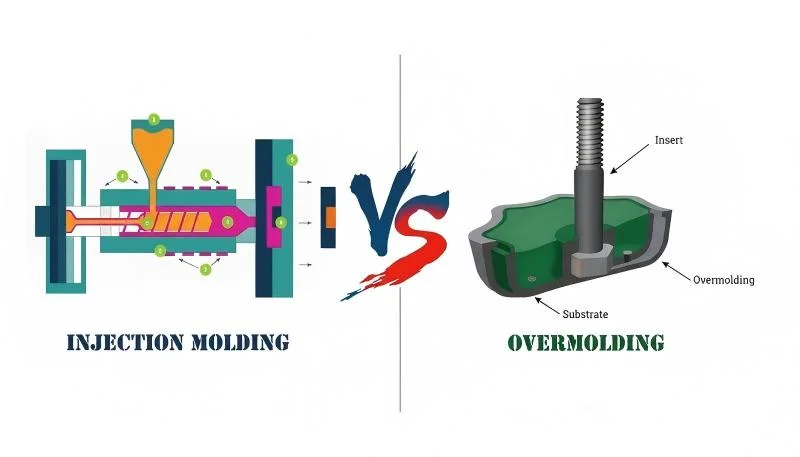
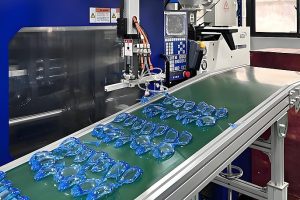
Overmolding is a two-step литьё под давлением process where a second material is molded directly over a previously formed substrate2 part. The result is a single multi-material component — think of a toothbrush with a rigid plastic body and a soft rubber grip, or a power drill housing with vibration-dampening overmold. The key distinction from insert molding is that overmolding bonds plastic-to-plastic, while insert molding typically encapsulates a metal component like a threaded brass insert.
There are two primary methods: two-shot molding (rotary or shuttle mold on a single press) and pick-and-place molding (substrate molded first, manually or robotically transferred to a second mold). Two-shot is faster and more repeatable; pick-and-place is cheaper to tool but slower per cycle.
What Materials Work Best for Overmolding?
Material selection is the single most important decision in any overmolding project. The bond between substrate and overmold either works chemically (molecules interdiffuse at the interface) or mechanically (undercuts, grooves, and surface texture lock the layers together). Chemical bonds are stronger and more reliable; mechanical bonds are a fallback when chemistry does not cooperate.
The most common pairings include TPE3 over ABS, TPE over PP, PC over ABS, and SEBS over PA6. For a chemical bond to form, the two materials need compatible polarity and similar melt temperatures — typically within 30°C of each other. If the substrate is polyolefin (PP, PE), you need a polyolefin-based TPE. If the substrate is engineering resin (ABS, PC, PA), you need a styrenic or TPU-based elastomer.
We have run overmolding trials on more than 400 materials at our Shanghai facility, and the pattern is consistent: when suppliers claim their TPE “bonds to everything,” it usually bonds well to two or three substrates and poorly to the rest. Always request a bond test sample before committing to production tooling.
На нашем заводе в Шанхае работают 47 машин для литья под давлением мощностью от 90 до 1850 тонн, включая специализированные двухкомпонентные прессы. Наша команда имеет опыт работы с 400+ видами пластиковых материалов и производит 100+ комплектов пресс-форм в месяц — это дает нам возможность тестировать и валидировать комбинации материалов для литья с накладкой внутри компании до запуска производственной оснастки.
| Substrate | Overmold | Bond Type | Приложение |
|---|---|---|---|
| ABS | TPE (Styrenic) | Chemical | Power tool grips |
| PP | TPE-V | Chemical | Sealed containers |
| ПК | TPE or TPU | Chemical | Медицинские изделия |
| PA6 / PA66 | SEBS | Chemical | Auto connectors |
| PC/ABS | TPE | Chemical | Laptop housings |
| Any rigid | Incompatible soft | Mechanical | Low-cost goods |
How Do You Design a Part for Overmolding?
Этот раздел посвящен проектированию детали для литья с накладкой и его влиянию на стоимость, качество, сроки или риски поставок. Хороший дизайн для литья с накладкой начинается с интерфейса — поверхности, где встречаются два материала. Если вы полагаетесь на химическую связь, поверхность подложки должна быть чистой, без разделительного агента и еще теплой при впрыске второго компонента. Если вы полагаетесь на механическую связь, вам нужны поднутрения, Т-образные пазы или перфорации, в которые материал накладки может затекать и фиксироваться.
Wall thickness matters more in overmolding than in single-shot molding. The overmold layer is typically 1.5–3 mm thick. Go below 1 mm and you get short shots; go above 4 mm and you get sink marks and excessively long cooling times. The substrate wall should be at least 1.5 mm to resist the injection pressure of the second shot without deforming.
Shut-off surfaces — the areas where the mold closes against the substrate to seal the cavity for the second shot — need at least 0.5 mm of interference. Too little and you get flash on the substrate; too much and you crush the substrate during mold closing. In practice, we specify 0.8–1.0 mm shut-off for most TPE-over-ABS parts.
What Are the Tooling Considerations for Overmolding?
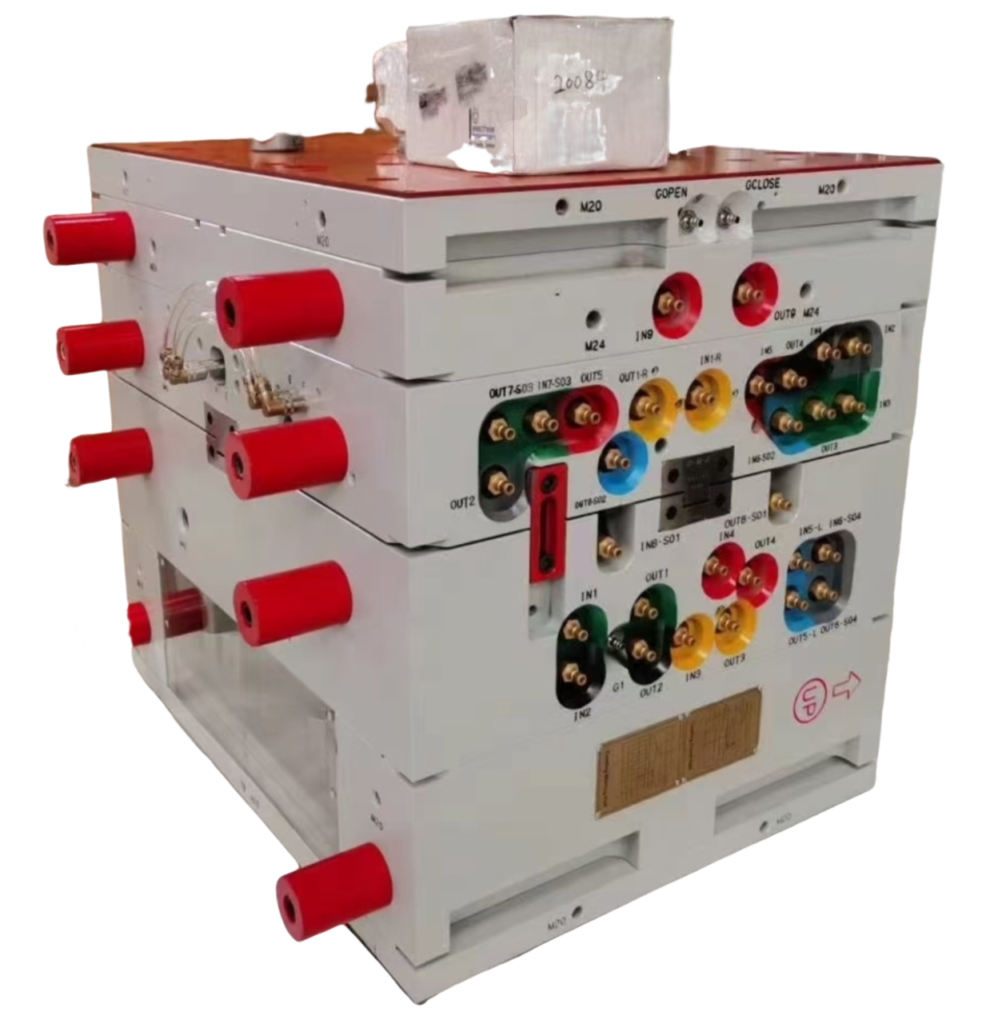
The tooling considerations for overmolding are the main categories or options explained in this section. Overmolding tooling is more complex than single-shot tooling because you are managing two cavities (or one cavity with a moving core) and aligning them precisely. In a two-shot rotary mold, the mold base rotates 180° between shots; the core side stays attached to the part while the cavity side swaps. This requires a precision rotary mechanism and typically adds 30–50% to the mold cost compared to a single-cavity equivalent.
Shrink rate compensation is critical. The substrate shrinks after the first shot, and the overmold layer shrinks after the second shot. If the substrate shrinks 0.6% (ABS) and the overmold shrinks 1.8% (TPE), the cavity dimensions must account for both independently. We have seen parts fail dimensional inspection because the mold was cut to nominal dimensions without shrink compensation for the overmold layer.
For pick-and-place tooling, the second mold needs locators that reference the substrate’s geometry precisely — typically pin locators or edge-reference surfaces with ±0.05 mm positional accuracy. The substrate must be fully cooled before transfer; placing a warm substrate into the second mold can cause distortion under clamping pressure.
What Is the Typical Lead Time for an Overmolding Project?
Руководство по процессу литья под давлением с перекрытием: Материалы, Дизайн и Применение
Sampling adds another 5–10 days. You need to verify the substrate shot, then the overmold shot, then run bond testing (peel test, pull test) and dimensional inspection on the finished part. At our Shanghai facility, we produce 100+ molds per month and typically turn around overmolding samples within 15 working days of tooling completion, assuming standard materials are in stock.
Production lead time after sample approval is usually 15–25 working days for the first run, depending on part complexity and volume. High-volume overmolding (>100K parts) benefits significantly from two-shot rotary tooling because the cycle time per part is 30–50% shorter than pick-and-place.
What Are Common Overmolding Defects and How Do You Prevent Them?
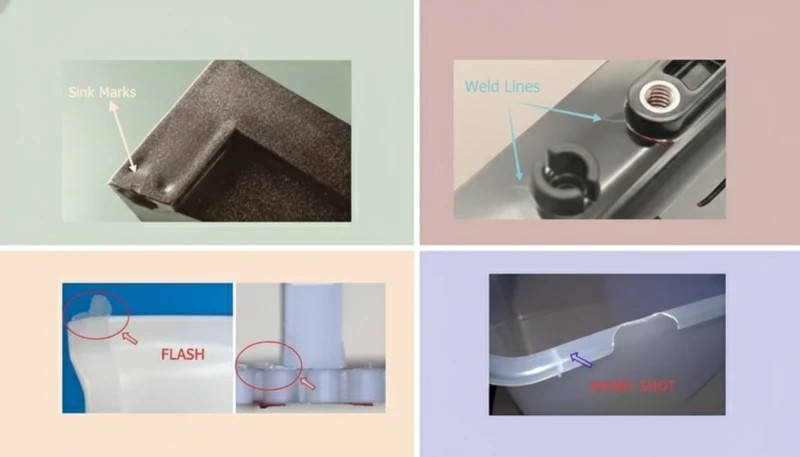
Common overmolding defects and how do you prevent them are the main categories or options explained in this section. The three most frequent overmolding defects are delamination (the two layers separate), flash on the substrate (overmold material leaks past the shut-off), and short shots in the overmold layer (incomplete fill). Delamination is almost always a material compatibility or surface preparation problem — the substrate was contaminated, too cold, or chemically incompatible with the overmold.
Выбор правильного поставщик литья под давлением для проекта литья с накладкой сложнее, чем для стандартного однокомпонентного литья, поскольку поставщику необходимы как возможности двухкомпонентного пресса, так и опыт работы с вашей конкретной комбинацией материалов. На нашем предприятии в Шанхае работают 47 машин для литья под давлением (90–1850 тонн), включая специализированные двухкомпонентные прессы, и мы изготовили более 100 комплектов оснастки для литья с накладкой.
Short shots in the overmold are typically caused by inadequate venting or a flow path that is too long and thin. Adding vent slots (0.01–0.02 mm deep) at the end of fill and increasing the overmold wall thickness to at least 1.5 mm usually resolves this. In our experience, about 30% of first-shot overmolding trials need a vent adjustment before achieving full fill.
When Should You Choose Overmolding Over Alternative Processes?
Литье с накладкой — правильный выбор, когда одной детали требуются два связанных материала для захвата, герметизации, изоляции или внешнего вида. Оно наиболее эффективно при средних и высоких объемах, обычно от 5 000+ единиц, где жесткий внутренний корпус и мягкий внешний слой выполняют различные функции. Если вам нужно всего несколько сотен деталей, стоимость оснастки для двухкомпонентного литья редко оправдывается; рассмотрите склеивание или сборку отдельных компонентов. Даже если выбрано литье с накладкой, точный этапы процесса литья под давлением по-прежнему требуется валидация перед выпуском в производство.
Compared to post-mold assembly (gluing, ultrasonic welding, snap fits), overmolding eliminates a secondary operation, improves consistency, and often reduces total part cost at volume. Compared to dual-shot проектирование пресс-форм with two rigid materials (like a two-color automotive lens), overmolding is simpler because the soft overmold material is more forgiving of dimensional variation.
Точка безубыточности между литьем с накладкой и сборкой сильно зависит от геометрии детали и годового объема. Для простой рукоятки из TPE поверх ABS литье с накладкой обычно выгоднее при объемах свыше 10 000 деталей в год. Для сложного медицинского устройства с жесткими допусками на обоих слоях пороговый объем может составлять 50 000+ деталей, прежде чем инвестиции в оснастку окупятся, поэтому решение следует проверять на реалистичность. время производства литья под давлением и риски запуска.
“Overmolding eliminates the need for adhesive bonding between rigid and soft components.”Правда
When materials are chemically compatible, the overmold layer bonds directly to the substrate during injection, creating a joint that is often stronger than an adhesive bond and more resistant to environmental degradation over time.
“Any TPE grade can bond to any rigid plastic substrate with equal effectiveness.”Ложь
TPE adhesion depends on chemical compatibility with the substrate. Polyolefin-based TPEs bond to PP and PE but poorly to ABS or PC. Styrenic TPEs bond well to ABS and PC but not to polyolefins. Material suppliers provide compatibility charts that must be checked during the design phase.
What Does a Real Overmolding Production Setup Look Like?
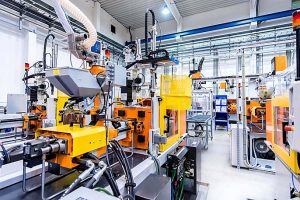
A real overmolding production setup is a market defined by supplier mix, regional clusters, and sourcing constraints summarized in this section. In a production environment, overmolding runs on either a two-shot press (one machine, two barrels, rotary platen) or two standard presses with robotic transfer. The two-shot setup is more capital-intensive but delivers 20–40% lower per-part cost at volume because there is no handling time between shots. A typical two-shot press costs 1.5–2x the price of a standard press of the same tonnage.
Cycle times for overmolding are naturally longer than single-shot molding because you are running two injection cycles sequentially. A typical TPE-over-ABS cycle runs 25–40 seconds total (10–15s for the substrate, 15–25s including the overmold shot and cooling). Compare this to 10–20 seconds for a single-shot ABS part of similar size.
Quality control for overmolded parts requires additional checks beyond standard dimensional inspection. Peel testing (ASTM D903) validates bond strength — typically requiring 2–5 N/mm for consumer products and 5–10 N/mm for automotive applications. Environmental testing (thermal cycling, humidity aging) ensures the bond survives real-world conditions. We run these tests as part of our standard 6-step QC process for all overmolding projects.

“A two-shot rotary mold typically costs 30-50% more than a single-cavity equivalent.”Правда
Two-shot rotary molds require a precision rotary mechanism and dual cavities, adding 30-50% to mold cost. However, per-part cost at volume is 20-40% lower because there is no handling time between shots.
“The overmold layer can be any thickness without affecting part quality.”Ложь
Wall thickness is critical. The overmold layer is typically 1.5-3 mm. Below 1 mm causes short shots; above 4 mm causes sink marks and excessively long cooling times.
Часто задаваемые вопросы
В чем разница между овермолдингом и двухкомпонентным литьем?
Overmolding is the general process of molding one material over another. Two-shot molding is a specific type of overmolding where both materials are injected on the same machine using a rotary or shuttle mold. All two-shot molding is overmolding, but not all overmolding uses two-shot technology. Pick-and-place overmolding uses two separate molds and often two separate machines, which costs less to tool but runs slower in production. The choice between them depends on your annual volume, part complexity, and available press equipment at your supplier.
Сколько стоит пресс-форма для овермолдинга?
An overmolding mold typically costs between $15,000 and $80,000 depending on part size, cavity count, and whether it uses rotary or pick-and-place design. A two-shot rotary mold is 30–50% more expensive than a single-cavity equivalent because it requires a precision rotary mechanism and dual cavities. Pick-and-place tooling uses two separate molds that are individually simpler and cheaper, but production is slower. For a medium-complexity consumer product handle, expect roughly $25,000–$40,000 for two-shot tooling. Budget an additional 10-15% for design revisions during the sampling phase, as overmolding molds typically require one or two rounds of adjustment before production approval.
Можете ли вы выполнить литье поверх металлических вставок?
Molding over metal inserts is technically insert molding, not overmolding. However, the processes are often combined in practice — a metal insert is loaded into the first shot, then a soft TPE or TPU material is overmolded on top. This combined approach is common in electronic connectors, medical device handles, and threaded fasteners where a brass or steel insert needs a soft-grip exterior layer for ergonomics, vibration damping, or environmental sealing around the metal-plastic interface. The key design consideration is ensuring adequate plastic wall thickness around the insert (minimum 1.5 mm) to prevent sink marks and stress concentration that could lead to cracking under load.
Каков минимальный объем заказа для литья с накладкой?
Most injection molding factories set a minimum of 3,000–5,000 units for overmolding due to setup time and material waste during changeover. At lower volumes, the per-part tooling amortization makes overmolding uneconomical compared to gluing or mechanical assembly of separate components. Some suppliers will accommodate smaller batches of 500–2,000 units, but expect a significant unit price premium. For prototype quantities under 500, consider 3D printing with flexible filament or silicone casting instead of injection overmolding. The actual MOQ also depends on the minimum order quantity for raw materials, particularly for custom-colored TPE grades that may have supplier minimums of 500 kg or more per color.
Как проверить прочность соединения при овермолдинге?
The standard test is a 180-degree or 90-degree peel test per ASTM D903, measuring the force required to separate the overmold from the substrate in newtons per millimeter. Acceptable bond strength varies by application: 2–5 N/mm for consumer products, 5–10 N/mm for automotive, and 10+ N/mm for medical devices subjected to repeated sterilization cycles. Cross-hatch adhesion testing per ASTM D3359 provides a quick qualitative check, while thermal cycling (-40°C to +85°C) validates long-term environmental durability. Pull-off testing per ASTM D4541 is another option for flat-bonded interfaces where peel geometry is not feasible. Document all test results with photos for your quality records.
Можно ли использовать материалы разного цвета при литье в оболочку?
Yes, each material is injected from a separate barrel so they can be independently colored. Two-shot molding is commonly used for two-color branding, such as a company logo inlaid in a contrasting color, as well as functional soft-touch surfaces on consumer electronics. Color matching between the two materials typically requires separate Pantone approvals for each resin system, because the same pigment code looks different in a translucent TPE versus an opaque ABS substrate. Masterbatch suppliers can provide pre-matched color pellets for both materials simultaneously.
Какой коэффициент усадки следует использовать для слоя оболочки?
The overmold material shrink rate determines cavity sizing independently from the substrate and must be obtained from the material supplier datasheet. TPE grades typically shrink 1.0–2.0%, TPU shrinks 0.5–1.5%, and silicone-based elastomers shrink 2.0–3.5%. Always use the specific supplier values rather than generic reference tables — inaccurate shrink compensation is one of the most common causes of dimensional failure in overmolded parts, and the error compounds when both layers shrink in different directions around a complex geometry. When prototyping with a new overmold material, run a shrinkage study using a standard test bar mold before cutting production tooling to confirm the datasheet values match actual molding conditions.
-
overmolding: Overmolding is a two-shot injection molding process where a second material is molded over a pre-formed substrate to create a multi-material part with enhanced functionality or ergonomics. ↩
-
substrate: The substrate refers to the first-shot or base component in an overmolding process, typically a rigid plastic part onto which a softer or different material layer is applied. ↩
-
TPE: TPE (thermoplastic elastomer) is a class of copolymers that exhibit rubber-like elasticity while being processable on standard injection molding equipment. ↩




 EN
EN  ES
ES  FR
FR  DE
DE  PT
PT  AR
AR  RU
RU  JA
JA  KO
KO  IT
IT  NL
NL  TR
TR  PL
PL