 Saltar para o conteúdo

Pergunte a qualquer engenheiro de ferramentas o que impulsiona moldagem por injeção1 custo, e ouvirá a mesma coisa: a maior parte da fatura é decidida antes de alguém cortar aço. A geometria da sua peça, o acabamento superficial que especifica, as tolerâncias que exige e o volume que planeia produzir — estas escolhas fixam 60–80% do preço final da ferramenta. Material e mão de obra importam, mas são variáveis a jusante, não causas raiz.
Construímos milhares de moldes de injeção nas últimas duas décadas, desde ferramentas simples de duas placas abaixo de $3.000 até sistemas de canal quente multicavidade superiores a $80.000. As variáveis de custo são previsíveis assim que compreende a hierarquia — e essa compreensão é a diferença entre um orçamento que funciona e um que o surpreende a meio da produção.
- A complexidade do design da peça (reentrâncias, variação da espessura da parede, tolerâncias apertadas) é o maior fator de custo na ferramentaria de moldação por injeção.
- O tipo de molde (dois placas vs. hot runner) e o número de cavidades determinam diretamente o volume de aço, as horas de maquinação e o custo por peça.
- Os requisitos de acabamento superficial (SPI A-1 vs. B-2) podem duplicar ou triplicar o tempo de polimento e obrigar a utilizar aços de molde de grau premium.
- Uma revisão DFM inicial deteta características dispendiosas antes do corte do aço — a poupança mais barata disponível.
- Um orçamento baixo para um molde de um fornecedor não qualificado frequentemente custa mais em retrabalho, atrasos e peças rejeitadas do que um orçamento mais elevado de um moldador experiente.
Quais São os Componentes Principais que Determinam o Custo do Molde?
Os componentes principais que determinam o custo do molde são o aço, o arrefecimento, a ejeção, a alimentação, a guia e os sistemas de ação lateral. Cada um destes seis sistemas funcionais tem as suas próprias implicações de custo, e compreender quais deles o seu projeto realmente necessita é o primeiro passo para controlar o orçamento da moldagem.

Na nossa fábrica em Xangai, operamos 47 máquinas de moldação por injeção de 90T a 1850T, apoiadas por uma instalação interna de fabrico de moldes que produz mais de 100 conjuntos de moldes por mês. Esta integração vertical significa que controlamos o custo da ferramentaria desde a análise DFM até à amostragem T1 — sem intermediários, sem atrasos na comunicação.
“A maior parte de um molde de injeção2O custo é determinado por decisões de geometria da peça tomadas antes de o aço ser cortado.”Verdadeiro
Reentrâncias, paredes finas, tolerâncias apertadas e requisitos de superfície cosmética aumentam as horas de usinagem, a seleção do grau de aço e as operações secundárias. Alterar estes elementos após o início da moldagem é 5 a 10 vezes mais caro do que identificá-los na DFM.
“Um grau de aço mais barato reduz sempre o custo total de um projeto de moldação por injeção.”Falso
O aço mais macio custa menos inicialmente, mas desgasta-se mais rapidamente, aumentando o custo de manutenção e a taxa de rejeição. Para produções acima de 100.000 ciclos, aços premium como o H13 ou S136 frequentemente proporcionam um custo total por peça mais baixo, apesar do investimento inicial mais elevado.
Os seis sistemas principais do molde — alimentação, arrefecimento, ejeção, guiamento, escape e cavidade3/core — cada adição aumenta horas de maquinação e custo de material. Um molde simples de duas placas com ejeção de tração direta pode precisar apenas de 80–120 horas de maquinação. Adicione deslizadores de ação lateral para reentrâncias, e pode facilmente duplicar isso. Adicione um sistema de canal quente com válvulas, e estará a olhar para mais de 250 horas de trabalho de precisão.
Na prática, a repartição de custos para um molde de produção típico é aproximadamente assim:
| Cost Component | Parte Típica do Total | Key Variables |
|---|---|---|
| Aço & matérias-primas | 15–25% | Tamanho do molde, grau de aço (P20 vs. H13 vs. S136) |
| Maquinação & EDM | 30–45% | Número de cavidades, complexidade de características, classe de tolerância |
| Design & engenharia | 10–15% | Profundidade de DFM, análise de fluxo de molde, rondas de revisão |
| Polimento & acabamento superficial | 5–15% | Classe SPI (A-1 a D-3), percentagem de área visível |
| Canal quente & componentes | 10–20% | Número de bicos, complexidade do distribuidor, seleção da marca |
| Montagem, testes, T1 | 5–10% | Tiragens de teste, validação dimensional, ajustes |
Como é que a Complexidade do Design da Peça Afeta o Custo da Moldagem?
O design da peça é o fator de custo mais poderoso na ferramentaria de moldação por injeção. Não o preço do aço, nem o custo da mão-de-obra — a geometria. Cada reentrância requer um mecanismo lateral deslizante ou elevador. Cada variação na espessura da parede exige um arrefecimento equilibrado para evitar empenamento. Cada tolerância apertada acrescenta tempo de inspeção e frequentemente requer aço de grau superior para manter a estabilidade dimensional ao longo das séries de produção.
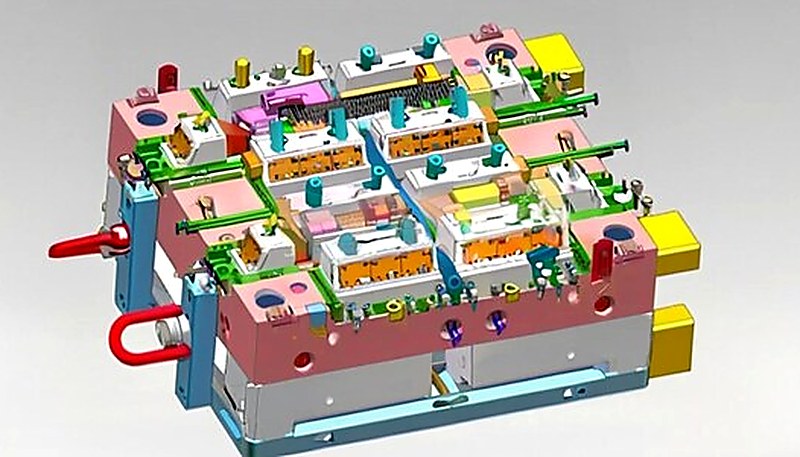
Aqui estão as características de design que mais consistentemente aumentam o custo do molde, ordenadas por impacto:
| Caraterísticas de design | Impacto nos custos | Porque Custa Mais |
|---|---|---|
| Rebaixos externos | Alto (+30–60%) | Requer deslizadores de ação lateral, pinos guia adicionais e maquinação extra |
| Rebaixos internos | Alto (+25–50%) | Requer elevadores ou núcleos retráteis, sequência de ejeção complexa |
| Variação da espessura da parede >30% | Média (+15–30%) | Exige um layout de arrefecimento otimizado, o risco de empenamento aumenta o tempo de ciclo |
| Tolerâncias apertadas (±0,05 mm) | Médio (+15–25%) | Requer aço premium, usinagem de precisão e validação estendida |
| Características de rosca (moldadas) | Médio (+20–40% do custo do molde) | Requer mecanismos de desaparafusamento ou insertos roscados |
| Nervuras profundas (profundidade/espessura >3×) | Médio (+10–25% do custo do molde) | EDM necessário, maior risco de danos no aço, ejeção difícil |
| Multimaterial (sobremoldagem) | Alto (+40–80% do custo do molde) | Ferramentaria de dupla injeção ou operação secundária, sistema de alimentação complexo |
Um simples casquilho cilíndrico com espessura de parede uniforme, ângulo de saída generoso e tolerâncias padrão pode custar 2.500–5.000€. O mesmo casquilho com uma rosca moldada, um rebaixo interno para um encaixe por pressão e uma tolerância de ±0,03 mm no furo? Agora está na faixa de 8.000–15.000€ — e o prazo de entrega duplicou.
“Uma revisão de DFM antecipada pode reduzir o custo do molde em 15–30% sem alterar os requisitos funcionais do produto.”Verdadeiro
Um engenheiro de DFM experiente pode frequentemente sugerir pequenos ajustes geométricos — mover uma linha de separação, adicionar ângulo de saída onde não é visível, aumentar um raio — que simplificam significativamente o molde, preservando todas as dimensões funcionais.
“Se uma peça parece simples no ecrã, o molde será barato.”Falso
A aparência num ecrã CAD não lhe diz nada sobre ângulos de saída, número de rebaixos, dificuldade de ejeção, desafios de refrigeração ou visibilidade da linha de solda. Um suporte de 'aparência simples' com rebaixos ocultos e requisitos cosméticos de superfície A pode custar mais do que um componente interno visivelmente complexo sem exigências cosméticas.
Que Papel Desempenha a Seleção de Materiais no Preço do Molde?
A seleção de material é um fator de custo significativo porque determina o grau de aço, o layout de refrigeração e o sistema de canais quentes que o molde requer. Resinas abrasivas como nylon com fibra de vidro exigem aço endurecido (H13 ou S136) em vez de P20 padrão, adicionando 20–40% ao custo do material e aumentando o tempo de usinagem porque o aço mais duro desgasta as ferramentas de corte mais rapidamente. Resinas de alta temperatura como PEEK ou PPS exigem bocais de canais quentes especializados e layouts de refrigeração mais robustos, ambos aumentando os custos de engenharia e componentes.
Eis como as famílias de materiais comuns impactam os requisitos do molde:
| Material Family | Recomendação de Aço para Molde | Impacto no Custo da Ferramentaria |
|---|---|---|
| PP, PE, ABS (sem enchimento) | P20 / 718H (padrão) | Linha de base — custo de ferramentaria mais baixo |
| PA6/PA66 (com fibra de vidro) | H13 / S136 (endurecido) | +20–40% para aço e maquinação |
| PC, PC/ABS | P20 ou H13 (depende do volume) | +5–15% para controlo de arrefecimento mais apertado |
| POM (acetal) | Recomenda-se H13 | +15–25% para resistência à corrosão |
| PEEK, PPS, PPA | S136 ou Stavax (premium) | +30–60% para distribuidor quente de alta temperatura e arrefecimento |
| TPE/TPU (sobremoldagem) | Base P20 + alimentação especializada | +15–30% para ferramentaria multi-material |
A ideia-chave: não selecione a sua resina isoladamente. Fale com o seu fabricante de moldes sobre a interação entre o material e o design do molde. Por vezes, uma pequena alteração na formulação — por exemplo, mudar de nylon com 30% de fibra de vidro para 15% — pode permitir um grau de aço menos dispendioso sem comprometer o desempenho da peça.
Com experiência em mais de 400 materiais plásticos e 8 engenheiros seniores na equipa, ajudamos rotineiramente os compradores a identificar substituições de materiais que reduzem o custo da ferramentaria sem sacrificar a função da peça. Em muitos casos, o material que funciona melhor para a aplicação não é aquele que o projetista especificou inicialmente.
Como é que o Tipo de Molde e o Número de Cavidades Influenciam o Custo?
O tipo de molde e o número de cavidades são os dois maiores fatores de custo estrutural. Um molde de canais quentes com múltiplas cavidades pode custar 5 a 10 vezes mais do que uma ferramenta de duas placas com cavidade única. O tipo de molde que escolhe estabelece a linha de base estrutural, e cada cavidade adicional multiplica a usinagem, o material e a complexidade. Eis como a matemática funciona na prática.
Um molde de duas placas é a estrutura mais simples e barata. Tem uma linha de separação, ejeção direta e um número mínimo de partes móveis. Intervalo de custo típico: $2.000–$15.000, dependendo do tamanho e complexidade.
Um molde de três placas adiciona uma segunda linha de separação para separar automaticamente o canal de alimentação da peça. Isto adiciona uma placa de extração, pilares de guia adicionais e sequenciamento mais complexo. Espere um prémio de custo de 30–60% sobre um molde de duas placas equivalente.
Um molde com distribuidor quente elimina completamente o distribuidor frio, injetando plástico diretamente em cada cavidade através de bicos aquecidos. Apenas o coletor e o hardware dos bicos podem custar $3.000–$15.000, dependendo do número de pontos e da marca. Mas para produção de alto volume (tipicamente acima de 50.000 peças), a poupança de material resultante da eliminação do desperdício do distribuidor frequentemente compensa o custo adicional do distribuidor quente ainda na primeira série de produção.
O número de cavidades multiplica o custo de forma sublinear: duplicar de 1 para 2 cavidades normalmente aumenta o custo do molde em 60–80%, não 100%, porque a base do molde, o sistema de guia e a placa de ejeção são partilhados. Mas além de 4–8 cavidades, o tamanho e a complexidade da base do molde, do sistema de arrefecimento e do distribuidor de canais quentes começam a acumular-se, e o custo começa a escalar de forma mais agressiva.
| Configuration | Intervalo de Custos Típicos do Molde | Amortização da Ferramentaria por Peça (100 mil peças) |
|---|---|---|
| Cavidade única, duas placas | $2,000–$8,000 | $0.02–$0.08 |
| 2 cavidades, duas placas | $4.000–$14.000 | $0.02–$0.07 |
| 4 cavidades, duas placas | $8,000–$25,000 | $0,02–$0,06 |
| 4 cavidades, distribuidor quente | $15,000–$40,000 | $0.04–$0.10 |
| 8 cavidades, distribuidor quente | $25,000–$80,000 | $0.03–$0.08 |

Qual é o Impacto do Acabamento Superficial e das Tolerâncias?
Tolerâncias mais apertadas e acabamentos superficiais mais elevados podem adicionar 30–50% ao custo do molde e são a fonte mais comum de excedentes orçamentais. Estas duas variáveis são frequentemente subestimadas pelos compradores — e as mais prováveis de causar picos de custo quando especificadas tarde ou alteradas após o início da ferramentaria.
A escala de acabamento superficial SPI varia de A-1 (polimento espelhado, tipicamente para lentes óticas ou peças cosméticas de alto brilho) a D-3 (acabamento bruto, como usinado, para componentes estruturais ocultos). A diferença de custo entre um acabamento A-2 e um acabamento B-2 no mesmo molde pode ser de 2–3× apenas no tempo de polimento — e o polimento espelhado A-1 pode exigir polimento eletrolítico ou acabamento com pasta de diamante que adiciona dias de trabalho manual.
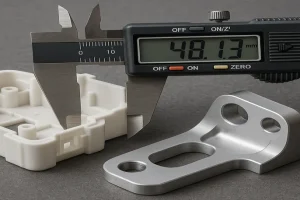
As tolerâncias seguem um padrão semelhante. Tolerâncias comerciais padrão (±0,1 mm ou ±0,005 por polegada) estão incluídas na maioria dos orçamentos de moldes sem custo adicional. Mas quando se especificam tolerâncias apertadas de ±0,05 mm ou mais rigorosas, várias coisas acontecem: o fabricante do molde deve usar aço de grau superior que mantém as dimensões ao longo do tempo, a usinagem passa da fresagem padrão para retificação de precisão e EDM por fio, e a validação dimensional requer inspeção por CMM em cada amostra T1.
“Especificar acabamento espelhado SPI A-1 numa superfície não cosmética é um dos erros de especificação mais comuns e mais caros na cotação de moldes.”Verdadeiro
Acabamento espelhado requer 20–40 horas de polimento manual por cavidade. Se a superfície está escondida dentro de uma montagem, um acabamento B-2 ou mesmo C-1 é funcionalmente idêntico e custa uma fração do preço.
“Tolerâncias mais apertadas produzem sempre peças melhores.”Falso
As tolerâncias devem corresponder aos requisitos funcionais, não a um padrão arbitrário. A sobreespecificação de tolerâncias aumenta o custo do molde, prolonga o prazo de entrega e pode realmente reduzir o rendimento porque a janela do processo se torna mais estreita. Aplique tolerâncias apertadas apenas onde são importantes — tipicamente superfícies de acoplamento e características de referência funcionais.
Como Pode Reduzir Custos de Moldes por Injeção Sem Sacrificar Qualidade?
A redução de custos na ferramentaria de moldes por injeção não se trata de cortar cantos — trata-se de cortar desperdício. As estratégias mais eficazes visam decisões que aumentam o custo sem acrescentar valor funcional.
Primeiro, invista numa DFM revisão antes de comprometer com a ferramentaria. Um bom engenheiro de DFM identificará reentrâncias que podem ser eliminadas com pequenas alterações geométricas, sugerirá onde os ângulos de saída podem ser aumentados sem impacto cosmético, e sinalizará especificações de tolerância mais apertadas do que a função exige. Regularmente vemos revisões de DFM reduzirem o custo do molde em 15–30% na primeira passagem.
Em segundo lugar, adapte o aço do seu molde ao seu volume de produção real. Se está a produzir 5.000–10.000 peças, o aço P20 é mais do que suficiente e custa significativamente menos que o H13. Reserve aço temperado para volumes de produção acima de 100.000 tiragens, onde o desgaste da ferramenta se torna um fator real.
Terceiro, seja honesto sobre os requisitos de acabamento superficial. Especifique polimento espelhado apenas nas superfícies que os clientes verão. Superfícies internas, características de montagem e paredes ocultas funcionam perfeitamente bem com um acabamento usinado padrão.
Quarto, consolide as alterações de design antes do início da ferramentaria. Cada ordem de alteração após o corte do aço custa 3–10× o que teria custado durante a fase de design. Congele o design da peça, valide-o com a sua equipa de montagem, e só então — e apenas então — liberte-o para o fabricante do molde.
Quinto, considere um parceiro de sourcing que ofereça DFM integrado, ferramentaria e produção. Quando a mesma equipa projeta o molde, constrói-o e executa peças de produção, não há atribuição de culpas quando surgem problemas — e a sobrecarga de comunicação que aumenta o custo em cadeias de abastecimento fragmentadas desaparece.
Com mais de 20 anos de experiência, mais de 120 funcionários de produção e processos certificados ISO 9001 / ISO 13485 / ISO 14001 / ISO 45001, a nossa equipa deteta problemas de conceção que aumentam os custos durante a análise DFM que a maioria das oficinas de ferramentaria independentes perde — porque pensamos na produção desde o primeiro dia, não apenas na entrega do molde.
Como é uma Cotação Real de um Molde?
A teoria é útil, mas números reais são melhores. Aqui estão três orçamentos de moldes anonimizados da nossa própria linha de produção, mostrando como as variáveis discutidas acima se traduzem em preços reais.
| Project | Tipo de peça | Configuração do Molde | Material | Acabamento da superfície | Custo do molde |
|---|---|---|---|---|---|
| Projeto A | Suporte simples | 1 cavidade, duas placas | PA66-GF30 | B-2 (funcional) | $3,200 |
| Projeto B | Caixa cosmética | 2 cavidades, sistema de canais quentes | PC/ABS | A-2 (semi-brilho) | $18,500 |
| Projeto C | Conector de precisão | 4 cavidades, distribuidor quente | POM | A-1 (espelhado, apenas face visível) | $42,000 |
O Projeto A é tão simples quanto um molde de produção pode ser — uma cavidade, ejeção por tração direta, acabamento superficial funcional (não cosmético) e um nylon com carga de vidro que requer aço temperado, mas nenhum sistema de alimentação ou refrigeração especial. Por $3.200, é uma ferramenta direta que funcionará de forma fiável para mais de 200.000 ciclos.
O Projeto B adiciona requisitos cosméticos (acabamento SPI A-2 semi-brilho em todas as superfícies visíveis), uma segunda cavidade e um sistema de canais quentes — elevando o preço para $18.500. O sistema de canais quentes sozinho representa cerca de $5.000 desse valor, mas o cliente economiza $0,04/peça com a eliminação do desperdício de canais, o que amortiza o prémio do sistema de canais quentes em aproximadamente 125.000 peças.
O Projeto C combina tolerâncias apertadas (±0,03 mm nas posições dos pinos), quatro cavidades, um distribuidor de canais quentes e um acabamento espelhado numa face crítica. O resultado é um molde de $42.000 que produz um conector usado em aplicações automóveis — e que se amortiza para $0,42/peça numa produção de 100.000 unidades, o que é altamente competitivo para esse nível de precisão.
Como Deve Abordar o Seu Próximo Projeto de Molde?
Comece por otimizar o design da peça para a fabricabilidade — é o maior fator de custo em qualquer projeto de molde. O custo do molde de injeção é previsível assim que compreender a hierarquia: primeiro a geometria, depois o tipo de molde, o número de cavidades, o material e os requisitos de superfície. As maiores poupanças vêm da eliminação de subcortes desnecessários, do relaxamento de tolerâncias não críticas e da escolha da estrutura de molde mais simples que satisfaça o seu volume de produção.
A forma mais barata de reduzir o custo do molde é investir numa revisão DFM antes de se cortar o aço. A segunda mais barata é trabalhar com um fabricante de ferramentas que compreenda todo o panorama de produção — não apenas a fabricação do molde, mas também o comportamento do material, a otimização do processo e a manutenção a longo prazo da ferramenta.
Se está a planear um projeto de moldagem por injeção e deseja uma análise detalhada de custos baseada na geometria real da sua peça, a nossa equipa de engenharia pode fornecer uma revisão DFM abrangente e um orçamento firme em 3–5 dias úteis.
Precisa de um orçamento detalhado para o seu projeto de moldagem por injeção? Obtenha preços competitivos, feedback DFM e cronograma de produção da equipa de engenharia da ZetarMold. Consulte o nosso Supplier Sourcing Guia para uma visão geral abrangente das nossas capacidades.

Perguntas mais frequentes
Perguntas mais frequentes
Quanto custa um molde de injeção típico?
Um molde de injeção de produção típico custa entre $3.000 e $30.000, dependendo da complexidade da peça, do número de cavidades, dos requisitos de acabamento superficial e da seleção de material. Moldes simples de cavidade única para peças não cosméticas começam em torno de $2.000–$5.000, enquanto moldes multicavidade com acabamentos cosméticos e tolerâncias apertadas variam tipicamente de $15.000–$80.000. O fator de custo mais importante não é o tamanho do molde, mas a complexidade do design — subcortes, tolerâncias apertadas e superfícies cosméticas adicionam mais custo do que o volume de aço bruto. Os compradores devem sempre solicitar um orçamento discriminado para compreenderem pelo que estão a pagar.
Qual é a parte mais cara de um molde de injeção?
A usinagem e a EDM (usinagem por descarga elétrica) representam tipicamente 30–45% do custo total do molde, tornando-as o maior componente de custo individual. Seguem-se os materiais de aço bruto com 15–25% e os componentes de distribuidor quente com 10–20%, quando aplicável. Geometrias de peça complexas que requerem deslizadores de ação lateral, elevadores ou mecanismos de desparafusamento aumentam significativamente as horas de usinagem. Para os compradores, isto significa que reduzir a complexidade da peça através de uma revisão DFM minuciosa é a ação única mais eficaz para baixar os custos de usinagem e reduzir o investimento total no molde.
Usar um sistema de distribuidor quente aumenta o custo do molde?
Sim, um sistema de distribuidor quente adiciona $3.000–$15.000+ ao custo do molde, dependendo do número de bicos e da complexidade do coletor. No entanto, os distribuidores quentes eliminam o desperdício de canais de alimentação, reduzem o tempo de ciclo e melhoram a qualidade da peça — tornando-os altamente económicos para séries de produção acima de 50.000 peças. As poupanças de material resultantes da eliminação dos canais de alimentação frios podem compensar o prémio do distribuidor quente num único lote de produção para projetos de alto volume, enquanto as séries de ferramentas de transição de baixo volume beneficiam geralmente muito mais de um design mais simples de canal de alimentação frio que evita totalmente o custo adicional do hardware.
Como é que o volume da peça afeta o custo do molde?
Volumes de produção mais elevados justificam investimentos iniciais mais elevados no molde, porque o custo da ferramenta é amortizado ao longo de mais peças produzidas ao longo do tempo. Para séries de 5.000 peças, um molde de cavidade única em P20 é tipicamente o ideal. Para 500.000+ peças, um molde multicavidade em aço temperado com distribuidor quente proporciona um custo por peça mais baixo, apesar do preço inicial mais elevado. A métrica chave é o custo da ferramenta dividido pela produção esperada ao longo da sua vida útil — um molde de $20.000 que produz 500.000 peças custa apenas $0,04 por peça em amortização, o que é altamente competitivo para a maioria das aplicações.
Posso reduzir o custo do molde alterando o design da peça?
Sim — o design da peça é a alavanca de custo mais eficaz disponível para os compradores. Eliminar reentrâncias remove a necessidade de mecanismos de ação lateral, economizando tipicamente 20–40% no custo do molde. Relaxar tolerâncias apertadas para graus comerciais padrão reduz o tempo de usinagem e inspeção. Reduzir o número de superfícies cosméticas que requerem polimento espelhado corta o tempo de polimento em 50–70%. Uma revisão completa de DFM com um moldador experiente tipicamente identifica 15–30% em economias de custo de molde sem comprometer o desempenho funcional do produto, integridade dimensional ou confiabilidade de uso final.
Por que os orçamentos de moldes de injeção variam tanto entre fornecedores?
A variação de orçamento deriva de diferenças na seleção de grau de aço, capacidade de usinagem, marca de sistema quente e profundidade de controle de qualidade entre fornecedores. Um fornecedor que cotar P20 onde outro especifica H13 mostrará um preço mais baixo, mas o molde pode não durar tanto sob condições reais de produção. Um fornecedor que omita análise de fluxo de moldagem ou forneça amostragem T1 mínima cotará menos, mas pode entregar um molde que necessite de retrabalho caro posteriormente. Compare sempre orçamentos em especificações equivalentes e solicite uma discriminação totalmente detalhada de cada moldador.
-
moldagem por injeção: A moldagem por injeção é um processo de fabricação que injeta plástico fundido em uma cavidade do molde, resfria-o e ejeta uma peça acabada em um ciclo repetitivo. ↩
-
molde de injeção: molde de injeção refere-se a um molde de injeção é a ferramenta metálica de precisão que define a geometria da peça, acabamento superficial, sistema de alimentação, resfriamento e ejeção no ciclo de moldagem. ↩
-
cavidade: cavidade refere-se a uma cavidade é o espaço oco dentro do molde que define a forma final da peça moldada; moldes multicavidade produzem várias peças por ciclo. ↩




 EN
EN  ES
ES  FR
FR  DE
DE  PT
PT  AR
AR  RU
RU  JA
JA  KO
KO  IT
IT  NL
NL  TR
TR  PL
PL 