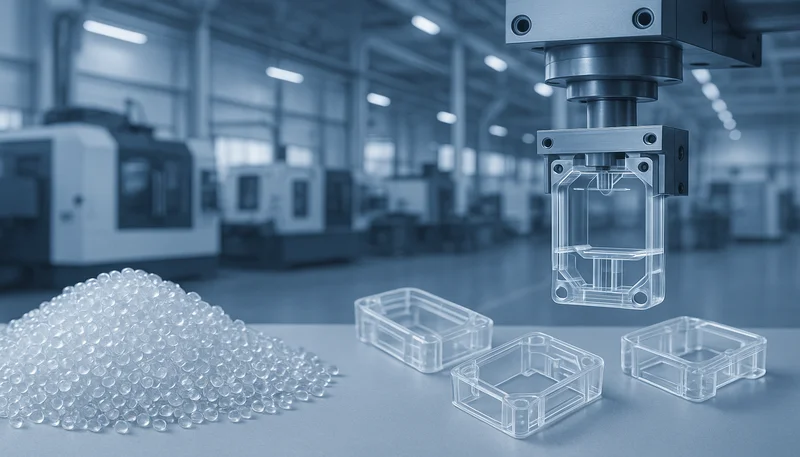
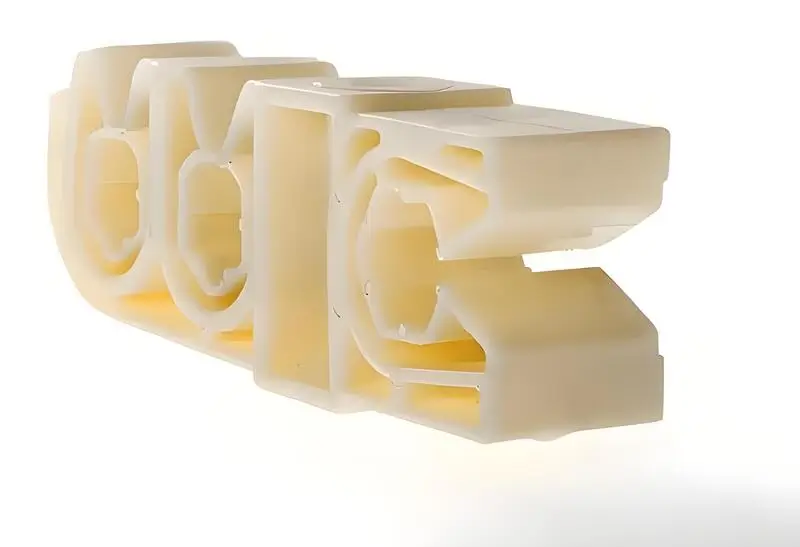
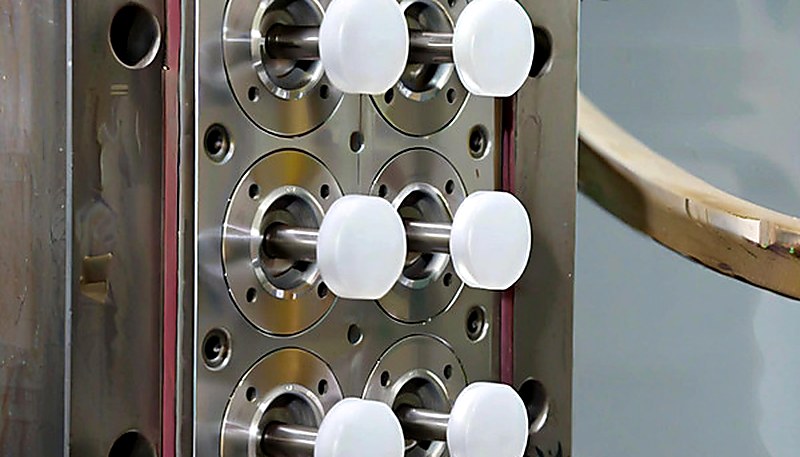
- – O Poliestireno (PS) é um termoplástico amorfo que oferece excelente clareza, estabilidade dimensional e tempos de ciclo rápidos de 15 a 30 segundos.
- – A moldagem por injeção de PS opera a baixas temperaturas (180–260°C de fusão, 20–50°C de molde), tornando-a energeticamente eficiente em comparação com plásticos de engenharia.
- – O GPPS oferece até 90% de transmissão de luz; o HIPS adiciona resistência modificada com borracha para aplicações duráveis.
- – Usos comuns incluem embalagens alimentares, caixas de eletrônicos e consumíveis de laboratório — onde custo e clareza são mais importantes.
O que é moldagem por injeção de PS e por que é tão usada?
A moldagem por injeção PS é o processo de moldar o poliestireno1 em partes injetando resina derretida em um molde de precisão. É um dos processos de moldagem por injeção mais comuns globalmente, com produção anual de PS superior a 14 milhões de toneladas. Em nossa fábrica, executamos peças PS diariamente — desde recipientes de alimentos limpos até caixas eletrônicas — porque o material combina baixo custo ($ 1,00-1,50/kg), fácil processamento e excelente acabamento superficial.
O poliestireno pertence à família do polímero amorfo2, o que significa que não tem estrutura cristalina. Isso dá taxas previsíveis de encolhimento (0,3–0,6%), excelente precisão dimensional, e não há necessidade de ciclos de resfriamento prolongados que os materiais semi-cristalinos demandam. Descobrimos que a PS oferece consistentemente tolerâncias de ±0,1 mm na maior parte das geometrias sem ajustes especiais de ferramentas.
Dois graus principais dominam a moldagem por injeção de PS:
| Imóveis | GPPS (uso geral) | HIPS (alto impacto) |
|---|---|---|
| Transparência | Transparente como cristal (90% de transmissão luminosa) | Opaco |
| Resistência ao impacto | Baixo (15–20 J/m) | Moderada (60–120 J/m) |
| Resistência à tração | 35–55 MPa | 20–35 MPa |
| Resistência térmica (HDT) | 80–95°C | 75–90°C |
| Uso típico | Embalagens transparentes, peças óticas | Carcaças eletrônicas, eletrodomésticos |
"“A moldação por injeção de PS utiliza temperaturas de molde mais baixas (20–50°C) do que a maioria dos plásticos de engenharia.”"True
Como o PS é amorfo e tem temperatura de transição vítrea em torno de 100°C, ele se solidifica rapidamente em baixas temperaturas do molde, permitindo ciclos mais curtos e menor consumo de energia.
"“O poliestireno exige temperaturas de molde elevadas, superiores a 100°C, para um preenchimento adequado.”"False
O PS é um polímero amorfo de viscosidade relativamente baixa. Temperaturas de molde de 20–50°C bastam para a maioria das peças, tornando o processamento energeticamente eficiente.
Quais propriedades essenciais tornam o PS ideal para moldagem por injeção?
As principais propriedades do material PS são baixa viscosidade de fusão, retração mínima e excelentes características de fluxo. Na nossa experiência, o PS preenche secções de parede fina até 0,5 mm com pressão mínima, algo com que materiais como PC ou POM têm dificuldade na mesma espessura de parede.
Estas são as propriedades críticas do material que consideramos ao selecionar PS para um projeto:
| Imóveis | Faixa de valores | Por que é importante |
|---|---|---|
| Índice de fluxo de fusão (MFI) | 2–30 g/10min | MFI superior = enchimento mais fácil de geometrias complexas |
| Densidade | 1.04–1.06 g/cm3 | Peças leves, menor custo de material por volume |
| Taxa de retração | 0.3–0.6% | Dimensões previsíveis, tolerâncias estreitas alcançáveis |
| Ponto de amolecimento Vicat | 85–105°C | Define a temperatura máxima de serviço |
| Resistência dieléctrica | 20–28 kV/mm | Bom isolamento elétrico para eletrônicos |
| Absorção de água (24h) | 0.03–0.10% | É necessária uma secagem mínima antes do processamento |
Uma vantagem prática que valorizamos: o PS tem absorção de umidade muito baixa, normalmente inferior a 0.1%. Isso significa que muitas vezes podemos dispensar a etapa de pré-secagem obrigatória para materiais como nylon ou PET. No caso do GPPS, na maioria das vezes passamos diretamente do saco para a tremonha. O HIPS pode se beneficiar de 1–2 horas a 70–80°C se o material tiver sido armazenado em condições úmidas, mas isso raramente é crítico.
Quais São as Principais Etapas no Processo de Moldagem por Injeção de PS?
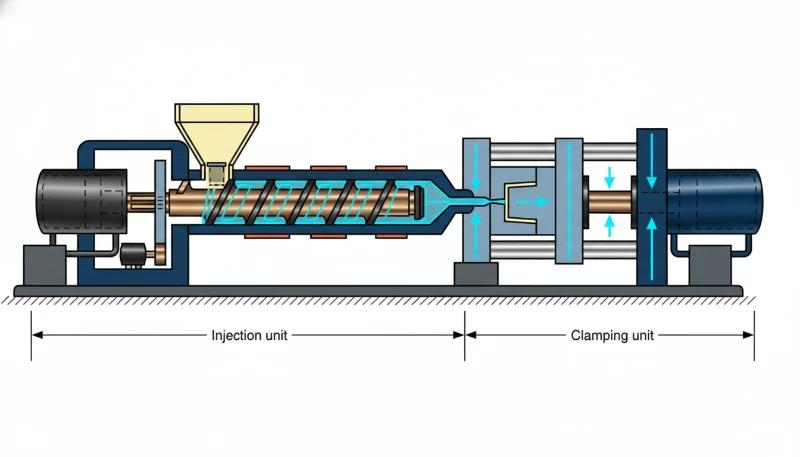
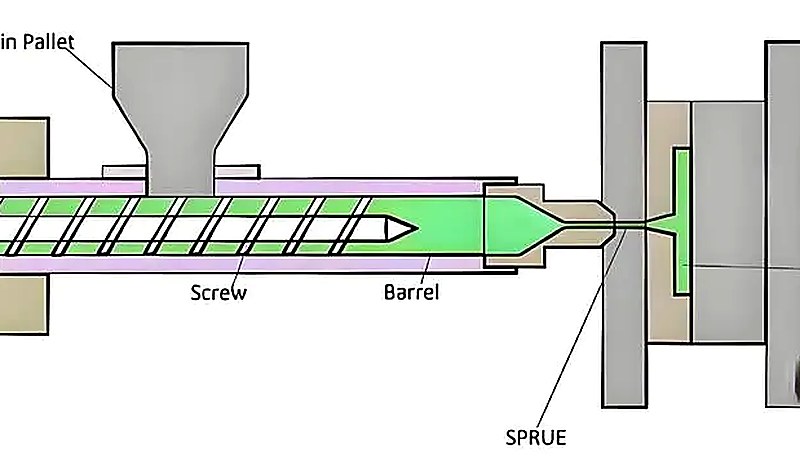
O processo de moldação de PS é um ciclo normalizado de plastificação, injeção, compactação, arrefecimento e ejeção, otimizado para a baixa viscosidade do poliestireno. Um ciclo típico dura 15–30 segundos, o que é 20–40% mais rápido do que em peças comparáveis de ABS ou PC.
Veja como processamos PS em nossa fábrica:
Passo 1: Preparação do material. Carregar pastilhas PS no funil. Para GPPS, geralmente não é necessária secagem. Para HIPS, secar a 70-80°C durante 1-2 horas, se necessário.
Passo 2: Plastificação. O parafuso gira para derreter PS a 180-260°C. Usamos um parafuso de uso geral com uma relação de compressão de 2,0 a 2,5:1. PS derrete facilmente e não requer alta precisão de temperatura de fusão3 - uma variação de ±5°C é aceitável.
Passo 3: Injeção. O parafuso empurra para a frente a uma velocidade de injeção de 30–80 mm/s, preenchendo a cavidade a 40–100 MPa. PS flui rapidamente, então mantemos a velocidade de injeção moderada para evitar marcas de jato na superfície.
Passo 4: Embalagem e manutenção. Aplicamos pressão de retenção a 40–60% da pressão de injeção por 3–8 segundos para compensar o encolhimento. Como a PS tem baixa redução (0,3–0,6%), o tempo de embalagem é relativamente curto.
Passo 5: Refrigeração. Peças frias no molde a 20-50°C por 8-20 segundos. PS solidifica rapidamente como um material amorfo — não é necessário tempo de cristalização.
Passo 6: Ejeção. O molde abre e os pinos de ejecção empurram a parte para fora. PS é rígido e pode ser frágil (especialmente GPPS), então usamos pinos ejetores suficientes para distribuir força uniformemente e evitar rachaduras.
Quais parâmetros de processamento são críticos para a qualidade da moldagem por injeção de PS?
Os parâmetros críticos do processamento de PS por injeção são a temperatura do material fundido, a velocidade de injeção e o tempo de resfriamento. Acertar esses três fatores determina se você produzirá peças de GPPS cristalinas ou terá embaçamento, marcas de tensão e falhas frágeis. Otimizamos esses parâmetros em centenas de projetos com PS, e a tabela abaixo apresenta nossas configurações comprovadas.
| Parâmetro | Faixa de GPPS | Intervalo do HIPS | Notas |
|---|---|---|---|
| Temperatura de fusão | 180–240°C | 200–260°C | Temperatura mais alta melhora a transparência do GPPS |
| Temperatura do molde | 20–40°C | 30–50°C | Temperatura menor = ciclo mais rápido, temperatura maior = superfície melhor |
| Pressão de injeção | 40–80 MPa | 50–100 MPa | O HIPS requer uma pressão ligeiramente maior |
| Velocidade de injeção | Média (30–60 mm/s) | Média-rápida (40–80 mm/s) | Velocidade excessiva causa jateamento; velocidade muito baixa causa marcas de fluxo |
| Pressão de retenção | 30–50 MPa | 35–60 MPa | 40–60% da pressão de injeção |
| Tempo de retenção | 3–6 segundos | 4–8 segundos | Até o congelamento do ponto de injeção |
| Tempo de arrefecimento | 8–15 segundos | 10–20 segundos | Depende da espessura da parede |
| Pressão de retorno | 3–10 MPa | 5–15 MPa | Garante homogeneidade uniforme do material fundido |
Uma lição importante que aprendemos: para peças transparentes de GPPS, mantenha a temperatura do fundido na faixa superior (220–240°C) e a velocidade de injeção moderada. A alta velocidade gera névoa induzida por cisalhamento que prejudica a transparência óptica. Para peças de HIPS em que a resistência ao impacto é mais importante que a aparência, elevamos a temperatura do fundido para 240–260°C a fim de dispersar completamente a fase de borracha.
"“O PS apresenta um dos níveis mais baixos de sensibilidade à humidade entre os plásticos comuns de moldação por injeção.”"True
Com absorção de água inferior a 0,1%, o PS é muito menos sensível à umidade que o náilon (1,5–2,5%), o PET (0,3%) ou até o ABS (0,2–0,4%). Isso simplifica o manuseio do material e reduz o tempo e o custo do pré-processamento.
"“O PS requer uma secagem prolongada (4+ horas) antes da moldação por injeção, tal como o nylon.”"False
O poliestireno absorve pouquíssima umidade (0.03–0.10% em 24 horas). Em geral, o GPPS pode ser processado sem secagem, e o HIPS precisa apenas de 1–2 horas a 70–80°C em condições úmidas. Isso é muito menos exigente que o nylon, que requer 4–6 horas de secagem.
Quais são os defeitos comuns na moldagem por injeção de PS e como podem ser evitados?
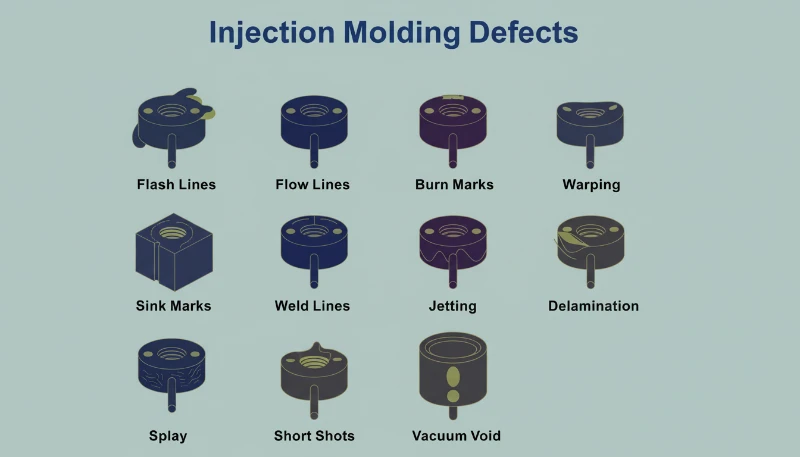
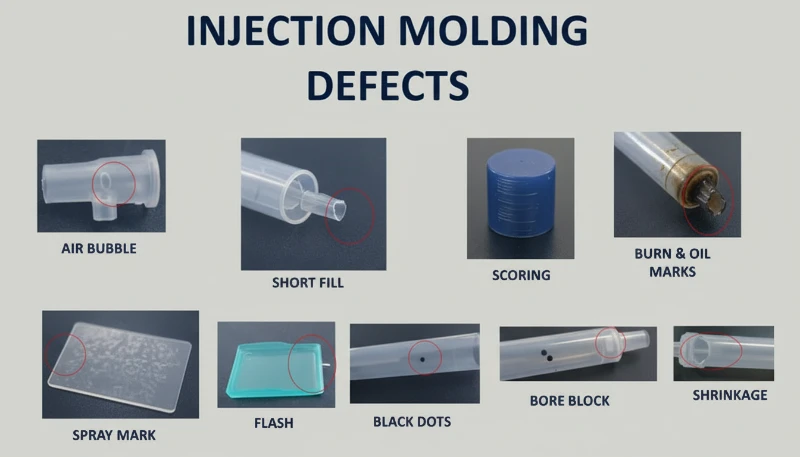
Os defeitos de moldagem de PS mais comuns são fissuras, marcas de fluxo e estrias prateadas, causados pela sua estrutura amorfa rígida. Na nossa produção, desenvolvemos contramedidas específicas para cada defeito que reduzem as taxas de rejeição para menos de 1%.
| Defeito | Causa raiz | Solução |
|---|---|---|
| Fissuração / Fragilidade | Tensão interna excessiva, sobrecompactação | Reduza a pressão de manutenção, eleve a temperatura do molde para 40–50°C e adicione ângulos de saída ≥1,5° |
| Raias de prata | O PS custa 30–40% menos que o ABS e processa-se mais rapidamente com menor consumo de energia. No entanto, o ABS oferece uma resistência ao impacto 5–10 vezes superior e melhor resistência ao calor (95–110°C vs 80–95°C). Escolha PS quando o custo e a transparência são mais importantes; escolha ABS quando as peças precisam de suportar impactos, temperaturas mais elevadas ou exposição química. | Secar o material se necessário, reduzir a temperatura de fusão e verificar a existência de contaminação |
| Marcas de fluxo | Material frio, injeção lenta | Aumente a temperatura do material fundido em 10–15°C e otimize o perfil de velocidade de injeção |
| Nebulosidade (GPPS) | Cristalitos induzidos por cisalhamento, contaminação | Reduzir a velocidade de injeção, limpar bem o cilindro, utilizar material virgem |
| Página de guerra | Resfriamento desigual, espessura de parede assimétrica | Equilibrar os canais de refrigeração, manter a espessura uniforme da parede ±10% |
| Marcas de pia | Seções espessas, recalque insuficiente | Remova o material interno das áreas espessas; aumente a pressão/o tempo de recalque |
| Jato | Entrada em alta velocidade por um ponto de injeção pequeno | Aumentar o ponto de injeção, reduzir a velocidade inicial de injeção, utilizar ponto de injeção em leque |
Um problema crítico exclusivo do PS é a fissuração sob tensão quando exposto a determinados produtos químicos. Já vimos peças de GPPS fissurarem espontaneamente após contato com adesivos, solventes de limpeza ou até certas tintas de impressão. Sempre teste a compatibilidade química antes de especificar PS para peças que serão coladas, pintadas ou expostas a solventes em serviço.
Onde a moldagem por injeção de PS é usada em aplicações reais?
As peças de PS moldadas por injeção são utilizadas em embalagens alimentares, eletrónica, dispositivos médicos e produtos domésticos em todo o mundo. Produzimos peças de PS para clientes de todos estes setores, e a versatilidade do material continua a surpreender-nos.
Embalagem de alimentos (GPPS e HIPS): Embalagens claras de conchas, copos de iogurte, talheres descartáveis e bandejas de deli. O GPPS fornece a transparência que os consumidores esperam, enquanto o HIPS lida com aplicações que precisam de mais durabilidade. PS é compatível com a FDA para contato com alimentos.
Consumer Electronics (HIPS): caixas de TV, caixas de controle remoto, cartuchos de impressora e painéis de aparelhos. HIPS oferece boa resistência ao impacto, fácil pintura/impressão e baixo custo para produtos de consumo de alto volume.
Médico e Laboratório (GPPS): Pratos de Petri, tubos de teste, pontas de pipeta, e carcaças de dispositivo de diagnóstico. A clareza óptica da GPPS e a compatibilidade gama-esterilização tornam-na padrão em consumíveis de laboratório.
Produtos Domésticos: Caixas de CD/DVD, molduras, cabides e organizadores de armazenamento. O PS molda facilmente em formas detalhadas com excelente acabamento superficial a um custo mínimo.
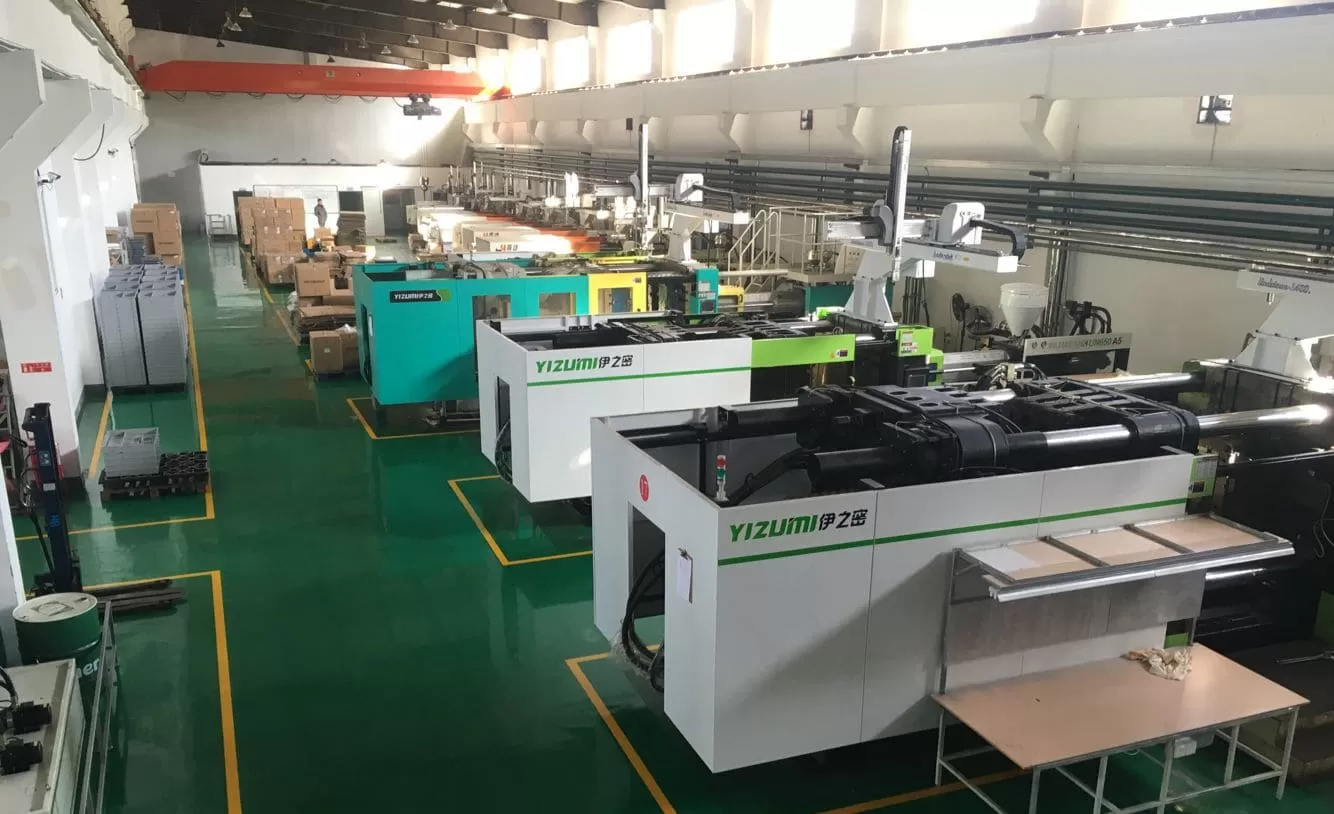
Na nossa fábrica de Xangai, operamos 47 máquinas de moldação por injeção, de 90T a 1850T, e temos experiência no processamento de mais de 400 materiais plásticos, incluindo graus GPPS e HIPS. Esta gama permite-nos selecionar o grau exato de PS e a tonelagem da máquina em função dos requisitos de cada projeto.
Como Pode o Design do Molde Prevenir Defeitos Comuns na Moldagem por Injeção de PS?
O desenho do molde para PS é fundamental, porque a fragilidade do material amplifica quaisquer erros do molde e transforma-os em defeitos que causam rejeições. Como o PS é mais frágil do que o ABS ou o PP, os erros de desenho do molde que poderiam ser toleráveis com materiais mais tenazes tornam-se problemas que causam rejeições no poliestireno.
Design de Portão: Recomendamos portões de ventilador ou portões submarinos para peças PS. Os portões de pinos funcionam para pequenas partes, mas podem causar concentrações de tensão que levam a rachaduras. O diâmetro da porta deve ser de 60–80% da espessura da parede para GPPS, e ligeiramente maior para HIPS.
Layout de resfriamento: O resfriamento uniforme é crítico porque o PS dobra facilmente com diferenciais de temperatura. Mantemos o espaçamento do canal de resfriamento a 1,5-2× o diâmetro do canal da superfície da cavidade, com a temperatura da água mantida a 20-40°C. O resfriamento informal ajuda significativamente para geometrias complexas.
Ângulos de rascunho: PS requer um rascunho mínimo de 1–2° — mais do que PP (0,5–1°) — porque a sua rigidez e fragilidade tornam-no propenso a rachar se forçado a sair do núcleo. Para superfícies texturizadas, adicione 1° por 0,025 mm de profundidade de textura.
Espessura da parede: Manter paredes uniformes entre 1,0-3,0 mm. PS pode preencher até 0,5 mm em aplicações de fluxo curto, mas paredes abaixo de 1,0 mm aumentam o risco de fragilidade. A variação da espessura deve permanecer dentro de ±10% para evitar a guerra.
Sistema de Ejeção: Use mais pinos ejetores do que você faria para PP ou PE. Nós normalmente ejetores de espaço não mais de 50 mm separados para peças PS, e usar ejetores de lâmina para bordas longas para distribuir força e evitar fraturas de estresse.
Perguntas mais frequentes
Qual é a diferença entre GPPS e HIPS na moldagem por injeção?
O GPPS (Poliestireno de Uso Geral) é um grau transparente e rígido com aproximadamente 90 por cento de transmissão de luz, tornando-o a escolha preferida para embalagens transparentes, componentes óticos e consumíveis de laboratório como placas de Petri e tubos de ensaio. O HIPS (Poliestireno de Alto Impacto) é um grau opaco, modificado com borracha, que oferece uma resistência ao impacto três a seis vezes maior — tipicamente 60 a 120 J/m em comparação com 15 a 20 J/m do GPPS. O HIPS é amplamente especificado para caixas de eletrónica, painéis de eletrodomésticos e produtos de consumo onde a durabilidade é mais importante do que a transparência. Ambos os graus partilham temperaturas de processamento semelhantes e estão entre os termoplásticos mais rentáveis para moldagem por injeção.
As peças de PS moldadas por injeção podem ser recicladas?
Sim, o PS é totalmente reciclável sob o código de identificação de resina número 6. Tanto os graus GPPS como HIPS podem ser triturados e reprocessados várias vezes, e na nossa fábrica misturamos rotineiramente 20 a 30 por cento de material triturado com material virgem sem perda significativa de propriedades mecânicas. No entanto, a taxa real de reciclagem depende fortemente da infraestrutura municipal local — muitos programas comunitários não aceitam espuma de PS ou recipientes rígidos de PS. Para aplicações industriais, os sistemas de trituração em circuito fechado são prática padrão e representam o caminho de reciclagem mais eficaz para peças moldadas por injeção de PS.
Qual é o tempo de ciclo típico da moldagem por injeção de PS?
Os tempos de ciclo típicos para moldagem por injeção de PS variam de 15 a 30 segundos para peças padrão com espessura de parede entre 1,5 e 2,5 mm. Isto é 20 a 40 por cento mais rápido do que peças comparáveis de ABS ou PC porque o PS solidifica rapidamente como um material amorfo a baixas temperaturas de molde de 20 a 50 graus Celsius. Aplicações de embalagem de parede fina podem alcançar tempos de ciclo tão rápidos quanto 8 a 12 segundos com arrefecimento otimizado e sistemas de ejeção de alta velocidade. O tempo de ciclo rápido é uma das principais vantagens económicas do PS na produção de alto volume.
O PS é seguro para aplicações em contato com alimentos?
Tanto o GPPS como o HIPS estão disponíveis em formulações compatíveis com a FDA e com o Regulamento da UE 10/2011 para contacto direto com alimentos. O PS é um dos materiais mais amplamente utilizados para embalagens alimentares — copos de iogurte, recipientes de charcutaria, embalagens de concha e talheres descartáveis são todos comumente produzidos a partir de PS de grau alimentar. Ao especificar resina de grau alimentar, confirme a certificação do grau com o seu fornecedor e garanta que as temperaturas de processamento permanecem abaixo de 280 graus Celsius para evitar degradação térmica e minimizar qualquer risco de migração de monómero de estireno para os produtos alimentares.
Como o PS se compara ao ABS na moldagem por injeção?
O PS custa 30 a 40 por cento menos que o ABS por quilograma e processa-se mais rapidamente devido à menor viscosidade de fusão e requisitos de temperatura do molde, o que reduz o consumo de energia por ciclo. No entanto, o ABS oferece uma resistência ao impacto cinco a dez vezes superior e melhor resistência ao calor, com uma HDT de 95 a 110 graus Celsius, contra 80 a 95 graus Celsius para o PS. O ABS também oferece uma resistência química superior e é mais fácil de pintar ou colar. A decisão resume-se a saber se a sua aplicação prioriza o custo e a transparência (PS) ou a robustez e a temperatura de serviço mais elevada (ABS).
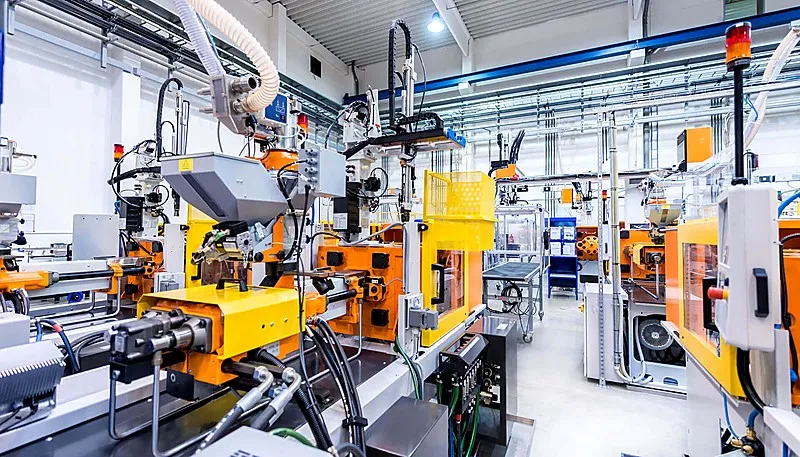
Fábrica de moldagem por injeção de alta tecnologia com linhas de produção automatizadas
A fissuração pós-moldagem em peças de PS é mais comumente causada por tensão interna residual resultante de pressão de retenção excessiva, altas velocidades de injeção ou ângulos de saída insuficientes durante a ejeção. A fissuração por tensão ambiental é outro risco significativo — o PS é sensível a solventes, adesivos, certos agentes de limpeza e até algumas tintas de impressão, que podem desencadear fratura frágil retardada. Para prevenir fissuração, reduza a pressão de retenção para 40 a 60 por cento da pressão de injeção, mantenha a temperatura do molde entre 40 e 50 graus Celsius, use pelo menos 1,5 graus de ângulo de saída e sempre realize testes de compatibilidade química antes de aprovar o PS para qualquer aplicação envolvendo adesivos, revestimentos ou exposição a solventes.
O Que Deve Lembrar Sobre a Moldagem por Injeção de PS?
A moldagem por injeção PS é um processo econômico com 15 ciclos de segundos e temperaturas de fusão de 180-260°C. O GPPS oferece clareza óptica; o HIPS adiciona resistência ao impacto. O sucesso depende do controle da velocidade da injeção, do projeto do molde e da compatibilidade química. Consulte nosso Guia completo de moldagem por injeção para um contexto mais amplo ou encontre um fornecedor de moldagem por injeção para o seu próximo projeto.
poliestireno: Poliestireno (PS) é um polímero aromático sintético feito a partir do monómero estireno, classificado como termoplástico amorfo. Está disponível em geral (GPPS) e graus de alto impacto (HIPS). ↩
polímero amorfo: Um polímero amorfo é um plástico cujas cadeias moleculares carecem de ordem cristalina de longo alcance, resultando em transparência, encolhimento isotrópico e uma temperatura de transição vítrea distinta em vez de um ponto de fusão afiado. ↩
temperatura de fusão: a temperatura de fusão refere-se à temperatura em que um polímero se torna totalmente fundido e suficientemente fluido para moldagem por injeção, medida na ponta do bico. Ela afeta diretamente o comportamento do fluxo, orientação molecular e potencial degradação térmica do material. ↩