 Przejdź do treści

Właśnie wydałeś 30 000 USD na formę produkcyjną w chińskiej fabryce. Sześć miesięcy później chcesz przenieść produkcję gdzie indziej – a fabryka twierdzi, że forma należy do nich. Nie, nie wyślą jej. Tak, są gotowi nadal produkować Twoje części. Na ich warunkach. Brzmi znajomo? Dzieje się to częściej, niż ktokolwiek lubi przyznać, a różnica między odzyskaniem formy a całkowitą jej utratą sprowadza się do jednego dokumentu: umowy własności formy.
- Chińscy dostawcy często domyślnie roszczą sobie prawo własności formy — pisemna umowa jest niezbędna
- Umowy NNN chronią twoją własność intelektualną, ale nie ustanawiają własności formy
- Umowy własności form muszą być egzekwowalne zgodnie z prawem chińskim, w języku chińskim
- Uwzględnij jasne klauzule dotyczące przeniesienia, przechowywania, ubezpieczenia i rozwiązania umowy
- Należyta staranność wobec dostawcy jest tak samo ważna jak sama umowa
Czym jest umowa o własność formy wtryskowej?
Umowa własności formy wtryskowej to dokument prawny dowodzący, że to Ty – a nie fabryka – jesteś właścicielem swojej Mold Tooling1. W Chinach ten dokument nie jest opcjonalny: bez niego domyślnym założeniem w wielu fabrykach jest, że są one właścicielami narzędzi wyprodukowanych na ich terenie. Umowa zazwyczaj obejmuje IP projektu formy, prawa przeniesienia, warunki przechowywania, obowiązki ubezpieczeniowe, odpowiedzialność za konserwację oraz co się dzieje, jeśli dostawca zbankrutuje.
Umowa zazwyczaj obejmuje własność intelektualną projektu formy, prawa przeniesienia, warunki przechowywania, obowiązki ubezpieczeniowe, odpowiedzialność za konserwację oraz co się dzieje, gdy dostawca zbankrutuje. Pomyśl o tym jak o akcie własności dla aktywów o wartości sześciu cyfr, które znajdują się w budynku należącym do kogoś innego — z tą różnicą, że budynek jest oddalony o 13 000 km, a lokalny system prawny działa inaczej, niż można by się spodziewać.
Dlaczego chińskie fabryki opierają się przeniesieniu własności formy?
Powód, dla którego chińskie fabryki opierają się przeniesieniu własności formy, jest prosty: zatrzymanie narzędzi blokuje powtarzalne przychody z produkcji. Większość chińskich formowanie wtryskowe dostawcy działają na niskich marżach z produkcji masowej, a nie z narzędzi. Ich model biznesowy zależy od utrzymania produkcji części we własnym zakresie. Niektóre fabryki oferują narzędzia po kosztach lub poniżej, aby zablokować przyszłą wielkość produkcji – to powszechna strategia wśród dostawca form wtryskowych w Chinach.
Nie jest to z natury nieuczciwe – to powszechna strategia cenowa w chińskim przemyśle. Fabryka inwestuje w budowę Twojej formy po konkurencyjnej cenie, ponieważ oczekuje, że odzyska tę inwestycję poprzez produkcję części w ciągu 12–36 miesięcy. Kiedy zabierasz formę po trzech seriach produkcyjnych, faktycznie tracą na tym narzędziu pieniądze.
W ZetarMold utrzymujemy wewnętrzny zakład produkcyjny form w Szanghaju, który wytwarza ponad 100 zestawów form miesięcznie. Dzięki ponad 20-letniemu doświadczeniu w budowaniu i przenoszeniu form dla międzynarodowych nabywców, widzieliśmy spory o własność na własne oczy – i naszą standardową praktyką jest uwzględnianie jasnych warunków przeniesienia własności w każdej umowie narzędziowej od pierwszego dnia.
Praktyczną implikacją jest to, że musisz określić oczekiwania dotyczące własności z góry, zanim jakiekolwiek pieniądze zmienią właściciela. Fabryki, które opierają się tej rozmowie, często są tymi samymi, które później będą się opierać wydaniu Twojej formy. Z naszego doświadczenia w ZetarMold wynika, że przejrzystość co do warunków własności od pierwszego dnia faktycznie wzmacnia relacje biznesowe – obie strony dokładnie wiedzą, na czym stoją.
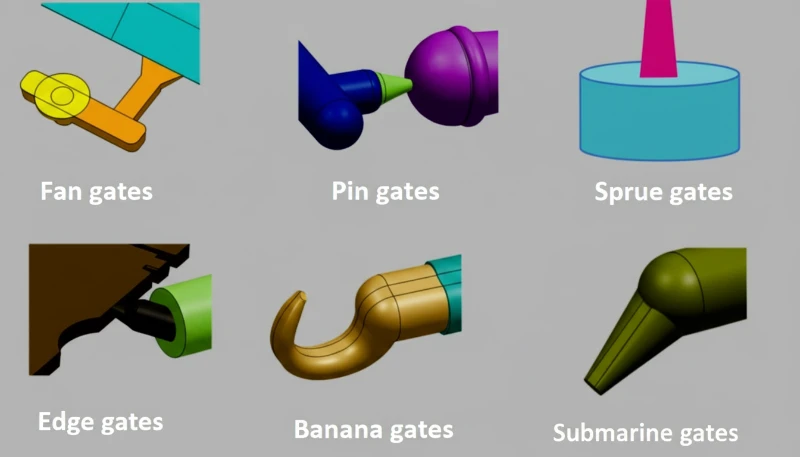
Z naszego doświadczenia w pracy z międzynarodowymi klientami w ZetarMold widzieliśmy projekty, w których poprzedni dostawca odmówił wydania form o wartości ponad 50 000 USD, tylko dlatego, że nie było pisemnej umowy o własności. Kupujący zapłacił w całości. Dostawca nie przejmował się — miał fizyczne posiadanie, a bez umowy zgodnej z prawem chińskim kupujący nie miał praktycznie żadnej siły przetargowej.
Jakie kluczowe klauzule musi zawierać umowa własności formy?
Wykonalna umowa o własności formy to taka, która obejmuje sześć kluczowych klauzul. Są to: (1) jasna deklaracja własności, (2) prawa do przeniesienia i odzyskania, (3) obowiązki przechowywania i konserwacji, (4) wymagania dotyczące ubezpieczenia, (5) zakaz nieautoryzowanego użycia oraz (6) warunki rozwiązania umowy i rozstrzygania sporów. Brak którejkolwiek z nich tworzy lukę, którą dostawca może wykorzystać.
| Klauzula | What It Covers | Why It Matters |
|---|---|---|
| Deklaracja własności | Jasne stwierdzenie, że kupujący jest właścicielem formy i wszelkich praw własności intelektualnej | Ustanawia prawny tytuł własności — zapobiega roszczeniom domyślnego dostawcy |
| Prawa przeniesienia | Warunki i harmonogram odzyskiwania formy | Bez tego dostawca może opóźniać w nieskończoność |
| Przechowywanie i konserwacja | Jak forma jest przechowywana, kto płaci za utrzymanie | Zapobiega degradacji i niespodziewanym opłatom za naprawy |
| Ubezpieczenie | Kto ubezpiecza formę i na jaką kwotę | Chroni przed utratą, uszkodzeniem lub bankructwem fabryki |
| Zakaz niewykorzystywania | Dostawca nie może używać formy dla innych klientów | Zapobiega nieautoryzowanemu kopiowaniu lub produkcji |
| Warunki rozwiązania umowy | Co się dzieje, gdy relacja się kończy | Określa proces wyjścia i harmonogram odbioru |
„Umowa o własności formy powinna określać dokładny harmonogram odzyskania formy.”Prawda
Uwzględnienie konkretnego harmonogramu odzyskania (zazwyczaj 30 dni od pisemnego żądania) wraz z karami za opóźnienie daje wykonalne terminy zamiast niejasnych zobowiązań.
„Standardowa umowa NDA podpisana w języku angielskim wystarcza do ustanowienia własności formy w Chinach.”Fałsz
NDA tylko w języku angielskim nie ustanawia własności formy zgodnie z prawem chińskim. Potrzebujesz osobnej umowy własności formy w języku chińskim, regulowanej prawem chińskim, z jasnymi postanowieniami o przeniesieniu tytułu.
Jak chińskie prawo reguluje własność formy?
Under Chinese law, mold ownership is determined by what the written contract states — in Chinese, under Chinese law, via Chinese arbitration. Foreign-court judgments are generally not enforceable in China. Under the PRC Civil Code (effective January 2021), mold ownership follows the contract between the parties. If the contract says you own it, you own it — in theory. In practice, enforcement requires specific contract provisions.
This means a mold ownership agreement drafted in English under New York law is essentially worthless if the factory is in Shenzhen and decides to keep your mold. You need a bilingual agreement — with the Chinese text controlling in case of discrepancy — filed with a recognized Chinese arbitration institution. It costs more upfront, but it is the only version a Chinese factory will actually respect.
Jaka jest różnica między umową NNN a umową własności formy?
An NNN Agreement2 and a mold ownership agreement are two separate documents protecting different things — your IP versus your physical tooling. An NNN agreement (Non-Disclosure, Non-Use, Non-Circumvention) protects your intellectual property — designs, drawings, specifications. A mold ownership agreement protects your physical asset — the steel forma wtryskowa tooling itself. They serve different purposes, and you need both.
We have seen buyers who had a solid NNN in place but lost their molds because they never signed a separate ownership agreement. The NNN prevented the supplier from copying the design — theoretically — but it said nothing about who owned the physical mold. The factory argued (successfully) that without a specific ownership clause, the mold was theirs under local commercial custom. Two different documents, two different protections. Do not skip either.
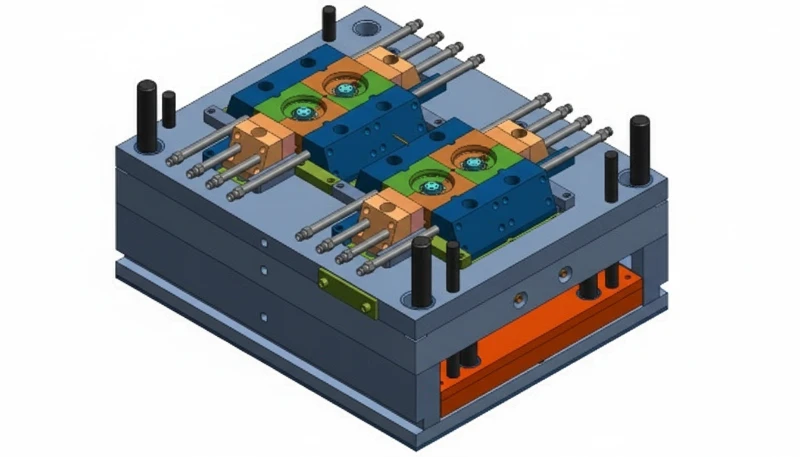
The lesson is straightforward: never assume that one document covers everything. IP protection and physical asset protection are parallel but distinct legal needs, and Chinese courts treat them as separate matters requiring separate contractual foundations.
The scope of protection differs fundamentally. An NNN prevents the factory from sharing your CAD files or making your product without permission — it addresses information security. A mold ownership agreement addresses property rights: who holds title, who controls access, and what happens to the physical steel when the relationship ends. In Chinese legal practice, these are separate legal concepts covered by separate areas of law.
“Engraving your company name on the mold helps prove ownership in disputes.”Prawda
Physical marking of the mold with buyer identification supports the Bailment3 claim and makes it harder for the factory to argue the mold is part of their assets.
“Chinese courts will enforce foreign court judgments on mold ownership disputes.”Fałsz
China generally does not enforce foreign court judgments. Your mold ownership agreement must specify Chinese arbitration (e.g., CIETAC) for enforceable dispute resolution.
Kiedy należy negocjować warunki własności formy?
The best time to negotiate mold ownership terms is before you place the tooling order — not during production, and certainly not after. The supplier wants your business most during the quotation and vendor selection phase. Once you have paid the deposit and they are cutting steel, your leverage drops significantly.
Include ownership terms in your initial RFQ or purchasing agreement. Make it clear from the first interaction that mold ownership is a deal-breaker. Suppliers who refuse to sign an ownership agreement before taking your tooling order are telling you something important about how the relationship will go.
In practical terms, here is the negotiation sequence we recommend: (1) Sign the NNN first, before sharing any design files. (2) Include mold ownership terms in the manufacturing agreement or as a standalone addendum. (3) Pay for tooling only after both documents are executed. (4) Insist on receiving mold design files (CAD data) as part of the delivery. This four-step approach protects both your IP and your physical tooling investment.
“A mold ownership agreement should name who is authorized to collect the mold on the buyer’s behalf.”Prawda
Specifying an authorized representative or third-party agent in the agreement prevents disputes over who has the right to physically take possession of the mold during retrieval.
“Once you sign a mold ownership agreement, you do not need an NNN agreement.”Fałsz
These serve different purposes. The ownership agreement covers the physical mold; the NNN protects your design IP. You need both for complete protection.
Co się dzieje z Twoją formą, jeśli chiński dostawca zbankrutuje?
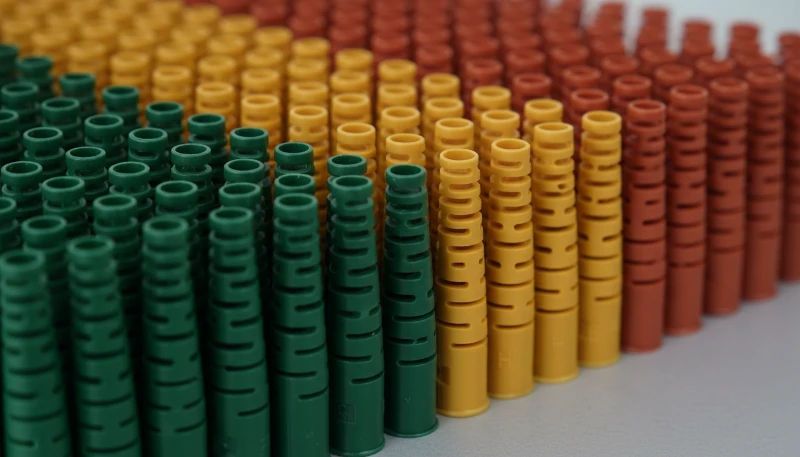
Your mold is treated as factory assets in a Chinese bankruptcy — unless your agreement explicitly carves it out. This is a clause most buyers never think about, and it is one of the most important. Without a specific bankruptcy carve-out, you become just another unsecured creditor waiting in line.
The solution is a contractual clause stating that the mold is buyer property held in bailment (a bailment relationship under Chinese law), not a factory asset. Combined with an equipment tag or engraving showing buyer name and asset number, this creates a stronger claim that the mold is not part of the factory’s bankruptcy estate. It is not foolproof — Chinese bankruptcy proceedings can be unpredictable — but it gives you a legal argument that pure possession-based claims lack.
We recommend including a specific provision that the mold is excluded from any creditor claims, pledge, or lien by the factory or its affiliates. Additionally, require the factory to maintain separate storage for customer-owned molds — physically distinct from their own tooling inventory. These structural separations, combined with proper documentation, significantly improve your position in any insolvency scenario.
Jak fizycznie odzyskać formę z chińskiej fabryki?
Mold retrieval is a formal process. You invoke your ownership agreement, send a 30-day transfer request, and arrange shipping. If the factory refuses, arbitration under Chinese law is your recourse. The practical steps are: (1) Send a formal written request citing the ownership agreement, with a reasonable deadline (typically 30 days). (2) Arrange and pay for shipping, insurance, and any outstanding maintenance costs. (3) Have a third-party inspector verify mold condition before it leaves the factory. (4) If the factory refuses, initiate arbitration under the contract’s dispute resolution clause.
At our Shanghai factory, ZetarMold operates 47 injection molding machines ranging from 90T to 1850T. When a client needs to retrieve a mold and move production to our facility, we can usually qualify the tool and start sampling within two weeks — because the equipment range covers virtually any mold specification.
The retrieval process itself can take 2–6 weeks under normal circumstances. If there is resistance, arbitration in China can take 6–12 months. This is why the agreement must specify a clear transfer timeline and penalties for non-compliance. A clause stating the factory must release the mold within 30 days of written request, with a daily penalty for delay, gives you measurable recourse.
Some buyers opt to have an injection molding sourcing agent or third-party logistics provider handle the retrieval. This can reduce friction, as the factory may be more willing to release the mold to a neutral party rather than a competitor. Either way, make sure your ownership agreement names who is authorized to collect the mold on your behalf.
Jakie są najczęstsze pytania dotyczące własności formy w Chinach?
Can a Chinese factory legally keep my mold if there is no written agreement?
Yes. Without a written ownership agreement governed by Chinese law, the factory can claim ownership based on possession and manufacturing custom. Verbal agreements are extremely difficult to enforce in China, and email confirmations alone carry limited legal weight in Chinese courts. The default legal position in many Chinese jurisdictions favors the party with physical possession of the tooling asset, which is almost always the factory that built and housed the mold on their premises. This is precisely why a formal bilingual contract is not optional — it is the only reliable protection for your tooling investment.
How much does a mold ownership agreement cost to draft?
A qualified China-focused manufacturing lawyer typically charges $2,000–$5,000 for a comprehensive mold ownership agreement with NNN provisions included. This represents a fraction of the mold’s replacement value — most production molds for injection molding cost between $10,000 and $80,000 depending on cavity count, steel grade, and geometric complexity. Think of the agreement cost as an insurance premium protecting a high-value manufacturing asset that sits in a factory thousands of miles away, under a legal system you may not be familiar with.
Should the mold ownership agreement be in Chinese or English?
Both languages, with the Chinese text explicitly designated as the governing and controlling version in the agreement itself. Chinese courts and arbitration bodies rely exclusively on the Chinese text as the authoritative legal document for any dispute resolution process. Any discrepancy between the English and Chinese versions will be resolved using the Chinese text, which means both versions must be drafted carefully and consistently by qualified legal counsel who specialize in cross-border manufacturing contracts and bilingual commercial agreement preparation and enforcement.
What if my supplier refuses to sign a mold ownership agreement?
Find a different supplier immediately — this is a deal-breaker. A factory that will not agree to basic ownership terms is clearly signaling that they intend to retain your tooling as leverage for continued business. This is a non-negotiable red flag in any injection molding partnership, regardless of how competitive their part pricing appears to be. The long-term risk of losing access to a mold worth tens of thousands of dollars far outweighs any short-term cost savings that factory might offer on individual part prices.
Can I get mold insurance to protect my investment in China?
Yes, tooling insurance is available through trade credit insurers and specialized manufacturing insurance providers who understand the China market. These policies can cover mold loss, physical damage, or supplier default scenarios. Your ownership agreement should require the factory to carry comprehensive insurance naming you as the loss payee, with coverage equal to the full replacement cost of the mold tooling. This provides a financial backstop that operates completely independent of the factory’s financial health or their willingness to cooperate with your mold retrieval requests at any point.
Does paying for the mold in full automatically make me the owner in China?
No, payment alone does not establish ownership under Chinese commercial practice or contract law. A written agreement stating ownership title — separate from the payment record, purchase order, or commercial invoice — is necessary to prove legal title in any dispute. The factory’s invoice confirms you paid for tooling services, but it does not establish that you own the resulting physical mold asset. Only a dedicated ownership agreement with proper legal structure creates that enforceable claim under the PRC Civil Code.
How long does mold retrieval arbitration take in China?
CIETAC arbitration typically takes 6–12 months for mold ownership disputes from initial filing through to the final arbitral award being issued. Local arbitration commissions in major manufacturing cities like Shenzhen, Dongguan, or Shanghai may resolve cases faster, sometimes within 3–6 months, but enforcement speed varies significantly by jurisdiction and local court cooperation levels. Always include a specific arbitration clause naming the institution, the city, and the governing language in your ownership agreement to minimize procedural delays and jurisdictional disputes during the arbitration process.
What should I do if a supplier uses my mold for another client?
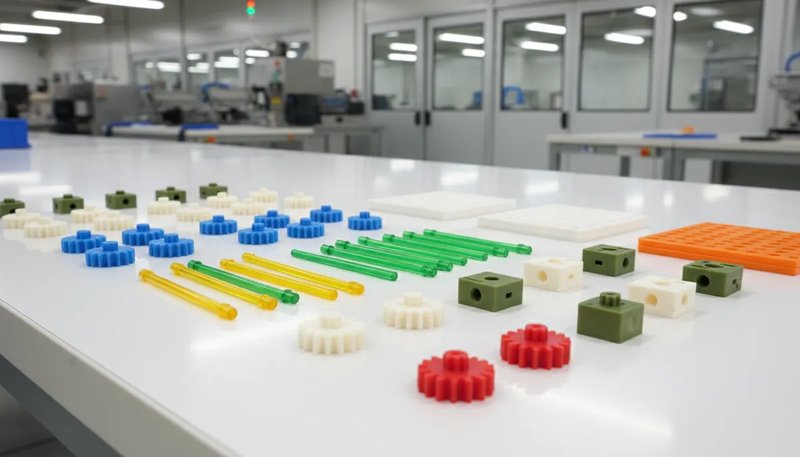
Send a formal written cease-and-desist letter immediately, citing both your NNN agreement and mold ownership agreement as the legal basis for your demand. Document the unauthorized use thoroughly with photographs of the copied parts, physical samples purchased through third parties, and shipping records before taking any formal legal action. If the supplier continues unauthorized production after receiving your notice, initiate arbitration proceedings promptly under your contract’s dispute resolution clause. Acting quickly and documenting everything comprehensively strengthens your legal position significantly.
Quick rule: before you pay for tooling in China, have two documents ready — an NNN for your IP, and a mold ownership agreement (in Chinese, under Chinese law) for the physical mold. If the factory will not sign both, walk away. No discount is worth losing a costly mold. At ZetarMold, we provide transparent mold ownership agreements as standard practice — your tooling is your asset, not a negotiating chip. With 47 formowanie wtryskowe machines in Shanghai, 100+ molds delivered monthly, and 8 senior forma wtryskowa engineers on staff, we have the scale and documentation practices to keep your investment secure. Get a Free Quote and let us show you how straightforward mold ownership can be.
-
Mold Tooling: Narzędzie formujące (mold tooling) odnosi się do precyzyjnej stalowej formy używanej w formowaniu wtryskowym do kształtowania stopionego plastiku w gotowe części, zazwyczaj kosztującej $5,000–$100,000 w zależności od złożoności. ↩
-
NNN Agreement: Umowa NNN (Non-Disclosure, Non-Use, Non-Circumvention) to trójczęściowy kontrakt powszechnie stosowany w chińskim przemyśle wytwórczym, chroniący własność intelektualną nabywcy przed ujawnieniem, nieautoryzowanym użyciem i obejściem dostawcy. ↩
-
Bailment: Przechowanie (bailment) to stosunek prawny, w którym jedna strona tymczasowo przechowuje mienie drugiej strony — w tym kontekście fabryka przechowuje narzędzie formujące klienta, nie będąc jego właścicielem. ↩





 EN
EN  ES
ES  FR
FR  DE
DE  PT
PT  AR
AR  RU
RU  JA
JA  KO
KO  IT
IT  NL
NL  TR
TR  PL
PL 