 Vai al contenuto

Hai appena spendito $30,000 per un stampo di produzione in una fabbrica cinese. Sei mesi dopo, vuoi trasferire la produzione altrove — e la fabbrica dice che lo stampo appartiene a loro. No, non lo spediranno. Sì, sono disposti a continuare a produrre i tuoi componenti. Alle loro condizioni. Ti sembra familiare? Succede più spesso di quanto nessuno ammetta, e la differenza tra recuperare il tuo stampo e perderlo completamente dipende da un documento: il contratto di proprietà dello stampo.
- I fornitori cinesi spesso rivendicano la proprietà dello stampo per impostazione predefinita — un accordo scritto è essenziale
- Gli accordi NNN proteggono la tua proprietà intellettuale ma non stabiliscono la proprietà dello stampo
- I contratti di proprietà dello stampo devono essere applicabili secondo la legge cinese, in cinese
- Includere clausole chiare su trasferimento, stoccaggio, assicurazione e risoluzione
- La due diligence sul tuo fornitore conta tanto quanto il contratto stesso
Cos'è un Contratto di Proprietà dello Stampo per Iniezione?
Un contratto di proprietà dello stampo per iniezione è un documento legale che prova che tu — non la fabbrica — possiedi il tuo Mold Tooling1. In China, questo documento non è facoltativo: senza esso, l'assunzione di default in molte fabbriche è che possiedano gli utensili che hanno fabbricato nei loro stabilimenti. Il contratto generalmente copre l'IP del design dello stampo, i diritti di trasferimento, le condizioni di stoccaggio, gli obblighi assicurativi, le responsabilità di manutenzione e cosa succede se il fornitore va in bancarotta.
L'accordo copre tipicamente la proprietà intellettuale del design dello stampo, i diritti di trasferimento, le condizioni di stoccaggio, gli obblighi assicurativi, le responsabilità di manutenzione e cosa succede se il fornitore fallisce. Pensalo come l'atto di proprietà di un bene a sei cifre che si trova nell'edificio di qualcun altro — tranne per il fatto che l'edificio è a 8.000 miglia di distanza e il sistema legale locale funziona diversamente da quanto potresti aspettarti.
Perché le fabbriche cinesi resistono al trasferimento della proprietà dello stampo?
Il motivo per cui le fabbriche cinesi resistono al trasferimento della proprietà dello stampo è semplice: mantenere il tuo utensile blocca il ricavo di produzione ricorrente. Molte fabbriche cinesi stampaggio a iniezione I fornitori operano con margini ridotti dalla produzione di massa, non dalla produzione di attrezzature. Il loro modello di business dipende dal mantenere la produzione dei tuoi componenti in-house. Alcune fabbriche quotano le attrezzature a costo o sotto costo specificamente per bloccare futuri volumi di produzione — una strategia comune tra molti fornitore di stampaggio a iniezione in China.
Questo non è intrinsecamente disonesto — è una strategia di pricing comune nella manifattura cinese. La fabbrica investe nella costruzione del tuo stampo a un prezzo competitivo perché prevede di recuperare quel investimento attraverso la produzione di componenti in 12–36 mesi. Quando rimuovi lo stampo dopo tre cicli di produzione, perdono genuinamente denaro su quel utensile.
Presso ZetarMold, manteniamo una struttura interna di produzione stampi a Shanghai che produce oltre 100 set di stampi al mese. Con oltre 20 anni di esperienza nella costruzione e nel trasferimento di stampi per acquirenti internazionali, abbiamo visto dispute di proprietà in prima persona — e la nostra pratica standard è includere chiari termini di trasferimento della proprietà in ogni accordo per attrezzature fin dal primo giorno.
L'implicazione pratica è che devi affrontare le aspettative di proprietà in anticipo, prima che qualsiasi denaro cambi di mano. Le fabbriche che resistono a questa conversazione sono spesso le stesse che poi resistono a rilasciare il tuo stampo. Secondo la nostra esperienza presso ZetarMold, la trasparenza sulle condizioni di proprietà dal primo giorno rafforza effettivamente la relazione commerciale — entrambe le parti sapono esattamente dove si trovano.
Nella nostra esperienza lavorando con clienti internazionali presso ZetarMold, abbiamo visto progetti in cui il fornitore precedente si è rifiutato di rilasciare stampi del valore di oltre 50.000 USD semplicemente perché non esisteva un accordo scritto di proprietà. L'acquirente aveva pagato per intero. Al fornitore non importava — aveva il possesso fisico e, senza un contratto regolato dalla legge cinese, l'acquirente non aveva praticamente alcuna leva.
Quali clausole chiave deve includere un accordo di proprietà dello stampo?
Un accordo di proprietà dello stampo applicabile è uno che copre sei clausole essenziali. Queste sono: (1) una chiara dichiarazione di proprietà, (2) diritti di trasferimento e recupero, (3) obblighi di stoccaggio e manutenzione, (4) requisiti assicurativi, (5) un divieto di uso non autorizzato e (6) termini di risoluzione e risoluzione delle controversie. La mancanza di una qualsiasi di queste crea una lacuna che un fornitore può sfruttare.
| Clausola | What It Covers | Why It Matters |
|---|---|---|
| Dichiarazione di Proprietà | Dichiarazione esplicita che il compratore possiede lo stampo e tutto l'IP | Stabilisce il titolo legale — previene rivendicazioni del fornitore inadempiente |
| Diritti di Trasferimento | Condizioni e tempistiche per il recupero dello stampo | Senza questo, il fornitore può ritardare indefinitamente |
| Stoccaggio & Manutenzione | Come viene conservato lo stampo, chi paga per la manutenzione | Previene il degrado e costi di riparazione imprevisti |
| Assicurazione | Chi assicura lo stampo e per quanto | Protegge contro perdita, danni o bancarotta della fabbrica |
| Proibizione di Non-Uso | Il fornitore non può utilizzare lo stampo per altri clienti | Previene copie o produzione non autorizzate |
| Termini di Terminazione | Cosa succede quando la relazione finisce | Definisce il processo di uscita e la tempistica di recupero |
“Un contratto di proprietà dello stampo dovrebbe specificare il calendario preciso per il recupero dello stampo.”Vero
Includere una tempistica specifica per il recupero (tipicamente 30 giorni dalla richiesta scritta) con penali per ritardo fornisce scadenze applicabili anziché obblighi vaghi.
"Un NDA standard firmato in inglese è sufficiente per stabilire la proprietà dello stampo in Cina."Falso
Un NDA solo in inglese non stabilisce la proprietà dello stampo secondo la legge cinese. Hai bisogno di un accordo di proprietà dello stampo separato in cinese, regolato dalla legge cinese, con chiare disposizioni di trasferimento del titolo.
Come la Legge Cinese Gestisce la Proprietà degli Stampi?
Under Chinese law, mold ownership is determined by what the written contract states — in Chinese, under Chinese law, via Chinese arbitration. Foreign-court judgments are generally not enforceable in China. Under the PRC Civil Code (effective January 2021), mold ownership follows the contract between the parties. If the contract says you own it, you own it — in theory. In practice, enforcement requires specific contract provisions.
This means a mold ownership agreement drafted in English under New York law is essentially worthless if the factory is in Shenzhen and decides to keep your mold. You need a bilingual agreement — with the Chinese text controlling in case of discrepancy — filed with a recognized Chinese arbitration institution. It costs more upfront, but it is the only version a Chinese factory will actually respect.
Qual è la differenza tra un accordo NNN e un accordo di proprietà dello stampo?
Un NNN Agreement2 and a mold ownership agreement are two separate documents protecting different things — your IP versus your physical tooling. An NNN agreement (Non-Disclosure, Non-Use, Non-Circumvention) protects your intellectual property — designs, drawings, specifications. A mold ownership agreement protects your physical asset — the steel stampo a iniezione tooling itself. They serve different purposes, and you need both.
We have seen buyers who had a solid NNN in place but lost their molds because they never signed a separate ownership agreement. The NNN prevented the supplier from copying the design — theoretically — but it said nothing about who owned the physical mold. The factory argued (successfully) that without a specific ownership clause, the mold was theirs under local commercial custom. Two different documents, two different protections. Do not skip either.
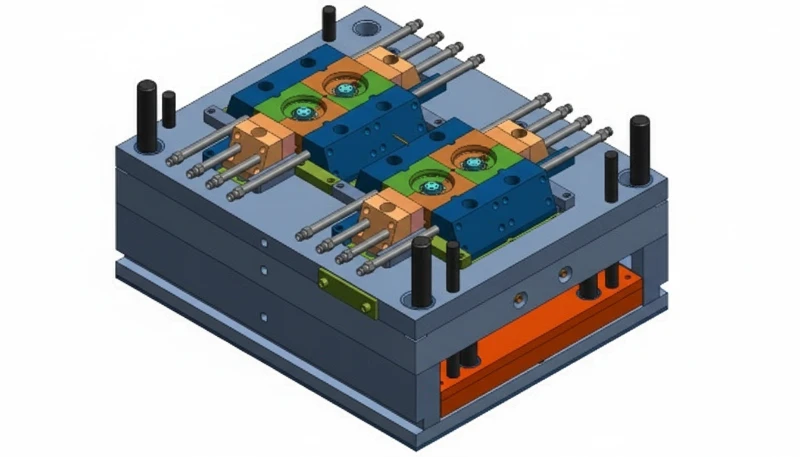
The lesson is straightforward: never assume that one document covers everything. IP protection and physical asset protection are parallel but distinct legal needs, and Chinese courts treat them as separate matters requiring separate contractual foundations.
The scope of protection differs fundamentally. An NNN prevents the factory from sharing your CAD files or making your product without permission — it addresses information security. A mold ownership agreement addresses property rights: who holds title, who controls access, and what happens to the physical steel when the relationship ends. In Chinese legal practice, these are separate legal concepts covered by separate areas of law.
“Engraving your company name on the mold helps prove ownership in disputes.”Vero
Physical marking of the mold with buyer identification supports the Bailment3 claim and makes it harder for the factory to argue the mold is part of their assets.
“Chinese courts will enforce foreign court judgments on mold ownership disputes.”Falso
China generally does not enforce foreign court judgments. Your mold ownership agreement must specify Chinese arbitration (e.g., CIETAC) for enforceable dispute resolution.
Quando dovresti negoziare i termini di proprietà dello stampo?
The best time to negotiate mold ownership terms is before you place the tooling order — not during production, and certainly not after. The supplier wants your business most during the quotation and vendor selection phase. Once you have paid the deposit and they are cutting steel, your leverage drops significantly.
Include ownership terms in your initial RFQ or purchasing agreement. Make it clear from the first interaction that mold ownership is a deal-breaker. Suppliers who refuse to sign an ownership agreement before taking your tooling order are telling you something important about how the relationship will go.
In practical terms, here is the negotiation sequence we recommend: (1) Sign the NNN first, before sharing any design files. (2) Include mold ownership terms in the manufacturing agreement or as a standalone addendum. (3) Pay for tooling only after both documents are executed. (4) Insist on receiving mold design files (CAD data) as part of the delivery. This four-step approach protects both your IP and your physical tooling investment.
“A mold ownership agreement should name who is authorized to collect the mold on the buyer’s behalf.”Vero
Specifying an authorized representative or third-party agent in the agreement prevents disputes over who has the right to physically take possession of the mold during retrieval.
“Once you sign a mold ownership agreement, you do not need an NNN agreement.”Falso
These serve different purposes. The ownership agreement covers the physical mold; the NNN protects your design IP. You need both for complete protection.
Cosa Succede al Tuo Stampo Se il Fornitore Cinese Va in Bancarotta?
Your mold is treated as factory assets in a Chinese bankruptcy — unless your agreement explicitly carves it out. This is a clause most buyers never think about, and it is one of the most important. Without a specific bankruptcy carve-out, you become just another unsecured creditor waiting in line.
The solution is a contractual clause stating that the mold is buyer property held in bailment (a bailment relationship under Chinese law), not a factory asset. Combined with an equipment tag or engraving showing buyer name and asset number, this creates a stronger claim that the mold is not part of the factory’s bankruptcy estate. It is not foolproof — Chinese bankruptcy proceedings can be unpredictable — but it gives you a legal argument that pure possession-based claims lack.
We recommend including a specific provision that the mold is excluded from any creditor claims, pledge, or lien by the factory or its affiliates. Additionally, require the factory to maintain separate storage for customer-owned molds — physically distinct from their own tooling inventory. These structural separations, combined with proper documentation, significantly improve your position in any insolvency scenario.
Come si recupera fisicamente uno stampo da una fabbrica cinese?
Mold retrieval is a formal process. You invoke your ownership agreement, send a 30-day transfer request, and arrange shipping. If the factory refuses, arbitration under Chinese law is your recourse. The practical steps are: (1) Send a formal written request citing the ownership agreement, with a reasonable deadline (typically 30 days). (2) Arrange and pay for shipping, insurance, and any outstanding maintenance costs. (3) Have a third-party inspector verify mold condition before it leaves the factory. (4) If the factory refuses, initiate arbitration under the contract’s dispute resolution clause.
At our Shanghai factory, ZetarMold operates 47 injection molding machines ranging from 90T to 1850T. When a client needs to retrieve a mold and move production to our facility, we can usually qualify the tool and start sampling within two weeks — because the equipment range covers virtually any mold specification.
The retrieval process itself can take 2–6 weeks under normal circumstances. If there is resistance, arbitration in China can take 6–12 months. This is why the agreement must specify a clear transfer timeline and penalties for non-compliance. A clause stating the factory must release the mold within 30 days of written request, with a daily penalty for delay, gives you measurable recourse.
Some buyers opt to have an injection molding sourcing agent or third-party logistics provider handle the retrieval. This can reduce friction, as the factory may be more willing to release the mold to a neutral party rather than a competitor. Either way, make sure your ownership agreement names who is authorized to collect the mold on your behalf.
Quali Sono le Domande più Comuni sulla Proprietà degli Stampi in China?
Can a Chinese factory legally keep my mold if there is no written agreement?
Yes. Without a written ownership agreement governed by Chinese law, the factory can claim ownership based on possession and manufacturing custom. Verbal agreements are extremely difficult to enforce in China, and email confirmations alone carry limited legal weight in Chinese courts. The default legal position in many Chinese jurisdictions favors the party with physical possession of the tooling asset, which is almost always the factory that built and housed the mold on their premises. This is precisely why a formal bilingual contract is not optional — it is the only reliable protection for your tooling investment.
How much does a mold ownership agreement cost to draft?
A qualified China-focused manufacturing lawyer typically charges $2,000–$5,000 for a comprehensive mold ownership agreement with NNN provisions included. This represents a fraction of the mold’s replacement value — most production molds for injection molding cost between $10,000 and $80,000 depending on cavity count, steel grade, and geometric complexity. Think of the agreement cost as an insurance premium protecting a high-value manufacturing asset that sits in a factory thousands of miles away, under a legal system you may not be familiar with.
Should the mold ownership agreement be in Chinese or English?
Both languages, with the Chinese text explicitly designated as the governing and controlling version in the agreement itself. Chinese courts and arbitration bodies rely exclusively on the Chinese text as the authoritative legal document for any dispute resolution process. Any discrepancy between the English and Chinese versions will be resolved using the Chinese text, which means both versions must be drafted carefully and consistently by qualified legal counsel who specialize in cross-border manufacturing contracts and bilingual commercial agreement preparation and enforcement.
What if my supplier refuses to sign a mold ownership agreement?
Find a different supplier immediately — this is a deal-breaker. A factory that will not agree to basic ownership terms is clearly signaling that they intend to retain your tooling as leverage for continued business. This is a non-negotiable red flag in any injection molding partnership, regardless of how competitive their part pricing appears to be. The long-term risk of losing access to a mold worth tens of thousands of dollars far outweighs any short-term cost savings that factory might offer on individual part prices.
Can I get mold insurance to protect my investment in China?
Yes, tooling insurance is available through trade credit insurers and specialized manufacturing insurance providers who understand the China market. These policies can cover mold loss, physical damage, or supplier default scenarios. Your ownership agreement should require the factory to carry comprehensive insurance naming you as the loss payee, with coverage equal to the full replacement cost of the mold tooling. This provides a financial backstop that operates completely independent of the factory’s financial health or their willingness to cooperate with your mold retrieval requests at any point.
Does paying for the mold in full automatically make me the owner in China?
No, payment alone does not establish ownership under Chinese commercial practice or contract law. A written agreement stating ownership title — separate from the payment record, purchase order, or commercial invoice — is necessary to prove legal title in any dispute. The factory’s invoice confirms you paid for tooling services, but it does not establish that you own the resulting physical mold asset. Only a dedicated ownership agreement with proper legal structure creates that enforceable claim under the PRC Civil Code.
How long does mold retrieval arbitration take in China?
CIETAC arbitration typically takes 6–12 months for mold ownership disputes from initial filing through to the final arbitral award being issued. Local arbitration commissions in major manufacturing cities like Shenzhen, Dongguan, or Shanghai may resolve cases faster, sometimes within 3–6 months, but enforcement speed varies significantly by jurisdiction and local court cooperation levels. Always include a specific arbitration clause naming the institution, the city, and the governing language in your ownership agreement to minimize procedural delays and jurisdictional disputes during the arbitration process.
What should I do if a supplier uses my mold for another client?
Send a formal written cease-and-desist letter immediately, citing both your NNN agreement and mold ownership agreement as the legal basis for your demand. Document the unauthorized use thoroughly with photographs of the copied parts, physical samples purchased through third parties, and shipping records before taking any formal legal action. If the supplier continues unauthorized production after receiving your notice, initiate arbitration proceedings promptly under your contract’s dispute resolution clause. Acting quickly and documenting everything comprehensively strengthens your legal position significantly.
Regola rapida: prima di pagare per gli utensilaggi in Cina, prepara due documenti: un NNN per la tua proprietà intellettuale e un accordo di proprietà dello stampo (in cinese, secondo la legge cinese) per lo stampo fisico. Se la fabbrica non firma entrambi, rinuncia. Nessuno sconto vale la perdita di uno stampo costoso. In ZetarMold, forniamo accordi di proprietà degli stampi trasparenti come pratica standard: il tuo utensilaggio è il tuo bene, non una pedina di negoziazione. Con 47 stampaggio a iniezione macchine a Shanghai, oltre 100 stampi consegnati mensilmente e 8 senior stampo a iniezione ingegneri in organico, abbiamo le dimensioni e le pratiche documentali per mantenere sicuro il tuo investimento. Ottieni un Preventivo Gratuito e lascia che ti mostriamo quanto possa essere semplice possedere uno stampo.
-
Mold Tooling: Gli stampi si riferiscono allo stampo in acciaio di precisione utilizzato nello stampaggio a iniezione per modellare la plastica fusa in parti finite, con un costo tipico di $5.000–$100.000 a seconda della complessità. ↩
-
NNN Agreement: Un accordo di Non-Divulgazione, Non-Uso, Non-Aggiramento è un contratto in tre parti comunemente utilizzato nella produzione cinese per proteggere la proprietà intellettuale dell'acquirente da divulgazione, uso non autorizzato e aggiramento del fornitore. ↩
-
Bailment: Il deposito è una relazione legale in cui una parte detiene temporaneamente la proprietà di un'altra parte — in questo contesto, una fabbrica che detiene gli stampi di un cliente senza esserne proprietaria. ↩



 EN
EN  ES
ES  FR
FR  DE
DE  PT
PT  AR
AR  RU
RU  JA
JA  KO
KO  IT
IT  NL
NL  TR
TR  PL
PL 