Wat is matrijskoeling bij spuitgieten en waarom is die belangrijk?
Na met koelsystemen op meer dan 47 spuitgietmachines in onze fabriek in Shanghai te hebben gewerkt, weet ik dat koelontwerp bepaalt of de meeste matrijsprojecten slagen of mislukken. De taak van het koelsysteem is eenvoudig: warmte zo snel en gelijkmatig mogelijk uit de gesmolten kunststof afvoeren, zodat het onderdeel correct stolt en zonder defecten kan worden uitgeworpen.
Dit is de realiteit die velen over het hoofd zien: koeling beslaat 60–70% van uw totale cyclustijd voor spuitgieten1. Als uw onderdeel 20 seconden moet koelen, terwijl injectie en uitwerpen samen maar 8 seconden duren, komt u uit op een cyclus van 28 seconden. Verkort die koeling tot 15 seconden en u hebt uw productiesnelheid met bijna 20% verhoogd.
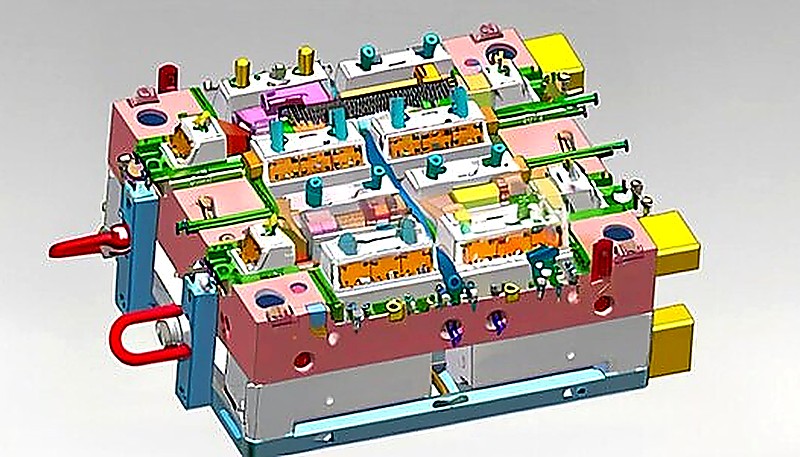
Het koelsysteem bestaat uit in de matrijs bewerkte kanalen waarin koelmiddel, meestal water, circuleert om warmte af te voeren. Deze kanalen moeten zo worden geplaatst dat de volledige geometrie van het onderdeel gelijkmatig wordt gekoeld. Ongelijkmatige koeling veroorzaakt inwendige spanningen die leiden tot kromtrekken, maatinstabiliteit en een slechte oppervlakteafwerking.
Ik heb slecht gekoelde matrijzen gezien die op vlakke oppervlakken 0.5mm kromtrekking veroorzaakten. Na herontwerp van de koeling hielden dezelfde onderdelen toleranties binnen 0.05mm. Dat is het verschil tussen uitval en rendabele productie.
Wat zijn de belangrijkste parameters voor het ontwerp van koelkanalen?
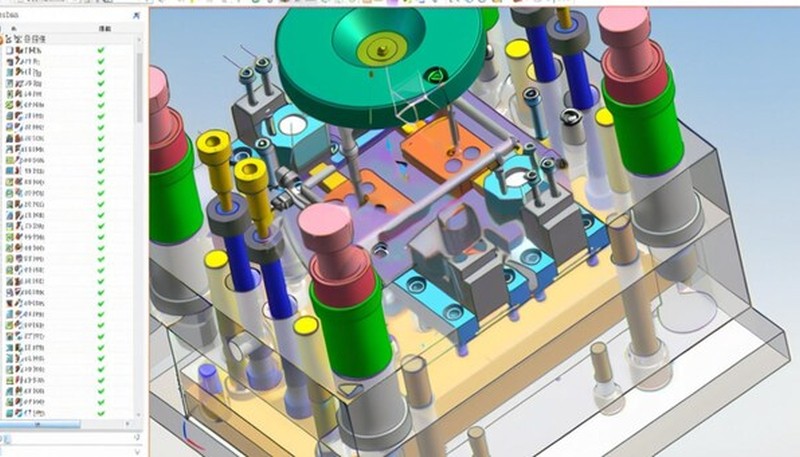
De kanaaldiameter is het uitgangspunt. De meeste koelkanalen hebben een diameter van 8mm tot 16mm, waarbij 10-12mm voor de meeste toepassingen optimaal is. Grotere kanalen betekenen niet altijd betere koeling – er is voldoende watersnelheid nodig om een turbulente stroming en daarmee een effectieve warmteoverdracht te behouden. Voor een optimale warmteoverdrachtscoëfficiënt streef ik doorgaans naar Reynoldsgetallen boven 5000.
Voor de kanaalafstand geldt de regel van 2-3 maal de diameter. Plaats kanalen van 10mm hart-op-hart op 20-30mm afstand. Een kleinere afstand verbetert de gelijkmatigheid van de koeling, maar verhoogt de bewerkingskosten. Bij een grotere afstand ontstaan tussen de kanalen hotspots waar de koeling minder effectief is.
De afstand tot het holteoppervlak is zeer belangrijk. Houd kanalen op 1.5-2.5 keer de kanaaldiameter van het holteoppervlak. Te dichtbij geeft risico op doorbraak tijdens verspaning of zwakke plekken in het matrijsstaal. Te ver weg verlaagt de koelefficiëntie aanzienlijk.
De regeling van de watertemperatuur vereist meer aandacht dan de meeste mensen beseffen. De inlaattemperaturen liggen doorgaans tussen 10°C en 40°C, afhankelijk van het materiaal. Het temperatuurverschil tussen inlaat en uitlaat moet onder 5°C blijven om een gelijkmatige koeling te behouden. Grotere temperatuurverschillen duiden op een ontoereikend debiet of een slecht kanaalontwerp.
Bij het berekenen van het debiet moet de drukval worden afgewogen tegen de vereisten voor warmteafvoer. Ik gebruik 2-4 liter per minuut per kanaal als uitgangspunt en pas dit vervolgens aan op basis van de berekende warmtebelasting. Hogere debieten verbeteren de warmteoverdracht, maar verhogen de pompkosten en drukvereisten.
Wat zijn de verschillende typen koelkanalenlay-outs?
Rechte koelkanalen zijn de meest gangbare en kosteneffectieve optie. Water komt aan één zijde van de matrijs binnen en verlaat de andere zijde via een recht traject. Ze werken goed voor eenvoudige geometrieën, maar zijn minder geschikt voor complexe vormen of gebieden ver van de matrijsranden.
Seriekoeling verbindt meerdere kanalen achter elkaar en creëert een slingerend pad door de matrijs. Deze aanpak werkt wanneer specifieke gebieden in een gecontroleerde volgorde moeten worden gekoeld. Het nadeel is dat de watertemperatuur stijgt naarmate het water door het circuit stroomt, waardoor temperatuurgradiënten ontstaan.
Bij parallelle koeling worden meerdere kanalen gelijktijdig gevoed vanuit een gemeenschappelijk verdeelstuk. Elk kanaal ontvangt water met dezelfde inlaattemperatuur, wat een gelijkmatigere koeling oplevert dan serieschakelingen. Dit is mijn voorkeursaanpak voor de meeste spuitgietmatrijzen2 wanneer er voldoende ruimte voor het verdeelstuk is.
Spiraalkoeling vormt een schroefvormig traject rond cilindrische kernen of pennen. Dit ontwerp biedt een uitstekende temperatuuruniformiteit voor ronde kenmerken, maar vereist zorgvuldige bewerking om over het hele spiraaltraject een constante kanaaldiameter te behouden.
Bij koeling met een keerschot sturen interne keerschotten de koelmiddelstroming in krappe ruimten, zoals smalle kernen. Het koelmiddel stroomt via een buis naar binnen, botst tegen een keerschotplaat en stroomt langs de buitenzijde van de buis terug. Dit maximaliseert de koeling in krappe ruimten waar conventionele kanalen niet passen.
Bij koeling met een bubbler wordt een buis in een geboord gat geplaatst, waardoor de koelvloeistof door het midden naar beneden stroomt en langs de buitenzijde terugkeert. Dit is effectief voor het koelen van diepe kernen, maar vereist een zorgvuldige afdichting om lekkage te voorkomen. Ik gebruik bubblers wanneer de kerndiameters te klein zijn voor conventionele kanalen.
Hoe verbetert conforme koeling de prestaties van de matrijs?
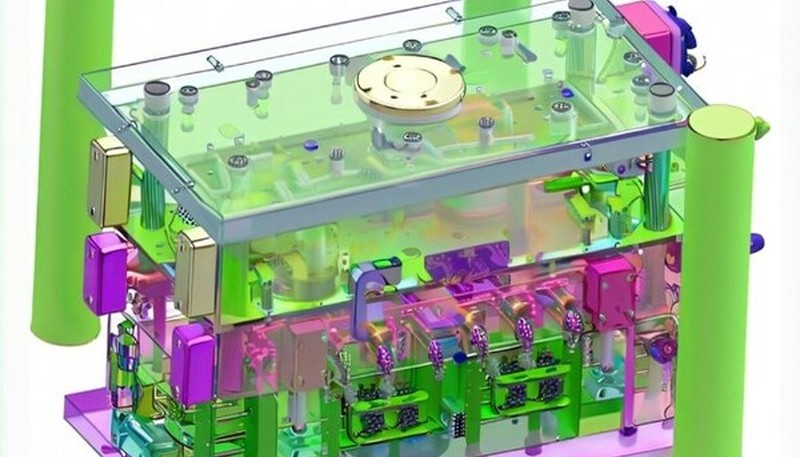
Conforme koelkanalen volgen de contouren van de onderdeelgeometrie en houden ongeacht de complexiteit een constante afstand tot het holteoppervlak. Traditionele rechte kanalen bereiken deze gelijkmatigheid niet bij gebogen of complexe geometrieën, wat hete zones en ongelijkmatige koeling veroorzaakt.
Het productieproces gebruikt additieve vervaardiging (3D-printen) om matrijsinserts met interne conforme kanalen te maken. We printen deze inserts uit gereedschapsstaalpoeder en bewerken de holteoppervlakken vervolgens tot de eindmaten. Zo zijn kanaalgeometrieën mogelijk die met conventionele bewerking niet kunnen worden gemaakt.
Met goed ontworpen conforme koeling zijn cyclustijdverbeteringen van 15-30% gebruikelijk. Bij dikwandige onderdelen of complexe geometrieën waar conventionele koeling tekortschiet, zijn nog betere resultaten mogelijk. Doorslaggevend is de constante afstand van kanaal tot oppervlak die rechte kanalen niet kunnen bieden.
De temperatuurgelijkmatigheid verbetert sterk met conforme koeling. Waar conventionele kanalen over het onderdeeloppervlak temperatuurverschillen van 10-15°C kunnen vertonen, bereiken conforme systemen vaak een gelijkmatigheid binnen 3-5°C. Dit leidt rechtstreeks tot minder kromtrekken en een betere maatvastheid.
De kwaliteitsvoordelen gaan verder dan maatnauwkeurigheid. Gelijkmatigere koeling vermindert interne spanningen en verbetert slagvastheid en vermoeiingslevensduur. De oppervlakteafwerking verbetert doordat thermische gradiënten die vloeimarkeringen en andere defecten veroorzaken worden beperkt.
De investering in gereedschap is vooraf hoger, maar verdient zich door kortere cyclustijden sneller terug. Bij hoogvolumeproductie rechtvaardigt de cyclustijdbesparing de extra investering doorgaans binnen 6-12 maanden productie.
Welke veelvoorkomende koelproblemen veroorzaken onderdeeldefecten?
In onze fabriek in Shanghai met 47 spuitgietmachines hebben we koelgerelateerde defecten gevolgd voor 400+ verschillende harsformuleringen. Volgens onze ervaring veroorzaakt een slecht koelontwerp bijna 40% van alle kwaliteitsproblemen met onderdelen. Onze 8 engineers ontwikkelden gestandaardiseerde koelberekeningen waarmee kromtrekkingsdefecten met 65% afnamen ten opzichte van traditionele vuistregels.
Kromtrekken staat bovenaan de lijst van koelingsgerelateerde defecten. Ongelijkmatige koeling veroorzaakt verschillende krimp over het onderdeel, waardoor het buigt, tordeert of vervormt. Dikke secties koelen langzamer dan dunne, waardoor inwendige spanningen ontstaan die het onderdeel uit vorm trekken. Ik heb gezien dat zones van 2mm nog afkoelden terwijl secties van 0.5mm al waren gestold, met blijvende vervorming als gevolg.
Inzakkingen ontstaan wanneer dikke secties tijdens het afkoelen sterker krimpen dan het omringende materiaal. Het oppervlak wordt naar binnen getrokken en vormt zichtbare verdiepingen. Dit gebeurt wanneer koelkanalen te ver van dikke zones liggen of de koeltijd onvoldoende is voor volledige stolling.
Maatinstabiliteit uit zich in onderdelen die warm correct meten, maar bij kamertemperatuur buiten tolerantie krimpen. Dit wijst op onvolledige koeling in de matrijs – de onderdelen worden uitgeworpen voordat thermisch evenwicht is bereikt. Een langere koeltijd verhelpt dit meestal, maar een correct kanaalontwerp voorkomt het.
Een zwakke lasnaad ontstaat wanneer koelkanalen temperatuurverschillen veroorzaken rond zones waar vloeifronten samenkomen. Als de ene zijde sneller afkoelt dan de andere, vormt de lasnaad zich bij verschillende temperaturen, waardoor de hechtsterkte afneemt. Evenwichtige koeling rond lasnaden is cruciaal voor de structurele integriteit.
Oppervlaktedefecten zoals vloeistrepen en aanspuitwaas zijn vaak terug te voeren op ongelijkmatige matrijstemperaturen. Hete plekken creëren zones waarin kunststof anders stroomt en zichtbare sporen op het oppervlak achterlaat. Een gelijkmatige matrijstemperatuur door een goed koelontwerp elimineert de meeste oppervlaktegebreken.
Uitwerpproblemen ontstaan wanneer onderdelen niet gelijkmatig zijn gekoeld. Zachte plekken vervormen tijdens het uitwerpen, terwijl te sterk gekoelde zones te stijf worden en scheuren. Gelijkmatige koeling geeft onderdelen een consistente stijfheid voor betrouwbaar uitwerpen.
Hoe berekent u de koeltijd voor spuitgieten?
De fundamentele formule voor de koeltijd luidt: t = h²/(π² × α), waarbij t de koeltijd is, h de wanddikte en α de thermische diffusiviteit van de kunststof. Deze vergelijking veronderstelt dat het midden van het onderdeel de uitwerptemperatuur bereikt wanneer de koeling aan het oppervlak is voltooid.
De thermische diffusiviteit (α) combineert materiaaldichtheid, soortelijke warmte en warmtegeleidingsvermogen. Voor gangbare kunststoffen: ABS ≈ 1.1 × 10⁻⁷ m²/s, PP ≈ 1.0 × 10⁻⁷ m²/s, PC ≈ 1.4 × 10⁻⁷ m²/s. Deze waarden variëren met de temperatuur en het vulstofgehalte; gebruik daarom indien beschikbaar de gegevens van de materiaalleverancier.
Voor de wanddikte (h) wordt voor de veiligheid de maximumdikte gebruikt, hoewel de gemiddelde dikte realistischer tijden oplevert. Bereken bij onderdelen met variërende dikten de koeltijd voor de dikste sectie — dunnere zones koelen sneller en begrenzen de cyclus niet.
Een praktisch voorbeeld: een ABS-onderdeel van 3mm dik. Met α = 1.1 × 10⁻⁷ m²/s: t = (0.003)²/(π² × 1.1 × 10⁻⁷) = 9 × 10⁻⁶/(1.09 × 10⁻⁶) = 8.3 seconden. Voeg voor praktijkomstandigheden een veiligheidsmarge van 20-30% toe, wat een koeltijd van ongeveer 10-11 seconden geeft.
Temperatuuroverwegingen beïnvloeden de berekening aanzienlijk. De formule gaat uit van afkoeling van smelttemperatuur naar uitwerptemperatuur, doorgaans 60-80°C voor de meeste thermoplasten. Lagere uitwerptemperaturen vereisen langere koeltijden, maar verbeteren de maatvastheid.
De matrijstemperatuur beïnvloedt de koelsnelheid via de temperatuurgradiënt die de warmteoverdracht aandrijft. Hogere matrijstemperaturen verkleinen de gradiënt, verlengen de koeltijd, maar verbeteren de oppervlakteafwerking en verminderen interne spanningen. Weeg cyclustijd af tegen de kwaliteitseisen van het onderdeel.
Validatie vereist het meten van de werkelijke onderdeeltemperaturen bij uitwerping met behulp van infraroodthermometrie of thermokoppels. Als kerntemperaturen de uitwerpingdoelen overschrijden, verhoog dan de koeltijd. Als oppervlaktetemperaturen te laag zijn, verminder dan de koeltijd of verhoog de matrijs temperatuur om overkoeling te voorkomen.
Wat zijn de meest gestelde vragen over matrijs koelontwerp?
Hoe dicht kunnen koelkanalen bij de holtewand komen?
Minimale afstand moet 1,5 keer de kanaaldiameter zijn, maar 2-2,5 keer de diameter is veiliger voor de meeste toepassingen. Voor 10mm kanalen, houd ze minimaal 15mm van het holteoppervlak, bij voorkeur 20-25mm. Dichterbij plaatsen brengt het risico van doorbraak tijdens bewerking met zich mee, creëert zwakke plekken in het staal en kan ongelijkmatige koeling veroorzaken door overmatige warmtestroom. De exacte afstand hangt af van de matrijsstaalhardheid, bewerkingsnauwkeurigheid en koelvereisten. Hardere staalsoorten staan dichtere plaatsing toe, terwijl zachtere staalsoorten meer materiaal nodig hebben voor structurele integriteit.
Wat is de optimale watertemperatuur voor het koelen van spuitgietmallen?
Watertemperatuur hangt af van het kunststofmateriaal en de onderdeeleisen. De meeste thermoplasten werken goed met een inlaatwatertemperatuur van 10-40°C. Lagere temperaturen (10-20°C) zorgen voor snellere koeling maar kunnen oppervlaktedefecten veroorzaken zoals stroomsporen of slechte glans. Hogere temperaturen (30-40°C) verbeteren de oppervlakteafwerking maar verlengen de cyclustijd. Semi-kristallijne materialen zoals PP en PE hebben baat bij hogere matrijstemperaturen om kristallisatie te bevorderen. Houd het inlaat-uitlaat temperatuurverschil onder 5°C voor consistente koeling in het circuit.
Hoe voorkom je lekkages in koelkanalen bij spuitgietmallen?
Goede afdichting begint met nauwkeurige bewerking – kanalen moeten recht en rond zijn met gladde oppervlakken. Gebruik geschikte O-ring groeven afgestemd op de werkdruk en temperatuur. Standaard NBR O-ringen werken voor de meeste toepassingen, maar gebruik FKM (Viton) voor hoge temperatuur of chemisch bestendige toepassingen. Draadafdichtmiddel op pijpfittingen voorkomt lekkages bij verbindingen. Regelmatig onderhoud omvat O-ring vervanging en controle op corrosie of erosie die lekkagepaden creëert. Test alle circuits op 1,5 keer de werkdruk vóór productie.
Kunt u bestaande mallen voorzien van betere koelsystemen?
Aanpassing achteraf is vaak mogelijk, maar vereist zorgvuldige beoordeling van de bestaande staaldikte en indeling. Kanalen toevoegen kan lassen en opnieuw bewerken vereisen, met risico op vervorming en beïnvloeding van de staaleigenschappen. Soms is vervanging van inserts kosteneffectiever dan aanpassing van bestaand staal. Conformele koeling achteraf is doorgaans onpraktisch vanwege de vereiste additieve productie. Richt u op optimalisatie van bestaande kanaalverbindingen, betere stromingsverdeling met manifolds of koeling van voorheen ongekoelde zones. Elk geval vereist een afzonderlijke kosten-batenbeoordeling.
Welke debiet moet koelwater hebben in spuitgieten?
Streef naar 2-4 liter per minuut per kanaal voor de meeste toepassingen, met Reynoldsgetallen boven 5000 voor turbulente stroming. Hogere debieten verbeteren warmteoverdracht maar verhogen drukval en pompkosten. Bereken debiet op basis van warmteafvoervereisten: Q = m × cp × ΔT, waarbij Q de warmtelast is, m het massadebiet, cp de soortelijke warmte van water en ΔT de temperatuurstijging. Typische drukval moet onder 2-3 bar per circuit blijven. Gebruik debietmeters en drukmeters om elk circuit tijdens productie te monitoren.
Hoe beïnvloedt de geometrie van het onderdeel het ontwerp van het koelkanaal?
Complexe geometrieën vereisen creatieve koeloplossingen om uniforme temperaturen te behouden. Diepe ribben hebben toegewijde koelleidingen of bubblers nodig om hotspots te voorkomen. Dikke secties hebben baat bij meerdere koelcircuits op verschillende afstanden van het oppervlak. Ondersnijdingen en zijkenmerken vereisen mogelijk koeling in schuiven of lifters. Dunne wanden hebben zorgvuldige kanaalafstand nodig om overkoeling die broosheid veroorzaakt te vermijden. Grote vlakke gebieden hebben baat bij parallelle kanalen gescheiden volgens de 2-3 diameter regel. Prioriteer altijd het koelen van de dikste secties eerst, aangezien deze de cyclustijd bepalen.
Welke onderhoud vereist het koelsysteem van spuitgietmallen?
Regelmatig doorspoelen voorkomt aanslag en corrosieopbouw die de koelings efficiëntie vermindert. Gebruik gefilterd water en overweeg waterbehandelingssystemen voor gebieden met hard water. Maandelijkse debietcontroles identificeren vroegtijdig verstoppingen of lekkages. Jaarlijkse circuitreiniging met geschikte ontkalkingsmiddelen verwijdert minerale afzettingen. Vervang O-ringen en afdichtingen tijdens gepland onderhoud. Monitor de watertemperatuurstijging over de circuits – een toenemend temperatuurverschil duidt op verminderde doorstroming of warmteoverdrachtsefficiëntie. Houd reserve snelkoppelingen en O-ringen bij de hand voor snelle reparaties tijdens de productie.
Hoe koelt u complexe geometrieën zoals schroefdraad of ondervormingen?
Schroefdraadzones vereisen vaak spiraalvormige koelkanalen die de draadspoed volgen, of dicht bij elkaar geplaatste rechte kanalen rond de draadkern. Ondersnijdingen in schuiven vereisen afzonderlijke koelcircuits die via flexibele slangen of roterende koppelingen zijn aangesloten. Diepe uitsparingen profiteren van fonteinkoeling (borrelbuizen) wanneer conventionele kanalen niet passen. Soms is een iets langere cyclustijd kosteneffectiever dan complexe koeloplossingen. Richt de koeling eerst op zones met de grootste thermische massa en pak daarna kleinere kenmerken aan als de cyclustijd dit toestaat. ZetarMolds ervaring met complexe geometrieën helpt deze uitdagende koelsituaties te optimaliseren.
Waarom kiezen voor ZetarMold voor Matrijs Koeloptimalisatie?
Onze faciliteit in Shanghai verfijnt het ontwerp van koelsystemen sinds 2005, met ISO 9001, 13485, 14001 en 45001 certificeringen die consistente kwaliteitsprocessen garanderen. Ons team van 8 ingenieurs heeft eigen koelingsberekeningen en ontwerprichtlijnen ontwikkeld op basis van praktijkervaring met meer dan 400 verschillende harsformuleringen op onze 47 spuitgietmachines.
ZetarMold onderscheidt zich door onze systematische benadering van koeloptimalisatie. We vertrouwen niet op verouderde vuistregels—elk koelsysteem wordt met thermische analysesoftware ontworpen en met werkelijke temperatuurmetingen gevalideerd. Ons team van 120+ medewerkers omvat meer dan 30 Engelstalige engineers die complexe technische eisen tijdens uw gehele projectontwikkeling helder kunnen communiceren.
Klaar om uw Matrijs Koelsysteem te Optimaliseren?
Ontvang een deskundige koelontwerpanalyse voor uw volgende spuitgietproject3
- Geavanceerde spuitgietproces optimalisatietechnieken en cyclustijd reductiestrategieën
- Uitgebreide matrijsontwerpprincipes inclusief koelsysteemintegratie en thermisch management
- Professionele spuitgietdiensten met geavanceerd koelsysteemontwerp en optimalisatie