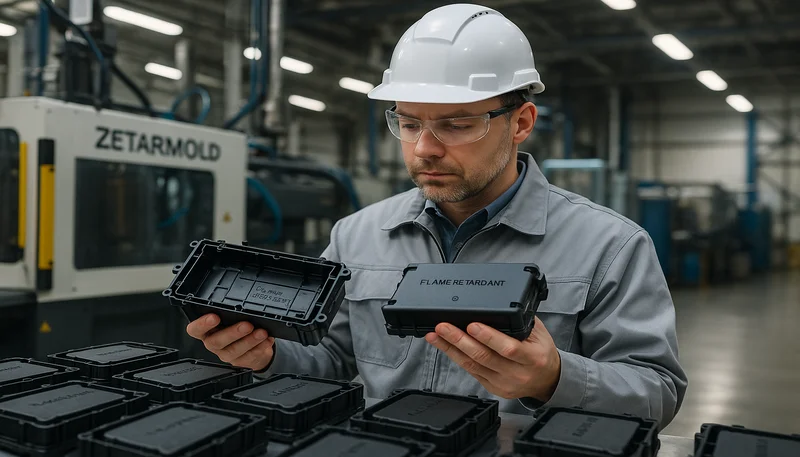
Spuitgieten is de ruggengraat van de moderne kunststofproductie. Elk jaar produceert de industrie biljoenen kunststofcomponenten met dit proces — van kleine medische connectoren die een fractie van een gram wegen tot automobiel bumpers die een hele meter overspannen. De reden is simpel: geen andere methode kan tippen aan spuitgieten wat betreft snelheid, precisie en schaalbaarheid, zodra je de processtappen begrijpt. In onze fabriek in Shanghai hebben we 47 spuitgietmachines lopen van 90T tot 1850T, en na 20+ jaar productie hebben we geleerd dat succes neerkomt op het correct uitvoeren van elke stap.
Deze gids neemt u mee door elke fase, van de eerste instelling voor het spuitgieten tot de uiteindelijke kwaliteitscontrole, zodat u precies weet wat er gebeurt en waarom elke stap belangrijk is.
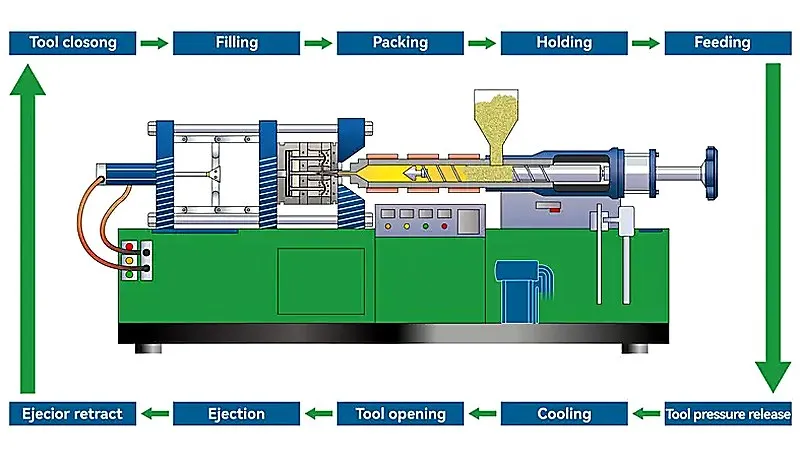
- Het spuitgietproces heeft zes kernstappen: matrijsontwerp, materiaalvoorbereiding, injectie, koeling, uitwerping en nabewerking.
- Koeling neemt 70-80% van de totale cyclustijd in beslag, waardoor het de grootste hefboom voor productiviteit is.
- Beslissingen in matrijsontwerp (type poort, leidingsysteem, aantal holtes) bepalen direct de kwaliteit en kosten van het onderdeel.
- Materiaaldrogen en temperatuurregeling zijn cruciaal — zelfs 0,1% vocht in hygroscopische harsen veroorzaakt defecten.
- Een goed geoptimaliseerd proces kan identieke onderdelen produceren met cyclustijden van 15-120 seconden en toleranties onder ±0,05 mm.
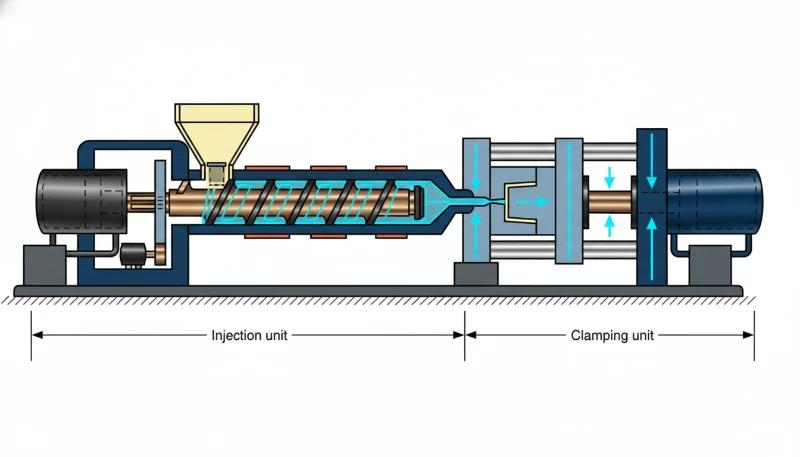
Wat is spuitgieten en waarom is het belangrijk?
Spuitgieten en waarom het belangrijk is, wordt gedefinieerd door de functie, beperkingen en afwegingen die in deze sectie worden uitgelegd. Spuitgieten is een productieproces waarbij gesmolten plastic onder hoge druk in een metalen matrijs wordt geperst, afgekoeld om te stollen en vervolgens als een voltooid onderdeel wordt uitgeworpen. Het proces werd in 1872 gepatenteerd door John Wesley Hyatt en is sindsdien geëvolueerd tot een van de meest efficiënte massaproductiemethoden ter wereld. Tegenwoordig wordt meer dan 30% van alle plastic producten wereldwijd gemaakt door spuitgieten.
Wat spuitgieten onderscheidt van andere kunststofvormgevingsmethoden zoals blaasgieten of thermovormen, is de combinatie van snelheid, herhaalbaarheid en geometrische complexiteit. Een enkele matrijs kan miljoenen identieke onderdelen produceren met dimensionale toleranties zo nauw als ±0,02 mm. Cyclustijden variëren van 15 seconden voor kleine consumentenonderdelen tot ongeveer 2 minuten voor grote automobielcomponenten.¹
{“type”:“factory_insight”,“fact_ids”:[“company.experience_20_years”,“equipment.injection_machines_47”,“equipment.tonnage_90_1850”],“text”:“Bij ZetarMold draaien in onze fabriek in Shanghai 47 spuitgietmachines van 90T tot 1850T, ondersteund door meer dan 20 jaar productie-ervaring met meer dan 400 kunststofmaterialen.”}
Hoe Werkt het Matrijsontwerp en Gereedschapsproces?
Elk succesvol spuitgietproject begint bij de matrijs. De spuitgietmatrijs is een nauwkeurig ontworpen gereedschap van staal of aluminium dat de vorm, oppervlakteafwerking en maatnauwkeurigheid van elk geproduceerd onderdeel bepaalt. Met het matrijsontwerp legt u de basis voor succes of creëert u problemen die zich tijdens elke productierun opstapelen.
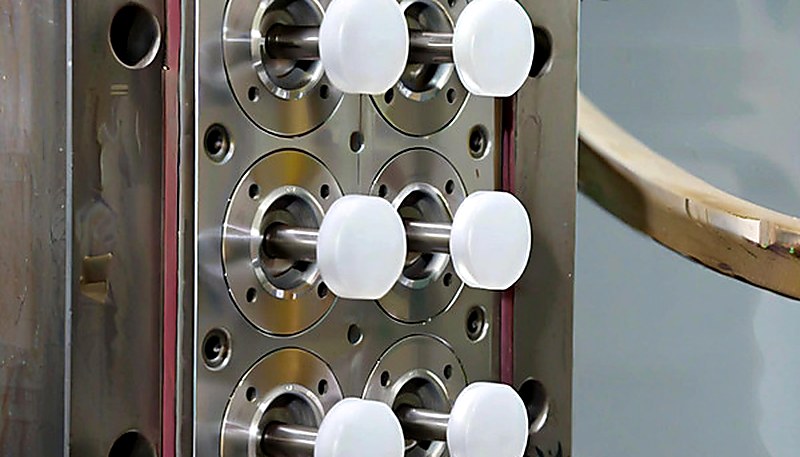
Het matrijsontwerpproces volgt een vaste volgorde. Eerst beoordeelt de engineer de geometrie van het onderdeel, de materiaalvereisten en de beoogde productievolumes. Vervolgens moeten belangrijke ontwerpbeslissingen worden genomen: het aantal caviteiten bepalen (één of meerdere, afhankelijk van het benodigde volume), de positie van de deellijn kiezen, de aanspuiting1 en het runnersysteem⁴ ontwerpen die de gesmolten kunststof verdelen, en de lay-out van de koelkanalen uitwerken. Elke beslissing heeft gevolgen verderop in het proces: een verkeerd geplaatste aanspuiting veroorzaakt vloeilijnen of luchtinsluitingen, terwijl onvoldoende koelkanalen hotspots creëren waardoor het onderdeel kromtrekt.
{“type”:“factory_insight”,“fact_ids”:[“facility.in_house_mold_manufacturing”,“capacity.mold_monthly_100_plus”],“text”:“Onze eigen matrijzenmakerij produceert meer dan 100 matrijzensets per maand, zodat wij de kwaliteit van gereedschapsontwerp tot productie beheersen zonder afhankelijkheid van externe leveranciers.”}
"Een matrijs met meerdere holtes verlaagt de kosten per onderdeel, maar verhoogt de initiële investering in gereedschap."True
Juist. Meervoudige holte matrijzen produceren meerdere onderdelen per cyclus, waardoor de machinekosten over meer eenheden worden verdeeld. De matrijs zelf is echter complexer en duurder om te bouwen en te onderhouden.
"Aluminium matrijzen zijn voor spuitgieten altijd inferieur aan stalen matrijzen."False
Onjuist. Aluminium matrijzen bieden snellere bewerking en lagere kosten voor prototyping en kleine series. Ze kunnen tienduizenden onderdelen produceren in veel materialen. Stalen matrijzen hebben de voorkeur voor grootschalige productie vanwege grotere duurzaamheid.
Wat gebeurt er tijdens de materiaalvoorbereiding?
Voordat enig kunststof de matrijs binnenkomt, moet het goed worden voorbereid. Materiaalvoorbereiding is een vaak onderschatte stap die de onderdeelkwaliteit direct beïnvloedt. De twee kritieke taken zijn materiaaldrogen en kleurmiddel-/mengvoorbereiding.
Veel technische kunststoffen — waaronder nylon (PA), polycarbonaat (PC), ABS en PET — zijn hygroscopisch, wat betekent dat ze vocht uit de lucht opnemen. Als deze materialen niet tot het juiste vochtgehalte zijn gedroogd vóór verwerking (typisch onder 0,02% voor PC en onder 0,15% voor PA), verdampt het water in de cilinder en veroorzaakt het sproeimarkeringen, luchtbellen of zelfs moleculaire afbraak die het onderdeel permanent verzwakt. Drogen gebeurt in trechterdrogers of ontvochtigingsdrogers bij materiaalspecifieke temperaturen en tijdsduur — bijvoorbeeld, PC vereist typisch 3–4 uur bij 120°C.
Tegelijkertijd moeten eventuele kleurstoffen, additieven of herverwerkt materiaal worden gemengd volgens de gespecificeerde verhouding. Consistent mengen voorkomt kleurstrepen en variaties in mechanische eigenschappen van shot tot shot. In onze faciliteit controleren we vochtniveaus met in-lijn sensoren voordat materiaal de machine-inlaat bereikt.
"Drogen van polycarbonaat (PC) bij de verkeerde temperatuur kan ertoe leiden dat de korrels samenkleven en de droger blokkeren."True
Waar. PC-korrels worden plakkerig als ze boven hun glasovergangstemperatuur (~147°C) worden gedroogd. Correct drogen op 120°C gedurende 3-4 uur voorkomt dit terwijl vocht effectief wordt verwijderd.
"Polypropyleen (PP) moet vóór het spuitgieten worden gedroogd."False
Onjuist. PP is niet hygroscopisch — het neemt geen significant vocht op uit de lucht. In de meeste gevallen kan PP direct uit de zak worden verwerkt zonder drogen, hoewel oppervlaktevocht door opslag in vochtige omstandigheden af en toe een korte droogcyclus kan vereisen.
Wat Gebeurt Er Tijdens de Injectiefase?
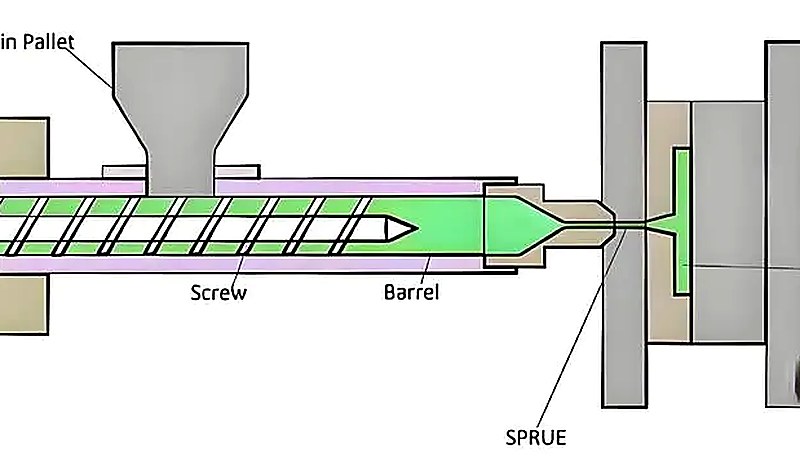
De injectiefase is waar de eigenlijke vorming plaatsvindt. Zodra de matrijs gesloten en met voldoende kracht² is vastgeklemd, draait de schroef in de machinekamer om het grondmateriaal te plastificeren (smelten) en beweegt vervolgens voorwaarts om het smeltmateriaal in de matrijsholte te injecteren.
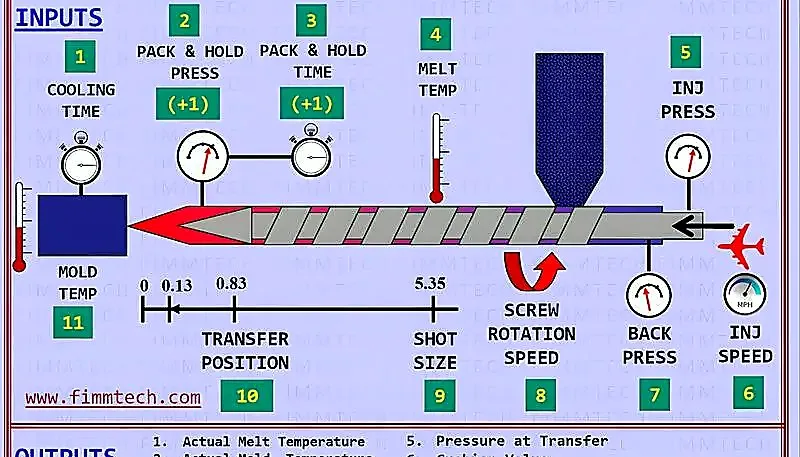
Deze fase valt uiteen in drie subfasen. Eerst de vul-fase: de schroef duwt gecontroleerd vooruit, waardoor gesmolten plastic door de spuitmond, tapse aansluiting, runner en gate de holte in wordt geperst. De vul-snelheid moet worden afgestemd — te snel veroorzaakt afschuifverhitting en ‘jetting’; te langzaam leidt tot vroegtijdig bevriezen en onvolledige shots. Ten tweede de pak-fase, waarbij extra materiaal onder hoge druk de holte in wordt geperst om volumekrimp te compenseren als de plastic begint af te koelen.⁵ Ten derde de houd-fase, die druk handhaaft totdat de gate bevriest, om terugstromen van materiaal uit de holte te voorkomen.
Spuitparameters — inclusief smelttemperatuur, inspuitsnelheid, naspuitdruk en houdtijd — moeten worden geoptimaliseerd voor elk materiaal en elke onderdeelgeometrie. Een dunwandige PC-behuizing kan bijvoorbeeld inspuitsnelheden van 200 mm/s of hoger vereisen om te vullen voordat het materiaal bevriest, terwijl een dikwandige nylon tandwielruwling met veel lagere snelheden kan worden geproduceerd. Deze parameters worden gedocumenteerd in het procesinstellingsblad en geverifieerd tijdens de eerste-onderdeel-inspectie.
{“type”:“factory_insight”,“fact_ids”:[“equipment.injection_machines_47”,“materials.material_range_400_plus”],“text”:“Met 47 machines en ervaring met meer dan 400 materialen stelt ons team de injectieparameters af op elke unieke combinatie van onderdeel en materiaal, zodat de kwaliteit van het eerste tot het miljoenste schot constant blijft.”}
"De dichtvriestijd van de aanspuiting bepaalt wanneer de nadruk veilig kan worden vrijgegeven."True
Waar. Zodra de poort stolt (bevriest), kan materiaal niet meer in of uit de holte stromen. Aanhoudende druk heeft na dit punt geen effect en verspilt alleen maar energie.
"Een hogere injectiedruk levert altijd onderdelen van betere kwaliteit op."False
Onwaar. Overmatige injectiedruk kan veroorzaken: flits (materiaal dat uit de matrijsnaad ontsnapt), oververpakking die leidt tot hoge restspanning, en voortijdige matrijsslijtage. De optimale druk balanceert een volledige holtevulling zonder defecten.
Waarom is Afkoelen en Stollen de Meest Kritieke Fase?
Als er één fase is waarin de meeste spuitgietproblemen ontstaan, dan is het de koeling.³ De koeltijd beslaat 70–80% van de totale spuitgietcyclus2¹ en is daarmee de grootste afzonderlijke factor voor de productiecapaciteit. Nog belangrijker is dat de manier waarop het onderdeel afkoelt, bepalend is voor de maatvastheid, oppervlakteafwerking en interne spanningen.
Het koelsysteem van de matrijs laat water of olie circuleren door kanalen die in de matrijsplaten zijn bewerkt. Het doel is een gelijkmatige warmteafvoer: elk deel van het product moet ongeveer even snel afkoelen. Bij ongelijkmatige koeling, bijvoorbeeld wanneer een dikke boss langzamer afkoelt dan de omringende dunne wand, veroorzaakt het verschil in krimp interne spanningen die leiden tot kromtrekken3, inval of maatvervorming.
Modern matrijsontwerp gebruikt conforme koelkanalen — kanalen die de contour van de onderdeelholte volgen — mogelijk gemaakt door metaal 3D-printen (DMLS). Vergeleken met traditionele recht geboorde kanalen kan conforme koeling de cyclusduur met 20–40% verminderen terwijl de vlakheid van het onderdeel verbetert en kromtrekken wordt verminderd. Voor grootschalige productie verdient deze technologie zich vaak binnen enkele maanden terug.
De koelfase eindigt wanneer het product voldoende is gestold om de uitwerpkrachten zonder vervorming te weerstaan. Dit wordt doorgaans bepaald door de warmtevervormingstemperatuur (HDT) van het materiaal: het product moet onder zijn HDT afkoelen voordat de matrijs opent. Voortijdig uitwerpen is een van de meest voorkomende oorzaken van productafkeur.
Hoe werken onderdeeluittrekking en nabewerking?
Zodra het koelen is voltooid, opent de matrijs en wordt het onderdeel uitgeworpen. Uitwerpsystemen omvatten uitwerppennen, afstripplaten, luchtstoten of robotextractors — de keuze hangt af van de geometrie en oppervlaktevereisten van het onderdeel. Kwetsbare of dunwandige onderdelen kunnen gespecialiseerde uitwerping vereisen om scheuren of vervorming te voorkomen.
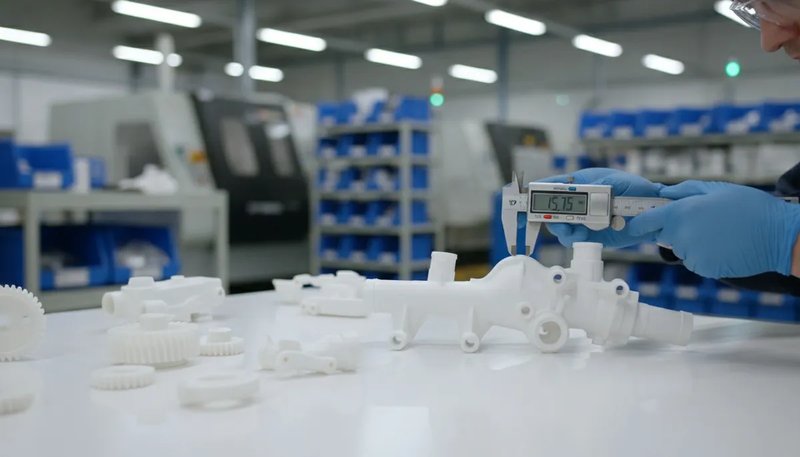
Na het uitwerpen vereist het ruwe spuitgietonderdeel doorgaans enige nabewerking. De meest voorkomende bewerkingen zijn het verwijderen van het kanaal en de aanspuitrest (aanspuiting verwijderen), het afbramen indien nodig en inspectie op visuele en maatgebonden defecten. Voor nauwere toleranties kunnen secundaire verspanende bewerkingen zoals boren, tappen of CNC-afwerking nodig zijn.
{“type”:“factory_insight”,“fact_ids”:[“quality.workflow_6_step”,“certification.iso_9001_13485_14001_45001”],“text”:“Onze kwaliteitsworkflow volgt een 6-stappensysteem — IQC, monstercontrole, procesinspectie, verpakkings- en assemblage-inspectie, FQC en OQC — allemaal onder volgens ISO 9001, ISO 13485, ISO 14001 en ISO 45001 gecertificeerde managementsystemen.”}
Voor veel inkopers is het kiezen van de juiste spuitgietpartner net zo belangrijk als inzicht in het proces zelf. Een gekwalificeerde leverancier moet eigen matrijzenbouw, procesdocumentatie, statistische procesbeheersing (SPC) en transparante communicatie bieden. Als u leveranciers beoordeelt, behandelt onze inkoopgids voor spuitgieten de belangrijkste criteria om capaciteit, kwaliteitssystemen en totale eigendomskosten te beoordelen.
Waarom wordt spuitgieten zo breed toegepast in verschillende industrieën?
Spuitgieten domineert de kunststofproductie om verschillende overtuigende redenen. Ten eerste kan geen enkel ander proces tippen aan de herhaalbaarheid bij grote volumes — een goed onderhouden matrijs kan miljoenen onderdelen produceren met vrijwel geen maatvariatie. Ten tweede ondersteunt het een extreem complexe geometrie, waaronder ondersnijdingen, schroefdraden, filmscharnieren en geïntegreerde bevestigingsfuncties, allemaal in één cyclus.
Ten derde is de materiaalvariatie enorm. Er zijn meer dan 25,000 commerciële kunststofkwaliteiten beschikbaar, van standaardpolypropyleen tot hoogwaardige PEEK en PEI. Materiaalmengsels en versterkte composieten (glas- of koolstofgevuld) vergroten de ontwerpruimte nog verder. Of u nu een flexibele TPU-overmould op een stijf substraat nodig hebt of een uv-gestabiliseerde ABS-behuizing voor buitengebruik: er bestaat een geschikte materiaalformulering.
Ten vierde zijn de kosten per onderdeel bij grote volumes uiterst concurrerend. Hoewel de initiële investering in de matrijs aanzienlijk is (doorgaans $5,000–$100,000+, afhankelijk van de complexiteit en het aantal caviteiten), worden de afgeschreven matrijskosten bij volumes boven 10,000 stuks verwaarloosbaar. Bij 100,000+ stuks is spuitgieten vrijwel altijd de productiemethode met de laagste kosten voor kunststofonderdelen.
Veelvoorkomende toepassingen zijn te vinden in vrijwel elke sector: automotive (interieurbekleding, componenten onder de motorkap, connectoren), medisch (spuiten, inhalatoren, handgrepen van chirurgische instrumenten), consumentenelektronica (telefoonhoesjes, toetsenbordframes, luidsprekerbehuizingen), verpakkingen (doppen, sluitingen, containers) en bouw (buisfittingen, raambeslag, elektradozen).
Veelgestelde vragen
Wat zijn de 6 stappen van het spuitgietproces?
De zes kernstappen zijn: (1) matrijsontwerp en -fabricage, waarbij de holte en kern van gereedschapsstaal voor de specifieke onderdeelgeometrie worden ontworpen; (2) materiaalvoorbereiding, waaronder het drogen van hygroscopische harsen en mengen van kleurstoffen; (3) injectie, waarbij de schroef gesmolten kunststof onder beheerste snelheid en druk in de gesloten vormholte perst; (4) nadrukken en vasthouden, ter compensatie van volumetrische krimp wanneer de kunststof begint te stollen; (5) koelen en stollen, waarbij het onderdeel gelijkmatig in de matrijs afkoelt tot het stijf genoeg is om uit te werpen; en (6) openen van de matrijs, uitwerpen van het onderdeel en nabewerking zoals verwijderen van de aanspuiting en inspectie.
Hoe lang duurt een spuitgietcyclus?
Cyclustijden variëren van circa 15 seconden voor kleine, eenvoudige onderdelen zoals doppen en kabelbinders tot ongeveer 2 minuten voor grote of complexe componenten zoals autobumpers en apparaatbehuizingen. Koeling domineert de cyclus en beslaat ongeveer 70 tot 80 procent van de tijd tussen sluiten en openen. Optimalisatie van koelkanalen, waar mogelijk conformale koeling en juiste instellingen van de matrijstemperatuurregelaar verkorten de cyclus het effectiefst zonder kwaliteits- of maatverlies.
Wat is het meest voorkomende defect bij spuitgieten?
De meest voorkomende defecten zijn onvolledige vulling, waarbij de holte niet volledig wordt gevuld; braamvorming, waarbij overtollig materiaal via de deellijn ontsnapt; inval op dikkere wanddelen; en vervorming door ongelijkmatige koeling en verschillende krimppercentages. Vervorming komt vooral voor bij onderdelen met een niet-uniforme wanddikte of een slecht uitgebalanceerde koelkanalenlay-out. Een correct matrijsontwerp met uitgebalanceerde aanspuitposities, geoptimaliseerde procesparameters zoals voldoende nadruk en nadruktijd, en een zorgvuldige materiaalkeuze voorkomt het merendeel van deze gangbare spuitgietfouten. Daarnaast helpen wetenschappelijke spuitgietstudies en proefopzetten (DOE) tijdens procesvalidatie om het optimale parametervenster te bepalen dat defecten over productieruns minimaliseert.
Welke materialen kunnen voor spuitgieten worden gebruikt?
Meer dan 25,000 commerciële kunststofkwaliteiten zijn geschikt voor spuitgieten, van bulkpolymeren tot hoogwaardige technische thermoplasten. Veelgebruikt zijn polypropyleen (PP), ABS, polycarbonaat (PC), nylon (PA6 en PA66), acetaal (POM), HDPE en thermoplastisch polyurethaan (TPU). Hoogwaardige opties zijn PEEK, PEI (Ultem), PPS en LCP voor extreme hittebestendigheid of chemische stabiliteit. Glasvezel, koolstofvezel of minerale vulstoffen kunnen mechanische sterkte, thermische stabiliteit en maatnauwkeurigheid verhogen.
Hoeveel kost een spuitgietvorm?
Matrijskosten lopen sterk uiteen, afhankelijk van de complexiteit, onderdeelgrootte, het aantal caviteiten, de vereiste oppervlakteafwerking en het aantal benodigde zijschuiven of schuine uitwerpers. Een eenvoudige aluminium prototypematrijs met één caviteit kan tussen 3,000 en 8,000 USD kosten. Een standaard stalen productiematrijs met één caviteit kost doorgaans 10,000 tot 30,000 USD. Complexe productiematrijzen met meerdere caviteiten, hotrunnersystemen, schuine uitwerpers of uitschroefmechanismen kunnen meer dan 80,000 tot 100,000 USD kosten. De matrijsinvestering wordt over het totale productievolume afgeschreven, waardoor spuitgieten zeer kosteneffectief is voor series van meer dan 10,000 onderdelen. Een gedetailleerde matrijsofferte met een tekening van de caviteitsindeling aanvragen is de beste manier om voor uw specifieke projecteisen een nauwkeurige kostenraming te krijgen.
Wat is het verschil tussen pakdruk en nadruk?
De vuldruk wordt tijdens de laatste fase van het vullen van de caviteit toegepast om te verzekeren dat de matrijs volledig wordt gevuld en om de samendrukbaarheid van het gesmolten polymeer bij het instromen in de caviteit te compenseren. De nadruk wordt gehandhaafd nadat de caviteit nominaal vol is, zodat voortdurend extra materiaal aan het onderdeel wordt toegevoerd terwijl de kunststof afkoelt en volumetrisch krimpt. Beide drukken hebben een afzonderlijke functie: onvoldoende vuldruk veroorzaakt onvolledige vulling en short shots, terwijl onvoldoende nadruk leidt tot inval, interne holten en onaanvaardbare maatvariatie tussen productieshots.
Kan spuitgieten transparante onderdelen produceren?
Ja, met spuitgieten kunnen eenvoudig transparante onderdelen worden gemaakt van heldere technische harsen zoals polycarbonaat (PC), acrylaat (PMMA), helder ABS en cyclisch olefinecopolymeer (COC). Optische helderheid vereist een samenspel van voorwaarden: grondig drogen om vochtgerelateerde zilverstrepen te voorkomen, nauwkeurige regeling van de smelttemperatuur om thermische vergeling te vermijden, een hooggepolijst vormholteoppervlak (SPI A-1- of A-2-afwerking) en zorgvuldig geoptimaliseerd aanspuitontwerp om zichtbare vloeilijnen, lasnaden en jetting te minimaliseren die bij elk transparant kunststof onderdeel direct opvallen.
Hoe vermindert u kromtrekken van spuitgietdelen?
Het verminderen van kromtrekking vereist een brede aanpak die begint met een gelijkmatige wanddikte in het onderdeelontwerp — dikteverschillen van meer dan 20 procent tussen aangrenzende secties zijn een veelvoorkomende hoofdoorzaak van kromtrekking. In de matrijs helpen conformale koelkanalen de warmte gelijkmatig over het volledige caviteitsoppervlak af te voeren. Optimaliseer tijdens het proces de nadruk, koeltijd en matrijstemperatuur zorgvuldig om verschilkrimp te beperken. Ook de materiaalkeuze is cruciaal: glasgevulde kwaliteiten en compounds met een inherent lage krimp, zoals PPS of PEEK, zijn van nature veel beter bestand tegen kromtrekking dan ongevulde standaardharsen.
Klaar om uw spuitgietproject te starten? Ontvang een concurrerende prijs, DFM-feedback en een productieplanning van het engineeringteam van ZetarMold. Wij beschikken over eigen matrijzenbouw, 47 machines van 90T–1850T en ISO-gecertificeerde kwaliteitscontrole. Vraag een gratis offerte aan →
aanspuiting: de aanspuiting is de nauwe opening in een spuitgietmatrijs waardoor de gesmolten kunststof de caviteit binnenkomt. Het ontwerp van de aanspuiting heeft rechtstreeks invloed op het vulpatroon, de druk en de productkwaliteit. ↩
spuitgietcyclus: de spuitgietcyclus is de volledige reeks bewerkingen bij het spuitgieten, vanaf het sluiten van de matrijs tot en met injectie, nadrukken, koelen en uitwerpen van het afgewerkte onderdeel. ↩
kromtrekken: kromtrekken is een vormfout waarbij het onderdeel vervormt of uit zijn vorm buigt door ongelijkmatige koeling, verschillen in krimp of interne spanningen tijdens het spuitgietproces. ↩