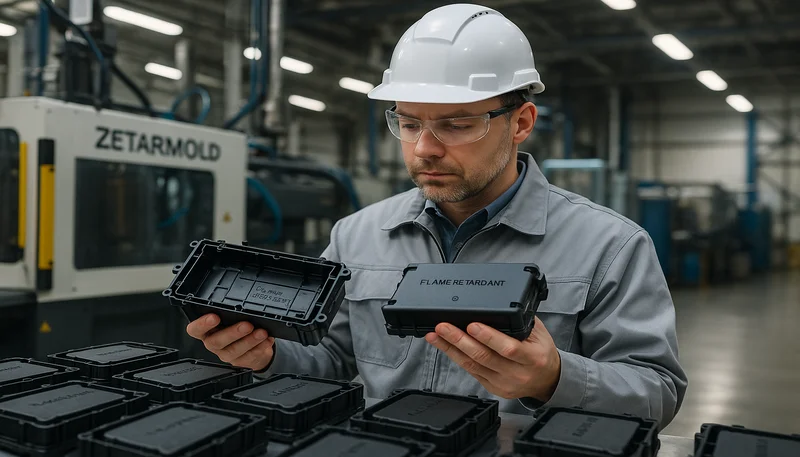
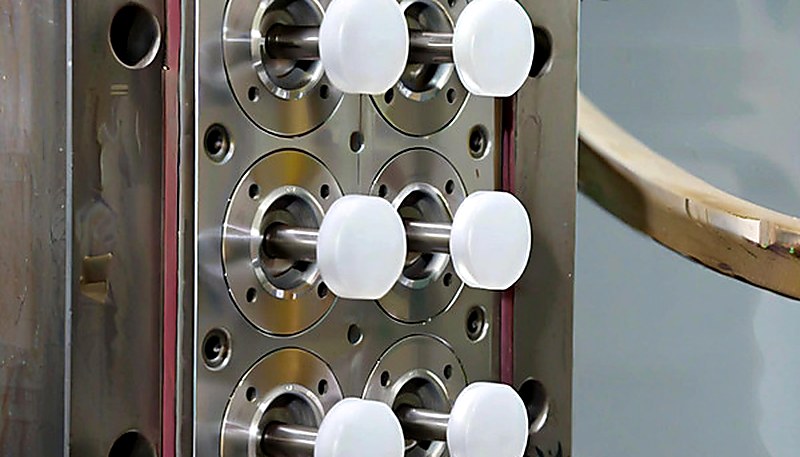
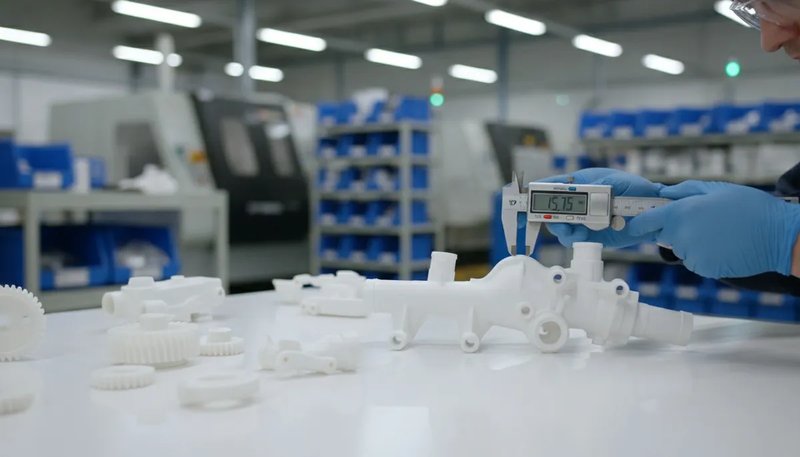
射出成形は現代のプラスチック製造を支える基幹技術です。毎年、1グラム未満の医療用コネクタから全長1メートルの自動車バンパーまで、何兆個もの部品がこの工程で作られます。工程を正しく理解すれば、速度、精度、拡張性で射出成形に匹敵する方法はありません。上海工場では90T~1850Tの射出成形機47台を稼働しており、20年以上の生産経験から、成功は各工程を正しく実行できるかにかかっていると学びました。
このガイドでは、最初の射出成形セットアップから最終品質検査まで、全工程を順に解説し、各段階で何が行われ、なぜ重要なのかを明らかにします。
- 射出成形プロセスには、金型設計、材料準備、射出、冷却、突き出し、後加工という6つの主要工程があります。
- 冷却は総サイクルタイムの70-80%を占め、生産性を左右する最大の要因です。
- 金型設計上の判断(ゲート形式、ランナーシステム、キャビティ数)は、部品品質とコストを直接左右します。
- 材料乾燥と温度管理は極めて重要です。吸湿性樹脂では、水分がわずか0.1%でも不良が発生します。
- 適切に最適化されたプロセスでは、15-120秒のサイクルで、公差±0.05 mm未満の同一部品を生産できます。
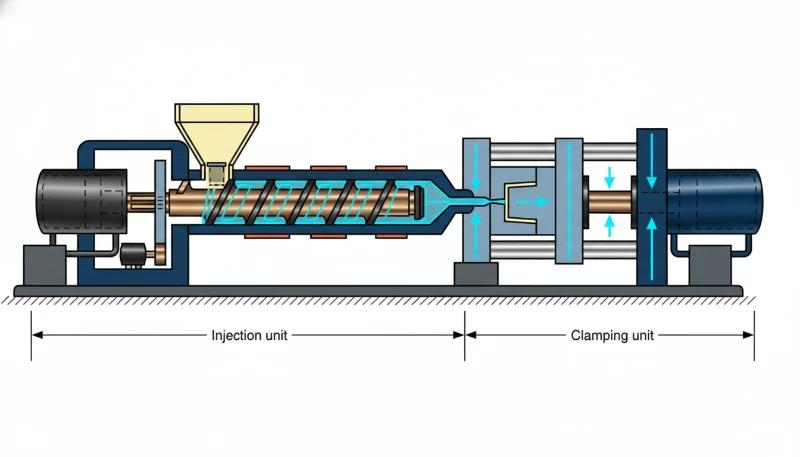
射出成形とは何か、なぜ重要なのか?
射出成形とは何か、またなぜ重要なのかは、このセクションで説明する機能、制約、トレードオフによって定義されます。射出成形は、溶融プラスチックを高圧で金属製の金型キャビティに充填し、冷却・固化させた後、完成部品として取り出す製造工程です。この工程は1872年にジョン・ウェズリー・ハイアットによって特許を取得し、その後、世界で最も効率的な大量生産方式の一つへと発展しました。現在、世界の全プラスチック製品の30%以上が射出成形で製造されています。
射出成形がブロー成形や熱成形などの他のプラスチック成形法と異なる点は、速度、再現性、複雑な形状への対応力を兼ね備えていることです。1つの金型で、寸法公差が最小±0.02 mmの同一部品を数百万個生産できます。サイクルタイムは、小型消費財部品の15 secondsから大型自動車部品の約2 minutesまでさまざまです。¹
{“type”:“factory_insight”,“fact_ids”:[“company.experience_20_years”,“equipment.injection_machines_47”,“equipment.tonnage_90_1850”],“text”:“ZetarMoldの上海工場では、400+種類のプラスチック材料にわたる20+年の生産経験を背景に、90Tから1850Tまでの射出成形機47台を稼働しています。“}
金型設計および金型製作プロセスはどのように進みますか?
射出成形プロジェクトの成功は、すべて金型から始まります。射出成形金型は精密設計された鋼製またはアルミニウム製の工具で、製造される各部品の形状、表面仕上げ、寸法精度を決定します。金型設計の段階で成功の基盤を築くか、製造を重ねるたびに深刻化する問題を生むかが決まります。
金型設計工程は体系的な手順に従います。まず、エンジニアが部品形状、材料要件、生産数量目標を確認します。その後、生産量に応じたキャビティ数(単一または多数個取り)の決定、パーティングライン位置の選定、溶融プラスチックを分配するゲート1とランナーシステム⁴の設計、冷却水路レイアウトの設計といった重要事項を決定します。各決定は後工程に影響し、ゲート位置が不適切だとウェルドラインやエアトラップが生じ、冷却水路が不十分だと部品を反らせるホットスポットが発生します。
{“type”:“factory_insight”,“fact_ids”:[“facility.in_house_mold_manufacturing”,“capacity.mold_monthly_100_plus”],“text”:“当社の社内金型製造設備では月間100セット以上の金型を製作しており、外部サプライヤーに依存することなく、金型設計から生産まで品質を管理できます。“}
「多数個取り金型は製品1個当たりの費用を下げるが、初期金型投資を増加させる。」True
そのとおりです。多数個取り金型は1サイクルで複数の部品を成形するため、成形機の稼働時間コストをより多くの製品に配分できます。ただし、金型自体は複雑になり、製作費と保守費も高くなります。
「射出成形では、アルミ金型は必ず鋼製金型より劣ります。」False
誤りです。アルミ金型は加工が速く、試作や少量生産のコストを抑えられます。多くの材料で数万個の部品を生産可能です。鋼製金型は耐久性に優れるため、大量生産に適しています。
材料準備では何が行われるのか?
プラスチックを金型へ投入する前に、適切な準備が必要です。材料準備は過小評価されがちですが、部品品質に直接影響する工程です。重要な作業は、材料の乾燥と、着色剤の調製・混合の2つです。
ナイロン(PA)、ポリカーボネート(PC)、ABS、PETなど多くのエンジニアリングプラスチックは吸湿性があり、空気中の水分を吸収します。加工前に適正な含水率(通常PCは0.02%未満、PAは0.15%未満)まで乾燥しないと、シリンダー内で水分が蒸発し、シルバーストリーク、気泡、さらには部品を恒久的に弱める分子劣化を引き起こします。乾燥にはホッパードライヤーまたは除湿乾燥機を用い、材料固有の温度・時間で処理します。例えばPCは通常120°Cで3~4時間必要です。
同時に、着色剤、添加剤、再生材はすべて、指定された比率で混合する必要があります。均一に混合することで、ショット間の色むらや機械的特性のばらつきを防止できます。当社工場では、材料が機械のホッパー口に入る前に、インラインセンサーで水分量を確認しています。
「ポリカーボネート(PC)を不適切な温度で乾燥すると、ペレット同士が付着して乾燥機を詰まらせる可能性があります。」True
正しいです。PCペレットはガラス転移温度(約147°C)を超える温度で乾燥すると粘着性を帯びます。120°Cで3~4時間適切に乾燥すれば、この問題を避けながら水分を効果的に除去できます。
"ポリプロピレン(PP)は射出成形前に乾燥させなければならない。"False
誤りです。PPは非吸湿性であり、空気中の水分をほとんど吸収しません。通常、PPは乾燥せずに袋から取り出してそのまま加工できますが、高湿度環境での保管により表面に水分が付着した場合は、短時間の乾燥が必要になることがあります。
射出工程では何が行われるのか?
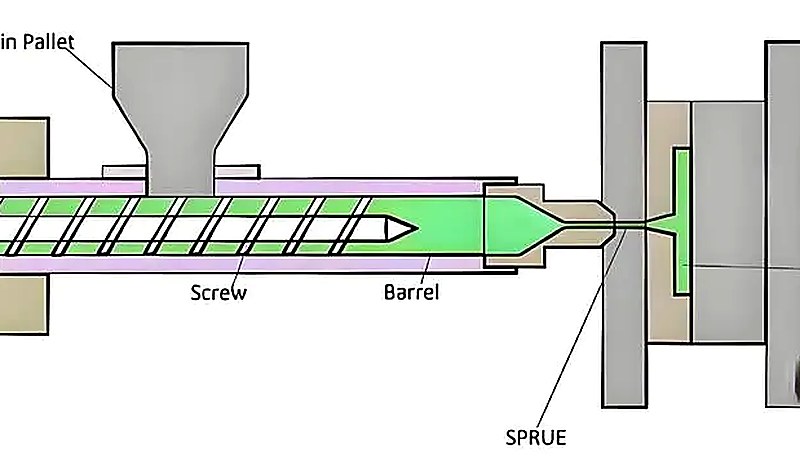
射出工程では、実際に成形が行われます。金型が閉じ、十分な力²で型締めされると、機械のバレル内のスクリューが回転して原料を可塑化(溶融)し、その後前進して溶融樹脂を金型キャビティへ射出します。
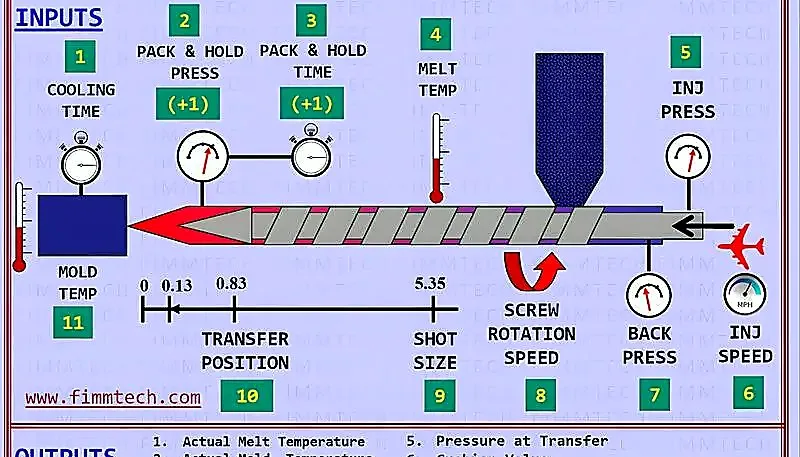
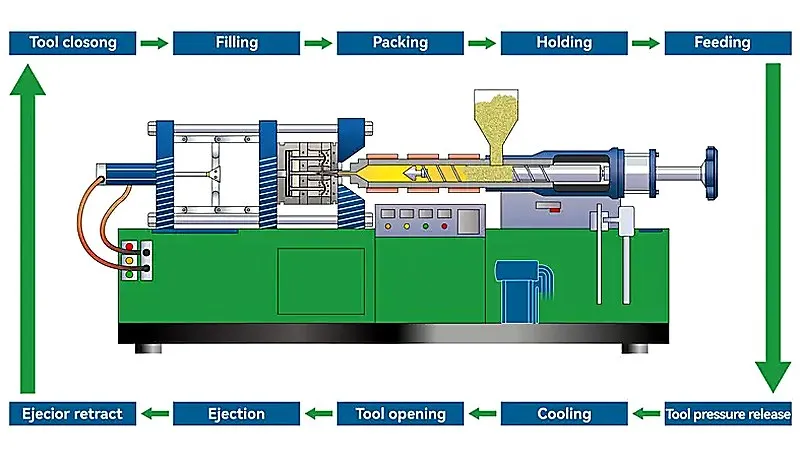
この工程は3つの段階に分かれます。第1は充填段階です。スクリューが制御された速度で前進し、溶融プラスチックをノズル、スプルー、ランナー、ゲートの順に通してキャビティへ押し込みます。充填速度は適切に調整する必要があります。速すぎるとせん断発熱やジェッティングが生じ、遅すぎると早期固化によってショートショットを招きます。第2はパッキング段階で、プラスチックが冷却し始める際の体積収縮を補うため、高圧で追加の材料をキャビティへ充填します。⁵ 第3は保圧段階で、ゲートが固化するまで圧力を維持し、キャビティからの材料の逆流を防ぎます。
溶融温度、射出速度、保圧圧力、保圧時間などの射出条件は、材料と部品形状ごとに最適化する必要があります。たとえば、薄肉PCハウジングでは材料が固化する前に充填するため200 mm/s以上の射出速度が必要な場合がありますが、厚肉ナイロン製ギアブランクははるかに低速で成形できます。これらの条件は成形条件表に記録し、初品検査で検証します。
{“type”:“factory_insight”,“fact_ids”:[“equipment.injection_machines_47”,“materials.material_range_400_plus”],“text”:“47台の成形機と400種類以上の材料経験を生かし、当社チームは各部品と材料の組合せに合わせて射出条件を調整し、初回ショットから100万回目まで安定した品質を確保します。“}
"ゲート固化時間によって、保圧を安全に解除できる時点が決まります。"True
正しい。ゲートが固化(凍結)すると、材料はキャビティ内外へ流動できなくなります。それ以降に保圧を続けても効果はなく、エネルギーを浪費するだけです。
「射出圧力を高くするほど、必ず部品品質が向上する。」False
誤りです。過大な射出圧力は、バリ(金型のパーティングラインからの樹脂漏れ)、高い残留応力を生む過充填、金型の早期摩耗を引き起こします。最適圧力は、不良を起こさずキャビティを完全充填できる値です。
冷却・固化が最も重要な工程である理由
射出成形の問題が最も多く発生する工程を一つ挙げるなら、冷却です。³ 冷却時間は射出成形サイクル2全体の70–80%¹を占め、生産量を左右する最大の要因です。さらに重要なのは、部品の冷却状態が寸法安定性、表面仕上げ、内部応力を決定することです。
金型の冷却システムは、金型プレート内に加工された水路に水または油を循環させます。目的は均一に熱を除去し、部品のすべての領域をほぼ同じ速度で冷却することです。冷却が不均一な場合(例えば、厚いボス部が周囲の薄肉部より遅く冷える場合)、収縮差によって内部応力が生じ、反り3、ヒケ、寸法変形の原因になります。
最新の金型設計では、金属3Dプリンティング(DMLS)によって実現する、製品キャビティの輪郭に沿ったコンフォーマル冷却水路を使用します。従来の直線穴加工による水路と比較して、コンフォーマル冷却は製品の平坦度を向上させ、反りを抑えながら、サイクルタイムを20~40%短縮できます。大量生産では、多くの場合、この技術への投資を数か月で回収できます。
冷却工程は、部品が変形せずに突き出し力に耐えられる程度まで固化した時点で終了します。この判断には通常、材料の荷重たわみ温度(HDT)が用いられ、金型を開く前に部品をHDT未満まで冷却する必要があります。早すぎる突き出しは、部品不良の最も一般的な原因の一つです。
成形品の突き出しと後加工はどのように行われるか?
冷却が完了すると、金型が開き、部品が取り出されます。取り出しシステムには、エジェクタピン、ストリッパープレート、エアブラスト、またはロボット抽出装置が含まれます。選択は部品形状と表面要件によって異なります。繊細な部品や薄肉部品は、ひび割れや変形を防ぐために特殊な取り出しを必要とする場合があります。
射出後、生の成形部品には通常、何らかの後処理が必要です。最も一般的な作業には、ランナーとゲートの痕跡の除去(デゲーティング)、フラッシュのトリミング(存在する場合)、視覚的および寸法的な欠陥の検査が含まれます。より厳しい公差を必要とする場合、穴あけ、タップ加工、またはCNC仕上げなどの二次加工が必要になることがあります。
{“type”:“factory_insight”,“fact_ids”:[“quality.workflow_6_step”,“certification.iso_9001_13485_14001_45001”],“text”:“当社の品質管理工程は、IQC、サンプル検査、工程検査、梱包・組立検査、FQC、OQCの6段階で構成され、ISO 9001、ISO 13485、ISO 14001、ISO 45001認証取得済みのマネジメントシステムの下で運用されています。”}
多くのバイヤーにとって、適切な射出成形パートナーの選定は、工程そのものを理解するのと同じくらい重要です。適格なサプライヤーには、社内金型製作、工程文書、統計的工程管理(SPC)、透明性のあるコミュニケーションが求められます。サプライヤーを評価する際は、能力、品質システム、総所有コストを評価する主要基準を解説した射出成形調達ガイドをご覧ください。
射出成形が幅広い産業でこれほど普及している理由とは?
射出成形がプラスチック製造を支配するのには、いくつかの説得力のある理由があります。第一に、大量生産における繰り返し精度において、これに匹敵するプロセスはありません。適切に維持された金型は、実質的に寸法変動なく数百万個の部品を生産できます。第二に、アンダーカット、ねじ、リビングヒンジ、一体化した締結機能を含む極度の幾何学的複雑さを、単一サイクルで実現できます。
第三に、材料の汎用性は非常に高いです。汎用ポリプロピレンから高性能のPEEKやPEIまで、25,000以上の市販プラスチックグレードが利用可能です。材料ブレンドや強化複合材料(ガラス充填、カーボン充填)により、設計の可能性はさらに広がります。硬質基材上の柔軟なTPUオーバーモールドが必要な場合でも、屋外使用用のUV安定化ABS筐体が必要な場合でも、その仕事に適した材料配合があります。
第四に、大量生産時の部品単価は非常に競争力があります。初期の金型投資は大きいものの(通常、複雑さとキャビティ数に応じて$5,000〜$100,000+)、10,000ユニット以上の生産量では償却された金型コストは無視できる程度になります。100,000ユニット以上では、射出成形はプラスチック部品のほぼ常に最低コストの製造方法です。
一般的な用途は、事実上すべての産業に及びます:自動車(内装トリム、ボンネット下コンポーネント、コネクタ)、医療(注射器、吸入器、手術器具のハンドル)、民生電子機器(電話ケース、キーボードフレーム、スピーカー筐体)、包装(キャップ、クロージャー、容器)、および建設(パイプフィッティング、窓金具、電気ボックス)。
よくある質問
射出成形プロセスの6つのステップは何ですか?
6つの主要ステップは以下の通りです:(1)金型設計と製作:特定の部品形状に合わせて工具鋼のキャビティとコアを設計する。(2)材料準備:吸湿性樹脂の乾燥や着色剤の混合を含む。(3)射出:スクリューが溶融プラスチックを制御された速度と圧力で閉じた金型キャビティに押し込む。(4)保圧と保持:プラスチックが固化し始める際の体積収縮を補償する。(5)冷却と固化:部品が金型内で均一に冷却され、取り出し可能な十分な剛性になるまで固まる。(6)金型開放、部品取り出し、およびゲート除去や検査などの後処理。
射出成形サイクルにはどのくらい時間がかかりますか?
サイクルタイムは、ボトルキャップやケーブルタイなどの小さくシンプルな部品で約15秒から、自動車のバンパーパネルや家電の筐体などの大型または複雑な部品で約2分まで幅があります。冷却は全体の生産サイクルを支配し、金型閉じから金型開きまでの総経過時間の約70〜80%を占めます。冷却チャンネルのレイアウトを最適化し、実用的な場合はコンフォーマル冷却を使用し、適切な金型温度コントローラーの設定を選択することが、部品の品質や寸法精度を犠牲にすることなくサイクルタイムを短縮する最も効果的な方法です。
射出成形で最も一般的な欠陥は何ですか?
最も一般的な欠陥には、キャビティが完全に充填されないショートショット、金型のパーティングラインから余分な材料が漏れるフラッシュ、肉厚セクションのシンクマーク、不均一な冷却と異なる収縮率によって引き起こされる反りが含まれます。反りは、肉厚が不均一な部品や冷却チャネルレイアウトのバランスが悪い部品で特に多く発生します。バランスの取れたゲート位置を備えた適切な金型設計、十分な保圧圧力と保持時間を含む最適化されたプロセスパラメータ、注意深い材料選択により、これらの一般的な射出成形欠陥の大部分を防ぐことができます。さらに、プロセス検証時に科学的成形研究と実験計画法(DOE)を実施することで、生産ロット全体で欠陥発生を最小限に抑える最適なパラメータウィンドウを特定するのに役立ちます。
射出成形にはどのような材料が使用できますか?
25,000種類以上の市販プラスチックグレードが射出成形に対応しており、汎用樹脂から高性能エンジニアリング熱可塑性プラスチックまで幅広くカバーしています。最も広く使用されている材料には、ポリプロピレン(PP)、ABS、ポリカーボネート(PC)、ナイロン(PA6およびPA66)、アセタール(POM)、HDPE、熱可塑性ポリウレタン(TPU)があります。高性能エンジニアリングオプションには、極度の耐熱性や化学的安定性を必要とする過酷な用途向けのPEEK、PEI(Ultem)、PPS、LCPが含まれます。材料はガラス繊維、炭素繊維、または鉱物充填材と複合化することで、成形部品の機械的強度、熱安定性、寸法精度を向上させることができます。
射出成形金型の費用はいくらですか?
金型のコストは、複雑さ、部品サイズ、キャビティ数、必要な表面仕上げ、および必要なサイドアクションやリフターの数によって大きく異なります。シンプルな単一キャビティのアルミニウム試作金型は3,000〜8,000米ドル程度です。標準的な単一キャビティのスチール生産金型は通常10,000〜30,000米ドルの範囲です。ホットランナーシステム、リフター、またはアンスクリュー機構を備えた複雑な多キャビティ生産金型は、80,000〜100,000米ドルを超える場合があります。金型投資は総生産量にわたって償却されるため、射出成形は10,000個以上の生産ロットで非常にコスト効率が良くなります。キャビティレイアウト図を含む詳細な金型見積もりを依頼することが、特定のプロジェクト要件に基づいた正確なコスト見積もりを得る最良の方法です。
保圧と保持圧力の違いは何ですか?
保圧はキャビティ充填の最終段階で適用され、金型が完全に充填されることを保証し、溶融ポリマーがキャビティに入るときの圧縮性を補償します。保持圧力は、キャビティが名目上満たされた後に維持され、プラスチックが冷却され体積収縮するにつれて、部品に追加の材料を継続的に供給します。両方の圧力は異なる機能を果たします:保圧が不十分だとショートショットや不完全充填を引き起こし、保持圧力が不十分だとシンクマーク、内部ボイド、および生産ショット間での許容できない寸法変動を引き起こします。
射出成形で透明な部品は製造できますか?
はい、射出成形ではポリカーボネート(PC)、アクリル(PMMA)、クリアABS、環状オレフィンコポリマー(COC)などの透明なエンジニアリング樹脂を用いて、容易に透明部品を製造できます。光学透明度を達成するには、以下の条件が揃う必要があります:湿気によるスプレーマークを防ぐための十分な材料乾燥、熱による黄変を避けるための正確な溶融温度制御、高度に研磨された金型キャビティ表面(SPI A-1またはA-2仕上げ)、および透明プラスチック部品で目立ちやすい流れ跡、溶着線、ジェッティングを最小限に抑えるために慎重に最適化されたゲート設計。
射出成形部品の反りをどのように軽減しますか?
反り軽減には、部品設計における均一な肉厚から始まる包括的で多面的なアプローチが必要です。隣接するセクション間で20%を超える肉厚のばらつきは、反りの頻繁な根本原因です。金型では、コンフォーマル冷却チャネルがキャビティ表面全体から均等に熱を除去するのに役立ちます。加工中は、異なる収縮率を最小限に抑えるために、保圧圧力、冷却時間、金型温度を慎重に最適化します。材料選択も重要な役割を果たします:ガラス充填グレードやPPSやPEEKなどの本質的に低収縮性のコンパウンドは、未充填の汎用樹脂よりもはるかに優れた反り抵抗性を自然に備えています。
射出成形プロジェクトを始めませんか?ZetarMoldのエンジニアリングチームが、競争力のある価格、DFMフィードバック、生産スケジュールをご提示します。社内金型製作、90T–1850Tの成形機47台、ISO認証に基づく品質管理を提供しています。無料見積もりを依頼 →