Wat is gas-geassisteerd spuitgieten?
Gasgeassisteerd spuitgieten1 wordt bepaald door de werking, beperkingen en afwegingen die in dit gedeelte worden uitgelegd. Gasgeassisteerd spuitgieten (GAIM) is een geavanceerd productieproces dat conventioneel spuitgieten combineert met de injectie van gas onder druk om holle delen in kunststof onderdelen te creëren. Bij deze innovatieve techniek wordt tijdens de vormcyclus stikstof in specifieke zones van de gesmolten kunststof geïnjecteerd. Zo ontstaan interne holtes terwijl de structurele integriteit en oppervlaktekwaliteit behouden blijven.
Het GAIM-proces werd voor het eerst ontwikkeld in de jaren 70 en is sindsdien geëvolueerd tot een geavanceerde productiemethode die wordt gebruikt in de automotive, consumentenelektronica en industriële toepassingen. In tegenstelling tot traditioneel massief spuitgieten stelt GAIM fabrikanten in staat om complexe geometrieën te produceren met minder materiaalverbruik, kortere cyclustijden en verbeterde onderdeelkwaliteit.
Gasgeassisteerd spuitgieten wordt uitgevoerd volgens de norm ISO 20421-1:20192, die algemene beginselen vastlegt voor procesparameters, apparatuurvereisten en kwaliteitsbeheersing. Deze standaardisering zorgt voor consistente resultaten bij verschillende productielocaties en bevordert de samenwerking tussen ontwerpingenieurs en productieteams.
Het belangrijkste voordeel van GAIM is dat holle kanalen en ribben kunnen worden gemaakt die met conventionele vormmethoden onmogelijk of te duur zouden zijn. Door gasinjectiepunten strategisch in het matrijsontwerp te plaatsen, kunnen ingenieurs bepalen waar holtes ontstaan en zo zowel het materiaalgebruik als de prestatiekenmerken van het onderdeel optimaliseren.
- Gas-geassisteerd spuitgieten is het meest geschikt voor onderdelen met dikke wanden waar holle kanalen gewicht kunnen besparen en krimpkraters kunnen verminderen.
- Typische materiaalbesparingen zijn betekenisvol maar moeten worden gevalideerd door DFM, stromingssimulatie, proefschoten en mechanische tests.
- Stikstoftiming, gaskanaalindeling, harsselectie en ontluchting moeten gezamenlijk worden ontworpen; het wijzigen van slechts één parameter kan nieuwe defecten veroorzaken.
- Een leverancier moet GAIM-capaciteit aantonen met gereedschapservaring, procesvalidatie, kwaliteitsregistraties en duidelijke communicatie vóór productievrijgave.
Hoe werkt gas-geassisteerd spuitgieten?
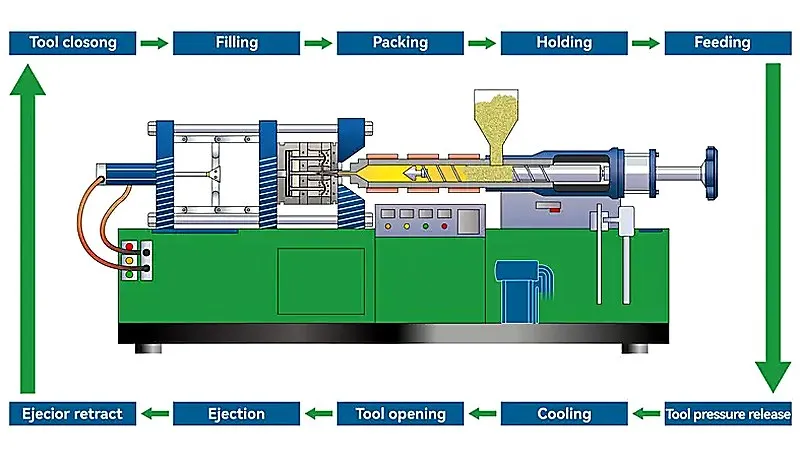
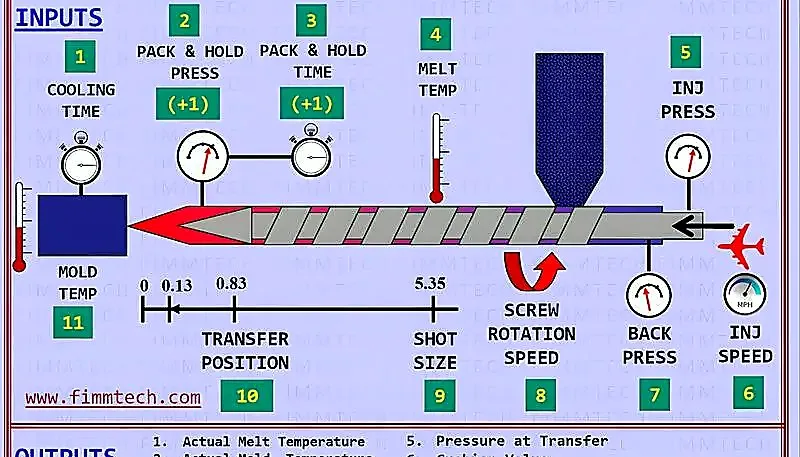
Gas-geassisteerd spuitgieten is een gecontroleerd procesverloop dat werkt via de fasen en instellingen die in deze sectie worden uitgelegd. Het gas-geassisteerde spuitgietproces volgt een precieze reeks handelingen die zorgvuldige coördinatie vereist tussen kunststofinjectie, gastiming en drukregelsystemen. Het begrijpen van deze workflow is essentieel voor ingenieurs en inkoopmanagers die GAIM voor hun toepassingen evalueren.
Fase 1: Gedeeltelijke Kunststofinjectie
Het proces begint met het injecteren van gesmolten kunststof in de matrijsholte, waarbij doorgaans 70-95% van het ontworpen volume wordt gevuld. Deze strategie van gedeeltelijke vulling, bekend als “short shot”, zorgt dat er voldoende materiaal aanwezig is om de buitenwand van het onderdeel te vormen en tegelijk ruimte overblijft voor gaspenetratie. De injectieparameters moeten nauwkeurig worden geregeld, met smelttemperaturen van 200°C tot 280°C, afhankelijk van het polymeertype.
Fase 2: Gasinjectie
Direct na de plasticinjectie wordt onder druk staande stikstofgas (meestal 50-200 bar) ingebracht via strategisch gepositioneerde gasinjectiepennen of sproeiers. Het gas volgt het pad van de minste weerstand, meestal door dikwandige secties, creëert holle kanalen en duwt tegelijkertijd extra plasticmateriaal naar de resterende holteruimtes. De timing van de gasinjectie is cruciaal en vindt meestal plaats binnen 0,5-2,0 seconden na voltooiing van de plasticinjectie.
Fase 3: Gasdruk Houdfase
Tijdens de koelfase wordt de gasdruk gehandhaafd om zinkmarkeringen te voorkomen en een goede onderdeelvorming te garanderen. De houddruk varieert doorgaans van 30-80% van de initiële injectiedruk en neemt geleidelijk af naarmate het kunststof stolt. Deze fase kan 10-60 seconden duren, afhankelijk van de onderdeeldikte en materiaaleigenschappen.
Fase 4: Gasontluchting en Onderdeeluitejectie
Zodra het plastic voldoende is afgekoeld en gestold, wordt het gas uit de holle kanalen geëvacueerd via dezelfde injectiepunten of speciale ontluchtingssystemen. De mal opent vervolgens en het voltooide onderdeel wordt uitgeworpen met standaard uitwerpsystemen.
"Gasgeassisteerd spuitgieten gebruikt stikstof onder druk om holle interne kanalen te vormen in geschikte dikwandige kunststofonderdelen."True
Waar. GAIM introduceert stikstof na een gedeeltelijke kunststoffvulling, zodat het gas dikke secties kan uithollen, de houddruk kan handhaven en krimpkraters kan verminderen terwijl het onderdeel afkoelt. De techniek is afhankelijk van het ontwerp van het gaskanaal, de timing en het materiaalgedrag.
"Gasgeassisteerd spuitgieten kan het materiaalverbruik met maximaal 70% verminderen ten opzichte van conventioneel spuitgieten."False
Onjuist. GAIM vermindert vaak het materiaalverbruik, maar realistische besparingen liggen doorgaans in het bereik van 20-40% voor geschikte onderdeelgeometrieën. Zeer hoge reductieclaims moeten worden gevalideerd door DFM, stromingssimulatie, proefschoten en mechanische tests voordat ze in een businesscase worden gebruikt.
Wat zijn de Belangrijkste Voordelen van Gas-Assisted Injection Molding?
De belangrijkste voordelen van gas-geassisteerd spuitgieten zijn de hoofdcategorieën of opties die in deze sectie worden uitgelegd. Gas-geassisteerd spuitgieten biedt aanzienlijke voordelen op meerdere prestatie-indicatoren, waardoor het een aantrekkelijke optie is voor fabrikanten die de productie-efficiëntie en onderdeelkwaliteit willen optimaliseren. Deze voordelen hebben direct invloed op zowel de productiekosten als de prestatiekenmerken van het eindproduct.
Materiaalreductie en Kostenbesparing
GAIM vermindert het materiaalverbruik doorgaans met 20-40% in vergelijking met massieve spuitgietonderdelen van gelijke sterkte. Deze reductie komt voort uit de holle kern die door gasinjectie wordt gecreëerd, waardoor de structurele integriteit behouden blijft terwijl onnodig materiaalgebruik wordt geëlimineerd. Voor grote productieseries vertalen materiaalbesparingen zich direct in lagere grondstofkosten en verbeterde winstmarges.
Verbeterde Oppervlaktekwaliteit
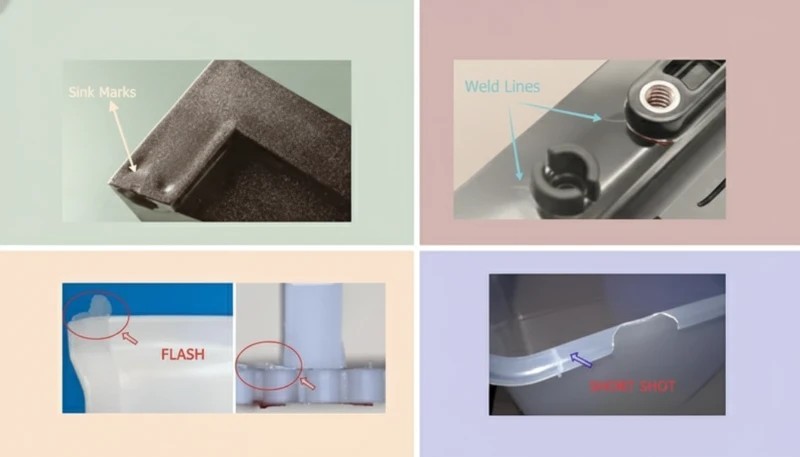
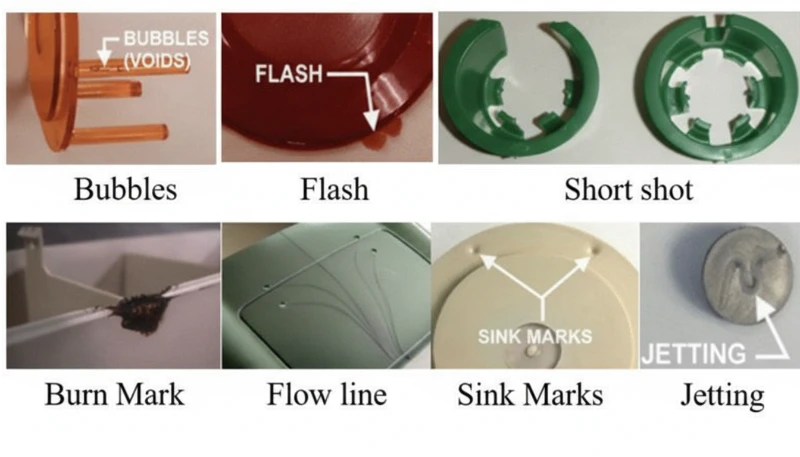
De gasdruk houdfase elimineert veelvoorkomende oppervlaktedefecten zoals krimpkraters, laslijnen en stroomlijnen die vaak voorkomen in dikwandige conventioneel gegoten onderdelen. Gasdruk fungeert als een interne pakkingmechanisme, wat zorgt voor een uniforme oppervlakteafwerking bij complexe geometrieën. Deze verbetering elimineert vaak secundaire afwerkingsbewerkingen, waardoor de totale productietijd en -kosten worden verlaagd.
Verbeterde Structurele Prestatie
Holle doorsneden die met GAIM worden gemaakt, hebben vaak een betere sterkte-gewichtsverhouding dan massieve equivalenten. Het holle kernontwerp vergroot het weerstandsmoment van het onderdeel en verlaagt tegelijk het gewicht, wat resulteert in een hogere buigsterkte en minder materiaalspanning. Dit voordeel is vooral waardevol in auto- en luchtvaarttoepassingen waar gewichtsbesparing cruciaal is.
Verminderde Vervorming en Dimensionale Stabiliteit
Gasdruk helpt om uniforme koelsnelheden door de hele doorsnede van het onderdeel te behouden, waardoor kromtrekken aanzienlijk wordt verminderd en de dimensionale stabiliteit verbetert. De interne spanningsverdeling is gelijkmatiger in GAIM-onderdelen, wat leidt tot een betere langetermijndimensionale retentie onder variërende omgevingsomstandigheden.
| Prestatie-indicator | Conventionele Spuitgieten | Spuitgieten met gasondersteuning | Verbetering |
|---|---|---|---|
| Materiaalgebruik | 100% basislijn | 60-80% van de basislijn | 20-40% reductie |
| Cyclustijd | 100% basislijn | 75-90% van de basislijn | 10-25% reductie |
| Oppervlaktekwaliteitsclassificatie | Goed (zinklijnen komen vaak voor) | Uitstekend (minimale defecten) | Aanzienlijk verbeterd |
| Kosten gereedschap | 100% basislijn | 110-130% van de basislijn | Toename van 10-30% |
| Onderdeelgewicht | 100% basislijn | 60-80% van de basislijn | 20-40% reductie |
Wat zijn veelvoorkomende toepassingen van gasgeassisteerd spuitgieten?
De gebruikelijke toepassingen van gasgeassisteerd spuitgieten vormen de belangrijkste categorieën die in dit gedeelte worden besproken. Gasgeassisteerd spuitgieten wordt veel toegepast in sectoren waar complexe onderdelen, gewichtsbesparing en materiaalefficiëntie3 cruciale ontwerpeisen zijn. Inzicht in deze toepassingen helpt ingenieurs kansen te herkennen waarbij GAIM de beste oplossing biedt.
Toepassingen in de automotive industrie
De automobielsector is de grootste markt voor GAIM-technologie en gebruikt het proces voor zowel constructieve als esthetische componenten. Veelvoorkomende toepassingen zijn portiergrepen, dashboardcomponenten, bumpersteunen en interieurbekleding. Autofabrikanten waarderen vooral dat GAIM complexe holle geometrieën kan maken die het voertuiggewicht verlagen en tegelijk aan de eisen voor botsveiligheid voldoen.
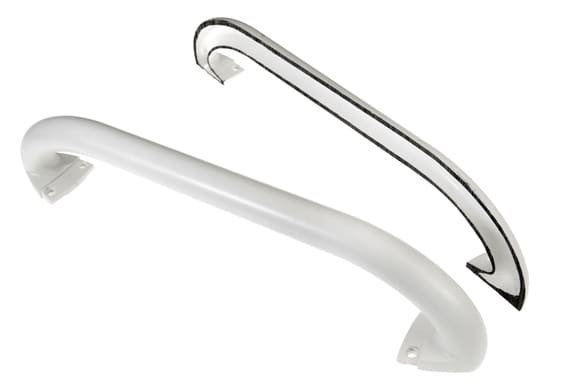
Deurhendels die met GAIM worden vervaardigd, hebben doorgaans interne holle kanalen waarin mechanische koppelingen zijn ondergebracht, terwijl de buitenkant ergonomisch is vormgegeven. Deze ontwerpbenadering maakt assemblages uit meerdere delen overbodig, waardoor zowel de productiecomplexiteit als het aantal potentiële faalpunten afneemt. Gewichtsbesparingen van 25-35% ten opzichte van massief gegoten alternatieven zijn gebruikelijk.
Consumentenelektronica en huishoudelijke apparaten
Elektronicafabrikanten gebruiken GAIM voor behuizingsdelen, constructieframes en warmteafvoerelementen. Het proces maakt dunwandige secties met geïntegreerde verstevigingsribben mogelijk, essentieel voor draagbare behuizingen die slag moeten weerstaan bij minimaal gewicht.
Televisieranden en monitorframes zijn belangrijke GAIM-toepassingen, waarbij de holle interne structuur kanalen voor kabelbeheer biedt en tegelijk een strakke buitenzijde behoudt. De verbeterde oppervlaktekwaliteit maakt secundaire lakbewerkingen vaak overbodig, waardoor de productietijd en milieubelasting afnemen.
Meubel- en bouwcomponenten
Meubelfabrikanten gebruiken GAIM voor stoelruggen, tafelsteunen en modulaire bouwelementen. Het proces maakt complexe ergonomische oppervlakken met geïntegreerde structurele versteviging mogelijk en elimineert traditionele assemblage met meerdere onderdelen en bevestigingsmiddelen.
Bouwtoepassingen omvatten constructiepanelen, decoratieve elementen en functionele componenten zoals leuningen en veiligheidsbarrières. GAIM kan holle doorsneden met nauwkeurig beheerste wanddikte maken en is daardoor ideaal voor toepassingen met specifieke sterkte-gewichtsverhoudingen die aan bouwvoorschriften moeten voldoen.
Componenten voor medische hulpmiddelen
Bij toepassingen voor medische hulpmiddelen wordt GAIM gebruikt voor apparatuurbehuizingen, ergonomische handgrepen en structurele componenten waarbij gewichtsreductie en oppervlaktekwaliteit cruciaal zijn. Het proces maakt complexe interne geometrieën voor kabelbeheer en componentintegratie mogelijk, terwijl de gladde, reinigbare buitenoppervlakken behouden blijven die in zorgomgevingen vereist zijn.
Wat zijn de verschillende soorten gasgeassisteerd spuitgieten?
De verschillende typen gasgeassisteerd spuitgieten zijn de hoofdcategorieën die in dit gedeelte worden behandeld. Gasgeassisteerd spuitgieten omvat verschillende procesvarianten, elk geoptimaliseerd voor specifieke onderdeelgeometrieën en productie-eisen. Kennis van deze varianten stelt engineers in staat de meest geschikte methode voor hun toepassing te selecteren.
Interne gasinjectie (IGI)
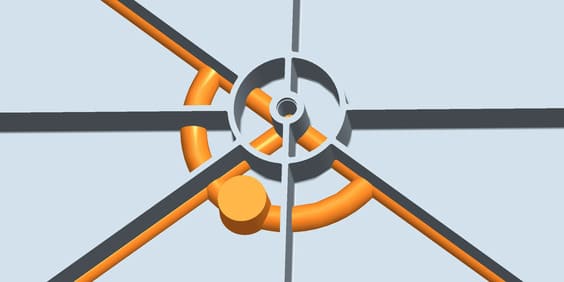
Interne gasinjectie is de meest voorkomende GAIM-variant, waarbij gas rechtstreeks in de gesmolten kunststof wordt ingebracht via injectiepennen in de matrijsholte. Gasinjectiepunten bevinden zich doorgaans aan het einde van stromingstrajecten in dikwandige zones, zodat het gas kan binnendringen en holle kanalen in de stromingsrichting van de kunststof kan vormen.
IGI-systemen werken doorgaans met gasdrukken van 50-150 bar, waarbij het injectiemoment voor optimale resultaten binnen ±0,1 seconde wordt geregeld. Het gas volgt dikwandige secties en ribben en vormt holle kanalen die de onderdeelsterkte behouden en het materiaalverbruik verminderen. Deze methode is bijzonder effectief voor onderdelen met lange, dikke secties, zoals autohandgrepen, constructieribben en buisvormige componenten.
Procesregelparameters voor IGI omvatten de vertragingstijd van de gasinjectie (doorgaans 0.5-2.0 seconds na de kunststofinjectie), de piekgasdruk, het nadrukprofiel en het moment van evacuatie. Nauwkeurige regeling van deze parameters is essentieel voor een consistente vorming van holle kanalen en om gasdoorbraak bij dunwandige zones te voorkomen.
Externe gasinjectie (EGI)
Bij externe gasinjectie wordt gas onder druk bij de nozzle van de spuitgietmachine ingebracht, waardoor vóór binnenkomst in de matrijsholte een gas-kunststofmengsel ontstaat. Deze methode is bijzonder geschikt voor onderdelen met meerdere dikke secties waar het gas verschillende zones van het onderdeel moet bereiken.
EGI-systemen vereisen speciale injectie-eenheden die de gas-kunststofverhouding regelen en gedurende de injectiecyclus een constante druk handhaven. Gasconcentraties liggen doorgaans tussen 0.1-0.5 volumeprocent; stikstof geniet de voorkeur vanwege de inerte eigenschappen en het consistente gedrag onder druk.
Het belangrijkste voordeel van EGI is dat hiermee gelijktijdig meerdere holle secties kunnen worden gevormd zonder meerdere gasinjectiepunten in de matrijs. Dit vermindert de complexiteit en productiekosten van de matrijs en zorgt tegelijk voor een gelijkmatigere gasverdeling door complexe onderdeelgeometrieën.
Overloop-/onvolledig-shotmethode
Bij de Spill- of Short Shot-methode wordt de matrijsholte tijdens het inspuiten van kunststof doelbewust onvolledig gevuld. Vervolgens wordt gasdruk gebruikt om extra materiaal naar ongevulde zones te drijven en tegelijkertijd holle secties in dikwandige zones te maken. Deze aanpak biedt uitstekende controle over de materiaalverdeling en de vorming van holle kanalen.
Overloopsystemen gebruiken doorgaans overloopzones of speciale caviteiten voor overtollig materiaal dat door gasinjectie wordt verdrongen. Dit materiaal kan vaak direct worden gerecycled, waardoor afval beperkt blijft. Gasdrukken voor overlooptoepassingen liggen tussen 30-100 bar, doorgaans lager dan bij IGI-systemen door de lagere weerstand van gedeeltelijk gevulde caviteiten.
Deze methode blinkt uit bij nauwkeurige beheersing van wanddikte en complexe interne geometrieën. Constructieve auto-onderdelen en grote apparaatbehuizingen gebruiken vaak spill GAIM voor optimale materiaalverdeling met behoud van maatnauwkeurigheid.
"Stikstof is de standaardgaskeuze voor de meeste productieprogramma's voor gasgeassisteerd spuitgieten."True
Juist. Stikstof wordt veel gebruikt omdat het inert, stabiel en voorspelbaar is voor uiteenlopende spuitgietkunststoffen. Alternatieve gassen vereisen materiaalspecifieke validatie en zijn niet de standaardkeuze voor GAIM-productie.
"Wanddikteverhoudingen bij GAIM moeten voor optimale gaspenetratie altijd groter zijn dan 5:1 tussen dikke en dunne secties."False
Onjuist. Optimale wanddikteverhoudingen voor GAIM liggen doorgaans tussen 2:1 en 4:1. Verhoudingen boven 5:1 kunnen ongecontroleerde gasdoorslag, verlies van oppervlaktekwaliteit en plaatselijke verzwakking veroorzaken. De juiste verhouding hangt af van harsviscositeit, lengte van het gaskanaal en de constructieve functie van de holle rib.
Hoe verhoudt gasgeassisteerd spuitgieten zich tot conventioneel spuitgieten?
Gasgeassisteerd spuitgieten is concurrerender dan conventioneel spuitgieten wanneer de onderstaande afwegingen rond kosten, doorlooptijd en kwaliteit bij uw programma passen. Het verschilt van conventioneel spuitgieten doordat na het vullen met kunststof een beheerste stikstofdrukfase wordt toegevoegd. Daarmee kunnen bij een geschikte geometrie dikke zones worden uitgehold, inval worden verminderd en het onderdeelgewicht worden verlaagd. De conventionele volgorde die bij de stappen van het spuitgieten wordt beschreven, blijft gelden, maar GAIM voegt gastiming, drukbehoud, evacuatie en strengere validatie toe. Ingenieurs moeten gereedschapskosten, procescomplexiteit, onderdeelsterkte, oppervlaktekwaliteit en jaarvolume vergelijken voordat ze GAIM kiezen.
Procescomplexiteit en apparatuurvereisten
Conventioneel spuitgieten gebruikt relatief eenvoudige apparatuur, bestaande uit een injectie-eenheid, sluitsysteem en basismatrijs. GAIM-systemen vereisen aanvullende gasinjectieapparatuur, drukregelsystemen en gespecialiseerde matrijscomponenten, waaronder gasinjectiepennen en afvoersystemen. Deze grotere complexiteit leidt tot hogere initiële investeringen in apparatuur, maar maakt mogelijkheden haalbaar die met conventionele methoden onmogelijk zijn.
Het instellen en optimaliseren van GAIM duurt doorgaans 2-3 keer langer dan conventioneel spuitgieten, omdat het injectiemoment van het gas, de drukprofielen en de evacuatievolgorde moeten worden geoptimaliseerd. Na optimalisatie vertonen GAIM-processen echter vaak een betere consistentie en minder variatie dan conventioneel spuitgieten van dikwandige onderdelen.
Ontwerpvrijheid en onderdeelcomplexiteit
Met GAIM kunnen complexe interne geometrieën, holle secties en geïntegreerde functies worden gemaakt waarvoor bij conventioneel vormen meerdere componenten nodig zouden zijn. Deze mogelijkheid maakt assemblagehandelingen vaak overbodig en verlaagt het totale aantal onderdelen in complexe producten. Conventioneel vormen blinkt uit in de productie van grote volumes met eenvoudige geometrieën, waarbij gereedschapskosten en optimalisatie van de cyclustijd centraal staan.
De eisen voor wanddikte verschillen sterk per methode. Conventioneel spuitgieten werkt optimaal met een gelijkmatige wanddikte (doorgaans 1-4mm), terwijl GAIM wisselende wanddikten aankan en holle secties maakt in zones dikker dan 6mm. Deze flexibiliteit laat ontwerpers materiaalplaatsing optimaliseren voor constructieve eisen in plaats van vormbeperkingen.
Kwaliteits- en prestatiekenmerken
De voordelen van GAIM voor oppervlaktekwaliteit zijn vooral duidelijk bij dikwandige toepassingen, waar conventioneel spuitgieten vaak inval, vloeinaden en interne spanningsconcentraties veroorzaakt. De gasdruk-nadrukfase van GAIM werkt als intern navulmechanisme en waarborgt uniforme afwerking en maatvastheid.
De mechanische eigenschappen van GAIM-onderdelen zijn vaak beter dan die van vergelijkbare massieve spuitgietonderdelen dankzij een geoptimaliseerde spanningsverdeling en lagere interne spanningen. De holle kernconstructie verhoogt het weerstandsmoment en verlaagt tegelijk het gewicht, wat resulteert in een betere sterkte-gewichtsverhouding die essentieel is voor constructieve toepassingen.
Economische overwegingen
Materiaalbesparingen bij GAIM compenseren doorgaans de hogere verwerkingskosten voor onderdelen boven bepaalde drempels voor afmeting en complexiteit. Het omslagpunt ligt meestal bij onderdeelgewichten boven 50-100 gram, afhankelijk van materiaalkosten en productievolumes. Grootschalige productie (>100,000 onderdelen per jaar) is doorgaans gunstig voor GAIM door de cumulatieve materiaalbesparing en minder nabewerkingen.
Gereedschapskosten voor GAIM liggen door integratie van het gasinjectiesysteem en speciale componenten doorgaans 15-30% boven conventioneel spuitgieten. Het wegvallen van secundaire montage en een betere first-pass quality leveren bij complexe delen vaak toch een totaal kostenvoordeel op.
Welke ontwerprichtlijnen moeten ingenieurs voor GAIM volgen?
Ingenieurs moeten GAIM-onderdelen ontwerpen rond een voorspelbare gasstroom: beheerste overgangen van dik naar dun, geplande gaskanalen, vloeiende radii, stabiele ontluchting en het stromingsgedrag van de hars moeten worden beoordeeld voordat het matrijsstaal wordt verspaand. Ook de instelling van de vormmachine is van belang. Daarom moet de DFM-beoordeling de schroefspuitgietmachine, de MFI van het materiaal, de verhouding tussen wanddiktes, de positie van de gaspen en de beoogde cyclustijd gezamenlijk beschouwen.
Overwegingen en verhoudingen voor wanddikte
Optimale wanddikteverhoudingen zijn de belangrijkste ontwerpparameter bij GAIM-toepassingen. De verhouding tussen dikke en dunne wand moet doorgaans tussen 2:1 en 4:1 liggen om goede gaspenetratie te waarborgen en doorbraak bij dunne secties te voorkomen. Gebieden die bedoeld zijn voor gaspenetratie moeten minimaal 4-6mm dik zijn, terwijl aangrenzende dunne wanden niet dikker mogen zijn dan 2-3mm.
Geleidelijke wanddikteovergangen voorkomen dat gas onbedoelde routes volgt en zorgen voor een voorspelbare vorming van holle kanalen. Overgangszones moeten zich uitstrekken over een afstand van minstens 3-5 keer het dikteverschil, waarbij de maximale dikteverandering niet meer dan 25% per lengte-eenheid bedraagt. Abrupte dikteveranderingen kunnen gasdoorbraak of onvolledige penetratie veroorzaken, wat zowel de productkwaliteit als de structurele integriteit aantast.
Materiaalkeuze beïnvloedt de optimale dikteverhoudingen sterk. Semi-kristallijne materialen zoals polyamiden en polyoxymethyleen vereisen doorgaans dikkere secties voor gaspenetratie (6-8mm) dan amorfe materialen zoals ABS of polycarbonaat (4-6mm), vanwege andere stromings- en koeleigenschappen.
Ontwerp van gaskanaal en optimalisatie van het stromingstraject
De plaatsing van gasinjectiepunten vereist een zorgvuldige analyse van de onderdeelgeometrie en verwachte stromingspatronen. Injectiepunten moeten aan de uiteinden van het stroompad in de dikste zones van het onderdeel worden geplaatst, doorgaans op afstanden van 50-150mm van dunwandige zones, afhankelijk van de materiaalviscositeit en complexiteit van het onderdeel.
Voor grote of complexe onderdelen kunnen meerdere injectiepunten nodig zijn, maar deze moeten zo worden geplaatst dat interferentie tussen gasstromen wordt voorkomen. De minimale afstand tussen injectiepunten moet groter zijn dan 100mm, met stromingspaden die voorkomen dat gasstromen in dunwandige secties samenkomen. Speciaal voor GAIM-toepassingen ontwikkelde stromingsanalysesoftware kan de plaatsing van injectiepunten optimaliseren en gaspenetratiepatronen voorspellen.
Gasafvoer is even belangrijk en vereist terugstroming via de injectiepunten of afzonderlijke afvoerkanalen. Het ontwerp van het afvoertraject moet volledige gasverwijdering waarborgen en tegelijk voorkomen dat kunststof in gastoevoersystemen terechtkomt. Terugslagkleppen en spoelsequenties helpen het systeem schoon te houden en verontreiniging te voorkomen.
Ribontwerp en structurele optimalisatie
Ribben die voor gaspenetratie zijn bedoeld, moeten over hun lengte een constante dikte hebben en vloeiend aansluiten op de omliggende onderdeelgeometrie. De ribdikte moet doorgaans 80-120% van de aangrenzende wanddikte bedragen om voldoende gaspenetratie te waarborgen zonder de structurele prestaties te verminderen. De verhouding tussen ribhoogte en -dikte mag niet groter zijn dan 3:1 om knikken of vervorming tijdens het afkoelen te voorkomen.
Het integreren van ribben met gaskanalen vereist zorgvuldige aandacht voor de geometrie van kruisingen en stromingsovergangen. Vloeiende radiusovergangen (minimaal 0.5mm) bij ribkruisingen voorkomen verstoring van de gasstroom en verminderen spanningsconcentraties. Meerdere ribben moeten zo worden geplaatst dat gas onafhankelijk kan doordringen zonder interferentie tussen aangrenzende kanalen.
Lossingshoeken voor GAIM-ribben liggen doorgaans tussen 0.5-1.5 graden, vergelijkbaar met conventionele vormeisen. Holle ribben kunnen echter iets grotere lossingshoeken (1.0-2.0 graden) vereisen vanwege mogelijke maatvariaties door gasdrukeffecten tijdens afkoeling.
Criteria voor materiaalkeuze
Bij de materiaalkeuze voor GAIM-toepassingen moet naast de standaardvereisten voor mechanische eigenschappen rekening worden gehouden met gasoplosbaarheid, smeltvloeigedrag en koelgedrag. Materialen met een lage gasoplosbaarheid, zoals polyolefinen en styrenen, leveren doorgaans beter gedefinieerde gaskanaaltjes en een eenvoudigere gasafvoer dan materialen met een hogere gasoplosbaarheid, zoals polyamiden.
Voor GAIM zijn doorgaans materialen met een gemiddelde tot hoge smeltvloei-index (MFI 10-50 g/10min voor de meeste toepassingen) vereist, zodat de matrijs vóór gasinjectie voldoende vult en de viscositeit hoog genoeg blijft voor correcte vorming van het gaskanaal. Bij extreem hoge vloei kan gas voortijdig doorbreken; bij lage vloei vult de matrijs mogelijk niet volledig.
Het kristallisatiegedrag beïnvloedt de patronen van gaspenetratie en de uiteindelijke onderdeeleigenschappen. Bij semi-kristallijne materialen is een nauwkeurige temperatuurregeling nodig om de kristallisatiesnelheid te beheersen en voortijdige stolling te voorkomen die de gaskanalen kan blokkeren. Amorfe materialen bieden doorgaans een beter voorspelbare gaspenetratie, maar kunnen door hun hogere smeltviscositeit bij verwerkingstemperaturen een hogere gasdruk vereisen.
Hoe kan ZetarMold uw project voor gasondersteund spuitgieten ondersteunen?
ZetarMold ondersteunt projecten voor gasgeassisteerd spuitgieten door vroege onderdeeltekeningen om te zetten in een praktisch plan voor DFM, matrijsproeven en productievalidatie. In onze fabriek in Shanghai beoordelen onze engineers de wanddikte, gaskanaalindeling, het harsgedrag, machinetonnage en de productietijd voor spuitgieten voordat zij adviseren of GAIM werkelijk gerechtvaardigd is wat betreft kosten, kwaliteit en levering.
Geavanceerde productiecapaciteiten
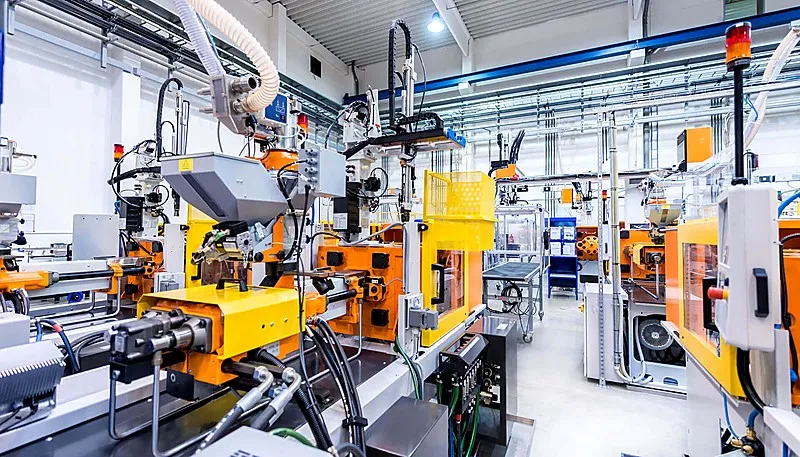
Fabrieksinzicht: voor haalbaarheidsbeoordelingen van gasgeassisteerd spuitgieten combineert ZetarMold 20+ jaar ervaring met spuitgieten en matrijsbouw met 47 spuitgietmachines van 90T tot 1850T, 8 senior engineers en ervaring met 400+ kunststofmaterialen. Dat is belangrijk omdat het ontwerp van gaskanalen, de stikstoftiming, het voorkomen van inval en de validatie van matrijsproeven gezamenlijk moeten worden beoordeeld voordat een project binnen ISO-beheerde kwaliteitssystemen voor productie wordt vrijgegeven.
Onze vestiging in Shanghai exploiteert 45+ spuitgietmachines met een sluitkracht van 90T tot 1850T en kan daardoor GAIM-projecten in uiteenlopende formaten uitvoeren. Elke machine beschikt over nauwkeurige gasinjectiesystemen die de druk binnen ±2 bar en de timing binnen ±0.1 seconden regelen, essentieel voor consistente GAIM-resultaten.
ZetarMold verwerkt 400+ technische kunststoffen en standaardharsen, waaronder gespecialiseerde GAIM-geoptimaliseerde kwaliteiten van toonaangevende leveranciers. Onze materiaalkennis helpt optimale polymeren te kiezen op basis van gasoplosbaarheid, verwerkingseisen en eindgebruiksprestaties. Wij onderhouden uitgebreide materiaalgegevensbanken specifiek voor GAIM, waarmee procesparameters nauwkeurig kunnen worden voorspeld en geoptimaliseerd.
Ons kwaliteitsmanagementsysteem werkt volgens ISO 9001:2015-certificering, met gespecialiseerde procedures voor validatie en beheersing van het GAIM-proces. Systemen voor statistische procesbeheersing bewaken kritieke parameters, waaronder gasdrukprofielen, injectietijdsequenties en maatnauwkeurigheid tijdens productieruns. Deze systematische aanpak waarborgt een consistente onderdeelkwaliteit en maakt snelle identificatie van procesvariaties mogelijk.
Uitstekende engineering en technische ondersteuning
Het team van ZetarMold bestaat uit 8 senior engineers met uitgebreide GAIM-ervaring in automotive, elektronica en industriële toepassingen. Onze engineeringdiensten omvatten uitgebreide analyses van ontwerp voor maakbaarheid (DFM), matrijsstroomsimulatie met gespecialiseerde GAIM-software en ondersteuning bij procesoptimalisatie gedurende de gehele projectontwikkeling.
Ontwerpadvies helpt de onderdeelgeometrie voor GAIM-verwerking te optimaliseren, waaronder analyse van wanddikte, plaatsing van gasinjectiepunten en aanbevelingen voor constructieve optimalisatie. Onze engineers gebruiken geavanceerde simulatietools om gaspenetratiepatronen te voorspellen, mogelijke procesproblemen te identificeren en het gereedschapsontwerp te optimaliseren voordat de productie begint.
Prototypecapaciteiten maken snelle validatie van GAIM-ontwerpen mogelijk met productierepresentatieve processen en materialen. Onze prototypeaanpak omvat iteratieve optimalisatie van gasinjectieparameters, validatie van de materiaalkeuze en beproeving van mechanische eigenschappen om vóór investering in productiegereedschappen te waarborgen dat aan de ontwerpeisen wordt voldaan.
Wereldwijde communicatie en projectmanagement
Met 30+ vloeiend Engelssprekende medewerkers waarborgt ZetarMold duidelijke communicatie tijdens de projectontwikkeling en productiefasen. Onze projectmanagementaanpak omvat regelmatige voortgangsupdates, technische documentatie in het Engels en rechtstreekse communicatie tussen engineers om technische uitdagingen efficiënt op te lossen.
Kwaliteitsdocumentatie omvat uitgebreide inspectierapporten, materiaalcertificaten en procesparameterregistraties volgens internationale normen. Onze traceerbaarheidssystemen bewaren de volledige productiehistorie per batch voor kwaliteitsonderzoek en continue verbetering.
Onze capaciteiten voor supplychainbeheer omvatten wereldwijde verzendcoördinatie, douanedocumentatie en kwaliteitsborgingsprotocollen die zijn ontworpen voor internationale productiepartnerschappen. We werken nauw samen met inkoopteams om optimale logistieke oplossingen te realiseren en consistente leveringsschema’s te handhaven.
Partnerschap en langdurige ondersteuning
ZetarMolds benadering van klantpartnerschappen gaat verder dan de eerste projectoplevering en omvat doorlopende technische ondersteuning, procesoptimalisatie en capaciteitsopschaling wanneer productievereisten veranderen. Ons ervaren team begrijpt de unieke uitdagingen van GAIM-productie en biedt proactieve ondersteuning om consistente kwaliteit en efficiëntie te behouden.
Programma’s voor continue verbetering helpen GAIM-processen in de loop der tijd te optimaliseren door mogelijkheden voor kortere cyclustijden, materiaalbesparing en kwaliteitsverbetering te identificeren. Regelmatige procesbeoordelingen en capabiliteitsanalyses zorgen ervoor dat productiemethoden blijven aansluiten op veranderende technische eisen en beste praktijken in de sector.
Voor bedrijven die een betrouwbare leverancier voor gasgeassisteerd spuitgieten zoeken, kan ZetarMold de onderdeelgeometrie beoordelen, adviseren of GAIM technisch gerechtvaardigd is en een DFM-traject opstellen voor de lay-out van gaskanalen, materiaalkeuze, gereedschapsrisico’s, proefvalidatie en kwaliteitsbeheersing in de productie.
Veelgestelde vragen
Welke onderdelen zijn het meest geschikt voor gasondersteunde spuitgietvorming?
Gasondersteund spuitgieten is bij uitstek geschikt voor dikwandige kunststofonderdelen, lange handgrepen, constructieribben, grote behuizingen, stoelonderdelen, apparaatframes en onderdelen waarbij gewichtsbesparing of beheersing van inval belangrijk is. Het proces werkt het best als het ontwerp een gepland gaskanaal en voldoende kunststofvolume heeft zodat stikstof de binnenzijde kan uithollen. Het is minder geschikt voor zeer dunne, eenvoudige onderdelen in kleine series waarvoor conventioneel spuitgieten al stabiele kwaliteit levert zonder zichtbare inval of overmatig harsverbruik. Daarom is een eerste beoordeling van de geometrie het eerste beslispunt.
Vermindert gasgeassisteerd spuitgieten altijd de kosten?
Nee. Gasondersteund spuitgieten kan het harsverbruik verminderen, de oppervlaktekwaliteit verbeteren en het onderdeelgewicht verlagen, maar het vergroot ook de complexiteit van de matrijs en vereist gaspennen of spuitmonden, gasregelapparatuur, tijd voor procesontwikkeling en meer validatiewerk. Het kostenvoordeel moet worden berekend op basis van de onderdeelgeometrie, het jaarvolume, de harsprijs, de matrijskosten, de verwachte vermindering van uitval, de cyclustijd en de waarde van het vervallen van secundaire assemblage. Een DFM-beoordeling en een proefspuitplan zijn nodig voordat GAIM als gegarandeerde kostenbesparende methode wordt beschouwd. Inkopers moeten om een schriftelijk kostenmodel vragen.
Wat is het belangrijkste kwaliteitsrisico bij gasgeassisteerd spuitgieten?
Het belangrijkste kwaliteitsrisico is ongecontroleerde gaspenetratie. Bij een slecht ontworpen gaspad of onjuiste druktiming kan stikstof door het smeltfront blazen, zwakke zones en onregelmatige holle kanalen vormen of zichtbare oppervlaktedefecten veroorzaken. Wanddikteovergangen, gas-kanaalradius, harsviscositeit, ontluchting, injectiesnelheid en nadruk beïnvloeden het resultaat. Daarom moeten GAIM-projecten DFM, waar nodig stromingssimulatie, validatie van matrijsproeven en gedocumenteerde procesvensters omvatten. Die registraties beperken het risico bij herhaalproductie.
Welk gas wordt normaal gesproken gebruikt in GAIM-productie?
Stikstof wordt normaal gebruikt bij gasondersteund spuitgieten in productie, omdat het inert, stabiel, breed verkrijgbaar en voorspelbaar is bij veel gangbare thermoplasten. Het gedrag tijdens gaspenetratie en nadruk is goed bekend bij spuitgieters, waardoor het proces reproduceerbaarder kan worden ingesteld. Andere gassen mogen pas na materiaalspecifieke tests worden overwogen, omdat ze het schuimgedrag, de oppervlakteafwerking, de gasoplosbaarheid of de processtabiliteit kunnen beïnvloeden. Voor de meeste exportproductieprojecten blijft stikstof de praktische standaard. Het vereenvoudigt ook de leverancierskwalificatie en productiedocumentatie voor herhaalorders.
Hoe moeten kopers een GAIM-leverancier evalueren?
Kopers moeten een GAIM-leverancier evalueren door te vragen naar DFM-ondersteuning, eerdere ervaring met dikwandig spuitgieten, het machinevermogenbereik, kennis van gasondersteunde gereedschappen, aanbevelingen voor harsen, validatie van proefschoten en kwaliteitsdocumentatie. De leverancier moet uitleggen waar het gas zal binnenkomen, hoe het holle kanaal zal ontstaan en hoe zinkmarkeringen of doorblazen worden voorkomen. Voor overzeese projecten moeten kopers ook de Engelse communicatie, projectmanagementdiscipline, onderhoudscapaciteit van matrijzen controleren en nagaan of de leverancier inspectierapporten en procesregistraties kan verstrekken. Deze controles voorkomen inkoopfouten.
Gasgeassisteerd spuitgieten: het Injection Molding Handbook van Rosato en Rosato biedt technische basisreferenties voor de procesprincipes, drukregeling en gereedschapsoverwegingen bij gasgeassisteerd spuitgieten. ↩
ISO 20421-1:2019: de zoekresultaten voor ISO 20421 dienen als normreferentie voor de terminologie en algemene procesprincipes van gasgeassisteerd spuitgieten. ↩
Materiaalefficiëntie: de marktgegevens van PlasticsEurope bieden context voor de materiaalefficiëntie, afvalvermindering en trends in de kunststofproductie die in dit artikel worden besproken. ↩