...

ガスアシスト射出成形の利点とは?

• ZetarMold Engineering Guide
• Plastic Injection Mold Manufacturing Since 2005
• Built by ZetarMold engineers for buyers comparing mold and molding solutions.

ガス補助射出成形とは何ですか?

ガスアシスト射出成形1 は、このセクションで説明されている機能、制約条件、およびトレードオフによって定義されます。ガス補助射出成形(GAIM)は、従来の原理を組み合わせた先進的な製造プロセスです 射出成形 プラスチック部品内部に中空セクションを作成するための加圧ガス注入技術。この革新的な手法では、成形サイクル中に溶融プラスチックの特定領域に窒素ガスを注入し、構造的完全性と表面品質を維持しながら内部空洞を形成します。

GAIMプロセスは1970年代に最初に開発され、以来、自動車、民生電子機器、産業用途で使用される高度な製造方法へと進化しました。従来のソリッド射出成形とは異なり、GAIMでは製造業者が複雑な形状を、材料消費の削減、サイクルタイムの短縮、部品品質の向上をもって生産することができます。

ガスアシスト射出成形は、以下の条件下で動作します ISO 20421-1:20192 規格は、プロセスパラメータ、設備要件、品質管理措置に関する一般原則を確立します。この標準化により、異なる製造施設間で一貫した結果が保証され、設計エンジニアと生産チーム間のより良い協業が可能になります。

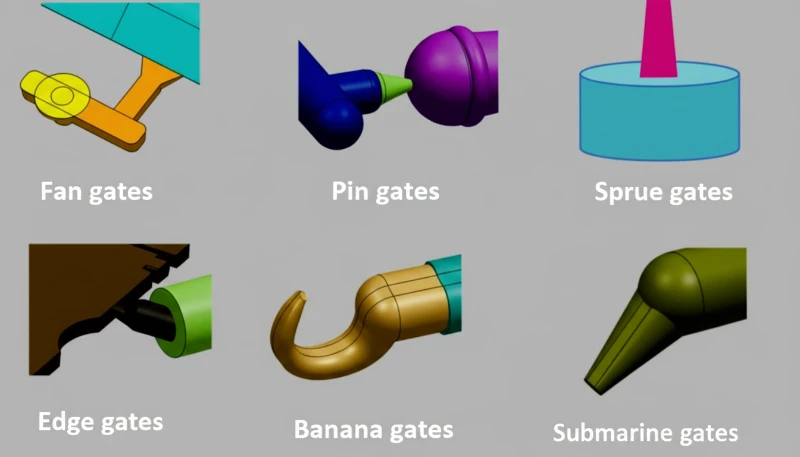
GAIMの主な利点は、従来の成形方法では不可能または費用がかかる中空チャネルやリブを作成できる能力です。ガス注入ポイントを戦略的に配置することで 金型設計、エンジニアは中空化が発生する場所を制御し、材料使用量と部品性能特性の両方を最適化できます。

要点
  • ガスアシスト射出成形は、中空チャネルによって重量を削減し、シンクマークを低減できる肉厚部品に最適です。
  • 典型的な材料削減効果は有意ですが、DFM(製造設計)、流動シミュレーション、試し打ち、機械的試験によって検証されるべきです。
  • 窒素のタイミング、ガスチャネルのレイアウト、樹脂の選択、排気は一体として設計する必要があります。一つのパラメータのみを変更すると、新たな欠陥が生じる可能性があります。
  • サプライヤーは、生産開始前に、ツール経験、プロセス検証、品質記録、および明確なコミュニケーションによってGAIM能力を証明する必要があります。
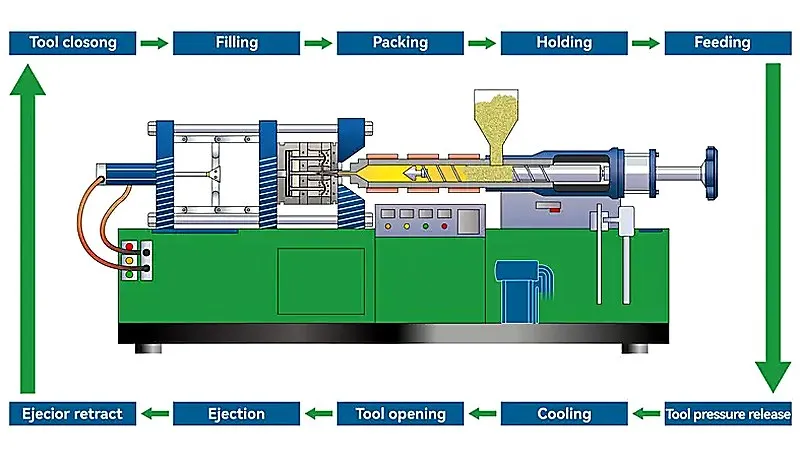
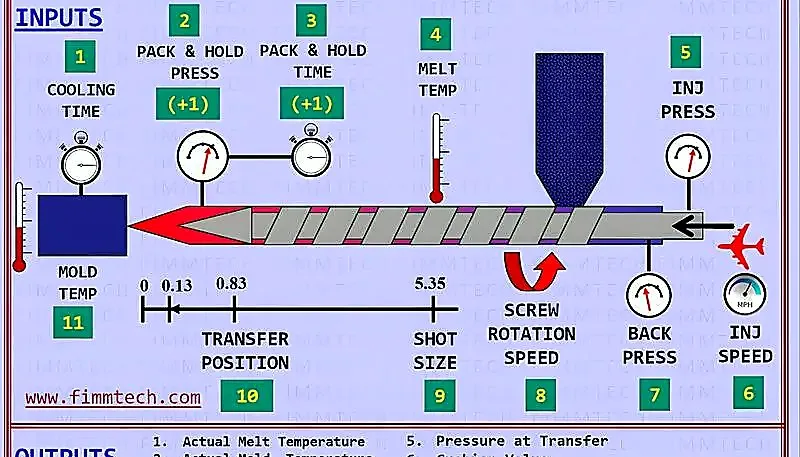
ガスアシスト射出成形システムの構成要素を示す射出成形機の概略図
ガス補助射出成形の概略図

ガスアシスト射出成形はどのように機能しますか?

ガスアシスト射出成形は、このセクションで説明される段階と設定を通じて機能する制御されたプロセスシーケンスです。ガスアシスト射出成形プロセスは、プラスチック注入、ガスタイミング、圧力制御システム間の注意深い調整を必要とする精密な操作シーケンスに従います。このワークフローを理解することは、エンジニアや調達管理者が自社の用途に対してGAIMを評価する際に不可欠です。

フェーズ1:部分的なプラスチック注入

このプロセスは、溶融プラスチック材料を金型キャビティに射出することから始まります。通常、設計体積の70〜95%を充填します。この部分充填戦略は「ショートショット」として知られ、ガス浸透のための空間を残しながら部品の外殻を形成するのに十分な材料が存在することを保証します。射出パラメータは厳密に制御する必要があり、ポリマーの種類に応じて溶融温度は200°Cから280°Cの範囲です。

フェーズ2:ガス注入

プラスチック注入直後に、加圧された窒素ガス(通常50~200バール)が戦略的に配置されたガス注入ピンまたはノズルから導入されます。ガスは通常、厚肉部分を通る抵抗が最も少ない経路をたどり、中空チャネルを作成しながら、残りのキャビティ領域を満たすために追加のプラスチック材料を押し出します。ガス注入のタイミングは非常に重要で、通常プラスチック注入完了後0.5~2.0秒以内に行われます。

第3段階: ガス圧保持

冷却段階では、シンクマークを防止し、適切な部品形成を確保するためにガス圧が維持されます。保持圧力は通常、初期射出圧力の30-80%の範囲で、プラスチックが固化するにつれて徐々に低下します。この段階は、部品の厚さと材料特性に応じて10〜60秒間続くことがあります。

第4段階: ガス排出と部品取り出し

プラスチックが十分に冷却・固化したら、同じ注入ポイントまたは専用の排気システムを通じて中空チャネルからガスを排出します。その後、金型が開き、標準的な取り出し機構を使用して完成した部品が取り出されます。

「ガスアシスト射出成形は、加圧された窒素を使用して、適切な肉厚プラスチック部品内に中空の内部チャネルを作成します。」

正しい。GAIMはプラスチックの部分充填後に窒素を導入するため、ガスは肉厚部分を中空化し、保持圧力を維持し、部品が冷却される間にシンクマークを低減できます。この技術は、ガスチャネル設計、タイミング、および材料の挙動に依存します。

「ガス補助射出成形は、従来の射出成形と比較して材料使用量を最大70%削減できます。」

誤り。GAIMは材料消費を削減することが多いが、適切な部品形状では現実的な削減率は通常20~40%の範囲である。非常に高い削減率の主張は、ビジネスケースで使用する前に、DFM、流動シミュレーション、試作射出、機械的試験によって検証されるべきです。

ガスアシスト射出成形の主な利点は何ですか?

ガスアシスト射出成形の主な利点は、このセクションで説明されている主要なカテゴリーまたは選択肢です。ガスアシスト射出成形は、複数の性能指標にわたって大きな利点をもたらし、生産効率と部品品質の最適化を求める製造業者にとって魅力的な選択肢となります。これらの利点は、製造コストと最終製品の性能特性の両方に直接影響します。

材料削減とコスト削減

GAIMは通常、同等の強度を持つソリッド射出成形部品と比較して、材料消費を20~40%削減します。この削減は、ガス注入によって作成される中空コアに起因し、不要な材料使用を排除しながら構造的完全性を維持します。大量生産では、材料削減は直接的に原材料コストの削減と利益率の向上につながります。

向上した表面品質

ガス圧保持段階により、厚肉の従来成形部品で頻繁に発生するシンクマーク、溶接ライン、流れ跡などの一般的な表面欠陥が排除されます。ガス圧は内部パック機構として機能し、複雑な形状全体で均一な表面仕上げを確保します。この改善により、二次仕上げ作業が不要になることが多く、全体の生産時間とコストが削減されます。
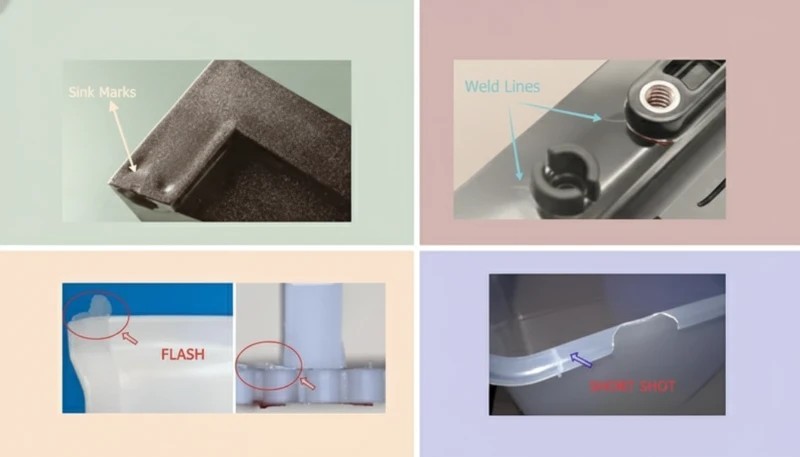
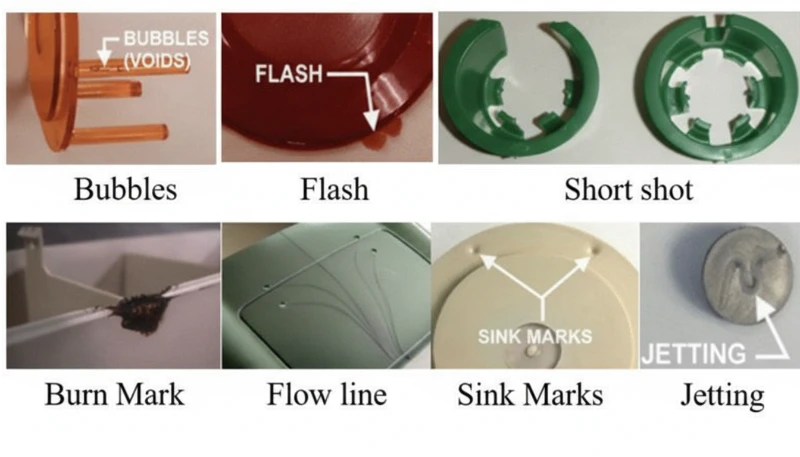
ガスアシスト成形が解消するシンクマークを含む一般的な射出成形欠陥
シンクなどの射出成形欠陥

構造性能の向上

GAIMによって作成された中空部分は、同等の固体部品と比較して、しばしば優れた強度重量比を示します。中空コア設計は部品の断面係数を増加させながら重量を削減し、曲げ強度の向上と材料応力の低減をもたらします。この利点は、重量削減が重要な自動車および航空宇宙アプリケーションで特に価値があります。

反りの低減と寸法安定性

ガス圧力は部品断面全体で均一な冷却速度を維持し、反りを大幅に減少させ、寸法安定性を向上させます。GAIM部品では内部応力分布がより均一であり、様々な環境条件下での長期的な寸法保持性が向上します。

Performance Metric 従来の射出成形 ガスアシスト射出成形 Improvement
Material Usage 100%ベースライン ベースラインの60-80% 20-40%削減
サイクルタイム 100%ベースライン ベースラインの75-90% 10-25%削減
Surface Quality Rating Good (sink marks common) Excellent (minimal defects) Significantly improved
金型費用 100%ベースライン 110-130% of baseline 10-30% increase
Part Weight 100%ベースライン ベースラインの60-80% 20-40%削減

ガスアシスト射出成形の一般的な用途は何ですか?

The common applications of gas-assisted injection molding are the main categories or options explained in this section. Gas-assisted injection molding finds extensive application across industries where part complexity, weight reduction, and material efficiency3 are critical design requirements. Understanding these applications helps engineers identify opportunities where GAIM provides optimal solutions.

Automotive Industry Applications

The automotive sector represents the largest market for GAIM technology, utilizing the process for both structural and aesthetic components. Common applications include door handles, instrument panel components, bumper supports, and interior trim pieces. Automotive manufacturers particularly value GAIM’s ability to create complex hollow geometries that reduce vehicle weight while maintaining crash safety requirements.

Door handles manufactured using GAIM typically feature internal hollow channels that house mechanical linkages while providing ergonomic exterior surfaces. This design approach eliminates the need for multi-piece assemblies, reducing both manufacturing complexity and potential failure points. Weight reductions of 25-35% are commonly achieved compared to solid molded alternatives.

Consumer Electronics and Appliances

Electronics manufacturers utilize GAIM for housing components, structural frames, and heat dissipation elements. The process enables creation of thin-walled sections with integrated strengthening ribs, essential for portable device housings that must withstand impact while minimizing weight.

Television bezels and monitor frames represent prime GAIM applications, where the hollow internal structure provides cable management channels while maintaining sleek external aesthetics. The improved surface quality eliminates secondary painting operations in many cases, reducing production time and environmental impact.

Furniture and Construction Components

Furniture manufacturers employ GAIM for chair backs, table supports, and modular construction elements. The process enables creation of complex ergonomic surfaces with integrated structural reinforcement, eliminating traditional assembly methods that require multiple components and fasteners.

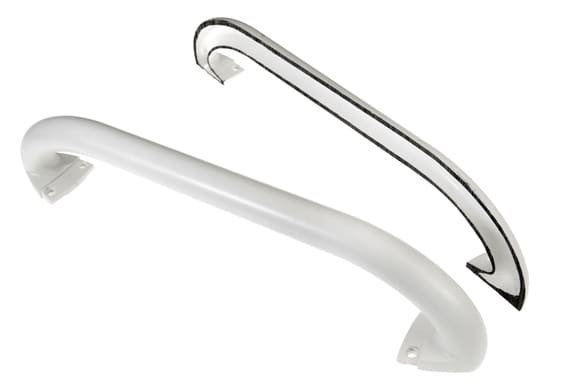
Construction applications include structural panels, decorative elements, and functional components such as handrails and safety barriers. GAIM’s ability to create hollow sections with precise wall thickness control makes it ideal for applications requiring specific strength-to-weight ratios while meeting building code requirements.

Medical Device Components

Medical device applications utilize GAIM for equipment housings, ergonomic handles, and structural components where weight reduction and surface quality are critical. The process enables creation of complex internal geometries for cable management and component integration while maintaining smooth, cleanable external surfaces required in healthcare environments.

ガスアシスト成形ワークフローの段階を示す射出成形プロセスのフローチャート
Process flowchart illustrating the complete gas-assisted

ガスアシスト射出成形にはどのような種類がありますか?

The different types of gas-assisted injection molding are the main categories or options explained in this section. Gas-assisted injection molding encompasses several distinct process variations, each optimized for specific part geometries and manufacturing requirements. Understanding these variations enables engineers to select the most appropriate method for their specific applications.

Internal Gas Injection (IGI)

Internal Gas Injection represents the most common GAIM variant, where gas is introduced directly into the molten plastic through injection pins positioned within the mold cavity. Gas injection points are typically located at the end of flow paths in thick-walled sections, allowing gas to penetrate and create hollow channels along the plastic flow direction.

IGI systems typically operate at gas pressures ranging from 50-150 bar, with injection timing controlled to within ±0.1 seconds for optimal results. The gas follows thick-walled sections and ribs, creating hollow channels that maintain part strength while reducing material usage. This method is particularly effective for parts with long, thick sections such as automotive handles, structural ribs, and tubular components.

Process control parameters for IGI include gas injection delay time (typically 0.5-2.0 seconds after plastic injection), peak gas pressure, holding pressure profile, and evacuation timing. Precise control of these parameters is essential for achieving consistent hollow channel formation and preventing gas breakthrough at thin-walled sections.

External Gas Injection (EGI)

External Gas Injection introduces pressurized gas at the injection molding machine nozzle, creating a gas-plastic mixture before entering the mold cavity. This method is particularly suitable for parts with multiple thick sections where gas needs to reach various areas of the component.

EGI systems require specialized injection units capable of controlling gas-plastic mixing ratios and maintaining consistent pressure throughout the injection cycle. Gas concentrations typically range from 0.1-0.5% by volume, with nitrogen being the preferred gas due to its inert properties and consistent behavior under pressure.

The primary advantage of EGI lies in its ability to create multiple hollow sections simultaneously without requiring multiple gas injection points in the mold. This reduces mold complexity and manufacturing costs while enabling more uniform gas distribution throughout complex part geometries.

Spill/Short Shot Method

The Spill or Short Shot method involves deliberately underfilling the mold cavity during plastic injection, then using gas pressure to drive additional material into unfilled areas while creating hollow sections in thick-walled regions. This approach provides excellent control over material distribution and hollow channel formation.

Spill systems typically use overflow areas or dedicated spill cavities to accommodate excess material displaced by gas injection. The overflow material can often be recycled directly back into the process, minimizing material waste. Gas pressures for spill applications range from 30-100 bar, generally lower than IGI systems due to the reduced resistance from partially filled cavities.

This method excels in applications requiring precise wall thickness control and complex internal geometries. Automotive structural components and large appliance housings frequently utilize spill GAIM to achieve optimal material distribution while maintaining dimensional accuracy.

“Nitrogen is the standard gas choice for most gas-assisted injection molding production programs.”

True. Nitrogen is widely used because it is inert, stable, and predictable across many molding resins. Alternative gases require material-specific validation and are not the default choice for production GAIM.

“Wall thickness ratios in GAIM should always exceed 5:1 between thick and thin sections for optimal gas penetration.”

False. Optimal wall thickness ratios for GAIM typically range from 2:1 to 4:1. Ratios above 5:1 can cause uncontrolled gas breakthrough, surface quality loss, and local weakness. The right ratio depends on resin viscosity, gas-channel length, and the structural role of the hollow rib.

ガスアシスト射出成形は従来の射出成形とどのように比較されますか?

Gas-assisted injection molding is more competitive than conventional injection molding when the cost, lead time, and quality tradeoffs below match your program needs. Gas-assisted injection molding differs from conventional injection molding by adding a controlled nitrogen pressure stage after plastic fill, so the process can core thick sections, reduce sink marks, and lower part weight when geometry supports it. The conventional sequence described in the 射出成形のステップ still applies, but GAIM adds gas timing, pressure holding, evacuation, and stricter validation. Engineers should compare tooling cost, process complexity, part strength, surface quality, and annual volume before selecting GAIM.

Process Complexity and Equipment Requirements

Conventional injection molding utilizes relatively straightforward equipment consisting of an injection unit, clamping system, and basic mold. GAIM systems require additional gas injection equipment, pressure control systems, and specialized mold components including gas injection pins and evacuation systems. This increased complexity translates to higher initial equipment investment but enables capabilities impossible with conventional methods.

Setup and optimization time for GAIM typically requires 2-3 times longer than conventional molding due to the need to optimize gas injection timing, pressure profiles, and evacuation sequences. However, once optimized, GAIM processes often demonstrate superior consistency and reduced variation compared to conventional thick-wall molding.

Design Flexibility and Part Complexity

GAIM enables creation of complex internal geometries, hollow sections, and integrated features that would require multiple components in conventional molding. This capability often eliminates assembly operations and reduces overall part count in complex products. Conventional molding excels in high-volume production of simple geometries where tooling costs and cycle time optimization are primary concerns.

Wall thickness requirements differ significantly between the methods. Conventional molding performs optimally with uniform wall thickness (typically 1-4mm), while GAIM can accommodate varying wall thickness and creates hollow sections in areas exceeding 6mm thickness. This flexibility enables designers to optimize material placement for structural requirements rather than molding limitations.

Quality and Performance Characteristics

Surface quality advantages of GAIM become particularly pronounced in thick-walled applications where conventional molding typically produces sink marks, weld lines, and internal stress concentrations. GAIM’s gas pressure holding phase acts as an internal packing mechanism, ensuring uniform surface finish and dimensional stability.

Mechanical properties of GAIM parts often exceed those of equivalent solid molded parts due to optimized stress distribution and reduced internal tensions. The hollow core structure increases section modulus while reducing weight, resulting in improved strength-to-weight ratios critical for structural applications.

Economic Considerations

Material cost savings in GAIM typically offset higher processing costs for parts exceeding certain size and complexity thresholds. The break-even point generally occurs at part weights above 50-100 grams, depending on material costs and production volumes. High-volume production (>100,000 parts annually) usually favors GAIM due to cumulative material savings and reduced secondary operations.

Tooling costs for GAIM typically exceed conventional molding by 15-30% due to gas injection system integration and specialized components. However, elimination of secondary assembly operations and improved first-pass quality often provide overall cost advantages for complex parts.

従来の成形欠陥とGAIMの改善点を比較した一般的なプラスチック射出成形欠陥の概要
Overview of common injection molding defects

エンジニアはGAIMに対してどのような設計ガイドラインに従うべきですか?

Engineers should design GAIM parts around predictable gas flow: controlled thick-to-thin transitions, planned gas channels, smooth radii, stable venting, and resin flow behavior must be reviewed before mold steel is cut. The molding machine setup also matters, so the DFM review should consider the スクリュー射出成形機, material MFI, wall thickness ratio, gas pin location, and target cycle time together.

Wall Thickness Considerations and Ratios

Optimal wall thickness ratios represent the most critical design parameter in GAIM applications. The thick-to-thin wall ratio should typically range from 2:1 to 4:1 to ensure proper gas penetration while preventing breakthrough at thin sections. Areas intended for gas penetration should maintain minimum thickness of 4-6mm, while adjacent thin walls should not exceed 2-3mm thickness.

Gradual thickness transitions prevent gas from taking unintended paths and ensure predictable hollow channel formation. Transition zones should extend over distances of at least 3-5 times the thickness difference, with maximum thickness change rates not exceeding 25% per unit length. Sharp thickness changes can cause gas breakthrough or incomplete penetration, compromising both part quality and structural integrity.

Material selection significantly influences optimal thickness ratios. Semi-crystalline materials like polyamides and polyoxymethylene typically require thicker gas penetration sections (6-8mm) compared to amorphous materials like ABS or polycarbonate (4-6mm) due to their different flow and cooling characteristics.

Gas Channel Design and Flow Path Optimization

Gas injection point placement requires careful analysis of part geometry and anticipated flow patterns. Injection points should be positioned at flow path extremities in the thickest part sections, typically at distances of 50-150mm from thin-walled areas depending on material viscosity and part complexity.

Multiple injection points may be necessary for large or complex parts, but should be positioned to prevent gas flow interference. Minimum spacing between injection points should exceed 100mm, with flow paths designed to prevent gas streams from converging in thin-walled sections. Flow analysis software specifically developed for GAIM applications can optimize injection point placement and predict gas penetration patterns.

Gas evacuation considerations are equally important, requiring either return flow through injection points or dedicated evacuation channels. Evacuation path design must ensure complete gas removal while preventing plastic material from entering gas supply systems. Check valve systems and purge sequences help maintain system cleanliness and prevent contamination.

Rib Design and Structural Optimization

Ribs intended for gas penetration should maintain consistent thickness along their length and connect smoothly to surrounding part geometry. Rib thickness should generally range from 80-120% of adjacent wall thickness to ensure adequate gas penetration without compromising structural performance. Rib height-to-thickness ratios should not exceed 3:1 to prevent buckling or distortion during cooling.

Integration of ribs with gas channels requires careful attention to intersection geometry and flow transitions. Smooth radius transitions (minimum 0.5mm) at rib intersections prevent gas flow disruption and reduce stress concentration points. Multiple ribs should be spaced to allow independent gas penetration without interference between adjacent channels.

Draft angles for GAIM ribs typically range from 0.5-1.5 degrees, similar to conventional molding requirements. However, hollow ribs may require slightly increased draft angles (1.0-2.0 degrees) to accommodate potential dimensional variations from gas pressure effects during cooling.

Material Selection Criteria

Material selection for GAIM applications must consider gas solubility, melt flow characteristics, and cooling behavior in addition to standard mechanical property requirements. Materials with low gas solubility, such as polyolefins and styrenics, generally provide better gas channel definition and easier gas evacuation compared to materials with higher gas solubility like polyamides.

Melt flow index (MFI) requirements for GAIM typically favor materials with moderate to high flow rates (MFI 10-50 g/10min for most applications) to ensure adequate mold filling before gas injection while maintaining sufficient viscosity for proper gas channel formation. Extremely high flow materials may allow premature gas breakthrough, while low flow materials may not achieve complete mold filling.

Crystallization behavior affects gas penetration patterns and final part properties. Semi-crystalline materials require careful temperature control to manage crystallization rates and prevent premature solidification that could block gas channels. Amorphous materials generally provide more predictable gas penetration but may require higher gas pressures due to their higher melt viscosity at processing temperatures.

ZetarMoldはガスアシスト射出成形プロジェクトをどのようにサポートできますか?

ZetarMold supports gas-assisted injection molding projects by turning early part drawings into a practical DFM, mold-trial, and production validation plan. In our Shanghai factory, our engineers review wall thickness, gas-channel layout, resin behavior, machine tonnage, and injection molding production time before recommending whether GAIM is truly justified for cost, quality, and delivery.

Advanced Manufacturing Capabilities

🏭 ZetarMold Factory Insight
Factory Insight: For gas-assisted injection molding feasibility reviews, ZetarMold combines 20+ years of molding and tooling experience with 47 injection molding machines from 90T to 1850T, 8 senior engineers, and experience across 400+ plastic materials. That matters because gas-channel design, nitrogen timing, sink-mark prevention, and mold trial validation must be checked together before a project is released to production under ISO-managed quality systems.

Our Shanghai facility operates 45+ injection molding machines ranging from 90T to 1850T clamping force, providing the flexibility to handle GAIM projects across a wide size spectrum. Each machine is equipped with precision gas injection systems capable of maintaining pressure control within ±2 bar accuracy and timing precision of ±0.1 seconds, essential for consistent GAIM results.

ZetarMold’s material capabilities encompass 400+ engineering plastics and commodity resins, including specialized GAIM-optimized grades from leading suppliers. Our material selection expertise helps identify optimal polymer choices based on gas solubility characteristics, processing requirements, and end-use performance specifications. We maintain comprehensive material property databases specific to GAIM applications, enabling accurate process parameter prediction and optimization.

Our quality management system operates under ISO 9001:2015 certification with specialized procedures for GAIM process validation and control. Statistical process control systems monitor critical parameters including gas pressure profiles, injection timing sequences, and dimensional accuracy across production runs. This systematic approach ensures consistent part quality and enables rapid identification of process variations.

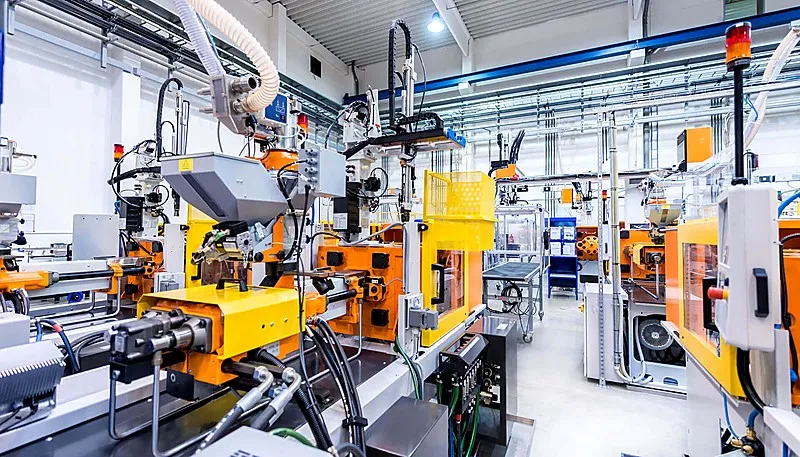
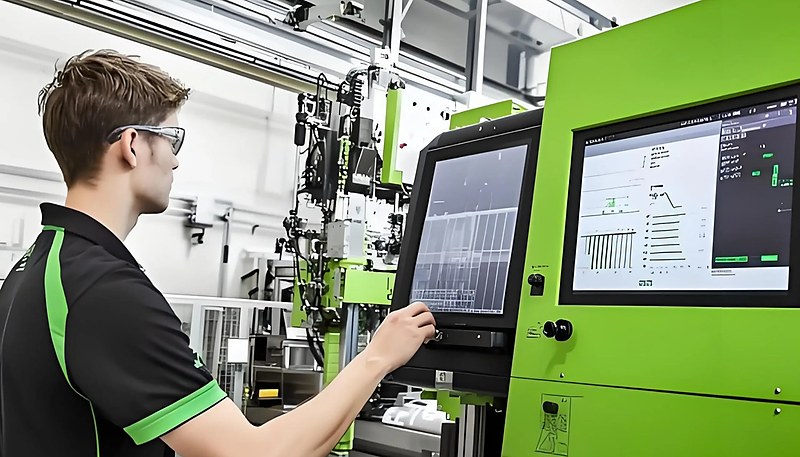
ガスアシスト成形能力を備えたZetarMold射出成形工場の生産フロア
ZetarMold’s Shanghai manufacturing facility equipped

Engineering Excellence and Technical Support

ZetarMold’s team of 8 senior engineers possesses extensive GAIM experience across automotive, electronics, and industrial applications. Our engineering services include comprehensive design for manufacturability (DFM) analysis, mold flow simulation using specialized GAIM software, and process optimization support throughout project development.

Design consultation services help optimize part geometry for GAIM processing, including wall thickness analysis, gas injection point placement, and structural optimization recommendations. Our engineers utilize advanced simulation tools to predict gas penetration patterns, identify potential processing challenges, and optimize tooling design before manufacturing begins.

Prototype development capabilities enable rapid validation of GAIM designs using production-representative processes and materials. Our prototyping approach includes iterative optimization of gas injection parameters, material selection validation, and mechanical property testing to ensure design requirements are met before committing to production tooling.

Global Communication and Project Management

With 30+ fluent English speakers on staff, ZetarMold ensures clear communication throughout project development and production phases. Our project management approach includes regular progress updates, technical documentation in English, and direct engineer-to-engineer communication to resolve technical challenges efficiently.

Quality documentation packages include comprehensive inspection reports, material certifications, and process parameter records formatted to meet international standards. Our traceability systems maintain complete production history for each part batch, supporting quality investigations and continuous improvement initiatives.

Supply chain management capabilities include global shipping coordination, customs documentation, and quality assurance protocols designed for international manufacturing partnerships. We work closely with sourcing teams to establish optimal logistics solutions and maintain consistent delivery schedules.

Partnership and Long-Term Support

ZetarMold’s approach to client partnerships extends beyond initial project delivery to include ongoing technical support, process optimization, and capacity scaling as production requirements evolve. Our experienced team understands the unique challenges of GAIM manufacturing and provides proactive support to maintain consistent quality and efficiency.

Continuous improvement programs help optimize GAIM processes over time, identifying opportunities for cycle time reduction, material savings, and quality enhancement. Regular process reviews and capability assessments ensure production methods remain aligned with evolving technical requirements and industry best practices.

For companies seeking reliable injection molding supplier sourcing for gas-assisted injection molding, ZetarMold can review the part geometry, recommend whether GAIM is technically justified, and prepare a DFM path that covers gas-channel layout, material choice, tooling risk, trial validation, and production quality control.

よくある質問

ガスアシスト射出成形に最も適した部品は何ですか?

Gas-assisted injection molding is strongest for thick-wall plastic parts, long handles, structural ribs, large housings, chair components, appliance frames, and parts where weight reduction or sink-mark control is important. The process works best when the design has a planned gas channel and enough plastic volume for nitrogen to core out the interior. It is less useful for very thin, simple, low-volume parts where conventional injection molding already produces stable quality without visible sink marks or excessive resin use. This makes geometry screening the first decision point.

ガスアシスト射出成形は常にコストを削減しますか?

No. Gas-assisted injection molding can reduce resin usage, improve surface quality, and lower part weight, but it also adds tooling complexity, gas pins or nozzles, gas-control equipment, process development time, and more validation work. The cost benefit should be calculated from part geometry, annual volume, resin price, tooling cost, expected scrap reduction, cycle time, and the value of eliminating secondary assembly. A DFM review and trial-shot plan are needed before treating GAIM as a guaranteed cost-saving method. Buyers should request a written cost model.

ガスアシスト射出成形における主な品質リスクは何ですか?

The main quality risk is uncontrolled gas penetration. If the gas path is poorly designed or the pressure timing is wrong, nitrogen can blow through the melt front, create weak sections, leave inconsistent hollow channels, or produce cosmetic defects on the visible surface. Wall thickness transitions, gas-channel radius, resin viscosity, venting, injection speed, and holding pressure all influence the result. This is why GAIM projects should include DFM, flow simulation when needed, mold trial validation, and documented process windows. Those records reduce repeat-production risk.

GAIM生産では通常、どのガスが使用されますか?

Nitrogen is normally used in production gas-assisted injection molding because it is inert, stable, widely available, and predictable with many common thermoplastics. Its behavior during gas penetration and pressure holding is well understood by molders, which makes process setup more repeatable. Other gases should only be considered after material-specific testing because they may affect foaming behavior, surface finish, gas solubility, or process stability. For most export manufacturing projects, nitrogen remains the practical default. It also simplifies supplier qualification and production documentation for repeat orders.

バイヤーはGAIMサプライヤーをどのように評価すべきですか?

バイヤーは、DFMサポート、過去の厚肉成形経験、機械トンネージ範囲、ガスアシスト金型の知識、樹脂の推奨、試射検証、および品質文書を求めることで、GAIMサプライヤーを評価する必要があります。サプライヤーは、ガスがどこから入るか、中空チャネルがどのように形成されるか、シンクマークやブロースルーがどのように制御されるかを説明する必要があります。海外プロジェクトの場合、バイヤーは英語でのコミュニケーション、プロジェクト管理の規律、金型メンテナンス能力、およびサプライヤーが検査報告書とプロセス記録を提供できるかどうかも確認する必要があります。これらのチェックは調達ミスを防ぎます。
  1. ガスアシスト射出成形: 射出成形ハンドブックは、RosatoとRosatoがガスアシスト射出成形プロセスの基礎、圧力制御、および金型設計に関する基本的な工学的参考文献を提供することを指します。

  2. ISO 20421-1:2019: ISO 20421検索は、ガスアシスト射出成形の用語および一般的なプロセス原則の基準参照点として使用されるISO 20421-1:2019を指します。

  3. 材料効率: PlasticsEuropeの事実は、PlasticsEuropeの市場データが、本記事で議論される材料効率、廃棄物削減、およびプラスチック製造のトレンドに関する文脈を提供することを指します。

最新の投稿
フェイスブック
ツイッター
LinkedIn
ピンタレスト
Mike Tangの写真
マイク・タン

Hi, I'm the author of this post, and I have been in this field for more than 20 years. and I have been responsible for handling on-site production issues, product design optimization, mold design and project preliminary price evaluation. If you want to custom plastic mold and plastic molding related products, feel free to ask me any questions.

私とつながる

クイック見積もり

図面および詳細要件を下記までお送りください。 

Emial:[email protected]

または下記のお問い合わせフォームにご記入ください:

クイック見積もり

図面および詳細要件を下記までお送りください。 

Emial:[email protected]

または下記のお問い合わせフォームにご記入ください:

クイック見積もり

図面および詳細要件を下記までお送りください。 

Emial:[email protected]

または下記のお問い合わせフォームにご記入ください:

クイック見積もり

図面および詳細要件を下記までお送りください。 

Emial:[email protected]

または下記のお問い合わせフォームにご記入ください:

クイック見積もり

図面および詳細要件を下記までお送りください。 

Emial:[email protected]

または下記のお問い合わせフォームにご記入ください:

ブランドのクイック見積もり

図面および詳細要件を下記までお送りください。 

Emial:[email protected]

または下記のお問い合わせフォームにご記入ください:

Спроситебыструюцитату。

Мы свяжемся с вами в течение одного рабочего дня, обратите внимание на письмо с суффиксом "[email protected]".

クイック見積もり

図面および詳細要件を下記までお送りください。 

Emial:[email protected]

または下記のお問い合わせフォームにご記入ください:

クイック見積もり

図面および詳細要件を下記までお送りください。 

Emial:[email protected]

または下記のお問い合わせフォームにご記入ください: